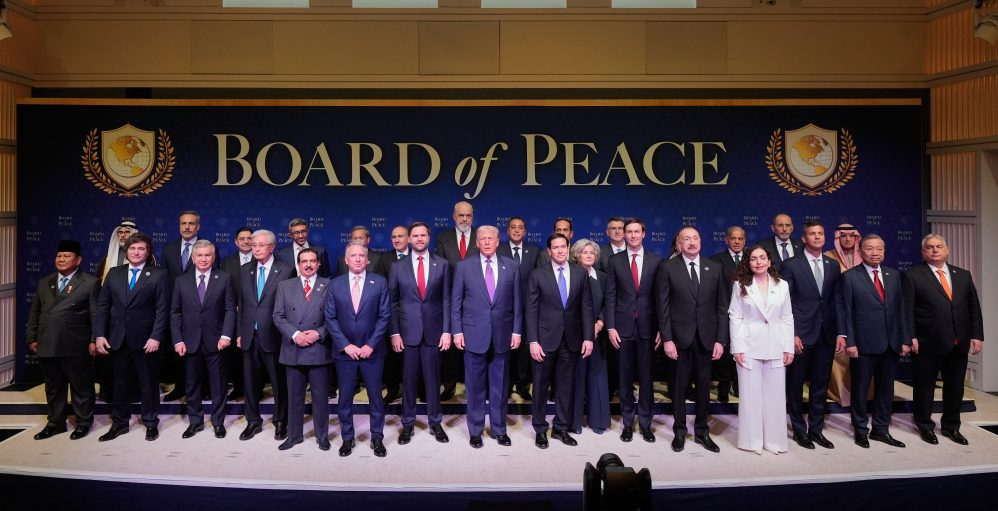

WASHINGTON — During his visit to the nation’s capital for the first Board of Peace summit, Indonesia’s President Prabowo Subianto finalized a mutual trade agreement with President Donald Trump on Thursday.
While specific terms weren’t immediately disclosed, the nations had previously established a framework agreement last summer requiring Southeast Asia’s biggest economy to remove tariffs on most U.S. products, with America imposing a 19% tariff rate on Indonesian imports — matching rates applied to Cambodia and Malaysia.
This week also saw Indonesian and American businesses finalize 11 separate agreements totaling $38.4 billion, covering purchases of U.S. agricultural products including soybeans, corn, cotton and wheat, along with partnerships in critical minerals, oil field recovery operations, and semiconductor joint ventures.
Speaking to business leaders Wednesday at the U.S. Chamber of Commerce, Prabowo stated: “We have negotiated very intensively over the last few months, and I think we have reached solid understandings on many issues.”
The White House described the agreement as a “great deal” in an official statement.
“The Agreement will help both countries to strengthen economic security, promote economic growth, and thereby continuously lead to global prosperity,” according to the White House announcement.
The trade agreement was finalized on the same day Prabowo, who leads the world’s largest Muslim nation, confirmed his commitment at the Board of Peace gathering to deploy 8,000 troops or “more if necessary” for an international stabilization mission in Gaza.
Indonesia became one of the first nations to make a concrete commitment to a key component of Trump’s post-conflict Gaza reconstruction strategy.
During the Board of Peace session, Trump acknowledged Prabowo, saying: “President Prabowo of Indonesia, thank you very much. It’s a big country you have, and you do a great job.”
Prabowo responded with praise for Trump’s leadership: “We are very optimistic with the leadership of President Trump, this vision of real peace will be achieved. There will be problems, but we will prevail.”
Cambodia and Vietnam represent the other two Southeast Asian nations participating in the board, which initially focused on overseeing the Gaza ceasefire but has expanded to address broader international conflicts.
Leaders from both countries traveled to Washington for the opening session. Cambodia has already completed its trade agreement with the United States, while Vietnam has established a preliminary framework deal.
Indonesian businesses committed this week to purchasing 1 million tons of soybeans, 1.6 million tons of corn, and 93,000 tons of cotton from American suppliers. They also promised to buy up to 5 million tons of U.S. wheat through 2030.
The nations also agreed to collaborate on critical minerals, though specific details remain undisclosed.
Washington seeks Indonesia’s cooperation in removing export restrictions on critical minerals, which the Trump administration believes could protect U.S. manufacturers from supply chain interruptions. The administration aims to reduce dependence on China’s control over essential materials used in products ranging from military aircraft to mobile devices.
During the Chamber of Commerce gathering, Prabowo suggested Indonesia could function as a “bridge” and “honest broker” between major powers, seemingly referencing U.S.-China tensions.
At the Board of Peace meeting, Trump praised Vietnam as “incredible as a country and as a force” and told leader To Lam it was “a really great honor to have you.”
Lam’s U.S. visit marks his first since winning reelection as head of Vietnam’s Communist Party leadership last month. Traditionally, China serves as an initial destination to acknowledge ideological connections and Beijing’s position as Vietnam’s primary trade partner. Lam did travel to China in August 2024 before his first U.S. visit during his initial term.
Political observers note that Lam’s decision to visit America before Beijing represents a significant change in diplomatic sequencing. Hanoi characterizes its international approach as independent and balanced among global powers.
Trade discussions between Vietnam and the United States continue following the Trump administration’s implementation of 20% tariffs on Vietnamese exports. The most recent sixth round of negotiations wrapped up in early February.