
Military tensions between the United States and Iran reached new heights Thursday as President Trump delivered an ultimatum to Tehran while a second American aircraft carrier moved closer to Middle Eastern waters.
Speaking to reporters, Trump stated he believes Iran has “10 to 15 days” to negotiate a nuclear agreement, cautioning that without a meaningful arrangement, “bad things happen.”
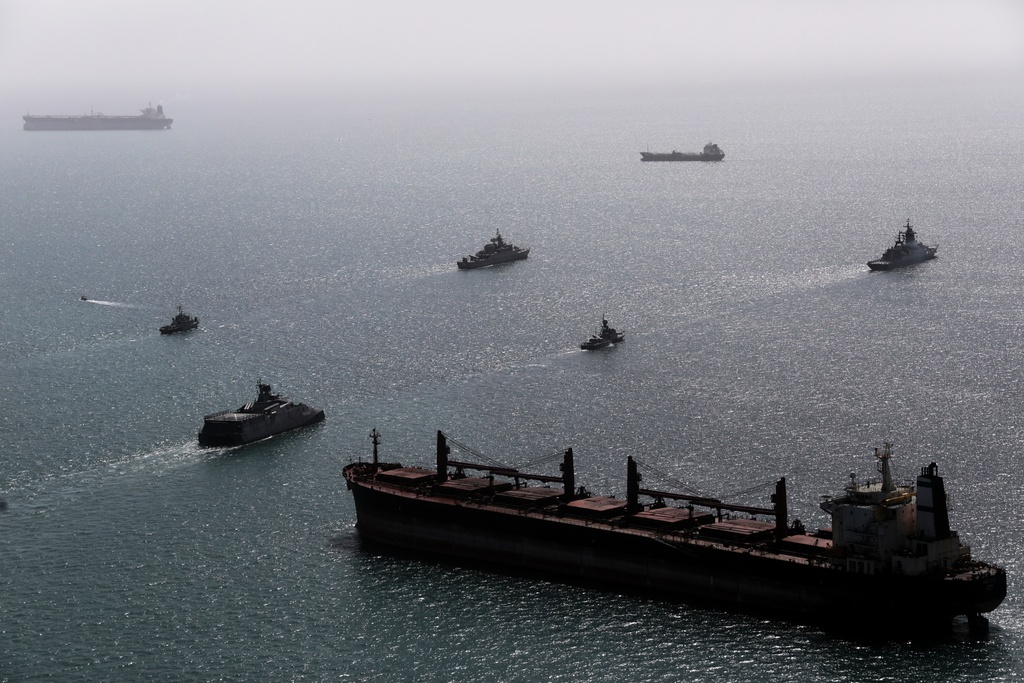
The warning comes as Iran conducted joint military exercises with Russia in the Gulf of Oman and Indian Ocean. Iranian state media reported the drills focused on improving operational coordination and sharing military expertise between the two nations.
Iran’s vulnerability has increased following what officials describe as 12 days of combined Israeli and American attacks on nuclear facilities and military installations last year, coupled with violent suppression of mass demonstrations in January.
Iranian Ambassador to the United Nations Amir Saeid Iravani sent a letter to the Security Council Thursday declaring that while Iran “does not seek tension or war and will not initiate a war,” any American aggression would meet a “decisive and proportionate” response.
“In such circumstances, all bases, facilities, and assets of the hostile force in the region would constitute legitimate targets in the context of Iran’s defensive response,” Iravani wrote.
The USS Gerald R. Ford aircraft carrier was tracked near Morocco’s coast Wednesday, positioning it to potentially enter the Mediterranean Sea. Military analysts estimate the carrier would need over a week to reach Iranian waters.
Recent Iranian military activities included live-fire exercises in the Strait of Hormuz, the critical waterway through which one-fifth of global oil trade passes. The nation also issued rocket-fire warnings to regional pilots, suggesting plans to test anti-ship missiles.
Nuclear negotiations have remained stalled for years, with Iran refusing to address American and Israeli demands to reduce its missile capabilities and cut connections to armed groups. Recent indirect talks in Geneva showed minimal progress, though Iran agreed to prepare written responses to U.S. concerns raised during discussions.
A senior U.S. official, speaking anonymously, revealed that national security leaders met Wednesday to review Iran policy. They received briefings indicating “full forces” needed for potential military operations would be positioned by mid-March.
Polish Prime Minister Donald Tusk issued urgent evacuation orders for Polish citizens in Iran, warning that “within a few, a dozen, or even a few dozen hours, the possibility of evacuation will be out of question.” He provided no additional details.
German military officials confirmed relocating “a mid-two digit number of non-mission critical personnel” from an Iraqi base due to regional circumstances, though some troops remain to maintain operations at the multinational facility in Irbil.
The New York-based Soufan Center noted that 50 additional U.S. combat aircraft, including F-35s, F-22s, and F-16s, were deployed to the region this week, joining hundreds already stationed at Arab Gulf bases.
Israeli Prime Minister Benjamin Netanyahu, who met with Trump last week, declared Israel ready “for any scenario.” He warned that if Iran targets Israel, “they will experience a response they cannot even imagine.”
Netanyahu has consistently advocated for stronger U.S. action against Iran, arguing any agreement should eliminate Tehran’s nuclear program, restrict its missile arsenal, and force separation from militant organizations like Hamas and Hezbollah.
Iran maintains its nuclear program serves peaceful purposes, though U.S. and international officials suspect weapons development intentions. Tehran claims it ceased uranium enrichment following last summer’s strikes, which Trump said “obliterated” Iranian nuclear sites, though actual damage remains unclear as international inspectors have been barred.
A regional government official, speaking confidentially about diplomatic conversations, said he has warned Iranian leaders that Trump’s threats should be taken seriously, pointing to the president’s track record on international issues. The official suggested focusing negotiations on nuclear matters while postponing discussions about missile programs and proxy group support.
Inside Iran, tensions continue rising as mourners conduct ceremonies honoring protesters killed by security forces 40 days ago. Some gatherings have featured anti-government demonstrations despite official warnings.