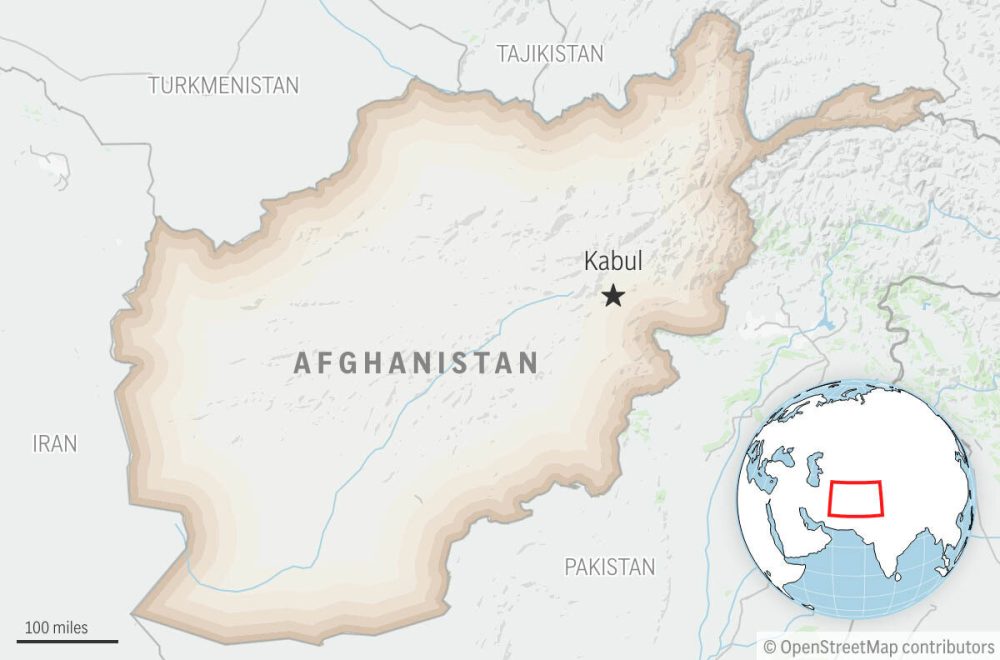
A young Pakistani girl’s incredible cricket talents have captured global attention, but the viral fame came with dangerous consequences for those who helped share her story.
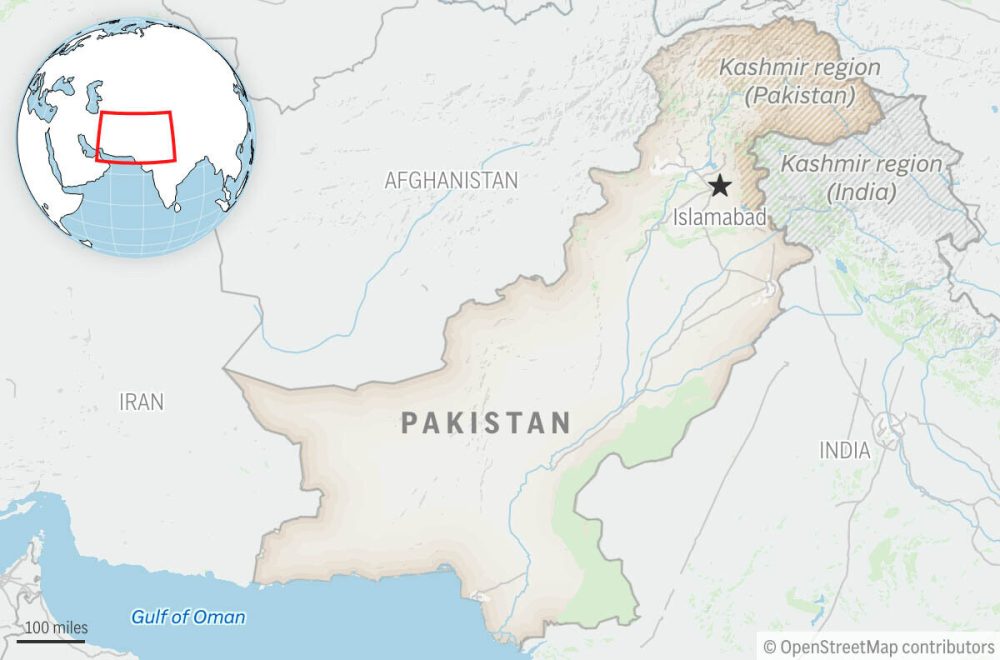
Aina Wazir, just eight years old, has become an international sensation after footage of her remarkable bowling abilities spread across social media platforms. The young athlete comes from Shiga Zalwal Khel, an isolated village in North Waziristan near the Pakistan-Afghanistan border.
The girl’s background adds another layer to her inspiring story – she lost her father, Omar Wazir, who worked as a respected educator before being murdered by militants. Despite facing such tragedy at a young age, Aina has found solace and skill in the sport of cricket.
However, the viral success brought unexpected danger. The cameraman responsible for recording Aina’s impressive cricket demonstration was later taken captive by the Pakistani Taliban (TTP). The militant group eventually freed him, but only after forcing him to issue a public apology.
The incident highlights the complex security challenges faced in the volatile border region, even as young Aina’s story continues to inspire cricket fans and supporters around the world. The talented youngster is now seeking opportunities for formal education alongside her athletic pursuits.
Mexican military forces eliminated the head of the nation’s most dominant criminal organization on Sunday, taking down Nemesio Rubén Oseguera Cervantes, widely known by his alias ‘El Mencho.’ His death marks the end of leadership for the Jalisco New Generation Cartel, which had risen to become the country’s most influential drug trafficking network.
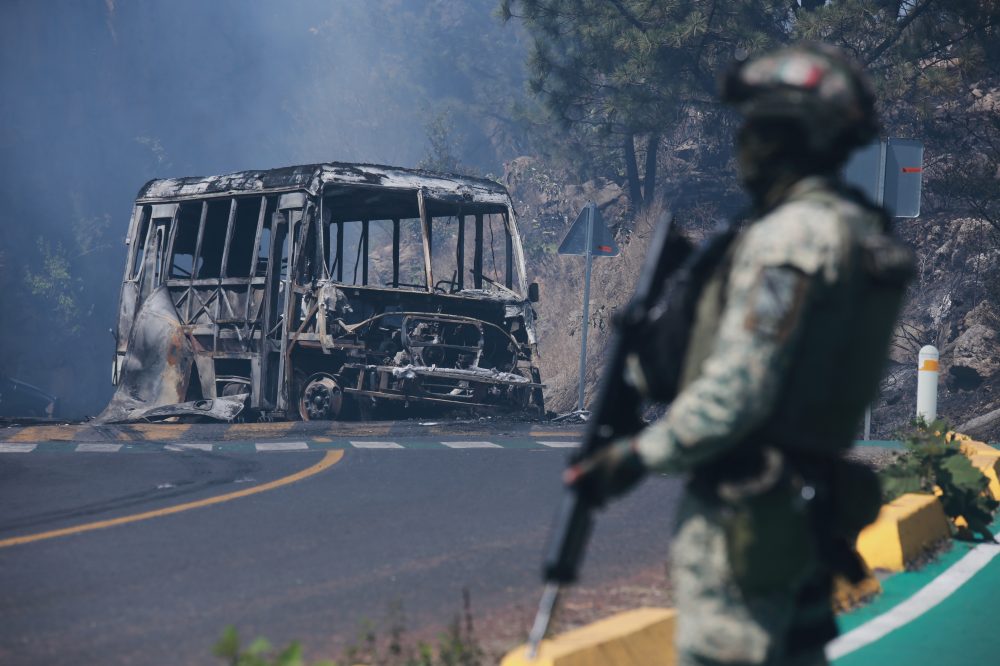
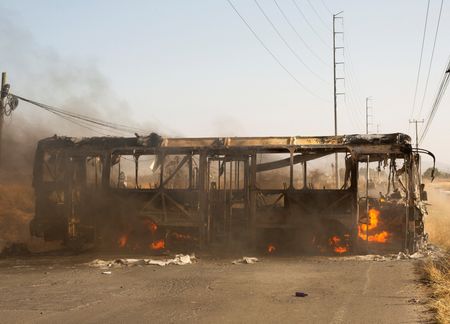
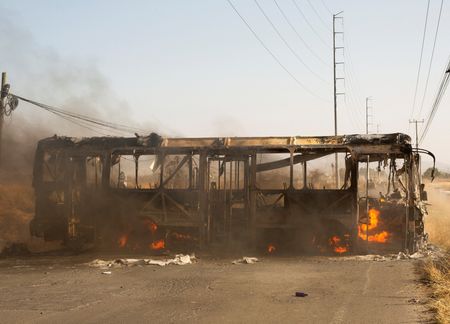
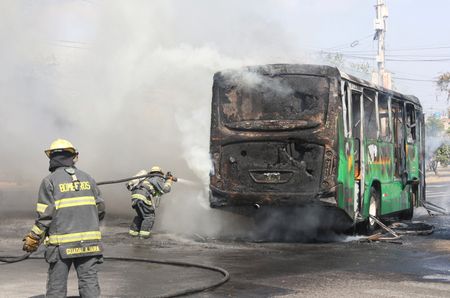
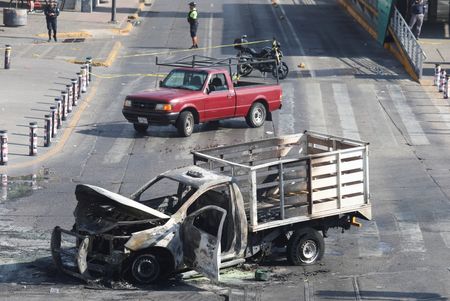
The operation’s aftermath sparked widespread disorder across multiple Mexican states, with reports of automobiles set ablaze in various locations. Military personnel took defensive positions around the General Prosecutor’s offices in the nation’s capital as authorities braced for potential retaliation from cartel members.
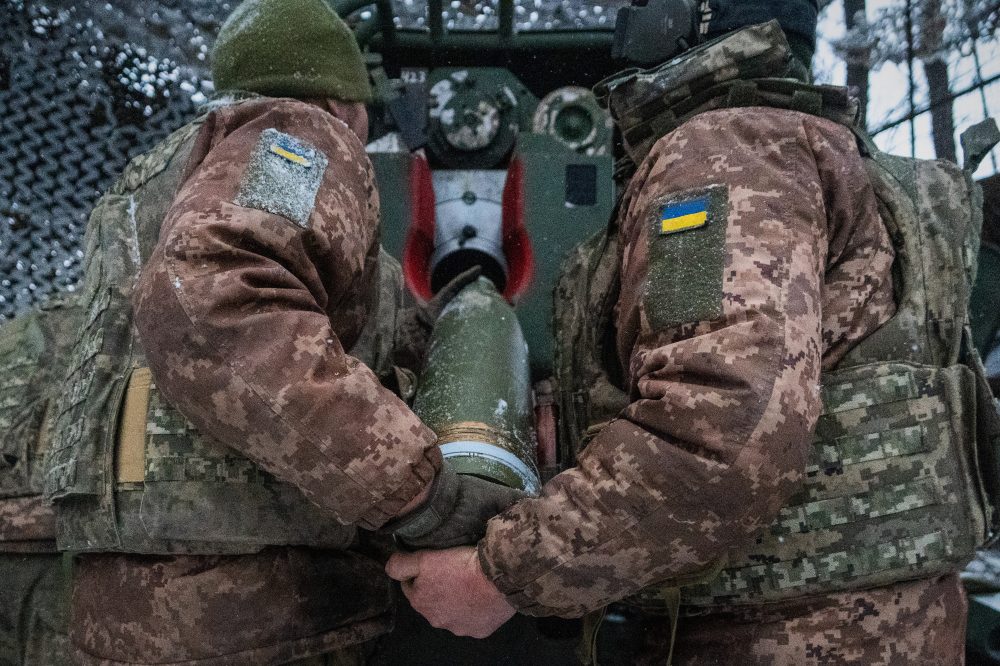
Ukrainian forces conducted a large-scale missile strike early Monday morning that severely damaged power systems and left residents without basic utilities in Russia’s Belgorod region, according to local officials.
Regional Governor Vyacheslav Gladkov reported on Telegram that the strike caused “serious damage to energy infrastructure” and resulted in widespread outages. “In residences, there are interruptions in supplies of electricity, water and heat,” Gladkov stated.
The governor characterized the Monday morning assault as “massive,” impacting both Belgorod city, located 25 miles from the Ukrainian border, and surrounding communities. Officials planned to conduct a full damage assessment once daylight arrived.
The border region has repeatedly been targeted by Ukrainian military operations throughout the ongoing war, which will reach its fourth anniversary later this week.
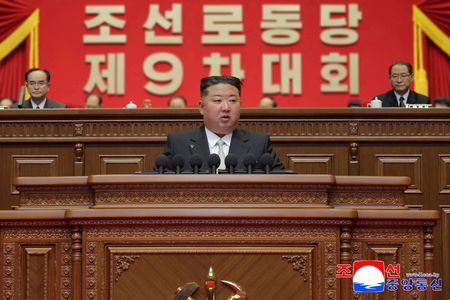
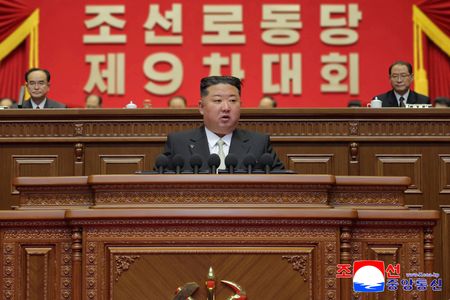
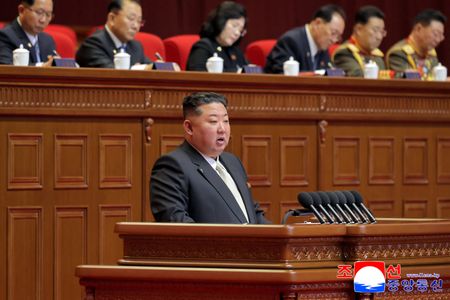
Kim Jong Un will continue leading North Korea’s Workers’ Party after being confirmed for another term as general secretary, according to an announcement from the country’s state-controlled news agency KCNA on Monday.
The decision came during the fourth day of the party’s congress meetings, which took place on Sunday. Along with confirming Kim’s leadership position, party members also selected new Central Committee members and approved changes to party regulations, though KCNA did not reveal specific details about what modifications were made.
The congress meetings represent significant political events in North Korea, where the Workers’ Party maintains complete control over the isolated nation’s government and policy decisions.
A recently established American military intelligence operation assisted Mexican forces in tracking down one of the world’s most wanted drug kingpins during a deadly weekend raid, according to a US defense official speaking with Reuters.
The operation targeted Nemesio Oseguera, better known by his alias ‘El Mencho,’ who led one of Mexico’s most powerful criminal organizations. The Joint Interagency Task Force-Counter Cartel, a multi-agency American unit focused on gathering intelligence about drug trafficking organizations, contributed to the successful Mexican military mission.
This specialized task force began operations quietly in late 2023, with its primary mission being to chart the complex networks of cartel operatives operating on both sides of the border between the United States and Mexico, according to US government sources.
The American defense official, who requested anonymity when discussing the matter, declined to specify what type of intelligence assistance the US task force provided to Mexican authorities. The source emphasized that Mexican forces conducted the actual raid independently.
According to Mexico’s defense ministry, the confrontation occurred in Jalisco state in western Mexico, where gunfire erupted during the operation. Oseguera sustained severe injuries during the firefight and succumbed to his wounds while being transported by air to Mexico City for medical treatment. Mexican officials acknowledged that American authorities had supplied “complementary information” for the mission.
The successful operation triggered widespread retaliation across Mexico, with criminal associates setting vehicles ablaze and establishing roadblocks on major highways in more than six different states throughout the country.
Repair crews have successfully brought electricity back online for the vast majority of residents affected by blackouts following Ukrainian strikes on power facilities in the Russian-occupied sections of Zaporizhzhia region, according to Moscow-appointed officials.
The Russia-installed regional administrator, Yevgeny Balitsky, announced on his Telegram channel that electrical service had been restored to all areas except for 12,000 homes located in one district. He stated that repair teams continued working to bring power back to the remaining affected households.
According to Balitsky’s earlier statements, the southeastern Ukrainian region experienced two separate electrical outages. Repair workers had already managed to restore electricity to half of the territory, while backup generators kept essential infrastructure operating during the blackouts.
Meanwhile, in the Russian-occupied Luhansk region of northeastern Ukraine, a fuel storage tank ignited following a Ukrainian drone strike on an oil facility, according to Leonid Pasechnik, the Moscow-appointed regional administrator.
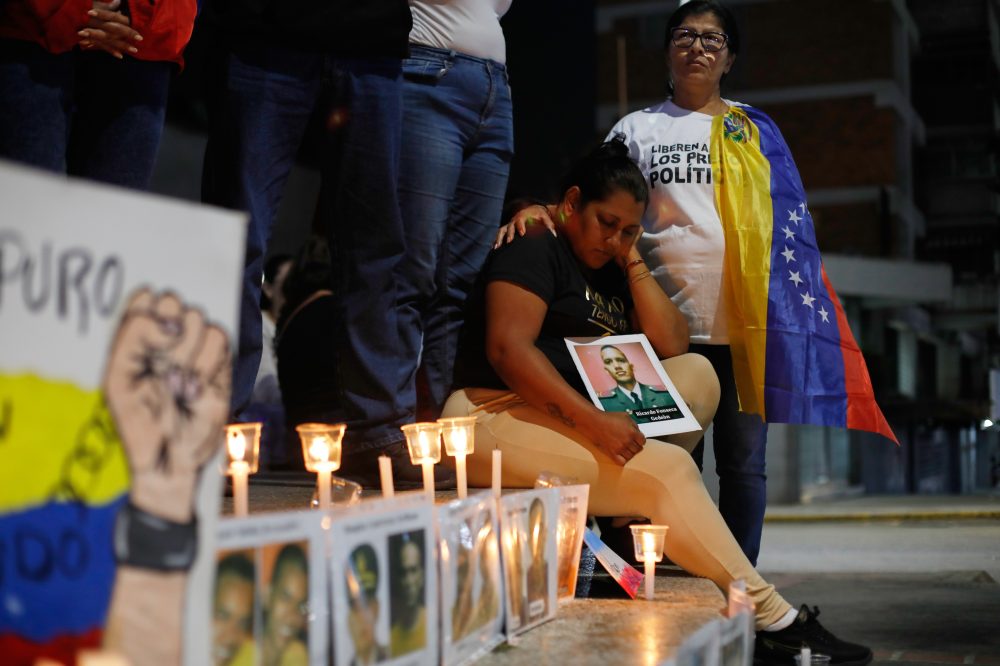
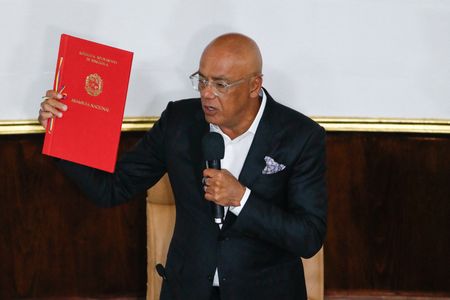
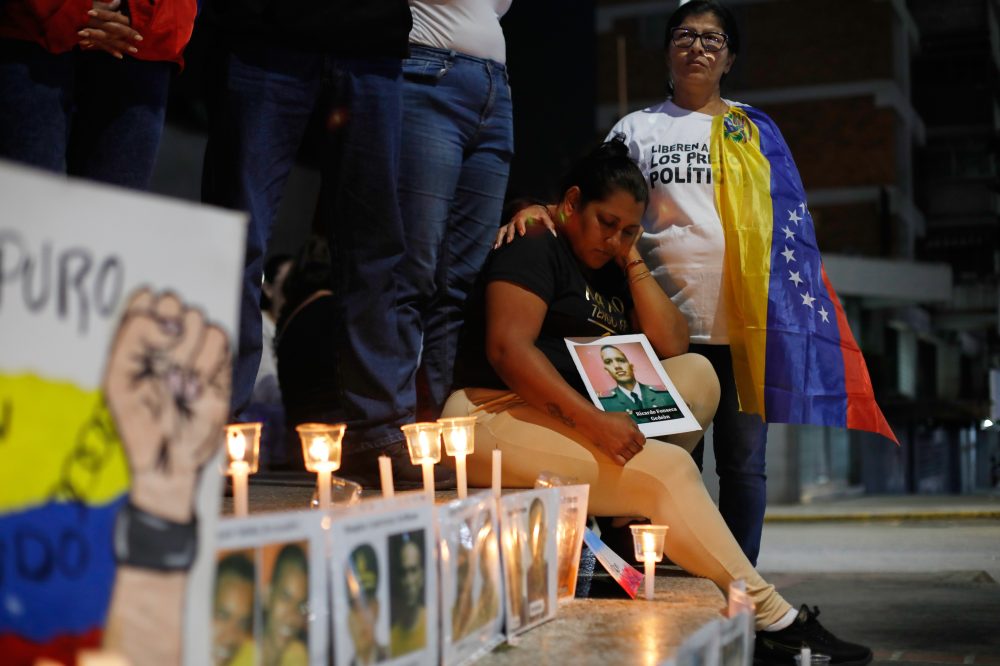
CARACAS, Venezuela (AP) — A Venezuelan prisoners’ rights organization announced on social media Sunday that it has confirmed the freedom of 16 individuals following the enactment of new amnesty legislation targeting those imprisoned on political charges earlier this week.
This confirmed figure stands dramatically lower than numbers announced by National Assembly leader Jorge Rodríguez just one day earlier. Rodríguez stated Saturday that officials were immediately processing 1,557 applications and that hundreds of people imprisoned under political circumstances were already gaining freedom through the new amnesty legislation.
Acting President Delcy Rodríguez put her signature on the amnesty legislation Thursday, marking a significant policy change after last month’s dramatic U.S. military operation in Caracas that resulted in the capture of former President Nicolás Maduro.
The legislation is designed to help opposition figures, political activists, human rights advocates, journalists and numerous others who have spent months or years behind bars.
However, human rights organizations have responded skeptically to the law’s passage, describing it as inadequate since it fails to include imprisoned military officers, among others.
The legislation also does not cover individuals convicted of murder, narcotics trafficking and severe human rights abuses.
Following Maduro’s arrest, Rodríguez’s administration promised to free a substantial number of prisoners as a peace-building measure. Since that time, 464 individuals have gained release while over 600 continue to be held, according to Foro Penal.
These releases have not provided complete freedom but instead represent precautionary measures replacing incarceration. Those freed face restrictions preventing them from media contact, international travel and political participation.
Opposition groups continue pushing for amnesty legislation that would provide complete freedom for political prisoners.
The Venezuelan Red Cross announced Sunday in an official statement that it would accept the government’s request to oversee the prisoner release process under the new amnesty law.
Officials in the United Arab Emirates announced Saturday that they successfully stopped a series of coordinated cyber attacks directed at the country’s essential services and digital networks, according to the state news agency.
The UAE Cybersecurity Council reported that these digital assaults were characterized as terrorist operations aimed at disrupting the nation’s stability and interfering with crucial institutional operations. The country’s cyber defense systems managed to identify and stop these threats before any damage occurred, though officials did not reveal who orchestrated the attacks.
The Cybersecurity Council detailed that the hostile activity “included attempts to infiltrate networks, deploy ransomware and conduct systematic phishing campaigns targeting national platforms.” The organization noted that the attackers utilized artificial intelligence technologies to create advanced attack tools, marking what the council called a significant advancement in terrorist groups’ methods and capabilities.
While authorities confirmed that various sectors were targeted in these digital assaults, they declined to specify which particular systems were involved or when exactly these attempts took place. Officials emphasized that the nation’s cybersecurity measures successfully identified and neutralized all threats before any service interruptions could occur.
As Ramadan begins – a time when charitable donations typically surge throughout the UAE and the broader Muslim community – the council issued warnings for residents to exercise caution while online. They encouraged citizens to follow “safe practices” when using digital services, especially when contributing to charities or providing personal and financial details.
The council additionally offered advice on data protection and fraud prevention, noting that cybercriminals frequently take advantage of seasonal spikes in internet usage. They urged both individuals and businesses to report any questionable cyber activity or suspicious online behavior through official reporting channels.
According to the state news agency, this announcement from the council demonstrates the country’s continued commitment to protecting national digital systems as online threats become increasingly sophisticated.
Sudan’s paramilitary Rapid Support Forces announced Saturday they have successfully seized Al-Tina, a strategic border town adjacent to Chad, representing yet another territorial advancement in their ongoing conflict against Sudan’s national military.
Through a social media announcement, the RSF declared their forces had overtaken the town, which was previously understood to be under control of Joint Forces supporting Sudan’s army. The declaration included video evidence displaying armed personnel celebrating under a sign identifying “District of Al-Tina.”
Sudan’s military has not yet provided an official response to these assertions. Nevertheless, Darfur Governor Minni Minnawi, an army supporter, delivered harsh criticism of the RSF, alleging they deliberately target non-combatants. Minnawi condemned what he characterized as “repeated criminal behavior embodying the worst offenses against the innocent.”
This alleged seizure of Al-Tina occurs while combat between the RSF and government forces continues throughout Sudan, approaching the two-year mark since hostilities began in April 2023. The ongoing warfare has devastated Sudan’s governmental structures and created massive population displacement, with United Nations officials estimating tens of thousands of deaths and approximately 11 million individuals forced to abandon their residences.
Darfur has experienced particularly devastating humanitarian consequences as RSF operations have intensified in recent months. This past Thursday, the United Nations’ independent investigation team examining Sudan determined that the RSF’s October assault on El Fasher, a major Darfur center, demonstrated “the hallmarks of genocide.” El Fasher had represented one of the final significant population centers in the area not completely dominated by RSF before its collapse.
Following that development, the paramilitary organization has escalated activities near Chad’s border, raising alarm about potential regional consequences of the conflict. Late last year, two Chadian military personnel died in border violence incidents, highlighting the expanding regional dangers associated with the warfare.
While opposing forces persist in competing for control over municipalities and supply corridors, extensive areas of Sudan continue experiencing violence, trapping civilians between changing battle zones amid an increasingly catastrophic humanitarian emergency.
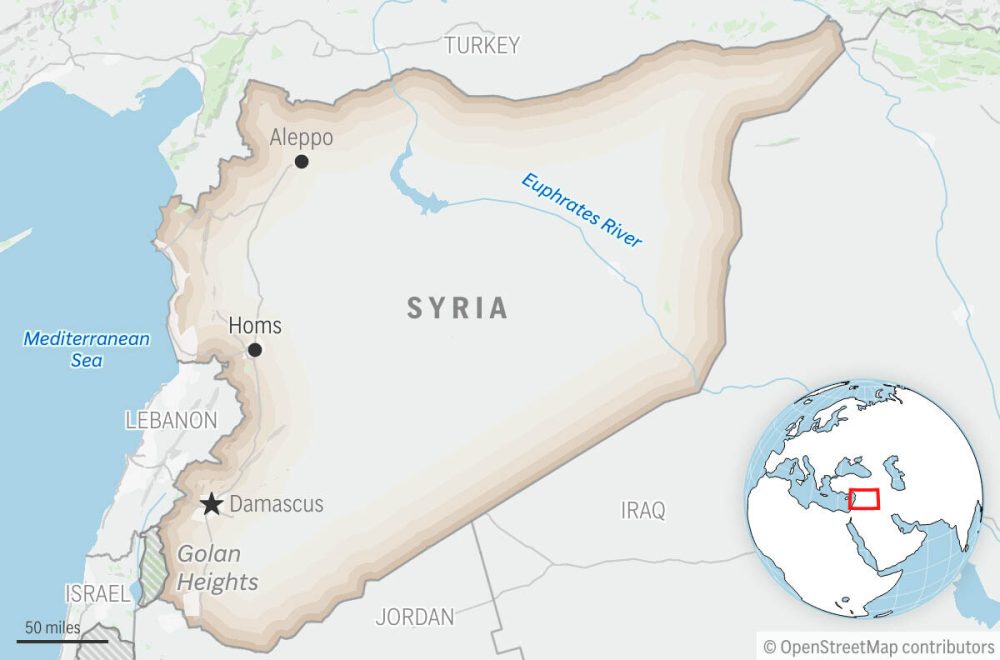
Syrian officials have revealed they successfully disrupted a significant narcotics smuggling scheme through collaborative efforts with Iraqi security forces, highlighting enhanced intelligence sharing between both nations as they battle international drug trafficking organizations amid mounting regional alarm over Captagon distribution.
An official from Syria’s Interior Ministry spoke with The Media Line, explaining that drug enforcement teams conducted what he called a “high-quality” security operation in Homs province, working alongside Iraq’s General Directorate of Narcotics and Psychotropic Substances. The mission successfully prevented a substantial drug shipment from leaving the country.
The official verified that accurate intelligence shared through joint cooperation channels between both nations made the operation possible.
Law enforcement officials revealed the mission led to capturing two people who operated an international network involved in cross-border drug smuggling. They noted the suspects were trying to transport a shipment of narcotic pills for overseas smuggling when authorities intercepted them and seized the drugs.
An unnamed security official informed The Media Line that law enforcement confiscated roughly 400,000 Captagon pills, weighing approximately 65 kilograms, that were being prepared for distribution beyond Syria’s borders. The arrested individuals have been turned over to judicial authorities for continued investigation and appropriate legal action.
This mission is part of ongoing security efforts Syrian authorities have launched in recent months, targeting domestic and international smuggling operations to stop the drug trade that has emerged as a regional security and economic concern.
Iraq’s Interior Ministry confirmed the operation demonstrates an advanced form of direct security collaboration, stating that a specialized team from the General Directorate for Narcotics Affairs traveled to Syrian territory after high-level coordination with Damascus officials.
This advancement shows a change in security cooperation between both nations, moving from intelligence exchange to conducting joint field missions, indicating an evolution in security partnership levels to address international organized crime.
The border between Syria and Iraq serves as a primary pathway for smuggling operations due to extensive desert landscape and challenges in maintaining complete control, leading both countries to improve intelligence coordination and security presence in border regions.
Security and regional assessments show Captagon has emerged as a major security challenge across the Middle East, being manufactured and transported in massive amounts through various pathways, including Iraq, Jordan, and Gulf nations.
Throughout the past year, Syrian-Iraqi security collaboration has included multiple joint missions resulting in confiscating substantial amounts of hashish and Captagon, along with apprehending internationally sought suspects, as part of efforts to eliminate trafficking sources and boost regional security.
Iraqi intelligence services also previously reported breaking up an international network operating within Syrian territory that planned to smuggle significant drug quantities into Iraq in multiple shipments, showing the scope of challenges these networks present.
Specialists suggest the expanding cooperation between Damascus and Baghdad shows growing awareness that fighting narcotics has become part of regional national security, especially considering connections between these networks and other criminal activities like weapons trafficking, money laundering, and funding armed groups.
Border management and stopping narcotics distribution have also become central to relationships among regional nations, with international pressure mounting to strengthen collaborative efforts in this area.
Following political changes in Syria during late 2024, authorities have worked to rebuild security institutions and strengthen border presence to regain complete control and prevent Syrian territory from serving as a smuggling corridor.
Despite ongoing security campaigns, analysts believe eliminating drug networks demands long-term commitment, including economic development in border areas, improved technological surveillance, and expanded regional and international cooperation.
Leaders in both countries stress the importance of additional joint operations, intelligence sharing, and developing monitoring systems to restrict criminal networks’ ability to exploit shared borders.
With continuing security challenges throughout the region, combating drugs appears to be among the most urgent issues that will influence security cooperation among Middle Eastern nations in upcoming years, particularly with growing concerns this trade could become a steady funding source for organized crime.
A former law enforcement officer who became one of Mexico’s most notorious drug kingpins met his end during a military operation on Sunday. Nemesio Oseguera, better known by his alias ‘El Mencho,’ was killed at age 60 after years of evading capture despite carrying a $15 million U.S. bounty.
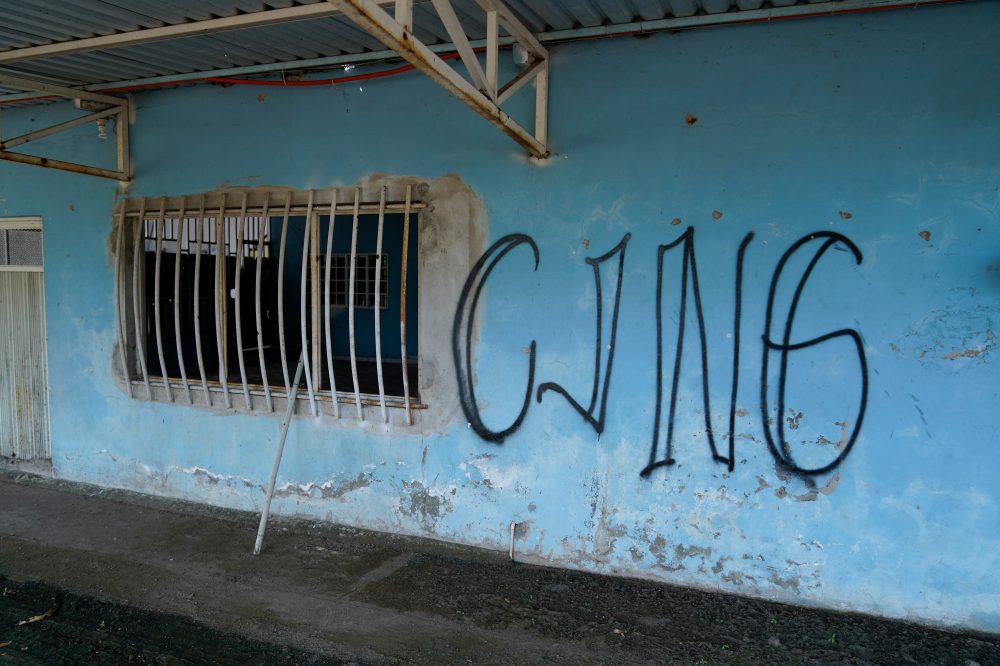
The deceased crime boss had commanded the Jalisco New Generation Cartel (CJNG), a criminal organization that security experts consider among Mexico’s most formidable drug trafficking networks. His organization gained infamy for flooding American streets with deadly substances, particularly fentanyl, contributing to countless overdose fatalities across the United States.
Vanda Felbab-Brown, who studies security issues at the Brookings Institution, emphasized Oseguera’s significance in the criminal underworld. “Apart from the heads of the Sinaloa cartel, ‘El Mencho’ has been the biggest prize for many, many years,” she stated. “And it’s really stunning, just like the heads of the Sinaloa cartel, how long he managed to evade U.S. and Mexican law enforcement gunning for him.”
Following the imprisonment of Joaquin ‘El Chapo’ Guzman, many viewed Oseguera as Mexico’s most powerful crime figure. However, unlike Guzman’s media-friendly persona, El Mencho maintained a low profile, becoming known primarily through profanity-filled audio messages where he issued threats against rivals and government officials.
His criminal enterprise extended far beyond drug trafficking, encompassing fuel theft, human trafficking, and forced labor operations. The cartel’s brutal enforcement methods included beheadings and other violent intimidation tactics designed to terrorize opponents.
One particularly audacious escape attempt occurred in May 2015, when his associates used rocket-propelled grenades to down a military helicopter, allowing their leader to flee advancing Mexican forces. His victims were rarely afforded such dramatic rescues.
The cartel’s violence reached staggering levels during a six-week span in 2015, when they executed 24 police officers in western Mexico as a message to authorities. In 2020, they attempted to assassinate Omar Garcia Harfuch, then Mexico City’s police chief and now the nation’s security minister who helped coordinate Sunday’s fatal operation. Two bodyguards died in that attack, though Harfuch survived.
Oseguera’s journey from poverty to criminal prominence began in 1966 in an impoverished mountain village in Michoacan state, a region where illegal drug cultivation has long competed with legitimate avocado farming. After working in agricultural fields as a youth, he migrated to the United States seeking better opportunities but instead entered the heroin trade.
Following his arrest and imprisonment in America, he was sent back to Mexico, where he initially joined law enforcement before transitioning to the Milenio Cartel, which operated under the Sinaloa Cartel’s umbrella. He climbed the criminal hierarchy, serving as an assassin and enforcer before attempting unsuccessfully to seize control of the Milenio organization.
After that failed takeover, he established his own criminal empire, declaring war against his former Sinaloa allies and creating the CJNG through partnerships with local money laundering networks. The organization took its name from Jalisco state, which includes the major city of Guadalajara.
His cartel combined traditional Sinaloa trafficking methods and community engagement with the extreme violence characteristic of the Zetas Cartel, a group known for military-style operations and diversification into kidnapping and extortion.
Corruption played a crucial role in Oseguera’s success, as he systematically bribed law enforcement and sought political protection throughout Jalisco state. Columbia University organized crime researcher Edgardo Buscaglia noted the cartel’s political influence, explaining that “El Mencho’s Jalisco New Generation Cartel was one of the biggest buyers of politicians and political campaigns, which has given it an enormous social base.”
Buscaglia highlighted how the organization cultivated public support, particularly during the 2020 coronavirus pandemic when cartel members distributed food packages bearing CJNG logos to struggling families during lockdowns. “Compared to the Mexican government,” Buscaglia observed, “he was the least bad option.”
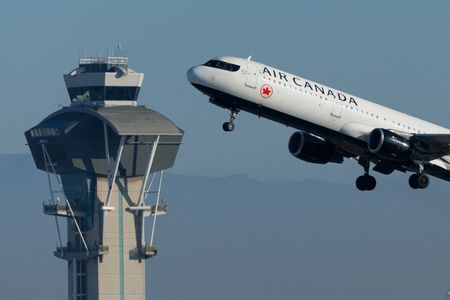
Canada’s flagship airline announced Sunday it has temporarily halted all flights to the popular Mexican resort city of Puerto Vallarta due to continuing security concerns in the region.
The decision by Air Canada comes amid reports that Mexican military forces conducted an operation that reportedly resulted in the death of notorious cartel leader Nemesio Oseguera, who goes by the alias “El Mencho.”
The airline has not specified how long the flight suspension will remain in effect, citing the fluid nature of the security situation in the coastal tourist destination.
A high-ranking Mexican government source has confirmed that notorious drug cartel leader Nemesio Oseguera, better known by his alias ‘El Mencho,’ was fatally shot during a military raid, according to Reuters reports from Sunday.
Oseguera, who previously worked in law enforcement, commanded the influential Jalisco New Generation Cartel (CJNG), a criminal organization that derives its name from the western Mexican state where the country’s second-largest city, Guadalajara, is located.
Within a relatively brief timespan, the CJNG expanded into a massive international criminal network that competed directly with the Sinaloa Cartel, previously led by infamous drug trafficker Joaquin ‘El Chapo’ Guzman, who is currently serving time in an American federal prison.
Reports of Oseguera’s death emerged after federal security forces conducted an operation in Tapalpa, a municipality within Jalisco state, as confirmed by Governor Pablo Lemus Navarro in a social media post.
Following the military action, numerous vehicles were torched across Jalisco and neighboring states, according to news reports and government officials.
Michoacan state Governor Alfredo Ramirez Bedolla posted on social media that his office had been notified of highway blockades occurring as a consequence of the Jalisco operation.
The foreign minister of Oman has verified that diplomatic discussions between the United States and Iran are scheduled to take place in Geneva this Thursday, according to reports from Cairo on February 22nd.
The Omani foreign minister, representing a nation that has served as an intermediary in negotiations between Washington and Tehran, indicated the discussions will proceed “with a positive push to go the extra mile towards finalising the deal.”
Oman has previously played a crucial role in facilitating dialogue between the two countries during diplomatic efforts.
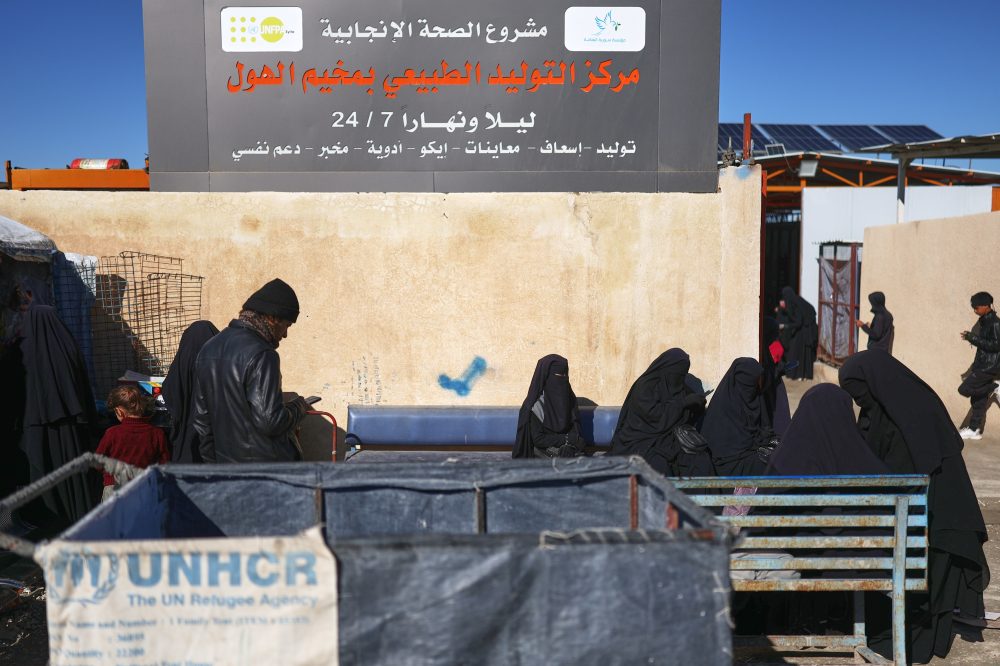
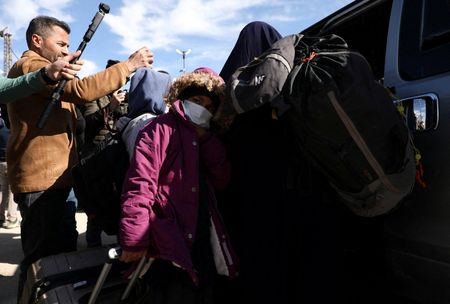
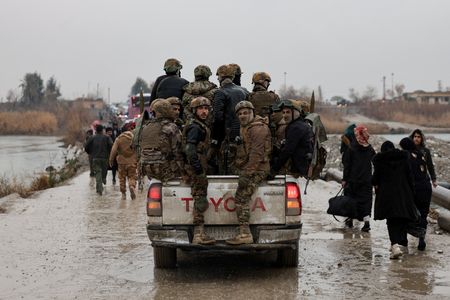
Syrian authorities announced Sunday that a sprawling detention facility once holding tens of thousands of women and children connected to the Islamic State has been completely evacuated.
The last group of residents departed the al-Hol camp Sunday morning, according to Fadi al-Qassem, who represents Syria’s Foreign Ministry in overseeing the facility’s operations.
Over recent weeks, hundreds of people from the isolated northeastern Syrian facility have been relocated to the Akhtarin detention center in Aleppo province, while others have been sent back to Iraq.
Authorities explained their decision to close al-Hol stemmed from its isolated desert position, which placed it far from essential services and dangerously close to regions where government control remains incomplete.
The United Nations refugee agency confirmed it facilitated the return of 191 Iraqi nationals from al-Hol to Iraq this past Thursday.
The Syrian Observatory for Human Rights, a monitoring organization based in the United Kingdom, also documented that some residents “left the camp individually, without waiting for the organized convoys.”
Following ISIS’s collapse in 2019, approximately 73,000 people resided at al-Hol, primarily Syrian and Iraqi nationals, though thousands came from other nations. The population consisted mainly of women, including current and former wives of ISIS fighters, along with their children.
The population gradually decreased as various nations retrieved their citizens, dropping to roughly 24,000 people by last month.
While residents weren’t officially classified as inmates and most faced no criminal charges, they remained in effective imprisonment at the heavily secured compound for years.
Syrian government troops seized control of al-Hol last month during a weeks-long military campaign against the Kurdish-led Syrian Democratic Forces, which had operated the border facility for ten years. The conflict ended with a ceasefire agreement.
Many families reportedly fled the camp during and after the military operations.
Questions remain about the future of the smaller Roj camp in northeastern Syria, which stays under SDF administration. That facility primarily houses foreign nationals whose home countries have generally declined repatriation requests.
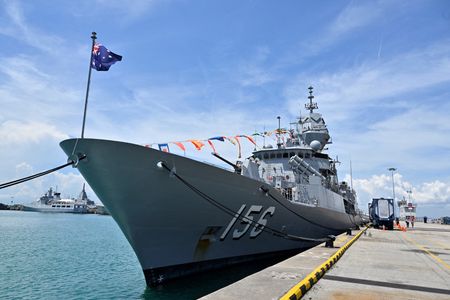
Syrian officials rejected a group of 34 Australian women and children on February 16 after they departed Roj camp and traveled toward Damascus to catch a flight to Australia. Australian officials subsequently stated they would not accept the families’ return.
A Syrian government representative, speaking anonymously due to lack of authorization for public statements, explained Sunday that the situation resulted from “the lack of prior coordination with the Syrian government” by the SDF and the families before attempting their Damascus journey.
The official noted that “whether they will be allowed (to return) will depend on the Australian government.”
MEXICO CITY — Mexican military forces have eliminated the head of one of the country’s most dangerous criminal organizations during a weekend operation, according to a federal government source.
Nemesio Rubén Oseguera Cervantes, widely known by his alias ‘El Mencho,’ was killed Sunday during military action in Jalisco state in western Mexico, confirmed an official who spoke on condition of anonymity due to lack of authorization for public statements.
The operation triggered violent responses across multiple Mexican states, with cartel members establishing burning vehicle barricades on roadways for several hours. These disruptive tactics represent standard cartel strategy for impeding government military actions.
Social media footage captured thick smoke clouds rising above Puerto Vallarta, a prominent Jalisco city, while other videos showed people running in fear through the state capital’s airport terminal.
United States authorities had placed a bounty of up to $15 million on El Mencho’s capture. His criminal organization ranks among Mexico’s most influential and rapidly expanding illegal enterprises.
The Trump administration classified the group as a foreign terrorist organization this past February.
This particular cartel has distinguished itself through exceptionally violent military confrontations, including helicopter attacks, and has pioneered the use of drone-delivered explosives and landmine installations. The organization executed a brazen 2020 assassination attempt in central Mexico City, using grenades and high-caliber weapons against the capital’s police chief, who currently serves as federal security director.
Drug enforcement officials consider this criminal network equivalent in strength to the notorious Sinaloa cartel, maintaining operations throughout all American states where it moves massive drug quantities. The organization serves as a primary cocaine supplier to American markets and generates billions through fentanyl and methamphetamine manufacturing, similar to the Sinaloa organization.
A notorious Mexican cartel leader known as ‘El Mencho’ has reportedly been killed during a federal military operation, according to a government official with knowledge of the mission who spoke to Reuters on Sunday.
The deadly confrontation took place during a federal security mission in Tapalpa, a city located in Jalisco state, based on information shared by Governor Pablo Lemus Navarro through his social media account.
Following the military action, numerous vehicles were torched across Jalisco and neighboring states, as reported by local media and government officials.
The operation’s aftermath also triggered highway blockades in the adjacent state of Michoacan, according to Governor Alfredo Ramirez Bedolla, who posted on social media that his office had been notified of the road closures stemming from the Jalisco operation.
Mexican military forces launched a federal security operation Sunday targeting one of the country’s most wanted drug kingpins, Nemesio Oseguera, better known by his alias ‘El Mencho,’ according to reports from Mexican media outlets Reforma and Milenio.
The operation took place in Tapalpa, a city located in Jalisco state, as confirmed by Governor Pablo Lemus Navarro in a social media post on X.
The military action triggered a violent response across the region, with numerous vehicles being torched throughout Jalisco and neighboring states, according to reports from media organizations and government officials.
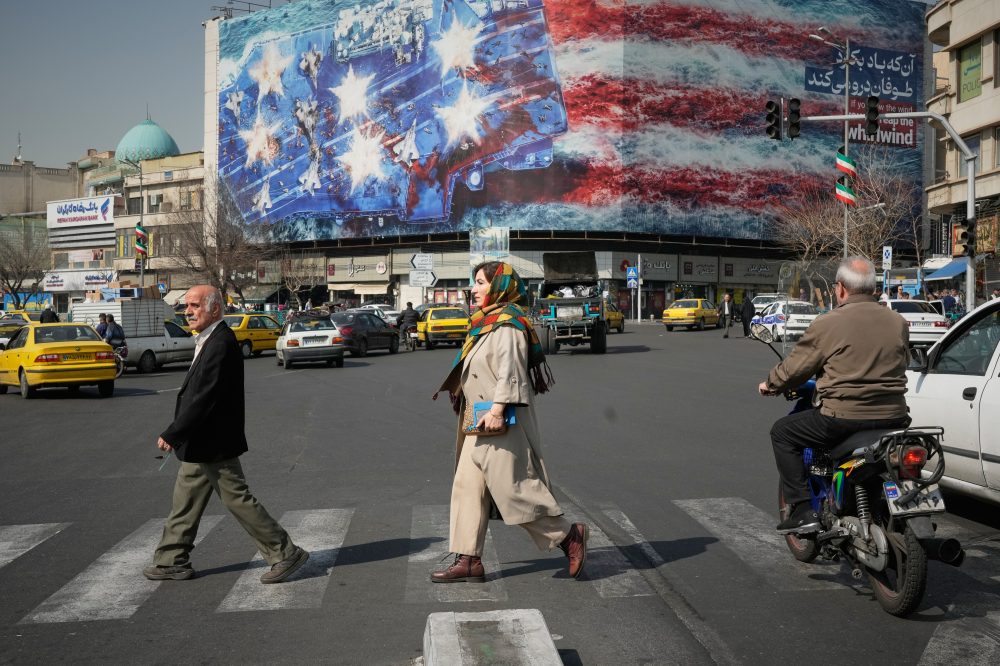
Student demonstrations continued across Iranian universities for the second straight day on Sunday, with violent confrontations breaking out between protesters and security forces, according to reports from local media outlets and social media platforms.
The ongoing campus unrest occurs as Iran works toward finalizing a nuclear agreement with the United States, even as American military forces increase their presence in the region.
These latest campus disturbances come on the heels of widespread anti-government protests that swept the country last month, resulting in thousands of deaths in what became Iran’s most severe domestic crisis since the Islamic Revolution of 1979.
Iranian state television broadcast footage showing what officials described as individuals “pretending to be students” who allegedly attacked government supporters on Tehran campuses. These pro-government students had been participating in counter-demonstrations to denounce January’s unrest. The footage showed the alleged attackers hurling stones and injuring students.
Additional protests occurred at educational institutions in Mashhad, located in Iran’s northeastern region, based on video evidence released by HRANA, a human rights organization based in the United States. The group reported that security force intervention during these demonstrations resulted in student injuries.
Video footage from Saturday allegedly captured large groups of demonstrators at Tehran’s Sharif University of Technology chanting against Supreme Leader Ayatollah Ali Khamenei, whom they labeled a “murderous leader.” The protesters also voiced support for Reza Pahlavi, the exiled heir to Iran’s former monarchy, calling for his return as ruler.
The current wave of protests began in December, initially focusing on economic difficulties before evolving into broader political opposition. Authorities responded with the harshest crackdown on dissent witnessed since the 1979 Islamic Revolution.
Cars were set ablaze across Mexico’s Jalisco state on Sunday after federal authorities carried out a security operation, according to Governor Pablo Lemus Navarro.
The governor announced the incidents on social media Sunday afternoon, stating that the federal operation took place in Tapalpa, a city within Jalisco, and resulted in confrontations in the region.
Navarro did not identify which organizations were part of the conflicts and offered no additional details about the nature of the federal operation.
News organizations in the area reported that cars were seen burning in Guadalajara, the state’s largest city.
A classified weapons agreement valued at 500 million euros ($589 million) between Iran and Russia has come to light, according to a Financial Times investigation published Sunday.
The confidential contract, finalized in Moscow this past December, outlines Russia’s commitment to supply 500 portable “Verba” launching systems along with 2,500 “9M336” missiles spanning three years, the Financial Times reported. The publication cited confidential Russian documentation and multiple sources with knowledge of the arrangement.
Reuters has not been able to independently confirm these details.
The weapons shipments are planned to occur in three separate deliveries between 2027 and 2029, according to the Financial Times report.
Negotiations took place between Rosoboronexport, Russia’s government-owned arms export company, and Iran’s Ministry of Defense and Armed Forces Logistics representative stationed in Moscow, the Financial Times stated.
Iran initially submitted a formal request for these weapon systems in July of last year, based on contractual documents reviewed by the Financial Times. This request came after U.S. military forces targeted Iran’s three primary nuclear installations in June, during Iran’s involvement in Israel’s military operations against the country.
President Donald Trump announced that the strikes successfully eliminated Iran’s major nuclear infrastructure. A preliminary U.S. intelligence evaluation, however, indicated that while the attacks caused damage, they did not completely eliminate Iran’s nuclear program and only delayed it by several months.
Tehran officials have consistently maintained that Iran has bounced back from the wartime damage and claims its military capabilities have reached unprecedented levels.
Iran and Russia maintain a strategic alliance agreement, though it lacks provisions for mutual military defense. This month, a Russian naval vessel participated in joint exercises with Iran’s navy in the Gulf of Oman, Russia’s Defense Ministry reported.
Fresh waves of anti-government demonstrations have erupted across Iranian universities as students gather to honor those who died in previous nationwide protests, according to witness accounts emerging Sunday from the Middle East.
State media in Iran confirmed that students demonstrated at six universities total – five in the capital city of Tehran and one in Mashhad – during weekend protests that began Saturday. These demonstrations coincided with traditional 40-day mourning ceremonies for victims killed during anti-government rallies in January.
Iranian officials have remained silent regarding these latest campus demonstrations.
The memorial services have been taking place throughout the past week, following Iranian customs that mark a 40-day period of mourning. Activist groups monitoring the situation believe most of the deaths occurred around January 8th and 9th.
Citizens throughout Iran continue to grapple with trauma, sorrow and anxiety following the brutal suppression of earlier demonstrations – marking the most lethal government response during 86-year-old Supreme Leader Ali Khamenei’s tenure. Death tolls reached into the thousands while tens of thousands faced detention.
While the harsh crackdown succeeded in quelling major demonstrations, smaller acts of resistance persist, as evidenced by protester accounts and social media footage.
This pattern of memorial-turned-protest echoes events from Iran’s 1979 Islamic Revolution, when 40-day commemorations for killed demonstrators frequently transformed into new rallies that authorities attempted to suppress, creating cycles of violence and remembrance.
Social media reports from the weekend suggest security personnel worked to prevent citizens from attending certain memorial gatherings.
These developments unfold as Iran prepares for possible American military strikes, with the Trump administration demanding Iranian concessions on nuclear matters and other disputes. U.S. military buildup in the Middle East has reached levels not seen in decades.
The U.S.-based Human Rights Activists News Agency reports that at least 7,015 people died during the previous protest wave and subsequent crackdown, including 214 government personnel. This organization has demonstrated accuracy in previous casualty counts and maintains connections with Iranian activists to verify deaths.
Their death count continues climbing as the organization cross-references information despite communication difficulties within Iran.
Iranian authorities provided their sole official casualty figure on January 21st, claiming 3,117 deaths. The country’s theocratic government has historically minimized or omitted fatality reports from civil unrest.
Independent verification of death tolls remains impossible for news organizations due to Iranian restrictions on internet access and international communications.
President Donald Trump indicated Friday that targeted military action against Iran remains possible, even as Iranian Foreign Minister Abbas Araghchi stated Tehran anticipates presenting a proposed agreement within days following indirect nuclear negotiations with Washington.
The positioning of additional American naval vessels and aircraft, including the USS Gerald R. Ford carrier near the Mediterranean entrance, doesn’t ensure military action but strengthens Trump’s capacity to authorize strikes if desired.
LONDON (AP) — Celebrity attendees gathered in London on Sunday evening for the prestigious British Academy Film Awards ceremony, an important precursor to the Academy Awards scheduled for next month.
The ceremony, formally known as the EE BAFTA Film Awards, features winners selected by thousands of British academy members comprised of film industry professionals. However, one category stands apart from the rest — the Rising Star Award — which allows the general public to vote from a predetermined list of candidates.
Those honored during the ceremony will receive the distinctive bronze mask trophy that has become synonymous with BAFTA recognition.
The event showcased numerous photo opportunities as celebrities walked the red carpet before the awards presentation.
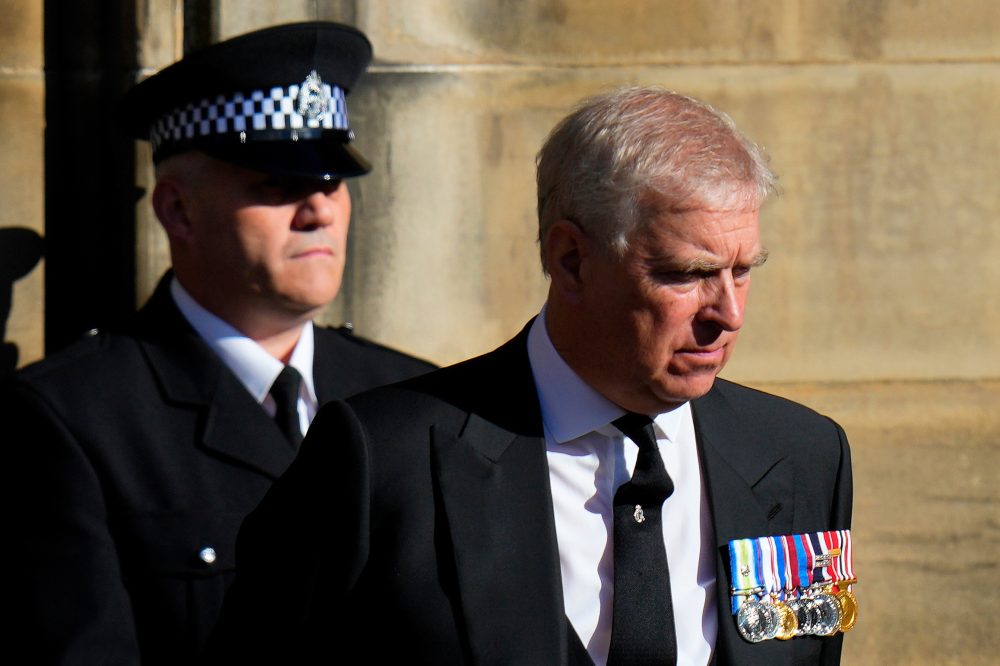
British security officers assigned to protect Prince Andrew received orders to work security at a dinner party hosted by Jeffrey Epstein at his New York residence in December 2010, according to new media reports published Sunday.
The Sunday Times broke the story after reviewing email communications from the Epstein document files, which appear to show detailed plans for Prince Andrew’s visit to stay with the disgraced financier, accompanied by two Metropolitan Police protection officers from London.
An email sent one day prior to the gathering, titled “Security for party,” revealed that a staff member notified Epstein that both officers had received “instructions on the door.”
These revelations surface just days after authorities announced Friday they were reaching out to former security personnel who previously worked for Prince Andrew, encouraging anyone with information about sexual offense allegations connected to Epstein to contact police.
Law enforcement officials stated they have not discovered any misconduct by the protection officers during their current investigation. When asked about Sunday’s news reports, the Metropolitan Police declined to provide additional statements.
Prince Andrew faced arrest Thursday on charges of suspected misconduct in public office as part of a different investigation, spending over 10 hours in custody with Thames Valley Police before being released pending further investigation.
The arrest stems from accusations that he transmitted classified government materials to Epstein during his tenure as a trade representative. Thames Valley Police officers continued searching his previous Windsor estate on Sunday as part of their ongoing probe.
Prince Andrew has consistently maintained his innocence regarding any improper conduct involving Epstein, though he has expressed regret about their association.
The royal reached a civil settlement in 2022 with Virginia Giuffre, who had filed a lawsuit in American courts alleging he sexually assaulted her as a minor at locations belonging to Epstein and his associates. Prince Andrew has maintained he never encountered Giuffre.
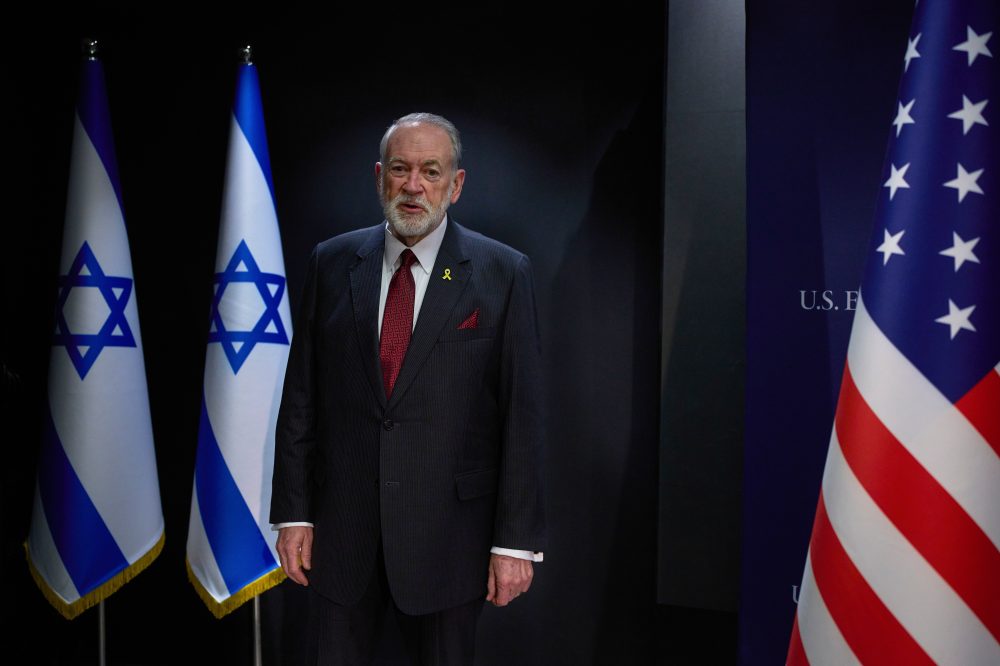
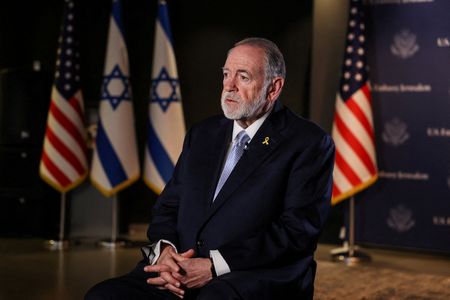
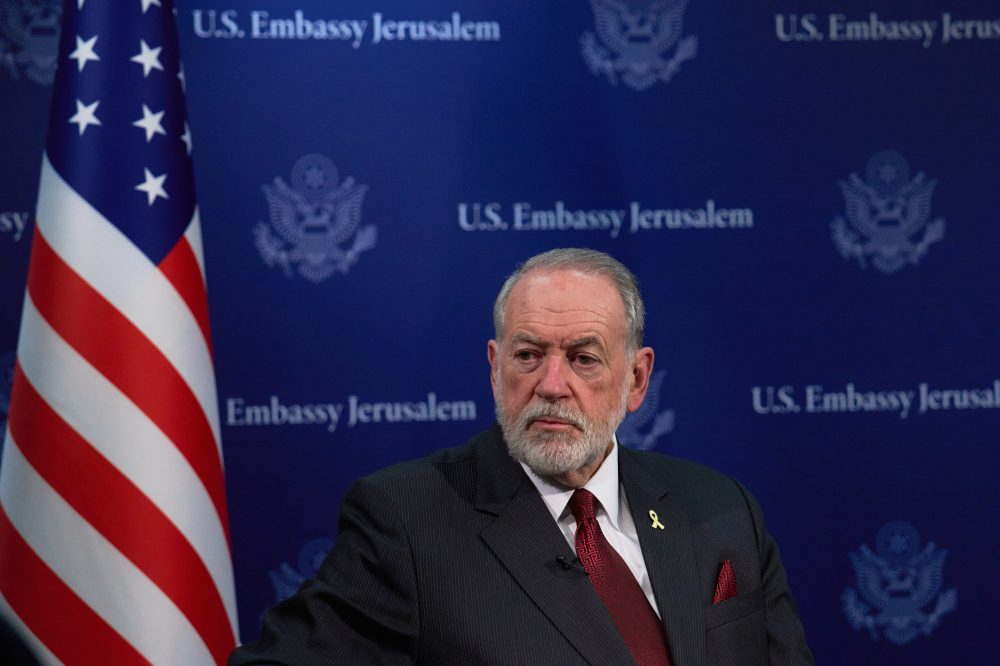
Diplomatic tensions escalated Sunday following controversial statements by US Ambassador to Israel Mike Huckabee regarding Israeli territorial rights across the Middle East, prompting condemnation from numerous Arab and Muslim nations while American officials insist the remarks were misinterpreted.
During a Friday interview with conservative host Tucker Carlson, Huckabee addressed biblical references to land promised to Abraham’s descendants, which Carlson described as encompassing much of today’s Middle East, including portions of Jordan, Syria, Iraq and Lebanon. When Carlson cited Genesis Chapter 15 and questioned whether Israel possessed rights to this territory, Huckabee replied: “It would be fine if they took it all.”
US Embassy officials responded Sunday, stating that Huckabee’s remarks were mischaracterized and emphasized that American policy toward Israel remains unchanged.
The ambassador provided additional context during the interview, explaining: “They’re not asking to go back and take all of that, but they are asking to at least take the land that they now occupy, they now live in, they now own legitimately, and it is a safe haven for them.” Huckabee clarified that Israel has no intentions of conquering Jordan, Lebanon, Syria, or Iraq, but seeks to safeguard its citizens.
Fifteen countries and multiple Arab organizations issued a unified condemnation Sunday, labeling Huckabee’s statements as “dangerous and inflammatory” and warning they threaten regional peace.
“These statements directly contradict the vision put forward by U.S. President Donald J. Trump … based on containing escalation and creating a political horizon for a comprehensive settlement that ensures the Palestinian people have their own independent state,” the coalition statement declared.
The signatories included Egypt, Saudi Arabia, Jordan, Bahrain, United Arab Emirates, Qatar, Indonesia, Pakistan, Turkey, Syria, Kuwait, Lebanon, Oman, the Palestinian territories and various Arab governing organizations.
Israel gained control of the West Bank and eastern Jerusalem from Jordan, along with Gaza and the Sinai Peninsula from Egypt, and the Golan Heights from Syria during the 1967 Six-Day War. Following the 1973 conflict, Israel returned the Sinai to Egypt as part of their peace agreement and later withdrew unilaterally from Gaza in 2005. Since the Hamas ceasefire began in October after two years of conflict, Israeli forces have maintained control over most of Gaza’s eastern regions.
Recent months have seen Israel strengthen its grip on the occupied West Bank through expanded settlement construction, legitimizing unauthorized outposts, and implementing major administrative policy shifts. President Trump has stated his opposition to Israeli annexation of the West Bank and promised to prevent such actions.
An evangelical Christian with strong pro-Israel views, Huckabee has consistently supported West Bank settlements and rejected the concept of a two-state solution between Israelis and Palestinians.
Carlson, who has criticized American support for Israel during the Gaza conflict, has faced scrutiny for promoting far-right ideologies, including white supremacist replacement theory claiming minorities are displacing white Americans.
Regional anxiety remains elevated as Israel braces for potential Iranian retaliation. Iran has previously threatened to strike both Israeli and American targets throughout the Middle East if attacked by the United States.
Trump indicated Friday that limited military action against Iran could occur, while Iranian diplomats suggested a proposed agreement might emerge within days from ongoing nuclear negotiations with Washington.
The deployment of additional American naval vessels and aircraft to the region, including positioning the USS Gerald R. Ford aircraft carrier near the Mediterranean entrance, doesn’t guarantee military action but enhances Trump’s strike capabilities.
Israeli Prime Minister Netanyahu cautioned last week that Iranian aggression against Israel would provoke “a response that they cannot even imagine.”
Last year’s Israeli attack on Iran during indirect US-Iranian negotiations triggered a 12-day conflict, during which the United States participated by targeting Iranian nuclear facilities.
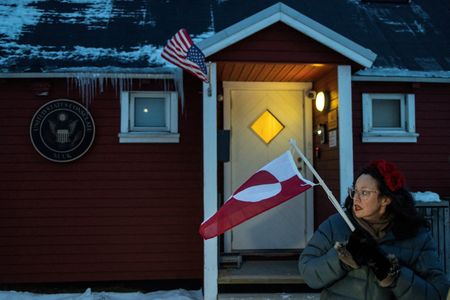
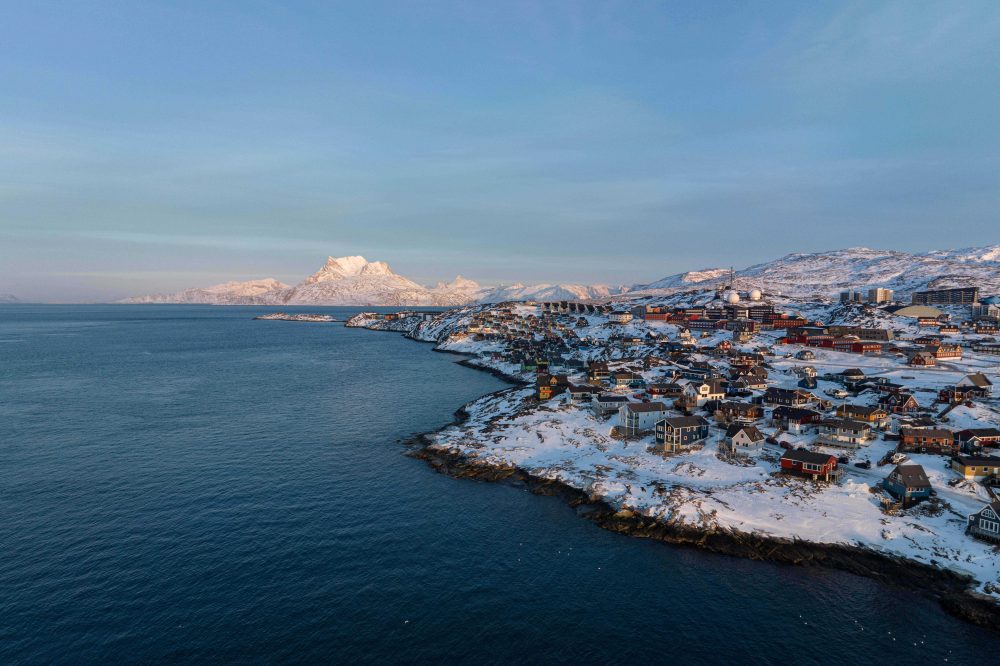
The leader of Greenland has turned down President Donald Trump’s proposal to dispatch a U.S. hospital vessel to the Arctic territory, delivering the rejection through social media on Sunday.
Prime Minister Jens-Frederik Nielsen dismissed the offer from Trump, who has made numerous public statements about his desire to acquire Greenland from Denmark’s control.
On Saturday, Trump announced through his social media channels that he was collaborating with Louisiana Governor Jeff Landry, who serves as his special representative to Greenland, to deploy a medical ship to the region.
Nielsen responded to the proposal on his Facebook page, stating: “President Trump’s idea of sending an American hospital ship here to Greenland has been noted. But we have a public healthcare system where treatment is free for citizens. It is a deliberate choice.”
While declining the hospital ship offer, Nielsen indicated that Greenland welcomes continued discussions and partnership opportunities, including with the United States.
However, he criticized Trump’s communication approach, saying: “But talk to us instead of just making more or less random outbursts on social media.”
The exchange occurs as the United States, Denmark, and Greenland initiated formal diplomatic discussions in late January aimed at addressing the ongoing dispute between the nations. The talks follow several months of rising tensions within the NATO military alliance stemming from Trump’s public threats regarding the Arctic region.
Trump’s hospital ship announcement came just hours after Denmark’s Joint Arctic Command reported conducting an emergency medical evacuation of a crew member from a U.S. submarine operating in Greenlandic waters, positioned seven nautical miles from Nuuk, Greenland’s capital city. Officials have not confirmed whether Trump’s social media post was related to this medical emergency.
President Donald Trump is questioning Iran’s unwillingness to surrender its nuclear ambitions despite Washington’s expanding military presence in the Middle East, according to his special envoy Steve Witkoff.
Speaking on Fox News Saturday, Witkoff explained Trump’s mindset regarding the ongoing standoff. “I don’t want to use the word ‘frustrated,’ because he understands he has plenty of alternatives, but he’s curious as to why they haven’t… I don’t want to use the word ‘capitulated,’ but why they haven’t capitulated,” Witkoff stated.
The envoy questioned Iran’s resistance to diplomatic overtures given the mounting pressure. “Why, under this pressure, with the amount of seapower and naval power over there, why haven’t they come to us and said, ‘We profess we don’t want a weapon, so here’s what we’re prepared to do’? And yet it’s sort of hard to get them to that place,” he said.
The president has directed a massive deployment of military assets to the Middle East while preparing for possible extended airstrikes against Iran. Iranian officials have warned they will target American bases if attacked.
Washington is demanding Tehran abandon its stockpile of enriched uranium, which American officials claim could be weaponized, while also ending support for regional militant groups and accepting restrictions on its missile capabilities.
Iran maintains its nuclear activities serve peaceful purposes but has indicated willingness to accept certain limitations in exchange for sanctions relief. However, Tehran refuses to link nuclear discussions to other issues like missiles or proxy groups.
Witkoff highlighted the urgency of Iran’s nuclear advancement, noting the country’s uranium enrichment levels. “They’ve been enriching well beyond the number that you need for civil nuclear. It’s up to 60% (fissile purity),” he explained. “They’re probably a week away from having industrial, industrial-grade bomb-making material, and that’s really dangerous.”
A senior Iranian official confirmed to Reuters Sunday that significant disagreements remain between Tehran and Washington regarding sanctions relief during ongoing negotiations.
The envoy also disclosed meeting with Iranian opposition leader Reza Pahlavi at Trump’s request. Pahlavi, whose father was overthrown during Iran’s 1979 revolution, currently lives in exile but provided no additional meeting details.
The opposition figure became a symbol for protesters during last month’s anti-government demonstrations across Iran, which reportedly resulted in thousands of deaths in the worst domestic violence since the revolutionary period.
Earlier this month, Pahlavi endorsed potential American military action against Iran as a way to preserve lives and urged Washington against prolonged negotiations with Iran’s religious leadership over nuclear agreements.
VATICAN CITY – During his weekly Sunday address, Pope Francis delivered a heartfelt plea for an immediate resolution to the ongoing war in Ukraine, declaring that efforts toward peace “cannot be postponed” while the United States continues working to facilitate negotiations between Russia and Ukraine.
The conflict, which began when Russia launched its comprehensive military assault on Ukraine on February 24, 2022, continues with fresh overnight strikes involving drones along with ballistic and cruise missiles, according to Ukrainian defense officials and local authorities who reported the attacks on Sunday.
Speaking to gathered pilgrims at St. Peter’s Square following Sunday prayers, the pontiff expressed his continued concern for the crisis. “My heart goes out again to the dramatic situation that everyone can see,” Pope Francis stated.
“So many victims, so many broken lives and families, so much destruction, so much unspeakable suffering,” he added.
American diplomatic efforts to facilitate dialogue between the warring nations have encountered significant obstacles, with Moscow insisting that Ukraine must abandon territories in the eastern Donbas region that remain under Ukrainian control – a condition that Kyiv has firmly rejected.
“Peace cannot be postponed,” the Pope emphasized. “It is an urgent necessity that must find space in hearts and be translated into responsible decisions.”
The Holy Father characterized warfare as a “wound inflicted on the entire human family,” noting that conflict creates lasting damage through “death, devastation, and a trail of pain that marks generations.”
MOSCOW – Russian aviation authorities temporarily suspended flight operations at four major airports serving the nation’s capital on Sunday as the city came under assault from unmanned aircraft, according to the country’s aviation regulatory agency Rosaviatsia.
Moscow’s mayor, Sergei Sobyanin, confirmed that defense systems successfully intercepted no fewer than seven drones that were heading toward the city, as reported by the Interfax news service.
The flight restrictions were implemented as a precautionary security measure while authorities responded to the aerial threat against Russia’s largest metropolitan area.
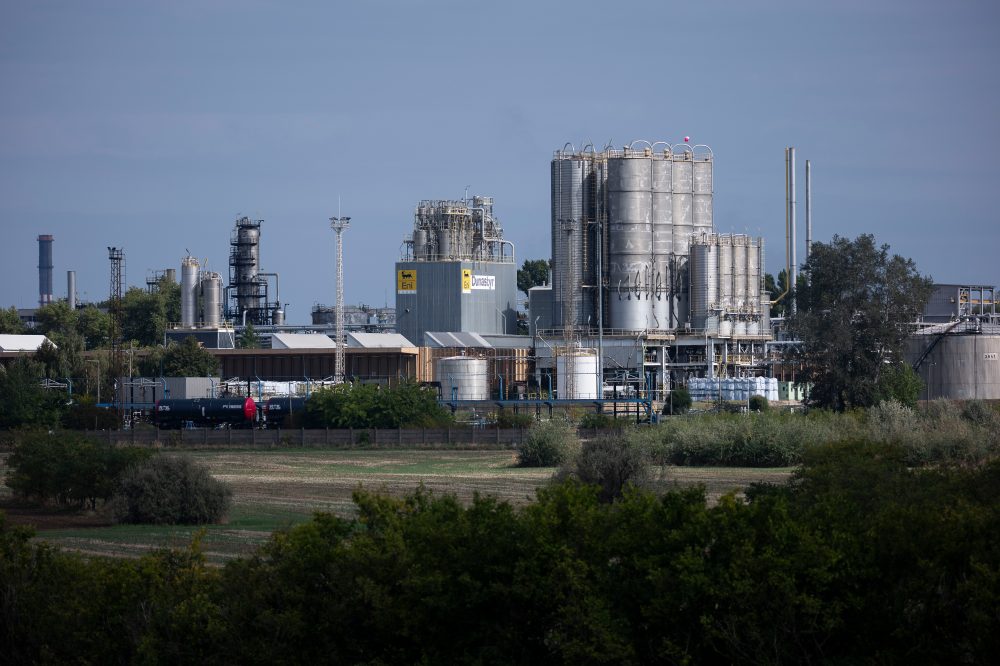
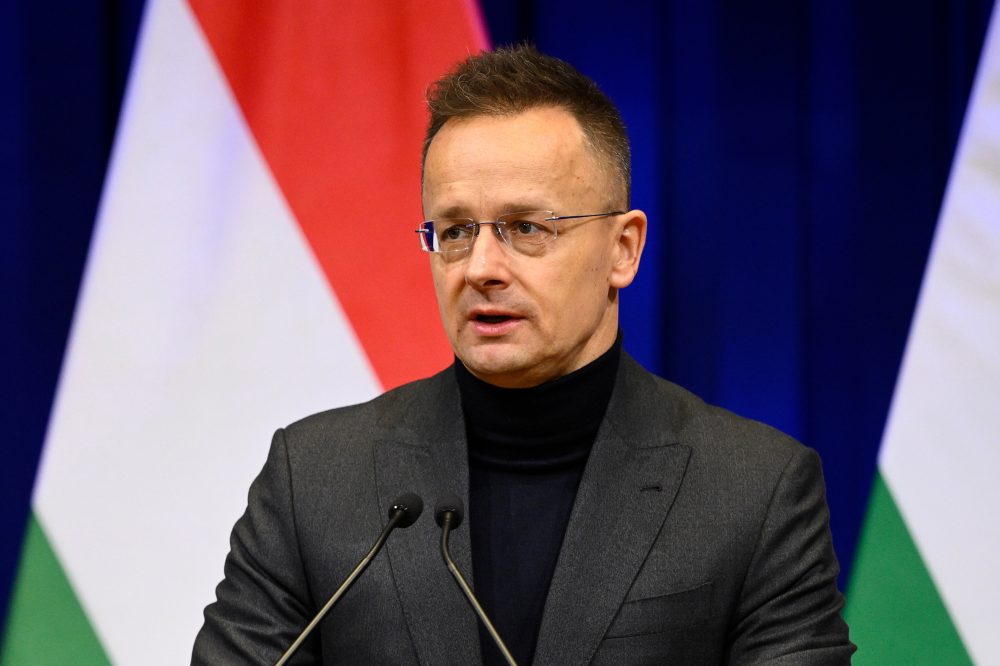
BUDAPEST, Hungary — Hungary’s government is threatening to derail the European Union’s latest sanctions package targeting Russia, demanding the restoration of oil shipments that have been disrupted for weeks.
EU foreign ministers plan to gather in Brussels Monday to consider the bloc’s 20th set of penalties against Moscow, hoping to finalize the measures before Tuesday’s fourth anniversary of Russia’s invasion of Ukraine.
Hungarian Foreign Minister Péter Szijjártó announced his opposition in a social media video Sunday, claiming Ukraine is intentionally blocking Russian oil from reaching Hungary through the Druzhba pipeline.
“We will not consent to the adoption of the 20th package of sanctions, because we have previously made it clear that until the Ukrainians resume oil shipments to Hungary, we will not allow decisions that are important to them to be approved,” Szijjártó said.
The EU requires all 27 member nations to agree before implementing sanctions.
Oil deliveries to Hungary and Slovakia through the pipeline have been halted since January 27, following what Ukrainian authorities describe as Russian drone strikes that damaged the Druzhba system. The pipeline transports Russian crude through Ukrainian territory into Central Europe, creating escalating friction between Budapest and Kyiv.
While most European nations have drastically cut or eliminated Russian energy purchases since Moscow’s February 24, 2022 invasion, Hungary and Slovakia have continued and even expanded their Russian oil and gas imports. Both countries secured temporary waivers from EU restrictions on Russian petroleum imports.
Szijjártó announced Saturday that Hungary would also oppose a massive 90-billion-euro ($106-billion) EU loan package designed to support Ukraine’s military and economic requirements over the next two years.
Both Hungary and Slovakia declared earlier this week they would halt diesel exports to Ukraine due to the oil supply disruptions. Slovak Prime Minister Robert Fico warned Saturday his nation would terminate emergency electricity supplies to Ukraine unless oil flows resume by Monday.
Russian attacks using missiles and drones have repeatedly targeted Ukraine’s power infrastructure in recent months, leaving citizens without electricity and heat during an exceptionally harsh winter.
Ukraine’s Foreign Ministry issued a Saturday statement rejecting what it called “ultimatums and blackmail” from Hungary and Slovakia, accusing both nations of “playing into the hands of the aggressor.”
“Such actions, in the context of massive and targeted Russian strikes on Ukraine’s energy infrastructure and Moscow’s attempts to deprive Ukrainians of electricity, heating, and gas during extreme cold weather, are provocative, irresponsible, and threaten the energy security of the entire region,” the ministry wrote.
Hungarian Prime Minister Viktor Orbán, who maintains the strongest ties to the Kremlin among EU leaders, has consistently argued that Russian energy supplies are essential for Hungary’s economy. He claims switching to alternative energy sources would trigger immediate economic disaster, though some analysts question this assessment.
Orbán has repeatedly threatened to undermine EU sanctions efforts against Moscow and has criticized measures targeting Russia’s energy revenues that fund its war effort. He has also blocked EU initiatives to provide military and financial support to Ukraine.
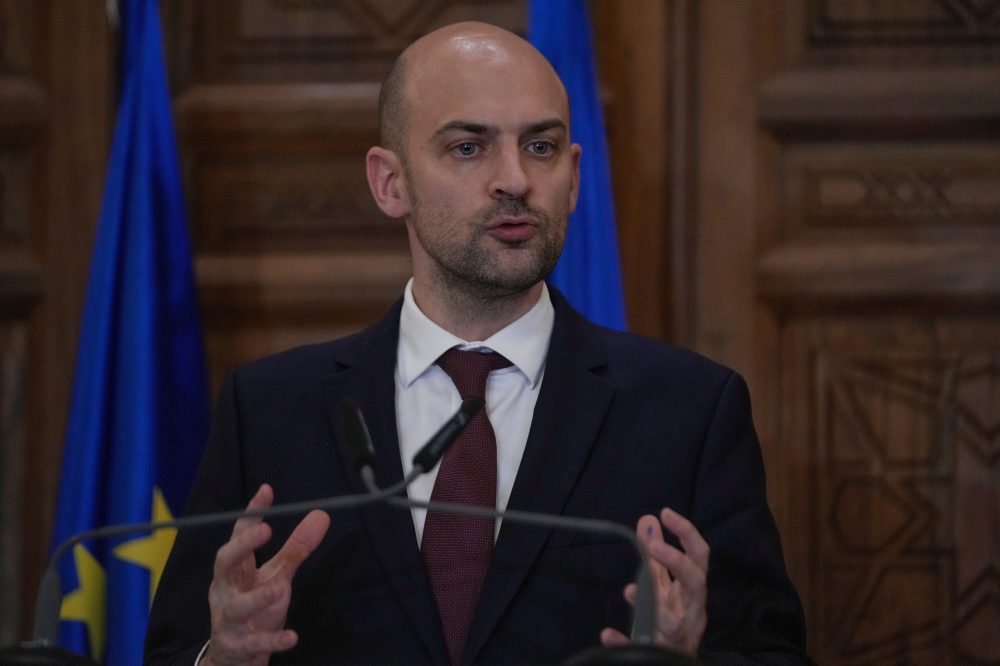
PARIS — French officials will call in US Ambassador Charles Kushner for a formal meeting to address the Trump administration’s remarks regarding the fatal beating of a far-right activist, according to the country’s foreign minister.
Foreign Minister Jean-Noel Barrot announced the diplomatic action in response to a social media post from the State Department’s Counterterrorism Bureau on X, which stated that “reports, corroborated by the French Minister of the Interior, that Quentin Deranque was killed by left-wing militants, should concern us all.”
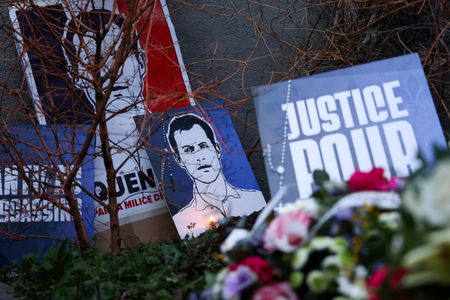
Deranque, who was involved in far-right political activities, succumbed to brain injuries following a brutal attack in Lyon last week. The assault occurred during clashes on the sidelines of a student gathering where far-left legislator Rima Hassan served as the main speaker.
The fatal incident has intensified France’s already volatile political atmosphere as the nation approaches next year’s presidential election. On Saturday, French President Emmanuel Macron urged for peace as approximately 3,000 demonstrators participated in a Lyon memorial march organized by far-right organizations honoring Deranque.
“We reject any instrumentalization of this tragedy, which has plunged a French family into mourning, for political ends,” Barrot said. “We have no lessons to learn, particularly on the issue of violence, from the international reactionary movement.”
The American State Department’s social media statement declared that “violent radical leftism is on the rise and its role in Quentin Deranque’s death demonstrates the threat it poses to public safety. We will continue to monitor the situation and expect to see the perpetrators of violence brought to justice.”
Legal proceedings have begun against seven individuals who received preliminary charges. Lyon’s prosecutor requested that each suspect face charges for intentional homicide, aggravated violence and criminal conspiracy. Six defendants were formally charged on all three allegations, while the seventh received charges for complicity in intentional homicide, aggravated violence and criminal conspiracy.
Barrot indicated he plans to address additional matters with Kushner during their meeting, including American sanctions imposed on Thierry Breton, a former European Union commissioner who oversaw social media regulations, and Nicolas Guillou, a French judge serving on the International Criminal Court.
The foreign minister characterized both sanctions as “unjustified and unjustifiable.”
PARIS – France’s Foreign Minister Jean-Noel Barrot announced Sunday his intention to call in the United States Ambassador to France, Charles Kushner, following official American statements regarding the fatal beating of a French far-right activist that occurred last week.
The victim, identified as Quentin Deranque, a far-right activist, died after being beaten during an altercation with suspected hard-left activists in an incident that has sent shockwaves throughout France.
Both the United States Embassy in France and the State Department’s Bureau of Counterterrorism issued statements indicating they were keeping watch over the situation. In a post on X, they cautioned that “violent radical leftism was on the rise” and emphasized it should be considered a threat to public safety.
Military forces from Denmark conducted an emergency medical evacuation of an American submarine crew member near Greenland waters over the weekend, according to officials.
Denmark’s Joint Arctic Command reported through social media that the sailor was airlifted on Saturday approximately 7 nautical miles from Nuuk, Greenland’s capital city, and taken to a local medical facility. A Danish Seahawk helicopter from a patrol vessel carried out the rescue operation.
The medical emergency occurred as diplomatic tensions escalate between the two NATO partners over Greenland’s future. On Saturday evening, President Trump revealed intentions to dispatch a hospital vessel to the Danish territory, claiming residents lack adequate medical care.
“Working with the fantastic Governor of Louisiana, Jeff Landry, we are going to send a great hospital boat to Greenland to take care of the many people who are sick, and not being taken care of there. It’s on the way!!!” Trump posted on Truth Social, referencing his appointed special representative for Greenland matters.
The announcement drew a sharp response from Danish Prime Minister Mette Frederiksen, who pushed back against suggestions that Greenland’s healthcare system is inadequate.
Writing on Facebook Sunday, Frederiksen stated she was “happy to live in a country where there is free and equal access to health for all. Where it’s not insurances and wealth that determine whether you get proper treatment.”
“You have the same approach in Greenland,” she added, concluding her message with “Happy Sunday to you all” alongside a smiling emoji.
Relations between Washington and Copenhagen have deteriorated significantly in recent months as Trump has intensified discussions about potentially acquiring the mineral-rich Arctic island, which holds strategic military importance. The two nations have maintained strong cooperative ties since World War II.
JERUSALEM – Multiple Middle Eastern nations have sharply criticized recent statements made by US Ambassador to Israel Mike Huckabee regarding Israel’s territorial claims based on biblical references, with regional leaders describing his words as reckless and provocative.
During a television interview with Tucker Carlson that was recorded Wednesday in Israel and broadcast Friday, Huckabee responded to questions about Israel’s territorial rights rooted in religious scripture. The ambassador, known for his evangelical Christian beliefs and long history of supporting Israel, has consistently backed Israeli settlement activities in the West Bank throughout his political career – territory that Palestinians view as essential for their future nation.
The international community generally considers Israeli settlements in areas seized during the 1967 conflict to violate international law, though Israel rejects this interpretation and points to religious and historical connections to these regions.
When Carlson referenced the Book of Genesis and asked about Israel’s potential claim to lands that God allegedly promised Abraham – territory spanning from the Euphrates River to the Nile and encompassing much of the Middle East – Huckabee responded with controversial remarks.
“It would be fine if they took it all. But I don’t think that’s what we’re talking about here today,” Huckabee stated during the interview.
The ambassador continued by saying: “We’re talking about this land that the state of Israel now lives in and wants to have peace in, they’re not trying to take over Jordan, they’re not trying to take over Syria, they’re not trying to take over Iraq or anywhere else. They want to protect their people.”
These statements triggered a coordinated response from Palestinian leadership and numerous countries including Jordan, the United Arab Emirates, Saudi Arabia, Egypt, Turkey, Indonesia and Pakistan, who issued a unified condemnation.
The joint statement characterized his words as: “Dangerous and inflammatory remarks, which constitute a flagrant violation of the principles of international law and the Charter of the United Nations, and pose a grave threat to the security and stability of the region.”
A representative from the US Embassy clarified that Huckabee’s statements do not signal any shift in American foreign policy, emphasizing that his complete comments demonstrated Israel’s lack of interest in expanding beyond its existing borders.
Israeli government officials have not yet provided public responses to either the interview content or the regional backlash from the countries that signed the joint condemnation.
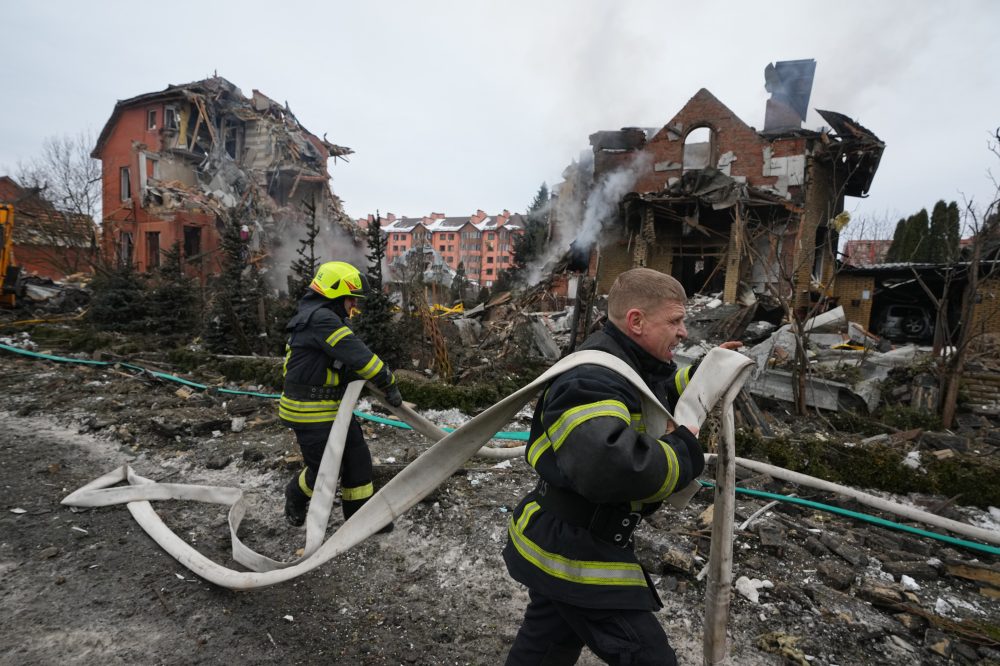
KYIV, Ukraine — Ukrainian emergency officials reported Sunday that a large-scale Russian assault using missiles and drones left one person dead in areas surrounding the capital city.
Emergency responders pulled eight individuals from the wreckage of demolished structures, including one child, according to Ukraine’s Emergency Service.
The overnight bombardment sparked blazes and caused destruction across five suburban districts around Kyiv. In Putrivka village within the Fastiv district, rescue teams worked to free residents trapped beneath collapsed debris.
Russian forces also targeted power facilities in Ukraine’s southern Odesa region, igniting major fires that emergency crews later brought under control, officials reported.
Throughout the four-year conflict since Russia began its full-scale invasion of Ukraine, and even as U.S.-led diplomatic initiatives have intensified over the past year, Ukrainian citizens have faced relentless bombardment from above. Russian military forces have increasingly focused their strikes on Ukraine’s electrical infrastructure, depriving civilians of power and heat during the brutal winter months.
Ukraine’s Air Force reported Sunday that the nighttime assault involved 297 drones and 50 missiles of different varieties. Ukrainian defenses successfully intercepted or disabled 274 drones and 33 missiles, while 14 missiles and 23 drones found their targets across 14 different locations. Three missiles remain unaccounted for, according to military officials.
In a separate incident unconnected to the Russian aerial bombardment, an explosion in Ukraine’s western city of Lviv resulted in one fatality and 25 injuries, Ukrainian President Volodymyr Zelenskyy announced via Telegram on Sunday. Authorities have detained one individual in connection with this incident.
Russian defense officials claimed Sunday that their air defense systems eliminated 86 Ukrainian drones during the overnight period.
In the Russian-controlled Ukrainian city of Luhansk, two Ukrainian drones struck an oil storage facility, injuring a security guard and igniting a fuel tank, according to Moscow-appointed leader Leonid Pasechnik.
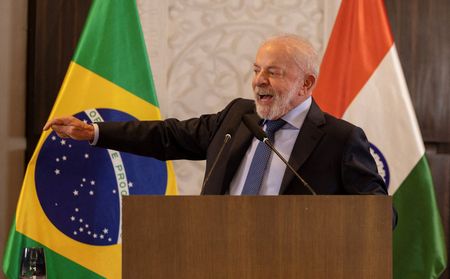
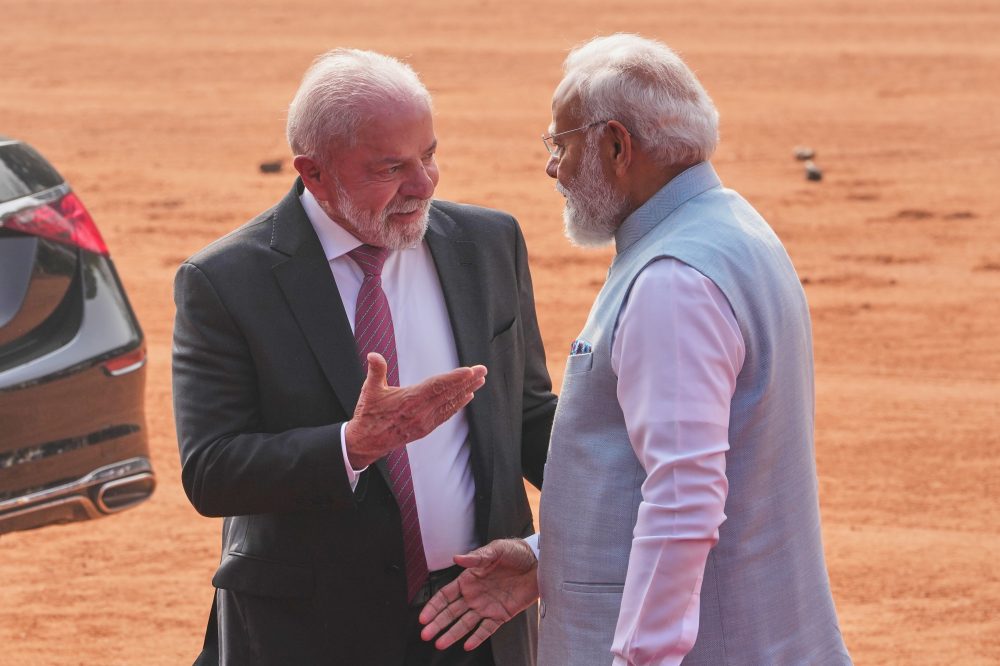
Brazilian President Luiz Inacio Lula da Silva made a diplomatic appeal Sunday, expressing his nation’s opposition to creating a “new Cold War” as he prepares for an upcoming meeting with President Donald Trump.
Speaking at a press conference in New Delhi following a three-day visit to India, the Brazilian leader delivered a direct message to the American president.
“I want to tell U.S. President Donald Trump that we don’t want a new Cold War,” Lula stated. “We don’t want to interfere in any other country, we want all countries to be treated equally.”
The South American president indicated he anticipates meeting with Trump in Washington during the first week of March. Their discussions are expected to cover several key areas including trade relationships, immigration policies, investment opportunities, and academic partnerships between universities.
The leftist leader has previously found himself at odds with Trump on various policy matters, including the Republican president’s tariff strategies, Israel’s military actions in Gaza, U.S. actions regarding Venezuelan President Maduro, and Trump’s Board of Peace initiatives.
When asked about Friday’s Supreme Court ruling that eliminated many of Trump’s tariffs on international goods entering the United States – which Trump indicated would be replaced with 15% duties under different legislation – Lula chose not to provide commentary.
However, the Brazilian president expressed optimism about future diplomatic relations, stating, “I think relations between the U.S. and Brazil will be in a better position.”
A high-ranking Iranian official revealed Sunday that Tehran and Washington continue to disagree on how sanctions should be removed in return for limitations on Iran’s nuclear activities, with fresh negotiations scheduled for early March.
Speaking to Reuters, the official indicated that Iran might seriously evaluate a plan involving the export of portions of its highly enriched uranium stockpile, reducing the concentration of its enriched uranium, and establishing a regional uranium enrichment partnership. However, the official emphasized that any agreement must acknowledge Iran’s right to “peaceful nuclear enrichment.”
“The negotiations continue and the possibility of reaching an interim agreement exists,” the official stated.
Iran’s Foreign Minister Abbas Araqchi announced Friday his expectation to complete a draft counterproposal within days after this week’s nuclear discussions with the United States, while President Donald Trump indicated he was weighing limited military action.
The Iranian official clarified that Tehran would retain control over its oil and mineral assets, though noted that American companies could participate as contractors in Iran’s energy sector operations.
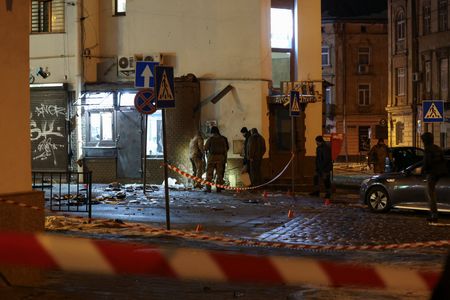
KYIV – A deadly bombing attack in western Ukraine has claimed the life of one police officer and left two dozen others wounded, according to Ukrainian National Police reports released Sunday.
The tragic incident unfolded at midnight in the city of Lviv when multiple homemade bombs went off in what authorities are calling a coordinated attack.
“It has been preliminarily established that homemade explosive devices detonated,” police officials announced through their Telegram channel.
According to investigators, the first blast happened when patrol officers responded to reports of a suspected store burglary. A second explosion followed shortly after the initial detonation.
Lviv Mayor Andriy Sadovyi has denounced the deadly incident as an act of terrorism targeting the western Ukrainian city.
The attack adds to the ongoing violence affecting Ukraine, bringing deadly consequences to the historic city of Lviv, located in the country’s western region.
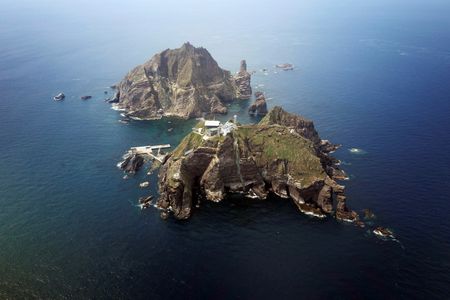
South Korea’s government issued a formal condemnation Sunday following Japan’s ceremonial observance of contested islands that remain under Seoul’s control, denouncing the event as an improper territorial claim.
The foreign ministry released a statement expressing strong opposition to the Takeshima Day ceremony conducted by Japan’s Shimane prefecture, particularly criticizing the participation of a high-ranking Japanese government representative. Officials demanded Japan cease holding the annual commemoration.
These small islands, called Takeshima by Japan and Dokdo by South Korea, have remained a persistent flashpoint between the neighboring nations. The territorial dispute adds to ongoing tensions stemming from Japan’s occupation of Korea between 1910 and 1945.
“Dokdo is clearly South Korea’s sovereign territory historically, geographically and under international law,” the ministry declared, urging Japan to abandon what officials characterized as baseless territorial assertions and confront historical realities with humility.
South Korean officials summoned a senior Japanese diplomatic representative to the foreign ministry headquarters in Seoul to formally register their objection.
Japan’s foreign ministry had no personnel available for comment Sunday, and calls to the Prime Minister’s Office received no response. Tokyo dispatched a Cabinet Office vice-minister rather than a full cabinet member to attend the ceremony.
This marks the latest in Seoul’s ongoing opposition to Japanese territorial assertions regarding the islands, following Friday’s protest over remarks made by Japan’s foreign minister during parliamentary proceedings claiming Tokyo’s sovereignty over the territory.
The disputed area encompasses valuable fishing waters and potentially sits above substantial natural gas hydrate reserves that Seoul estimates could be worth billions of dollars.
LONDON — Britain’s royal family operates without political power but remains highly sensitive to public opinion, a reality now playing out dramatically with Andrew Mountbatten Windsor’s legal troubles.
The former prince spent nearly 11 hours in police custody Thursday after being arrested on suspicion of misconduct in public office.
Authorities are examining whether Mountbatten-Windsor leaked confidential trade secrets to deceased sex offender Jeffrey Epstein during his time as Britain’s trade representative. These charges are separate from previous allegations connected to Epstein’s trafficking crimes.
While Mountbatten-Windsor has repeatedly rejected claims about his Epstein connections, he hasn’t addressed these latest accusations, which emerged from extensive Epstein documents released by U.S. federal prosecutors.
King Charles III finds his brother’s ongoing legal issues dominating his fourth year on the throne.
The monarch, who is battling an undisclosed cancer diagnosis, must maintain royal duties as normal. The crown demands nothing short of complete continuity.
However, the persistent investigations surrounding Mountbatten-Windsor, particularly the image of him appearing stunned in his luxury vehicle, will prove difficult to overcome.
Charles is working to shield the monarchy from additional Andrew-related controversies stemming from his Epstein ties. Epstein died by suicide in a Manhattan detention facility in August 2019 while facing trafficking charges.
The king has removed all of Andrew’s royal designations and expelled him from his Windsor estate residence. Charles now states the legal system “must take its course.”
The ultimate outcome remains uncertain. For Britain’s monarchy, this represents a potential catastrophe rivaling any crisis since the House of Windsor emerged over 100 years ago.
The Windsor dynasty emerged from wartime turmoil.
European royal bloodlines are interconnected, with Britain’s heavily influenced by German heritage, particularly after Queen Victoria wed Prince Albert of Saxe-Coburg and Gotha, producing nine offspring.
During the 1914 conflict between Britain and Germany, some extended British royal relatives found themselves supporting opposite sides.
King George V transformed the family surname from Saxe-Coburg and Gotha to Windsor in 1917, establishing laws to strip titles from nobility supporting German forces.
Prince Ernest Augustus, Duke of Cumberland and Teviotdale, lost his British royal status for supporting Germany under the 1917 legislation, implemented in 1919 after the war concluded.
The House of Commons Library notes “this was the first and only time such a title has been removed in this way.”
Though no longer prince or Duke of York, Mountbatten-Windsor remains eighth for the throne. The current British administration announced Friday it’s exploring legislation to eliminate Andrew from royal succession.
The romance between Edward, Prince of Wales, and American socialite Wallis Simpson evolved from a problem into a constitutional emergency. Simpson had divorced twice, while Edward, the throne’s heir, would lead the Church of England, which prohibited divorced individuals from church remarriage.
Edward assumed the crown as King Edward VIII following his father King George V’s death in early 1936. He maintained his marriage intentions despite government resistance.
Choosing between royal obligation and personal desires, he abandoned the throne in December 1936, declaring in a radio address: “I have found it impossible … to discharge my duties as king as I would wish to do without the help and support of the woman I love.”
This revelation surprised many Britons, though international audiences knew more. British media had avoided covering the relationship, while foreign publications had controversial content removed before distribution.
The abdication redirected the monarchy’s path. Edward’s younger brother became King George VI, followed by his daughter Queen Elizabeth II, then after her seven-decade reign, her son King Charles III. Each emphasized duty as the monarch’s essential quality — something Edward appeared to lack.
Edward and Wallis, later Duke and Duchess of Windsor and suspected of German sympathies, were relocated to the Bahamas for his gubernatorial service. Post-war, they largely avoided Britain, pursuing a wandering lifestyle of wealth.
Princess Diana’s fatal car accident in Paris during 1997, at age 36, devastated global audiences and left her family, including sons William and Harry, ages 15 and 12, grieving.
The intense public response surprised the royal household. Enormous flower displays accumulated outside Buckingham Palace and Diana’s Kensington Palace residence, mourning a princess the royal family had isolated following her 1992 divorce from Charles.
The queen remained at Scotland’s Balmoral for her annual vacation with Prince Philip, Charles, William and Harry. The family maintained private mourning and regular schedules — bringing the grief-stricken boys to Sunday services — while the queen delayed public statements for days.
Prime Minister Tony Blair advised public grieving displays, perfectly capturing popular sentiment by calling Diana “the people’s princess.”
Following newspaper demands reading “Speak to us Ma’am” and “Show us you care,” the queen delivered a live national television address before Diana’s funeral.
“What I say to you now, as your queen and as a grandmother, I say from my heart,” the queen declared, recognizing national sorrow, honoring Diana and vowing to preserve her legacy.
Recently, Andrew had attempted family reconciliation, benefiting somewhat from Prince Harry’s difficulties.
Harry became distant from his father and elder brother Prince William, the throne’s heir, after he and wife Meghan abandoned royal duties for California in 2020. The pair publicly criticized the royal family through an Oprah Winfrey interview and Netflix documentary. Harry intensified conflicts by sharing private conversations in his book “Spare.”
Harry also violated royal tradition by pursuing legal remedies for his disputes. He became the first senior royal testifying in court for over a century during his successful phone hacking case against Daily Mirror.
His unsuccessful attempt to restore stripped police protection was perceived as challenging his father’s administration.
When courts ultimately dismissed the case, it created reunion opportunities between father and son. They met for tea at Charles’ London residence, Clarence House, in September 2024 — their first encounter in more than a year.
Russia’s comprehensive assault on Ukraine has now stretched beyond 1,418 days last month, marking a grim milestone that surpasses the duration Moscow needed to defeat Nazi Germany during World War II.
Yet unlike the Soviet forces that marched to Berlin eight decades earlier in their Great Patriotic War, Russia’s four-year comprehensive offensive against its neighboring country continues to struggle in capturing Ukraine’s eastern industrial regions completely.
Following Moscow’s unsuccessful attempt to capture Kyiv and establish a proxy government in February 2022, the battle has devolved into static warfare with enormous losses. Estimates suggest close to 2 million troops have been killed, injured, or are unaccounted for across both armies in Europe’s most catastrophic war since the 1940s.
Moscow has controlled approximately 20% of Ukrainian land since its illegal seizure of Crimea in 2014, though territorial advances following the February 24, 2022 assault have been minimal. NATO Secretary-General Mark Rutte recently compared Moscow’s progress to “the speed of a garden snail.”
Over the past two years, Russian forces have advanced merely 50 kilometers (roughly 30 miles) into Ukraine’s Donetsk region through brutal combat for control of several key positions.
Even with the sluggish progress and enormous costs, President Vladimir Putin continues pressing his extreme conditions in American-brokered peace negotiations, demanding that Kyiv withdraw its military from four Ukrainian territories that Moscow illegally claimed but never completely conquered. Putin has consistently threatened nuclear retaliation to discourage Western nations from increasing military aid to Kyiv.
What began with rapid movements of massive troop formations and armored vehicles during Russia’s initial assault and Ukraine’s fall 2022 counter-attack has transformed into devastating static combat across the 1,200-kilometer (750-mile) battle line.
The Washington-based Center for Strategic and International Studies calculated Russian military losses at 1.2 million, with 325,000 deaths. Ukrainian military casualties were estimated at 600,000, including 140,000 fatalities.
“Russia has suffered the highest casualty rate of any major power in any war since World War II, and its military has performed poorly, with historically slow rates of advance and little new territory to show for its efforts over the last two years,” the organization stated, highlighting that Russian forces averaged just 70 meters (76½ yards) daily progress over two years to reach the transportation center of Pokrovsk.
Unmanned aircraft are playing a pivotal role for the first time in warfare history, making it virtually impossible for either military to secretly concentrate large numbers of soldiers.
From the conflict’s beginning, Ukraine has deployed drones to counter Moscow’s firepower advantage and halt its advances, though Russia has dramatically expanded drone usage and introduced longer-range fiber-optic connected drones to prevent electronic interference. These have extended the danger zone to 50 kilometers (approximately 30 miles) from the front lines, leaving the landscape covered in fiber strands.
The combination of advanced drone technology and World War I-era trench combat has forced small infantry units — frequently just two or three soldiers — to attempt infiltrating enemy positions in towns destroyed by Russian heavy artillery and glide bombs. Moving supplies and rescuing wounded personnel presents major difficulties as drones target supply lines.
Ukrainian leadership described this winter as the war’s most difficult period. Russia dramatically intensified attacks on the nation’s electrical infrastructure, creating power outages in Kyiv where electricity to many residents was limited to several hours daily during freezing temperatures.
Moscow has also increasingly attacked power transmission lines to stop energy transfers and fragment Ukraine’s electrical grid into separate sections, adding stress to the system.
Ukraine responded with long-distance drone strikes on petroleum refineries and other energy infrastructure deep within Russia, seeking to reduce Moscow’s export income.
Ukrainian drones and missiles destroyed multiple Russian naval vessels in the Black Sea, compelling Moscow to relocate its fleet from Russian-controlled Crimea to Novorossiysk. In a bold operation called “Spiderweb,” Ukraine launched truck-based drone attacks on several airbases housing long-range bombers throughout Russia in June, delivering an embarrassing defeat to the Kremlin.
U.S. President Donald Trump, who previously vowed to resolve the conflict in one day, has worked to halt the violence, but mediation attempts have encountered vastly different requirements from both sides.
Putin demands Ukraine withdraw its forces from the Donetsk region areas it still holds, abandon NATO membership aspirations, limit its military capabilities, and provide official recognition to Russian language, among other conditions Ukraine has refused.
Moscow has indicated openness to Kyiv’s potential European Union membership but firmly rejected any European peacekeeping forces in Ukraine as part of any agreement.
Ukrainian President Volodymyr Zelenskyy seeks a ceasefire along current battle lines, while Putin rejects any temporary truce, insisting on a complete peace settlement.
“The territorial issue is important to the Kremlin, but the war has a more ambitious goal: to create a Ukraine that would be entirely within Russia’s sphere of influence and not perceived by Moscow as ‘anti-Russia,’” noted Tatiana Stanovaya of Carnegie Russia Eurasia Center.
Ukraine and its partners claim Putin is prolonging negotiations while capturing additional territory. The Kremlin accuses Kyiv and European allies of attempting to sabotage a preliminary agreement reached between Trump and Putin at their Alaska meeting.
Despite maintaining their stances, both Putin and Zelenskyy have complimented American mediation efforts and attempted to gain Trump’s support.
Following a problematic White House meeting last year, Zelenskyy has taken a more pragmatic negotiating approach, highlighting Ukraine’s willingness to compromise.
When Trump suggested holding presidential elections in Ukraine, Zelenskyy indicated willingness despite elections being prohibited under martial law. He proposed combining elections with a peace agreement referendum, but emphasized voting could only occur after establishing a ceasefire and securing defense guarantees from America and other partners.
Zelenskyy revealed the White House established a June deadline for ending the war and will likely pressure both nations to comply. However, even with Trump’s apparent eagerness for a peace agreement before U.S. midterm elections, obstacles persist.
With Putin demanding Ukraine’s withdrawal from Donetsk and Zelenskyy refusing, a rapid agreement seems improbable. Zelenskyy also expressed doubt about a compromise American proposal to transform the eastern region into a special economic zone.
The Kremlin believes its attacks will eventually compel Kyiv to accept Moscow’s conditions. Ukraine hopes to persist until Trump becomes impatient and increases sanctions against Russia, forcing Putin to end his military campaign. Yet Trump frequently appears to lose patience with Zelenskyy instead.
The conflict and Western economic restrictions have increasingly pressured Russia’s economy. Economic expansion has nearly stopped due to continuing inflation and worker shortages. Recent U.S. sanctions targeting Russian oil exports have intensified these pressures.
Despite economic difficulties, Russia’s weapons manufacturing has boosted production while its government has protected crucial groups like military personnel and factory workers from hardship.
“Its economy is poorer, less efficient and less promising than it might otherwise have been,” wrote Richard Connolly of the Royal United Services Institute. “But it remains capable of sustaining the war. Its elites are more dependent on the regime, not less. Its political system is insulated from the transmission of economic discontent into pressure for regime change.”
A Royal Australian Navy vessel made its way through the contested Taiwan Strait over the weekend, according to government officials, with Chinese military forces closely monitoring the ship’s movement through the strategically important waterway.
The frigate Toowoomba, part of Australia’s Anzac-class fleet, completed what officials described as a standard passage through the strait on Friday and Saturday. This transit occurred as part of the vessel’s broader mission in the Indo-Pacific region, a government source confirmed on Sunday.
Beijing considers the narrow waterway between mainland China and Taiwan to be part of its territorial waters, along with asserting control over the democratically-run island of Taiwan itself. Chinese authorities have frequently reacted with hostility when foreign naval vessels navigate through these disputed waters.
According to the Australian source, “conducted a routine transit through the Taiwan Strait” during its “Regional Presence Deployment in the Indo-Pacific region.” The official added that “All interactions with foreign ships and aircraft were safe and professional.”
Chinese state media reported that military forces maintained constant surveillance of the Australian vessel throughout its passage. The Global Times, citing a Chinese military official, stated that “the Chinese People’s Liberation Army carried out full-process tracking, monitoring, and alert operations throughout the transit.”
American naval vessels regularly navigate through the strait several times each year, consistently drawing angry responses from Beijing. Other allied nations including France, Australia, Britain and Canada have also periodically sent ships through the waterway.
China has significantly increased its military activities in the waters and airspace surrounding Taiwan, most recently conducting military exercises near the island in late December.
Taiwan’s leadership continues to reject China’s territorial claims, maintaining that only the Taiwanese people have the authority to determine the island’s political future.
Pakistani military forces launched cross-border operations against militant positions within Afghanistan, according to officials in Karachi who attributed a wave of recent suicide attacks to fighters based in Afghan territory.
The military action represents a significant increase in hostilities between Pakistan and Afghanistan’s Taliban government, occurring just days after Kabul freed three Pakistani military personnel through Saudi Arabian mediation designed to reduce friction after months of border confrontations.
According to a February 21 government statement released Sunday morning, Pakistani officials possess “conclusive evidence” that the attacks were orchestrated by groups they refer to as Khwarij – their designation for the Pakistani Taliban – following orders from “their Afghanistan-based leadership and handlers.”
Pakistani forces conducted “intelligence-based selective targeting of seven terrorist camps and hideouts” operated by the Pakistani Taliban and Islamic State Khorasan Province near the Afghan border, the statement indicated.
Afghan Taliban officials were not immediately available for response to Reuters inquiries. Kabul has consistently rejected claims that militants use Afghan soil to launch operations against Pakistan.
According to government sources, recent attacks included an explosion at a Shiite mosque in Islamabad and violence in the northwestern border regions of Bajaur and Bannu. In Bannu, military officials reported Saturday that a suicide attacker targeted a security convoy, resulting in five militant deaths during fighting and two soldier fatalities when an explosive-filled vehicle struck a military truck.
The ongoing friction has repeatedly forced major border crossing points to close, hampering commerce and travel along the 2,600-kilometer frontier.
Violent confrontations in October resulted in dozens of casualties before both nations reached a tenuous ceasefire agreement. However, Pakistan maintains its accusations that Afghanistan’s Taliban leadership provides sanctuary to militants conducting attacks on Pakistani soil – allegations that Kabul continues to reject.
Student demonstrations continue across Iran’s universities despite the government’s harsh attempts to silence dissent, according to reports from Iran International and Tousi news outlets. At Tehran’s Amirkabir University of Technology, students organized a demonstration that shut down a nearby street.
Video footage from the protest captured students scattering while shouting “Don’t be afraid, we are all together,” the news sources reported. At Tehran’s Sharif University of Technology, another demonstration took place where participants reportedly called out “Death to Khamenei” and “Long live the King.” Students at Mashhad’s Medical University also gathered to protest, with demonstrators calling for “Freedom.”
The ongoing unrest has sparked a public disagreement between President Donald Trump and Iran’s top diplomat regarding the number of people killed during the government’s response. During a Friday press conference, Trump urged Iran to negotiate, stating: “Iran should make a deal. It’s a very sad situation. The Iranian people are better than their leaders. Thirty-two thousand people were killed in a short time.”
Trump further claimed: “They were going to hang 800, two weeks ago, hang some by a crane. They lift them up with a tall crane, and they play with them around the square.”
Iran’s Foreign Minister Abbas Araghchi disputed these numbers in a social media post on X, writing: “We are fulfilling our commitment to full transparency with our people. The government has already published the complete list of 3,117 victims in the recent terror operation, including about 200 police officers.”
The conflicting casualty figures reflect broader uncertainty about the scope of the violence. Iran International previously estimated that up to 36,000 people may have died during the crackdown in late January, with countless others wounded and jailed. A U.S.-based human rights organization informed CBS that arrest numbers exceeded 50,000 people.
Military experts are warning that the United States has positioned its most substantial force deployment in the Middle East since the 2003 Iraq invasion, indicating potential preparations for an extended military operation against Iran that could span multiple weeks.
Former British Army commander Col. Richard Kemp spoke with The Media Line about the unprecedented scale of American military assets now concentrated in the region. “As I understand it, this is the biggest military buildup in the Middle East since 2003,” Kemp stated. He emphasized that the current force level exceeds what was deployed during last June’s 12-day conflict in 2025, describing it as “very significant military power.”
Washington has been using the term “imminent” for weeks regarding potential action, though specific timelines remain undefined. The military positioning could lead to rapid developments or extend over a longer period, according to Kemp, who focused on the strategic implications rather than political rhetoric.
“I think it’s likely there will be a military strike, but I don’t think you’d say it’s inevitable,” he explained. “I think it’s very likely.”
The comparison to 2003 reflects more than mere emphasis, as the current military footprint has expanded dramatically in recent weeks. Four American carrier strike groups are now either stationed in or heading toward the broader Middle East region, fundamentally altering the strategic balance. Approximately twelve guided-missile destroyers are positioned throughout surrounding waters, with some near the Strait of Hormuz and others operating closer to the Red Sea.
The United States maintained a substantial regional presence even before this buildup, with over 40,000 personnel stationed at military installations and aboard naval vessels. The arrival of the latest carrier group adds several thousand additional service members to this total.
Aviation assets have also been repositioned significantly. Long-range B-52 bombers and B-2 stealth aircraft have been placed on heightened alert status. Additional fighter aircraft, including F-16s, F-22s, and F-35s, have been moved to forward positions. Al Udeid Air Base in Qatar has raised its alert levels, with these adjustments reflecting both offensive capabilities and defensive preparations for potential retaliation.
The concentration of forces makes it difficult to characterize the deployment as routine military positioning.
The June 2025 conflict, which commenced on June 13 and lasted 12 days, had clearly defined military objectives. Kemp described that engagement as primarily targeting Iran’s ballistic missile capabilities and nuclear infrastructure. Israel conducted most of that campaign, focusing on air defense systems and missile-related facilities, with American forces joining near the conclusion. While intense, the fighting remained limited in scope and was not designed to topple the Iranian government.
Kemp suggested that President Donald Trump would prefer achieving concessions from Tehran without engaging in full-scale warfare. “I think he would prefer Iran to buckle under the military pressure that’s been building up around them and make significant concessions, particularly on the nuclear program, but also on ballistic missiles and potentially on sponsoring terrorist proxies in the region as well,” he said. “He would like to be able to stand up and say, ‘I have resolved this through negotiations rather than through military force.’”
However, Kemp expressed skepticism about Iran’s willingness to offer genuine, lasting concessions. “Nothing that Iran agrees to or says can be trusted,” he stated. “They’ll just use it as a tactic to buy time for themselves.”
Should diplomatic efforts fail, the currently deployed forces suggest preparation for operations extending beyond limited strikes intended as warnings. Kemp outlined two distinct aspects of the military buildup: offensive capabilities and protection of American personnel and regional allies.
“One is what you need to actually damage Iran, bring down the regime, destroy the key components in Iran that are used offensively against other countries in the Middle East, of course, Israel particularly,” he explained. “The second element is defensive.”
American forces positioned throughout the Gulf region, including those in Qatar, would face exposure to Iranian missiles and allied militias during military operations. Saudi Arabia and the United Arab Emirates would need to assess their own vulnerabilities. Israel would almost certainly become a primary target for retaliation. Kemp noted that protecting “such a wide range of targets” demands substantial resources, including aircraft, naval vessels, layered missile defense systems, and regional coordination.
Kemp also raised the possibility of preemptive or simultaneous action against Iranian proxy forces. While Hezbollah in Lebanon has been significantly weakened since last year, he said, the organization retains missile launch capabilities against Israel. Yemen’s Houthis continue to possess long-range attack capabilities. “They would have to be dealt with either before a US strike in Iran, or at the same time,” he said. “We’re talking about a much more intensive attack.”
The question of operational duration remains central to understanding potential scenarios. Would a new confrontation follow the compressed timeline of June 2025, or evolve into something more prolonged?
“I would say much longer than a couple of days,” Kemp predicted. “It could run into weeks. It could well be a fairly long, sustained bombing campaign against Iran.”
He stressed that military planners would continuously evaluate results throughout any campaign. While objectives would be established beforehand, the operation’s length would depend on whether those goals were being achieved. “They won’t probably know now how long it’s going to last,” he said. “It depends on the effect.”
Brig. Gen. Amir Avivi, founder of the Israel Defense and Security Forum, presented the situation in more dramatic terms when speaking with The Media Line, stating that strategic discussions have moved beyond targeting nuclear facilities.
“The objective of the 12-day war was to destroy their nuclear capability and stop the rapid buildup with ballistic missiles,” Avivi explained. “Now we are talking about taking down the regime. It is something completely different.”
According to Avivi, Tehran misinterpreted the aftermath of June 2025. Rather than reducing tensions, he said, Iran continued investing resources in missile development and maintaining its regional proxy network, despite domestic economic difficulties. “There is no way to stop this threat and the instability in the Middle East without dismantling this regime,” he argued.
Avivi suggested that under optimal conditions, including precise intelligence and rapid targeting of command structures, the regime could be overthrown within weeks. “I think in two weeks it could be done,” he said, while acknowledging that success would heavily depend on internal Iranian dynamics.
He argued that the crucial variable extends beyond military hardware to include the Iranian population itself. Iran faces economic pressures, he said, and public dissatisfaction persists. Should external military action coincide with renewed domestic unrest, the regime would confront simultaneous internal and external challenges.
Kemp, while more cautious, also indicated that leadership targets would likely be central if objectives extend to regime change. “If the objective is to topple the regime, then one of the primary targets has to be the IRGC [Islamic Revolutionary Guard Corps],” he said.
He did not dismiss unconventional approaches. “I wouldn’t be surprised if we see troops on the ground,” Kemp said. “I don’t mean large scale. I’m talking about special forces commandos, maybe, to directly take out the Ayatollah and some of the other leadership. I don’t think we should exclude the possibility of that happening, as well as the air campaign.”
Avivi dismissed the notion that a regime-focused campaign would necessarily require substantial foreign ground forces. If there are “boots on the ground,” he said, they would not be American or Israeli troops.
“The boots on the ground are the Iranian people,” he stated.
In his assessment, sustained external military pressure could combine with growing internal frustration. Economic hardship, infrastructure shortages, and political repression have undermined confidence in the leadership, he argued. If the regime’s military foundation weakens, domestic unrest could complete the process.
“You need to eliminate the leadership,” he said. “You need to break their military capability completely.”
When asked about proxy escalation, Avivi said the probability is “very high” if Hezbollah, the Houthis, and other aligned groups view the confrontation as existential. He added that recent conversations with senior Israeli military leadership revealed a sense of preparedness and heightened alertness. “There is no 100%,” he said, acknowledging that ballistic missiles would likely strike Israel and create serious challenges.
The distinction from June 13, 2025, therefore involves not only the scale of American military equipment now visible in the region, but also the objectives being discussed by those analyzing the situation.
“The primary target,” Kemp said, “is going to be the leadership and the effort to try and bring the regime down.”
Whether this objective can be accomplished primarily through air operations, requires limited ground operations, or results in stability or prolonged chaos remains unclear. What appears more certain, in their analysis, is that the current military posture is not intended for symbolic purposes.
“It’s needed in order to sufficiently damage the regime,” Kemp concluded. “Not a token strike.”
US Ambassador to Israel Mike Huckabee has found himself at the center of international controversy following statements made during a recent appearance on Tucker Carlson’s podcast program.
During the discussion, Huckabee addressed questions about biblical references to territory that encompasses portions of Egypt, Syria, and Iraq as belonging to Israel, though he emphasized that Jerusalem has no current plans for such expansion.
The diplomatic storm erupted when Carlson pressed the ambassador about Israel’s rights to what he described as “basically the entire Middle East.” When asked directly if Israel had legitimate claim to such vast territory, Huckabee initially deflected, saying “Not sure we’d go that far” and noting “It would be a big piece of land.”
However, when Carlson persisted with his questioning, Huckabee responded, “It would be fine if they took it all,” though he quickly clarified, “I don’t think that’s what we’re talking about here today.”
When specifically asked about Israel potentially taking control of Jordan, Huckabee defended Israel’s current position, stating “They’re not trying to take over Jordan. They’re not trying to take over Syria. They’re not trying to take over Iraq or anywhere else, but they do want to protect their people.”
The ambassador further explained, “I think you’re missing something because they’re not asking to go back to take all of that, but they are asking to at least take the land that they now occupy, they now live in, they now own legitimately, and it is a safe haven for them.”
Regional governments responded with swift condemnation on Saturday, characterizing Huckabee’s statements as violations of established diplomatic protocols and international legal standards.
Jordan’s Foreign Ministry spokesperson Fuad al-Majali condemned what he termed “absurd and provocative statements,” declaring them “an assault on the sovereignty of the countries of the region and a flagrant breach of international law.”
Egypt’s Foreign Ministry similarly rejected the ambassador’s remarks, labeling them a “blatant violation” of diplomatic standards and arguing they contradicted President Donald Trump’s expressed goals for resolving the Gaza conflict.
Arab League Secretary-General Ahmed Aboul Gheit, representing the organization’s 22 member nations, criticized Huckabee’s position as conflicting with established US foreign policy stances. Palestinian leadership also responded, calling on the Trump administration to issue a “clear and explicit stance” addressing the controversial statements.
Neither the White House nor the State Department provided responses to media inquiries seeking comment on the matter.
A facility manufacturing Oreo cookies in eastern Ukraine sustained damage Saturday after being hit by a Russian missile, according to Ukrainian Foreign Minister Andrii Sybiha in a social media post.
The attack on the Trostyanets facility resulted in damage to a production building, though no fatalities were reported, Sybiha stated. The plant is operated by Mondelez International, the global snack company.
Mondelez, headquartered in Chicago and known for producing Ritz crackers, Toblerone chocolate bars, and Trident chewing gum, had not provided a response to requests for comment as of Saturday evening. Russian officials also did not respond to requests for comment overnight.
“When Russian missiles hit such sites, they are not only targeting Ukraine,” Sybiha stated. “They are targeting American business interests in Europe.”
This marks the second time the facility has suffered damage since Russia launched its invasion in 2022. Following severe damage two years ago, the plant gradually resumed operations, first producing chocolate in 2023 before returning to Oreo cookie production in 2024.
The snack manufacturer has drawn scrutiny for maintaining its business presence in Russia throughout the ongoing conflict.
Australian government officials are disputing weekend news reports suggesting the country is making arrangements to bring home dozens of citizens currently held at a Syrian detention facility housing relatives of suspected Islamic State fighters.
The controversy centers around 34 women and children who were briefly freed from the northern Syrian camp on Monday, only to be sent back to the detention facility because of logistical complications. According to reports, the group was expected to travel through Damascus on their way back to Australia, though politicians from both major parties have voiced opposition to their return.
Home Affairs Minister Tony Burke directly challenged the Sunday Telegraph’s reporting during a television interview, denying that his government is orchestrating any homecoming efforts.
“In that report, it makes a claim that we are conducting a repatriation. We are not,” Burke stated during his appearance on Australian Broadcasting Corp television.
“It claims we have been meeting with the states for the purposes of a repatriation. We have not,” Burke continued.
Earlier in the week, Prime Minister Anthony Albanese, who heads Australia’s Labor Party administration, made clear his government would not assist in bringing the group back to Australian soil.
The debate over whether to allow family members of suspected IS fighters to return home has become a contentious political topic in Australia, particularly as the right-wing One Nation party, headed by Pauline Hanson, has gained traction with its anti-immigration platform.
Australian law treats Islamic State as a designated terrorist organization, with membership carrying potential prison sentences of up to 25 years. The country also maintains authority to revoke citizenship from dual nationals who join the Sunni Muslim extremist group.
Pakistani military forces launched early morning strikes Sunday against militant strongholds positioned along the Afghanistan border, officials announced, following a deadly wave of terrorist attacks within Pakistan’s borders.
Government officials in Islamabad withheld specific location details of the military operations and did not elaborate on the scope of the strikes. Afghan authorities in Kabul have not yet responded to the reported attacks, while unverified social media posts indicate the operations took place within Afghan territory.
Information Minister Attaullah Tarar announced via social media platform X before sunrise Sunday that Pakistani forces executed what he termed “intelligence-based, selective operations” targeting seven facilities operated by the Pakistani Taliban, known as Tehrik-e-Taliban Pakistan or TTP, along with associated groups. Tarar noted that forces also struck a camp belonging to an Islamic State affiliate in the border region.
This marks the second time Pakistan has conducted such cross-border operations, with similar strikes launched deep into Afghanistan in October to eliminate militant positions.
“Pakistan has always strived to maintain peace and stability in the region,” Tarar stated, while emphasizing that protecting Pakistani citizens remains the government’s highest priority.
The military action follows a devastating suicide attack earlier this week when an explosive-laden vehicle, supported by armed militants, crashed into a security facility’s perimeter in Bajaur district within Khyber Pakhtunkhwa province near the Afghan border. The explosion brought down sections of the compound, resulting in the deaths of 11 military personnel and one child. Intelligence sources later identified the attacker as an Afghan citizen.
Just hours before Sunday’s border operations, another suicide bomber struck a security patrol in the neighboring Bannu district, killing two soldiers, including a lieutenant colonel. Following Saturday’s violence, Pakistan’s military leadership declared they would not “exercise any restraint” and promised continued operations against those responsible “irrespective of their location,” signaling escalating tensions between Pakistan and Afghanistan.
According to Tarar, Pakistan possesses “conclusive evidence” linking recent terrorist incidents, including a mosque bombing in Islamabad that claimed 31 lives earlier this month, to militants operating under direction from “Afghanistan-based leadership and handlers.”
Pakistani officials say they have repeatedly called on Afghanistan’s Taliban government to take concrete, verifiable measures preventing militant organizations from using Afghan soil as a launching pad for attacks against Pakistan, but claim no meaningful action has resulted.
Tarar appealed to the global community to pressure Afghanistan’s Taliban leadership to honor their Doha agreement commitments prohibiting the use of their territory for attacks against neighboring nations.
Pakistan has experienced an escalation in militant violence over recent years, with much of the bloodshed attributed to the TTP and banned Baloch separatist organizations. The TTP operates independently from but maintains close ties with Afghanistan’s Taliban, who regained control in 2021. Pakistani authorities accuse the TTP of maintaining bases inside Afghanistan, allegations both the militant group and Kabul’s government reject.
Diplomatic relations between the two neighboring nations have deteriorated since October, when fatal border confrontations resulted in dozens of casualties among soldiers, civilians and suspected militants. The violence erupted following explosions in Kabul that Afghan officials attributed to Pakistani involvement.
While a Qatar-brokered ceasefire has generally held, diplomatic talks in Istanbul failed to produce a formal resolution, leaving relations between the countries strained.
Authorities in Libya discovered the remains of five migrants along a coastal area east of Tripoli on Saturday, according to local police officials.
The bodies, which included two women, were found on the shoreline at Emhamid Al-Sharif in the coastal community of Qasr al-Akhyar, located approximately 45 miles east of the capital city.
Hassan Al-Ghawil, who leads investigations at the local police station, reported that residents in the area also spotted a child’s body that had washed ashore, but strong waves carried it back out to sea. Officials have requested the coast guard to conduct a search for the missing child.
According to Al-Ghawil, local residents discovered the bodies and immediately contacted police. Photos circulating online, which Reuters has verified, show the deceased migrants on the beach, with some still wearing black inflatable life preservers.
“We reported to the Red Crescent to recover the bodies,” Al-Ghawil stated. “The bodies we found are still intact and we think there are more bodies to wash ashore.”
The North African nation has served as a major pathway for people fleeing violence and economic hardship, seeking passage to Europe via the Mediterranean Sea. This migration route became heavily trafficked following the 2011 overthrow of longtime ruler Muammar Gaddafi during a NATO-supported rebellion. Political divisions have fractured the country between competing eastern and western governments since 2014.
This tragedy follows another recent maritime disaster earlier this month when 53 migrants, including two infants, died or went missing after their rubber vessel capsized near Zuwara, a town west of Tripoli, according to the International Organization for Migration.
A recent United Nations assessment highlighted the severe dangers facing migrants in Libya, including young girls who face threats of murder, torture, sexual assault, and forced domestic servitude. The report recommended halting the return of migrant vessels to Libya until basic human rights protections can be guaranteed.
The Islamic State has announced what it calls an escalated campaign against Syrian government forces after claiming responsibility for dual attacks that left military personnel dead on Saturday.
According to the terror group’s Dabiq media outlet, militants used a handgun to target “an individual of the apostate Syrian regime” in Mayadin, located in Deir al-Zor province, while separately attacking two other government personnel with automatic weapons in the northern city of Raqqa.
Syria’s Defense Ministry confirmed in an official statement that one army soldier and one civilian lost their lives Saturday in attacks carried out by “unknown assailants.” A military source speaking to Reuters identified the fallen soldier as a member of the army’s 42nd Division.
These violent incidents occur as ISIS has dramatically increased attacks against Syria’s government led by President Ahmed al-Sharaa, who previously commanded al Qaeda forces before splitting from that organization in 2016 and ultimately spearheading the Islamist coalition that toppled President Bashar al-Assad in late 2024.
In a recorded message released Saturday evening, ISIS spokesman Abu Hudhayfa al-Ansari declared that Syria had “moved from Iranian occupation to Turkish-American occupation.”
The terrorist organization proclaimed it had launched a “new phase of operations” within Syria, labeling Sharaa as a “watchdog” of the international coalition and threatening that his destiny would mirror Assad’s downfall.
During his November visit to the United States, where he met with President Donald Trump, Sharaa formalized Syria’s participation in the global coalition fighting ISIS.
Saturday’s violence follows another ISIS attack just two days earlier in Deir al-Zor that claimed the life of an Interior Ministry internal security officer and left another wounded.
Pro-ISIS social media accounts and messaging channels have recently urged supporters to intensify attacks using motorcycles and small arms.
Since Assad’s government collapsed, ISIS has conducted six separate attacks against Syrian government forces.
A United Nations Office of Counter-Terrorism report published last week revealed that ISIS has attempted to assassinate Sharaa and two top cabinet officials on five separate occasions, though all plots were unsuccessful.
A medical emergency aboard an American submarine in Arctic waters prompted an international rescue mission Saturday, according to Danish military officials.
The Danish Defence’s Joint Arctic Command coordinated the evacuation of a U.S. Navy crew member who needed immediate medical attention while the submarine operated in waters near Greenland, approximately seven nautical miles from the capital city of Nuuk.
Military officials used a Danish Defence Seahawk helicopter to transport the sailor from the submarine to medical facilities on shore. The rescued crew member was subsequently handed over to Greenland’s healthcare system and admitted to Nuuk’s hospital for treatment.
The Joint Arctic Command released details of the rescue operation in an official statement but did not provide information about the nature of the medical emergency or the current condition of the evacuated sailor.
SEOUL – Saturday marked the third day of North Korea’s Workers’ Party Ninth Congress, where leader Kim Jong Un delivered an extensive presentation evaluating his party’s performance and setting future directions, according to state media reports released Sunday.
The Korean Central News Agency (KCNA) reported that Kim’s comprehensive address examined the party’s accomplishments during the previous five-year period while establishing fresh strategic objectives and priorities for upcoming years. The plan encompasses initiatives across multiple areas designed to strengthen socialist development throughout the nation.
Conference attendees indicated that Kim’s presentation provided both strategic and tactical guidance for what officials characterized as an emerging phase of national progress, while reinforcing optimism about the country’s prospects ahead, state media reported.
Iranian Revolutionary Guard Corps officers have assumed direct command of Hezbollah’s military operations in Lebanon, according to intelligence sources cited by Saudi news outlet Al-Arabiya. The development coincides with Israeli military strikes over the weekend that eliminated three high-ranking Hezbollah commanders.
Al-Arabiya’s sources indicate that IRGC personnel, including officers who recently traveled from Iran to Lebanon, have taken charge of reconstructing Hezbollah’s military infrastructure. These Iranian commanders are conducting personal briefings with fighters across Lebanon and preparing the organization for potential conflicts with Israel and the United States.
The intelligence report revealed that IRGC officials were conducting meetings with Hezbollah’s missile division at a location in Lebanon’s Beqaa Valley when Israeli forces launched overnight strikes on the facility. These attacks were part of extensive aerial operations that left at least 50 people injured and resulted in 12 fatalities, including a high-ranking Hezbollah official.
Saudi television network Al-Hadath confirmed that Israeli Defense Forces operations resulted in the deaths of three Hezbollah commanders: Ali Zeid al-Mousawi, Muhammad Ibrahim al-Mousawi, and Hussein Yaghi. Lebanese publication An-Nahar identified Hussein Yaghi as the son of Muhammad Hassan Yaghi, a former Hezbollah parliamentary representative and founding member who previously served as an assistant to Hassan Nasrallah.
Lebanon’s Health Ministry reported that Israeli bombardments in Baalbek within the Beqaa Valley resulted in 10 deaths and 24 wounded, including three minors. Israeli military officials stated their forces targeted Hezbollah headquarters facilities in the region. Additional reports suggested that six of the casualties were Hezbollah operatives.
Israeli military spokespersons confirmed additional strikes targeted a Hamas command facility in southern Lebanon’s Ein al-Hilweh region, along with multiple Hezbollah command positions in Baalbek.
Lebanese President Joseph Aoun criticized the Israeli military actions, stating that “the continuation of Israeli strikes undermines diplomatic efforts to stabilize the country.” He further declared that “the airstrikes reflect contempt for the will of the international community and UN resolutions regarding Resolution 1701.”
Aoun’s statements represent the first official response from Lebanon’s senior leadership following this latest series of Israeli military operations in Lebanese territory.
The Islamic State terrorist organization has launched a verbal assault against Syria’s new interim leader, branding him a Western-controlled “puppet without a soul” and predicting he will meet the same downfall as former dictator Bashar Assad.
The extremist group’s spokesman, identifying himself as Abu Musab al-Furati, delivered the harsh criticism in an audio recording distributed Saturday evening. During the message, he encouraged ISIS supporters across the globe to launch strikes against Jewish and Western locations, echoing previous calls for violence.
Al-Furati conveyed messages from the organization’s current leader, Abu Hafs al-Hashemi al-Qurayshi, who assumed control of the group three years ago, to ISIS operatives worldwide.
This marks the terrorist organization’s first public statement in several months, emerging after ISIS was held responsible for multiple deadly incidents across Syria, Iraq, Pakistan, and other regions that killed and injured dozens of people.
Last December, the group orchestrated a deadly assault in Syria’s central region that claimed three American lives, prompting extensive U.S. military strikes against suspected ISIS strongholds throughout the nation.
Although ISIS suffered major defeats in Iraq during 2017 and Syria two years afterward, dormant terrorist cells continue executing fatal attacks in both nations where they previously established their so-called caliphate.
A United Nations report released this month revealed that Syria’s current president, along with the interior and foreign ministers, were targeted in five unsuccessful assassination plots during the previous year.
In December 2024, rebel forces under current interim President Ahmad al-Sharaa’s Hayat Tahrir al-Sham organization advanced into Damascus and toppled Assad’s government, significantly weakening Iran’s regional power in the conflict-ravaged nation. Assad represented the minority Alawite community in Syria’s Sunni Muslim-majority population.
Following these events, al-Sharaa, who previously commanded al-Qaida’s Syrian branch, has strengthened ties with Western nations and made history as the first Syrian leader to travel to Washington since the country gained independence in 1946.
Al-Furati declared that Iran and Assad’s administration had been “replaced with a regime that is subjected to American influence.”
“Syria today is ruled by the Crusaders after they placed a leader who is a puppet without a soul,” al-Furati stated. He promised renewed violence in the region, declaring that “Syria has entered a new era of defense and the convoys of jihad will eventually march in Syria.”
The recording, timed to coincide with the start of Ramadan, made no reference to the recent transfer of 5,704 suspected ISIS prisoners from northeastern Syrian detention facilities to Iraq over recent weeks. Al-Furati only mentioned that authorities fear these detainees, with American, Shiite, and Kurdish forces working to prevent any escapes.
The spokesman also avoided discussing al-Hol refugee camp, which previously sheltered over 24,000 individuals, primarily women and children connected to ISIS. The facility now sits nearly vacant after government troops seized control from the U.S.-supported, Kurdish-led Syrian Democratic Forces last month.
Al-Furati admitted that ISIS has lost personnel over the past two years due to strikes by the U.S.-led anti-ISIS coalition. Syria’s government officially became part of this coalition in November.
The United Arab Emirates successfully prevented a series of coordinated cyber attacks aimed at the nation’s digital systems and critical sectors, according to an announcement from the country’s state news agency on Saturday, February 21.
Officials reported that the cyber offensive “included attempts to infiltrate networks, deploy ransomware and conduct systematic phishing campaigns targeting national platforms.” The attackers reportedly utilized artificial intelligence technology to create sophisticated offensive cyber tools.
The state news agency did not identify which group or nation was responsible for orchestrating these digital attacks against UAE infrastructure.
Two of the world’s largest developing economies have forged a new partnership centered on critical minerals and rare earth elements, as both nations work to expand their global trade relationships beyond traditional powers.
During a state visit to India on Saturday, Brazilian President Luiz Inácio Lula da Silva and Indian officials finalized a memorandum of understanding that creates a cooperation framework between the nations. The agreement covers mutual investment opportunities, resource exploration, mining operations, and artificial intelligence development.
Brazil holds the planet’s second-largest deposits of rare earth minerals, which are essential components in smartphones, electric cars, solar energy systems, and aircraft engines.
“Increasing investments and cooperation in matters of renewable energy and critical minerals is at the core of a pioneering agreement that we have signed today,” Brazilian President Luiz Inácio Lula da Silva told journalists.
The countries also established legal frameworks covering entrepreneurship, healthcare, scientific research, and educational initiatives.
Lula’s diplomatic mission to India began Wednesday and continues through Sunday, marking an effort to strengthen relationships with India, which like Brazil belongs to the BRICS+ alliance of developing countries. The Brazilian leader also took part in an artificial intelligence conference during his visit.
This follows Indian Prime Minister Narendra Modi’s visit to Brazil in July of the previous year, making Lula’s current trip his second state visit to India.
Eleven Brazilian ministers joined Lula’s delegation, including the heads of foreign affairs, finance, health, and agriculture departments, along with numerous business executives. Lula described it Saturday as potentially his largest overseas delegation to date, demonstrating his dedication to the India relationship.
According to Oliver Stuenkel, who teaches international relations at the Getulio Vargas Foundation think tank, this rare earths agreement represents part of a larger plan by both India and Brazil to gain strategic independence from China and the United States through partnership diversification.
Stuenkel noted that Brazil has pursued this approach for several years, enabling Lula to resist pressure from President Donald Trump when the U.S. imposed a 50% tariff on Brazilian goods following legal proceedings against former President Jair Bolsonaro, Trump’s political ally.
“The reading is that, given how turbulent and unpredictable things have become, the more partners, the better,” Stuenkel said.
The United States subsequently lifted most Brazilian tariffs and sanctions against the judge handling the case.
Roberto Goulart Menezes, who teaches international relations at the University of Brasilia, explained that Brazil’s confrontation with the U.S. sparked the concept of leveraging rare earths and critical minerals in diplomatic negotiations.
“Brazil began to reposition its understanding of the importance of these elements beyond their commercial dimension, recognizing their geopolitical relevance,” said Goulart.
Lula plans to meet with his American counterpart in Washington D.C. in the coming months. “For Brazil, this agreement represents a kind of pilot before negotiating with a country with which Brazil has an asymmetrical relationship,” Goulart said.
More than 1,550 applications have been submitted under Venezuela’s newly enacted amnesty legislation, according to National Assembly President Jorge Rodriguez during a Saturday broadcast on government television.
Rodriguez announced that hundreds of detainees are currently being freed through this law, which the ruling party-dominated legislature approved on Thursday. However, human rights advocates argue the legislation doesn’t provide adequate assistance for the numerous political detainees held throughout the nation.
Since assuming office last month following the U.S.-backed removal of President Nicolas Maduro, Interim President Delcy Rodriguez has complied with Trump administration requirements regarding petroleum exports and freed hundreds of individuals whom human rights organizations classify as political detainees. Venezuelan officials reject claims of holding political prisoners, maintaining that incarcerated individuals have been convicted of criminal offenses.
Juan Pablo Guanipa, an opposition figure and close associate of Nobel Peace Prize recipient Maria Corina Machado, had his home detention order revoked, according to his brother, legislator Tomas Guanipa, who spoke with Reuters on Thursday evening.
Italy’s national television network RAI found itself issuing public apologies Saturday following an embarrassing broadcast mishap that aired discriminatory remarks about Israel’s Olympic bobsled team during Winter Games coverage.
The controversy erupted when viewers unexpectedly heard an off-air instruction from a RAI journalist telling production staff to “Let’s avoid crew number 21, which is the Israeli one” followed by “no, because…” before audio was quickly terminated during Four-Man bobsleigh competition coverage.
This latest blunder comes as RAI’s sports department continues dealing with fallout from previous Olympic coverage problems. The sports division chief had already stepped down earlier this week following heavily criticized commentary during the Milano Cortina 2026 opening ceremonies just two weeks prior.
Israel’s ambassador Jonathan Peled took to social media to express strong disapproval of the incident, stating: “I firmly condemn the statements made today by a RAI journalist regarding the Israeli bobsleigh delegation at the Milan-Cortina 2026 Winter Olympics.”
“There should be no room in sport for incitement to hatred, discrimination based on national, cultural, or religious beliefs, and any offensive rhetoric,” Peled continued.
“We are confident that the RAI management will take all necessary measures to ensure that similar incidents are not repeated,” he said.
RAI’s chief executive Giampaolo Rossi characterized the broadcast error as a “serious” violation of core broadcasting values including neutrality, dignity and inclusiveness that should define public media operations. Rossi announced the launch of an immediate internal investigation to identify those responsible and determine appropriate disciplinary action.
The broadcaster’s board of directors issued their own statement calling the aired comment “unacceptable” while extending formal apologies to Jewish communities, affected athletes and any viewers who experienced offense from the broadcast.
RAI serves as Italy’s primary media company, managing nationwide television programming, radio broadcasts and online news platforms.
The journalist union representing RAI staff, known as Usigrai, had previously criticized former sports chief Paolo Petrecca’s opening ceremony performance as inflicting “a serious blow” to the organization’s professional reputation.
Petrecca’s commentary errors included incorrectly naming Olympic venues and prominent figures, plus making widely condemned observations about competing national teams.
Former British Prime Minister Boris Johnson is pushing for Britain and European partners to immediately station non-combat military personnel in Ukraine as a demonstration to Russian President Vladimir Putin that Western countries remain genuinely dedicated to Ukraine’s sovereignty.
In remarks made before the fourth anniversary of Russia’s comprehensive assault on Ukraine, Johnson spoke with the BBC about positioning troops in stable areas for non-combat duties. Johnson, who served as one of Ukraine’s most vocal advocates during his tenure as Britain’s leader when the conflict began, shared these views in interview segments scheduled to air Sunday.
Should this recommendation be implemented, it would represent a significant departure from current UK and allied policy. Although the “coalition of the willing” is developing plans for troop deployment to Ukraine, such forces would only be sent following a peace agreement and would serve to monitor any ceasefire.
“If we are willing to do it in the context of a ceasefire, which of course puts all the initiative, all the power, in Putin’s hands, why not do it now?” Johnson said. “There is no logical reason that I can see why we shouldn’t send peaceful ground forces there to show our support, our constitutional support for a free, independent Ukraine.”
Western defense strategists have refrained from publicly addressing such deployment options due to fears that Russia would interpret this as conflict escalation.
Putin dismissed Western peacekeeping proposals for Ukraine in September, declaring that any military personnel sent to the country would become “legitimate targets.”
However, Johnson maintained that Putin should not be permitted to set conditions for Ukraine and its supporters.
“It’s about whether Ukraine is a free country or not,” he said. “If it’s a vassal state of Russia, which is what Putin wants, then obviously it’s up to Putin to decide who comes to his country. If it’s not, then it’s up to the Ukrainians.”
Responding to Johnson’s statements, Britain’s Ministry of Defense confirmed the government continues collaborating with the coalition of willing nations to prepare for post-ceasefire troop deployment to Ukraine.
“The multinational force Ukraine under UK leadership will secure peace for the long term, with the Prime Minister being clear that we will put British troops on the ground following the end of hostilities,” the ministry said in a statement.
Johnson attributed the Ukrainian conflict to Western inaction following Russia’s 2014 Crimea invasion, along with the failure to hold Bashar al-Assad accountable for chemical weapon attacks on Syrian civilians and the chaotic US Afghanistan withdrawal.
“I think Putin was emboldened by a Western failure in Syria to punish Assad for using chemical weapons,” he said.
“I think Putin was further emboldened in February 2022 by what he’d seen in Afghanistan, and a sort of general sense that the West was on the back foot. He’d seen those appalling pictures of Americans being forced to flee Afghanistan and the UK pulling out as well, and that really did embolden him.”
Campus demonstrations erupted at multiple Iranian universities Saturday as students returned for the start of their new academic semester, with some encounters turning violent between protesters and government supporters, according to local media reports and social media documentation.
The university unrest took place during traditional memorial services held 40 days after deaths, honoring victims killed by government security personnel during January’s widespread anti-regime demonstrations. Those protests represented the most significant domestic upheaval Iran has experienced since the 1979 Islamic Revolution, resulting in thousands of casualties.
Footage allegedly captured demonstrators at Tehran’s Sharif University of Technology marching in formation while denouncing Supreme Leader Ayatollah Ali Khamenei as a “murderous leader” and advocating for Reza Pahlavi, the former shah’s exiled heir, to assume leadership as monarch.
Government-aligned news outlets including SNN broadcast footage showing confrontations where demonstrators reportedly injured volunteer student Basij militia members by hurling stones at the prestigious engineering institution. These pro-government Basij forces frequently support security personnel during protest suppression efforts.
Additional demonstrations occurred at Beheshti and Amir Kabir universities in Tehran, as well as Mashhad University in northeastern Iran, based on footage released by rights organization HAALVSH, though Reuters was unable to independently confirm these reports.
In Abdanan, a western community that has been a focal point for demonstrations, protesters shouted “Death to Khamenei” and “Death to the dictator” following the detention of an activist educator, as documented by rights group Hengaw and social media accounts.
CARACAS, Venezuela (AP) — Venezuelan officials announced that 379 individuals imprisoned on political grounds will walk free this weekend following the implementation of a newly passed amnesty law.
The legislation, which became official on Thursday, is designed to help opposition figures, political activists, human rights advocates, journalists and others who have spent months or years behind bars.
This development represents a significant policy change for Venezuelan leadership, which has historically rejected claims of detaining political prisoners. The move comes after last month’s dramatic U.S. military operation in Caracas that resulted in the capture of former President Nicolás Maduro.
Jorge Arreaza, who heads the special committee managing the amnesty process, announced Friday evening on government television that officials had processed 379 applications for release, with prisoners expected to be freed between Friday and Saturday. He indicated additional releases could occur over the next two weeks.
Gonzalo Himiob from the Venezuelan prisoners’ rights organization Foro Penal confirmed to The Associated Press on Saturday that some individuals had already been freed in Barinas state in the country’s southwest region, though verification of all releases was still underway.
The amnesty legislation specifically excludes individuals convicted of murder, narcotics trafficking, severe human rights abuses and military insurrection.
Human rights advocates are pushing for broader application of the law to cover all politically motivated detentions, regardless of current eligibility restrictions.
“It is discriminatory and unconstitutional to exclude imprisoned military personnel and persecuted political figures,” Foro Penal president Alfredo Romero posted on X Saturday. He argued that without broader inclusion, “there can be no talk of national coexistence.”
Acting President Delcy Rodríguez, who has led Venezuela since January 5, described the law’s signing as evidence that the nation’s leadership was “letting go of a little intolerance and opening new avenues for politics in Venezuela.”
The amnesty covers “crimes or offenses committed” during designated time periods beginning in 1999 when Venezuela experienced politically motivated conflicts, including violence related to the disputed 2024 presidential election. Post-election demonstrations resulted in more than 2,000 arrests, including minors.
Following Maduro’s January 3 arrest, Rodríguez’s administration promised to free substantial numbers of prisoners. However, family members and human rights monitors have expressed frustration with the gradual pace of releases and strict conditions imposed on those who have been freed.
The Venezuelan nonprofit Justice, Encounter and Forgiveness documented 459 releases of political detainees between January 8 and February 20.
A deadly vehicle bombing in northwest Pakistan claimed the lives of two Pakistani military personnel on Saturday when an attacker drove an explosive-packed car into a security patrol, according to Pakistani military officials.
The assault occurred in Bannu, located within Khyber Pakhtunkhwa province near the Afghan border, where government forces have engaged in ongoing battles with insurgent groups for many years.
Military officials stated that Pakistan will not “exercise any restraint” and vowed that military operations targeting those behind such violence will persist “irrespective of their location,” words that suggest growing friction between Pakistan and Afghanistan.
While no organization has taken credit for the bombing, investigators will likely focus on the Pakistani Taliban, who have been linked to similar previous incidents. Afghan government representatives have not yet issued any response.
This deadly incident follows Pakistan’s Foreign Ministry calling in a high-ranking Afghan official just two days earlier to formally protest another fatal assault on a security outpost that resulted in the deaths of 11 Pakistani troops and one young girl in the Bajaur area along the Afghan frontier.
According to local law enforcement, the individual who conducted the Bajaur attack was identified as an Afghan citizen.
Both Pakistani President Asif Ali Zardari and Prime Minister Shehbaz Sharif issued individual statements denouncing the bombing while honoring the fallen servicemen, Lt. Col. Shehzad Gul and Sepoy Karamat Shah, for their ultimate sacrifice.
Pakistan has experienced an increase in extremist attacks in recent times, with many incidents attributed to Tehrik-e-Taliban Pakistan (TTP) and banned Baloch organizations. The TTP operates independently from but maintains close ties with Afghanistan’s Taliban rulers, who regained control in 2021. Pakistani officials claim the TTP conducts operations from Afghan territory, an allegation that both the militant group and Kabul reject.
Diplomatic ties between the two nations have deteriorated since October, when fatal border confrontations resulted in casualties among troops, civilians and alleged militants. These clashes followed bombing incidents in Kabul that Afghan authorities attributed to Pakistan. While a Qatar-brokered truce has mostly prevented further violence, subsequent negotiations in Istanbul have not yielded a formal peace accord, leaving relationships strained.
SEOUL, South Korea (AP) — Trade officials in South Korea held emergency weekend discussions to evaluate how a recent U.S. Supreme Court decision striking down certain Trump-era tariffs will affect their economy, while governments and businesses worldwide analyzed potential consequences from Washington’s latest trade policy shifts.
The urgent session called by Seoul’s Trade Ministry occurred as representatives from South Korea to South America recognized that duties will continue on particular U.S.-bound exports, including cars and steel products, which remain unaffected by the Supreme Court’s recent ruling.
The development represents another dramatic shift in America’s tariff approach since President Donald Trump resumed office 13 months ago, disrupting numerous trade partnerships with the world’s largest economy.
Speaking at an agricultural exhibition in Paris, French President Emmanuel Macron celebrated America’s system of checks and balances, commending the “rule of law” during his appearance. “It’s a good thing to have powers and counter-powers in democracies. We should welcome that.”
However, Macron warned against celebrating too early.
Government representatives examined the specific wording of recent bilateral and multilateral agreements with the United States while preparing for additional policy changes. Trump announced Friday his intention to implement new 10% worldwide tariffs under different regulations.
“I note that President Trump, a few hours ago, said he had reworked some measures to introduce new tariffs, more limited ones, but applying to everyone,” Macron stated. “So we’ll look closely at the exact consequences, what can be done, and we will adapt.”
Referencing Trump’s latest 10% tariff proposal, Sergio Bermúdez, who leads an industrial parks company in Ciudad Juárez, Mexico, near the Texas border, commented that Trump “says a lot of things, and many of them aren’t true. All of the businesses I know are analyzing, trying to figure out how it’s going to affect them.”
Ciudad Juárez could face particularly significant consequences since much of its economic activity relies on manufacturing facilities that produce goods for American consumers, built through decades of free trade between the United States and Mexico.
The repeated policy reversals from the United States over the past year have created widespread caution among international business executives, who find it difficult to make predictions and have seen investments suffer as a result.
Mexican Economy Secretary Marcelo Ebrard said Friday that his country was monitoring the tariff situation with a “cool head,” pointing out that 85% of Mexican exports remain tariff-free, primarily due to the United States-Mexico-Canada agreement. He has scheduled meetings with U.S. economic officials for next week.
Alan Russell, CEO of Tecma, which assists American companies in establishing Mexican operations, has watched his responsibilities become increasingly complex over the past year — his organization’s workload has increased up to four times as it handles new import regulations. He fears recent U.S. actions will create additional complications.
“We wake up every day with new challenges. That word ‘uncertainty’ has been the greatest enemy,” Russell, who is American, explained. “The difficult part has been not being clear what the rules are today or what they’re going to be tomorrow.”
Some American importers who may have paid excessive tariffs are exploring potential refunds — likely through a very complicated procedure — and some international companies may also seek compensation.
Bernd Lange, who chairs the European Parliament’s trade committee, stated on Deutschland radio that excessive tariffs “must be refunded.” He calculates that German businesses or their American importers alone overpaid more than 100 billion euros ($118 billion).
Swissmem, a leading technology industry group in Switzerland, praised the Supreme Court’s “good decision” on X, noting that Swiss exports to America dropped 18% in the fourth quarter alone — during a time when Switzerland faced significantly higher U.S. tariffs than most other European nations.
“The high tariffs have severely damaged the tech industry,” Swissmem President Martin Hirzel wrote on X, while recognizing the situation remains unsettled. “However, today’s ruling doesn’t win anything yet.”
TEL AVIV, Israel (AP) — Regional tensions escalated Saturday as Arab and Muslim countries strongly criticized remarks made by Mike Huckabee, the United States ambassador to Israel, regarding Israeli territorial claims across much of the Middle East.
During a Friday broadcast interview with conservative host Tucker Carlson, Huckabee addressed biblical references to land promised to Abraham’s descendants, which Carlson described as encompassing virtually the entire Middle East region. When questioned about Israel’s entitlement to this territory, Huckabee stated: “It would be fine if they took it all.” The ambassador qualified his statement by noting that Israel isn’t seeking territorial expansion and deserves security within its current legitimate boundaries.
The controversial statements immediately drew fierce opposition from Egypt, Jordan, the Organization of Islamic Cooperation, and the League of Arab States, all issuing separate condemnations describing the remarks as radical, inflammatory, and inconsistent with official U.S. policy.
Egyptian foreign ministry officials characterized Huckabee’s position as a “blatant violation” of international law, emphasizing that “Israel has no sovereignty over the occupied Palestinian territory or other Arab lands.”
The League of Arab States declared: “Statements of this nature — extremist and lacking any sound basis — serve only to inflame sentiments and stir religious and national emotions.”
Neither Israeli nor American officials provided immediate responses to the growing diplomatic backlash.
Israel’s borders have remained undefined since the nation’s founding in 1948, with boundaries changing through military conflicts, territorial annexations, ceasefire agreements, and peace treaties with neighboring countries.
The 1967 Six-Day War marked a significant territorial shift when Israeli forces seized the West Bank and eastern Jerusalem from Jordan, captured Gaza and the Sinai Peninsula from Egypt, and took control of Syria’s Golan Heights. Israel later returned the Sinai Peninsula through peace negotiations with Egypt after the 1973 conflict and voluntarily left Gaza in 2005.
Recent months have seen Israel intensify its control over the occupied West Bank through expanded Jewish settlement construction, legitimizing unauthorized outposts, and implementing major administrative policy changes. President Donald Trump has publicly stated his opposition to Israeli annexation of the West Bank, providing strong guarantees to prevent such actions.
For generations, Palestinians have advocated for an independent nation encompassing the West Bank and Gaza, with eastern Jerusalem serving as their capital — a position supported by most of the international community.
Huckabee has consistently rejected the concept of a two-state solution between Israelis and Palestinians. During a previous interview, he expressed disagreement with using the term “Palestinians” to describe Arab descendants of those who lived in British-administered Palestine.
In the recent discussion, Carlson questioned Huckabee about biblical passages from Genesis, where he claimed God promised Abraham and his offspring territory stretching from the Nile River to the Euphrates.
“That would be the Levant, so that would be Israel, Jordan, Syria, Lebanon. It would also be big parts of Saudi Arabia and Iraq,” Carlson explained.
Huckabee responded: “Not sure we’d go that far. I mean, it would be a big piece of land.”
Israel has expanded its territorial presence since beginning its military campaign against Hamas in Gaza.
The current ceasefire agreement requires Israeli forces to pull back to a designated buffer zone, though they maintain control over more than half of Gaza’s territory. While the ceasefire mandates further Israeli withdrawal, no specific timeline has been established.
Following the late 2024 overthrow of Syrian President Bashar Assad, Israeli military forces took control of a demilitarized buffer zone in Syria established under a 1974 ceasefire agreement. Israeli officials described the occupation as temporary and necessary for border security.
Additionally, Israel continues to occupy five strategic hilltop positions within Lebanese territory following its brief 2024 conflict with Hezbollah.
Ukrainian military forces launched a successful attack against a Russian missile manufacturing facility located deep inside Russian territory, according to statements from Ukraine’s General Staff released Saturday.
The targeted facility in Votkinsk produces ballistic missiles for Russia’s military, including short-range Iskander missiles and intercontinental Topol-M weapons systems. The plant sits approximately 800 miles from Ukraine’s border, positioned east of Moscow in Russia’s remote Udmurtia region.
Ukrainian officials reported their military used domestically manufactured Flamingo cruise missiles launched from the ground to carry out the operation. The strike resulted in fires breaking out at the targeted location, according to Ukrainian military sources.
Regional Governor Alexander Brechalov confirmed that an overnight drone attack had occurred in the Udmurtia area, though he described the assault differently than Ukrainian reports.
“There has been damage and injuries as a result,” Brechalov stated in a video message shared through the Telegram platform, though he declined to provide additional specifics about the incident.
Flight operations were temporarily halted at the airport serving Izhevsk, Udmurtia’s primary city, along with airports in surrounding regions, according to Russia’s civil aviation authority Rosaviatsiya.
Local residents in Votkinsk reported hearing multiple explosions and drone activity during the overnight hours, according to the Russian Telegram channel SHOT, which frequently cites security service contacts.
Russian forces have been deploying these ballistic weapons alongside drone swarms to target Ukraine’s power grid and energy facilities, leaving millions of civilians without electricity and heating during winter months.
Ukrainian strategy has increasingly focused on striking military production sites and energy infrastructure located far inside Russian borders. Ukrainian leadership maintains that attacking weapons manufacturers and the energy systems supporting Russia’s war effort represents their most effective approach to gaining strategic advantage against their larger adversary as the conflict approaches its fifth year.
Ukrainian forces also reported striking a natural gas processing facility in Russia’s Samara region, though Russian regional authorities have not confirmed any such attack occurred.
Indonesia’s leader expressed readiness Saturday to handle whatever comes next following the U.S. Supreme Court’s decision to strike down President Donald Trump’s worldwide tariff initiative.
President Prabowo Subianto traveled to Washington D.C. this week alongside his cabinet members for Trump’s inaugural Board of Peace gathering and a one-on-one meeting with the American president. During that visit, the two nations finalized a trade agreement reducing tariffs on goods from Indonesia from 32% down to 19%.
“We are prepared for all possibilities. We respect the domestic politics of the United States, and we will monitor the developments,” Prabowo stated to media in a recorded message.
Meanwhile, Airlangga Hartarto, who leads Indonesia’s negotiations on U.S. tariffs, announced Saturday that his nation has asked America to preserve existing tariff waivers for key Indonesian products including palm oil, coffee and cocoa.
Hartarto emphasized that Friday’s trade agreement between the two countries remains valid regardless of recent Supreme Court actions, noting that nations with signed trade deals will receive different consideration from Washington.
German Chancellor Friedrich Merz announced Saturday his belief that his nation’s economy will experience reduced trade pressures following a U.S. Supreme Court decision that eliminated significant portions of President Donald Trump’s trade policies.
During an interview with Germany’s ARD television network, Merz indicated that discussions with Washington officials must occur before German businesses can recover billions in losses. He emphasized that European Union member nations plan to present a unified approach during his planned visit to the United States.
“We will have a very clear European position on this, because tariff policy is a matter for the European Union, not individual member states, and I will go to Washington with a coordinated European position,” Merz stated.
Iranian President Masoud Pezeshkian declared Saturday that his nation will resist yielding to international pressure during ongoing nuclear discussions with the United States.
During a televised address broadcast live on state television, Pezeshkian stated: “World powers are lining up to force us to bow our heads… but we will not bow our heads despite all the problems that they are creating for us.”
The Iranian leader’s remarks come as diplomatic efforts continue between Tehran and Washington regarding nuclear negotiations.
Germany’s governing political party has approved new restrictions that would block children under 14 from using social media platforms, marking a significant step toward implementing youth digital protections in Europe.
During a party gathering in Stuttgart on Saturday, Chancellor Friedrich Merz’s Christian Democratic Union endorsed the proposal, which would also require stricter age verification processes for teenagers. The plan includes financial penalties for online platforms that don’t comply with these restrictions and calls for unified age standards across the European Union.
Multiple European countries are exploring comparable social media limitations or access restrictions for platforms such as TikTok and Instagram, including Spain, Greece, France, and Britain. These efforts mirror Australia’s groundbreaking approach, as that nation became the first to mandate that platforms block access for young users last year.
European governments are increasingly pressuring social media companies, potentially creating tension with the United States. President Donald Trump has warned of possible tariffs and sanctions if EU nations implement new technology taxes or online rules that impact American companies.
The approved motion stated: “We call on the federal government to introduce a legal age limit of 14 for the use of social networks and to address the special need for protection in the digital sphere up to the age of 16.”
Merz’s coalition partners, the Social Democrats, have also supported social media restrictions for children. With both coalition parties backing these measures, federal government action on restrictions appears increasingly probable.
Germany’s federal structure means media oversight falls under state jurisdiction, requiring individual states to coordinate and establish uniform national guidelines.
Students at Cardinal Frings Gymnasium in Bonn offered mixed reactions to the potential restrictions. Thirteen-year-old Moritz, who primarily uses YouTube, shared his perspective: “I think it’s fair, but I think it should be up to the parents to decide whether to forbid it, not the state. For children under 12 it should be forbidden, but from age 12 onwards I think children can already distinguish between what is fake news and what is not.”
Emma, also 13, mainly uses Snapchat with parental time limits on her device. She described how a ban would feel “kind of unusual, because you get used to sending your snap in the morning before school, or what my friends do, like just scrolling through Instagram or TikTok for a bit.”
Twelve-year-old Ella, who uses social media multiple times daily, acknowledged the addictive nature of these platforms. “So I have TikTok and Instagram myself, but I understand that it’s all addictive, and the more you scroll, the more you want to see,” she explained.
Teacher Till Franke predicted that while the restrictions “would be a shock at first, because of this daily use of social media,” students would eventually adapt “because they would find other niches where they could communicate with each other.”
Native protesters have taken control of a major grain export facility owned by American company Cargill in Brazil’s Para state, forcing a complete shutdown of operations at the river port terminal, the company announced Saturday.
Workers at the private terminal were forced to leave the facility Friday night after demonstrators occupied the site, according to Cargill officials. The company stated it is working with local law enforcement to have the protesters removed “in an orderly and safe manner.”
The Santarem terminal plays a crucial role in Brazil’s agricultural exports, handling over 5.5 million metric tons of soybeans and corn in the previous year based on port industry records. That shipment volume, primarily sourced from Brazil’s Center West farming region, accounted for more than 70% of all grain moved through Santarem.
Company officials report “strong evidence of vandalism and damage to assets” has occurred at the facility during the takeover.
The dramatic escalation stems from an ongoing dispute between indigenous groups and the grain company regarding proposed river dredging projects along waterways like the Tapajos, which serve as transportation routes for agricultural products heading to international markets.
Cargill maintains it has no authority over the river dredging proposals.
The protesters had been preventing truck access to the terminal since January 22, though this caused minimal disruption to operations since most grain arrives via barge before being loaded onto export vessels.
Following their occupation of the facility, the demonstrators issued a letter calling on Brazil’s federal government to reverse a decree they claim would allow widespread dredging of Amazon waterways.
“Rivers are not export channels: they are a source of life, sustenance, memory, and identity for thousands of families,” the protesters wrote, explaining that dredging operations would harm water quality and destroy the fishing resources their communities depend on for survival.
Brazilian government officials have not yet responded to requests for comment on the occupation. Previously, authorities have defended dredging as standard practice needed to maintain river navigation during periods of low water levels.
Ukrainian forces launched a long-range strike against a Russian missile production facility deep within Russian territory, according to officials in Kyiv on Saturday.
The Ukrainian General Staff reported that their domestically-manufactured Flamingo missiles successfully targeted the facility during overnight operations in Votkinsk, a city situated in Russia’s distant Udmurtia region approximately 800 miles from the Ukrainian border.
According to military officials, the targeted facility manufactures both intercontinental ballistic missiles and short-range ballistic missiles for Russian forces. Ukrainian forces also conducted a separate strike against a gas processing facility located in Russia’s Samara region during the same operation.
The attacks represent some of the deepest strikes Ukrainian forces have conducted into Russian territory since the conflict began.
RAYAK, Lebanon — Eight Hezbollah militants died in Israeli military strikes in eastern Lebanon late Friday, according to two officials from the militant organization who spoke anonymously to The Associated Press.
Lebanon’s Health Ministry reported a higher casualty count of 10 deaths and 24 injuries, though their figures did not separate combatants from civilians.
The strikes targeted an area close to Rayak village in northeastern Lebanon, where Associated Press journalists observed significant damage to a three-story structure, with the upper level completely destroyed.
Israeli military officials confirmed Saturday that they had “eliminated” multiple Hezbollah missile unit personnel across three separate command facilities in the Baalbek region.
According to the Israeli army, those killed were “operating to accelerate readiness and force build-up processes, while planning fire attacks toward Israel.”
A Hezbollah source identified three of the deceased as regional commanders: Ali al-Moussawi, Mohammed al-Moussawi and Hussein Yaghi.
Hussein Yaghi was the son of Mohammed Yaghi, a founding member and prominent Hezbollah figure who passed away in 2023. The elder Yaghi had served as a trusted associate of former Hezbollah leader Hassan Nasrallah, who was killed in an Israeli strike in September 2024.
Ali Abdullah, who heads Rayak Hospital, confirmed to AP that his facility treated 10 fatalities and 21 wounded from the post-sunset attack. Among the dead were two foreign nationals — one Syrian man and one Ethiopian woman. The injured included five Syrians and three Ethiopians.
The current conflict traces back to the Hamas-led October 7, 2023 assault on Israel that sparked the Gaza war. Hezbollah subsequently launched rocket attacks from Lebanon into Israel, expressing solidarity with Hamas and Palestinian forces.
Israel retaliated with aerial bombardments and artillery fire. This limited engagement expanded into comprehensive warfare in September 2024, which was later curtailed by a U.S.-mediated truce agreement two months afterward.
Following the ceasefire, Israel has maintained that Hezbollah continues reconstruction efforts, prompting almost daily Israeli strikes on Lebanese territory targeting what it describes as Hezbollah operatives and installations. Hezbollah has acknowledged conducting one attack on Israel since the ceasefire took effect.
Friday’s casualty numbers represent an unusually severe toll and occur amid heightened regional tensions, as the United States has warned of potential military action against Iran — which supports both Hezbollah and Hamas — should diplomatic efforts regarding Tehran’s nuclear activities fail to achieve results.
BUDAPEST, Hungary — Hungarian officials announced they will prevent a massive $106 billion European Union aid package from reaching Ukraine unless Russian oil deliveries through a critical pipeline are restored.
Oil shipments to Hungary and Slovakia came to a halt on January 27th when Ukrainian authorities reported that a Russian drone strike had damaged the Druzhba pipeline. This key energy artery transports Russian crude oil across Ukrainian soil into Central European nations.
Both Hungary and Slovakia have temporary waivers allowing them to continue importing Russian oil despite broader EU restrictions. These countries now claim, without offering proof, that Ukraine is intentionally preventing the restoration of oil supplies.
Hungarian Foreign Minister Péter Szijjártó released a social media video Friday night, claiming Ukraine was engaging in “blackmail” by not restarting the oil flow. He announced his nation would obstruct the interest-free loan that EU leaders approved in December to support Ukraine’s military and economic requirements over the coming two years.
“We will not give in to this blackmail. We do not support Ukraine’s war, we will not pay for it,” Szijjártó said. “As long as Ukraine blocks the resumption of oil supplies to Hungary, Hungary will block European Union decisions that are important and favorable for Ukraine.”
This financial blockade follows Hungary’s decision earlier this week to halt diesel shipments to Ukraine until Druzhba pipeline operations restart. The escalation comes just days before the fourth anniversary of Russia’s large-scale military assault on Ukraine.
While virtually all European nations have dramatically cut or completely eliminated Russian energy purchases since Moscow began its war on February 24, 2022, Hungary continues as both an EU and NATO member to maintain and expand its Russian oil and gas imports.
Hungarian Prime Minister Viktor Orbán, known for his nationalist policies, has consistently maintained that Russian energy sources are essential for his country’s economic stability. He argues that transitioning to alternative energy suppliers would trigger immediate economic disaster, though several experts challenge this assessment.
Orbán is widely regarded as Moscow’s strongest supporter within the European Union and has repeatedly resisted the bloc’s sanctions against Russia following the invasion. He has also criticized measures targeting Russian energy profits that help fund the military campaign, and his administration has regularly threatened to veto EU assistance to Ukraine.
The $106 billion loan package did not receive unanimous support from all 27 EU member nations. Hungary, Slovakia, and the Czech Republic initially opposed the proposal, but an agreement was eventually reached where these countries agreed not to block the funding in exchange for guarantees protecting them from potential financial consequences.
KYIV, Ukraine — Ukrainian forces launched a long-range drone assault on Saturday targeting a Russian defense manufacturing facility located deep within Russian territory, according to reports from Russian officials and media outlets.
The drone operation hit a facility in Russia’s Udmurt Republic, resulting in injuries to 11 individuals, with three requiring hospital treatment, local health minister Sergei Bagin reported via Telegram.
Regional leader Alexander Brechalov confirmed in a Telegram message that “One of the republic’s facilities was attacked by drones” launched by Ukrainian forces. Brechalov noted the assault resulted in both casualties and property damage, though he declined to identify the specific location or provide additional information.
The unofficial Russian Telegram news outlet Astra identified the target as the Votkinsk Machine Building Plant, a significant state-run defense contractor. Astra based this assessment on video evidence obtained from local residents.
Ukrainian officials have not yet responded to requests for comment regarding the operation.
Located more than 1,400 kilometers (870 miles) from Ukraine’s borders, the Votkinsk facility manufactures Iskander ballistic missiles frequently deployed in Russian attacks on Ukraine, along with nuclear-capable intercontinental ballistic missiles.
Russian media outlets shared video footage and photographs allegedly taken by Votkinsk residents, displaying dark smoke billowing from an industrial complex and shattered windows on nearby structures.
SHOT, another unofficial Russian Telegram channel known for citing security service sources, reported that Votkinsk residents heard no fewer than three explosions overnight, accompanied by sounds they believed were drone engines.
CARACAS – Cuban security personnel and medical staff are withdrawing from Venezuela as the nation’s interim leadership confronts escalating demands from Washington to dissolve one of Latin America’s most significant leftist partnerships, according to eleven sources with knowledge of the situation.
Interim President Delcy Rodriguez has shifted to Venezuelan bodyguards for her personal security, four sources confirm, breaking from the pattern established by ousted leader Nicolas Maduro and his predecessor Hugo Chavez, who both depended on elite Cuban protection forces.
The January 3 U.S. military operation that resulted in Maduro’s capture claimed the lives of 32 Cubans, the Cuban government reported. These personnel were integral to an extensive security partnership between Caracas and Havana that took shape in the late 2000s, with Cuban intelligence operatives integrated into Venezuela’s military structure and the powerful DGCIM counterintelligence agency, which played a crucial role in suppressing internal opposition.
Alejandro Velasco, a New York University history professor specializing in Venezuelan affairs, emphasized the significance of this relationship: “The Cuban influence was absolutely essential” to the survival of the Chavista government.
Within DGCIM, certain Cuban advisers have been dismissed from their positions, a former Venezuelan intelligence official revealed. Multiple sources indicated that Cuban medical personnel and security consultants have departed Venezuela for Cuba on recent flights.
A source connected to Venezuela’s governing party indicated the Cubans are leaving under Rodriguez’s directive due to American pressure. Other sources remained uncertain whether the departures resulted from Venezuelan leadership demands, voluntary Cuban decisions, or recall orders from Havana.
This move to exclude Cubans from presidential protection and counterintelligence operations has not been publicly disclosed before.
TRUMP SEEKS TO END VENEZUELA-CUBA ALLIANCE
Before the operation removing Maduro, thousands of Cuban healthcare workers, nurses, and athletic instructors served in Venezuela through social programs initiated under Chavez. Venezuela reciprocated by supplying Cuba with essential oil resources.
After the U.S. intervention, President Donald Trump pledged to terminate the security partnership between Venezuela and Cuba. On January 11, he posted on Truth Social: “Cuba lived, for many years, on large amounts of OIL and MONEY from Venezuela. In return, Cuba provided ‘Security Services’ for the last two Venezuelan dictators, BUT NOT ANYMORE!”
When asked about U.S. pressure on Venezuela to sever Cuban ties, a White House representative stated the U.S. maintains “a very good relationship with the leaders of Venezuela” and believes Rodriguez’s “own self-interest aligns with advancing our key objectives.”
Breaking Venezuela’s Cuban connection forms part of Washington’s comprehensive approach to undermining Havana’s communist administration. Since mid-December, Washington has prevented Venezuela from delivering oil to Cuba, creating severe economic hardship for the island nation.
The U.S. government is “talking to Cuba, whose leaders should make a deal,” the official stated.
Cuban leadership has expressed willingness for dialogue on equal footing while denouncing the oil embargo and pledging to resist American interference.
Both Cuban and Venezuelan governments declined to respond to comment requests. The nations have publicly reaffirmed their ongoing partnership.
Rodriguez, whose father was a former Marxist revolutionary, has maintained long-standing ties with Maduro and membership in Venezuela’s ruling Socialist Party. She also maintains personal connections with Cuban leadership, ten U.S. and Venezuelan sources confirmed.
On January 8, Rodriguez joined Cuban Foreign Minister Bruno Rodriguez at a flower-covered memorial ceremony in Caracas honoring victims of the U.S. operation.
Bruno Rodriguez declared at the gathering: “To the brave Venezuelan people, we express Cuba’s deepest solidarity,” before invoking the famous words of Cuban revolutionary Ernesto “Che” Guevara: “Hasta la victoria siempre.”
Later that month, Delcy Rodriguez conducted a phone conversation with Cuban President Miguel Diaz-Canel, afterward stating the nations remained “united.” Following the same call, Diaz-Canel expressed Cuba’s commitment to “continue strengthening the historic relations of brotherhood and cooperation.”
Addressing the bilateral relationship, the White House official commented: “President Trump understands that they have to make certain statements for domestic political reasons.”
RETURN FLIGHTS TO CUBA
A source knowledgeable about Cuban government perspectives revealed that some military personnel wounded in the U.S. operation have returned to Cuba, while others continue serving in Venezuela. The source also noted that numerous Cuban physicians remain active in Venezuelan healthcare.
Cuban state media reported in early January that suspended commercial flights and closed Venezuelan airspace created delays preventing Cuba from repatriating doctors from leave or completing their Venezuelan assignments. These flights restarted the week following the January 3 U.S. operation, according to those reports.
A U.S. source familiar with developments indicated that while Cuban presence is decreasing, some covert intelligence operatives likely remain to monitor the evolving political landscape.
Frank Mora, who served as U.S. ambassador to the Organization of American States during the Biden presidency, observed that “Rodriguez is treading very carefully.”
“She wants to keep the Cubans at a distance until this situation calms down, until her hold on power is clear, but not entirely throw them under the bus, either,” Mora explained.
At least some Cuban military consultants continue operating in Venezuela, four informed sources confirmed. Cuban educators also maintain their teaching roles at UNES, the state university for police and security personnel, according to a former police officer.
John Polga-Hecimovich, a U.S. Naval Academy professor in Maryland who has researched Cuban security advisers’ role in Venezuela, noted that the impact of Cuban counterintelligence efforts remains visible in Caracas, where Maduro’s key supporters retain power.
Polga-Hecimovich observed: “The Cubans didn’t manage to protect Maduro, but they played a key role in keeping the Chavista government in power. The coup-proofing worked brilliantly.”
President Trump continues to deliberate on whether to launch military strikes against Iran as American forces have substantially increased their presence throughout the Middle East region over recent weeks.
The commander-in-chief has not yet made a final determination regarding potential attacks on Iranian targets, according to recent statements. However, the past month has seen a significant expansion of U.S. military assets positioned strategically across the region.
This military positioning provides the Trump administration with extensive operational capabilities as officials evaluate various response scenarios. The buildup represents one of the most substantial American force deployments in the area in recent memory.
The escalating tensions have prompted increased speculation about potential military action, though Trump has emphasized that no final decisions have been reached regarding strikes against Iranian interests.
French President Emmanuel Macron has announced he will convene ministerial meetings next week to examine violent political organizations, following the death of a far-right university student who succumbed to injuries sustained during a brutal attack in Lyon. The incident has intensified political divisions as France approaches its upcoming presidential election.
While addressing attendees at the Paris agriculture fair, Macron urged citizens to “remain calm” before Saturday’s memorial events planned by far-right organizations to honor Quentin Deranque, the 23-year-old victim who died from severe head trauma at a local hospital. Authorities will maintain heightened security during these gatherings.
“This is a moment of remembrance and respect for this young compatriot who was killed, for his family and loved ones. That must come first. And then it is a moment of firmness and responsibility,” Macron stated.
Prosecutors have filed preliminary charges against seven individuals. Lyon’s public prosecutor sought intentional homicide, aggravated violence, and criminal conspiracy charges for all suspects. Six defendants received charges on all three counts, while the seventh faces complicity in intentional homicide along with aggravated violence and criminal conspiracy charges.
The fatal assault occurred when violence broke out between far-left and far-right supporters on the sidelines of a student gathering featuring far-left legislator Rima Hassan as the main speaker.
The French president indicated his administration will conduct a thorough examination of all violent activist organizations connected to political parties, suggesting some groups may face dissolution.
“In the Republic, no violence is legitimate,” he declared. “There is no place for militias, wherever they come from. We must be absolutely uncompromising.”
Lyon was set to host the primary memorial service for Deranque on Saturday, in a city where confrontations between far-right activists and far-left organizations have become commonplace. Intelligence agencies consider Lyon the birthplace of far-right activism in France, with newer far-left militant organizations forming in response to established far-right groups that have operated for decades.
Deranque’s family has also appealed for peaceful conduct and will not participate in the tribute, which French officials have chosen not to prohibit.
The young man’s death has sparked intense political finger-pointing, with much criticism directed at France Unbowed and its leader Jean-Luc Mélenchon. Among those charged is a parliamentary assistant to France Unbowed legislator Raphaël Arnault, who established the anti-fascist organization The Young Guard.
Political adversaries accuse France Unbowed of encouraging violence and unrest through its aggressive far-left positions. Mélenchon has denounced the violence while maintaining his party bears no responsibility for the tragic outcome.
Mélenchon previously sought the presidency in 2012, 2017, and 2022, failing each time to reach the final runoff stage. He is positioning himself for another anticipated campaign next year when Macron’s second and final term concludes.
With municipal elections approaching next month, right-wing political forces have seized upon this incident to attack France Unbowed. National Rally leader Jordan Bardella has advocated for a unified opposition against Mélenchon’s party, while criticism has also emerged from notable left-wing figures.
PARIS – French President Emmanuel Macron is urging citizens to remain peaceful as memorial demonstrations are set to take place Saturday honoring a far-right activist who was fatally beaten last week.
The French leader announced plans to convene with his prime minister and cabinet members next week to address concerns about violent extremist organizations.
Speaking at Saturday’s opening ceremony of the nation’s annual agricultural exhibition, Macron declared: “In the Republic, no violence is legitimate. In the Republic, only Republican forces can act because they protect the Republican order. There is no place for militias.” He emphasized that his administration remains vigilant to ensure the day’s demonstrations proceed without incident.
The memorial events honor 23-year-old Quentin Deranque, who died after being brutally attacked in an altercation that was recorded on video, sending shockwaves throughout France. Law enforcement officials worry the gatherings could escalate into violent confrontations between rival political factions.
The primary demonstration is scheduled for 3 p.m. in Lyon, where Deranque lost his life and where significant numbers of both far-right supporters and anti-fascist activists are present. French interior ministry officials project attendance between 2,000 and 3,000 participants. Additional smaller memorial marches are organized across various French municipalities.
Pakistani military officials reported Saturday that seven people died during armed conflict in the northwestern city of Bannu, located in Khyber Pakhtunkhwa province.
The deadly encounter claimed the lives of two Pakistani soldiers and five insurgent fighters, according to army statements released over the weekend.
Bannu sits in the southern portion of Khyber Pakhtunkhwa, a region that has experienced ongoing security challenges along Pakistan’s border areas.
KYIV, Ukraine — In a rehearsal room one day before their debut performance, Ukrainian military veterans joined drama students in a circle, practicing lines from a script with centuries of history behind it.
Director Olha Semioshkina guided the group through her version of “Eneida” by Ivan Kotliarevskyi — an 18th-century Ukrainian retelling of Virgil’s ancient “Aeneid.” However, this theatrical work carries a contemporary message about perseverance amid the ongoing conflict approaching its fourth year since Russia launched its full-scale assault on Ukraine.
The cast members, ranging from their twenties to sixties, included Ukrainian military veterans who had come back from combat zones with missing limbs, serious burn injuries, and vision loss. Others had experienced the war from civilian perspectives. Most had no previous acting experience before joining this production.
The show was developed by Theater of Veterans, a group established by Ukraine’s Territorial Defense Forces members that offers acting instruction and performance opportunities to help former military personnel with their transition back to civilian life and healing process.
Preparation for Thursday’s opening night at Kyiv’s National Academic Molodyy Theatre required over a year of work.
“We understood these individuals had recently returned from medical treatment, so we needed to begin at square one,” Semioshkina explained.
“We dedicated approximately four months just learning basic communication, how to fall safely, form groups, roll, and work together,” she continued. “After that, we focused on physical development, removing prosthetic devices and learning to function without them.”
The 51-year-old director’s vision was straightforward: “Every male performer represents Aeneas. Every female performer embodies Dido.”
In Virgil’s ancient tale, Aeneas roams following Troy’s destruction, seeking a new home. Kotliarevskyi’s comedic version transforms the Trojan warrior into a Cossack character, rough and down-to-earth.
On this Kyiv stage, Aeneas displays artificial limbs and battle wounds from the conflict that started with Russia’s February 24, 2022, attack on Ukraine.
“Aeneas represents a warrior who endures tremendous hardship while seeking his homeland,” Semioshkina noted. “He maintains his sense of humor and passion, experiences setbacks and terrors, celebrates and mourns. But he remains human with a mission — to discover his place and protect his loved ones.”
She connects the combat veterans who survived warfare with the role they portray. “Aeneas is someone who went to battle. True, he came back damaged and wounded,” she said, but the performers bringing this version to life “are discovering how to live” once more.
During practice, Yehor Babenko, a Ukraine Border Service veteran who sustained serious burns early in Russia’s invasion, spoke a line with a smile: “Feeling burned out at work? We have a lot in common.”
Later in the performance, his solo speech struck a personal note as he discussed fire destroying his hands, ears and nose. “I won’t be able to show children a trick with a missing finger,” he says. “Maybe the one when all 10 fingers disappear.”
The chance to act on stage, Babenko explained, has provided therapeutic benefits.
“For me, theater serves as both mental and physical therapy. I’ve observed that I’m more aware of my body, feel more comfortable around people, and communicate my ideas more clearly.”
For Babenko, Aeneas’s journey connects with current reality. “It’s about finding your homeland,” he said. “And for our nation, that’s extremely meaningful right now.”
The performance’s closing section moved away from classical poetry entirely as the performers came forward to share their personal experiences — discussing combat wounds, fallen comrades, forced relocation, and existence under enemy control.
One veteran described losing his leg in a drone attack and using a machine gun as support to reach safety. A female performer told of surviving Russian occupation with her two daughters.
Another participant, who served as a volunteer medic starting in 2014 when Russia illegally seized Crimea and pro-Russian fighters took control of parts of Ukraine’s Donetsk and Luhansk areas, and again following the 2022 Russian invasion, discussed returning to war in her sixties.
Andrii Onopriienko, who became blind from a Russian artillery attack near Avdiivka in the Donetsk area in 2023, provided narration throughout much of the show with his powerful, rich voice. During one moment he performed: “Let our enemies dig up holes, install crosses, and lie down on their own,” while other cast members sang along.
Onopriienko originally declined to participate in the project. “I couldn’t comprehend what I would contribute on stage without sight,” he said. He was eventually convinced that a meaningful role existed for him.
“It brings positivity, joy, and encouragement,” he said about rehearsals. “Regardless of your mood when you arrive, you depart with a broad grin. Here you escape from current reality. You step into a different realm.”
During the performance, artificial legs and arms were taken off and reattached as elements of the production’s visual storytelling. Extended metal poles served multiple purposes as weapons, rowing oars, and walking aids — functioning both as artistic props and practical support tools for performers with amputations.
The ongoing conflict interrupted even before Thursday’s curtain call. An announcement requested the audience follow standard theater etiquette and turn off their phones — then cautioned that during air raid warnings, they should proceed to the basement shelter. If electrical power failed, it noted, the performance would halt while backup generators activated.
As Babenko presented his monologue moments before the show concluded, the electricity indeed failed.
Semioshkina walked onto the stage carrying a flashlight, with others following with their own lights. Babenko continued his lines illuminated by the makeshift spotlight. The audience, some quietly crying, others laughing through tears, remained seated.
When the final speech ended and the curtain dropped and lifted again, the performers received a standing ovation. As they took a second bow, power returned, and the applause grew louder.
For Semioshkina, the significance of veterans performing extends beyond classical literature and theater boundaries.
“I want to communicate to all veterans who are staying home: Come out,” she said. “Come out. You have capabilities. Live. Don’t isolate yourself. Live every single moment.”
Four years after fleeing her homeland, Maryna Bondarenko keeps three packed suitcases in her Polish apartment, ready for the day she can return to Ukraine.
The 51-year-old journalist escaped Kyiv alongside her son and mother when Russia began its invasion on February 24, 2022. Initially, she expected their exile would last just a month or two.
Today, Bondarenko remains in Poland, employed at a Ukrainian-language media outlet serving over 1.5 million Ukrainians now residing in the country.
“There were so many moments when we thought: ‘This is it, we’re finally going back.’ We went to the post office several times, packed our belongings into boxes, absolutely certain that we were going back,” she said.
The Russian invasion has created Europe’s most significant refugee emergency since World War Two, displacing more than 5 million Ukrainians throughout the continent, particularly in Central and Eastern European nations, according to United Nations data.
Women and children comprise approximately three-quarters of these refugees, as Ukraine’s martial law prevents military-age men from departing the country.
Bondarenko yearns to reunite with her spouse, Andrij Dudko, a 44-year-old former television cameraman now operating drones at the front lines. However, continuous Russian bombardments that have left thousands without electricity in Kyiv during harsh winter conditions have persuaded her to remain abroad.
“We get ready to leave, and then there’s another massive attack. We get ready again, and then cold winter comes and there is no heating, no power, no water. And I just can’t bring my child there, under the rockets.”
Major Polish cities like Warsaw and Krakow now host substantial Ukrainian populations, occasionally creating friction with locals who express concerns about newcomers accessing social services and employment opportunities.
“I want to go home, I really do. I know it won’t be easy,” said Bondarenko, acknowledging that her homeland will be dramatically transformed upon her return.
While Ukrainian President Volodymyr Zelenskyy’s administration anticipates 70% of overseas Ukrainians will return post-war, polling indicates a decreasing percentage express desire to go back as time passes.
Many younger Ukrainians abroad, including Bondarenko’s 11-year-old son Danylo, have limited recollection of their birth country.
Despite encountering some anti-Ukrainian sentiment at school, Danylo enjoys life in Poland.
“I don’t really remember anyone from Ukraine. I remember I had one friend, but I do not really remember him and I’ve lost contact with him,” he said. “I don’t think that I will return to Ukraine.”
Meanwhile, childhood friends Iryna Kushnir and Olga Yermolenko from Kharkiv have reconnected in Istanbul, joining the smaller Ukrainian refugee community in Turkey.
“I thought the war would end quickly, so I didn’t plan to stay in Istanbul for long,” explained 42-year-old Kushnir, who left her 19-year-old daughter Sofia in Ukraine to continue her studies.
Four years later, Kushnir has wed a Turkish citizen and secured a teaching position in Istanbul University’s Ukrainian program.
“Like all Ukrainians, I planned to return home, but life turned out differently,” said Kushnir, expressing pride that her daughter chose to stay in Ukraine.
Her companion Yermolenko, 43, provides remote financial services to Ukrainian clients from Istanbul while maintaining constant communication with her 73-year-old mother Tetyana in Kharkiv.
“I cannot say I am involved 100% in Turkish life. It is a bit strange feeling to be caught between your previous life and a possible future life,” said Yermolenko, who has begun studying Turkish while closely monitoring Ukrainian developments.
“I open the news — there’s a Telegram channel that reports what’s happening in Kharkiv in real time — and I see a missile flying toward my home,” she said. “In that moment, the feeling is terrifying. I’m very scared. And of course, I immediately call my mom to make sure she’s okay.”
ISTANBUL – Turkish regulators announced Friday they are conducting an official investigation into how six major social media companies collect and manage personal information from children who use their platforms.
The Personal Data Protection Authority released a statement explaining that this investigation focuses on safeguarding young people from dangers they may encounter in online spaces. Officials will scrutinize the data collection methods and protective protocols implemented by TikTok, Instagram, Facebook, YouTube, X, and Discord.
The regulatory review represents Turkey’s effort to ensure these popular digital platforms maintain appropriate standards when processing information belonging to minors.
HONG KONG (AP) — Authorities in Hong Kong announced Saturday a comprehensive resettlement strategy for thousands of residents forced from their homes following last November’s catastrophic fire, the region’s most fatal in decades. The plan centers on purchasing property ownership rights directly from those affected by the tragedy.
Nearly three months have passed since the devastating fire consumed seven residential towers at Wang Fuk Court, leaving former residents in limbo about their housing future. These displaced families continue adapting to temporary living situations spread throughout different neighborhoods, supported by government rental assistance to help property owners cover interim housing costs.
During Saturday’s press briefing, authorities outlined how property owners from the affected buildings can transfer their ownership rights to the government for monetary compensation, allowing them to secure new housing of their choosing or purchase units through designated government programs. Those preferring to avoid large cash transactions can opt for direct apartment exchanges through the same policy framework.
Administrative officials calculate the buyback program for approximately 1,700 residential units will require roughly 6.8 billion Hong Kong dollars ($870 million), with public funding covering about 4 billion Hong Kong dollars ($512 million) and relief contributions making up the remainder.
Deputy Financial Secretary Michael Wong indicated the administration favors tearing down all seven structures, with no plans to rebuild residential housing at the location. The site could instead become green space or community amenities, he noted.
Wong explained that restoring the fire-damaged structures would neither be practical nor economically feasible, and without government action, property owners would struggle to find market buyers for their units.
“In other words, the funds they have invested in these units over the years could turn to nothing,” he said.
The timeline calls for reaching out to property owners in March, with compensation payments targeted for the third quarter of this year, Wong stated.
These proposals emerged following surveys of affected residents regarding their preferences. Wong reported that 74% of survey participants expressed willingness to consider transferring their ownership rights to the government. Meanwhile, approximately 9% of respondents indicated they would only accept on-site redevelopment, a process the government estimates would require roughly ten years to complete.
The November 26, 2025 fire claimed 168 lives and devastated a tight-knit community in Tai Po’s suburban area. Officials determined that inferior scaffold netting and foam materials used during maintenance work caused the flames to spread rapidly. While several arrests have occurred, an independent panel continues examining the incident’s underlying causes.
French President Emmanuel Macron weighed in Saturday on a recent United States Supreme Court decision involving former President Donald Trump’s trade policies, praising the judicial system’s role as a check on executive authority.
Speaking at Paris’s annual agricultural exhibition, Macron responded to questions about Friday’s Supreme Court decision that declared certain Trump-era tariffs unconstitutional, saying the ruling demonstrates the value of judicial oversight in democratic nations.
“It is not bad to have a Supreme Court and, therefore, the rule of law,” Macron stated during the agricultural event. “It is good to have power and counterweights to power in democracies.”
The French leader’s comments came after the high court determined that tariffs Trump had implemented using emergency economic powers violated federal law.
Macron also addressed how France plans to respond to Trump’s proposed 10% universal tariff, stating his country will evaluate the impact and adjust accordingly while continuing to promote French exports across multiple sectors, including farm products, luxury items, fashion, and aerospace manufacturing.
The president emphasized the need for measured responses and advocated for “reciprocity” as the most equitable approach, rather than accepting “unilateral decisions” from other nations.
HONG KONG – Government officials in Hong Kong announced Saturday they will allocate approximately $512 million (HK$4 billion) to purchase apartments from residents of a tower complex where a catastrophic fire claimed more than 160 lives last November.
During a press conference, authorities detailed compensation rates of HK$8,000 per square foot for units without land premium requirements, while properties subject to land premium payments will receive HK$10,500 per square foot.
“We believe the proposed price is sufficient for the affected residents to relocate and secure long-term housing,” said Wong Wai-lun, Hong Kong’s deputy financial secretary.
Beyond the buyout program, government representatives announced an apartment swap initiative targeting the 4,600 displaced residents who occupied nearly 2,000 units within the Wang Fuk Court complex.
While the complete financial commitment reaches an estimated HK$6.8 billion, officials explained that a relief fund contribution will reduce costs by HK$2.8 billion, with additional savings expected once insurance settlements are processed.
KYIV, Ukraine — Severely wounded veterans from Ukraine’s ongoing conflict with Russia have discovered a path to recovery through theatrical performance, staging a moving adaptation of Ivan Kotliarevskyi’s “Eneida” — Ukraine’s version of Virgil’s ancient “Aeneid.” The amateur acting group, made up of soldiers bearing serious injuries from the Russian invasion, recently debuted their production at Kyiv’s National Academic Molodyy Theatre after spending almost a year in preparation.
Under the guidance of director Olha Semioshkina, these veterans have woven together classical epic poetry with comedy, determination, and their own battlefield experiences to create a unique theatrical experience. The performance represents how art can serve as a healing force, allowing these wounded warriors to transform their personal struggles into compelling drama that resonates with audiences.
The production showcases the veterans’ journey from trauma to artistic expression, demonstrating the therapeutic power of creative storytelling in the face of war’s devastating physical and emotional toll.
LONDON (AP) — While King Charles III’s brother faced arrest and police searched royal estates, Britain’s monarchy attempted to project normalcy during what experts describe as their most serious crisis in nearly a century.
As news outlets dissected details of a sex scandal reaching Buckingham Palace’s doorstep, the royal family maintained their scheduled appearances Thursday. Charles attended London Fashion Week’s opening day, Queen Camilla participated in a midday musical performance, and Princess Anne conducted a prison visit.
This commitment to routine royal obligations represents more than traditional British resilience — it marks the Windsor family’s strategic battle for institutional survival as Andrew’s detention threatens to erode public confidence in the crown.
Following his promise to cooperate with law enforcement regarding his brother’s connections to deceased convicted sex offender Jeffrey Epstein, the monarch emphasized his commitment.
“My family and I will continue in our duty and service to you all,” Charles declared in an official statement bearing his signature “Charles R.,” utilizing the Latin Rex abbreviation for king.
The mere necessity of Charles issuing such a declaration reveals the severity of problems created by his 66-year-old sibling’s arrest. Andrew Mountbatten-Windsor, as he’s now known, endured 11 hours of detention before release under investigation — neither formally charged nor cleared.
The situation proved so extraordinary that analysts referenced the 1640s execution of King Charles I during England’s Civil War to find historical comparison.
Mountbatten-Windsor’s detention on suspected misconduct in public office charges represents the monarchy’s gravest crisis since Edward VIII’s 1936 abdication to wed American divorcee Wallis Simpson.
That previous scandal damaged royal popularity for 15 years, only recovering when Edward’s replacement, King George VI, remained in Britain throughout World War II, showing solidarity with citizens enduring Nazi bombardment.
Before her coronation, Queen Elizabeth II embraced her father’s example, publicly dedicating her existence to British service.
However, while Edward’s abdication crisis peaked within days and offered a straightforward resolution — Edward’s departure allowing his brother’s succession — the current Mountbatten-Windsor situation continues indefinitely without clear resolution.
Today’s crisis originated from revelations about the former prince’s Epstein relationship, exposed when the Justice Department released millions of investigation documents last month.
Authorities previously referenced reports suggesting Mountbatten-Windsor provided trade intelligence to Epstein, a wealthy financier, during 2010 when serving as Britain’s international trade special representative.
At least eight UK police departments are examining issues highlighted in these documents.
Unlike previous royal controversies, “this time there doesn’t seem to be any clear route forward,” observed Ed Owens, who authored “After Elizabeth: Can the Monarchy Save Itself?” “There’s no blueprint to follow” regarding how the institution should address these allegations.
The monarchy last navigated similar challenges following Princess Diana’s death, Charles’ former wife. Elizabeth and Charles faced criticism for inadequately responding to massive public mourning as thousands gathered at Kensington Gardens, placing flowers outside the late princess’ residence. Some demanded Charles relinquish his heir status to son William.
The queen subsequently organized focus groups to gauge public sentiment and understand people’s intense connection to someone they’d never encountered. This crisis taught royals that Diana’s relatability had touched people in ways the House of Windsor hadn’t grasped.
These insights later influenced other royals, including Diana’s sons William and Harry, toward more casual and accessible approaches.
Yet this moment differs partly due to rapidly evolving media landscapes and increased demands for leadership transparency.
Progress requires confronting difficult questions about institutional knowledge — and family awareness — regarding Mountbatten-Windsor’s conduct. The palace has attempted clear separation between the former prince and remaining monarchy by removing his titles, including princely designation.
Adding to the former prince’s troubles, the British government considers formally eliminating him from crown succession. Despite losing status and honors, Andrew remains eighth in line, changeable only through legislation.
Charles becomes the first monarch “that has to meet our expectations of figures in public life, which is to be accountable and to explain yourself,” stated Craig Prescott, a royal authority at Royal Holloway, University of London. “And you always have to work to earn the support of the public. And that is a particular challenge when you’re facing a controversy such as Andrew Mountbatten-Windsor.”
Critics contend the monarchy responded slowly to mounting pressure, considering Mountbatten-Windsor’s Epstein connections have been public knowledge for over ten years.
The optimal outcome involves police investigation focusing exclusively on Epstein file information and its connection to Mountbatten-Windsor, according to Peter Hunt, former BBC royal correspondent. The worst scenario would involve expanded inquiries into broader institutional knowledge and timing.
“Were questions raised about his behavior as a trade envoy over those 10 years? Were they answered? What did people do about them?” Hunt questioned on BBC.
BUDAPEST, Hungary — A pizzeria in Hungary’s capital has created an unusual culinary experiment that takes diners on a journey back 2,000 years, long before ingredients like tomatoes and mozzarella ever reached European shores.
Neverland Pizzeria’s owner Josep Zara and his culinary team have developed a special pizza recipe that exclusively uses ingredients that ancient Romans would have recognized, creating a dish from an era when modern pizza didn’t exist.
“Curiosity drove us to ask what pizza might have been like long ago,” Zara explained. “We went all the way back to the Roman Empire and wondered whether they even ate pizza at the time.”
Technically, ancient Romans didn’t consume pizza as we understand it today. Tomatoes didn’t arrive in Europe until centuries later from the New World, and mozzarella cheese hadn’t been developed yet. Historical accounts suggest that mozzarella’s creation directly led to pizza’s invention in Naples during the 18th century.
However, Romans did consume flatbreads baked in ovens and topped with various herbs, cheeses and sauces — the true predecessors of today’s pizza — commonly sold at ancient Roman food stalls known as thermopolia.
The inspiration for Zara’s creation came from a 2023 archaeological find in Pompeii, where researchers discovered a fresco showing a focaccia-style flatbread garnished with what appeared to be pomegranate seeds, dates, spices and a sauce resembling pesto. This discovery captured international attention and sparked Zara’s creativity.
“That made me very curious about what kind of flavor this food might have had,” he noted. “That’s where we got the idea to create a pizza that people might have eaten in the Roman Empire, using only ingredients that were in wide use at the time.”
Zara dove into extensive research on Roman food culture, working with a German historian and studying the ancient cookbook De re coquinaria, believed to have been written around the 5th century. His research produced a comprehensive list of historically authentic ingredients for the restaurant’s head chef to work with.
“We sat down to imagine what we might be able to make using these ingredients, and without using things like tomatoes and mozzarella,” Zara said. “We had to exclude all ingredients that originated from America.”
Head chef László Bárdossy explained that these limitations led to months of testing and several unsuccessful attempts.
“We had to discard a couple ideas,” Bárdossy said. “The fact that there wasn’t infrastructure like a water system at the time of the Romans made things difficult for us, since more than 80% of pizza dough is water. We had to come up with something that would have worked before running water.”
Their breakthrough came from using fermented spinach juice to help the dough rise. The base incorporates ancient grains like einkorn and spelt, which were commonly grown during Roman times, resulting in a denser texture than contemporary pizza dough.
The completed pizza features toppings associated with wealthy Roman dining, including epityrum (an olive paste), garum (a fermented fish sauce that was essential in Roman cuisine), duck leg confit, toasted pine nuts, ricotta cheese, and a grape reduction sauce.
“Our creation can be called a modern pizza from the perspective that we tried to make it comprehensible for everyone,” Bárdossy explained. “Although we wouldn’t use all its ingredients for everyday dishes. There is a narrow niche that thinks this is delicious and is curious about it, while most people want more conventional pizza, so it’s not for everyday eating. It’s something special.”
According to Zara, this experimental dish embodies Neverland Pizzeria’s overall approach to food.
“We’ve always liked coming up with new and interesting things, but tradition is also very important for us, and we thought that these two things together suit us,” he said.
Despite their willingness to experiment, Zara noted there’s one modern ingredient the restaurant refuses to use.
“We do a lot of experimentation with our pizzas. But of course, we definitely do not use pineapple,” he said.
Five major European countries have launched a collaborative effort to develop affordable air defense technology by tapping into Ukraine’s extensive battlefield experience gained during four years of conflict with Russia.
The initiative, announced Friday, involves France, Poland, Germany, the United Kingdom and Italy working together through what they call the E5 partnership. This represents one of several European defense initiatives aimed at strengthening border security, including plans for a “drone wall” designed to better monitor and stop unauthorized aircraft from entering European airspace.
Both Russia and Ukraine have developed advanced drone warfare capabilities through the harsh realities of combat, where battlefield innovations have transformed modern military tactics. Poland has already begun collaborating with Ukraine on drone technology through joint training exercises and manufacturing partnerships.
These collaborative efforts gained momentum following multiple incidents where unauthorized drones have challenged European borders and disrupted airport operations. While Russia has been accused of involvement in some cases, Moscow denies any intentional actions or participation.
“The UK and our E5 partners are stepping up — investing together in the next generation of air defense and autonomous systems to strengthen NATO’s shield,” said Luke Pollard, Britain’s minister for defense readiness and industry.
“We have some of the best kit on the entire planet for shooting down air threats. The problem is to be effective at shooting down relatively low-cost missiles, drones, and other threats facing us,” he said. “We need to make sure that we’re matching the cost of the threats with the cost of defense.”
Polish Defense Minister Władysław Kosiniak-Kamysz explained that the participating nations signed an agreement for shared investment in manufacturing and purchasing drone-based attack systems and affordable defense technologies through a program titled Low-Cost Effectors and Autonomous Platforms, or LEAP.
“Combat technologies and techniques are changing rapidly — we must respond quickly and appropriately,” Kosiniak-Kamysz said. “We also signed a crucial commitment regarding the joint development of drone-based strike capabilities, low-cost joint production, and joint procurement of drone effectors, i.e, combat payloads, using artificial intelligence.”
The cost-effectiveness issue became apparent when Russian drones violated Polish airspace in September 2025, prompting Warsaw and NATO allies to deploy multimillion-dollar fighter jets against drones worth only thousands of dollars that ultimately crashed in Polish rural areas. Affordable kinetic or electronic countermeasures would enable drone detection and elimination at significantly reduced costs.
European nations have rushed to strengthen their military capabilities following President Donald Trump’s harsh criticism of NATO, European defense expenditures, and previously solid alliances. The European Union has increased defense spending and is considering more extensive military cooperation projects.
“Europe’s security is more uncertain than it has been in decades,” said Kaja Kallas, the EU’s foreign policy chief, pointing to Russian aggression, Middle Eastern instability, China’s influence, and a “redefined” relationship with the United States. She described the affordable interceptor program as evidence of Europe’s dedication to self-defense.
“If we want to keep our country safe, we must strengthen our hard power. The good news is that we are already investing record sums in defense. Europe is stepping up. but it’s not about competing with NATO. It’s about making Europe stronger within NATO. A stronger Europe makes the alliance also stronger.”
However, the 32-member military alliance faces challenges from Trump’s second presidency. His recent threats regarding Greenland, a semi-independent Danish territory and NATO ally, along with critical comments about NATO forces in Afghanistan, have created additional friction.
Although Greenland tensions have temporarily cooled, the internal disputes have significantly weakened the world’s largest security alliance’s capacity to discourage potential adversaries.
The company responsible for creating ChatGPT announced Friday that it had flagged suspicious activity from a user who would later become responsible for one of Canada’s most devastating school attacks.
OpenAI revealed that in June of last year, their monitoring systems detected concerning behavior from Jesse Van Rootselaar’s account, specifically activities that appeared to promote violence.
The artificial intelligence firm, based in San Francisco, weighed whether to notify the Royal Canadian Mounted Police about the account but ultimately decided the user’s actions fell short of their criteria for contacting authorities. The company terminated Van Rootselaar’s access to their platform in June 2025 due to policy violations.
Last week, the 18-year-old perpetrator took the lives of eight individuals in a secluded area of British Columbia before taking her own life with a firearm.
According to OpenAI, their standard for involving law enforcement requires evidence of immediate and believable threats of severe physical violence against others. Company officials stated they found no concrete or urgent planning at that time. This information was initially disclosed by The Wall Street Journal.
Following news of the tragic incident, OpenAI personnel contacted the RCMP to share details about the shooter and how ChatGPT had been used.
“Our thoughts are with everyone affected by the Tumbler Ridge tragedy. We proactively reached out to the Royal Canadian Mounted Police with information on the individual and their use of ChatGPT, and we’ll continue to support their investigation,” an OpenAI spokesperson said.
RCMP Staff Sgt. Kris Clark verified through email Friday that the AI company had made contact with law enforcement following the shooting incident.
Clark explained that investigators are conducting a “thorough review of the content on electronic devices, as well as social media and online activities” related to Van Rootselaar. He noted that “digital and physical evidence is being collected, prioritized, and methodically processed.”
Authorities report that Van Rootselaar began the attack by killing her mother and stepbrother at their residence before proceeding to assault the local school. The perpetrator had previously been in contact with police regarding mental health issues.
Investigators have not yet determined what motivated the shooting.
The remote community of 2,700 residents sits in the Canadian Rockies, located over 1,000 kilometers (600 miles) northeast of Vancouver, close to the Alberta provincial boundary. Law enforcement confirmed the casualties included a 39-year-old teaching assistant and five students between the ages of 12 and 13.
This incident represents Canada’s most lethal mass violence event since 2020, when an individual in Nova Scotia murdered 13 people and started fires that claimed nine additional lives.
SÃO PAULO (AP) — Despite Bad Bunny’s worldwide chart dominance, the reggaeton superstar has faced challenges breaking through in Brazil, where audiences traditionally show strong loyalty to homegrown musical talent over international acts.
However, momentum that started building with his Grammy-winning release “Debí Tirar Más Fotos” could gain significant traction following his historic debut concerts in São Paulo on Friday and Saturday.
The Puerto Rican artist, whose real name is Benito Antonio Martínez Ocasio, arrives in Brazil during his career’s highest point, riding the wave of massive attention from his recent Super Bowl halftime show appearance.
“This represents the optimal moment to crack a market like Brazil, coming when he’s achieved dominance across virtually every other region globally,” explained Felipe Maia, an ethnomusicologist working on his doctorate in popular music and digital technologies at Paris Nanterre University.
Despite ranking among the world’s most-streamed performers for years, the artist and his music failed to appear among Brazil’s top-played content in 2024, based on Spotify data. Brazilian artists claimed all the leading streaming positions in the country last year.
In a nation celebrated for samba, funk, bossa nova, choro, sertanejo, forró and pagode musical styles, domestic artists capture 75% of streaming activity, according to entertainment data specialist Luminate’s 2025 midyear report. Brazil leads all countries in consuming its own musical content, the study found.
Nevertheless, excitement surrounding Bad Bunny has gained momentum in Brazil, especially following “Debí Tirar Más Fotos.” Originally planning just one show at Allianz Parque arena, rapid sellout conditions forced organizers to add a second date, which also reached capacity.
By Friday afternoon, extensive lines had developed outside the venue. Brazilian supporters mingled with fans traveling from El Salvador, Colombia and Venezuela. Many attendees sported straw hats — a signature Bad Bunny accessory traditionally worn by jíbaros, Puerto Rico’s rural farming community.
Official Ticketmaster prices ranged from $50 to $210, though scalpers demanded over $830 for Friday’s performance — exceeding 2.5 times Brazil’s monthly minimum wage.
Flávia Durante, a São Paulo DJ focusing on Latin American music, noted that some Brazilians previously viewed Spanish-language music as outdated due to associations with Mexican soap operas, but Bad Bunny’s recent album changed perceptions.
“Currently everyone recognizes his entire catalog, singing along enthusiastically. I typically feature his music during peak evening hours. Audiences request his songs even at rock or 80s pop-themed events,” Durante observed.
His Super Bowl appearance accelerated this popularity surge. Bad Bunny’s Brazilian Spotify streams jumped 426% in the week following his halftime performance compared to the previous period. Individual tracks saw dramatic increases, with “Yo Perreo Sola” leading at 2,536% growth.
During Brazil’s Carnival season, Bad Bunny-inspired costumes became common sights at Rio’s vibrant street celebrations.
Nicole Froio, a Colombian Brazilian writer covering Latin American cultural topics, participated wearing a straw hat and artificial tropical plants mimicking his latest album artwork. This marked Froio’s third consecutive Carnival honoring the Puerto Rican performer — she has two Bad Bunny tattoos with plans for a third.
Previously, Froio stood alone among her Brazilian friends in appreciating Bad Bunny’s music. She attributes this to Brazilians struggling to embrace their Latino identity.
“Significant bias exists against Hispanic music, with prejudices stemming from his Puerto Rican accent and comprehension difficulties,” she explained.
While Brazil’s Latino identity exists, it remains scattered and elusive given the continent-sized nation’s diversity, Maia noted. Bad Bunny successfully highlights this connection, particularly in metropolitan areas like São Paulo and Rio de Janeiro.
During his Super Bowl performance, Bad Bunny mentioned Brazil alongside other American nations, emphasizing that “America” encompasses two continents rather than serving as a U.S. synonym.
Bad Bunny’s worldwide success, including his Brazilian breakthrough, “confirms our inclusion — that we belong,” said 22-year-old longtime fan Diogo da Luz before Friday’s concert. “He demonstrates our unity as one people.”
For Froio, who waited six years to see him perform live and attended Saturday’s show, Bad Bunny “embodies Latino resistance.”
She highlighted how other Latin American stars like Anitta, Shakira, and Ricky Martin have recorded complete songs in different languages, while Bad Bunny maintains his music almost exclusively in Spanish.
“His sound contains genuine authenticity that encourages me to remain true to myself regardless of others’ opinions,” Froio concluded.
Emergency officials in Australia’s Victoria state have issued the most urgent evacuation warning possible as an uncontrolled wildfire threatens residents near a remote mining community, according to Saturday reports from Sydney.
The emergency alert covers areas around the A1 Mine Settlement in Gaffney’s Creek, located approximately 31 miles northeast of Melbourne, the state’s capital city.
Victoria Emergency posted on their website that “Leaving immediately is the safest option, before conditions become too dangerous,” while confirming that firefighters have not yet gained control of the flames.
According to the Australian Broadcasting Corp., the challenging mountainous landscape is preventing ground crews from effectively fighting the fire.
The threatened region has a rich history of gold mining dating back to the 1860s and remains sparsely populated, though it draws campers and visitors seeking outdoor recreation.
Victoria Emergency reported that three additional wildfires were active on Saturday, all classified at the “watch and act” level, which represents the second-most serious threat category.
Australia’s southeast region faced devastating wildfire conditions in January, when thousands of emergency responders fought blazes that destroyed residential properties, left thousands without electricity, and consumed vast areas of natural landscape. Those fires marked the most severe since the catastrophic Black Summer fires of 2019-2020, which burned an area equivalent to Turkey’s size and claimed 33 lives.
Security officials confirmed Friday that Israeli military operations in Lebanon’s eastern Bekaa Valley resulted in six deaths and left 21 people injured, according to two sources who spoke with Reuters.
The strikes targeted the mountainous region that runs along Lebanon’s border with Syria, marking the latest escalation in regional tensions.
The casualty figures were provided by security sources familiar with the situation in the area.
HAVANA — American sanctions targeting Cuba’s fuel supply are driving the island nation’s healthcare system toward complete breakdown, according to Cuba’s top health official who spoke out Friday.
Cuba’s medical infrastructure was already facing severe challenges alongside the nation’s struggling economy, with shortages of equipment, personnel, and medications being commonplace. However, the situation has deteriorated dramatically in recent weeks. Emergency vehicles are running out of fuel needed for critical calls. Power failures are repeatedly striking aging medical facilities. Aircraft delivering essential medical supplies have been grounded because Cuba’s government reports it cannot provide fuel for planes at its airports.
International experts and foreign government officials have cautioned that the Caribbean island may be approaching a humanitarian emergency.
During a conversation with The Associated Press, Cuba’s Health Minister José Ángel Portal Miranda stated that American sanctions have moved beyond merely damaging the island’s economic foundation and are now endangering “basic human safety.”
“You cannot damage a state’s economy without affecting its inhabitants,” Portal said. “This situation could put lives at risk.”
Portal indicated that 5 million Cuban citizens living with long-term medical conditions will experience disruptions to their medications or care. Among these are 16,000 cancer patients who need radiotherapy and an additional 12,400 receiving chemotherapy.
Heart-related medical care, bone and joint treatments, cancer services, and care for severely ill patients dependent on electrical power backup represent the most severely affected specialties, according to the minister. Treatments for kidney conditions and emergency transportation services have also joined the roster of compromised medical services.
The power shortage that Cuba has been battling for years reached unprecedented levels last month following U.S. President Donald Trump’s signing of an executive directive imposing tariffs on nations that sell or supply oil to Cuba. This action followed Trump’s removal of Venezuelan President Nicolás Maduro by just weeks, along with his declaration that Venezuelan petroleum exports to Cuba would cease.
The island nation, which generates just 40% of its fuel domestically and relies heavily on petroleum for power generation, has historically counted on partnerships with countries like Venezuela, Mexico, and Russia to meet its energy needs. However, these supply lines have now been cut off.
Trump has publicly stated that his broader objective involves forcing governmental change in Cuba through increased economic pressure on the island, which has already endured decades of American sanctions.
Cuban citizens — whom the American government claims to support — are experiencing the severe consequences of the U.S. fuel embargo as daily hardships intensify. Public transportation has reduced service, gasoline is under tight restrictions and available only for foreign currency, and widespread power outages have reached unprecedented levels.
“There’s been a drastic change since January,” said Aniliet Rodríguez, a 25-year-old pregnant woman who was admitted that month to a maternal care center for an extreme case of anemia. “There’s no bread, no milk for nutrition … . There are no medicines.”
Cuba’s medical system operates on a universal, no-cost basis, offering neighborhood clinics throughout communities and government-subsidized pharmaceuticals. Nevertheless, it has fallen into crisis mode in recent years, particularly following the COVID-19 outbreak. Thousands of physicians earning government salaries insufficient to purchase basic necessities like eggs have left the country, while medical facilities have rapidly declined.
Medication shortages have compelled many citizens to purchase drugs through illegal markets.
These issues are anticipated to intensify in upcoming weeks despite Cuba’s government attempting to adapt to current circumstances, Portal explained. Solar energy systems have been installed at medical facilities while officials focus resources on pediatric and geriatric care.
However, he also noted they have implemented limitations on energy-intensive equipment such as CT scanners and laboratory diagnostics, explaining that physicians must depend on more fundamental treatment approaches, essentially denying many patients access to advanced medical care.
“We are facing an energy siege with direct implications for the lives of Cubans, for the lives of Cuban families,” Portal said.
Diplomatic efforts between Washington and Tehran appear to be crumbling as both nations move toward potential military confrontation over Iran’s nuclear activities, according to government sources and international diplomats.
Officials from neighboring Gulf states and Israel now believe armed conflict has become more probable than a negotiated settlement, with the Biden administration assembling one of its largest military presences in the region since the 2003 Iraq invasion.
Sources with knowledge of Israeli planning indicate that Jerusalem views the situation between Iran and America as deadlocked and is preparing for potential joint military operations with the United States, though no final decisions have been reached about executing such plans.
This development would mark the second instance of coordinated US-Israeli military action against Iran within twelve months, following joint airstrikes on Iranian military and nuclear installations last June.
Gulf nation officials report that oil-producing countries in the region are bracing for possible military action that could spiral beyond control and create widespread Middle Eastern instability.
Two Israeli government sources informed Reuters that they view the divide between Washington and Tehran as impossible to bridge, with the likelihood of immediate military escalation being substantial.
Certain regional authorities suggest Iran is making a dangerous error by continuing to demand concessions, while President Trump finds himself constrained by his own military positioning – unable to reduce forces without appearing weak unless Iran provides concrete commitments to end its nuclear weapons pursuits.
Former US diplomat and Iran expert Alan Eyre observed that “Both sides are sticking to their guns,” noting that meaningful progress cannot occur “unless the U.S. and Iran walk back from their red lines – which I don’t think they will.”
Eyre added, “What Trump can’t do is assemble all this military, and then come back with a ‘so-so’ deal and pull out the military. I think he thinks he’ll lose face. If he attacks, it’s going to get ugly quickly.”
Negotiations between the two nations have reached an impasse across fundamental issues including uranium enrichment, missile programs, and sanctions relief.
During mediation efforts by Oman, Iranian Foreign Minister Abbas Araqchi declined to even examine an envelope containing US missile-related proposals, immediately returning it unopened, according to sources familiar with the discussions.
Following Tuesday’s Geneva meetings, Araqchi stated that both sides had established “guiding principles,” while the White House maintained significant gaps remained between the parties.
Iran is anticipated to present a written response soon, a US official confirmed, with Araqchi announcing Friday that he expected to have a draft counterproposal prepared within days.
However, Trump, who has deployed aircraft carriers, naval vessels, and fighter jets to the Middle East, cautioned Iran Thursday that it must reach an agreement on its nuclear program or “really bad things” will happen.
The president seemed to establish a 10 to 15-day timeline, prompting Tehran to threaten retaliation against US regional bases if attacked. These escalating tensions have driven oil prices higher.
US officials indicate Trump has not yet decided on military action, though he acknowledged Friday that he might order limited strikes to pressure Iran into negotiations.
“I guess I can say I am considering that,” he told reporters.
The potential timing for any attack remains uncertain. US Secretary of State Marco Rubio is scheduled to meet Israeli Prime Minister Benjamin Netanyahu on February 28 regarding Iran. A senior US official noted that all American forces would not be positioned until mid-March.
European and regional authorities believe the magnitude of US military deployment would allow Washington to strike Iran while simultaneously protecting its bases, allies, and Israel.
America’s primary requirement remains constant: complete cessation of uranium enrichment on Iranian territory. Iran maintains it must preserve its nuclear capabilities and refuses to negotiate regarding its ballistic missile program, while denying intentions to develop nuclear weapons.
Should negotiations collapse, defense expert David Des Roches explained that current US Gulf activities already indicate how strikes would commence: disabling Iran’s air defenses before targeting the Revolutionary Guards Navy, the force responsible for years of tanker attacks and threats to block the Strait of Hormuz, through which one-fifth of global oil passes.
However, some Arab and European officials express uncertainty about Trump’s ultimate objectives, with European governments wanting America to clarify what military strikes would accomplish – whether to weaken Iran’s nuclear and missile capabilities, prevent escalation, or pursue more ambitious goals like “regime change.”
Various regional and European officials question whether military action could alter Iran’s governing structure, led by Supreme Leader Ayatollah Ali Khamenei and defended by the powerful Islamic Revolutionary Guards Corps.
Some argue that without clear alternative political forces in Iran and with the leadership’s resilience largely unchanged, assuming strikes could trigger “regime change” would be dangerous.
Military operations may prove easier to initiate than control, and much more difficult to convert into strategic success, they warn.
Compromise indicators have been minimal. Ali Larijani, a key Khamenei adviser, told Al Jazeera TV that Iran was prepared to accept comprehensive International Atomic Energy Agency monitoring to demonstrate it is not pursuing nuclear weapons. Tehran has subsequently notified IAEA director Rafael Grossi of this decision.
A source knowledgeable about the talks revealed that Iran’s support for regional militias had not been formally discussed, but Tehran had no fundamental opposition to addressing US concerns about proxy forces.
Three regional officials reported that Iranian negotiators had clarified that any meaningful concessions require Khamenei’s approval, as he considers enrichment and missile development sovereign rights.
Washington Institute analyst David Makovsky noted that each side is testing the other’s boundaries.
Washington believes overwhelming force will force Tehran to surrender, while Tehran believes Trump lacks commitment for prolonged conflict and Israel considers the differences too substantial to resolve, making confrontation nearly unavoidable, he explained.
North Korean leader Kim Jong Un spent Saturday examining his nation’s accomplishments over the past half-decade, which he described as bringing “great transformation” to the country, according to state-run media reports from Seoul.
The Workers’ Party’s Ninth Congress kicked off Thursday and is anticipated to continue for several more days. This major political gathering, held once every five years, represents North Korea’s most significant governmental event, establishing future policies and potentially reshuffling leadership positions under Kim’s supreme authority.
State media outlet KCNA reported that the ruling party celebrated “remarkable successes” across multiple sectors including politics, economics, cultural affairs, military defense, and international relations throughout Kim’s leadership over the previous five years.
According to KCNA, the party’s Central Committee initially concentrated on identifying areas needing improvement before turning attention to achievements, though the report did not specify what deficiencies were discussed.
Friday’s reports indicated that 5,000 Workers’ Party members are participating in the congress. While no major international officials appear to be in attendance, KCNA noted that congratulatory messages arrived from Russia, China, Vietnam, and Laos.
Analysts expect North Korea to display its military strength through a parade and outline weapons development objectives as components of the ongoing meeting.
WASHINGTON — Congressional leaders have been notified that the Trump administration plans to move forward with preparations to potentially reopen America’s embassy in Damascus, Syria, after a 14-year closure that began during the nation’s civil conflict in 2012.
According to documentation received by The Associated Press, lawmakers were informed earlier this month about the State Department’s plan to “implement a phased approach to potentially resume embassy operations in Syria” through a notice sent to congressional committees.
The February 10 communication indicated that funding for these preparations would commence within 15 days, beginning next week, though no specific timeline was provided for completion or the return of American diplomatic staff to Damascus on a permanent basis.
Embassy reopening discussions have been ongoing since last year, gaining momentum after longtime ruler Bashar Assad was removed from power in December 2024. The initiative has received strong support from President Donald Trump’s ambassador to Turkey and Syria special envoy, Tom Barrack.
Barrack has championed extensive diplomatic reconciliation with Syria’s new government led by former opposition leader Ahmad al-Sharaa, successfully promoting the removal of American sanctions and Syria’s return to regional and global diplomatic circles.
Speaking to media on Friday, Trump praised al-Sharaa’s leadership performance. “He’s doing a phenomenal job,” Trump stated. “He’s a rough guy. He’s not a choir boy. A choir boy couldn’t do it. But Syria’s coming together.”
During a Damascus visit last May, Barrack ceremonially raised the American flag at the embassy location, though formal operations had not yet resumed.
On the same date as the congressional notification, Barrack celebrated Syria’s decision to join the coalition fighting Islamic State militants, despite ongoing U.S. military withdrawal from a strategically important southeastern base and continuing tensions with Kurdish populations.
“Regional solutions, shared responsibility. Syria’s participation in the D-ISIS Coalition meeting in Riyadh marks a new chapter in collective security,” Barrack commented.
State Department officials declined to provide specific details about the classified embassy reopening strategy beyond acknowledging the congressional notification was delivered.
The department has employed comparable “phased” methodology for plans to reestablish the American Embassy in Caracas, Venezuela, following military action that removed former President Nicolás Maduro in January, utilizing temporary personnel operating from provisional locations.
WASHINGTON — President Donald Trump acknowledged Friday that he’s contemplating limited military action against Iran, even as Tehran’s foreign minister indicated a nuclear agreement could be finalized within days.
When asked by reporters whether the United States might pursue limited military strikes while diplomatic negotiations continue, Trump responded, “I guess I can say I am considering that.”
Meanwhile, Iranian Foreign Minister Abbas Araghchi told television interviewers that Tehran plans to complete a draft agreement “in the next two to three days” before sending it to Washington.
The contrasting messages highlight growing tensions between the two nations as the Trump administration demands concessions from Iran. The U.S. has assembled its most substantial military deployment in the Middle East in decades, with additional naval vessels and aircraft en route to the region.
Both Washington and Tehran have indicated their readiness for military conflict should diplomatic efforts regarding Iran’s nuclear program collapse. Recent indirect negotiations have shown minimal apparent advancement.
The standoff reflects the longstanding adversarial relationship between the two countries, with military preparations intensifying even as diplomatic channels remain active.
PUTLOS, Germany (AP) — A massive multinational military training operation brought together thousands of service members from over a dozen countries in northern Germany for NATO exercises dubbed Steadfast Dart 2026.
The training marked a historic milestone as NATO’s rapid response spearhead force conducted its inaugural European deployment, incorporating naval vessels, military aircraft, and ground forces from 13 participating countries: Italy, Greece, Germany, the Czech Republic, Spain, Lithuania, Estonia, and Turkey. Additional logistical and operational support came from France, Belgium, Poland, the United Kingdom, and the Netherlands.
The images were compiled by Associated Press photography staff.