Category: World News

  • Former South Korean President Gets Life Sentence for Martial Law Rebellion

    Former South Korean President Gets Life Sentence for Martial Law Rebellion

    SEOUL, South Korea — Former South Korean President Yoon Suk Yeol was handed a life sentence Thursday by a Seoul court for his December 2024 martial law declaration, which judges determined amounted to rebellion against the state.

    The historic ruling concluded nearly a year of intense legal battles, throughout which Yoon showed no remorse and continued defending his actions as proper presidential powers used to fight his political opponents. The sentence brings closure to South Korea’s worst political upheaval in recent memory.

    Below is a timeline of critical moments leading to Yoon’s unprecedented conviction:

    According to prosecutors, Yoon instructed Defense Minister Kim Yong Hyun about plans for “emergency measures” targeting liberal opposition lawmakers in the National Assembly, following their majority votes to impeach government officials and slash budgets.

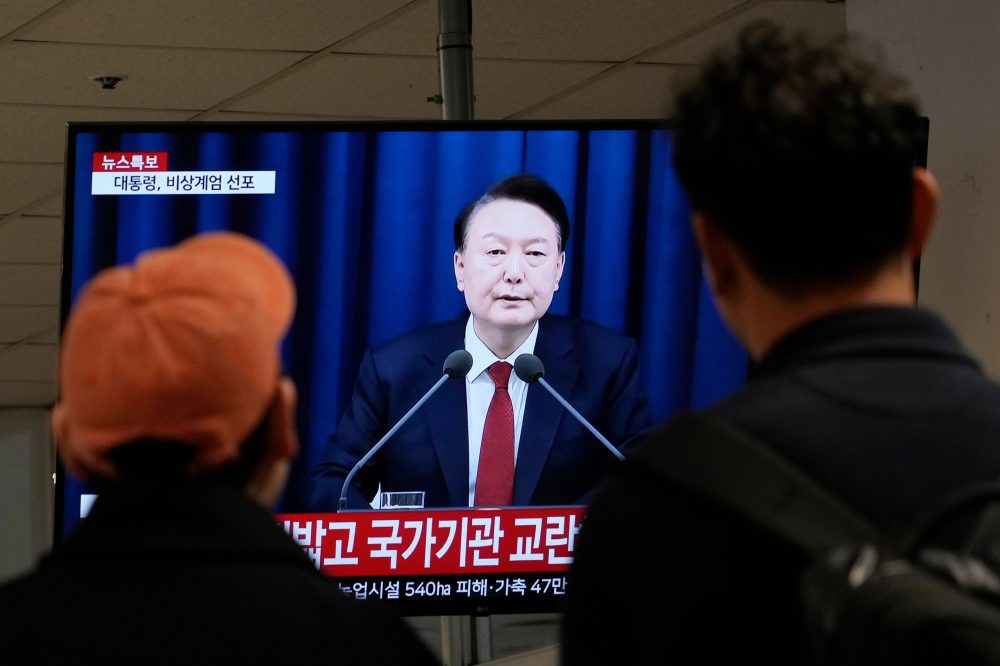
    Around 10:30 p.m., Yoon shocked the nation with a televised martial law announcement, calling the opposition-led legislature a “den of criminals” that was crippling government operations. He promised to “eradicate” what he termed “anti-state” liberal opponents. Armed forces and police quickly surrounded the National Assembly building.

    Just after midnight, National Assembly Speaker Woo Won Shik announced via YouTube that lawmakers would use “constitutional procedure” to counter Yoon’s declaration. By 1 a.m., 190 legislators—including 18 from Yoon’s own People Power Party—unanimously voted to end martial law. Military and police forces withdrew from the assembly grounds. At 4:30 a.m., a Cabinet meeting officially terminated martial law.

    An impeachment attempt against Yoon failed when most ruling party members refused to participate in the vote.

    Authorities arrested former Defense Minister Kim for his involvement in planning and implementing the martial law order.

    The Justice Ministry prohibited Yoon from leaving the country as multiple agencies launched competing investigations into rebellion and related charges.

    Kim received formal arrest on charges of conspiring with Yoon and others in the martial law plot. Officials revealed Kim attempted suicide hours before a Seoul court approved his detention warrant.

    Yoon characterized his martial law order as legitimate governance and rejected rebellion accusations, promising to “fight to the end” against impeachment efforts.

    Lawmakers successfully impeached Yoon with a 204-85 vote, elevating Prime Minister Han Duck-soo to acting president.

    The National Assembly also impeached acting President Han for refusing to appoint Constitutional Court justices before the court’s decision on Yoon’s removal.

    Seoul Western District Court authorized Yoon’s detention for questioning.

    Investigators attempted to arrest Yoon at the presidential residence but were prevented by security personnel and physical barriers.

    Anti-corruption officials and police successfully raided the presidential compound and detained Yoon, marking the first arrest of a sitting South Korean president.

    Seoul Western District Court issued Yoon’s formal arrest warrant over evidence tampering concerns. His arrest sparked violent protests by supporters who stormed the courthouse, breaking windows and damaging equipment. Police arrested approximately 90 rioters.

    The Seoul Central District Prosecutors’ Office charged Yoon with orchestrating attempted rebellion, alleging he illegally tried to control the legislature and election facilities while planning to arrest political rivals.

    Seoul Central District Court ordered Yoon’s release from custody due to unresolved questions about investigators’ detention authority. He was freed the next day.

    The Constitutional Court reversed Prime Minister Han’s impeachment, reinstating his role as acting leader.

    The Constitutional Court confirmed Yoon’s impeachment and presidential removal, mandating an election within 60 days. Officials set June 3 as the election date.

    Seoul Central District Court conducted the initial hearing for Yoon’s rebellion case.

    Democratic Party candidate Lee Jae Myung, Yoon’s liberal opponent, won the presidential election.

    Seoul Central District Court approved Yoon’s re-arrest after special prosecutors argued he might destroy evidence.

    Authorities arrested Yoon’s wife, Kim Keon Hee, as investigators prepared bribery and other criminal charges.

    Special prosecutors charged Kim Keon Hee and former Prime Minister Han with assisting Yoon’s martial law declaration, document falsification and destruction, and perjury.

    Investigators added charges against Yoon for allegedly ordering drone flights over North Korea to increase tensions and justify martial law plans.

    A special prosecutor requested the death penalty for Yoon on rebellion charges.

    Seoul Central District Court sentenced Yoon to five years for resisting arrest and fabricating the martial law declaration in the first verdict against him.

    Seoul Central District Court gave Han a 23-year sentence for supporting Yoon’s martial law and other offenses.

    Seoul Central District Court sentenced Yoon’s wife Kim to 20 months in jail on corruption charges.

    Seoul Central District Court sentenced Yoon’s former interior minister Lee Sang-min to seven years for supporting the martial law decree.

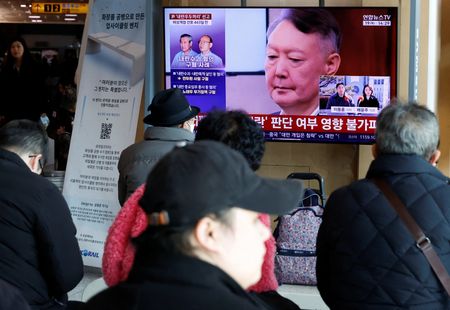
    Seoul Central District Court imposed a life sentence on Yoon for rebellion charges. His attorneys expressed disappointment with the verdict and said they would consider whether to file an appeal.

  • Two Foreign Nationals Arrested in Georgia for Attempting $3M Uranium Purchase

    Two Foreign Nationals Arrested in Georgia for Attempting $3M Uranium Purchase

    Security officials in the nation of Georgia have taken two foreign nationals into custody after they attempted to buy nuclear materials worth $3 million, including uranium and a dangerous radioactive substance used in nuclear weapons programs, authorities announced Thursday.

    The arrests took place in Kutaisi, where the State Security Service apprehended the suspects from undisclosed countries, according to an official statement.

    “They were planning to illegally purchase nuclear material uranium and radioactive substance Cesium 137 for $3 million and illegally transport it to the territory of another country,” the security service stated.

    Officials revealed that additional foreign individuals have been coming to Georgia in recent weeks with similar intentions to buy and smuggle nuclear and radioactive substances, though they provided no further details about these activities.

    Authorities did not disclose how much material the suspects were trying to obtain, nor did they reveal where the substances came from or their intended final destination.

    Cesium 137 represents a particularly dangerous radioactive material that typically appears following nuclear weapons tests and nuclear power plant disasters, including the catastrophic Chernobyl accident that occurred in what was then Soviet Ukraine in 1986.

    Nuclear material security became a major international concern following the Soviet Union’s collapse in 1991, when Georgia was still part of the former communist bloc. The country has experienced multiple serious cases involving illegal nuclear material trafficking over the past several decades.

    In the most recent previous incident, authorities in the Georgian capital of Tbilisi arrested three Chinese nationals who were attempting to purchase two kilograms of uranium described as “nuclear material.”

  • Gas Explosion Brings Down Building in Pakistan, 13 Dead Including 7 Children

    Gas Explosion Brings Down Building in Pakistan, 13 Dead Including 7 Children

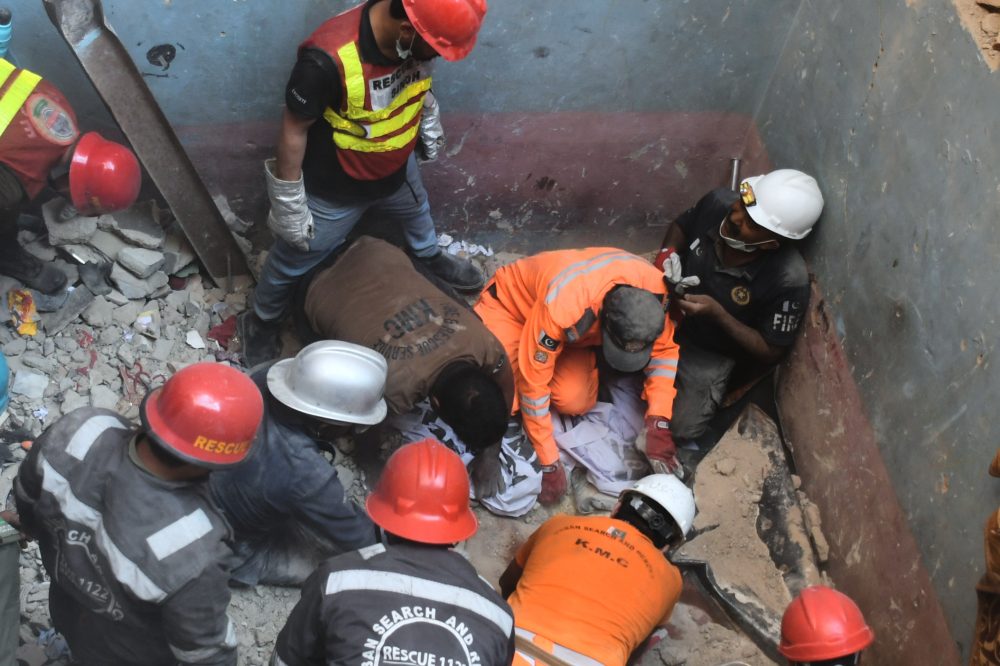
    A devastating gas cylinder explosion brought down a multi-story residential building in Pakistan’s largest city Thursday, leaving at least 13 people dead, according to local authorities.

    The deadly blast occurred on the ground level of the residential complex located in Soldier Bazaar, a neighborhood on the eastern side of Karachi, the major southern port city, officials reported.

    Among the fatalities were seven children, with the youngest victim being just two years old, according to police official Summaiya Syed.

    Authorities are still working to determine what caused the gas cylinder to detonate, police stated.

    Rescue teams pulled more than a dozen injured survivors from the wreckage, though emergency responders warn additional victims may still be trapped beneath the debris.

    This tragedy follows another deadly incident in Karachi just last month, when a massive blaze at a shopping mall claimed more than 70 lives.

  • Former South Korean President Gets Life Sentence After Failed Martial Law Attempt

    Former South Korean President Gets Life Sentence After Failed Martial Law Attempt

    SEOUL – Former South Korean President Yoon Suk Yeol received a life prison sentence Thursday from a Seoul court for orchestrating an insurrection during his short-lived martial law declaration in December 2024.

    The dramatic events began on December 3, 2024, when Yoon announced on national television just before 10:30 p.m. that he was implementing martial law to eliminate what he called “anti-state forces” and break through political gridlock.

    Within an hour, military orders banned all political party activities and legislative functions. Security forces surrounded the opposition-controlled parliament building, where staff members fought back using barricades and fire extinguishers against special operations troops. Lawmakers climbed over fences to bypass security barriers as demonstrators gathered outside.

    By early December 4, with 190 legislators in attendance, parliament unanimously rejected Yoon’s martial law order, prompting military forces to withdraw. Approximately 3.5 hours later, Yoon reversed his decision. The entire martial law period lasted roughly six hours.

    Opposition lawmakers immediately filed impeachment proceedings against Yoon. U.S. Deputy Secretary of State Kurt Campbell stated that Yoon had “badly misjudged” his martial law decision.

    On December 7, Yoon delivered a public apology to the nation, stating he would leave his political future to his ruling People Power Party (PPP), though he stopped short of announcing his resignation. An initial impeachment vote failed due to a PPP boycott that prevented the required quorum.

    Criminal investigations began December 8, with prosecutors targeting Yoon over the martial law incident. Former Defense Minister Kim Yong-hyun was taken into custody that same day.

    Army Special Warfare Command leader Kwak Jong-geun testified before parliament on December 10 that Yoon had instructed him to “drag out” legislators from the parliament building following the martial law announcement.

    Yoon declared he would “fight to the end” on December 12, making accusations that North Korea had infiltrated South Korea’s election systems and questioning his party’s significant electoral losses in April.

    Parliament successfully impeached Yoon on December 14 with support from 204 out of 300 lawmakers, including at least 12 members from his own PPP. His presidential authority was immediately suspended, with Prime Minister Han Duck-soo stepping in as acting president.

    The Constitutional Court started examining the impeachment case on December 16. However, parliament also impeached acting President Han on December 27, leading Finance Minister Choi Sang-mok to assume acting presidential duties.

    A Seoul court issued an arrest warrant for Yoon on December 31 after he failed to appear for questioning. Yoon’s legal team denounced the warrant as illegal and claimed investigators lacked proper authority.

    Between January 3-15, 2025, authorities made unsuccessful attempts to arrest Yoon during confrontations with presidential security and military personnel at his residence. Yoon eventually surrendered after a local court extended his arrest warrant.

    During his Constitutional Court impeachment hearing on January 21, Yoon refuted claims that he had ordered military leaders to remove lawmakers from parliament by force.

    Prosecutors formally charged Yoon with insurrection on January 26 and requested his continued detention.

    A court canceled Yoon’s arrest warrant on March 9, leading to his release from custody.

    The Constitutional Court ruled on April 4 that Yoon had breached his constitutional obligations and permanently removed him from the presidency.

    The liberal Democratic Party selected former leader and 2022 presidential candidate Lee Jae Myung as their nominee for the special election on April 27.

    Lee won the presidency in the emergency election held June 3.

    Yoon returned to jail on July 10 after a court granted the special prosecutor’s detention request.

    In a historic first for South Korea, Yoon’s wife, former first lady Kim Keon Hee, was detained on August 13 following court approval of an arrest warrant, making them the first presidential couple simultaneously imprisoned in the nation’s history.

    Special prosecutors charged former first lady Kim with bribery and additional offenses on August 29.

    On October 10, special prosecutors indicted Han Hak-ja, head of South Korea’s Unification Church, for allegedly orchestrating bribes to former first lady Kim.

    Additional charges related to the martial law incident were filed against Yoon on November 10, including accusations of assisting an enemy nation.

    Special prosecutors sought a 15-year prison term for former Prime Minister Han on November 26 for allegedly supporting insurrection and committing perjury.

    On December 15, special prosecutors claimed Yoon had attempted to provoke North Korea into armed conflict to validate his martial law declaration.

    The special prosecutor requested the death penalty for Yoon on insurrection charges on January 13, 2026.

    Seoul Central District Court sentenced Yoon to five years in prison on January 16 for charges including obstruction of arrest attempts.

    The same court imposed a 23-year sentence on former Prime Minister Han on January 21 for his central role in the insurrection.

    Former first lady Kim received a 20-month jail sentence on January 28 for accepting bribes.

    On February 12, Seoul Central District Court sentenced former Interior Minister Lee Sang-min to seven years in prison for his involvement in the martial law attempt.

    The legal proceedings concluded Thursday with Seoul Central District Court’s life sentence for Yoon Suk Yeol for leading the insurrection.

  • Military Tensions Rise Between US and Iran as Nuclear Negotiations Stall

    Military Tensions Rise Between US and Iran as Nuclear Negotiations Stall

    DUBAI, United Arab Emirates (AP) — Military tensions between the United States and Iran escalated Thursday as both countries engaged in shows of naval force while nuclear negotiations remained uncertain, with Tehran conducting joint exercises with Russia as Washington moved an aircraft carrier closer to Middle Eastern waters.

    The Iranian military exercise alongside the positioning of the USS Gerald R. Ford aircraft carrier near the Mediterranean Sea entrance highlight growing tensions between the two nations. Earlier this week, Iran also conducted live-fire exercises in the Strait of Hormuz, the critical waterway that handles one-fifth of global oil shipments.

    The deployment of additional American naval vessels and aircraft doesn’t necessarily signal an imminent U.S. military strike against Iran, but it provides President Donald Trump with operational capabilities should he decide to take such action. Trump has thus far refrained from military action despite establishing clear boundaries regarding the deaths of peaceful demonstrators and Tehran’s mass executions, while attempting to restart nuclear discussions previously interrupted by the Iran-Israel conflict in June.

    “Should Iran decide not to make a Deal, it may be necessary for the United States to use Diego Garcia, and the Airfield located in Fairford, in order to eradicate a potential attack by a highly unstable and dangerous Regime,” Trump wrote on his Truth Social website, seeking to pressure the United Kingdom over its plans to settle the future of the Chagos Islands with Mauritius.

    Concurrently, Iran faces domestic turmoil following its harsh response to protests, with families now conducting memorial services for those killed 40 days after their deaths at the hands of security forces. Several of these gatherings have featured anti-government demonstrations, despite official warnings from authorities.

    Thursday’s military exercise involved Iranian and Russian naval personnel operating in the Gulf of Oman and Indian Ocean waters, according to Iran’s official IRNA news agency. The exercise focused on “upgrading operational coordination as well as exchange of military experiences,” IRNA reported.

    While China participated in the “Security Belt” exercise in previous years, there was no confirmation of Chinese involvement in this iteration. Recently, what appeared to be a Russian Steregushchiy-class corvette was observed at Iran’s Bandar Abbas military facility.

    Iranian authorities also issued warnings to regional pilots about potential rocket launches, indicating plans to test anti-ship missiles during the exercise.

    Tracking information revealed the Ford positioned off Morocco’s Atlantic coast Wednesday afternoon, suggesting the carrier could pass through Gibraltar and potentially deploy to the eastern Mediterranean alongside its escort destroyers.

    Stationing the carrier in that region would provide American forces with additional aircraft and defensive missile capabilities to potentially safeguard Israel and Jordan if hostilities with Iran develop. The U.S. employed similar naval positioning during the Israel-Hamas conflict in Gaza to counter potential Iranian attacks.

    Memorial ceremonies for protest victims killed by security forces last month have intensified. Iranian tradition calls for commemorating deceased family members 40 days after their passing. Eyewitness accounts and social media footage documented memorial gatherings at Tehran’s expansive Behesht-e Zahra cemetery. Some ceremonies featured participants chanting against Iran’s religious government while performing patriotic songs.

    The protest movement started December 28 at Tehran’s historic Grand Bazaar, initially triggered by Iran’s currency collapse, then expanded nationwide. Tensions peaked January 8, coinciding with demonstrations organized by Iran’s exiled crown prince, Reza Pahlavi.

    Iran’s administration has provided only one official casualty count for the violence, claiming 3,117 deaths. The U.S.-based Human Rights Activists News Agency, which has maintained accuracy during previous Iranian unrest periods, estimates over 7,000 fatalities, with additional deaths suspected.

  • Deadly Gas Blast in Pakistan Kills 16 as Building Partially Collapses

    Deadly Gas Blast in Pakistan Kills 16 as Building Partially Collapses

    KARACHI, Pakistan — At least 16 people lost their lives Thursday morning when a devastating gas explosion tore through an apartment complex in Karachi, Pakistan’s major port city, causing a partial building collapse that trapped victims under debris, according to police and emergency response teams.

    The deadly blast occurred as residents were cooking their pre-dawn meal to mark the beginning of Ramadan in a neighborhood within Karachi, located in Sindh province, local police commander Rizwan Patel reported. Emergency crews continued digging through the wreckage searching for anyone who might still be alive beneath the collapsed sections, Patel explained.

    Officials initially confirmed 13 fatalities, but Patel announced the count climbed to 16 after rescue workers recovered three additional bodies from the destruction.

    Pakistan’s President Asif Ali Zardari issued a statement expressing grief and offering sympathy to bereaved families while ordering officials to provide top-quality medical care for those wounded. He also demanded rapid completion of search and rescue efforts and pressed the Sindh provincial leadership to strengthen construction regulations, improve gas cylinder safety measures, and launch a comprehensive investigation to prevent future tragedies.

    Throughout Karachi and other Pakistani cities, residential buildings typically receive natural gas service for cooking purposes. Many families supplement this with liquefied petroleum gas tanks due to inadequate natural gas pressure in their neighborhoods.

    A similar tragedy struck Pakistan’s capital city of Islamabad this past July, when a gas explosion at a wedding celebration claimed eight lives, including the newlywed couple. Officials reported the deadly blast happened while wedding guests had come together to honor the bride and groom.

  • Former South Korean President Gets Life Sentence for Failed Martial Law Attempt

    Former South Korean President Gets Life Sentence for Failed Martial Law Attempt

    A former prosecutor turned president has been sentenced to spend the rest of his life behind bars after his risky political maneuvers finally caught up with him.

    Yoon Suk Yeol, 65, received a life sentence Thursday from Seoul Central District Court for orchestrating an insurrection, marking a dramatic conclusion to his meteoric rise and spectacular collapse from South Korea’s highest office.

    The former leader’s reckless decision to impose martial law ultimately sealed his fate, according to those who worked alongside him during his career in law enforcement and politics.

    A telling glimpse into Yoon’s mindset emerged from former judge Han Dong-soo, who recalled a 2020 dinner conversation where the then-powerful prosecutor made a startling admission.

    “If I had gone to the military academy, I would have staged a coup,” Han quoted Yoon as saying during the evening gathering with flowing alcohol.

    The court determined Thursday that Yoon violated constitutional principles by implementing martial law, sending military forces to invade parliament and attempt to arrest his political rivals.

    Looking noticeably thinner than when he was arrested a year ago, Yoon appeared pale and shaken as he listened to the verdict while dressed in a dark suit. His legal team expressed opposition to the ruling and indicated they would consider filing an appeal.
    Yoon has consistently maintained his innocence, claiming his martial law declaration served as a necessary alert that democratic principles and liberty faced danger from “anti-state” elements attempting to seize control of South Korea.

    His path to the presidency began through his work as a prosecutor investigating sitting presidents, which made him widely recognized across the nation.

    “Yoon Suk Yeol was the most powerful prosecutor-general ever,” Han observed, having overseen internal affairs at the prosecutor’s office during Yoon’s tenure.

    “He used the office to carry out his plan to become president and in doing so, his actions were daring.”

    By 2022, following his leadership of a corruption probe involving the justice minister, conservative voters who had grown frustrated with then-President Moon Jae-in’s liberal agenda embraced Yoon as their presidential nominee.

    However, his time in office brought constant conflicts with opposition forces, which former prosecution colleague Lee Sung-yoon said revealed the reckless tendencies that had always characterized Yoon’s approach.

    When Yoon declared martial law in December 2024, his political standing had severely deteriorated due to controversies surrounding his wife, Kim Keon Hee, who faced accusations of improperly receiving gifts, though charges weren’t filed initially.

    Following Yoon’s removal from office, a special prosecutor’s investigation led to Kim’s bribery conviction in January, resulting in her current 20-month prison sentence.

    The year leading up to Yoon’s martial law announcement was marked by continuous opposition battles that prevented his policy initiatives and legislative priorities from moving forward.

    Despite domestic struggles, Yoon achieved notable success in international relations.

    His efforts to end a longstanding diplomatic dispute with Japan and establish trilateral security partnership with Japan and the United States stand out as among his limited policy victories.

    Yoon’s ability to connect personally with world leaders was memorably demonstrated at a 2023 White House gathering, where he surprised then-President Joe Biden and thrilled the audience by performing the 1970s classic “American Pie.”

    Coming from a wealthy background, Yoon performed well academically and gained admission to prestigious Seoul National University law school. However, his love of social activities caused him to fail the bar examination multiple times before finally succeeding on his ninth attempt at 30 years old.

    During his prosecution career, colleagues knew him for his relaxed demeanor, but associates noted increased ambition following his marriage to Kim, an accomplished art curator.

    His presidency began controversially when he relocated the presidential office away from the historic Blue House complex, raising speculation about whether feng shui beliefs regarding the location’s supposed curse influenced the decision.

    Yoon rejected claims that he and his wife had any connection to a shaman.

    Critics accused him of protecting his “yes men” when he declined to dismiss senior officials after a Halloween crowd disaster claimed 159 lives.

    Among those he protected was Safety Minister Lee Sang-min, a fellow graduate of Yoon’s high school, who later received a seven-year sentence for his involvement in the martial law declaration.

    Another high school classmate, Defense Minister Kim Yong-hyun, previously served as presidential security chief and now faces insurrection charges for allegedly being the primary advisor who encouraged Yoon to impose martial law. Kim has denied any wrongdoing.

    Political science professor Shin Yul from Myongji University believes Yoon’s downfall resulted from following bad advice, suggesting the former president likely “still thinks he did the right thing” regarding his martial law decision.

  • UK Orders Removal of Four Chagossians Who Landed on Remote Island

    UK Orders Removal of Four Chagossians Who Landed on Remote Island

    Four individuals with ties to the Chagos Islands found themselves facing eviction orders from British officials after arriving on a remote atoll earlier this week in what they hoped would disrupt Britain’s plans to hand over the territory to Mauritius.

    The group touched down Monday on Ile du Coin, located within the Peros Banhos atoll, with additional people expected to join what organizers described as a permanent community.

    A British Foreign Office representative condemned their arrival as an “illegal, unsafe stunt” that would not assist the collaborative efforts between the UK and Mauritius to restart heritage visit programs to the Chagos Islands.

    According to a 2025 deal, Britain plans to hand over control of the Chagos Islands to Mauritius while maintaining authority over the strategically vital U.S.-UK military facility on Diego Garcia through a 99-year lease arrangement.

    British politician Nigel Farage, who leads the Reform UK party, described the four as British passport holders attempting to “reclaim their birthright” and indicated he was researching legal options to assist them.

    “They were this morning served an eviction notice on behalf of the British government, and told that unless they comply, they could face up to three years in prison,” he stated during a London press conference.

    Documents reviewed by Reuters show the eviction notices, sent to each individual by a British Indian Ocean Territory immigration officer, declared their presence unlawful and ordered their departure.

    The paperwork cautioned that violating the directive by returning would constitute a criminal act carrying penalties of up to three years behind bars, a fine of 3,000 pounds sterling ($4,060), or both punishments combined.

    During the 1960s and 1970s, as many as 2,000 Chagossians were forced from their homes in the archipelago and relocated primarily to Mauritius and Britain.

    Some Chagossians have voiced opposition to the sovereignty transfer agreement, claiming Mauritius has ignored their needs for decades, though Mauritius disputes these accusations.

  • UN Investigation Finds Evidence of Genocide in Sudan City Attack

    UN Investigation Finds Evidence of Genocide in Sudan City Attack

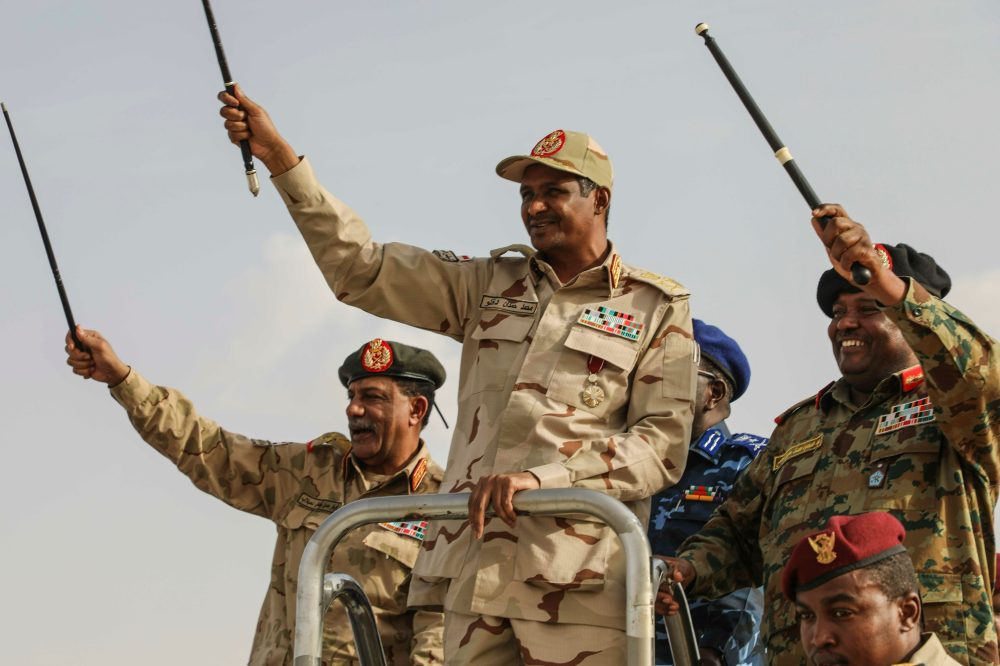
    A United Nations investigation has concluded that the brutal takeover of a Sudanese city by paramilitary forces shows clear signs of genocide, according to a report released Thursday.

    The UN Independent International Fact-Finding Mission for Sudan found that when the Rapid Support Forces seized control of al-Fashir in late October, they systematically murdered members of non-Arab ethnic groups during three horrific days of violence.

    Al-Fashir had served as the final government stronghold in Sudan’s western Darfur region before falling to the RSF after an 18-month blockade. During that siege, investigators say the paramilitary group deliberately created living conditions designed to physically destroy the Zaghawa and Fur communities.

    According to the UN mission, evidence shows the RSF systematically targeted people based on their ethnicity, gender, and perceived political loyalties. The attacks included mass executions, sexual assault, torture, and other acts that constitute core elements of genocide under international law.

    Mission Chairman Mohamad Chande Othman emphasized the organized nature of the violence. “The scale, coordination, and public endorsement of the operation by senior RSF leadership demonstrate that the crimes committed in and around al-Fashir were not random excesses of war,” Othman stated.

    “They formed part of a planned and organised operation that bears the defining characteristics of genocide,” he continued.

    The report describes how al-Fashir’s population consisted primarily of the Zaghawa people, while surrounding refugee camps housed members of the Fur, Berti, Masalit, and Tama communities before the attack.

    Survivors told investigators about explicit threats from RSF forces to “clean” the city. The paramilitary group used drones and heavy artillery to attack displacement camps, community kitchens, and medical facilities while conducting widespread killings, theft, beatings, and sexual violence throughout al-Fashir.

    The investigation found that the RSF’s “exterminatory rhetoric” and other violations demonstrated clear intent to destroy the Zaghawa and Fur populations either completely or partially.

    “Witnesses heard the Rapid Support Forces saying, ‘Is there anyone Zaghawa among you? If we find Zaghawa, we will kill them all’,” the report documented.

    Survivors described point-blank executions of civilians and streets filled with the bodies of men, women, and children. The report also details how women and girls between ages 7 and 70 from non-Arab communities, especially the Zaghawa, were subjected to rape and other forms of sexual violence, including whipping and forced nudity.

    British Foreign Secretary Yvette Cooper called for strong international action in response to the findings. “The findings of this UN report are truly horrific — atrocities including systematic starvation, torture, killings, rape and deliberate ethnic targeting used on the most horrendous scale during the Rapid Support Forces siege of al-Fashir,” Cooper said in a statement.

    The UN mission received its mandate from Human Rights Council members, including Britain, to urgently examine violations of international law in and around al-Fashir. Investigators shared their final report with Sudan’s government but received no response, while the RSF declined to meet with mission leadership.

    Neither the RSF nor Sudan’s Armed Forces immediately responded to requests for comment from Reuters. The RSF has previously rejected similar allegations, claiming such reports are fabricated by opponents while making counter-accusations against their enemies.

  • Britain Slams Iran’s 10-Year Prison Terms for UK Couple on Spy Charges

    Britain Slams Iran’s 10-Year Prison Terms for UK Couple on Spy Charges

    Britain’s foreign secretary is strongly denouncing Iran’s decision to hand down decade-long prison sentences to two UK citizens accused of spying, calling the punishment completely without merit.

    Foreign Minister Yvette Cooper issued a sharp rebuke Thursday regarding the sentencing of Craig and Lindsay Foreman, who face 10 years in Iranian custody after being accused of collecting intelligence across multiple regions of the country.

    “We will pursue this case relentlessly with the Iranian government until we see Craig and Lindsay Foreman safely returned to the UK and reunited with their family,” Cooper declared in her official response.

    According to Joe Bennett, who is Lindsay’s son, the pair faced a three-hour court proceeding on October 27 where they were denied the opportunity to mount any defense against the charges.

    “We have seen no evidence to support the charge of espionage,” Bennett stated, expressing his family’s serious worries about the couple’s well-being and criticizing the lack of openness in Iran’s legal proceedings.

  • Albania’s Deputy PM Faces Corruption Charges as EU Membership Hopes Hang in Balance

    Albania’s Deputy PM Faces Corruption Charges as EU Membership Hopes Hang in Balance

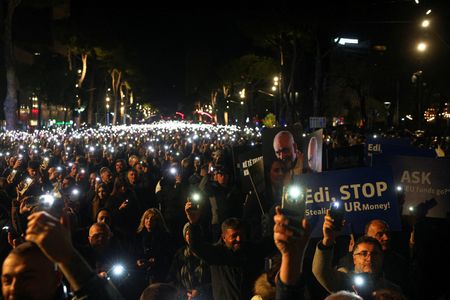
    Violent demonstrations erupted in Albania’s capital last week as citizens threw gasoline bombs at government offices while law enforcement deployed tear gas and water cannons to control the crowds. Protesters could be heard shouting demands for Prime Minister Edi Rama’s resignation, calling his administration corrupt.

    The unrest stems from corruption charges filed in December against Deputy Prime Minister Belinda Balluku by Albania’s special anti-corruption prosecutor’s office, SPAK. Balluku faces allegations of manipulating the bidding process for two major infrastructure projects in 2021 valued at more than 200 million euros.

    Balluku, considered a political rising star and potential heir to Rama’s leadership, maintains her innocence. The Prime Minister has continued supporting her despite mounting pressure.

    The corruption allegations pose a significant threat to Albania’s European Union membership aspirations, with the country aiming to join the bloc by 2030. The ongoing crisis represents one of the most serious challenges for Rama, who has governed the Balkan nation since 2013 and secured his fourth consecutive term last year.

    “Albania has to understand that to become an EU member, respecting the rule of law is a prerequisite,” stated Andi Hoxhaj, a Balkan expert at King’s College London. “That has to hit home, or it will not look good with the EU.”

    Rama’s representative Manjola Hasa defended the government’s anti-corruption efforts when contacted by Reuters. “Albania deserves to join (the EU) for many reasons and fighting corruption with no second thoughts is one of them,” Hasa responded.

    Following nearly five decades of communist isolation that ended in the early 1990s, Albania experienced widespread corruption issues common throughout post-communist Eastern Europe. The country made significant progress through judicial system overhauls in 2016, establishing SPAK in 2019, and achieving steady economic development.

    EU membership negotiations commenced in 2022, and Albania reached a milestone on November 17 when it entered the final phase of accession discussions, positioning itself as a leading candidate in the EU’s Balkan expansion initiative.

    Just three days following this achievement, SPAK announced the charges against Balluku.

    The accusations center on two 2021 infrastructure projects – a highway tunnel construction contract and a section of Tirana’s ring road development. As infrastructure minister, Balluku allegedly manipulated the tender processes to benefit particular construction companies.

    Court documents reviewed by Reuters contain text message exchanges between Balluku and associates, including the Albanian Road Authority director, who also faces charges.

    One September 10, 2021 message shows Balluku apparently requesting the director arrange a meeting with a NOVA Construction 2012 representative.

    Within four days of this meeting, NOVA partnered with two other firms to create a consortium that subsequently secured the ring road project.

    According to SPAK, Balluku “predetermined the winner” and “created unfair advantages and privileges.”

    Reuters could not confirm whether the requested meeting occurred. NOVA Construction declined to comment, as did Balluku’s legal counsel.

    After an anti-corruption court suspended Balluku in November, she stated she would not address the case or respond to “half-truths and lies.”

    Relations between SPAK and Prime Minister Rama have grown increasingly tense. The prosecutor’s office seeks to remove Balluku’s protection from pre-trial detention, but Rama opposes this action and accuses SPAK of exceeding its authority.

    During Monday’s parliamentary session, Rama revealed he had rejected Balluku’s resignation attempts three times. “There is no such thing as a resignation under pressure from a power that has stepped outside its territory,” he declared while Balluku observed.

    That same day, Rama announced plans to modify legislation protecting ministers from suspension during criminal investigations, a proposal opposition leaders claim is designed to shield him and his political allies.

    European Union officials are monitoring the situation closely.

    “Rhetoric that sows public mistrust in the judiciary and in the independence, impartiality and integrity of the judicial and prosecutorial systems is counterproductive,” the EU’s Tirana office stated to Reuters.

    “Fighting corruption effectively is of paramount importance for Albania’s progress towards EU membership.”

  • European Intelligence Chiefs Doubt Ukraine Peace Deal Will Happen This Year

    European Intelligence Chiefs Doubt Ukraine Peace Deal Will Happen This Year

    MUNICH – Five senior European intelligence officials are casting doubt on President Trump’s optimistic assessment that a Ukraine peace deal is “reasonably close,” telling Reuters they believe Russia has no intention of ending the conflict anytime soon.

    The intelligence chiefs, who requested anonymity when speaking with Reuters recently, indicated that Moscow is primarily using ongoing diplomatic discussions with the United States to pursue sanctions relief and business opportunities rather than genuine peace negotiations.

    One European intelligence leader characterized the discussions – including the latest round held in Geneva this week – as “negotiation theatre.”

    These assessments reveal a significant divide between European intelligence services and the White House, which according to Ukraine hopes to secure a peace agreement by June, ahead of November’s U.S. congressional midterm elections. Trump has expressed confidence that Russian President Vladimir Putin is interested in making a deal.

    “Russia is not seeking a peace agreement. They are seeking their strategic goals, and those have not changed,” stated one intelligence chief. Moscow’s objectives continue to include removing Ukrainian President Volodymyr Zelenskyy from power and transforming Ukraine into a “neutral” buffer zone between Russia and Western nations.

    A second intelligence official emphasized that Russia has neither the desire nor the necessity for rapid peace, noting that the Russian economy is “not on the verge of collapse.”

    While the intelligence leaders did not reveal their information sources, their agencies employ human intelligence assets, communications intercepts, and various other collection methods. All five confirmed they prioritize Russia as a key intelligence target.

    Russia’s foreign ministry has not yet responded to requests for comment.

    Putin has indicated willingness to pursue peace, but only under his conditions. Russian officials maintain that European governments have consistently misjudged Russia in their analyses.

    DIPLOMATIC EFFORTS CONTINUE

    Ukrainian and Russian representatives conducted their third U.S.-facilitated meeting of 2026 this week without achieving breakthroughs on major disputes, particularly territorial issues.

    Russia demands that Ukraine withdraw its military forces from the remaining 20% of eastern Donetsk region not under Russian control, a requirement Ukraine categorically rejects.

    According to the second intelligence official, while Russia might accept territorial gains limited to the rest of Donetsk, this would not satisfy Moscow’s broader goal of removing Zelenskyy’s pro-Western administration.

    A third intelligence chief warned against assuming that Ukrainian territorial concessions in Donetsk would rapidly produce a comprehensive peace agreement.

    “In the case of the Russians getting these concessions, I (think) that this is maybe the beginning of actual negotiations,” the official predicted, suggesting Russia would then present additional demands.

    This same official also criticized what they described as “very limited” negotiating expertise regarding Russia throughout the West, including Europe, despite Zelenskyy’s call for active European participation in the talks.

    The U.S. negotiating team is headed by Steve Witkoff, a real estate developer and longtime Trump associate, along with Jared Kushner, the president’s son-in-law.

    While both men have handled other conflicts for Trump, neither possesses formal diplomatic training or specialized knowledge of Russia or Ukraine.

    White House spokeswoman Anna Kelly responded to the criticism by stating that anonymous complaints do not assist U.S. peace efforts. “President Trump and his team have done more than anyone to bring both sides together to stop the killing and deliver a peace deal,” Kelly said.

    ECONOMIC CONSIDERATIONS

    Two officials reported that Moscow is attempting to divide negotiations into separate tracks – one addressing the war itself and another focusing on bilateral U.S.-Russia agreements that would include sanctions relief.

    Zelenskyy revealed that his intelligence services informed him that U.S. and Russian negotiators have discussed bilateral cooperation deals worth up to $12 trillion, proposed by Russian envoy Kirill Dmitriev.

    The European officials did not elaborate on these discussions.

    The second intelligence chief suggested this proposal targets both Trump’s interests and Russian oligarchs who have not benefited from the war due to sanctions but whose support Putin requires as Russia’s economy faces increasing challenges.

    This official characterized Russia as a “resilient society” capable of withstanding hardship.

    However, the third official identified “very high” financial risks facing Russia in the latter half of 2026, citing factors including Moscow’s restricted capital market access due to sanctions and elevated borrowing costs.

    Economic analysts suggest Russia’s economy is experiencing somewhere between stagnation and recession after achieving only 1% growth last year.

    Russia’s central bank has set its key interest rate at 15.5%, directly affecting borrowing costs nationwide. The liquid portion of Russia’s emergency fund used to address budget deficits has decreased by more than half since the 2022 invasion began.

  • Former South Korean President Convicted of Insurrection Over Martial Law Attempt

    Former South Korean President Convicted of Insurrection Over Martial Law Attempt

    SEOUL – Former South Korean President Yoon Suk Yeol was convicted Thursday on insurrection charges stemming from his unsuccessful effort to impose martial law on the nation in December 2024.

    The court’s decision represents a major legal milestone in the case against Yoon, who was found guilty of orchestrating what prosecutors described as an insurrectionary plot when he attempted to declare martial law last year.

    The failed martial law declaration had thrown South Korea into political turmoil before being quickly reversed.

  • Ancient Roman Stone Quarries Still Supply Modern Churches and Temples Worldwide

    Ancient Roman Stone Quarries Still Supply Modern Churches and Temples Worldwide

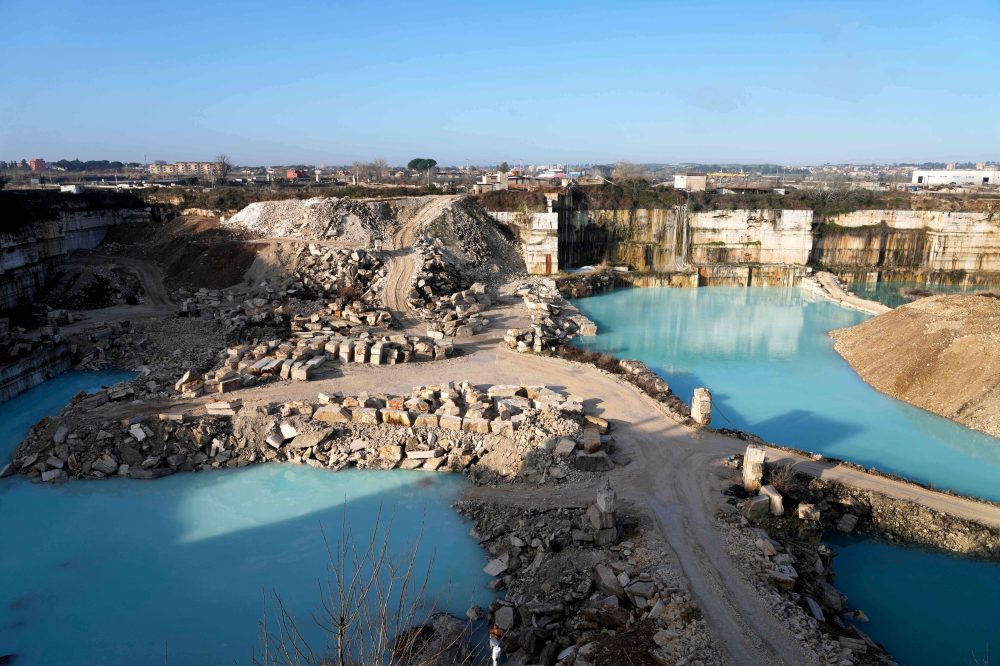
    TIVOLI, Italy (AP) — Centuries ago, Roman builders would travel to quarries near Tivoli to extract chunks of porous limestone called lapis tiburtinus — what we now call travertine — then transport the stone blocks on rafts down the river to construction sites.

    This ancient process created the iconic Colosseum two millennia ago. The same method was used centuries later for St. Peter’s Basilica and Bernini’s magnificent colonnade.

    The identical quarries that supplied Rome’s legendary travertine continue operating today, providing their signature hole-filled stone for modern religious structures, houses of worship, and mosques worldwide — plus banks, cultural institutions, government facilities and residential properties.

    Although other nations produce similar sedimentary limestone, Roman travertine stands apart because workers extract it from underground sulfuric springs and pools surrounding Tivoli. Composed primarily of calcium carbonate minerals, this Roman stone developed over hundreds of thousands of years through calcium, sulfur and mineral deposits, displaying the area’s volcanic past, ancient forests and fossil remains in its layered bands.

    Architects value the material for multiple qualities: durability, abundance and resistance to various weather conditions and environmental challenges. The cutting method and location determine its appearance, ranging from rough to smooth textures, warm white with irregular dark pockets to sandy tan with gray, brown or green streaks.

    The Mariotti Carlo SpA stone-cutting company has shaped travertine to specification for four generations, completing some of the globe’s most notable architectural projects: Los Angeles’ Getty Center, Beijing’s Bank of China headquarters, and the Great Mosque in Algiers, Algeria.

    During a recent work session, components for a temple reconstruction by The Church of Jesus Christ of Latter-day Saints, commonly called the Mormon church, sat arranged across Mariotti’s Tivoli warehouse floor — travertine chunks extracted from local quarries and shaped into custom puzzle-like sections for assembly at the New York City location.

    Following their travertine supply work for the Latter-day Saint temple in Rome, church architects selected Mariotti to renovate the Manhattan Upper West Side temple. This temple stands opposite Lincoln Center and Julliard School, both constructed with Mariotti-processed travertine decades earlier when the stone first entered American markets.

    “Travertine represents a classic stone recognized globally. It’s similar to spreading Rome’s illumination everywhere, since travertine’s light reflection qualities are truly unique,” explained Fabrizio Mariotti, who leads the family enterprise.

    Throughout the Tivoli quarry areas, sulfur odors fill the atmosphere alongside continuous hammering, chiming and splitting sounds from massive jackhammers breaking ancient rock formations.

    At Degemar quarries, excavated 30 meters below sea level, brilliant blue sulfur spring pools collect travertine debris while flatbed trucks transport 33-ton stone slabs to ground level.

    This location provided Gian Lorenzo Bernini, the renowned Baroque sculptor and architect, with brilliant white travertine for the 284 columns and 88 pillars forming St. Peter’s Square colonnade, plus his other Catholic and Roman masterpieces.

    Bernini visited so frequently to choose his stones that he maintained a residence overlooking the quarry, which remains standing.

    Current quarry director Vincenzo De Gennaro points out that Bernini’s tower still contains the pigeon coop that housed homing birds carrying stone measurement orders from Rome to the quarry.

    Today, the quarry serves clients across much greater distances: Riyadh’s new airport in Saudi Arabia and the Chinese governing party’s new Shenzhen headquarters, among others.

    “This is exceptional, a unique stone because it lives and breathes, born from a mixture of mineral waters,” De Gennaro commented while navigating earth-moving equipment and walking past sulfur pools.

    Anyone doubting travertine’s longevity need only examine Rome itself, he noted.

    “We have the physical proof of a civilization spanning thousands of years that remains visible today, glowing continuously for 2,000 years,” he stated. “That serves as our warranty.”

    Marco Ferrero, civil engineering professor at Rome’s La Sapienza University, explained that travertine’s attraction partly stems from its connection to ancient Rome “and consequently to the enchantment of the classical era.”

    He said the stone captures Rome’s character in multiple ways: Travertine demonstrates strength, endurance and dignity without the flashiness of marble, which deteriorates faster when facing weather exposure.

    “Here’s an appropriate comparison: Marble communicates in elegant Italian, in literary Italian, while travertine speaks in Roman dialect,” he observed. “It truly represents the Romans’ stone. Similar to Roman cooking, which features simple meals often using leftover ingredients, travertine remains an authentic and traditional material.”

  • UN Investigators: Sudan Rebels’ October Assault Shows ‘Signs of Genocide’

    UN Investigators: Sudan Rebels’ October Assault Shows ‘Signs of Genocide’

    International human rights investigators have concluded that paramilitary forces in Sudan conducted operations in October that exhibit characteristics of genocide against ethnic minority groups in the Darfur region.

    The United Nations-supported fact-finding team released findings Thursday showing the Rapid Support Forces executed mass killings and other brutal acts in el-Fasher following an 18-month blockade. The investigators determined these actions were designed to physically eliminate non-Arab populations, specifically targeting Zaghawa and Fur ethnic groups.

    According to UN officials, the RSF’s conquest of el-Fasher resulted in several thousand civilian deaths. The city had been the Sudanese military’s final remaining position in Darfur. Of el-Fasher’s 260,000 inhabitants, only 40% successfully escaped the assault, with thousands suffering injuries. The whereabouts of remaining residents is unclear.

    The conflict in Sudan began in April 2023 when tensions between military and paramilitary leadership erupted in Khartoum before spreading to additional areas including Darfur.

    This devastating conflict has claimed over 40,000 lives based on UN data, though humanitarian organizations believe the actual death toll could be significantly higher.

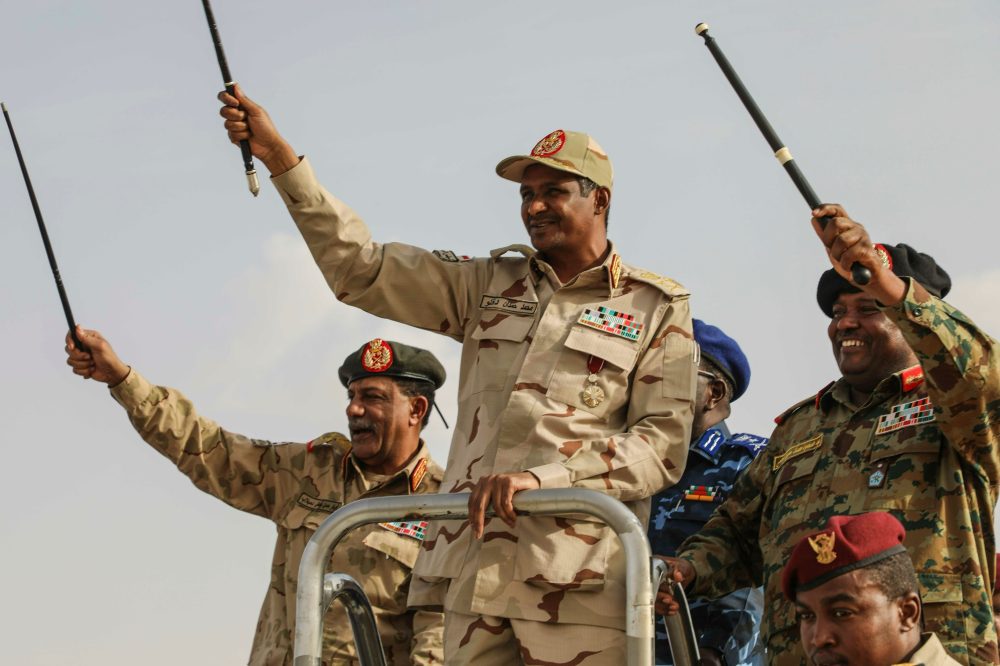
    The RSF along with allied Arab militia groups called Janjaweed captured el-Fasher on October 26 and conducted widespread violence throughout the area. Their offensive included mass executions, sexual assault, torture, and kidnappings for financial gain, according to the UN Human Rights Office.

    Between October 25 and 27, the forces killed more than 6,000 people within the city limits. Prior to the main attack, rebels attacked the Abu Shouk displacement facility near the city, killing at least 300 individuals over two days.

    The RSF did not provide a response to requests for comment. Their leader, General Mohammed Hamdan Dagalo, has previously admitted to misconduct by his troops while questioning the extent of reported atrocities.

    The international Genocide Convention from 1948 establishes five standards for determining genocide: killing group members; causing severe physical or psychological damage; implementing birth prevention measures; intentionally creating conditions for physical elimination; and forcibly moving children to different groups.

    The investigation team found evidence of at least three criteria being satisfied by RSF actions. The convention allows for genocide determination if even one criterion is met.

    According to the team, RSF activities in el-Fasher included murdering members of protected ethnic groups, inflicting serious physical and mental trauma, and intentionally creating life conditions designed to destroy the group partially or completely.

    The findings cited systematic ethnically-motivated killings, sexual violence, destruction, and public declarations calling for non-Arab community elimination.

    Mohamed Chande Othman, the team’s chairman and former Tanzania chief justice, stated the RSF operations were not “random excesses of war” but indicated a deliberate and coordinated effort displaying genocide characteristics.

    “Physically exhausted, malnourished, and in part unable to flee, leaving them defenseless against the extreme violence that followed,” the report described el-Fasher residents. “Thousands of persons, particularly the Zaghawa, were killed, raped or disappeared during three days of absolute horror.”

    The investigation documented mass killings, extensive rape, sexual violence, torture, arbitrary imprisonment, extortion, and forced disappearances during the RSF takeover in late October.

    The report recorded survivor accounts of fighters making statements such as: “Is there anyone Zaghawa among you? If we find Zaghawa, we will kill them all” and “We want to eliminate anything black from Darfur.”

    Investigators noted “selective targeting” of Zaghawa and Fur women and girls, “while women perceived as Arab were often spared.”

    The Geneva-based Human Rights Council, the UN’s primary human rights organization with 47 member nations, established the fact-finding team in 2023.

    The team demanded accountability for those responsible and emphasized that civilian protection is needed “more than ever” as the conflict spreads to additional Sudanese regions.

    Throughout the conflict, both sides have faced accusations of international law violations, though most atrocities have been attributed to the RSF. The Biden administration recently declared the group committed genocide in Darfur.

    UN experts and rights organizations report that the United Arab Emirates has supported the RSF during the war, though the UAE denies these claims.

    The RSF originated from Janjaweed militias that gained infamy for atrocities in the early 2000s during a brutal campaign against people of East or Central African identity in Darfur. That earlier campaign resulted in approximately 300,000 deaths and displaced 2.7 million people.

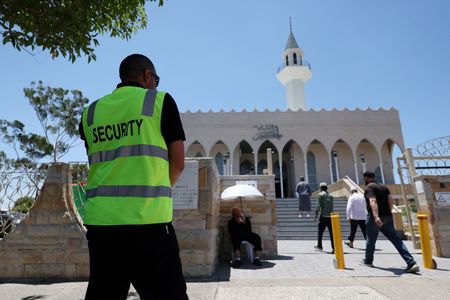
  • Australia Investigates Third Threat Against Sydney Mosque Before Ramadan

    Australia Investigates Third Threat Against Sydney Mosque Before Ramadan

    SYDNEY – Law enforcement officials in Australia have opened an investigation following the delivery of a menacing letter to Sydney’s largest Islamic worship center, marking the third threatening incident as Muslims prepare for their holy month of Ramadan.

    The correspondence, delivered Wednesday to Lakemba Mosque in western Sydney, included an offensive drawing of a pig along with death threats targeting what the sender called the “Muslim race,” according to local news outlets.

    Authorities have collected the letter for laboratory analysis and announced plans to increase patrols around houses of worship, including the targeted mosque, as well as community gatherings.

    This most recent threat follows a previous menacing message delivered to the same mosque several weeks earlier, which showed an image of Muslim worshippers trapped in a burning religious building.

    Law enforcement has also apprehended and filed charges against a 70-year-old individual connected to a third threatening correspondence sent to mosque personnel in January.

    The organization that operates the mosque, the Lebanese Muslim Association, has contacted government officials requesting additional funding for extra security personnel and surveillance equipment, according to the Australian Broadcasting Corp.

    During Ramadan, approximately 5,000 worshippers are anticipated to visit the mosque nightly. Government census data shows that more than 60% of Lakemba’s population identifies as Muslim.

    Canterbury-Bankstown council Mayor Bilal El-Hayek, whose jurisdiction includes Lakemba, described the community as feeling “very anxious.”

    “I’ve heard first-hand from people saying that they won’t be sending their kids to practice this Ramadan because they’re very concerned about things that might happen in local mosques,” he said.

    Australian Prime Minister Anthony Albanese expressed strong disapproval of the recent series of threats.

    “It is outrageous that people just going about commemorating their faith, particularly during the holy month for Muslims of Ramadan, are subject to this sort of intimidation,” he told ABC radio.

    “I have said repeatedly we need to turn down the temperature of political discourse in this country, and we certainly need to do that.”

    A government-commissioned study indicates that hostility toward Muslims has increased across Australia since the Gaza conflict began in late 2023.

    The Islamophobia Register Australia has recorded a 740% surge in incident reports following the December 14 Bondi mass shooting, where officials say two attackers with Islamic State connections killed 15 people at a Jewish holiday gathering.

    “There’s been a massive increase post-Bondi,” Mayor El-Hayek said. “Without a doubt, this is the worst I have ever seen it. There’s a lot of tension out there.”

  • French Man Accused of Abusing 89 Boys Across Multiple Countries Over 50 Years

    French Man Accused of Abusing 89 Boys Across Multiple Countries Over 50 Years

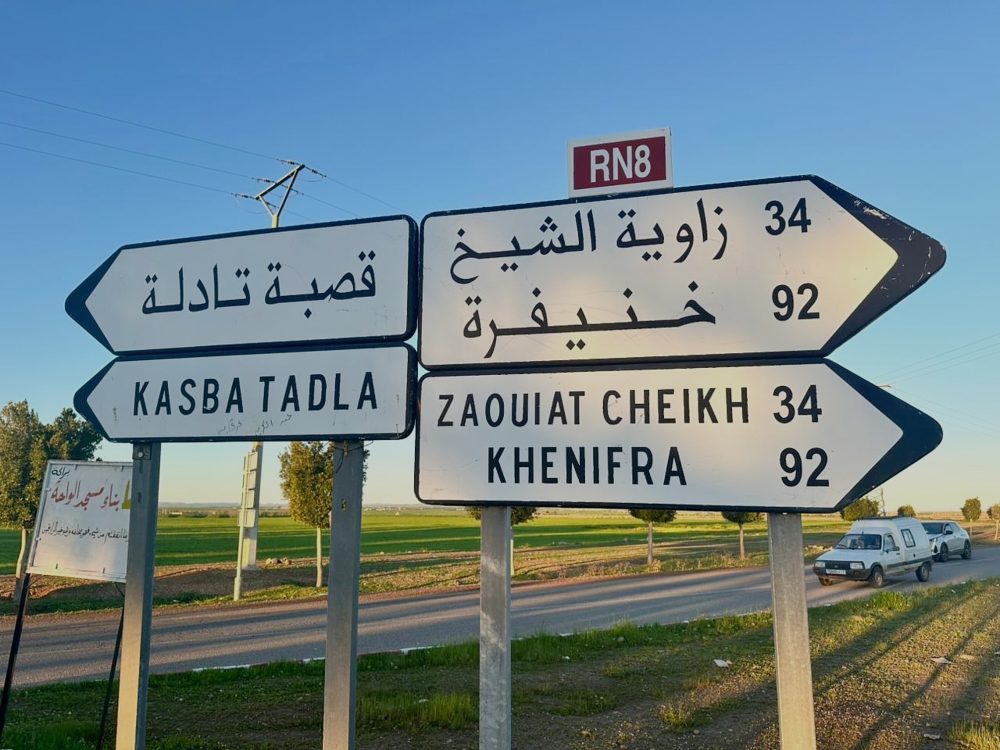
    KHENIFRA, Morocco (TV Delmarva) — A man who spent decades building trust as a community helper and educator in Morocco now faces shocking criminal charges that have stunned two North African nations.

    Jacques Leveugle, a 79-year-old French citizen, is currently imprisoned and facing formal charges in France for allegedly raping and sexually assaulting 89 boys spanning more than 50 years across multiple countries. French prosecutors revealed the case to the public last week, also stating that Leveugle admitted to suffocating his terminally ill mother and later murdering his 92-year-old aunt.

    For years in the Moroccan city of Khenifra, residents knew Leveugle as a skinny French man who cleaned streets before sunrise, provided no-cost language instruction, and arranged educational trips for local students. His fluency in Arabic, Morocco’s local dialect, and Shilha — a regional Berber language — allowed him to become deeply embedded in the community, according to neighbors.

    The unassuming man would bicycle to local markets wearing simple jeans and collared shirts, and established a small children’s library in the working-class Lassiri district.

    Most of the alleged sexual crimes took place in North Africa, where Leveugle established himself as a dedicated educator and trustworthy individual throughout his lifetime.

    Authorities uncovered the alleged crimes after a family member discovered Leveugle’s electronic diary on a USB device and provided it to law enforcement.

    Grenoble Prosecutor Etienne Manteaux confirmed to The Associated Press that Leveugle is suspected of victimizing more than a dozen boys in Morocco, where he resided until his 2024 arrest. During his eight-year tenure as a foreign language instructor in Algeria during the 1960s and 1970s, he allegedly abused at least two children.

    The disturbing allegations have created widespread shock throughout both nations and brought renewed focus to child exploitation issues in a region where advocates report abuse continues to be widespread and frequently unreported.

    “This case demonstrates exceptional gravity and understandably creates profound outrage,” stated Najat Anwar, who leads the Moroccan child protection organization Don’t Touch my Child. “We stand ready to participate as a civil party in legal proceedings if Moroccan witnesses or victims step forward.”

    The Associated Press interviewed twelve individuals who personally knew Leveugle, including Moroccan neighbors and former Algerian students, plus Moroccan officials familiar with the investigation. Those acquainted with him characterized a person widely regarded as reserved, supportive, and someone who enjoyed spending time around children.

    Throughout the narrow pathways of Khenifra’s Lassiri district, populated by many traditional Moroccans, the pleasant atmosphere of a winter morning stands in stark opposition to what locals describe as deep embarrassment they’ve experienced since prosecutors disclosed Leveugle’s alleged offenses last week.

    Community members report feeling disrespected and degraded. Several are now contemplating relocating. All requested anonymity due to concerns about potential harassment or retaliation.

    They indicated Leveugle’s residence, an incomplete, unpainted single-level structure encircled by fig trees, positioned beside a river where children frequently play nearby.

    Local residents explained that “Monsieur Jacques,” his common nickname, financially supported community initiatives and assisted people in securing employment, occasionally distributing cash directly. Khenifra has historically maintained among Morocco’s highest jobless rates, with many inhabitants working in unofficial employment sectors. Residents frequently relocate seeking improved opportunities.

    Community members recalled how Jacques once brought children to Agelmam Agezga, a popular regional lake, and instructed them to swim without clothing, beginning with himself and claiming health benefits. This behavior conflicts with Moroccan cultural norms and broader Islamic customs, which prohibit men from being unclothed in each other’s presence.

    One neighbor explained that the revelations have so severely damaged his ability to trust others that he now refuses to allow his 5-year-old son to spend nights at his brother’s home.

    According to a knowledgeable Moroccan official, Leveugle was born during the 1940s in Annecy, France, and initially came to Morocco in 1955. His father served at the French Embassy, and Leveugle attended school in Morocco’s capital city during the concluding years of French colonial rule.

    A Moroccan justice official confirmed that Leveugle maintained Moroccan residency status and faced no documented criminal complaints within the kingdom. Both officials requested anonymity in accordance with Moroccan governmental protocols.

    Neighbors reported that Leveugle relocated to Khenifra’s Lassiri neighborhood during the early 2000s. Local residents noted his regular interactions with teenage boys ranging from 13 to 15 years old.

    He operated as a private instructor and, according to community members, provided complimentary lessons, coordinated educational excursions, and occasionally offered financial support to families. Some neighbors reported that he also purchased homes and vehicles for local residents and assisted with European immigration processes.

    His extensive time spent with teenage boys sometimes raised questions about his minimal engagement with adult community members.

    French investigators identified 89 victims of Leveugle, all boys between ages 13 and 17, through examination of a 15-volume electronic memoir discovered on a USB drive that a relative provided to police, according to the Grenoble prosecutor. He confirmed that Leveugle’s Moroccan victims date to at least 1974.

    French authorities believe additional victims exist and have issued a global request for witnesses. The prosecutor informed The Associated Press that French investigators plan to travel to Morocco for evidence collection. Moroccan authorities have not issued public statements.

    The French prosecutor did not indicate whether Algeria has opened an investigation, despite Leveugle’s teaching positions at three Algerian schools. The revelations have deeply affected his former students.

    “I felt completely shocked upon learning this information,” Ali Bouchemla, who studied French under Leveugle during the late 1960s at a northern Algerian school, told The Associated Press. He remembered a “committed and excellent teacher” who never aroused suspicion.

    Lahlou Aliouate, another former student, similarly described a dedicated educator who maintained professional conduct.

    Child protection experts say Leveugle’s characteristics mirror patterns observed globally.

    “Offenders frequently present themselves through educational or cultural programs, develop respectable reputations and use social or cultural influence to establish trust,” explained Najat Anwar from Don’t Touch my Child. “They subsequently focus on children experiencing vulnerable emotional or social circumstances.”

  • Hamas Strengthens Control in Gaza Despite Trump Peace Initiative

    Hamas Strengthens Control in Gaza Despite Trump Peace Initiative

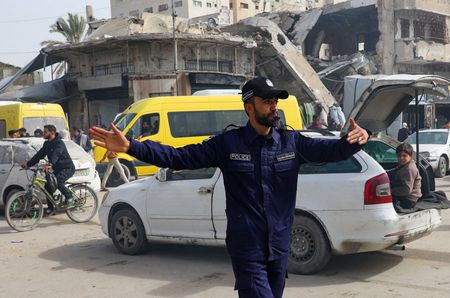
    The militant organization Hamas is strengthening its authority across Gaza by positioning loyal supporters in crucial government positions while resuming tax collection and salary payments, according to Israeli military intelligence documents obtained by Reuters and Palestinian sources within the territory.

    This expanding control by Hamas has raised serious questions about the viability of President Donald Trump’s Middle East peace initiative, which demands the organization surrender its weapons in return for Israeli forces withdrawing from Gaza.

    Trump’s newly formed international Board of Peace, tasked with overseeing Gaza’s transition period, convened its first session in Washington on Thursday.

    “Hamas is advancing steps on the ground meant to preserve its influence and grip in the Gaza Strip ‘from the bottom up’ by means of integrating its supporters in government offices, security apparatuses and local authorities,” military officials stated in documentation provided to Prime Minister Benjamin Netanyahu during late January.

    While Hamas claims readiness to transfer administrative control to a U.S.-supported panel of Palestinian technical experts led by former Palestinian Authority official Ali Shaath, the organization maintains that Israel has prevented committee members from entering Gaza to begin their duties.

    Netanyahu’s office did not respond to inquiries regarding Hamas’ territorial control. However, an unnamed Israeli government representative rejected any future involvement by the group as a “twisted fantasy,” declaring: “Hamas is finished as a governing authority in the Gaza Strip.”

    Israeli military leadership declined commentary on Hamas’ claims.

    Military sources indicate that Hamas, which continues to refuse disarmament, has utilized the October ceasefire agreement to reestablish dominance in regions previously occupied by Israeli forces. While Israel maintains control over more than half of Gaza’s territory, nearly all 2 million residents live within Hamas-controlled zones.

    Reuters was unable to verify the complete extent of Hamas’ personnel appointments and revenue collection efforts.

    The organization has designated five regional governors, all connected to its military wing known as the al-Qassam Brigades, according to two Palestinian sources with direct operational knowledge. Additionally, Hamas has installed new leadership within Gaza’s economic and interior departments, which oversee taxation and security functions, these sources confirmed.

    A newly appointed deputy health minister appeared in ministry footage touring Gaza medical facilities released this month.

    “Shaath may have the key to the car, and he may even be allowed to drive, but it is a Hamas car,” one source explained to Reuters.

    Israeli military analysis appears to support this assessment.

    “Looking ahead, without Hamas disarmament and under the auspices of the technocrat committee, Hamas will succeed, in our view, to preserve influence and control in the Gaza Strip,” the military evaluation concluded, initially reported by Israel’s Channel 13 news.

    Ismail al-Thawabta, spokesperson for the Hamas-controlled government’s media department, disputed claims of new appointments, explaining that interim replacements were necessary for positions vacated during wartime to “prevent any administrative vacuum” and maintain essential services for residents while peace negotiations continue.

    Neither the U.S. State Department nor Shaath’s National Committee for the Administration of Gaza (NCAG) immediately provided responses to requests for comment.

    A source familiar with the 15-member NCAG indicated awareness of Hamas’ activities and expressed dissatisfaction with these developments.

    On Saturday, the committee released a statement calling on international mediators to accelerate resolution of pending issues, noting it cannot fulfill its responsibilities “without the full administrative, civilian, and police powers necessary to implement its mandate effectively.”

    The establishment of Shaath’s committee in January initiated the subsequent phase of Trump’s Gaza war resolution strategy, despite incomplete fulfillment of first-phase requirements, including complete cessation of hostilities between Israel and Hamas.

    The Board of Peace anticipates receiving progress reports on the committee’s activities Thursday.

    Trump is also expected to announce participating countries that will provide personnel for a U.N.-authorized stabilization force and assist in training new Palestinian police units, which the NCAG would supervise.

    Hamas seeks to integrate 10,000 of its police officers into the new force, Reuters previously reported. This includes hundreds from its influential internal security division, which has merged with police operations, according to two Gaza sources.

    Hamas did not immediately respond to requests for comment regarding this claim.

    When asked whether Israel would address Hamas’ entrenchment concerns during Thursday’s meeting, Netanyahu’s office provided no comment.

    Israel has repeatedly stated its opposition to any Hamas involvement in Gaza following the group’s October 2023 attack on southern Israel, which killed over 1,200 people according to Israeli records. Israel’s subsequent air and ground offensive has resulted in more than 72,000 deaths, according to Palestinian health ministry figures.

    “Dismantling Hamas governing capabilities” in Gaza was identified as a primary objective of Israel’s military campaign.

    Hamas assumed territorial control following a brief 2007 civil conflict with political rival Fatah. Since then, government ministry and municipal appointments have been determined by Hamas’ political leadership, which also established an independent civil service employing tens of thousands.

    Currently, at least 14 of Gaza’s 17 ministries are operational, compared to five during peak warfare, according to Israeli military documentation. Additionally, at least 13 of 25 municipalities have resumed services.

    Hamas spokesperson Thawabta characterized “this relative recovery” as unrelated to “political considerations.”

    “The organisational measures taken during the past period were necessary to prevent the collapse of the service system and do not conflict with any future arrangements agreed upon,” he stated to Reuters.

    According to sources, Hamas appointed five governors and four mayors to replace individuals killed or removed during the conflict. The selection of candidates with armed wing connections for gubernatorial positions was intended to suppress criminal gangs, some of which had received weapons and funding from Israel, sources explained.

    Netanyahu acknowledged Israeli support for anti-Hamas tribal groups in June, though Israel has disclosed limited details.

    Following a violent crackdown against opponents during the truce’s initial weeks, Hamas has concentrated on maintaining public safety and collecting taxes within its portion of the “yellow line” demarcating Israeli and Hamas territories, according to Israeli military officials and Gaza sources.

    “There is no opposition to Hamas within the yellow line now, and it is taking over all economic aspects of daily life,” an Israeli military official told Reuters.

    Gaza political analyst Mustafa Ibrahim reported that theft and robbery have ceased.

    “Hamas is trying to organise markets and streets through the traffic police,” Ibrahim observed. “Police stations have reopened… The tax department and economy ministry are working and collecting.”

    Hamas primarily collects revenue from private sector businesses, according to military documents. This includes fees imposed on Gaza merchants importing smuggled items such as cigarettes, batteries, solar panels, and mobile phones, according to three additional sources, including one merchant.

    The organization has generated hundreds of millions of shekels through cigarette smuggling taxes since the war began, according to an Israeli indictment filed this month against a suspected smuggling network that includes Israeli reservists deployed in Gaza.

    Hamas has continued salary payments to government employees and fighters, averaging approximately 1,500 shekels (about $500) monthly, according to at least four Hamas sources.

    “Every moment of delay in allowing the technocratic committee to enter the Gaza Strip leads to the imposition of a de facto reality,” stated Palestinian political analyst Reham Owda, “increasing the administrative and security control of the Hamas government in Gaza.”

  • China Seeks Trade Dominance While Trump Focuses on Tariffs

    China Seeks Trade Dominance While Trump Focuses on Tariffs

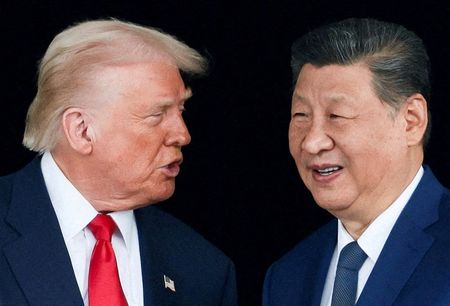
    BEIJING — While President Donald Trump implements tariffs against various nations, China is seizing the opportunity to restructure international commerce in ways that could shield its $19 trillion economy from American influence for decades to come.

    According to a Reuters investigation, Beijing is taking advantage of the disruption caused by Trump’s policies to integrate China’s massive manufacturing sector into major economic partnerships worldwide, including deals with the European Union, Gulf nations, and trans-Pacific trading groups. This strategy involves fast-tracking approximately 20 trade agreements that have been under development for years, despite global concerns about China’s excess production capacity, limited market openness, and weak domestic consumer spending.

    An analysis of 100 Chinese-language publications by government-supported trade experts since 2017 shows a coordinated effort by China’s policy consultants to counter U.S. trade strategies and undermine Washington’s efforts to limit Chinese economic influence.

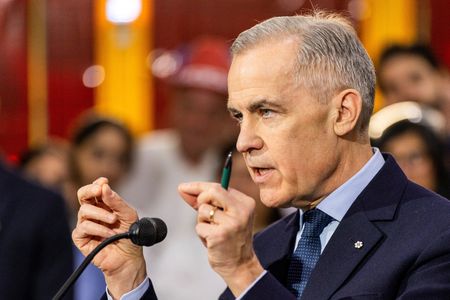
    China is now implementing this strategy. The agreement signed with Canada during Prime Minister Mark Carney’s January trip to Beijing — reducing tariffs on Chinese electric vehicles — represents the first of multiple deals designed to diminish U.S. economic leverage, according to conversations with 10 sources including Chinese government representatives and trade officials.

    “Don’t interrupt your opponent when he is making a mistake,” commented one Chinese official regarding Trump’s disruptive trade policies.

    The analysis, based on more than 2,000 trade strategy documents endorsed by the Chinese Academy of Social Sciences and Peking University, which provide guidance to senior leadership, demonstrates that policy experts widely believe that difficult structural adjustments are worthwhile for China’s long-term control of international trade. These document contents are being disclosed publicly for the first time.

    If Beijing succeeds, it could overturn more than ten years of American trade policy by positioning itself as the center of a new, Chinese-influenced multilateral system, according to two Western diplomatic sources.

    “The Chinese have a golden opportunity now,” stated Alicia Garcia Herrero, senior fellow at the Bruegel think tank.

    China’s commerce ministry did not respond to requests for comment regarding Beijing’s approach.

    When asked about China’s strategy, a U.S. official told Reuters it was predictable that nations with significant trade surpluses would try to preserve globalization.

    “President Trump is fixing the problems globalization caused for the United States while other countries are trying to double down on globalization as free market access to the United States goes away,” the official stated.

    BUILDING PARTNERSHIPS

    The change in China’s messaging reflects its strategic thinking. Twelve months ago, Beijing was using military-style rhetoric, referencing Mao Zedong and China’s resistance against Western forces during the Korean War.

    Currently, as China prepares for Trump’s April visit, its diplomats are traveling globally, encouraging trade partners to join in protecting multilateral cooperation and open commerce.

    In January, China sent its senior diplomat to small nation Lesotho — initially targeted by Trump with a 50% tariff — to promise development assistance. On Saturday, state media announced China would eliminate tariffs on imports from 53 African nations. Meanwhile, China is promoting AI-enhanced customs technology to neighboring countries and working to modernize digital infrastructure supporting international trade.

    These actions highlight an objective outlined in policy documents: to integrate China so thoroughly into global trade networks that partners cannot afford to disconnect under U.S. pressure.

    “In countering U.S. strategic competition with China, ‘anti-decoupling’ should become China’s primary focus,” wrote Ni Feng, fellow at CASS’s Institute of American Studies, in 2024.

    Chinese representatives are now working to expedite delayed trade negotiations. Since 2017, China has been in discussions with nations including Honduras, Panama, Peru, South Korea and Switzerland.

    “We are willing to negotiate bilateral and regional trade and investment agreements with interested countries and regions,” commerce ministry spokesperson He Yongqian told Reuters during Carney’s visit, without providing details.

    China’s foreign minister Wang Yi caught European negotiators off guard in November by suggesting a free-trade agreement with Brussels during discussions with his Estonian counterpart.

    One month later, Wang urged the Gulf Cooperation Council to finalize ongoing free-trade negotiations. In January, British Prime Minister Keir Starmer agreed with Chinese leader Xi Jinping to begin a feasibility study for a services trade agreement that could lower barriers for British companies. German Chancellor Friedrich Merz has announced plans to pursue “strategic partnerships” with China during an upcoming trip.

    China’s commerce minister Wang Wentao has made membership in the Comprehensive and Progressive Agreement for Trans-Pacific Partnership (CPTPP) a top priority. This agreement originated from the U.S.-supported Trans-Pacific Partnership, created partly to counter China before Washington withdrew in 2017.

    However, China’s massive trade surplus complicates these efforts. Some member nations worry Chinese manufacturers might use improved market access to export excess low-cost products while China’s domestic consumption remains weak.

    Wendy Cutler, chief negotiator during the Obama administration for the Trans-Pacific Partnership, recognized Beijing’s opportunity to promote trade and multilateralism but emphasized China needed to move beyond rhetoric.

    “And with its huge trade imbalances, as well as some of the coercive measures it’s now taking against countries like Japan, it’s hard to see how they’re walking the walk,” Cutler told Reuters.

    A senior European trade diplomat characterized Beijing’s proposals as “pure Chinese propaganda,” stating Brussels had no intentions for a trade agreement.

    Chinese advisers remain determined. Speaking to Reuters, one referenced the EU and China’s landmark 2020 investment agreement negotiated during Trump’s first presidency. However, the deal was suspended in 2021 before implementation due to disputes over human-rights sanctions.

    STRATEGIC INSIGHTS

    Some Chinese advisers argue in the documents that Beijing should examine how Washington has “weaponized” international organizations to contain China, and take advantage of opportunities created by Trump’s willingness to abandon or marginalize multilateral institutions like the World Trade Organization.

    Others suggest Beijing should concentrate on shaping global standards in areas such as intellectual property through programs like Xi’s Belt and Road initiative and China’s participation in the Regional Comprehensive Economic Partnership, covering approximately 30% of worldwide GDP.

    China is now implementing these strategies.

    Its recently enhanced agreement with Southeast Asian nations, for instance, emphasizes AI-driven and digital commerce, where China aims to establish early dominance.

    China’s customs processing vision is demonstrated at its “Friendship Port” on the Vietnamese border, where state media reports domestically-developed AI technology has reduced waiting times by 20%, enabling faster deliveries. Reuters could not independently confirm this claim.

    MASSIVE TRADE SURPLUS

    The challenges that China’s $1.2 trillion trade surplus creates for trading partners’ manufacturing industries are difficult to ignore.

    Pascal Lamy, former WTO director-general and EU trade commissioner, said Chinese companies are exporting more goods to Europe than the region can handle.

    “It’s a mystery how, given the nature of the regime, given the sort of collective cleverness, how is it that they have not succeeded in rebalancing their economic model?” he stated.

    Not everyone views closer Chinese relationships as the best method to reduce U.S. dependence.

    Stephen Nagy, China project lead at the Macdonald-Laurier Institute in Ottawa, said Carney’s tariff-reduction agreement with Xi appears intended to create negotiating power before discussions over the U.S.-Mexico-Canada (USMCA) trade agreement.

    “I think his bet is wrong,” he added, predicting Trump would not be influenced.

    Carney has stated Canada honors its USMCA commitment to avoid free-trade agreements with non-market economies. His office did not respond to comment requests.

    Mexico, meanwhile, is cautious about risking U.S. market access by developing closer Chinese ties.

    “We see no need for a free-trade agreement with China right now,” said a Mexican trade official. “We are already in the CPTPP and have 60% of world GDP covered.”
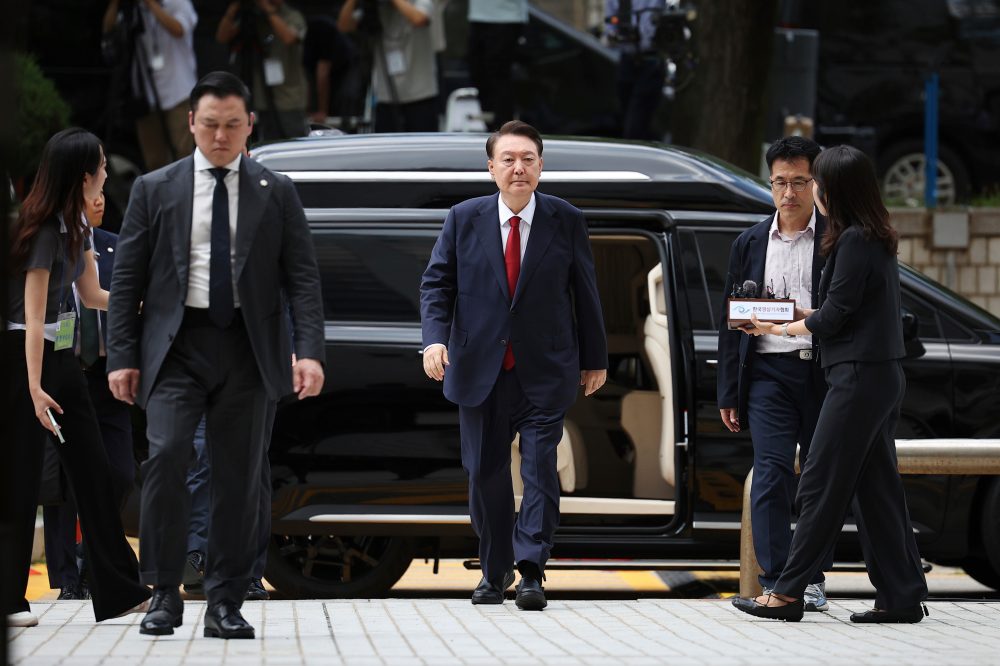
    Beijing’s trade partners genuinely need China to boost its consumer spending, said Fred Neumann, chief economist for Asia Pacific at HSBC.

    Wang, China’s commerce minister, has stated that increasing imports is a priority as Beijing prepares to unveil its next five-year plan in March, consistent with commitments to raise consumption’s portion of GDP.

    But economic rebalancing is a long-term undertaking. Trump has three years remaining in office, and the following administration could return to building coalitions to contain China.

    China must “study in depth the logic of U.S. actions within international institutions and the possible next steps it may take to better respond to increasingly fierce strategic offensives in the future,” Zhao Pu, then at Renmin University and now a researcher at CASS’s Institute of American Studies, wrote in 2023.

  • Ex-South Korean President Awaits Rebellion Verdict in Historic Trial

    Ex-South Korean President Awaits Rebellion Verdict in Historic Trial

    SEOUL, South Korea — Ousted South Korean President Yoon Suk Yeol appeared in a Seoul courtroom Thursday to learn whether he’ll face the ultimate punishment for rebellion charges connected to his failed martial law declaration.

    The charges stem from what experts call South Korea’s worst political upheaval in decades, when Yoon declared martial law and deployed military forces to encircle the national legislature on December 3, 2024.

    Prosecutors are pushing for capital punishment against Yoon, arguing his actions threatened the nation’s democratic foundations and warrant the harshest available penalty.

    However, legal experts widely anticipate a life imprisonment sentence instead, noting that Yoon’s bungled power seizure didn’t lead to deaths. The country hasn’t carried out an execution since 1997, maintaining what’s effectively a freeze on death sentences while abolition advocates push for reform.

    Seoul Central District Court Judge Jee Kui-youn was scheduled to announce the ruling and punishment Thursday.

    Outside the courthouse, competing demonstrations unfolded as Yoon’s transport arrived under heavy police presence. His backers voiced support while opponents demanded his execution.

    The court will simultaneously decide cases against seven former military and law enforcement leaders accused of implementing Yoon’s martial law order, including former Defense Minister Kim Yong Hyun.

    The conservative leader has justified his martial law declaration as essential to counter liberal opposition lawmakers he branded as “anti-state” forces blocking his political agenda through their parliamentary control.

    The emergency order survived roughly six hours before collapsing when enough legislators broke through military barriers and voted unanimously to overturn it.
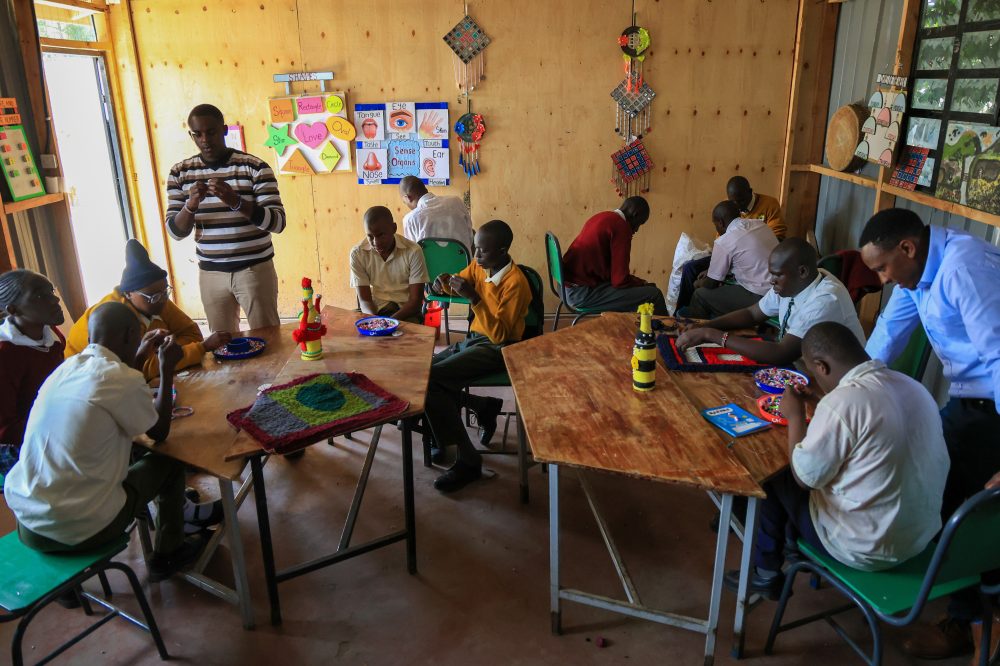
    Parliament suspended Yoon from his presidency on December 14, 2024, following his impeachment, and the Constitutional Court officially ousted him in April 2025. He’s remained in custody since July while battling various criminal cases, with the rebellion charge carrying the severest potential consequences.

    A separate court handed Yoon a five-year prison term last month for resisting detention, creating fraudulent martial law documents, and bypassing required Cabinet consultations before announcing the measure.

    Seoul Central Court has also found two of Yoon’s Cabinet officials guilty, including Prime Minister Han Duck-soo, who received 23 years behind bars for trying to validate the decree through forced Cabinet approval, document falsification, and perjury. Han is challenging that conviction.

  • Kenyan School’s Innovative Approach Could Transform Education for Dyslexic Students

    Kenyan School’s Innovative Approach Could Transform Education for Dyslexic Students

    KITENGELA, Kenya — In the classrooms of an innovative Kenyan institution, traditional teaching methods have been completely transformed. Rare Gem Talent School has revolutionized education by replacing standard lectures with interactive, sensory-based instruction specifically designed for students living with dyslexia.

    While Kenya has made significant strides in expanding educational opportunities, children with learning differences often struggle to keep pace in conventional settings. Rare Gem represents one of only a few educational facilities nationwide that caters specifically to youngsters facing dyslexia and similar learning obstacles, requiring only minor adjustments to standard academic programs.

    Research shows dyslexia impacts approximately 10% of all students and creates significant barriers to developing reading skills. Without proper support, this condition could sideline enormous numbers of young people throughout Kenya and the broader African continent.

    Student Jason Malak Atati experienced firsthand the difference specialized instruction can make. “Teachers didn’t understand me,” he explained about his previous educational experience. “This school is much better.”

    Dennis Omari, who specializes in teaching students with special needs, explained that dyslexic children typically struggle with fundamental literacy skills, often confusing letters such as ‘b’ and ‘p’ or even numbers like ‘9.’ “The early signs to look out for are if children have issues with phonological awareness — not able to listen to exact sounds in a particular language — and when kids fail to read,” Omari noted.

    The school tackles these obstacles through what Omari describes as a comprehensive sensory-based teaching strategy, with instructors focusing on different learning preferences. Methods include visual techniques like assigning specific colors to represent different sounds, audio approaches such as teaching spelling through musical patterns, and hands-on activities using physical objects to demonstrate how words are built.

    Dorothy Kioko, an instructor at the facility, emphasized the personalized nature of their teaching philosophy. “You teach step by step until the learner gets what you’re teaching, not a lecture method where the teacher stands in front,” she said. “You have to have additional knowledge on how to handle them with patience.”

    The institution was established in 2012 by the Dyslexia Organisation Kenya, beginning operations with fewer than 10 pupils. Currently, the school serves approximately 210 students, primarily those with dyslexia, while also supporting children with additional learning differences including autism.

    Phyllis Munyi, who founded Rare Gem after witnessing her own son’s struggles with unaddressed dyslexia, stressed the importance of early intervention. “If they are identified early and intervention given early, they improve their skills and learn to identify their talents — and they complete school,” she stated.

    Families pay tuition costs of $180 per semester, which falls below fees charged by elite private institutions but remains considerably more expensive than government-funded schools that serve most Kenyan students.

    According to Munyi, the primary obstacles preventing children from accessing specialized education like that offered at Rare Gem include social stigma and insufficient awareness, particularly among parents. Additionally, many students arrive having endured harassment at their former schools.

    Geoffrey Karani, a Rare Gem graduate who now works as an art instructor there, recalled his own difficult experiences. “In other, normal schools, there was a lot of discrimination, a lot of bullying,” he shared. Karani views mentoring as essential to his current role. “I’m not only teaching, I’m showing kids that I’ve been on the same journey,” he explained.

    Kenya has achieved remarkable progress in educational expansion over recent decades, with primary school enrollment climbing from 5.9 million students in 2002 to 10.2 million in 2023—growth that has exceeded population increases.

    However, educational opportunities for students with disabilities continue to lag significantly. Despite 11.4% of Kenyan children having special needs, only 250,000 such students participate in the nation’s educational system, according to data from So They Can, a nonprofit organization working to expand educational access across Africa.

    Rare Gem potentially demonstrates how to broaden educational access without requiring extensive curriculum overhauls. Rather than creating entirely new academic content, the school adapts Kenya’s standard curriculum to better serve students with dyslexia and other learning challenges, Munyi explained. She emphasized: “The curriculum was not designed as a standalone … nor is it limited to dyslexia.”

  • World Food Program Forced to Deny Aid to 75% of Starving Afghan Children

    World Food Program Forced to Deny Aid to 75% of Starving Afghan Children

    KABUL, Afghanistan — A small child struggles as medical staff place an oxygen mask over his face, the green strap wrapping around his hollow cheeks. The 2½-year-old boy has been battling for survival in a Kabul hospital for weeks.

    At just 13 pounds — roughly half his healthy weight — severely undernourished Abu Bakar represents one of the fortunate few: his family managed to bring him to Indira Gandhi Children’s Hospital in Kabul for critical medical intervention.

    However, countless other starving children cannot access such care.

    “We have a catastrophic nutritional crisis on our hands with two-thirds of the country in a very serious or crisis level for acute malnutrition,” said John Aylieff, Afghanistan Country Director for the United Nations’ World Food Program. “This is the highest surge in malnutrition ever recorded in the country. And the lives of 4 million children are hanging in the balance.”

    Following decades of warfare, Afghanistan has depended heavily on international assistance. However, when the Taliban seized control in 2021, direct foreign support ceased almost immediately, plunging millions deeper into destitution and starvation. The crisis has worsened due to economic collapse, prolonged drought, two major earthquakes in late 2025, and the deportation of 5.3 million Afghans primarily from Pakistan and Iran.

    Currently, reduced funding to relief organizations, including suspended U.S. support for programs like the WFP’s food assistance, has eliminated crucial support for countless people.

    “The aid cuts have been devastating,” Aylieff told The Associated Press. Regarding the 4 million severely malnourished children, “we are forced now to turn away three out of four of them because we simply don’t have the money.”

    He described this situation as “unprecedented and I’ve never seen this in my more than 30-year-old career as a humanitarian.”

    Among 17.4 million people experiencing severe hunger, the organization can currently assist only 2 million. Even those receiving help get reduced food portions.

    International donors are stretching limited resources across multiple global emergencies, including Sudan’s famine and conflicts in Gaza and Ukraine. The WFP’s Afghanistan budget reached $600 million in 2024 following “very generous” donor contributions, Aylieff noted.

    That amount dropped by half last year, with expectations of receiving even less — approximately $200 million — this year. This funding proves insufficient to address hunger that “is spiraling out of control,” he explained.

    Abu Bakar’s family experienced this aid reduction firsthand.

    “We once received assistance from an organization that helped us a lot with food,” said his mother, Latifa, 36, who, like many Afghans, goes by one name. However, that support ended three years ago, leaving them with nothing since.

    Her construction worker husband has remained jobless for a year. Sometimes, she has absolutely nothing to feed her five sons.

    “I am trying to provide food for my kids,” Latifa said, cradling her emaciated toddler in her arms. She doesn’t care if she doesn’t eat, she says. “I can control my hunger. I will handle it. But my child can’t.”

    Rising hunger correlates with increased child deaths, Aylieff reported, with the WFP documenting over 500 child fatalities in recent months. He emphasized this figure represents “the tip of the iceberg” since many winter deaths occur in snow-blocked villages and go unreported.

    “How many more Afghan children will die here before the world wakes up and realizes that that’s enough? Aylieff asked. “Before the world says, ‘OK, we’ve crossed a threshold, we are not willing to stand by anymore, and we’re coming now to help.’ How many? What is the number? I really don’t know.”

    Sharara, 21, struggles to save her 6-month-old son Samir from joining those statistics.

    Traveling from remote Badakhshan province, the mother of two moved between hospitals there and in Kunduz as medical staff worked to treat her critically ill infant, who suffers from cardiac issues and severe pneumonia worsened by malnutrition.

    Finally reaching Kabul’s Ataturk Hospital malnutrition ward, Sharara, who also uses one name, remains deeply concerned.

    “Doctors say his condition is currently critical,” she explained. During Samir’s 13-day hospitalization, he hasn’t gained any weight.

    Afghanistan’s leadership acknowledges the nation’s hunger emergency and has increased malnutrition treatment centers from 800 to approximately 3,200, Health Ministry spokesman Sharafat Zaman informed the AP. During 2025, about 3 million malnourished children and mothers received treatment, he reported.

    “Malnutrition is not a one-day problem. Malnutrition has been a problem in Afghanistan for decades due to poverty, war and other problems,” said Zaman, who is also a medical doctor.

    Government officials have engaged with aid organizations, he noted, including those reducing funding or halting operations.

    “Health is separate from politics. Providing health services is an inalienable right for all people,” Zaman said.

    Women face particularly severe hunger impacts. Prohibited from most employment by the Taliban government’s strict women’s restrictions, widowed mothers are extremely vulnerable.

    Many express such desperation they wish for death.

    “As WFP, we’re getting more and more suicide calls from women because they just don’t know how to feed their children and they don’t know where to turn,” the WFP country director said.

    WFP nutrition programs report a 30% surge in severely malnourished pregnant and nursing mothers, an increase Aylieff said nutrition experts had never witnessed before.

    “These are the women to whom the world pledged unwavering solidarity in the aftermath of the takeover of the country in 2021. … Those same women are asking us, where is the solidarity of the international community?” Aylieff said.

    “If I had one plea, it’s to not walk away from Afghan women who are now facing abject misery, hunger, malnutrition and watching their children die.”

  • Kim Jong Un Shows Off 50 New Missile Launchers Before Key Party Meeting

    Kim Jong Un Shows Off 50 New Missile Launchers Before Key Party Meeting

    SEOUL, South Korea — North Korean dictator Kim Jong Un showcased 50 new missile launch vehicles during a military ceremony this week, displaying his country’s growing nuclear threat against South Korea just before a significant ruling party gathering.

    Kim’s sister, a senior foreign policy adviser, issued a separate statement acknowledging South Korea’s apology for alleged civilian drone flights over North Korean territory, while warning that the North will strengthen border defenses against what she called the “enemy” South.

    Diplomatic ties between the two Koreas have remained frozen since 2019, following the collapse of nuclear negotiations between Kim and then-U.S. President Donald Trump over sanctions disputes. Tensions have escalated further as Kim abandoned North Korea’s historic commitment to peaceful reunification, instead promoting a hostile “two-state” approach that may be formally adopted during the upcoming Workers’ Party congress.

    Official photographs revealed multiple launcher vehicles positioned outside the April 25th House of Culture, the same location where party congresses took place in 2016 and 2021.

    According to the Korean Central News Agency, these vehicles operate 600-millimeter rocket launcher systems. Military analysts note that North Korea’s heavy artillery rockets function similarly to short-range ballistic missiles due to their self-propelled guidance systems. These weapons form part of Kim’s expanding arsenal of nuclear-capable short-range arms intended to overwhelm South Korean missile defense networks.

    During his address, Kim described the “wonderful” rocket launchers as featuring artificial intelligence and sophisticated guidance systems designed for “strategic mission” purposes — language typically indicating nuclear capabilities. He announced that the forthcoming congress would outline new strategies to enhance his nuclear-armed forces, which already possess various weapons targeting U.S. regional allies and intercontinental missiles potentially capable of striking American territory.

    Kim Yo Jong stated she “highly assesses” South Korean Unification Minister Chung Dong-young’s apology concerning the alleged drone incidents, but warned of forceful retaliation if similar flights occur again. She confirmed plans to enhance military surveillance along the inter-Korean border.

    “The border with an enemy state should naturally be firm,” she said.

    Minister Chung announced Wednesday that Seoul was exploring the restoration of a suspended 2018 inter-Korean military agreement aimed at reducing border tensions, including establishment of a no-fly zone, as measures to prevent future drone incidents.

    Last month, North Korea issued retaliation threats after claiming South Korea conducted surveillance drone operations in September and January. While Seoul’s government has denied official drone activities during those periods, law enforcement officials are investigating three civilians suspected of operating drones over North Korean territory from border regions.

  • New Bangladesh PM Vows to Control Food Prices During Ramadan

    New Bangladesh PM Vows to Control Food Prices During Ramadan

    DHAKA, Bangladesh – The newly installed Prime Minister of Bangladesh, Tarique Rahman, has committed to keeping food costs under control during Ramadan while working to restore order and rebuild the country’s economy after his party’s overwhelming election win.

    The 60-year-old Rahman, whose father was the late President Ziaur Rahman and whose mother is former Prime Minister Khaleda Zia, took the oath of office on Tuesday. He inherits a nation facing significant hurdles, including the need to restore political calm, regain investor trust, and revitalize crucial sectors like textile manufacturing following the 2024 unrest that toppled Sheikh Hasina’s administration.

    During a broadcast to the nation on Wednesday evening, Rahman offered greetings for the beginning of Ramadan and cautioned merchants against taking advantage of consumers. Food staples including rice, cooking oil, sugar and lentils often see price spikes during the holy month as demand increases.

    “Ramadan is a month of self-purification. This period should not increase public hardship,” Rahman said. “Do not treat Ramadan as a month for profit. Ensure essential goods remain affordable.”

    The new leader’s comments address ongoing concerns about rising costs. The country’s yearly inflation rate reached 8.58% in January 2026, marking the highest level since May 2025, as food expenses continue pressuring family finances.

    Rahman announced his administration would break up market cartels that take advantage of consumers and strengthen protections for both purchasers and vendors.

    Establishing better law enforcement and implementing tough anti-corruption policies will top his government’s agenda, he stated. “The rule of law will be the final word in governing the state — not party influence, political power or coercion.”

    The prime minister additionally revealed intentions to modernize and expand the country’s railroad system and enhance cooperation between transportation departments to build a unified transit network designed to reduce urban congestion and improve connections throughout the nation.

  • US-Mediated Russia-Ukraine Peace Talks End Without Major Progress in Geneva

    US-Mediated Russia-Ukraine Peace Talks End Without Major Progress in Geneva

    GENEVA — Diplomatic representatives from Russia and Ukraine wrapped up their latest round of American-facilitated negotiations Wednesday without achieving a major breakthrough, with both delegations characterizing the discussions as challenging as the war nears its fourth anniversary.

    The Swiss meetings marked the third series of direct discussions coordinated by the United States, following earlier sessions this year in Abu Dhabi that officials called productive despite yielding limited concrete results. Going into the Geneva talks, anticipation for substantial advancement remained modest.

    “The negotiations were not easy,” Ukrainian President Volodymyr Zelenskyy stated following the conclusion of talks, speaking by telephone from Kyiv with his diplomatic team.

    Zelenskyy previously charged Russia with “trying to drag out negotiations” while continuing its military campaign — a claim he and European officials have consistently voiced before.

    Nevertheless, Zelenskyy indicated some advancement occurred regarding military matters, though significant political gaps persist, particularly concerning the fate of eastern Ukrainian territory currently under Russian military control that President Vladimir Putin seeks to retain.

    Vladimir Medinsky, who leads Russia’s delegation and serves as a Putin advisor, informed journalists that the two-day Geneva discussions “were difficult but businesslike.”

    Kremlin representative Dmitry Peskov advised reporters it remains “too early” to assess the talks’ results. Putin has been receiving updates about the Geneva proceedings, Peskov noted.

    Representatives from both nations confirmed plans for additional negotiating sessions.

    Regarding military aspects, Zelenskyy characterized those conversations as “constructive,” noting that both countries’ armed forces examined potential monitoring mechanisms for any future ceasefire agreement.

    “Monitoring will definitely be carried out with participation of the American side,” he stated in an audio message distributed through a WhatsApp media group.

    Steve Witkoff, President Donald Trump’s special envoy, posted on social media that Washington’s diplomatic efforts toward Ukrainian peace over recent months have “brought about meaningful progress,” though he provided no additional details.

    Military forces from both nations continue engaging along the approximately 1,250-kilometer (750-mile) battle zone, while Russia maintains daily bombardments of Ukrainian civilian locations.

    Following Tuesday’s initial negotiating session, Russian drone attacks killed one woman and wounded both a 6-year-old girl and an 18-month-old child in Zaporizhzhia, a southern Ukrainian city, according to local authorities.

    During the night, Russia deployed one ballistic missile and 126 extended-range drones against Ukraine, Ukrainian air force officials reported.

    Zelenskyy revealed that Ukrainian and American negotiators in Geneva conducted meetings with officials from the United Kingdom, France, Germany, Italy and Switzerland.

    European involvement in diplomatic efforts remains “indispensable,” Zelenskyy emphasized.

    European officials, recognizing Putin’s broader territorial ambitions, maintain their security depends on Ukraine’s outcome and have demanded inclusion in peace initiatives.

    Russia and Ukraine continue displaying substantial disagreement over settlement conditions.

    While Zelenskyy has proposed a ceasefire arrangement and direct discussions with Putin, Moscow demands a complete agreement prior to any truce commitment.

    Putin maintains the objectives he announced when Russia began its invasion on Feb. 24, 2022: Ukraine must abandon NATO membership aspirations, significantly reduce military forces, and safeguard Russian language and cultural interests to maintain the country within Moscow’s sphere of influence.

    Putin also demands Ukrainian military withdrawal from four eastern regions Moscow occupies but doesn’t completely control.

    Zelenskyy maintains Ukraine will not cede territory to Russia.

  • Germany Eyes More U.S. F-35 Fighter Jets as European Program Stalls

    Germany Eyes More U.S. F-35 Fighter Jets as European Program Stalls

    Sources close to the matter reveal that Germany is exploring the acquisition of additional U.S.-manufactured F-35 fighter aircraft, a decision that would strengthen Berlin’s military ties with America while its collaborative European fighter initiative with France struggles to move forward.

    According to two informed sources, German officials are engaged in discussions that could result in purchasing more than 35 extra jets. This would supplement the 35 aircraft Berlin ordered in 2022, with deliveries scheduled to commence later this year.

    The possible procurement of additional Lockheed Martin stealth aircraft, each carrying a price tag exceeding $80 million, comes amid Washington’s push for European NATO members to boost their defense expenditures.

    Should Germany proceed with all potential F-35 acquisitions alongside existing contracts, the nation’s fleet could reach approximately 85 aircraft. However, sources emphasize that the final decision remains undetermined.

    Germany’s Defense Ministry has not provided immediate response to inquiries, while Pentagon officials directed questions back to German authorities. A Lockheed Martin representative stated the company remains focused on fulfilling Germany’s current F-35 orders.

    Parliamentary sources indicated in October that Germany’s defense minister planned to order 15 additional F-35s, with an announcement expected in the near future, according to one source.

    Growing Germany’s F-35 inventory would represent a notable strategic pivot toward enhanced military cooperation with the United States, moving away from European defense independence that France, a fellow EU member, strongly advocates.

    Berlin and Paris find themselves at an impasse regarding their Future Combat Air System (FCAS) initiative, a troubled 100-billion-euro undertaking launched in 2017 to develop next-generation aircraft replacing French, German, and Spanish jets beginning in 2040. The emerging situation suggests both nations may ultimately abandon the FCAS effort.

    Germany’s commitment to expanding its F-35 capabilities would carry significant implications for NATO, as the aircraft serves a crucial function in the alliance’s nuclear deterrent strategy.

    Additional F-35 purchases would provide Germany breathing room to determine its approach to developing or partnering on future aircraft programs.

    German Chancellor Friedrich Merz raised questions Wednesday about whether his nation’s air force still requires a piloted sixth-generation fighter jet, as FCAS has attempted to create.

    “Will we still need a manned fighter jet in 20 years’ time? Do we still need it, given that we will have to develop it at great expense?” Merz stated during Wednesday’s Machtwechsel podcast.

    Germany’s 2022 F-35 purchase decision stemmed from NATO requirements to deploy U.S. nuclear weapons housed in Germany when necessary. The F-35 remains the sole Western fighter aircraft authorized to carry the latest B61 nuclear weapons and is essential for replacing Germany’s outdated Tornado jets currently performing this mission.

    While defense insiders anticipate Germany and France will discontinue their joint fighter project, they expect continued collaboration on unmanned systems and digital warfare capabilities.

    German Defense Minister Boris Pistorius indicated last week that FCAS’s future would be determined within days.

  • Secretary of State Rubio to Brief Netanyahu on Iran Nuclear Talks Next Week

    Secretary of State Rubio to Brief Netanyahu on Iran Nuclear Talks Next Week

    WASHINGTON — Secretary of State Marco Rubio will journey to Israel next week for discussions with Prime Minister Benjamin Netanyahu regarding ongoing U.S.-Iran nuclear negotiations, according to two Trump administration officials.

    The meeting between Rubio and Netanyahu is scheduled for Feb. 28, the officials revealed Wednesday while requesting anonymity since the travel arrangements haven’t been formally announced.

    The United States and Iran have conducted two rounds of indirect negotiations concerning the Islamic Republic’s nuclear activities. Representatives from both nations have expressed cautious hope about potential progress this week, with Iranian Foreign Minister Abbas Araghchi stating that “a new window has opened” for achieving an agreement.

    “In some ways, it went well,” U.S. Vice President JD Vance commented about the discussions during a Tuesday Fox News Channel interview. “But in other ways, it was very clear that the president has set some red lines that the Iranians are not yet willing to actually acknowledge and work through.”

    Netanyahu traveled to the White House last week to press President Donald Trump to guarantee that any nuclear agreement with Iran would also address Tehran’s ballistic missile capabilities and halt its support for proxy organizations like Hamas and Hezbollah.

    Trump is considering military strikes against Tehran while the administration increases military presence in the region, sparking worries that any assault could escalate into broader Middle Eastern warfare.

    During a Friday press briefing, Trump told journalists that regime change in Iran “seems like that would be the best thing that could happen.” He continued, “For 47 years, they’ve been talking and talking and talking.”

    The Trump administration has sent the USS Gerald R. Ford, the globe’s largest aircraft carrier, from Caribbean waters to the Middle East to accompany a second carrier along with additional warships and military equipment already positioned in the area.

    Numerous U.S. fighter aircraft, including F-35s, F-22s and F-16s, have departed American and European installations in recent days bound for the Middle East, the Military Air Tracking Alliance reports. This organization consists of approximately 30 open-source intelligence specialists who regularly monitor military and government aviation movements.

    The group indicates it has also documented more than 85 refueling tankers and over 170 transport aircraft moving toward the region.

    Steffan Watkins, a Canada-based researcher and MATA member, reported observing support aircraft including six military early-warning E-3 planes heading to a Saudi Arabian installation.

    These aircraft serve crucial roles in coordinating large-scale aviation operations. According to Watkins, they were relocated from installations in Japan, Germany and Hawaii.

  • Russian Diplomat Cautions U.S. Against Military Action on Iran

    Russian Diplomat Cautions U.S. Against Military Action on Iran

    Russia’s top diplomat issued a stern warning Wednesday against potential American military action targeting Iran, cautioning that such strikes could trigger severe repercussions across the region.

    Foreign Minister Sergei Lavrov made his remarks during a televised interview with Saudi Arabia’s Al-Arabiya network, which aired one day following indirect negotiations between American and Iranian representatives in Geneva aimed at preventing further escalation between Washington and Tehran.

    “The consequences are not good. There have already been strikes on Iran on nuclear sites under the control of the International Atomic Energy Agency. From what we can judge there were real risks of a nuclear incident,” Lavrov stated during the interview, which appeared on his ministry’s official website.

    “I am carefully watching reactions in the region from Arab countries, Gulf monarchies. No one wants an increase in tension. Everyone understands this is playing with fire.”

    The Russian minister emphasized that escalating hostilities could reverse recent diplomatic progress, particularly the improved relationship between Iran and regional neighbors like Saudi Arabia.

    According to a high-ranking American official who spoke with Reuters Wednesday, Iran is anticipated to provide a written response outlining potential solutions to end the diplomatic impasse with the United States following the Geneva discussions.

    The same official revealed that White House national security advisers convened Wednesday and received briefings indicating all American military assets sent to the region should be positioned by mid-March.

    Washington continues demanding Iran abandon its nuclear activities, while Tehran has consistently rejected these demands and maintains it is not pursuing atomic weapons development.

    Lavrov noted that Middle Eastern nations are communicating with Washington “clearly calling for restraint and a search for an agreement that will not infringe on Iran’s lawful rights and … guarantee that Iran has a purely peaceful nuclear enrichment programme.”

    The foreign minister added that Moscow maintains consistent communication with Iranian leadership “and we have no reason to doubt that Iran sincerely wants to resolve this problem on the basis of observing the Nuclear Non-Proliferation Treaty.”

  • US-Mediated Russia-Ukraine Peace Talks in Geneva End Without Major Progress

    US-Mediated Russia-Ukraine Peace Talks in Geneva End Without Major Progress

    GENEVA — Wednesday marked the end of another round of American-facilitated peace negotiations between Russian and Ukrainian representatives, with both nations characterizing the discussions as challenging and yielding no major breakthroughs as the conflict approaches its fourth anniversary next week.

    The Switzerland meetings represented the third series of direct negotiations organized by the United States, following earlier sessions in Abu Dhabi this year that officials called productive despite limited concrete results. Going into the Geneva talks, expectations for substantial progress remained modest.

    “The negotiations were not easy,” Ukrainian President Volodymyr Zelenskyy stated following the conclusion of talks, speaking by telephone from Kyiv with his negotiating representatives.

    Zelenskyy previously criticized Russia for “trying to drag out negotiations” while continuing its military campaign — a charge he and European officials have made repeatedly throughout the conflict.

    However, Zelenskyy acknowledged that some advancement occurred on military matters, though significant political divisions persist, particularly regarding the fate of eastern Ukrainian territories currently under Russian military control that Russian President Vladimir Putin seeks to retain.

    Vladimir Medinsky, who leads Russia’s delegation and serves as a Putin advisor, informed journalists that the two-day Geneva discussions “were difficult but businesslike.”

    Kremlin spokesperson Dmitry Peskov indicated to reporters that discussing the talks’ outcomes remains “too early.” He noted that Putin has been receiving updates about the Geneva proceedings.

    Both delegations confirmed plans for additional negotiation rounds.

    Regarding military discussions, Zelenskyy characterized them as “constructive,” noting that both countries’ armed forces examined potential ceasefire monitoring mechanisms.

    “Monitoring will definitely be carried out with participation of the American side,” he stated in a voice message distributed through a media WhatsApp group.

    Steve Witkoff, President Donald Trump’s special envoy, posted on social media that Washington’s year-long peace efforts in Ukraine have “brought about meaningful progress,” though he provided no specific details.

    The opposing forces continue fighting along an approximately 1,250-kilometer (750-mile) battle line, while Russia maintains daily bombardments of Ukrainian civilian areas.

    Following Tuesday’s initial day of talks, Russian drone attacks killed one woman and wounded a 6-year-old girl and 18-month-old child in Zaporizhzhia, a southern Ukrainian city, according to local officials.

    During the overnight hours, Russia deployed one ballistic missile and 126 long-range drones against Ukraine, Ukrainian air force reports indicated.

    Zelenskyy revealed that Ukrainian and American negotiators in Geneva conducted meetings with officials from the United Kingdom, France, Germany, Italy and Switzerland.

    European involvement in the negotiation process remains “indispensable,” Zelenskyy emphasized.

    European officials, concerned about Putin’s broader territorial ambitions, maintain that their own security depends on Ukraine’s outcome and have demanded inclusion in peace discussions.

    Russia and Ukraine continue to maintain significantly different positions regarding settlement terms.

    While Zelenskyy has proposed a ceasefire and direct meeting with Putin, Moscow demands a comprehensive agreement prior to any truce commitment.

    Putin’s primary objectives remain unchanged from Russia’s February 24, 2022 invasion: Ukraine must abandon NATO membership aspirations, drastically reduce military forces, and safeguard Russian language and cultural interests to maintain the country within Moscow’s sphere of influence.

    Putin also demands Ukrainian military withdrawal from four eastern regions that Moscow occupies but doesn’t completely control.

    Zelenskyy maintains that Ukraine will not cede territory to Russia.

  • Top US Military Commander Visits Venezuela After Maduro’s Capture

    Top US Military Commander Visits Venezuela After Maduro’s Capture

    CARACAS, Venezuela — A top U.S. military commander traveled to Venezuela’s capital this week for extensive discussions with the country’s acting leadership, marking another significant diplomatic development following the recent capture of former President Nicolás Maduro.

    Marine General Francis Donovan, who leads U.S. Southern Command overseeing military operations across Latin America, spent several hours Wednesday in meetings with acting President Delcy Rodríguez and key cabinet officials. The Venezuelan government and American military command each confirmed the high-level visit through their respective social media channels.

    According to Venezuelan officials, Donovan held talks with Defense Minister Vladimir Padrino López and Interior Minister Diosdado Cabello during his time in Caracas.

    The diplomatic engagement follows just weeks after U.S. military forces conducted a dramatic operation that resulted in Maduro’s capture and subsequent transport to America, where he now faces charges related to drug trafficking.

    “During this meeting, both countries agreed to work on developing a bilateral cooperation agenda to combat illicit drug trafficking in our region, terrorism, and migration,” Rodríguez’s press office stated in a social media post. “The meeting reaffirms that diplomacy should be the mechanism for resolving differences and addressing issues of binational and regional interest, of interest to all parties.”

    The U.S. delegation included Laura Dogu, America’s senior diplomatic representative in Venezuela, along with Joseph Humire, who serves as acting assistant secretary of defense for homeland defense and Americas affairs.

    American military officials described the talks as centering on regional security matters affecting Venezuela and the broader Western Hemisphere, plus discussions about implementing President Donald Trump’s gradual approach toward the South American nation.

    This represents the most recent in a series of high-profile American visits to Venezuela. CIA Director John Ratcliffe traveled to meet with Rodríguez just two weeks following Maduro’s removal from power, while Energy Secretary Chris Wright conducted meetings with Venezuelan leadership last week as part of an evaluation of the nation’s petroleum sector.

  • Canada Overhauls Immigration System, Prioritizes Military and Skilled Workers

    Canada Overhauls Immigration System, Prioritizes Military and Skilled Workers

    Canada announced significant changes to its immigration framework on Wednesday, establishing new priority pathways for skilled professionals in crucial sectors including healthcare, research, aviation, and military service.

    The revamped system supports Prime Minister Mark Carney’s strategy to decrease overall permanent residency numbers while strategically recruiting qualified workers and academics, along with strengthening defense capabilities to reduce reliance on the United States.

    Officials stated the modifications aim to return immigration levels to manageable numbers while addressing workforce gaps in essential industries. The Canadian government has been working in recent years to lower immigrant numbers to alleviate pressure on housing markets and public services.

    Immigration Minister Lena Metlege Diab explained that the 2026 modifications to the Express Entry program will help draw talent capable of making immediate contributions as Canada confronts worker shortages in vital areas.

    The updated priority categories encompass researchers, executive-level managers, transportation industry professionals including pilots and aircraft technicians, and foreign physicians with Canadian work experience. The system will also welcome skilled international military candidates recruited by the Canadian Armed Forces, such as military medical professionals, nurses, and aviators.

    “Canada’s future depends on a workforce ready for a changing economy,” Diab stated.

    In an effort to decrease dependence on the United States, Carney unveiled a comprehensive defense plan on Tuesday targeting the next ten years. The strategy seeks to increase government defense research and development investment by 85%, expand defense industry revenue by over 240%, grow defense exports by 50%, and generate as many as 125,000 high-quality employment opportunities.

    Following other NATO alliance members, Canada has committed to increasing defense expenditure to 5% of gross domestic product by 2035.

    Current Express Entry invitation rounds for existing categories — covering French-speaking applicants, healthcare professionals, and skilled trade workers — will remain active alongside these new focused programs.

  • Former South Korean President Awaits Insurrection Verdict Thursday

    Former South Korean President Awaits Insurrection Verdict Thursday

    A critical verdict awaits former South Korean President Yoon Suk Yeol on Thursday as the Seoul Central District Court prepares to determine whether he orchestrated an insurrection through his failed martial law declaration in December 2024.

    The ruling represents the most significant legal challenge yet for the deposed leader, whose emergency rule attempt sparked a nationwide political upheaval and put the nation’s democratic foundations to the test.

    In January, prosecutors demanded the ultimate punishment, stating “his unconstitutional and illegal emergency martial law undermined the function of the National Assembly and the Election Commission… actually destroying the liberal democratic constitutional order.”

    Under South Korean legal statutes, orchestrating an insurrection can result in either capital punishment or life behind bars. The country’s last death sentence was issued in 2016, though no executions have occurred since 1997.

    Heavy security surrounded the Seoul Central District Court Thursday, with law enforcement vehicles creating a protective barrier around the courthouse.

    Beyond the insurrection allegations, the court will address accusations that Yoon overstepped his authority by commanding military forces to invade parliament and arrest political rivals, while also deploying personnel to restrict access to opposition party headquarters.

    The 65-year-old defendant has rejected all accusations. The former prosecutor with conservative leanings maintained he possessed presidential powers to enact martial law, claiming his actions were meant to highlight how opposition groups were blocking governmental functions.

    Currently held at Seoul Detention Centre, the former president will likely stay incarcerated whatever Thursday’s outcome brings. A guilty verdict would prompt an expected appeal, while acquittal wouldn’t end his extensive legal troubles.

    Yoon confronts eight different court cases and already received a five-year prison term in January for charges including interfering with arrest efforts following his martial law announcement. He has challenged that conviction.

    Though Yoon’s emergency rule lasted merely six hours before massive public demonstrations and parliamentary rejection ended it, the incident shocked South Korea – Asia’s fourth-largest economic power, a crucial American security partner, and a nation long viewed as having one of the world’s strongest democracies.

    Current President Lee Jae Myung, who assumed office through a special election in June after Yoon’s removal, praised Korean citizens on social media platform X Thursday for stopping the martial law implementation.

    “It was possible because it was the Republic of Korea,” Lee stated, referencing the country’s formal name and adding that the Korean people would stand as an inspiration throughout human history.

    His message accompanied a news report discussing academic proposals to nominate the Korean public for a Nobel Peace Prize for their peaceful resistance against military and police forces during the martial law crisis.

  • Poland Warns NATO as Russia Escalates Covert Attacks Across Europe

    European security officials are raising alarms about Moscow’s increasing use of unconventional warfare tactics targeting NATO member countries, with Poland at the center of growing concerns about covert Russian operations.

    The Kremlin has been escalating secretive attacks throughout the continent, employing tactics that include destroying critical infrastructure like railways, deploying unmanned aircraft, and launching digital warfare campaigns against European targets.

    These shadow operations represent a significant test for the NATO alliance as member nations grapple with how to respond to attacks that fall below the threshold of traditional military conflict.

    According to Polish security experts, Russia is deploying what they describe as “disposable agents” – operatives designed to carry out destabilizing missions with the goal of creating widespread anxiety among European populations and eroding public backing for Ukraine’s defense against Russian invasion.

    The strategy appears designed to weaken Western resolve without triggering the kind of direct military response that would come from conventional attacks on NATO territory.

    Intelligence officials across Europe are working to counter these hybrid threats, which blend traditional espionage with modern cyber capabilities and infrastructure sabotage to maximum destabilizing effect.

  • Gaza Family Struggles to Celebrate Ramadan Amid Ongoing Hardships

    Gaza Family Struggles to Celebrate Ramadan Amid Ongoing Hardships

    KHAN YOUNIS, Gaza Strip — The memories of better times weigh heavily on Waleed al Zamli’s mind as he reflects on what Ramadan used to mean for his family. Traditional lanterns brightening his children’s faces. Sweet treats shared among loved ones. Elaborate meals prepared with care.

    “We used to welcome this holy month with such joy,” said al Zamli, a father of eleven children now living in the overcrowded Muwasi tent settlement after being forced to abandon their home during Israel’s military campaign.

    Those days of celebration feel like a distant memory now, he explained.

    The weight of being unable to care for his large family in their current circumstances brings al Zamli deep sorrow. His workplace was demolished during the conflict, leaving him without employment, he explained.

    When it came time for Wednesday’s first iftar meal to break the daily fast, al Zamli’s wife collected food from a charitable kitchen that has become their lifeline. She prepared soup as an accompaniment to stretch the donated meal.

    “Joy has abandoned us this year,” al Zamli stated.

    The holy month of Ramadan has begun in Gaza during a tentative ceasefire agreement, yet Palestinian residents report that the season’s traditional celebratory atmosphere remains absent as they navigate ongoing hardships and mourn losses from the prolonged conflict.

    The struggles were evident at the charitable kitchen location, where crowds of people pressed forward with outstretched hands, clutching empty containers in hopes of receiving food. The desperate group included young children, mothers, and senior citizens all competing for assistance.

    Throughout Ramadan, practicing Muslims abstain from food and drink between sunrise and sunset each day. The period emphasizes enhanced prayer, spiritual contemplation, and charitable giving. Under typical conditions, the month creates opportunities for families and communities to gather for celebratory fast-breaking meals.

    However, conditions in Gaza remain anything but typical. The Israeli military campaign has resulted in over 72,000 Palestinian deaths according to Gaza’s Health Ministry, while causing extensive infrastructure damage and forcing most residents from their homes. Israel initiated this offensive following the October 7, 2023 attack by Hamas-led fighters that killed approximately 1,200 people, primarily civilians, and resulted in 251 individuals being taken hostage.

    Al Zamli identifies securing adequate nutrition for his family as his greatest Ramadan challenge. He reports receiving minimal humanitarian assistance. Essential foods including meat and poultry now cost significantly more than before the conflict began, he noted, making many necessities impossible to afford without steady income.

    “My children long to experience the same happiness as other kids – to dress nicely and enjoy clean, special food,” he shared.

    These economic pressures become particularly intense during Ramadan, al Zamli observed. Normally, families flood marketplaces to purchase food supplies, decorative items, and other seasonal necessities. Food takes on special significance as the daily fasting period transitions into nourishing iftar dinners that can be quite elaborate for some families. Muslims also consume a pre-dawn meal called suhoor to sustain themselves through the fasting hours.

    Gaza residents shopping at markets this week expressed frustration over how financial difficulties have dampened the month’s spirit.

    Nevertheless, despite these challenges, some Gaza Strip residents have made efforts to recreate elements of traditional Ramadan celebrations – including displaying decorative strings among damaged buildings. At al Zamli’s displacement camp, his children created makeshift Ramadan lanterns using discarded soda cans.

    The October 10 ceasefire agreement, facilitated by the United States, aimed to end more than two years of warfare between Israeli forces and Hamas. Although major combat operations have decreased, the ceasefire period has still witnessed near-daily Israeli military action.

    Israeli military units have conducted multiple aerial bombardments and regularly opened fire on Palestinians approaching military-controlled areas, resulting in over 600 Palestinian deaths according to Gaza health authorities. The ministry, operating under Hamas governance, keeps comprehensive casualty documentation that United Nations agencies and independent analysts generally consider credible. However, their records do not separate civilian and combatant deaths.

    Armed groups have launched attacks against Israeli military personnel, with Israel claiming its strikes respond to these and other ceasefire violations. Four Israeli soldiers have died during this period.

    Even with some relief provided by the unstable ceasefire arrangement, numerous daily challenges continue affecting residents.

    Al Zamli explained that the war has taken many precious things from his family. A son-in-law was killed shortly after marrying his daughter, who is now a widow, he said.

    During this Ramadan season, his prayers focus on ending “the violence and bloodshed” and experiencing “security, peace, and calm,” along with gaining “the ability to provide quality food and clothing for our children.”

  • Argentine President Milei Returns to US While Juggling Trump Alliance, China Trade

    Argentine President Milei Returns to US While Juggling Trump Alliance, China Trade

    BUENOS AIRES, Argentina — Argentine President Javier Milei departed Wednesday for his fourteenth visit to the United States, where he will participate in President Donald Trump’s inaugural Board of Peace initiative session. Milei is also scheduled to join Trump’s regional gathering in Miami on March 7, bringing together Latin American leaders who support the White House’s political direction.

    These diplomatic missions occur as Trump works to strengthen partnerships aimed at reducing Chinese influence across Latin America, while Milei navigates delicate international relations — aligning his nation’s foreign policy with Washington’s vision while simultaneously deepening economic connections with Beijing, Argentina’s primary trade partner.

    Despite calling Beijing’s Communist leadership “assassins” during his campaign, political analysts note that after two years in office, Milei clearly cannot sever ties with China.

    Benjamin Gedan, who leads the Latin American program at the Wilson Center, explained: “Argentina relies on China’s insatiable demand for South America’s energy, food and minerals, and the United States will never replace that market.”

    Recent government statistics show China became Argentina’s primary trading partner this past December, surpassing neighboring Brazil three months prior. Argentine shipments to China jumped 125% compared to the previous year, while imports increased 26%.

    Mariano Turzi, an international relations professor at Austral University near Buenos Aires, described the situation as paradoxical: “It’s the great irony of Milei’s administration. Milei rhetorically seeks to distance himself from China. But it was under Milei’s anti-communist libertarian government that China gained greater ground in the Argentine market.”

    Milei’s representatives did not respond to requests for comment.

    Business leaders have praised Milei’s efforts to control runaway inflation and ease strict capital restrictions. However, his elimination of tariff protections and reduction in public infrastructure spending have damaged domestic manufacturers in this historically protectionist country. Argentine producers, facing some of Latin America’s heaviest tax burdens, express concerns about unfair international competition, especially from China.

    The recent arrival of Chinese electric vehicles at an Argentine port last month ignited heated discussions, coinciding with multiple factory shutdowns and contrasting with other nations like Mexico, which imposed steep tariffs on Chinese EVs to align with Washington’s stance.

    Major tire producer Fate ceased operations Wednesday, eliminating over 900 jobs. The company blamed “changes in market conditions,” which local news outlets widely understood as referring to Chinese competition among other challenges.

    Labor ministry officials ordered a 15-day halt to the layoffs Thursday, providing time for company-union negotiations, though the company indicated it would close permanently regardless.

    Chinese investment has funded hydroelectric dam construction and solar energy facilities throughout Argentina, with significant stakes in crucial sectors including the nation’s rapidly developing mining operations. Chinese corporation Ganfeng Lithium has invested billions in lithium reserves located in Argentina’s northern regions.

    A Chinese space installation in southern Neuquen province, which US officials claim could serve military functions and represents China’s first such overseas facility, has operated for several years.

    During Milei’s most challenging presidential period — approaching October 2025 midterm elections amid market instability — Washington provided $20 billion in financial assistance to support the Trump ally’s political future and prevent further peso devaluation.

    This significant intervention reflects the Trump administration’s implementation of what it calls a contemporary version of the Monroe Doctrine — the 1823 declaration warning European nations about American authority in the Western Hemisphere.

    Following Trump’s controversial Argentine financial rescue, US Treasury Secretary Scott Bessent stated on Fox News that Milei was “committed to getting China out” of the South American country.

    However, months afterward, little evidence supports this claim, as Argentine officials emphasize that their nation’s strong US relationship does not damage ties with China.

    Despite Argentina and the US signing an extensive trade agreement this month, Foreign Minister Pablo Quirno recently informed Buenos Aires reporters that the agreement “does not imply that China cannot participate or will not participate in investments in Argentina.”

    Wilson Center’s Gedan noted that despite Milei’s frequent visits to Mar-a-Lago and Washington, Argentina demonstrates “a great example of the limitations of the Monroe Doctrine.”

  • Kim Jong Un Announces Military Expansion Plans at Major Party Meeting

    Kim Jong Un Announces Military Expansion Plans at Major Party Meeting

    North Korean dictator Kim Jong Un announced that his government will establish fresh defense objectives during a major political assembly scheduled for this week, according to state-controlled media reports released Thursday.

    The announcement came as Kim participated in a presentation ceremony for 600mm-caliber multiple rocket launchers being delivered to the Ninth Congress of the ruling Workers’ Party, along with a groundbreaking event for a construction initiative in Pyongyang’s Hwasong District on Thursday.

    Leading up to this month’s Ninth Congress, Kim has been highlighting achievements from various national initiatives. This political assembly represents the nation’s most significant governmental meeting, where officials evaluate past performance, establish future policy objectives, and potentially implement leadership transitions.

    During his remarks at the rocket launcher presentation, Kim stated, “The Ninth Congress of our Party will declare the next phase of self-reliant defence’s initiative and goal,” as reported by state news agency KCNA.

    He continued, “The project of constantly renewing our military capabilities that can strongly subdue any threats and challenges from outside forces will accelerate.”

    According to Hong Min, a researcher with Seoul’s Korea Institute for National Unification, the Ninth Congress could begin as early as Thursday or Friday of this week.

  • Britain Sets 48-Hour Deadline for Removing Revenge Images Online

    Britain Sets 48-Hour Deadline for Removing Revenge Images Online

    LONDON – The United Kingdom announced Thursday it will mandate technology platforms remove intimate images posted without permission within two days of being flagged, or face substantial financial penalties reaching up to 10% of their worldwide revenue.

    Officials say these measures aim to strengthen protections for women and girls amid growing concerns about digital abuse, where private photos can be rapidly distributed online and artificial intelligence tools can generate explicit content instantly.

    The British government revealed plans to modify current legislation moving through parliament, establishing a mandatory requirement for major social media platforms to eliminate reported non-consensual intimate content within 48 hours.

    While sharing such material without permission is already prohibited under British law, victims have struggled to get platforms to permanently delete these images from their services.

    “The online world is the frontline of the 21st century battle against violence against women and girls,” Prime Minister Keir Starmer said in a statement.

    The rise in unauthorized intimate imagery has intensified Britain’s broader discussions about internet safety regulations. Government officials are evaluating potential restrictions on social media access for teenagers under 16, similar to Australia’s recent prohibition.

    British authorities indicated their media oversight agency Ofcom is exploring whether to handle illegal intimate image sharing with the same level of seriousness as child exploitation and terrorism-related material.

    Under the proposed system, victims would need to file only one complaint, with platforms required to delete identical content across all their services and block future uploads of the same material.
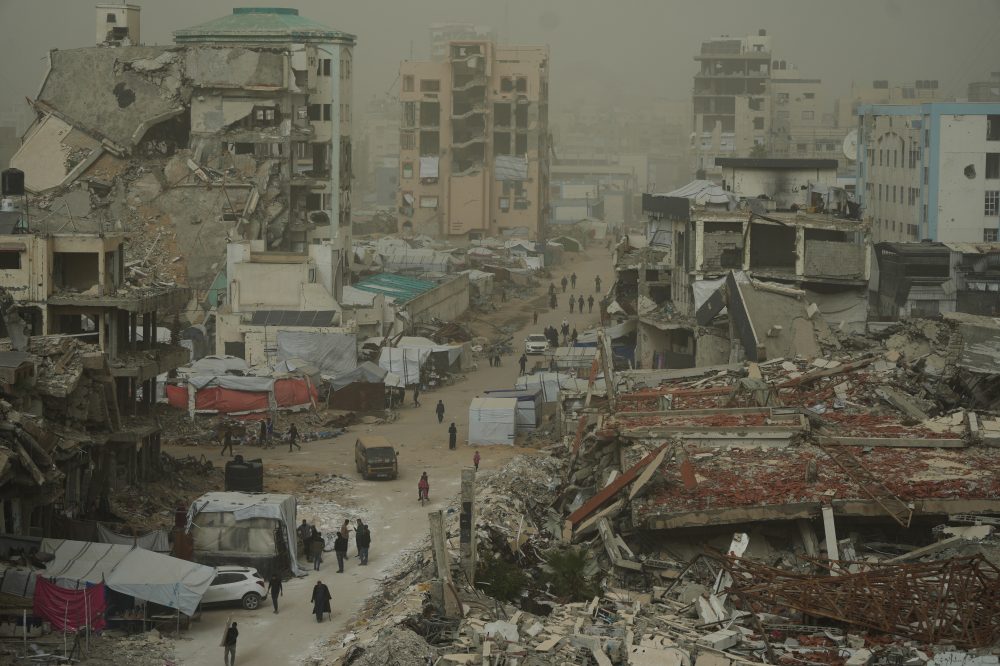
    Penalties for non-compliance would apply to a platform’s total qualifying global income, a metric Ofcom uses that encompasses revenue generated worldwide from regulated services.

    Ofcom announced separately it will expedite decisions on new regulations requiring platforms to implement specialized blocking technology called “hash-matching” to prevent illegal intimate images from being uploaded initially. The agency expects to finalize these rules by May, with implementation potentially beginning this summer.

  • Kim Jong Un’s Sister Praises South Korea’s Drone Admission

    Kim Jong Un’s Sister Praises South Korea’s Drone Admission

    Kim Yo Jong, the influential sister of North Korean leader Kim Jong Un, has expressed satisfaction with South Korea’s formal acknowledgment that unmanned aircraft were deployed into North Korean airspace, according to state-run media reports released Thursday.

    The powerful sibling stated that South Korea’s admission serves the country’s own interests by helping to avoid future serious violations of North Korea’s territorial sovereignty. She indicated that North Korean armed forces plan to implement enhanced security protocols along the inter-Korean border.

    “The border with the enemy should be solid,” Kim declared, as reported by the state news agency KCNA.

  • Iran to Send Written Plan to End U.S. Tensions After Geneva Talks

    Iran to Send Written Plan to End U.S. Tensions After Geneva Talks

    WASHINGTON – A high-ranking U.S. official revealed Wednesday that Iran plans to deliver a written plan outlining steps to defuse current tensions with America following diplomatic discussions held in Geneva earlier this week.

    The announcement comes after senior national security advisors gathered in the White House Situation Room for Iran-focused discussions, where officials learned that all American military personnel sent to the Middle East region are scheduled to be fully deployed by the middle of March, according to the same official.

    Additionally, Secretary of State Marco Rubio has scheduled a meeting with Israeli Prime Minister Benjamin Netanyahu in Israel during the final weekend of February, the official confirmed.

  • Iran Announces Thursday Rocket Launch Plans Amid Rising U.S. Tensions

    Iran Announces Thursday Rocket Launch Plans Amid Rising U.S. Tensions

    Iranian officials have notified aviation authorities of scheduled rocket launches planned for Thursday across southern regions of the country, according to information posted on the U.S. Federal Aviation Administration’s website Wednesday.

    The rocket activity is set to occur between 330 GMT and 1330 GMT on Thursday, with Iranian authorities issuing the standard aviation warning to ensure flight safety in the affected areas.

    This week, Iranian naval forces have been conducting military exercises in the strategically important Hormuz Strait, and the country is preparing for joint naval operations with Russia scheduled for Thursday.

    The rocket launch announcement comes as relations between Iran and the United States continue to deteriorate, with American naval vessels positioned in waters near Iran. U.S. Vice President JD Vance recently indicated that Washington is evaluating whether to maintain diplomatic talks with Tehran or consider alternative approaches.

    The aviation warning system, known as NOTAM, serves as a crucial safety tool that alerts pilots, flight crews, and others using airspace about potential hazards or restricted areas.

  • America Plans Complete Military Pullout from Syria, Report Says

    America Plans Complete Military Pullout from Syria, Report Says

    America is moving forward with plans to pull out all of its approximately 1,000 military personnel currently deployed in Syria, according to a Wednesday report from the Wall Street Journal that cited three unnamed U.S. officials.

    Reuters has not been able to independently confirm this reporting.

    Just last week, American forces completed their departure from a key military installation in Syria, transferring control of the facility to Syrian government forces. This handover marked another indication of improving diplomatic relations between Washington and Damascus, potentially paving the way for a more extensive American military exit from the country.

    According to the Journal’s sources, the remaining U.S. military positions throughout Syria will be vacated during the coming two-month period.

  • Deadly Gas Poisoning Claims 37 Lives at Nigerian Mine

    Deadly Gas Poisoning Claims 37 Lives at Nigerian Mine

    A tragic mining accident in Nigeria has claimed the lives of 37 people who succumbed to carbon monoxide poisoning while working at an underground site, according to police sources and security documents obtained by Reuters.

    The deadly incident unfolded around 5:45 Wednesday morning at a mining operation located in Kampani, within the Wase region of Plateau state. Emergency responders transported an additional 25 miners to medical facilities for treatment.

    Nigeria’s Solid Minerals Development Minister Dele Alake explained that the location was a former lead extraction site where stored minerals naturally emit poisonous gases. The minister noted that local residents were unaware of the hazardous fumes when they descended into the tunnel seeking to harvest minerals.

    Following the fatalities, Alake has mandated the immediate shutdown of all mining operations under license 11810, which is operated by Solid Unit Nigeria Limited and belongs to owner Abdullahi Dan-China in the Zuraq area.

    Initial investigation results indicate the deceased workers, all between ages 20 and 35, perished after breathing in toxic gases while laboring in the underground chambers, security documentation revealed.

    State officials in Plateau confirmed multiple deaths occurred but declined to specify exact numbers, while noting that survivors continue receiving medical care at area hospitals.

    Law enforcement has established a perimeter around the mining location to block additional entry attempts.

    Nigeria’s mining sector is characterized by widespread illegal operations that typically lack adequate safety protocols, with workers frequently operating without proper protective gear.

    Federal authorities have mandated an immediate halt to all mining work throughout the impacted region while investigations proceed.

  • German Leader Plans China Partnership as Trump Pushes Tariffs

    German Leader Plans China Partnership as Trump Pushes Tariffs

    German Chancellor Friedrich Merz announced Wednesday his intention to pursue “strategic partnerships” with China during an upcoming visit, as his country navigates rising tensions over President Trump’s tariff agenda.

    Speaking at his political party’s Ash Wednesday gathering in Passau, Bavaria, Merz outlined Germany’s approach to international relations amid growing trade disputes.

    “We have a strategic interest in finding partners in the world who think the way we do, who act the way we do, and who above all are prepared to shape the future together so that we remain a country with prosperity and a high level of social security,” Merz stated during the event.

    The German leader emphasized that foreign and economic policies have become inseparable in today’s global landscape.

    Addressing the Trump administration’s trade approach directly, Merz said: “If the Americans believe that, with their tariff policy, they should exert influence around the world — if they believe that tariffs are more important than taxes at home — then that is something Americans can, of course, decide for themselves. But it is not our policy.”

    Trump’s aggressive tariff strategy has created strain between traditional allies, potentially threatening bilateral trade relationships and posing additional risks to Germany’s already weakened economy.

    Merz made clear Germany’s position on the tariff issue, declaring: “You can do it, but we will not go along with it. And if you overdo it, then we Europeans are certainly able to defend ourselves against it.”

    The Chancellor pointed to recent European unity during disputes involving Greenland as evidence that the continent can respond collectively to American pressure, suggesting the European Union would take action if Washington escalates tariff measures.

    Describing Germany’s balanced approach, Merz explained: “That is our double strategy: an outstretched hand and, at any time, a renewed partnership — but also enough cohesion and unity within the European Union so that we can defend ourselves sufficiently against things we do not want.”

  • Pioneering Palestinian Diplomat Leila Shahid Passes Away at 76

    Pioneering Palestinian Diplomat Leila Shahid Passes Away at 76

    A trailblazing Palestinian diplomat who shattered gender barriers in international relations has passed away in France at 76 years old.

    Leila Shahid made history as the first woman to represent Palestine in an ambassadorial role, serving in key European posts during pivotal moments in Middle Eastern relations.

    Palestinian Authority President Mahmoud Abbas honored her memory, describing Shahid as a “model of diplomacy committed to the values of freedom, justice and peace,” and noting that “she remained faithful to her people’s message until her final days,” as reported by the official WAFA news agency.

    Born in Beirut in 1949 during the aftermath of the Arab-Israeli war that displaced hundreds of thousands of Palestinians, Shahid’s family originally hailed from Jerusalem and what became northern Israel.

    Following early work in Palestinian refugee settlements, she moved to Paris during the 1970s to earn her doctorate in anthropology. By 1976, she had risen to lead France’s Palestinian student organization.

    Shahid witnessed firsthand one of the conflict’s darkest chapters when she returned to Beirut in 1982 during the Sabra and Shatila killings, where Israeli-supported Lebanese Christian forces murdered hundreds of Palestinian civilians in refugee settlements.

    The Palestine Liberation Organization appointed her as ambassador to Ireland in 1989, marking her historic achievement as the first Palestinian woman to hold such a position. She transferred to the Netherlands the subsequent year.

    Her most significant diplomatic assignment came as Palestinian representative to France from 1993 through 2005, a period encompassing both promising peace negotiations and the eruption of the second intifada in 2000. During this time, she accompanied Palestinian leader Yasser Arafat during his final moments before his death at a French military medical facility in 2004.

    Shahid concluded her diplomatic career representing Palestinian interests to the European Union, Belgium, and Luxembourg from 2006 to 2014.

    Beyond her diplomatic work, she spent years directing “The Review of Palestinian Studies,” a French-language publication documenting the conflict’s history.

  • Delaware Senators Return from Ukraine Visit, Push New Russia Sanctions

    Delaware Senators Return from Ukraine Visit, Push New Russia Sanctions

    WASHINGTON — Four U.S. senators returned home Wednesday following their historic visit to Ukraine, where they’re now advocating for Congress to approve new economic penalties against Russia designed to weaken Moscow financially and force President Vladimir Putin into meaningful peace negotiations.

    The bipartisan group became the first American senators to travel to Odessa since the conflict started nearly four years ago. Ukraine’s third-largest city serves as a vital Black Sea shipping hub and has faced repeated Russian attacks. Democratic senators Jeanne Shaheen, Chris Coons, Richard Blumenthal, and Sheldon Whitehouse completed the journey, while Republican Senator Thom Tillis had to cancel due to personal matters.

    “One of the things we heard wherever we stopped today was that the people of Ukraine want a peace deal, but they want a peace deal that preserves their sovereignty, that recognizes the importance of the integrity of Ukraine,” Shaheen told reporters during a phone briefing.

    The senators’ trip occurs during a pivotal time in the ongoing war. Representatives from both nations were simultaneously conducting U.S.-facilitated discussions in Switzerland over two days, though neither party seemed willing to compromise on critical matters including territorial disputes and future security arrangements. Lawmakers believe the proposed sanctions could push Putin toward accepting a settlement, particularly with the U.S. establishing a June timeline for resolution.

    “Literally nobody believes that Russia is acting in good faith in the negotiations with our government and with the Ukrainians,” Whitehouse stated. “And so pressure becomes the key.”

    However, proposed legislation targeting Russia with severe economic penalties has remained stalled in Congress for several months.

    Multiple sanction proposals are currently under consideration by senators, including comprehensive legislation that would grant the Trump administration authority to implement tariffs and secondary penalties against nations buying Russian oil, natural gas, uranium, and other exports that fund Moscow’s war machine. The Senate Foreign Relations Committee has also moved forward with more focused bills targeting China’s military assistance to Russia, seizing frozen Russian funds, and dismantling Moscow’s “shadow fleet” of oil vessels used to evade existing sanctions.

    Republican Senator Lindsey Graham, who helped sponsor the Senate’s comprehensive sanctions and tariff proposal, issued a statement during this weekend’s Munich Security Conference announcing that Senate Majority Leader John Thune pledged to schedule a vote on the sanctions bill once it secures the necessary 60 votes for passage.

    “This legislation will be a game changer,” Graham declared. “President Trump has embraced it. It is time to vote.”

    Blumenthal, Graham’s co-sponsor on the bill, confirmed bipartisan backing for what he described as a “very tough sledgehammer of sanctions and tariffs,” while acknowledging that “we need to work out some of the remaining details.” Democrats and several Republicans have opposed Trump’s broader tariff strategy aimed at negotiating trade agreements and boosting domestic manufacturing.

    In the House of Representatives, a cross-party coalition led by Republican Representative Brian Fitzpatrick has introduced sanctions targeting Russia’s military industry, banking sector, and petroleum exports that sustain the war effort.

    Another House proposal, spearheaded by Representative Gregory Meeks, the leading Democrat on the House Foreign Affairs Committee, would increase U.S. military aid to Ukraine by $8 billion. Democrats currently need one additional Republican vote to force consideration of that measure.

    Upon their return, the senators plan to document how American companies operating in Ukraine have suffered Russian attacks. The Democratic lawmakers also aim to pressure Trump into providing additional U.S. weapons to Ukraine. “Putin understands weapons, not words,” Blumenthal emphasized.

    Nevertheless, the legislators will return to a Washington where the Trump administration remains uncertain about its long-term commitment to achieving lasting peace in Ukraine and broader European security. For the moment, they drew encouragement from discussions with European allies and Republican colleagues.

    “We and the Republican senators who were with us in Munich spoke with one voice about our determination to continue to support Ukraine,” Coons reported.

  • Mystery Solved: Famous Architect’s Forest Building Confirmed After Century of Doubt

    Mystery Solved: Famous Architect’s Forest Building Confirmed After Century of Doubt

    After more than a century of uncertainty, Spanish officials have definitively confirmed that celebrated architect Antoni Gaudi was behind the design of a mysterious building tucked away in a remote Catalonian forest.

    The announcement Wednesday puts to rest decades of debate surrounding the Xalet del Catllaras, a three-story mountain lodge constructed for cement factory employees about 78 miles north of Barcelona. While experts had long suspected Gaudi’s involvement due to his connection with factory owner Eusebi Guell, no comprehensive study had been conducted to verify the theory.

    That changed when officials commissioned Gaudi expert Galdric Santana to conduct a thorough investigation in 2023. Santana, who leads planning for 2026 commemorative events marking 100 years since Gaudi’s death, discovered definitive proof of the architect’s involvement.

    “What’s most important is that it shows the new architectural approach that Gaudi had,” Santana explained.

    The researcher identified distinctive structural features that only Gaudi employed during that specific period, including unique arch designs, specialized vaulting techniques, and rooms divided by walls positioned at 45-degree angles. These innovative methods wouldn’t appear in his students’ work for another decade or more, Santana noted.

    Using advanced 3D analysis, historical documents, photographs, and floor plans from other Gaudi projects, Santana uncovered geometric and structural evidence that definitively linked the famous architect to the building constructed between 1901 and 1908 in La Pobla de Lillet.

    Initially, Santana acknowledged the possibility that Gaudi might not have been the designer, given the structure’s isolated location and the architect’s busy schedule during those years working on major Barcelona landmarks like Park Guell and Casa Batllo.

    However, the expert believes Gaudi likely didn’t oversee the actual construction, as the finished building differs from the original plans. This deviation may explain why Gaudi never publicly claimed credit for the design, following the common practice of architects refusing to sign their names to projects that strayed from their blueprints.

    According to Santana, approximately ten other structures remain unverified as potential Gaudi creations.

  • Sudan War Escalates as Drone Attacks Target Civilians in Kordofan Region

    Sudan War Escalates as Drone Attacks Target Civilians in Kordofan Region

    CAIRO — An intensification of unmanned aerial attacks in Sudan’s Kordofan area has resulted in mounting civilian casualties and disrupted relief efforts, according to experts and aid workers who spoke Wednesday as Sudan’s civil war approaches its third year.

    The Sudan Doctors Network, an organization monitoring wartime violence, reports that no fewer than 77 individuals lost their lives with dozens more wounded in multiple assaults, primarily carried out by the paramilitary Rapid Support Forces targeting populated neighborhoods. Civilians comprised the majority of casualties.

    The battle between the RSF and Sudan’s armed forces escalated into comprehensive warfare in April 2023. The World Health Organization reports that the fighting has claimed at least 40,000 lives and forced 12 million people from their homes. Relief organizations warn the actual casualties may be significantly higher due to combat in remote and expansive territories that prevent access.

    According to Jalale Getachew Birru, a senior East Africa analyst with the nonprofit Armed Conflict Location & Event Data (ACLED), Sudan’s military has expanded its deployment of unmanned aircraft and aerial bombardments in Kordofan during the previous year as hostilities moved westward, transforming the area into “a primary theater of operations.”

    Military officials announced two weeks ago that they had ended the RSF’s blockade of Kadugli, South Kordofan’s provincial capital, along with the adjacent town of Dilling following more than two years under siege.

    Nevertheless, Birru stated the blockades remain partially intact. “These cities are still encircled, and the fight for the control of these cities and the wider region is ongoing,” he explained to The Associated Press.

    Walid Mohamed, a Kadugli resident, informed the AP that ending the blockade enabled increased flow of supplies and medical resources into the city, reopening connections with Dilling and reducing food costs following a severe humanitarian crisis. Nevertheless, he noted that RSF unmanned aircraft attacks have become nearly constant since then, primarily hitting medical facilities, marketplaces and residential areas.

    Omran Ahmed, who lives in Dilling, similarly reported increased drone attacks, “spreading fear and terror among residents as they see more civilians become victims.”

    U.N. High Commissioner for Human Rights Volker Türk issued an urgent warning Wednesday that unmanned aircraft strikes claimed more than 50 civilian lives during a two-day period this week.

    “These latest killings are yet another reminder of the devastating consequences on civilians of the escalating use of drone warfare in Sudan,” Türk stated, denouncing the attacks on civilian locations including marketplaces, medical centers and educational institutions.

    U.N. spokesperson Stéphane Dujarric indicated evidence shows both warring parties deployed drones against civilians during this week’s violence.

    “These civilians have been at one time or another in government-controlled areas and areas controlled by the RSF, which would make us believe that both sides are using them,” he explained.

    Two military officials, speaking anonymously because they lacked authorization to address media, informed the AP this week that the army does not deliberately strike civilian infrastructure.

    United Nations agencies announced Wednesday that a U.N. convoy successfully delivered aid to more than 130,000 people in Dilling and Kadugli, marking the first significant supply delivery in three months. However, relief workers express alarm about increasing violence.

    Mathilde Vu, an advocacy manager with the Norwegian Refugee Council, told the AP there’s “huge concern” about the “unacceptable” escalation in Kordofan and its potential to “shatter lives and obstruct any hope to reverse the famine/ starvation” affecting the region.

    “It’s very indiscriminate. Between Kordofan, Darfur and the east (Sennar), it’s now every other day we receive messages like ‘drone attack here, hit a civilian infrastructure, killed people,’” Vu explained.

    Kholood Khair, founding director of Confluence Advisory think tank, told the AP that recent Sudan fighting has concentrated in Kordofan, where the military seeks to establish access into the adjacent Darfur region.

    El-Fasher city, North Darfur’s capital, served as the army’s final stronghold in the area before falling to the RSF in October. Reclaiming it could enable the military to reestablish crucial supply and logistics connections between Kordofan and Darfur.

    Meanwhile, the RSF aims to establish a corridor from Kordofan back toward the country’s center and capital city Khartoum, according to Khair.

    Both military forces and the RSF have deployed unmanned aircraft, particularly in North Kordofan, with civilians bearing the brunt of attacks.

    ACLED data shows that 163 aerial and drone attacks nationwide targeted civilians last year, resulting in 1,032 deaths. The army allegedly conducted 83 strikes causing 568 fatalities, while the RSF carried out 66 strikes killing 288 people.

    Federico Donelli, associate professor of international relations at the University of Trieste, reports that both sides have increased their drone usage in Kordofan during recent weeks.

    Donelli explained that multiple factors drive this increase, including the army’s procurement of new weaponry and unmanned aircraft manufactured and provided by foreign entities.

    “This has enabled the army to rely more heavily on precision strikes, mirroring tactics that the Rapid Support Forces have been using for some time,” he noted.

    Both sides may face challenges maintaining adequate troop numbers, he suggested. “Consequently, drones are favored over deploying armed units on the ground, particularly in contested areas such as Kordofan.”

    Khair from Confluence Advisory predicted the Kordofan fighting could change direction in coming periods, with the army potentially attempting to advance into Darfur, especially toward el-Fasher, where authorities have documented war crimes.

    “We expect to see the bombing campaigns not only continue but increase in frequency and volume,” she warned.

  • Canadian PM Carney Moves Closer to Parliamentary Majority After Conservative Defection

    Canadian PM Carney Moves Closer to Parliamentary Majority After Conservative Defection

    Canadian Prime Minister Mark Carney moved a step closer to securing parliamentary control Wednesday after a Conservative Party member switched sides to join his Liberal government.

    Matt Jeneroux, who represents an Alberta district for the Conservative opposition, announced his decision to join the Liberal caucus in the House of Commons. The defection brings Carney’s centrist Liberal Party to 169 seats in the 343-member chamber, leaving them just three seats away from majority control.

    Since winning a minority government in last April’s election, the Liberals have required opposition backing to advance major legislation including budget measures. Carney has argued that achieving a majority would allow his government to respond more swiftly to trade policies from U.S. President Donald Trump’s administration.

    “The world has changed, and Canada must change with it. This is a time to come together — and together, we will build a stronger future,” Carney wrote on social media platform X.

    Jeneroux is scheduled to meet with Carney later Wednesday. In his statement announcing the switch, the Alberta representative cited his desire to address “unprecedented pressures” facing Canada’s economic stability and independence.

    Three Liberal-held seats currently remain empty, and if Carney’s party captures all of them in upcoming special elections, he would secure the majority needed to govern until April 2029. While two of these vacant positions are in traditional Liberal strongholds, polling suggests the third seat in a Montreal-area district will present a more competitive contest.

    This marks the third time in recent months that a Conservative member has crossed the floor to join the Liberals, intensifying scrutiny on Conservative leader Pierre Poilievre. Poilievre narrowly survived a leadership challenge last month following his party’s election defeat despite holding substantial polling advantages.

    Poilievre responded harshly to the defection, posting on X that “Mark Carney is trying to seize a costly Liberal majority government that Canadians voted against in the last election through dirty backroom deals.” He accused Jeneroux of betraying his constituents.

    Carney must still officially call the special elections to fill the remaining vacant seats before he can claim majority status in Parliament.

  • Syria Detention Camp Nearly Empty After Mass Escape of ISIS Families

    Syria Detention Camp Nearly Empty After Mass Escape of ISIS Families

    A detention facility in northeastern Syria that once housed thousands of family members connected to suspected ISIS militants now contains fewer than 1,000 families, according to the camp’s former administrator who spoke Wednesday.

    The Al-Hol camp, located close to Iraq’s border, served as a primary holding facility for relatives of alleged Islamic State fighters captured during the American-supported military operations against the extremist organization in Syria.

    Management of the facility shifted last month when forces loyal to President Ahmed al-Sharaa’s government captured large portions of northeastern Syria from Kurdish-led Syrian Democratic Forces, including multiple prisons housing Islamic State members.

    Last week, U.S. military officials announced they had finished relocating 5,700 adult male ISIS detainees to Iraq.

    Jihan Hanna, who previously ran the camp and continues working with international organizations and Syria’s government, informed Reuters that the families still there are Syrian citizens being moved to a facility in Aleppo. She noted that most foreign nationals had already escaped.

    Syrian government officials have not yet responded to requests for information.

    Camp records from January 19 – one day before government forces assumed control – showed a population of 6,639 families totaling 23,407 individuals, primarily Syrians and Iraqis, plus 6,280 foreign nationals from over 40 countries.

    The United Nations refugee agency UNHCR reported witnessing “a significant decrease in the number of residents in al-Hol camp in recent weeks,” though they stated no verified population counts were available.

    “Over the weekend the camp administration advised UNHCR not to enter the camp due to the unrest and anxiety in the camp,” the agency added in their statement to Reuters.

    Syria’s government criticized the SDF for abandoning al-Hol on January 20 without coordination.

    The SDF responded that same day, explaining their troops were “compelled to withdraw from al-Hol camp and redeploy to areas surrounding cities in northern Syria that are facing increasing risks and threats.”

    A Syrian security official revealed that most camp residents escaped during a five-hour window when no guards were present, with some departing alongside men who arrived to collect relatives for unknown destinations.

    Both the security official and an NGO worker confirmed that the camp’s most dangerous section, called the annex, now sits completely vacant.

    The security source explained that escapees have dispersed throughout Syria, prompting authorities to create a special unit working with international partners to “follow up on the matter and pursue those who are wanted.”

    Some have crossed Syria’s borders entirely.

    In Lebanon, military forces have interrogated more than a dozen Lebanese citizens who illegally entered from Syria after departing al-Hol, according to a Lebanese security source.

    Syria’s Directorate of International Cooperation announced Tuesday that hundreds of people, primarily women and children, had been relocated from al-Hol to a newly established camp near Akhtarin in northern Aleppo.

  • IDF Reports Death of 21-Year-Old Paratrooper in Gaza Friendly Fire Tragedy

    IDF Reports Death of 21-Year-Old Paratrooper in Gaza Friendly Fire Tragedy

    The Israel Defense Forces announced Wednesday that a young paratrooper lost his life in a tragic case of mistaken identity during overnight combat operations in southern Gaza.

    Staff Sgt. Ofri Yafe, age 21, died from wounds sustained when fellow Israeli forces accidentally fired upon his unit near Khan Yunis, military officials confirmed. Yafe served as a reconnaissance fighter with the Paratroopers Brigade and hailed from HaYogev, a farming community in Israel’s Jezreel Valley. Israeli media reports indicate he was raised in Kibbutz Megiddo in the country’s northern region.

    Initial military findings reveal the fatal shooting happened around 2 a.m. during standard operations to dismantle Hamas military installations close to the Yellow Line boundary in the Khan Yunis sector. Two separate Israeli military teams were working simultaneously in the vicinity when the confusion occurred.

    One team erroneously determined the other group posed a threat and began shooting, military sources explained. Emergency responders airlifted the severely injured Yafe by helicopter toward medical treatment, but he succumbed to his injuries while being transported, the IDF stated.

    Military leadership emphasized that investigators continue examining the exact circumstances of the incident and have informed Yafe’s relatives of his death.

    The fallen soldier leaves behind his mother and father, Hadas and Yiftach, along with three siblings named Noy, Tzuf, and Itamar. His grieving family released a public message expressing their devastation. “We are shocked by the tragedy and cannot digest the loss of Ofri, our beloved son. This is incomprehensible,” the family wrote.

    Regional officials from northern Israel also paid tribute to Yafe’s service. The Jezreel Valley Regional Council honored him, saying he “set out to defend the State of Israel and all of us, and fell in battle.”

    Military statistics show that 472 Israeli service members have perished during ground combat operations in Gaza against Hamas forces, with 80 of those deaths resulting from accidental shootings by their own troops or other mishaps.

  • Turkey Arrests 88 Suspected Members of Group Behind Failed 2016 Coup

    Turkey Arrests 88 Suspected Members of Group Behind Failed 2016 Coup

    Security forces across Turkey conducted sweeping arrests Tuesday, taking 88 people into custody on suspicions of belonging to the organization blamed for the country’s failed 2016 military coup.

    The arrests occurred through two independent operations targeting suspected followers of the Gulen movement, which Turkish officials hold responsible for the deadly uprising attempt.

    In the larger operation, prosecutors from Kayseri province in central Turkey issued warrants for 70 suspects after conducting an eight-month investigation. Police teams launched coordinated strikes across four provinces – Kayseri, Istanbul, Adana, and Mersin.

    The massive operation involved 144 police units with 676 officers, including specialized tactical teams, according to authorities. During property searches, investigators seized hidden recording devices, cameras, illegal firearms and bullets, plus documents and electronic files allegedly connected to the organization.

    A second investigation led by Istanbul’s Chief Public Prosecutor resulted in 18 more arrests spanning eight provinces. Sixteen of those detained held government positions, prosecutors revealed.

    Istanbul officials stated that two suspects allegedly occupied leadership roles in the organization, while others faced membership accusations. Authorities withheld the identities of those arrested and declined to specify which government agencies employed them.

    Officials confirmed both investigations proceeded independently, without indicating whether additional arrests might follow. No details were released about upcoming court hearings or formal criminal charges.

    Turkey’s leadership blames the Gulen movement for masterminding the July 2016 coup attempt, when military factions tried to topple the government. Official casualty figures show at least 250 deaths and roughly 2,200 injuries from the violence.

    The Turkish government points to Fethullah Gulen, a religious leader who lived in exile in the United States from 1999 until his 2024 death, as the architect of the coup plot. Turkey has officially classified the Gulen movement as a terrorist organization.

    Turkish law enforcement and prosecutors have maintained an aggressive campaign against suspected movement supporters since 2016. Tuesday’s detentions represent the most recent phase of this continuing crackdown, officials confirmed.

  • Trump’s Peace Board Faces First Test with Fragile Gaza Ceasefire

    Trump’s Peace Board Faces First Test with Fragile Gaza Ceasefire

    JERUSALEM — President Donald Trump’s newly established Board of Peace will convene for its inaugural session Thursday in Washington, marking an initial challenge for one of his signature foreign policy programs as it attempts to strengthen the fragile Gaza ceasefire agreement.

    The president’s expansive vision for this board ranges from overseeing Gaza’s reconstruction into a modern metropolis to competing with the United Nations Security Council in international conflict resolution. However, these grand plans may face harsh realities given the limited headway made in achieving even basic ceasefire objectives in Gaza.

    Deadly incidents continue almost daily, with Israel conducting strikes it claims target militants who pose threats to or attack Israeli troops, resulting in Palestinian casualties including non-combatants. The militant group Hamas remains armed, international peacekeeping forces have yet to arrive, and a Palestinian administrative committee intended to replace Hamas leadership remains stranded in Egypt.

    “If this meeting does not result in fast, tangible improvements on the ground — and particularly on the humanitarian front — its credibility will quickly crumble,” said Max Rodenbeck, Israel-Palestine Project Director at the International Crisis Group, a global think tank.

    Over two dozen countries have joined as charter members of the board.

    The membership roster features Israel and other regional powers involved in ceasefire discussions, along with nations from beyond the Middle East whose leadership either backs Trump or seeks his approval. Notable U.S. partners including France, Norway and Sweden have chosen not to participate.

    Israeli officials express concern about Qatar and Turkey’s participation, given their established relationships with Hamas. Palestinian leaders oppose the arrangement because no Palestinian representatives received invitations to join the board, despite its authority over territory housing approximately 2 million Palestinians.

    Trump, who has designated himself as the board’s chairman, announced earlier this week that member nations had promised $5 billion for Gaza reconstruction and would provide thousands of personnel for peacekeeping and law enforcement duties. Neither financial commitments nor this week’s meeting agenda have been disclosed publicly.

    “We want to make it successful. I think it has the chance to be the most consequential board ever assembled of any kind,” Trump told reporters on Monday. He repeated his disapproval of the U.N.’s track record in settling international conflicts.

    Trump — working alongside son-in-law Jared Kushner and envoy Steve Witkoff — has outlined bold reconstruction plans for Gaza using international investment.

    During a Davos presentation last month, Kushner proposed completing reconstruction within three years, despite U.N. projections indicating that debris removal and mine clearance alone could require significantly more time.

    Kushner’s presentation depicted a rebuilt Gaza featuring beachfront tourism areas, manufacturing districts and technology centers. He acknowledged that reconstruction would only start in weapons-free zones and that security would be crucial for attracting investors.

    Current joint calculations by the U.N., European Union and World Bank estimate reconstruction costs at approximately $70 billion.

    Israeli Prime Minister Benjamin Netanyahu has declared that reconstruction cannot proceed until Hamas surrenders its weapons, creating uncertainty for Palestinians amid widespread destruction.

    The ceasefire agreement has stopped large-scale military campaigns, secured the release of remaining hostages held by Hamas and increased humanitarian aid shipments to Gaza. However, a permanent end to the conflict that began with Hamas’ October 7, 2023 assault on Israel remains uncertain.

    The agreement envisions Hamas surrendering its arsenal and Israeli forces leaving Gaza while international troops arrive. It left certain questions unresolved and established no timeline, essentially postponing difficult decisions to avoid immediate confrontation.

    Israel and the U.S. consider Hamas’ weapon surrender essential for progress in other areas. Arab and Muslim Board of Peace members have criticized Israel for weakening the ceasefire through daily military actions and want the U.S. to restrain its ally. While they have urged Hamas to disarm, they emphasize that Israeli withdrawal is equally crucial.

    Israel’s definition of demilitarization encompasses everything from heavy weaponry like rocket launchers down to standard rifles. Netanyahu stated Sunday that Hamas must surrender approximately 60,000 automatic weapons.

    Although Hamas accepted the ceasefire terms, the group has only made unclear or conditional promises regarding disarmament as part of a process toward Palestinian statehood. Senior Hamas leaders have indicated their security personnel must keep some weapons to maintain order during the transition period.

    Potential solutions being considered include Hamas “securing” weapons in monitored storage facilities under external oversight or surrendering heavy arms while retaining some handguns for police work, according to two regional officials familiar with the talks. One official noted that disarmament represents a complex process potentially lasting months. The officials spoke anonymously due to the sensitive nature of negotiations.

    Whether Israel or the United States would accept such arrangements remains highly uncertain.

    The ceasefire terms also establish a temporary International Stabilization Force composed of troops from Arab and Muslim-majority nations to screen, train and assist a new Palestinian police organization. While its specific duties aren’t fully detailed, responsibilities would include protecting aid deliveries and preventing arms trafficking.

    Nations asked to contribute troops demand that any deployment be characterized as peacekeeping. They have rejected involvement in Hamas disarmament, viewing it as potentially dangerous work. Another worry involves the presence of Israeli-allied armed groups.

    Indonesia has started preparing up to 8,000 soldiers for the force, though its foreign minister stated last week they would not participate in disarmament operations.

    According to the ceasefire terms, Hamas must transfer authority to a transitional committee of politically neutral Palestinian officials. The U.S. has selected a 15-person committee and appointed former U.N. envoy Nickolay Mladenov to supervise them as the board’s Gaza representative.

    The committee, headed by former Palestinian Authority deputy minister Ali Shaath, has not yet received Israeli authorization to enter Gaza from Egypt. Israeli officials have not addressed the situation.

    Mladenov stated last week that the committee cannot function unless Hamas relinquishes control and ceasefire violations end.

    “We’re only embarrassing the committee and ultimately making it ineffective,” he said at the Munich Security Conference. “All of this needs to move very fast.”

  • Peru Congress Set to Pick Nation’s 8th President in 10 Years After Latest Removal

    Peru Congress Set to Pick Nation’s 8th President in 10 Years After Latest Removal

    LIMA, Peru — Congressional representatives in Peru are preparing to select the nation’s eighth president in ten years on Wednesday, following the recent removal of José Jerí from office. Four legislative candidates, mostly unfamiliar to the general public, are competing for the position.

    The winner of Wednesday’s vote will govern Peru until July 28, at which point they will hand over authority to whoever wins the general election set for April.

    This constant turnover in Peru’s highest office demonstrates the ongoing political turmoil caused by presidents lacking strong legislative support. Congressional members have repeatedly relied on expansive readings of a constitutional provision concerning “permanent moral incapacity” to dismiss sitting leaders.

    On Tuesday, legislative members voted to dismiss Jerí following a four-month tenure. His removal came after information surfaced about secret meetings he held with Chinese business leaders, including someone with government contracts. Jerí maintained he was simply organizing a Peruvian-Chinese cultural celebration.

    Prosecutors have opened two preliminary inquiries into Jerí concerning accusations of unlawfully promoting private business interests and using his influence inappropriately against state interests.

    Legislative officials announced Tuesday that four individuals had formally entered Wednesday evening’s selection process. Support levels for each remain uncertain.

    The leading contender appears to be María del Carmen Alva, a 58-year-old attorney put forward by the conservative Popular Action party. Alva, who formerly held the congressional speaker position, belongs to a family with substantial investments in agricultural exports, particularly companies shipping asparagus to global markets including the United States.

    Also running is Héctor Acuña, a 68-year-old engineer from the conservative Honor and Democracy faction. While he brings extensive private sector background, many consider him less experienced in traditional politics compared to other contenders. He is the sibling of César Acuña, a wealthy former regional leader and presidential hopeful for the April 12 election under the Alliance for Progress party. This party previously backed former presidents Dina Boluarte and Jerí.

    The remaining contenders include José Balcázar, an 83-year-old retired judge from the leftist Perú Libre party, and Edgard Reymundo, a 73-year-old sociologist representing the leftist Bloque Democrático.

    Whoever replaces Jerí will face escalating violence and extortion threatening small business operators and working families. Along with security challenges, various political factions are pushing for strong assurances of fair elections that will also choose a two-chamber legislature with 130 parliamentary representatives and 60 senators.

  • Third Canadian Conservative MP Switches to Liberal Party Under PM Carney

    Third Canadian Conservative MP Switches to Liberal Party Under PM Carney

    TORONTO (AP) — A third Conservative Party member of Canada’s Parliament has switched allegiances to join Prime Minister Mark Carney’s Liberal government.

    Prime Minister Carney revealed through social media Wednesday that Alberta MP Matt Jeneroux has abandoned the Conservative Party to become part of the Liberal caucus. This marks the third time in recent months that a Conservative legislator has made such a political switch.

    Jeneroux’s party change brings the Liberal government one step closer to achieving majority control, which would allow them to advance legislation without needing support from opposition parties.

    Three upcoming parliamentary by-elections could potentially secure the Liberals’ path to majority rule.

    This latest defection deals another setback to Conservative Party leader Pierre Poilievre, who suffered defeat in April’s election and temporarily lost his parliamentary seat before returning to the House of Commons.

    While Poilievre successfully navigated a party leadership review last month, he continues facing challenges maintaining unity within his caucus.

    Jeneroux had initially revealed his intention to resign back in November, coming just days after another Conservative MP departed to join the Liberal ranks. At that time, Poilievre indicated Jeneroux would be stepping down from Parliament entirely come spring.

    However, Jeneroux explained in a Wednesday social media post that family discussions led him to reconsider, stating that current circumstances require “steady leadership” for the nation.

    Since taking over from Justin Trudeau as prime minister in 2025 and securing electoral victory, Carney has positioned the Liberal Party toward the political center.

    During last month’s World Economic Forum in Davos, Carney spoke out against economic pressure tactics used by major powers against smaller nations. His comments at the international gathering earned significant praise and media attention, overshadowing U.S. President Donald Trump’s presence at the event.

  • British Police Launch Joint Investigation Into Epstein Document Revelations

    British Police Launch Joint Investigation Into Epstein Document Revelations

    LONDON — Law enforcement agencies throughout the United Kingdom have established a collaborative task force to examine potential criminal conduct detailed in millions of pages of Jeffrey Epstein documents recently made public by U.S. federal investigators.

    The National Police Chiefs’ Council announced Wednesday that they have created a specialized coordination team to assist regional police departments investigating matters stemming from the massive document release containing more than 3 million pages of evidence from late last month.

    “It may take some time due to the volume of material and the complexity of international jurisdictions, but policing and its law enforcement partners are taking this matter extremely seriously, and will assess all information thoroughly,” the council stated in their announcement.

    Though the council declined to identify which specific departments are participating, at least eight regional police forces have confirmed they are examining information contained within the files. Their investigations span multiple concerns, from potential use of Epstein’s aircraft for human trafficking purposes to claims that former Prince Andrew shared classified intelligence with the convicted financier during his tenure as Britain’s trade representative.

    Surrey Police, serving the region directly south of London, revealed Wednesday that the documents contain accusations of sex trafficking activities in Virginia Water village spanning from 1994 to 1996. Officials withheld specific information regarding suspected perpetrators or victims involved.

    The department urged individuals with knowledge of the alleged criminal activity to reach out to authorities.

    “Where relevant, and via the national coordination group, we will engage with law enforcement agencies to obtain access to further information which may support our enquiries,” Surrey Police officials stated.

    Essex Police announced Tuesday they are examining details about private aircraft operations at Stansted Airport based on information discovered in the recent document disclosure.

    The Epstein controversy has created significant turmoil within Britain’s royal family and political establishment due to connections between the disgraced financier and Andrew Mountbatten-Windsor, the former prince, along with Peter Mandelson, Britain’s previous ambassador to the United States.

    King Charles III removed his brother’s royal designations in October, including his princely title, as an attempt to shield the monarchy from ongoing disclosures about Andrew’s association with Epstein.

    Prime Minister Keir Starmer faced criticism over his decision-making and encountered leadership challenges after the documents exposed that Mandelson maintained closer ties to Epstein than he had previously disclosed when Starmer appointed him to the Washington diplomatic post.

  • UN Security Council Moves Gaza Meeting Ahead of Trump’s Peace Board Summit

    UN Security Council Moves Gaza Meeting Ahead of Trump’s Peace Board Summit

    NEW YORK (TV Delmarva) — The United Nations Security Council has moved up its scheduled discussion on the Gaza ceasefire agreement to Wednesday, one day earlier than planned, to accommodate diplomatic travel before President Donald Trump’s inaugural Board of Peace gathering.

    The timing adjustment came after Trump announced his board would convene Thursday, creating scheduling conflicts for international diplomats hoping to participate in both events. The overlap signals possible competing approaches between the established UN framework and Trump’s newly created peace initiative, which aims to mediate global conflicts.

    Palestinian UN Ambassador Riyad Mansour expressed his expectations for both gatherings, telling reporters: “We expect from the international community to stop Israel and end their illegal effort against annexation, whether in Washington or in New York.”

    Wednesday’s Security Council session will bring together foreign ministers from Britain, Israel, Jordan, Egypt, and Indonesia, among other nations. The 15-member council agreed to the emergency session after multiple Arab and Islamic nations requested urgent discussions about Gaza and Israel’s controversial West Bank activities.

    Trump’s Board of Peace, which he will chair personally, initially focused on his comprehensive 20-point Gaza reconstruction plan. However, the Republican president has expanded the board’s mission to address conflicts worldwide, drawing skepticism from key allies.

    More than 20 nations have agreed to join Trump’s peace initiative, though notable US partners like France and Germany have declined participation while reaffirming their commitment to UN processes currently undergoing significant reforms and budget reductions.

    US Ambassador to the UN Mike Waltz defended the board’s membership during a Monday radio interview with Hugh Hewitt, emphasizing that crucial players including Qatar and Egypt, who maintain communication channels with Hamas leadership, have joined the effort.

    “All of those countries are on the Board of Peace, singing the same tune as the United States,” Waltz stated.

    The Security Council meeting follows Tuesday’s dramatic scene where 14 of the 15 council members, excluding only the United States, stood with Palestinian Ambassador Mansour as he delivered a statement from 80 countries condemning Israel’s West Bank actions and demanding immediate policy reversals.

    Israel has initiated a controversial land regulation process that will strengthen its authority over the occupied West Bank territory. Israeli Energy Minister Eli Cohen described these measures as establishing “de facto sovereignty” that would prevent Palestinian statehood.

    Palestinian officials, Arab governments, and human rights organizations have denounced these actions as illegal annexation of land where approximately 3.4 million Palestinians live and hope to establish their future nation.

    Wednesday’s UN session will also examine the US-mediated ceasefire that began October 10, ending more than two years of warfare between Israel and Hamas. Britain, currently leading the Security Council, announced the meeting will feature briefings from UN political affairs chief Rosemary DiCarlo and Israeli and Palestinian civilian representatives speaking for the first time since the October 7 attacks.

    Several ceasefire provisions have been implemented successfully, including Hamas releasing all hostages in its custody and increased humanitarian supplies reaching Gaza, though UN officials say aid levels remain inadequate. A newly formed administrative committee now oversees Gaza’s daily operations.

    The most difficult challenges remain ahead, including establishing an international security presence, dismantling Hamas’s military capabilities, and reconstructing Gaza’s infrastructure.

    Trump announced this week that Board of Peace members have committed $5 billion for Gaza reconstruction and will provide thousands of personnel for international stabilization and police operations in the territory, though he provided no specific details. Indonesia’s military has indicated up to 8,000 troops could be prepared by late June for possible Gaza deployment as part of humanitarian and peacekeeping efforts.

  • Trump’s Taiwan Arms Discussion with China Sparks Foreign Policy Concerns

    Trump’s Taiwan Arms Discussion with China Sparks Foreign Policy Concerns

    Foreign policy experts are expressing alarm after President Donald Trump revealed he’s consulting with Chinese leader Xi Jinping about potential weapons sales to Taiwan, a move that could undermine longstanding diplomatic principles.

    During a Monday press briefing, Trump made the surprising disclosure when reporters questioned him about Xi’s opposition to the arms deals. “I’ve talked to him about it. We had a good conversation, and we’ll make a determination pretty soon,” Trump stated, emphasizing his “very good relationship with President Xi.”

    The revelation has sparked intense debate about whether America’s approach to Taiwan might be shifting before Trump’s scheduled April visit to China.

    According to William Yang, a senior Northeast Asia analyst with the International Crisis Group, Trump’s consultation with Xi could breach the Six Assurances – a collection of policy guidelines established in 1982 during Ronald Reagan’s presidency that have shaped U.S.-Taiwan relations.

    The second principle explicitly declares that America “did not agree to consult with the People’s Republic of China on arms sales to Taiwan.”

    “That basically has been executed by several U.S. presidents after Ronald Reagan to justify and continue the arms sales to Taiwan without actually discussing the topic with China over the past few decades,” Yang explained.

    Yang warned that Trump might be establishing a “dangerous precedent” that could enable Beijing to influence future American weapons sales to Taiwan.

    Taiwan’s leadership has remained silent on Trump’s remarks as the island observes its weeklong Lunar New Year celebration.

    The controversy stems from China’s territorial ambitions regarding Taiwan, with Beijing insisting the island must be reunified with the mainland, using military force if needed. China prevents nations with which it maintains diplomatic ties from establishing formal relationships with Taipei and routinely deploys naval vessels and aircraft near the island.

    Although lacking official diplomatic connections with Taiwan, America serves as the island’s primary unofficial ally and weapons provider. Federal law requires the U.S. to supply Taiwan with adequate military equipment to prevent mainland attacks.

    Last December, the Trump administration approved a historic $11 billion arms package for Taiwan.

    China strongly objected to the agreement, with Xi cautioning Trump during a recent phone call that “the U.S. must handle the issue of arms sales to Taiwan with prudence.”

    Xi emphasized that “the Taiwan question is the most important issue in China-U.S. relations,” according to China’s foreign ministry summary of their conversation.

    Lev Nachman, a political science professor at National Taiwan University, outlined the three foundations of U.S. policy toward Taiwan in the absence of formal diplomatic recognition.

    The Taiwan Relations Act, passed by Congress in 1979 when America recognized China and ended Taiwan ties, legally obligates the U.S. to help Taiwan defend itself while treating any threats to the island as security concerns.

    The Three Communiques represent joint statements from the 1970s and 1980s between American and Chinese officials covering various Taiwan-related issues. These documents allow the U.S. to acknowledge one China without accepting Beijing’s control over Taiwan, creating strategic flexibility for America to assist Taiwan while maintaining Chinese diplomatic relations.

    The Six Assurances were designed to guarantee continued American support for Taiwan and have reportedly been honored by every president since Reagan.

    Hoo Tiang Boon, an associate professor of international relations at Singapore’s Nanyang Technological University, expressed concern that Trump’s statements suggest China might influence the volume of American arms sales to Taiwan.

    “Even if eventually the U.S. will approve whatever arms sales packages to Taiwan, it is a disturbing development, particularly from the perspective of Taiwan because it sounds like it would be an issue that would be bargained away,” Hoo noted.

    Taiwan is expected to be a major topic during Trump’s April China visit, alongside trade disputes and technology access issues.

    Yang suggested that uncertainty about Trump’s approach to Taiwan arms sales during his visit could increase doubts on the island about American willingness to defend against a potential Chinese invasion.

    “This further surge of skepticism, anxiety about the United States within Taiwan is exactly what China would be aiming for,” he added.

    Taiwan’s independence-supporting administration under President Lai Ching-te already faces challenges funding existing American arms purchases, with the budget stalled in parliament.

    Opposition legislators announced Monday they would examine a $40 billion special defense budget when parliament reconvenes February 23rd following the holiday break.

  • Four South Africans Deceived Into Russian Military Service Return Home

    Four South Africans Deceived Into Russian Military Service Return Home

    JOHANNESBURG – Four men from South Africa who were deceived into joining Russian military operations in Ukraine have arrived back in their home country, according to the South African Broadcasting Corporation.

    The men touched down at O.R. Tambo International Airport in Johannesburg on Wednesday, where law enforcement officials were present to meet them, SABC reported.

    When contacted for details, a police representative refused to provide comment and referred questions to the nation’s foreign affairs department. Officials from the foreign ministry did not immediately return requests for information.

    In November, South African authorities announced they would launch an investigation into how 17 of their nationals became involved with mercenary operations in the ongoing Russia-Ukraine war. The probe began after the men reached out desperately seeking assistance to return to South Africa.

    Earlier this month, South African President Cyril Ramaphosa held a phone conversation with Russian President Vladimir Putin. Following their discussion, Ramaphosa’s administration released a statement saying both leaders had “pledged their support to the process of returning South Africans fighting alongside Russian forces in Ukraine.”

    According to South African legal statutes, citizens are prohibited from offering military support to foreign nations or enlisting in overseas armed forces without official authorization from South Africa.

  • Hungary Halts Diesel Exports to Ukraine Amid Pipeline Dispute

    Hungary Halts Diesel Exports to Ukraine Amid Pipeline Dispute

    BUDAPEST, Hungary — Hungarian officials announced Wednesday they will halt diesel fuel exports to Ukraine following ongoing disruptions to Russian oil deliveries through a key pipeline crossing Ukrainian soil.

    Oil shipments from Russia to both Hungary and Slovakia have been cut off since January 27th following damage to the Druzhba pipeline, which transports Russian crude oil into Central Europe. Ukrainian authorities attribute the damage to Russian military strikes.

    Both Hungary and Slovakia, nations that secured temporary waivers from European Union restrictions on Russian oil purchases, have pointed fingers at Ukraine for intentionally blocking the fuel supplies, though they have not offered proof of these claims.

    Hungarian Foreign Minister Péter Szijjártó declared in a social media video Wednesday that the supply disruption represents “a political decision made by the Ukrainian president himself.”

    Ukrainian officials have rejected these allegations.

    Szijjártó also stated that Hungary maintains sufficient oil stockpiles to meet needs for over three months and emphasized the country’s energy security remains intact.

    While nearly all European nations have dramatically cut or completely eliminated Russian energy purchases, Hungary — despite being both an EU and NATO member — has continued and even expanded its Russian oil and gas imports since Moscow began its military campaign in Ukraine in February 2022.

    Hungarian nationalist leader Viktor Orbán has consistently maintained that Russian energy sources are essential for the nation’s economic stability, claiming that transitioning to alternative energy suppliers would trigger immediate economic devastation — a position challenged by some energy analysts.

    Recognized as Moscow’s strongest supporter within the EU, Orbán has actively resisted the bloc’s sanctioning efforts against Russia following its invasion and has criticized measures targeting Russian energy revenues that help fund the military operation.

    With April elections approaching that could prove the most difficult challenge to his 16-year tenure, Orbán has initiated an intense campaign criticizing both Ukraine and the EU, attempting to persuade Hungarian voters that their neighboring country represents a serious threat and that only he can ensure Hungary’s protection.

    After the Druzhba pipeline interruptions began in late January, Hungarian leadership requested that Croatia permit Russian oil delivered by ship to flow through the Adria pipeline to Hungarian and Slovakian refineries.

    Croatian Economy Minister Ante Šušnjar indicated his nation would not permit Central European energy security to be compromised but rejected Hungary’s proposal.

    In a Monday post on social media platform X, Šušnjar stated there are “no technical excuses left for staying tied to Russian crude for any EU country.”

    “A barrel bought from Russia may appear cheaper to some countries, but helps fund war and attacks on Ukrainian people,” he wrote.

  • Former Kosovo President Pleads for Acquittal in War Crimes Trial

    Former Kosovo President Pleads for Acquittal in War Crimes Trial

    THE HAGUE, Netherlands — The former president of Kosovo made an impassioned final appeal Wednesday to international judges, positioning himself as a champion of peace while requesting full acquittal on what he described as baseless accusations of murder, torture and persecution stemming from his country’s fight for independence.

    “Throughout my life, I stood with the people of Kosovo defending freedom, life and dignity. I was always guided by the Western ideals of democracy, equality and justice,” Hashim Thaci declared to the panel at the conclusion of his trial spanning nearly three years at the Kosovo Specialist Chambers.

    Emotional supporters packed the courtroom’s public viewing area at the start of his address, pressing against the glass barrier to gesture toward their former leader before security personnel intervened. At least one observer was seen shedding tears during Thaci’s remarks.

    The prosecution is demanding maximum sentences of 45 years behind bars for Thaci along with co-defendants Kadri Veseli, Rexhep Selimi and Jakup Krasniqi. Additionally, Thaci confronts a second upcoming trial on witness intimidation allegations scheduled to commence this month.

    Thaci stepped down from the presidency in 2020 to confront 10 counts of crimes against humanity and war crimes allegedly perpetrated during Kosovo’s 1998-99 independence war against Serbia. He and three other former Kosovo Liberation Army (KLA) commanders have remained in detention since November 2020 at the Hague-based tribunal, which operates as part of Kosovo’s legal framework. The defendants now face what could be months of waiting before judges deliver their verdicts.

    During his final courtroom address, Thaci, who has consistently maintained his innocence, stated “the only just decision would be my full acquittal.”

    He described leaving his studies in Switzerland to help protect his homeland from violent assaults by Serbia, eventually becoming a prominent KLA negotiator in Western-mediated peace discussions and subsequently his nation’s president.

    “During all that time, the only power I had was the power of my voice,” he testified.

    “I used my voice to promote a multi-ethnic and tolerant society in my country, in Kosovo,” he continued.

    However, prosecutor Kimberly West presented a dramatically different narrative on Monday, telling judges that witnesses offered “overwhelming evidence” showing Thaci and his co-defendants implemented a strategy of targeting political rivals and civilians viewed as collaborators and traitors while leading the Kosovo Liberation Army.

    Thaci also rejected allegations that Kosovo Albanian combatants removed organs from captives during the conflict, calling such claims “Russian and Serbian propaganda.”

    Wednesday’s final arguments followed a massive demonstration Tuesday in Kosovo’s capital city of Pristina, where thousands rallied in solidarity with Thaci and the other former fighters facing trial, coinciding with the country’s independence anniversary celebration.

    Kosovo proclaimed independence from Serbia in 2008, though Belgrade continues to reject this declaration. Relations between the two nations remain strained despite nine years of European Union-facilitated negotiations backed by the United States.

    Many Kosovo citizens view the court proceedings as an effort to distort their historical narrative, arguing it attempts to equate Serbia’s actions with their own suffering.

    Ethnic Albanians comprised the majority of the approximately 13,000 war casualties in Kosovo. The conflict concluded after a 78-day NATO bombing campaign against Serbian military forces. Nearly one million ethnic Albanian Kosovars were forced to flee their residences.

    Reflecting on his decision to join the struggle, Thaci stated: “I did not return to risk my life for control or for power. I returned to my homeland, risking my life, for freedom and for peace.”

  • French Authorities Detain 11 in Fatal Beating of Nationalist Student

    French Authorities Detain 11 in Fatal Beating of Nationalist Student

    LYON, France — Authorities in France have detained 11 individuals in connection with the fatal assault of a young nationalist student, marking another chapter in the country’s escalating political tensions as the 2027 presidential race approaches.

    Twenty-three-year-old Quentin Deranque, characterized as an ardent nationalist, succumbed to his injuries at a medical facility on Saturday. The student had been severely beaten two days prior during violent confrontations between opposing political factions in Lyon. The altercation occurred on the sidelines of a student gathering featuring far-left European Parliament member Rima Hassan as the main speaker.

    Medical examination revealed Deranque sustained a broken skull and severe brain trauma that proved fatal, according to Lyon prosecutor Thierry Dran. Authorities launched a homicide investigation and are exploring additional criminal charges. Dran’s office confirmed that officers apprehended a man and woman Wednesday morning, adding to nine others already in custody since Tuesday evening.

    Hassan, a French-Palestinian politician born in a Syrian refugee camp, represents the far-left France Unbowed party in the European Parliament. Following the initial attack but prior to Deranque’s death, Hassan posted on social media expressing her shock at the violence and denouncing it.

    The student’s death has unleashed a wave of political finger-pointing, with much criticism directed at France Unbowed. Political adversaries claim the party’s aggressive far-left stance, including harsh criticism of Israel, promotes violence and social discord.

    The organization operates under the leadership of seasoned left-wing politician Jean-Luc Mélenchon, a former Trotskyist who sought the presidency unsuccessfully in 2012, 2017, and 2022, never reaching the final round. He’s positioning for another anticipated campaign when President Emmanuel Macron’s final term concludes next year.

    On Tuesday, Mélenchon rejected any responsibility for the Lyon tragedy, stating: “We have absolutely nothing to do, either directly or indirectly, with the death of this young Deranque.”

    However, reports indicate that among those detained is a parliamentary assistant to France Unbowed legislator Raphaël Arnault. The lawmaker acknowledged his aide’s arrest on social media without providing details and announced the termination of the employee’s contract.

    Political violence has remained a constant element in French society, with extreme left and right factions maintaining deep-seated animosity that occasionally turns violent, though fatal encounters have been uncommon in recent years.

    With municipal elections scheduled for next month and campaigning intensifying, political opponents across the right and far-right spectrum are holding Mélenchon’s party accountable for Deranque’s death, urging voters to reject France Unbowed at the ballot box.

    The backlash extends beyond traditional opponents, with former President François Hollande, a prominent left-wing figure, declaring that moderate leftist parties, including his Socialist Party, will not align with Mélenchon’s organization in future elections as they have previously.

    “The relationship with France Unbowed is over,” Hollande declared.

  • Danish King Makes Second Greenland Visit Amid Trump Acquisition Push

    Danish King Makes Second Greenland Visit Amid Trump Acquisition Push

    Denmark’s King Frederik touched down in Nuuk, Greenland’s capital, on Wednesday for his second royal visit to the Arctic territory in just one year, demonstrating Danish solidarity as President Donald Trump continues his efforts to obtain the strategic island.

    The monarch’s arrival follows diplomatic discussions that began last month between Denmark, Greenland, and the United States, aimed at addressing mounting tensions within the NATO alliance sparked by Trump’s persistent acquisition remarks.

    According to Denmark’s prime minister, who spoke Friday about recent talks, she and Greenland’s leader had productive discussions with U.S. Secretary of State Marco Rubio. However, she cautioned that Trump remains committed to his goal of acquiring Greenland.

    Upon landing, King Frederik was greeted on the airport tarmac by Greenlandic Prime Minister Jens-Frederik Nielsen and parliamentary leader Kim Kielsen, embracing both officials. The king sported a distinctive black winter jacket featuring both Danish and Greenlandic flags positioned on the left chest area.

    Wednesday’s itinerary includes stops at a local educational facility, Denmark’s Joint Arctic Command headquarters in Nuuk, and Royal Greenland, the territory’s primary seafood company and largest business enterprise.

    Annual royal visits to Greenland represent a longstanding Danish tradition, with family members frequently donning traditional island attire including white anoraks for men, colorfully beaded collars for women, and sealskin footwear.

    King Frederik has substantial personal experience in Greenland, having previously completed a four-month research expedition across the island’s ice sheet.

    Thursday’s schedule will take the monarch to Maniitsoq, located approximately 87 miles north of Nuuk along the western coastline. His final stop Friday will be the Arctic Basic Training program in the western community of Kangerlussuaq.

  • Displaced Islanders Return to Remote Atoll to Challenge Britain-Mauritius Agreement

    Displaced Islanders Return to Remote Atoll to Challenge Britain-Mauritius Agreement

    A group of four Chagossians has established what they describe as a permanent settlement on a remote Indian Ocean atoll, in an effort to disrupt Britain’s planned handover of the Chagos Islands to Mauritius scheduled for 2025.

    The group, led by Misley Mandarin, arrived Monday on Ile du Coin atoll and are currently residing in tents. Mandarin expects ten additional people to join them next week, with many more planned arrivals throughout the coming year.

    Speaking to Reuters by phone Tuesday, Mandarin revealed that his 74-year-old father Michel accompanied him on the journey. The elder Mandarin was just 14 years old when he was forced to leave the island decades ago.

    “I am not in exile anymore. This is my homeland,” declared Misley Mandarin, who was born in Mauritius after his family’s displacement.

    Between the 1960s and 1970s, British authorities forcibly relocated as many as 2,000 Chagossians from the archipelago, with most settling in Mauritius and Britain. Many of these displaced people continue to seek the right to return to their birthplace.

    The 2024 sovereignty agreement between Britain and Mauritius permits Britain to maintain control over the strategically vital U.S.-UK military installation on Diego Garcia, the archipelago’s largest island, through a 99-year lease arrangement.

    The United Nations Committee on the Elimination of Racial Discrimination has called on both nations to reject ratifying the deal, warning it could continue historical violations of rights.

    Mandarin stated his goal is to enable the 322 individuals he says were born on Ile du Coin and remain alive “to come home before they die.”

    He emphasized that their settlement poses no threat to the American military facility on Diego Garcia.

    However, Mauritius Attorney General Gavin Glover characterized the landing as illegal during an interview with private Radio Plus, calling it a “publicity stunt organised to create a situation of conflict with the British government.”

    Glover noted that Mauritius will not assume control over the Chagos Archipelago until the treaty receives official ratification.

  • Berlin Court Forces X to Share Election Data with Researchers

    Berlin Court Forces X to Share Election Data with Researchers

    A Berlin appeals court has issued a groundbreaking decision forcing Elon Musk’s social media platform X to provide qualified researchers with access to public information related to Hungary’s upcoming parliamentary election.

    The ruling, announced Tuesday by Democracy Reporting International, one of the organizations that brought the case, requires X to share data including post reach and user engagement metrics connected to Hungary’s electoral process. A court representative confirmed Wednesday that the decision goes into effect immediately.

    Legal experts consider this verdict a significant breakthrough in enforcing the European Union’s Digital Services Act, which requires major online platforms to provide researchers with data access to help identify threats like false information, hate speech, and electoral interference.

    X has not provided any response to requests for comment regarding the court order.

    The case was filed by two organizations: Democracy Reporting International (DRI) and the Society for Civil Rights (GFF). These same groups had previously been unsuccessful in obtaining comparable information from X for Germany’s 2025 federal election.

    Initially, a lower court determined that the matter fell under Irish jurisdiction, since X operates its European headquarters there. However, the Berlin appeals court took a different approach, ruling that German courts have authority when local issues are involved, such as when German researchers are prevented from accessing essential data for work serving the public interest.

    The appeals court sided with the two advocacy organizations, stating that X’s refusal to cooperate hindered their research capabilities within Germany.

    “No appeal can be lodged against the decision,” stated Joschka Selinger, an attorney representing GFF. He added that the ruling could be enforced through financial penalties if X refuses to comply.

    The case comes as Hungary’s Prime Minister Viktor Orban confronts his most serious political challenge since his Fidesz party gained control in 2010. The center-right opposition Tisza party currently leads in most public opinion surveys, though government-aligned polling organizations show Fidesz ahead, and many voters have not yet decided.

    Hungary’s past elections have been marked by allegations of media manipulation and the spread of false information.

    Hungarian government officials did not provide an immediate response when contacted for comment Wednesday.

    DRI argued that this court decision will make it easier for civil society organizations throughout Europe to use national courts to protect digital rights.

    Legal observers interpret the ruling as a warning to major platforms subject to DSA regulations that blocking researcher access could result in legal action across EU member nations.

  • Rome Investigators Probe Damage to Famous Bernini Elephant Statue

    Rome Investigators Probe Damage to Famous Bernini Elephant Statue

    ROME (AP) — Authorities in Italy’s capital are examining how a cherished elephant monument created by renowned Baroque artist Gian Lorenzo Bernini sustained damage to its left tusk’s tip for the second time in recent years.

    Investigators discovered the broken marble piece, measuring 11 centimeters (4 inches), close to the monument during the weekend. Officials announced Wednesday they had established the fragment wasn’t part of Bernini’s original creation but had been attached during restoration efforts in 1977.

    The identical section had previously been damaged through vandalism in 2016, according to Rome’s municipal government.

    Authorities are currently examining surveillance footage to determine whether someone was responsible for causing the damage once more.

    The compact elephant statue, situated close to Rome’s famous Pantheon, attracts numerous visitors. Pope Alexander VII asked Rome’s most celebrated Baroque artist, Bernini, to create the design after Dominican monks found a small Egyptian obelisk within their nearby monastery grounds, which sits next to the Basilica of Santa Maria Sopra Minerva.

    The elephant statue, positioned in Piazza della Minerva facing the basilica, supports the ancient obelisk on its back.

    Based on Rome’s municipal website, Bernini and the monks had conflicting views about the project: The sculptor thought the obelisk’s weight could be supported by the elephant’s four legs alone, while the monks demanded additional stone reinforcement beneath its belly for better stability.

    The monks prevailed in this dispute, and the resulting sturdy appearance earned the elephant the nickname “Minerva’s Piglet,” since its short legs and central support make it resemble a pig rather than an elephant.

    Local folklore suggests Bernini sought payback against the monks by positioning the elephant’s rear end with its tail raised toward their monastery.

  • Greece Partners with 4 European Nations on Migrant Deportation Centers in Africa

    Greece Partners with 4 European Nations on Migrant Deportation Centers in Africa

    ATHENS, Greece (AP) — Greek officials announced Wednesday they are collaborating with four European nations to establish deportation facilities in third-world countries, primarily targeting locations in Africa, for asylum seekers who have been denied refugee status.

    Migration Minister Thanos Plevris revealed during an interview on Greek state television ERT that his country is partnering with Germany, Netherlands, Austria and Denmark to develop these “return hubs,” with Africa being the preferred continent. According to Plevris, officials from all five nations have already conducted preliminary discussions, with technical working groups scheduled to convene next week.

    “We are not speaking theoretically any more, we are speaking practically,” Plevris stated. The minister declined to identify specific African nations under consideration and noted that the continental preference “was not binding.” He explained that larger European partners are handling direct negotiations with potential host countries, “but we are participating too.”

    These deportation facilities would serve individuals whose asylum requests have been denied and whose home nations refuse repatriation, Plevris clarified. He suggested the centers would discourage potential migrants with slim chances of receiving asylum approval. While the minister indicated an initial framework should emerge within months, he provided no timeline for when such facilities might become operational.

    Positioned at Europe’s southeastern border, Greece has served for decades as a primary gateway into the European Union for individuals escaping violence and economic hardship across the Middle East, Africa and Asia. Annual arrivals number in the tens of thousands, with most undertaking perilous maritime journeys from Turkey’s coastline to Greek islands in the Aegean Sea, or making extended Mediterranean crossings from North Africa to southern Greek territories including Gavdos and Crete.

    Greek authorities have adopted increasingly strict migration policies, with the coast guard frequently facing allegations of conducting “pushbacks” — immediate deportations of new arrivals without asylum processing opportunities. Officials categorically reject such accusations.

    According to Plevris, illegal border crossings dropped 21% in 2025 compared to 2024, representing 13,000 fewer arrivals, with a 40% decrease recorded over the past five months.

    European legislators recently approved revised immigration regulations permitting member states to refuse asylum and deport migrants from designated safe countries or those eligible to seek protection in non-EU nations.

    Plevris emphasized his government’s renewed focus on removing rejected asylum seekers. Greece currently processes approximately 5,000-7,000 deportations annually, but with roughly 40,000-50,000 new arrivals yearly — about half of whom face asylum rejection — current removal rates remain insufficient, the minister acknowledged.

    The Greek official confirmed plans to travel to Rome next week for discussions with Italian and Spanish counterparts, including meetings with Pakistani officials to enhance cooperation on deportation procedures with origin countries.

  • Iran, Russia Launch Joint Naval Exercise as Officials Strengthen Economic Partnership

    Iran, Russia Launch Joint Naval Exercise as Officials Strengthen Economic Partnership

    Iranian and Russian naval forces are carrying out combined military training exercises Wednesday in waters off Iran’s southern coastline, according to reports from Iranian news outlets, while diplomatic leaders from both nations work simultaneously to strengthen economic partnerships.

    The maritime training operations are taking place in the Gulf of Oman and northern Indian Ocean regions, as reported by the FARS news agency. Officials describe the exercise as designed to improve security collaboration and naval partnership in these strategic waterways. This military activity comes just days after Iran’s Revolutionary Guards completed separate training exercises in the Strait of Hormuz.

    Iranian naval commander Hassan Maghsoodloo explained that the training focuses on developing unified responses to maritime dangers. According to FARS reporting, Maghsoodloo stated that the exercise aims at “Creating convergence and coordination in joint measures to counter activities threatening maritime security and safety … as well as combating maritime terrorism, are among the main goals of this joint exercise.”

    The United States Naval Institute has noted that publicly available tracking information suggests the USS Lincoln may be operating near the waters where the training is scheduled to occur.

    Beyond the naval activities, Iranian and Russian government representatives made progress this week on expanding economic collaboration. High-ranking officials from both nations reached agreements Tuesday to accelerate delayed contracts and eliminate obstacles impacting shared development projects, according to the semi-official Tasnim news agency.

    Ali Larijani, secretary of Iran’s Supreme National Security Council, conducted meetings in Tehran with Russian Energy Minister Sergei Tsivilyov to explore expanded cooperation across multiple economic areas. Larijani characterized the relationship between Tehran and Moscow as being at an “excellent” stage that has surpassed standard diplomatic connections, observing that both nations have encountered comparable external pressures and sanctions in recent years, Tasnim reported.

    Tsivilyov characterized the discussion atmosphere as “positive” and affirmed Russia’s dedication to ongoing collaboration with Iran, particularly in economic and energy fields, while also emphasizing Iran’s strategic significance in Russian foreign policy.

    The energy minister is in Tehran for the 19th Iran-Russia Joint Economic Cooperation Commission meetings. Earlier Tuesday, he conducted discussions with Iranian Oil Minister Mohsen Paknejad regarding enhanced cooperation in petroleum, energy, transportation and commerce sectors, according to the Shana News Agency, which operates under Iran’s Oil Ministry. Both Iran and Russia, facing comprehensive US sanctions, have expanded political and economic coordination in recent years as a response to Western pressure.

  • VP Vance Says Iran Won’t Accept Nuclear Limits Despite ‘Constructive’ Geneva Talks

    VP Vance Says Iran Won’t Accept Nuclear Limits Despite ‘Constructive’ Geneva Talks

    Vice President JD Vance revealed that the United States and Iran continue to clash over fundamental nuclear agreement terms, despite both nations committing to further dialogue after recent Geneva negotiations.

    During a Fox News interview, Vance described the diplomatic meetings as producing mixed outcomes. “In some ways it went well. They agreed to meet afterward,” Vance explained. “But in other ways, it was very clear that the president has set some red lines that the Iranians are not yet willing to actually acknowledge and work through.” Vance identified stopping Iran from developing nuclear weapons as a primary non-negotiable demand.

    Despite Iran’s ongoing assertions that its nuclear activities serve civilian purposes only, Vance indicated intelligence suggests otherwise. “There are a number of things that make it clear that they are interested in acquiring a nuclear weapon,” the Vice President stated.

    Vance emphasized that President Donald Trump remains committed to finding a solution that blocks Iran’s nuclear weapon development through diplomatic channels or alternative approaches. “We’re going to keep on working it,” Vance explained, noting that Trump “reserves the ability to say when he thinks that diplomacy has reached its natural end.”

    Iran’s Foreign Minister Abbas Araghchi offered a markedly different perspective on the Geneva meetings, characterizing them as “constructive” and claiming both parties established shared “guiding principles.” However, an Israeli official dismissed Araghchi’s statements to Channel 13 as a “smokescreen,” predicting “the odds for a deal are low.”

    Israeli leadership has voiced deep doubts about achieving a workable nuclear agreement with Iran. At last week’s Conference of Presidents’ 51st Annual National Leadership Mission, Prime Minister Benjamin Netanyahu shared his concerns. “I will not hide from you that I expressed my skepticism of any deal with Iran because, frankly, Iran is reliable on one thing: they lie and they cheat,” Netanyahu declared.

    Netanyahu outlined specific requirements for any future agreement, including restrictions on Iran’s missile development program. He referenced the Missile Technology Control Regime’s 300-kilometer limitation, stating, “There’s an MTCR limitation of 300 kilometers, and Iran is supposed to adhere to it. Of course, it doesn’t.” The Prime Minister also demanded provisions addressing Iran’s regional proxy support, uranium enrichment cessation, and enhanced inspection protocols.

    Prior to the initial US-Iran discussions, Tehran demanded negotiations focus solely on nuclear matters, rejecting inclusion of missile programs and human rights concerns. This past January, Iranian authorities violently suppressed domestic demonstrations, with human rights groups reporting thousands of deaths over two days.

  • Turkey’s Parliament Advances Peace Plan with Kurdish Militants

    Turkey’s Parliament Advances Peace Plan with Kurdish Militants

    ANKARA, Turkey — Turkish legislators moved forward Wednesday with a comprehensive peace plan designed to end a 40-year armed conflict with Kurdish militants, though they emphasized that any legal concessions must come only after complete disarmament verification.

    The National Solidarity, Brotherhood and Democracy Commission endorsed the reform package by an overwhelming margin, with the final tally showing 47 members supporting the measures, two opposing, and one abstaining, according to Haberturk broadcaster.

    The approved framework outlines temporary legal provisions that would allow Kurdistan Workers’ Party members to rejoin Turkish society if they abandon violence, based on the commission’s final report shared with media outlets.

    Additional proposals include expanding speech protections, releasing elderly and ill inmates, preventing the prosecution of non-violent actions under terrorism statutes, and ending the government practice of installing appointed officials to replace elected pro-Kurdish mayors.

    Turkey, along with the United States and European Union, has classified the PKK as a terrorist organization. The group has conducted an armed campaign since 1984 that has resulted in tens of thousands of deaths and extended into Iraq and Syria.

    Originally pursuing Kurdish independence, the organization later modified its objectives to seek self-governance and enhanced rights within Turkey.

    According to the commission’s findings, government confirmation that the PKK has abandoned weapons and disbanded represents “the most critical threshold in the process.”

    The proposals fall short of recommending parole for detained PKK leader Abdullah Ocalan, instead advocating adherence to European Court of Human Rights and Turkish Constitutional Court decisions regarding detention improvements. Acknowledging widespread public resistance to PKK leniency, the document avoids broad pardons and suggests individual case evaluations for fighters.

    “The report is not an amnesty arrangement,” Parliamentary Speaker Numan Kurtulmus emphasized before the voting, characterizing the commission’s efforts as “a clear expression of the determination to build the future together without denying our suffering.”

    The document states that “legal regulations must not create a perception of impunity or amnesty in society.”

    Officials have not indicated what the subsequent phase of the process will entail.

    Established in August to supervise peace efforts, the commission was formed after the PKK responded to Ocalan’s appeal by announcing in May its intention to disarm and disband, concluding more than four decades of conflict. The organization subsequently conducted a ceremonial weapons surrender in northern Iraq and began removing remaining fighters from Turkish territory.

    The PKK has not issued an immediate response, though the group has previously demanded formal legal assurances from the government to advance the process.

    In a broadcast statement, Turkish President Recep Tayyip Erdogan praised the commission’s work, stating it has “put forward a perspective that will give momentum” to reconciliation initiatives.

    The commission’s recommendations also encompass broader democratic reforms, including media law revisions to safeguard expression rights and legitimate criticism. The proposal suggests that when mayors face removal, replacements should be selected through municipal council internal elections rather than government appointments.

  • Cricket Legends Call for Better Prison Medical Care for Pakistan’s Imran Khan

    Cricket Legends Call for Better Prison Medical Care for Pakistan’s Imran Khan

    ISLAMABAD — Fourteen retired international cricket captains have written to Pakistan’s leadership demanding improved prison conditions and medical treatment for Imran Khan, the former cricket star turned politician who has been behind bars since 2023.

    The group of cricket legends, which includes Indian icons Sunil Gavaskar and Kapil Dev, sent their appeal to Prime Minister Shehbaz Sharif, requesting that Khan receive treatment with “dignity and basic human consideration.” Their letter highlighted worries about reports suggesting Khan’s vision has declined significantly during his incarceration.

    “Recent reports concerning his health — particularly the alarming deterioration of his vision while in custody — and the conditions of his imprisonment over the past two and a half years have caused us profound concern,” the former captains stated in their correspondence.

    Pakistani officials have not yet responded publicly to the letter, though prison authorities maintain Khan receives adequate facilities. His defense attorney Salman Safdar, who visited Khan recently, has supported these claims about improved conditions.

    Members of Khan’s Pakistan Tehreek-e-Insaf opposition party concluded a multi-day protest outside parliament Wednesday after medical professionals reported substantial improvement in Khan’s right eye condition and confirmed no problems with his left eye.

    The 73-year-old Khan achieved cricket immortality by leading Pakistan to victory in the 1992 Cricket World Cup before transitioning to politics. He held the office of prime minister from 2018 until his removal in 2022, followed by his imprisonment in 2023 on corruption and additional charges.

    Khan maintains his innocence, claiming all legal proceedings against him stem from political persecution rather than legitimate criminal activity.

    Health concerns intensified in late January when Khan required hospitalization for eye treatment. His legal representative Safdar revealed last week that Khan had lost approximately 85% of vision in his right eye.

    Interior Minister Mohsin Naqvi dismissed such reports as “propaganda” the previous day. Government representatives, referencing physicians who examined Khan, stated his right eye vision had shown marked improvement, though Khan’s relatives and personal doctor say they cannot verify his condition without direct access.

    The letter’s signers include notable former captains such as Australia’s Ian Chappell, West Indies’ Clive Lloyd, Australia’s Allan Border, England’s Michael Brearley, England’s David Gower, New Zealand’s John Wright, and Australia’s Kim Hughes, according to Australia’s The Age publication. “Many of us competed against him, shared the field with him, or grew up idolizing his all-round brilliance, charisma and competitive spirit,” their letter stated.

    The cricket veterans also pressed Pakistan to provide “immediate, adequate and ongoing medical attention from qualified specialists of his choosing.”

    Former Pakistani cricket stars including Wasim Akram, Waqar Younis, and Shoaib Akhtar have publicly voiced similar concerns following encouragement from former Indian batsman Ajay Jadeja for Pakistani players to speak up.

    Khan began his international cricket career in 1971 facing England and assumed captaincy duties in 1982. Considered among cricket’s greatest all-around players, he stepped away from the sport shortly after securing Pakistan’s sole World Cup championship in 1992. He established the PTI political party in 1996 and ascended to national leadership in 2018.

    Parliamentary opposition forces removed Khan from the prime minister’s position in April 2022 through a no-confidence motion, leading to his eventual imprisonment following court verdicts. Khan contends his removal resulted from a conspiracy backed by the United States involving domestic political opponents and Pakistan’s military establishment — allegations rejected by Washington, military officials, and Prime Minister Sharif, who replaced him.

    Even while incarcerated, Khan continues to wield considerable influence within Pakistan’s political landscape.

  • Argentina Port Workers Launch Strike Over Labor Law Changes

    Argentina Port Workers Launch Strike Over Labor Law Changes

    Workers at Argentina’s ports walked off the job Wednesday for a two-day strike protesting proposed changes to the country’s labor laws, according to union officials.

    The maritime workers federation FESIMAF organized the work stoppage to oppose President Javier Milei’s labor reform legislation.

    Port operations are being disrupted across Argentina, with the most significant impact expected at Rosario, which ranks among the globe’s major agricultural shipping centers. The strike is affecting vessel loading, unloading operations, pilot boat services, and other commercial shipping activities, industry officials report.

    Guillermo Wade from the Chamber of Port and Maritime Activities confirmed the strike’s immediate effects on port functions. “Ships are being loaded, but once they’re two or three feet short of the draft needed for dispatch, they’ll almost certainly stop,” Wade told Reuters.

    Union representatives defended their action in a social media post. “This action aims to defend our labor rights and the stability of our jobs,” FESIMAF stated.

    The proposed labor reforms have sparked widespread resistance from Argentine labor organizations, who claim the legislation would weaken worker protections that have been in place for years.

    The country’s lower legislative chamber is set to consider the reform bill Thursday, following its passage in the Senate last week.

    Adding to the labor tensions, Argentina’s influential CGT labor confederation has scheduled a nationwide strike for Thursday as well.

  • Finland’s Leader Champions New EU-India Trade Agreement Over Tariff Wars

    Finland’s Leader Champions New EU-India Trade Agreement Over Tariff Wars

    Finland’s Prime Minister Petteri Orpo voiced strong support for a major new trade agreement between the European Union and India following discussions with Indian Prime Minister Narendra Modi in New Delhi on Wednesday.

    The comprehensive trade pact, finalized at the end of January, will slash tariffs on the majority of goods while helping both regions reduce their dependence on American trade relationships as global commerce tensions continue to escalate.

    Speaking to Reuters by phone, Orpo emphasized the deal’s significance in the current international climate. “In today’s world, the value of the trade agreement is extremely high. What we need globally is more free trade, not tariffs,” the Finnish leader stated.

    According to a statement from the Indian Prime Minister’s Office, both leaders expressed enthusiasm for the EU-India agreement, describing it as something “which will serve as a catalyst for shared progress and prosperity.”

    Officials anticipate the trade deal will take effect within the next twelve months.

    While the European Union’s approval process has sometimes encountered hurdles – as seen with the Mercosur trade agreement that EU legislators are now challenging in court – Orpo expressed confidence that the India deal would face no similar roadblocks from member nations.

    “I conveyed greetings from last week’s European Council meeting, where everyone was unusually unanimous and satisfied that the trade agreement has been concluded,” Orpo explained.

    The Finnish Prime Minister, who is also participating in India’s AI Summit during his visit, announced that Finland aims to double its trade volume with India by the early 2030s.

    Regarding the ongoing conflict in Ukraine, Orpo said he urged Modi to support Finland and the EU’s stance and to maintain pressure on Russia for achieving peace. The two leaders did not discuss Russian oil exports to India during their talks.

    “Modi strongly emphasised that he is working to find solutions to the crisis in Ukraine,” Orpo reported.

  • Bulgaria Names Interim Government, Schedules April Elections Amid Political Crisis

    Bulgaria Names Interim Government, Schedules April Elections Amid Political Crisis

    SOFIA, Bulgaria — Bulgaria’s President Iliana Yotova established a temporary government on Wednesday to oversee the nation’s upcoming parliamentary vote in April, as the country works to address ongoing political turmoil and financial challenges.

    According to Yotova, the interim administration’s primary responsibility will be organizing transparent and fair elections. She emphasized the government must also address citizens’ concerns about increasing costs for goods and services after Bulgaria adopted the euro as its currency in January.

    The president announced that the temporary cabinet will take their oath of office during a formal parliamentary ceremony, and she plans to issue an official order scheduling emergency parliamentary elections for April 19.

    The previous governing coalition, headed by the center-right GERB party, stepped down after widespread demonstrations throughout late 2025. Citizens took to the streets expressing frustration over government corruption, social inequities, and what many viewed as excessive influence from wealthy oligarchs.

    This governmental breakdown has led to yet another election — marking the eighth such vote since April 2021. Political experts predict the results may strengthen nationalist parties and groups with ties to Russia.

    The new interim Prime Minister, 50-year-old Andrey Gyurov, earned his economics degree from Truman State University in Missouri and completed doctoral studies at the University of Vienna in Austria. His career includes leadership roles in academic institutions and European financial organizations, leading to his 2023 appointment as deputy governor of Bulgaria’s central bank in Sofia. Previously, he served as a parliamentary member and led the reformist “We Continue the Change” political group.

    Gyurov will work alongside a cabinet of specialists focused on two main objectives: conducting fair and open elections while rebuilding citizen confidence in government institutions that have suffered during the political uncertainty affecting this EU and NATO member country.

    This marks Bulgaria’s 12th temporary government, with six of those appointed by former President Rumen Radev. Radev has since left the presidency to establish his own political organization and will run as a candidate in the upcoming emergency elections.

  • Moscow Welcomes Cuban Diplomat as Russia Criticizes US Embargo Amid Island Crisis

    Moscow Welcomes Cuban Diplomat as Russia Criticizes US Embargo Amid Island Crisis

    MOSCOW — Cuba’s top diplomat arrived in the Russian capital Wednesday for high-level discussions as the Caribbean island nation battles widespread electrical blackouts and critical fuel shortages intensified by American oil sanctions.

    Foreign Minister Bruno Rodriguez of Cuba conducted negotiations with Russia’s Foreign Minister Sergey Lavrov and was scheduled for a subsequent meeting with Russian President Vladimir Putin.

    During their discussions, Lavrov called upon the United States to abandon blockade plans against Cuba, noting the island’s difficulties in securing oil imports for electrical generation and fuel processing facilities following President Donald Trump’s tariff warnings against countries providing petroleum to Cuba.

    “Together with most members of the global community, we are calling on the U.S. to show common sense, take a responsible approach and refrain from its plans of sea blockade,” Lavrov stated while meeting with Rodriguez.

    The Russian foreign minister pledged Moscow’s continued commitment to “supporting Cuba and its people in protecting the country’s sovereignty and security.”

    Kremlin representative Dmitry Peskov emphasized that “Russia, like many other countries, has consistently spoken against the blockade of the island.”

    “We have our relations with Cuba, and we value these relations very much,” Peskov informed journalists. “And we intend to further develop them — of course, during difficult times, by providing appropriate assistance to our friends.”

    When questioned about potential impacts on improving US-Russia relations if Moscow provides fuel assistance to Cuba, Peskov stated that “we don’t think these issues are linked.”

    The Russian leader has commended Trump’s mediation efforts regarding the Ukraine conflict, with both Moscow and Washington exploring opportunities to rebuild economic partnerships.

    Cuba lost a major petroleum source when Venezuela halted crude oil sales to the island in January following the US capture of then-President Nicolás Maduro during an early morning operation, subsequently transporting him to New York on drug trafficking charges.

    Additionally, Mexico terminated oil deliveries to Cuba in January after Trump issued tariff warnings.

    Last week, Russia’s Izvestia publication reported that Moscow’s embassy in Havana indicated preparations for humanitarian fuel deliveries to the Cuban capital in the coming period. Monday saw Russian Ambassador Viktor Koronelli confirm Moscow’s examination of assistance logistics for Cuba, though he provided no detailed timeline.

    The fuel crisis has already impacted Russian tourism operations, forcing travel companies to suspend Cuban vacation packages after Havana announced it cannot guarantee aircraft fuel for incoming flights.

  • Thailand Seeks Myanmar’s Return to Regional Alliance After Controversial Elections

    Thailand Seeks Myanmar’s Return to Regional Alliance After Controversial Elections

    BANGKOK – Thailand’s top diplomat has expressed optimism about Myanmar rejoining the Association of Southeast Asian Nations following controversial elections conducted almost five years after military leaders seized control of the country.

    Foreign Minister Sihasak Phuangketkeow made these remarks Wednesday following discussions with Myanmar’s Foreign Minister Than Swe during meetings held in southern Thailand.

    The neighboring nation completed a three-stage electoral process spanning from December through January, marking the first voting since the 2021 military takeover that removed an elected administration and plunged Myanmar into chaos and internal conflict.

    Election officials announced victory for a party backed by the military in areas where voting was permitted, though the United Nations and human rights organizations have condemned the electoral process.

  • Moscow Demands Evidence After Europeans Claim Navalny Poisoned with Frog Toxin

    Moscow Demands Evidence After Europeans Claim Navalny Poisoned with Frog Toxin

    MOSCOW – Moscow is calling on five European nations to back up their accusations with hard evidence after they claimed Russia poisoned opposition figure Alexei Navalny using a toxin derived from South American dart frogs, according to statements made Wednesday by Foreign Ministry spokeswoman Maria Zakharova.

    Over the weekend, officials from Britain, France, Germany, Sweden and the Netherlands announced that laboratory testing of biological samples taken from Navalny had detected epibatidine – a poisonous compound naturally occurring in South American poison dart frogs that does not exist in Russia’s environment. The European officials stated that Russia possessed the “means, motive and opportunity” to poison the Kremlin opponent with this substance.

    During Wednesday’s press conference, Zakharova dismissed the European claims as lacking substance. “All the accusations against Russia were of the ‘highly likely’ variety. There were no specific details. It was purely a proclamation to become the opening act of the Munich (security) conference and to overshadow the Epstein files,” she stated.

    “We demand they hand over concrete data on this issue,” Zakharova added.

    Russian government officials have completely denied the European allegations, while Yulia Navalnaya, whose husband was the deceased opposition leader, stated that the real circumstances surrounding her spouse’s death have now been revealed.

  • Romanian Court Approves Judicial Pension Reforms in Victory for Government

    Romanian Court Approves Judicial Pension Reforms in Victory for Government

    Romania’s Constitutional Court delivered a significant victory to the country’s pro-European Union government on Wednesday, approving sweeping changes to judicial retirement benefits and age requirements.

    The ruling allows Prime Minister Ilie Bolojan’s administration to move forward with reforms that will gradually increase the retirement age for judges and prosecutors from approximately 50 years old to the standard 65 over the next 15 years.

    Additionally, the approved measures will limit judicial pensions to 70% of an individual’s final gross salary. Currently, judicial retirement benefits fall into a special category that operates independently of tax contributions, with monthly payments reaching approximately 5,000 euros ($5,800) — significantly higher than Romania’s national average of 600 euros.

    The government’s broad coalition initially attempted to implement these judicial pension modifications last year as part of requirements to secure EU recovery and resilience funding.

    However, the Constitutional Court rejected the original legislation in October due to technical issues, prompting officials to draft and approve revised measures.

    “The reform of special pensions has been much requested by Romanian society and we are achieving a great step towards equality,” government officials stated in their announcement.

    The European Commission maintained special oversight of Romania’s judicial system for corruption concerns from the country’s 2007 EU membership until 2023.

    However, recent developments have raised new concerns about anti-corruption efforts, as the pace of corruption investigations has decreased since 2023, and several high-profile acquittals have sparked questions about the momentum of graft-fighting initiatives.

    These concerns intensified last December when approximately 700 judges and prosecutors made allegations of ongoing systemic misconduct within the justice system, leading to several days of street demonstrations focused on anti-corruption themes.

    Bolojan’s coalition government, which assumed power in June, has weathered six no-confidence votes, primarily related to tax increases and spending reductions designed to address the European Union’s largest budget deficit and maintain Romania’s investment-grade debt status.

    Despite these challenges, the four-party coalition continues to face difficulties reaching consensus on public sector employment and spending reductions, with the 2026 budget still awaiting approval.

  • Global Survey Reveals What Makes Nations Most Proud of Their Countries

    Global Survey Reveals What Makes Nations Most Proud of Their Countries

    A comprehensive international survey conducted by the Pew Research Center explored what citizens value most about their home countries across 25 nations, revealing diverse sources of national pride. The research findings show dramatically different priorities depending on the country.

    According to the study, Americans overwhelmingly cite freedom as their primary source of national pride. Meanwhile, Canadians point to diversity and multiculturalism as what they value most about their nation. The survey revealed that Italians take greatest pride in their artistic legacy and cultural traditions, while citizens of India highlight their country’s economic achievements. Notably, Israel stands alone among the surveyed nations, with its residents identifying religion as their foremost reason for national pride.

  • Cuba’s Tourism Industry Collapses as Jet Fuel Crisis Forces Flight Cancellations

    Cuba’s Tourism Industry Collapses as Jet Fuel Crisis Forces Flight Cancellations

    VARADERO BEACH, Cuba – The pristine beaches of Cuba’s Varadero peninsula, featuring crystal-clear turquoise waters and pristine white sand, paint a picture of tropical perfection.

    However, these once-bustling resort beaches have become increasingly deserted since Cuban officials declared on February 8 that the country was facing a critical jet fuel shortage.

    Recovery appears unlikely in the near future.

    A comprehensive Reuters investigation involving hotel operators, travel companies, airlines, and local tourism workers reveals that virtually every segment of the industry has been severely impacted by the fuel crisis. This development threatens to deliver a fatal blow to an already struggling sector that serves as a lifeline for Cuba’s battered economy.

    Major Canadian carriers including Air Canada, WestJet, and Transat – representing the primary airlines from Canada, Cuba’s top visitor source – have announced flight suspensions to the island. According to analytics company Cirium, this will result in up to 1,709 canceled flights through April, potentially reducing visitor numbers by hundreds of thousands during the crucial winter tourism season.

    Russian aviation authorities announced last week that they plan to evacuate their tourists from Cuba in the coming days before halting all flights until the fuel crisis subsides. Russia represents Cuba’s third-largest tourist market.

    International hotel chain NH announced Friday that it had shuttered all its Cuban properties, while Spanish hospitality giant Melia, Cuba’s largest hotel operator, revealed the same day it had closed three of its 30 island locations and was consolidating guests into better-equipped facilities with higher capacity.

    “There is just total uncertainty,” said Alejandro Morejon, a 53-year-old tourism guide who began work in Varadero shortly after Cuba re-opened to international tourism in the 1990s. “Everything is beginning to fall apart.”

    The tourism crisis represents the first major casualty in a broader U.S. campaign designed to pressure Cuba’s leadership through economic strangulation by preventing oil deliveries to the Caribbean nation.

    The Trump administration has designated Cuba “an unusual and extraordinary threat” to American national security, severing Venezuelan oil supplies to the island while threatening tariffs against any country that provides fuel to Cuba.

    The tourism industry generated $1.3 billion in foreign currency for the communist government in 2024, the most recent year for which dollar figures were available, representing approximately 10% of total export revenues.

    Paolo Spadoni, an Augusta University economist in Georgia who specializes in Cuban economic analysis, noted that tourism, along with medical professional exports and remittances, forms the backbone of the country’s critical hard currency income.

    The Trump administration has targeted all three revenue streams with renewed sanctions that had already prevented the resort industry from achieving a complete post-pandemic recovery.

    “The complete collapse of Cuba’s tourism sector would create an unsustainable situation for the Cuban economy and threaten its survival,” Spadoni said.

    Cuba welcomed only 1.8 million tourists in 2025, declining from 2.2 million the previous year and marking the lowest visitor count in over twenty years.

    Current tourists expressed difficulty relaxing, feeling anxious following Cuba’s recent announcement about the impending jet fuel depletion.

    “We’re just winging it, trying not to stress, because we don’t want it to ruin our trip,” said Tyler LaMountaine, an Alberta-based oil and gas industry worker who had come to Cuba with his wife to escape Canada’s cold winter but worried they could end up stranded by the canceled flights. “But you get scared because everyone else is scared.”

    Cuban government officials announced a contingency strategy in early February to safeguard essential services including emergency medical care and elementary education.

    Leadership initially assured that tourism and international aviation would remain unaffected, but two days later, authorities informed aviation stakeholders that fuel supplies would soon be exhausted.

    Carriers throughout Europe, South America, the United States, Russia, and Canada have subsequently reduced flights or modified routes to accommodate the fuel shortage.

    APPROACHING CRISIS

    Surface conditions in Varadero appear normal at the beach destination that once served as a winter retreat for the DuPont family before Cuba’s 1959 revolution and now attracts Europeans and Canadians during the northern hemisphere’s cold months.

    As of late last week, souvenir stores and most dining establishments remained operational. Beach furniture and umbrellas still lined the shores, and sunburned visitors continued collecting shells and swimming in the remarkably clear waters.

    However, Reuters verified that at least two peninsula hotels had ceased operations.

    A security officer at the Domina Marina resort, an extensive complex featuring multiple towers overlooking an expansive marina constructed in the early 2010s, prevented a reporter from accessing the property and confirmed its closure. The hotel’s local telephone line was disconnected.

    Local employees indicated that maintaining hotel and restaurant operations will become increasingly challenging as the U.S. fuel blockade enters its third complete week.

    Jorge Fernandez, who provides peninsula tours for visitors in a pink 1950s convertible, reported late last week that his fuel supply would last only one additional day.

    “After that, it’s back home to invent something else to do,” the 53-year-old said.

    “Trump and (Cuban President) Miguel Diaz-Canel need to come to some agreement because the only ones that are suffering here are the people,” Fernandez said. “The country is shutting down.”

  • Second Deadly Fireworks Shop Blast Rocks China During New Year Celebrations

    Second Deadly Fireworks Shop Blast Rocks China During New Year Celebrations

    BEIJING — A devastating blast at a pyrotechnics store in China’s Hubei province claimed the lives of 12 people on Wednesday, marking the second deadly incident of its kind within days as the nation observes Lunar New Year festivities.

    Fire crews extinguished flames at the fireworks retailer located in Xiangyang, a town in central Hubei province, during Wednesday afternoon hours, the state-run Xinhua News Agency confirmed. Officials are currently examining what triggered the deadly blast, though the report provided no additional specifics.

    Pyrotechnic displays play a central role in China’s Lunar New Year traditions, yet they have repeatedly led to tragic incidents.

    Just days earlier on Sunday, a separate tragedy at a fireworks retailer in Jiangsu province’s eastern region resulted in eight deaths and left two others wounded. Officials determined that a local resident had ignited fireworks in proximity to the store.

    China’s central authorities issued a safety warning on Tuesday, with the Ministry of Emergency Management declaring that “fireworks are still the biggest risks during the Spring Festival period.”

  • Germany’s Railway System Recovers From Cyber Attack

    Germany’s Railway System Recovers From Cyber Attack

    Germany’s national railway operator has fully restored its ticketing and customer information platforms following a cyber attack that knocked systems offline Tuesday, the company announced Wednesday.

    Deutsche Bahn confirmed that a distributed denial-of-service attack temporarily disrupted their digital services, but stated that protective measures helped reduce disruptions for travelers. “Our countermeasures were effective in minimizing the impact on our customers,” the railway company posted on their official blog, though they did not identify the perpetrators behind the attack.

    This latest incident adds to a pattern of security challenges facing Germany’s rail network. The transportation company has faced previous suspected sabotage attempts that German officials believe were intentional, including incidents where attackers severed fiber optic communication lines, bringing train operations to a complete standstill.

  • Ukrainian Ambassador Reveals Secret Intelligence Raid, Rift with Zelenskyy

    Ukrainian Ambassador Reveals Secret Intelligence Raid, Rift with Zelenskyy

    Ukraine’s current ambassador to Britain has broken his silence about a dramatic behind-the-scenes conflict with President Volodymyr Zelenskyy, including a shocking intelligence raid on his military command center that nearly escalated into an armed confrontation.

    Valerii Zaluzhnyi, the 52-year-old former army commander who many consider Zelenskyy’s primary political challenger, revealed the previously unknown incident during his first public discussion of tensions between the two Ukrainian leaders. The confrontation occurred in September 2022, just months after Russia’s full-scale invasion began.

    According to Zaluzhnyi’s account, dozens of domestic intelligence agents unexpectedly appeared at his military headquarters following a heated meeting with Zelenskyy. British officers were present at the facility during the search, which Zaluzhnyi describes as an intimidation tactic.

    The situation became so tense that Zaluzhnyi contacted Zelenskyy’s chief of staff with a stark ultimatum. “I will fight with you and have already called in reinforcements to the center of Kyiv for support,” he warned, threatening to deploy military forces to halt the intelligence operation.

    Neither Zelenskyy’s administration nor Ukraine’s security service responded to requests for comment about the incident, and the details could not be independently verified.

    The intelligence agency had obtained a court warrant claiming to search for a strip club allegedly operated by criminals at that location. However, former employees of the establishment told reporters the club had relocated before the Russian invasion began, suggesting the warrant may have been fabricated.

    Zaluzhnyi believes the search was deliberately targeting him. “I told Yermak that I would repel this attack, because I know how to fight,” he said, referring to his conversation with the president’s chief of staff at the time.

    The dramatic revelation comes as disagreements between the two leaders over military strategy continued throughout the conflict. Their most significant dispute centered on Ukraine’s 2023 counteroffensive, which ultimately failed to achieve its objectives.

    Zaluzhnyi maintains that his original battle plan, developed with NATO assistance, could have succeeded if properly resourced. The strategy called for concentrating forces into what he termed a “single fist” to recapture Zaporizhzhia region and advance to the Sea of Azov, cutting off Russian supply lines to occupied Crimea.

    Instead, he says, forces were scattered across multiple fronts, weakening their effectiveness. Two Western defense officials confirmed Zaluzhnyi’s version of how the counteroffensive deviated from initial plans.

    The ongoing friction led to Zaluzhnyi’s dismissal as army chief in February 2024, followed by his appointment as ambassador to London. Political observers interpreted the diplomatic posting as Zelenskyy’s attempt to neutralize a potential rival by removing him from Ukraine’s daily operations.

    Recent polling data supports concerns about Zaluzhnyi’s political potential. An Ipsos survey from last month shows him leading Zelenskyy 23% to 20% in a hypothetical future election, making him the president’s strongest competitor.

    Zelenskyy’s popularity has declined as the war continues, particularly following corruption scandals involving senior officials. The president recently reorganized his leadership team in response to eroding public confidence.

    From his London embassy office, decorated with military aircraft posters and children’s battlefield drawings, Zaluzhnyi monitors the ongoing conflict through real-time drone footage. He criticizes current Ukrainian strategy as requiring unrealistic troop numbers and lacking proper technology deployment.

    Despite his removal from military leadership, Zaluzhnyi says his interactions with Zelenskyy have remained cordial during their two meetings since his departure. However, he continues receiving offers from campaign consultants and political operatives interested in supporting a future presidential bid.

    One notable approach came from Paul Manafort, the former Trump campaign chairman who previously worked for Ukraine’s pro-Russian president Viktor Yanukovych. “I thanked him for paying attention to me, but said that I did not need his services,” Zaluzhnyi stated. Manafort did not respond to media inquiries.

    The former general insists he won’t discuss political ambitions while the war continues, citing concerns about national unity. “Until the war is over or martial law ends, I am not discussing this and have done nothing toward that,” he explained.

    Political analyst Volodymyr Fesenko suggests many Ukrainians view Zaluzhnyi as someone capable of systemic change. “People will vote not only for Zaluzhnyi but also against Zelenskyy — blaming him for the failures of his presidency,” Fesenko observed.

    The timing of these revelations is particularly sensitive as Russian forces continue advancing along Ukraine’s eastern front, while the United States pressures both sides toward a potential peace agreement. President Trump has proposed a framework calling for post-war elections and security guarantees, which Zelenskyy has accepted in principle.

    The disclosure of high-level Ukrainian leadership conflicts risks further polarizing public opinion at a crucial moment in the war effort, potentially undermining the national unity both leaders claim to prioritize.

  • Russia-Ukraine Peace Talks Continue in Geneva for Second Day

    Russia-Ukraine Peace Talks Continue in Geneva for Second Day

    GENEVA — Representatives from Russia and Ukraine continued American-mediated discussions in Geneva on Wednesday, extending their diplomatic efforts into a second straight day as they attempt to resolve political and military disputes that have persisted since Russia’s full-scale invasion of Ukraine nearly four years ago.

    Ukrainian delegation leader Rustem Umerov posted on X that “consultations are taking place in working groups by areas within the political and military tracks,” adding that delegates are “working on clarifying the parameters and mechanisms of the decisions discussed yesterday.”

    These Switzerland-based discussions mark the third series of direct negotiations facilitated by the United States, following earlier sessions this year in Abu Dhabi that officials characterized as productive despite failing to achieve any major breakthrough.

    Steve Witkoff, President Donald Trump’s special envoy, stated on social media that America’s year-long diplomatic efforts toward Ukrainian peace have “brought about meaningful progress,” though he provided no additional details and combat operations have persisted.

    Military forces from both nations remain engaged along an approximately 750-mile battle zone, as Russia continues its bombardment of Ukrainian civilian targets. Ukrainian air force officials reported that Russia fired one ballistic missile and 126 long-range drones at Ukraine during overnight attacks.

    In the southern Ukrainian city of Zaporizhzhia, a Russian drone attack resulted in one woman’s death and wounded seven others, including two young children, according to regional military leader Ivan Fedorov.

    The two countries continue to maintain significantly different positions regarding potential peace terms.

    Ukrainian President Volodymyr Zelenskyy has proposed implementing a ceasefire and arranging direct talks with Russian President Vladimir Putin. However, Moscow insists on securing a comprehensive settlement before agreeing to halt hostilities.

    Putin maintains the same primary objectives he established when Russia launched its invasion on February 24, 2022: Ukraine must abandon its NATO membership aspirations, dramatically reduce its military forces, and safeguard Russian language and cultural interests to maintain the country within Moscow’s sphere of influence.

    Putin also demands that Ukraine remove its military presence from four territories that Russia has seized but does not completely control.

    Zelenskyy maintains that Ukraine will not cede any territory to Russia.

  • Russia Denies Secret Nuclear Tests Following U.S. Accusations Against China

    Russia Denies Secret Nuclear Tests Following U.S. Accusations Against China

    MOSCOW – Russian officials firmly rejected allegations Wednesday that Moscow or Beijing have conducted clandestine nuclear weapons testing, responding to recent American accusations against China.

    Washington earlier this month alleged that China secretly performed nuclear testing in 2020, while simultaneously pushing for expanded arms control agreements that would include China alongside existing U.S.-Russia frameworks.

    “We’ve heard many references to certain tests. Both the Russian Federation and China have been mentioned in this regard. Neither the Russian Federation nor China has conducted any nuclear tests,” Kremlin spokesman Dmitry Peskov told reporters.

    Peskov further stated: “We also know that these allegations were categorically denied by a representative of the People’s Republic of China, so that’s the situation.”

    President Donald Trump has been advocating for China’s participation in negotiations to create a successor agreement to New START, the final nuclear arms limitation treaty between America and Russia that lapsed on February 5.

    The treaty’s recent expiration has sparked debate among defense analysts, with some warning of a potential acceleration in global nuclear weapons development, while others believe such concerns are overstated.

  • Thailand to Meet with Myanmar Officials After Controversial Elections

    Thailand to Meet with Myanmar Officials After Controversial Elections

    BANGKOK – Thailand’s top diplomat is scheduled to sit down with Myanmar’s foreign minister Wednesday as part of an effort to foster dialogue and explore peaceful solutions in the conflict-torn nation following recent elections that solidified military control.

    Myanmar has experienced widespread violence and government oppression ever since military forces seized power in 2021, overthrowing the country’s first democratically elected government in fifty years.

    The military-supported political party declared success in January’s voting, which took place in select regions only. The United Nations and human rights organizations have condemned these elections.

    Thai Foreign Minister Sihasak Phuangketkeow explained to media on Tuesday evening that the planned discussion with Myanmar’s Than Swe, who previously served as both a military officer and diplomatic representative, could represent a pivotal moment for establishing peace following the disputed vote.

    According to a ministry announcement, Wednesday’s diplomatic session will address future bilateral relationships as well as Myanmar’s connections with the Association of Southeast Asian Nations (ASEAN).

    “We have not said we’ve accepted (the election), but it’s the reality that an election has happened, so we’ll help by being a bridge. But for us to help them, they have to help us,” Sihasak said.

    “It’s time for ASEAN to move. We can have conversations to help the transition be positive … so they can understand ASEAN’s good intentions,” he said.

    Thailand faces higher stakes regarding Myanmar’s situation than other ASEAN countries, given that the two nations share a 2,400-kilometer (1,500-mile) boundary – Myanmar’s most extensive border with any neighboring country.

    Than Swe previously represented Myanmar as its U.S. ambassador in 2012 and subsequently gained prominence following the 2021 military takeover, eventually assuming roles as both deputy prime minister and foreign minister.

  • Turkey’s Parliament Set to Vote on Kurdish Peace Process Report

    Turkey’s Parliament Set to Vote on Kurdish Peace Process Report

    Turkish parliamentary representatives are scheduled to cast votes Wednesday on a comprehensive proposal designed to move forward peace negotiations with the Kurdistan Workers Party, a militant organization that has waged conflict for more than four decades.

    The PKK, which Turkey, the United States, and the European Union classify as a terrorist group, ceased its attacks last year and announced plans to surrender weapons and dissolve, requesting that Turkish officials create pathways for its members to enter legitimate political participation.

    The approximately 60-page proposal, distributed to media representatives before Wednesday’s parliamentary vote in Ankara, outlines simultaneous legal changes as the PKK surrenders its weapons. The document calls for judicial officials to examine current laws and ensure compliance with rulings from both the European Court of Human Rights and Turkey’s Constitutional Court.

    Parliamentary approval of this proposal would move peace negotiations into the legislative arena, as President Tayyip Erdogan, who has led Turkey for more than twenty years, works to halt violence that has created significant internal divisions and extended beyond Turkey’s borders into neighboring Iraq and Syria.

    Parliamentary officials established the commission in August 2025 to facilitate a possible new chapter in efforts to resolve the deadly conflict, which has claimed over 40,000 lives and hindered economic progress in Turkey’s predominantly Kurdish southeastern regions.

    Since beginning its insurgency in 1984, the PKK initially demanded an independent nation within Turkey’s Kurdish-majority southeast, though in recent years the group has modified its goals to focus on expanded Kurdish civil rights and partial self-governance.

    The prolonged conflict has resulted in more than 40,000 deaths, with militants comprising the majority of casualties, while Turkey’s NATO-allied military forces pushed PKK operations into remote mountainous areas of northern Iraq.

    In symbolic gestures, the PKK has destroyed some of its weapons and declared it is removing any remaining combatants from Turkish territory as an initial step toward lawful reintegration into society, following directives from imprisoned movement leader Abdullah Ocalan.

  • Somalia Intensifies Military Campaign Against al-Shabab with US Support

    Somalia Intensifies Military Campaign Against al-Shabab with US Support

    MOGADISHU, Somalia — Somalia’s government reports significant progress in its battle against the al-Qaeda-affiliated al-Shabab extremist organization, with American-supported air campaigns and expanded military operations helping shift the balance of power in the nation’s prolonged conflict.

    Officials claim recent efforts have successfully recaptured territory from the militants while targeting key leadership figures and bomb-making operations within the terrorist network.

    This military escalation occurs during a crucial transition period, as African Union peacekeeping forces begin their gradual withdrawal while Somalia prepares to take on increased responsibility for national security — almost twenty years since al-Shabab became a major insurgent threat.

    The extremist organization first appeared in the mid-2000s as the military branch of what was then called the Islamic Courts Union coalition, later establishing ties with al-Qaeda. During its strongest period, the group maintained control over large portions of southern and central Somalia, including sections of the capital city Mogadishu.

    African Union forces successfully expelled al-Shabab from Mogadishu in 2011, prompting the organization to change tactics toward guerrilla-style attacks, suicide bombings, and assassination campaigns. United Nations monitoring reports indicate the group continues generating millions annually through forced taxation and extortion schemes.

    American military strikes in Somalia have continued for over ten years. During his initial presidency in 2020, Donald Trump ordered the withdrawal of most American personnel. Two years later, Joe Biden authorized the return of U.S. forces to Somalia, reestablishing a continuous advisory and anti-terrorism mission.

    Government officials report that Somali military units have successfully reclaimed territories in Lower Shabelle, Hiiraan, Middle Shabelle, and portions of Jubbaland that had remained under militant control for extended periods.

    Somalia’s state defense minister Omar Ali Abdi told The Associated Press that several Lower Shabelle locations, including Jilib Marka, Gendershe, and Dhanaane — all former al-Shabab strongholds — are now under military control.

    Abdi also highlighted victories in the central Hiiraan region, specifically mentioning Taydaan and Yasooman, along with operations near Masjid Ali Gaduud in Middle Shabelle. In Jubbaland’s Kudhaa area, he reported that combined operations featuring regional Darawiish forces and Somalia’s American-trained Danab special operations units have eliminated numerous militants and captured equipment.

    Al-Shabab has not acknowledged these claimed territorial losses. Independent confirmation remains challenging due to restricted access in many disputed regions.

    American forces conduct aerial strikes throughout areas under U.S. Africa Command jurisdiction, targeting al-Shabab commanders, training facilities, and weapons sites in coordination with Somalia’s federal government.

    State minister Abdi reported that recent air operations successfully destroyed facilities manufacturing improvised explosive devices and eliminated bomb-laden vehicles before deployment. He noted that Somali intelligence agencies provide confirmed targeting information.

    AFRICOM states it performs precision strikes while evaluating potential civilian casualties before execution. Previous U.S. strikes in Somalia have faced criticism from human rights organizations regarding civilian deaths. AFRICOM has acknowledged certain incidents and maintains it investigates such allegations.

    Mogadishu-based security expert Abdullahi Ahmed Ali explained that enhanced aerial surveillance and strike capabilities transformed what had been a relatively balanced conflict.

    During earlier stages, he noted, both government troops and al-Shabab possessed comparable ground weaponry. The government’s disadvantage was the absence of consistent airpower and continuous surveillance.

    Enhanced drone operations have enabled forces to locate al-Shabab’s underground facilities and supply lines that were previously inaccessible, he explained. After aerial targeting of these positions, government troops could more easily advance into those territories.

    Somali leadership reports that drones now deliver advance warning of militant activity near Mogadishu, where al-Shabab continues conducting bombings despite enhanced security measures.

    The renewed offensive’s timing coincides significantly with the transition away from African Union forces — officially called the African Union Transition Mission in Somalia — who are progressively reducing their presence as Somali forces assume greater responsibility.

    Security analysts emphasize this makes air support and intelligence coordination with international allies increasingly vital.

    Simultaneously, Somalia confronts multiple challenges, including climate-driven drought conditions, political friction between federal and regional governments, and budget shortfalls impacting security and humanitarian programs.

    Some security specialists warn that territorial victories over al-Shabab require consolidation through effective governance and public services. During past military campaigns, al-Shabab successfully returned to areas after government forces departed or failed to maintain ongoing presence.

    Somali authorities claim thousands of al-Shabab fighters have died since the intensified campaign began, including dozens during recent operations in coastal Kudhaa and other locations. These casualty figures cannot be independently confirmed.

    Experts caution that territorial authority in Somalia remains unstable, especially in rural areas. While government forces appear to have expanded their reach in multiple regions, al-Shabab maintains access to extensive areas of central and southern Somalia.

    Somali officials indicate operations will continue alongside international partners, combining ground campaigns, intelligence collection, and reconstruction projects in recovered communities.

    According to Abdi, the government intends to reconstruct housing and provide assistance in newly secured areas to prevent al-Shabab from regaining control. However, despite reported government advances, al-Shabab remains among Africa’s most persistent militant organizations and a primary security threat.

    This means the government must now convert battlefield successes into enduring stability. Success will depend on Somalia’s capacity to secure and administer territory as international peacekeeping forces reduce their involvement.

  • Russian Official: Foreign Intelligence Agencies Intercepting Soldier Messages

    Russian Official: Foreign Intelligence Agencies Intercepting Soldier Messages

    MOSCOW – Russia’s digital development minister has accused international spy agencies of intercepting communications from Russian military personnel who use the Telegram messaging platform, according to a Wednesday report from Interfax news agency.

    Minister Maksud Shadayev made the allegations as Russian authorities continue pressuring the widely-used messaging service, which has become popular among Russian troops deployed in Ukraine. Officials have placed restrictions on Telegram, claiming the company refuses to remove what they consider extremist material.

    “There are numerous indications that foreign intelligence agencies have access to the messenger’s correspondence and are using this data against the Russian military,” Shadayev stated according to the news agency.

    Russia’s communications oversight body, Roskomnadzor, has been deliberately slowing Telegram’s performance as part of a broader campaign against international messaging platforms that officials say violate Russian regulations.

    Last week, the Kremlin announced it had completely banned WhatsApp, which is owned by Meta Platforms, for non-compliance with domestic laws. Russian officials are encouraging citizens to switch to MAX, a government-supported “national messenger” service.

    However, critics argue that MAX functions as a surveillance system, though Russian government officials reject these accusations.

  • Dubai Port CEO Resigns After Name Surfaces in Epstein Documents

    Dubai Port CEO Resigns After Name Surfaces in Epstein Documents

    The resignation of Dubai port company DP World’s top executive represents the most significant Middle Eastern consequence stemming from Justice Department documents that reveal how Jeffrey Epstein worked to establish influential connections with political and business figures throughout the region.

    DP World made the announcement Friday that Sultan Ahmed Bin Sulayem had stepped down from his positions as CEO and chairman. Two sources familiar with the situation told Reuters that the company made this decision after Bin Sulayem’s connections to Epstein came under increased examination following the release of the government documents.

    The correspondence between the two men included discussions about Bin Sulayem’s romantic encounters with women Epstein had introduced to him. In one email from November 9, 2007, Bin Sulayem informed Epstein about meeting one such woman in New York, though he stated no sexual contact occurred.

    “Yes after several attempts for several months we managed to meet in NY,” Bin Sulayem wrote, explaining there had been confusion because “she wanted some BUSINESS! while i only wanted some PUSSYNESS!”

    Dubai’s leadership also issued an official order Friday naming a replacement chairman for Dubai’s Ports, Customs and Free Zone Corporation, another position Bin Sulayem had occupied.

    While Reuters could only verify portions of the Epstein documents concerning Bin Sulayem, sources confirmed his departure was connected to the files, though they provided no additional specifics. Neither Bin Sulayem nor DP World responded to requests for comment regarding his resignation.

    Email exchanges show Epstein characterizing Bin Sulayem as humorous, reliable, and passionate about food. Epstein noted that Bin Sulayem, who practices Islam, abstains from alcohol and maintains his daily prayer schedule.

    A photograph without a date stamp, appearing in an email and available publicly, depicts Epstein and Bin Sulayem cooking side by side, appearing comfortable in each other’s company. The complete identity of the email recipient remains unclear.

    Bin Sulayem has made no public statements regarding Epstein’s characterizations or their email correspondence.

    While appearing in these documents doesn’t indicate illegal conduct, Congressional members highlighting Bin Sulayem’s presence in the Justice Department files prompted renewed questioning from some of DP World’s financial supporters about his historical associations.

    Bin Sulayem offered no public response to these concerns. British International Investment, the UK’s development finance organization, along with Canada’s second-largest pension fund, announced last week they would halt all new DP World investments due to Bin Sulayem’s alleged Epstein connections.

    “We are shocked by the allegations emerging in the Epstein Files regarding Sultan Ahmed Bin Sulayem,” a BII representative stated, without specifying which claims prompted concern. “In light of the allegations, we will not be making any new investments with DP World until the required actions have been taken by the company.”

    Canadian pension fund La Caisse announced it was “pausing additional capital deployment alongside the company” pending DP World’s clarification of the matter and implementation of “the necessary actions.”

    Following Friday’s DP World leadership transition, BII expressed approval of the company’s actions and anticipated continuing “our partnership to advance the development of key African trading ports.” La Caisse stated “the company took the appropriate measures” and would “move quickly to work with DP World’s new leadership to continue our partnership on port projects around the world.”

    The extensive collection of Justice Department documents, encompassing text messages and emails, demonstrates that Epstein’s strategy of leveraging his wealth to cultivate relationships with influential figures in politics, finance, academia, and business extended globally, including the Middle East.

    Reuters could not determine Epstein’s success level in attempting to influence his Middle Eastern contacts or whether they followed his guidance.

    The Justice Department materials examined by Reuters reveal Epstein’s attempts to counsel Qatari business and political leaders during the 2017-2021 economic blockade imposed by Saudi Arabia, the United Arab Emirates, Bahrain, and Egypt. These nations accused Qatar of maintaining inappropriate ties with Iran and supporting terrorism, allegations Qatar rejected.

    In communications with Qatari businessman and royal family member Sheikh Jabor Yousuf Jassim Al Thani, Epstein recommended Qatar “stop kicking and arguing…let the heat come down a bit.” He criticized “the current Qatar team is very weak” and stated “FM is not experienced and it shows.”

    The foreign minister during that period was Sheikh Mohammed bin Abdulrahman Al Thani, who currently holds both foreign minister and prime minister roles. Sheikh Mohammed has not publicly addressed Epstein’s assessment. Qatar’s International Media Office, responsible for prime ministerial media inquiries, declined commentary when asked about these exchanges.

    Reuters received no responses to comment requests sent to three Qatari companies listing Sheikh Jabor as chairman, nor to a text message sent to someone the Justice Department files identify as working in Sheikh Jabor’s office.

    Epstein encouraged Qatar to establish Israeli connections to maintain favorable relations with then-President Donald Trump during his initial term. He proposed either moving toward Israeli recognition or contributing $1 billion to a terrorism victims’ fund. Qatar ultimately maintained its independent approach. The blockading nations restored Qatar relations in 2021, and current Trump administration-Qatar ties remain robust.

    Epstein engaged in extensive email discussions about Saudi Aramco’s planned initial public offering. In a September 10, 2016 exchange with someone identified as Aziza Alahmadi, copying former Norwegian diplomat Terje Roed-Larsen, Epstein cautioned that Aramco’s public listing could expose Saudi Arabia to legal action and asset confiscation. Saudi Aramco declined to comment on these communications.

    Reuters could not contact Alahmadi for comment and was unable to determine her involvement, if any, in Epstein’s activities.

    In an October 16, 2017 email also sent to Alahmadi, Epstein proposed offering China an option to purchase a $100-billion Aramco stake instead of pursuing a conventional IPO, arguing this would provide liquidity while reducing public market exposure.

    Saudi Aramco refused Reuters’ request for comment regarding the emails. Roed-Larsen did not immediately respond to an email comment request sent through his attorney.

    The Justice Department documents show Epstein’s influence reached Egypt as well. Some emails reveal a 2011 request from Hosni Mubarak’s family member – specifically his son Gamal Mubarak’s wife – seeking Epstein’s assistance following the former president’s removal from power and subsequent legal difficulties. The documents don’t specify what help was requested, and Reuters couldn’t establish whether Epstein attempted to intervene for the family.

    Reuters sent comment requests to two attorneys who represented Gamal Mubarak, one by email and another by text message, but received no immediate responses.

  • Geneva Peace Talks Continue as Ukraine’s Leader Criticizes U.S. Pressure

    Geneva Peace Talks Continue as Ukraine’s Leader Criticizes U.S. Pressure

    GENEVA – Diplomatic representatives from Ukraine and Russia reconvened Wednesday for their second consecutive day of negotiations in Geneva, Switzerland, as Ukrainian President Volodymyr Zelenskyy voiced concerns about excessive American pressure to conclude the four-year conflict.

    The Switzerland-based discussions, facilitated by U.S. mediators, come amid repeated public statements from President Donald Trump suggesting Ukraine and its leader must take decisive action to ensure successful negotiations.

    In a Tuesday interview with Axios, Zelenskyy expressed his displeasure with Trump’s approach, stating it was “not fair” that the American president consistently demands Ukraine, rather than Russia, make compromises when discussing potential peace agreement terms.

    The Ukrainian leader firmly stated that any proposed settlement requiring his country to surrender territory in the eastern Donbas region that remains under Ukrainian control would face rejection by citizens in a national referendum.

    “I hope it is just his tactics and not the decision,” Zelenskyy told Axios regarding Trump’s public statements.

    Despite his criticism, Zelenskyy expressed gratitude for Trump’s diplomatic efforts and noted that his direct discussions with chief U.S. negotiator Steve Witkoff and presidential son-in-law Jared Kushner have not involved similar pressure tactics.

    Trump addressed reporters Monday with a direct message: “Ukraine better come to the table fast. That’s all I’m telling you.”

    Ukraine’s chief negotiator Rustem Umerov, who leads the National Security and Defence Council, characterized Tuesday’s discussions as focusing on “practical issues and the mechanics of possible decisions,” though he declined to elaborate on specifics.

    Russian representatives remained silent about the proceedings, but Russian media outlets cited unnamed sources describing the talks as “very tense” and lasting six hours across various bilateral and trilateral meeting formats.

    Prior to the Geneva meetings, Umerov tempered expectations for major progress, indicating the Ukrainian delegation approached the talks “without excessive expectations.”

    During his Tuesday evening address, Zelenskyy said he awaited updates from his negotiating team in Switzerland.

    “We are ready to move quickly toward a worthy agreement to end the war,” Zelenskyy declared. “The question for the Russians is: Just what do they want?”

    These Geneva discussions follow two previous rounds of American-brokered negotiations in Abu Dhabi that ended without significant progress, as both nations remained deeply divided on crucial matters including territorial control in eastern Ukraine.

    Early Wednesday, Witkoff praised Trump’s diplomatic approach on social media platform X, stating that Trump’s “success in bringing both sides of this war together has brought about meaningful progress, and we are proud to work under his leadership to stop the killing in this terrible conflict.”

    “Both parties agreed to update their respective leaders and continue working towards a deal,” Witkoff added.

  • UK PM Starmer and Trump Discuss Ukraine Peace Talks, Iran Nuclear Deal

    UK PM Starmer and Trump Discuss Ukraine Peace Talks, Iran Nuclear Deal

    British Prime Minister Keir Starmer and President Donald Trump held a telephone conversation Tuesday evening to review diplomatic developments following peace negotiations in Geneva, according to officials from Downing Street.

    The call between the two leaders covered the ongoing U.S.-facilitated peace discussions between Ukraine and Russia, as well as recent dialogue between Washington and Tehran regarding Iran’s nuclear program, a spokesperson for the British government confirmed.

    During their conversation, Starmer and Trump also addressed the humanitarian crisis in Gaza, with the British Prime Minister emphasizing the critical need to expand access for aid deliveries to the region, the spokesperson added.

    Representatives from both Ukraine and Russia wrapped up the initial day of two-day peace negotiations in Geneva on Tuesday, with the U.S. serving as mediator. Trump has been urging Ukrainian officials to move quickly toward reaching an agreement.

    In a related development, Iran’s Foreign Minister Abbas Araqchi announced that his country and the United States had reached a preliminary understanding Tuesday on “guiding principles” designed to address their ongoing nuclear disagreement, though he cautioned that this does not indicate an immediate resolution is forthcoming.

  • Poland Blocks Chinese Cars from Military Bases Over Spying Concerns

    Poland Blocks Chinese Cars from Military Bases Over Spying Concerns

    WARSAW – The Polish military announced Tuesday evening that it has implemented a ban on Chinese-manufactured vehicles entering secure military installations, expressing concerns that embedded sensors in these cars could potentially gather classified information.

    According to a military statement, exceptions may be granted for these vehicles to access restricted areas only when certain functions are deactivated and additional security protocols required by individual facilities are implemented.

    The armed forces have also prohibited personnel from linking work phones to entertainment and navigation systems in cars produced in China as an additional measure to prevent potential data breaches.

    Military officials clarified that these new rules do not extend to military facilities open to the public, including medical centers, healthcare clinics, libraries, legal offices, and recreational facilities for service members.

    The Polish Army emphasized that these security measures are preventative steps that mirror protocols already adopted by NATO partners and allied nations to maintain robust protection standards for defense installations.

  • Australia Denies Entry to Citizen with Suspected ISIS Connections

    Australia Denies Entry to Citizen with Suspected ISIS Connections

    MELBOURNE, Australia (AP) — The Australian government issued a ban Wednesday preventing one of its citizens with suspected Islamic State connections from returning home from a Syrian detention facility.

    This individual was part of a 34-person group consisting of women and children who attempted to travel from Damascus to Australia on Monday. However, Syrian officials sent them back to the Roj detention facility due to administrative issues.

    Since the Islamic State lost territorial control in Syria in 2019, the country has held wives of former militants and their children from various nations in detention camps.

    Tony Burke, the Home Affairs Minister, announced that Australian security officials determined one person in the group posed enough risk to warrant entry denial, even though they hold citizenship. Burke declined to reveal the person’s identity or specify the duration of the prohibition.

    “I can confirm that one individual in this cohort has been issued a temporary exclusion order, which was made on advice from security agencies,” Burke stated.

    “At this stage, security agencies have not provided advice that other members of the cohort meet the required legal thresholds for temporary exclusion orders,” Burke continued.

    These temporary exclusion orders allow Burke to block high-risk citizens from entering Australia for as long as two years.

    Previously, Australian administrations have brought home Australian women and children from Syrian camps twice. Additional Australians have also made their way back independently.

    On Wednesday, Prime Minister Anthony Albanese restated his stance from the previous day that his administration would not provide assistance to bring this latest group home.

    “These are people who chose to go overseas to align themselves with an ideology which is the caliphate, which is a brutal, reactionary ideology and that seeks to undermine and destroy our way of life,” Albanese explained to media.

    “We are doing nothing to repatriate or to assist these people. I think it’s unfortunate that children are caught up in this, that’s not their decision, but it’s the decision of their parents or their mother,” Albanese continued.

  • Nordic Countries Move to Give Greenland Equal Status After Trump Acquisition Push

    Nordic Countries Move to Give Greenland Equal Status After Trump Acquisition Push

    COPENHAGEN – Government leaders from Nordic countries are gathering in Denmark today to consider granting Greenland equal standing in their regional partnership, a direct response to President Donald Trump’s demands for U.S. control over the Arctic territory.

    The meeting comes after Denmark and its European partners firmly rejected Trump’s calls for the Nordic nation to transfer Greenland to American control. Diplomatic discussions between Copenhagen, Nuuk, and Washington began last month in an effort to ease tensions over the dispute.

    Today’s discussions will center on revising the Helsinki Treaty, originally signed in 1962 by Finland, Sweden, Denmark, Iceland, and Norway. The proposed changes would grant complete membership rights to Denmark’s autonomous territories of Greenland and the Faroe Islands, along with Finland’s Aland region.

    These self-governing areas have spent decades pushing for equal representation in Nordic forums but were previously excluded from discussions on security issues and topics like the conflict in Ukraine. Greenland’s leadership boycotted the partnership format in 2024 due to this exclusion.

    “An update of the Helsinki Treaty will be a historic step and a future-proofing of Nordic co-operation,” stated Morten Dahlin, Denmark’s minister for Nordic cooperation.

    Greenland plans to take an active role in establishing a commission to revise the agreement, according to the island’s Foreign Minister Vivian Motzfeldt. “The process surrounding the Helsinki Treaty will be decisive in determining whether Greenland can be recognised as an equal partner in Nordic cooperation,” Motzfeldt explained.

    Polling data shows that most of Greenland’s 57,000 residents aspire to eventual independence from Denmark, though many caution against moving too quickly due to their economic dependence on Copenhagen and concerns about increased U.S. influence.

    Greenland’s Prime Minister Jens-Frederik Nielsen stated earlier this month that if residents were compelled to pick between the United States and Denmark, they would side with Denmark.

  • Chinese Leader Reaches Out to Iowa Contacts Ahead of Trump Meeting

    Chinese Leader Reaches Out to Iowa Contacts Ahead of Trump Meeting

    China’s President Xi Jinping has reached out to longtime contacts in Iowa with a message of optimism about future U.S.-China cooperation, according to Chinese state media reports released Monday.

    Writing to Iowa businessman Luca Berrone and others who sent New Year’s greetings, Xi expressed confidence that Americans and Chinese will continue seeking cooperation and exchanges, no matter how government relations between the two nations develop.

    “The hope of U.S.-China relations lies in the people,” Xi stated in his response to the Iowa group, whom he first encountered during a 1985 visit to the state as a provincial leader from Hebei province studying agricultural practices.

    The personal correspondence comes as Xi prepares for an anticipated April meeting with President Trump, following a rocky period in diplomatic relations between the world’s two largest economies.

    Last year brought significant challenges to the relationship, with Trump threatening to slap additional 100% tariffs on Chinese goods in October. However, the year also witnessed an unexpected cultural bridge-building moment when Trump’s proposed TikTok restrictions drove American users to explore Chinese social media platform RedNote.

    A trend called “Chinamaxxing” also gained traction among younger Americans, reflecting growing fascination with Chinese culture and technology among Generation Z users.

    Diplomatic relations showed signs of improvement after Xi and Trump held discussions in South Korea last October, resulting in a one-year extension of existing trade agreements. During those talks, Trump agreed to reduce some tariffs while Beijing committed to intensifying efforts against illegal fentanyl trafficking, resuming American soybean imports, and temporarily halting restrictions on rare earth mineral exports.

    The leaders followed up with an unexpected phone conversation in early February, addressing Taiwan and other security concerns. Trump reported that Xi indicated China might expand its purchases of American soybeans, a key crop for Iowa farmers.

    Trump announced plans last month to visit China in April, with Xi expected to make a reciprocal trip to the United States later in 2026.

    Xi has maintained personal connections with Iowa contacts over the decades, including Sarah Lande, another friend from his original 1985 visit. In 2022, he sent Lande New Year’s wishes emphasizing the global need for stable U.S.-China relations during pandemic-related tensions.

  • Australian Government Blocks Citizen’s Return Using Anti-Terror Powers

    Australian Government Blocks Citizen’s Return Using Anti-Terror Powers

    The Australian government announced Wednesday it has activated seldom-used anti-terrorism legislation to block one of its own citizens from returning home from a Syrian detention facility.

    The citizen is part of a group of 34 Australians currently detained at a northern Syrian camp that houses families connected to suspected ISIS fighters. Camp officials had given conditional approval for the group’s release, but their attempt to leave on Monday was unsuccessful when Syrian authorities rejected them due to insufficient documentation.

    Home Affairs Minister Tony Burke confirmed the government’s action in a Wednesday statement, saying the temporary exclusion order was implemented based on recommendations from security officials.

    “I can confirm that one individual in this cohort has been issued a temporary exclusion order, which was made on advice from security agencies,” Burke stated.

    Burke noted that security officials have not yet determined that other group members warrant similar restrictions.

    The 2019 legislation permits the government to ban Australian citizens aged 14 and older from entering the country for up to two years if they are deemed a security threat.

    Prime Minister Anthony Albanese addressed the situation Wednesday, noting that some group members, which includes minors, had embraced what he called a “brutal, reactionary ideology and that seeks to undermine and destroy our way of life.”

    “It’s unfortunate that children are caught up in this, that’s not their decision, but it’s the decision of their parents or their mother,” Albanese commented.

    The Australian government has previously stated it will not offer assistance to individuals detained in the camp and is conducting security assessments to determine if any pose national security risks.

    The potential homecoming of these families has sparked debate across Australia, coinciding with rising support for the anti-immigration One Nation party in recent months.

    Recent polling data shows One Nation has reached a historic 26% share of popular support, surpassing the combined backing for the traditional center-right opposition coalition.

  • Government Officials Help Build Illegal Luxury Homes in Protected Sierra Leone Park

    Government Officials Help Build Illegal Luxury Homes in Protected Sierra Leone Park

    FREETOWN, Sierra Leone — Dozens of expensive homes have been constructed illegally within a protected national park that acts as a crucial environmental shield for Sierra Leone’s capital city, while government authorities have taken minimal action to address the violations, according to an investigation.

    The Associated Press and The Gecko Project obtained exclusive access to findings from a government probe into the unauthorized development that has remained hidden from public view for nearly four years since President Julius Maada Bio ordered the investigation. The probe revealed that high-ranking government officials distributed land ownership paperwork for the protected area.

    During a recent site visit, AP reporters observed ongoing construction activity.

    These luxury homes are located in the Bio Barray community, portions of which have been illegally developed within the mountainous Western Area Peninsula National Park — an area Sierra Leone’s administration has nominated for UNESCO World Heritage designation. No fewer than 50 residences in Bio Barray have been completed or remain under development within park limits on terrain that was covered by rainforest just five years ago in 2019.

    Bio initiated the investigation in 2022 to determine how the unauthorized encroachment occurred and assess the environmental consequences of the resulting forest destruction.

    The probe’s conclusions describe forest clearing in the national park as “an environmental time bomb that has to be nipped in the bud.”

    “The government is fully aware of what is going on,” stated Yvonne Aki-Sawyerr, Freetown’s mayor and environmental advocate who intends to run against Bio in the upcoming presidential race.

    According to Aki-Sawyerr, the Bio Barray development houses influential individuals who received permission to disregard environmental laws. “They are being given permission, simple,” she explained.

    Sierra Leone’s capital sits on a narrow coastal strip between the national park and the Atlantic Ocean. Throughout the last ten years, numerous forested hillsides overlooking the city have been cleared by developers, mining operations, marijuana cultivators, and charcoal producers.

    Construction activity within the park at Bio Barray can be easily seen by motorists traveling south from the capital along one of the nation’s major roadways.

    Located above the Bio Barray mansions sits a water reservoir that supplies 90% of Freetown residents’ drinking water. The government probe determined that forest destruction and other human interference in the national park might trigger a “water shortage crisis.”

    Bio ordered the investigation following a destructive fire near the water reservoir in 2022.

    Landslide risks also pose a significant danger. A previous landslide on the national park’s border claimed over 1,000 lives in 2017.

    The investigation team’s 13 members — comprising police personnel, attorneys, nonprofit representatives, and an Anti-Corruption Commission member — examined satellite images and reviewed documentation to understand how construction permits were obtained for residences within the park.

    The committee discovered “widespread and indiscriminate clearing of forested areas” despite construction prohibitions in the area.

    The most significant encroachment occurred in and surrounding Bio Barray, where deforestation had “increased exponentially” during the months before the investigation began. Maada Kpenge, who served as managing director of Freetown’s water utility until recently, informed the AP that this activity endangered the reservoir’s stability by heightening landslide risks.

    Personnel at the Ministry of Lands, Housing and Country Planning were aware that “vast stretches” of government property were being illegally occupied but remained “reluctant to act robustly for reasons unknown,” according to the investigation.

    The probe found that certain officials promoted encroachment and actively assisted it for financial benefit.

    According to the State Land Act, the ministry has authority to transfer government property to private citizens through a process that begins with issuing a letter. However, clearing land and building within a national park violates the Forestry Law, the investigation noted.

    Denis Sandy, who held the ministerial position during that period, approved no fewer than 175 documents providing land leases to private parties, which the investigation labeled a “flagrant violation.” The report did not specify how many of these grants involved Bio Barray property.

    The committee suggested disciplinary action against Sandy and 16 additional named officials. Sandy has not responded to multiple requests for comment.

    The investigation results were allegedly submitted to Sierra Leone’s former chief minister, who coordinates between the president and government departments, in September 2022.

    Twelve months later, the president’s office released a photograph showing Bio formally accepting the findings from a commission leader. The related statement mentioned that “people in high places” participated in deforestation, without providing specifics.

    “We will act on it very soon and do whatever is needed to be done,” Bio declared.

    However, AP analysis of satellite images from Bio Barray demonstrated that unauthorized mansions continue to stand while construction proceeds. Multiple new structures appeared during the months following the chief minister’s reported receipt of the findings.

    An AP site inspection last year discovered construction workers actively completing residential projects.

    In November, current Chief Minister David Sengeh informed the AP that multiple government agencies had responded to the investigation’s recommendations. He declined to reveal whether the Cabinet had approved any penalties, explaining that cabinet deliberations remain confidential.

    Sandy currently holds the position of minister of works and public assets. When asked about the accusations against Sandy, Sengeh responded, “I don’t think government makes decisions based on accusations only.”

    Sengeh indicated that the Anti-Corruption Commission represented the proper authority to examine the allegations. However, during an interview, ACC director Ben Kaifala stated that no investigation had begun and claimed he had not reviewed the original probe’s conclusions.

    Kaifala said the ACC would examine the report and take action, while noting that other government departments bear responsibility for protecting national parks.

    “Other institutions must do their job,” Kaifala explained. “I can’t do it for them.”

    Thomas Kamara, executive director of the National Protected Area Authority responsible for managing national parks, also claimed ignorance of the report. The investigation findings indicated that allegations had been raised regarding staff members under his predecessor’s involvement in selling park lands.

    Kamara, who was appointed two months after the investigation was publicly presented to the president, asserted that all park encroachment had been halted. He stated he possessed no evidence of staff participation in land transactions. Kamara was dismissed from his role late last year, with the environment minister citing his failure to address the encroachment.

    In mid-2025, Bio declared that no one is exempt from prosecution for illegally selling government land. He had previously stated regarding unauthorized homes in the national park, “Even if a house belongs to me or my family, it would be broken down.”

    The investigation findings did not identify specific individuals owning homes in Bio Barray. While it identified 876 property owners throughout the national park, only 301 responded to requests for documentation supporting their land ownership claims.

    The AP confirmed 46 luxury residences within the national park boundaries. A comprehensive survey of these properties late last year revealed that 14 owners held government positions, according to residents, caretakers, and security personnel.

    These included officials reportedly employed in the presidential office, land ministry, and Environment Protection Agency.

    Sierra Leone’s president initially consented to an interview but subsequently failed to respond to comment requests.

  • Greek City’s Maria Callas Mural Wins Global Street Art Award

    Greek City’s Maria Callas Mural Wins Global Street Art Award

    KALAMATA, Greece — A Greek coastal city famous for its olives has earned international recognition after a giant wall painting featuring opera icon Maria Callas was crowned the globe’s top mural for 2025.

    Street Art Cities, an international organization that tracks urban artwork worldwide, selected the enormous piece painted on a central building in Kalamata as this year’s “Best Mural of the World.”

    The southern Greek community, situated roughly 150 miles southwest of Athens, produces some of the planet’s most celebrated olives, figs and grapes — agricultural products that play starring roles in the award-winning artwork.

    City officials say that was exactly their intention.

    Deputy Mayor Vassilis Papaefstathiou, who oversees strategic planning and climate initiatives, said Kalamata stands among the rare Greek municipalities pursuing carbon neutrality by 2030. Local leaders sought a method to help their 73,000 residents better understand complex ideas like sustainable growth, agricultural programs, and economic development.

    This vision led to commissioning a large-scale public mural.

    “We wanted it to reflect a very clear and distinct message of what sustainable development means for a regional city such as Kalamata,” Papaefstathiou said. “We wanted to create an image that combines the humble products of the land, such as olives and olive oil — which, let’s be honest, are famous all over the world and have put Kalamata on the map — with the high-level art.”

    “By bringing together what is very elevated with … the humbleness of the land, our aim was to empower the people and, in doing so, strengthen their identity. We want them to be proud to be Kalamatians.”

    The region has endured severe heat, drought conditions and devastating fires recently, all threatening the olive farms that drive the local economy.

    Officials selected Maria Callas to symbolize their community. The legendary performer, considered among history’s finest opera voices and celebrated throughout Greece as a cultural treasure, was born in New York to Greek parents, though her father originated from a village near Kalamata. Local residents consider her family.

    This bond extends beyond symbolism: Kalamata’s music academy alumni group bears Callas’ name, while the community cultural facility maintains a permanent display honoring her life, featuring personal correspondence from her archives.

    Creator Kleomenis Kostopoulos, age 52, explained the mural “is not actually called ‘Maria Callas,’ but ‘Kalamata’ and my attempt was to paint Kalamata (the city) allegorically.”

    Instead of creating a glamorous portrait of the celebrated singer, Kostopoulos chose a more realistic, relatable approach. He wove in features connecting residents to their homeland: tree limbs representing underground root systems, local bird species, and signature farm products.

    “The dress I create on Maria Callas in ‘Kalamata’ is essentially all of this, all of this bloom, all of this fruition,” he said. “The blessed land that Kalamata itself has … is where all of these elements of nature come from.”

    The project demanded significant effort. Kostopoulos spent approximately two weeks painting, stretched across a full month due to poor weather conditions. He worked mainly with traditional brushes while adding spray paint details, using mechanical lifts to access the entire wall surface.

    Deputy Mayor Papaefstathiou noted the mural has transformed into a community centerpiece.

    “We believe this mural has helped us significantly in many ways, including in strengthening the city’s promotion as a tourist destination,” he said.

    The artwork has generated discussions about public art beyond attracting visitors. Additional property owners throughout Kalamata have approached officials about featuring murals on their buildings.

    “All of us — residents, and I personally — feel immense pride,” said tourism educator Dimitra Kourmouli.

    Artist Kostopoulos hopes the international recognition will influence Greece’s broader arts scene and increase support for public artwork.

    “We see that such modern interventions in public space bring tremendous cultural, social, educational and economic benefits to a place,” he said. “These are good springboards to start nice conversations that I hope someday will happen in our country, as well.”

  • Philippines VP Sara Duterte Announces 2028 Presidential Run Despite Impeachment Threats

    Philippines VP Sara Duterte Announces 2028 Presidential Run Despite Impeachment Threats

    MANILA, Philippines — During a televised address on Wednesday, Philippine Vice President Sara Duterte declared her intention to run for president in the 2028 elections, despite facing ongoing impeachment proceedings and criminal investigations that could potentially bar her from holding office if she’s found guilty.

    Duterte used her television appearance to launch fresh accusations of corruption and poor governance against President Ferdinand Marcos Jr. The two politicians formed a surprising partnership during the 2022 election cycle but have since experienced a dramatic breakdown in their relationship.

    The Duterte family holds Marcos responsible for the imprisonment of her father, former President Rodrigo Duterte, who could face trial for crimes against humanity before the International Criminal Court. The court issued an arrest warrant for him in the Netherlands last year related to his controversial war on drugs.

    Sara Duterte leveled charges against Marcos, claiming he failed to deliver on campaign commitments and governed poorly. She made multiple requests for public forgiveness regarding issues including government corruption, public safety problems, and rising prices.

    “Politicians often avoid announcing their plans early so they wouldn’t be the target of attacks,” Duterte said. “But this administration has long destroyed my name.”

    After making her presidential announcement, she departed the news conference without fielding reporters’ questions.

    Marcos, who cannot seek re-election due to the single six-year term limit, has not yet responded to his vice president’s candidacy announcement or her accusations. Presidential spokesperson Claire Castro suggested that Duterte should apologize to citizens for numerous irregularities and corruption allegations she faces, as well as her frequent international travel.

    “She should ask forgiveness for focusing on destroying reputations of other people instead of doing her work and helping the government,” Castro said.

    Many of the charges against Duterte were part of an impeachment case she escaped last year due to a procedural error.

    The House of Representatives approved impeachment proceedings against her and forwarded the matter to the Senate for trial. However, the Supreme Court later determined that the lower chamber had broken a constitutional provision allowing only one impeachment case per year against any impeachable official.

    New impeachment complaints filed this month focus on her alleged improper use and management of $10.3 million in confidential funds from both the vice president’s office and her previous role as education secretary under Marcos.

    Additional allegations involve unexplained wealth, including funds in personal banking accounts. An anti-corruption prosecutor has indicated his office is working to access those accounts as part of a separate criminal probe.

    One impeachment complaint referenced the vice president’s threat made during a 2024 online news conference to arrange the assassination of the president, his spouse, and the House speaker if she herself were killed.

    Throughout the House’s initial investigation into these allegations, Duterte declined to provide detailed responses to questions and was absent from several televised hearings.

    The vice president’s attorney, Michael Poa, has stated that Duterte is ready to address these accusations and remains confident “that a fair and impartial review will demonstrate that the accusations are devoid of both factual and legal basis.”

  • Three South Korean Civilians Flew Drones Into North Korea, Officials Say

    Three South Korean Civilians Flew Drones Into North Korea, Officials Say

    SEOUL – A South Korean government official disclosed Wednesday that private citizens have conducted unauthorized drone operations across the border into North Korea, creating additional strain in the already tense relationship between the neighboring countries.

    According to Unification Minister Chung Dong-young, three individuals have carried out drone flights into North Korean airspace on four different occasions since President Lee Jae Myung began his term in office.

    The minister indicated these civilian-led drone incursions have contributed to deteriorating diplomatic relations between Seoul and Pyongyang.