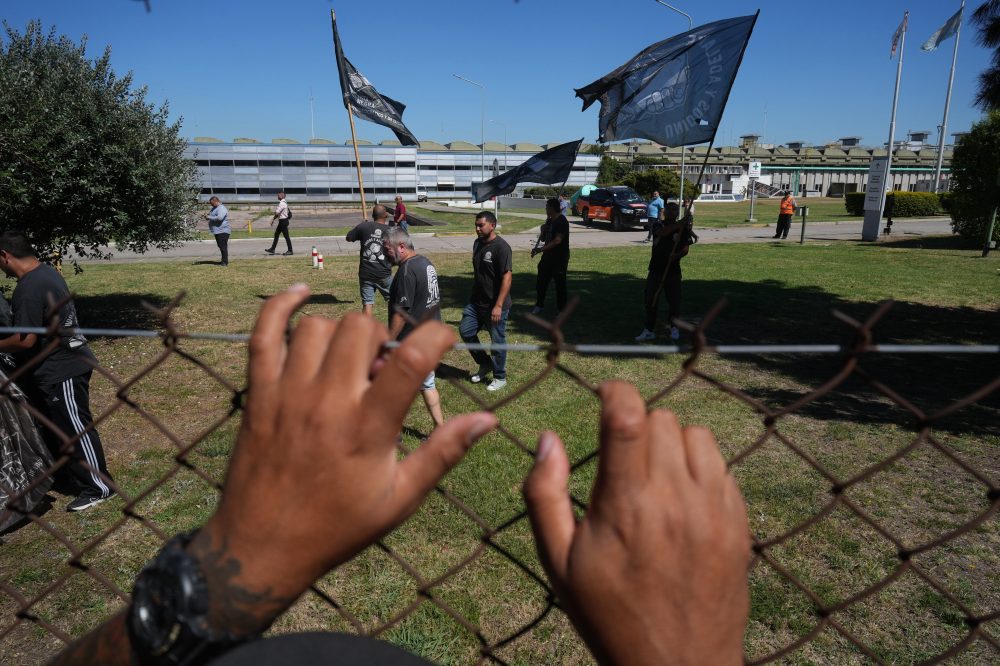

BUENOS AIRES, Argentina — Major labor organizations across Argentina launched a country-wide work stoppage Thursday in opposition to President Javier Milei’s proposed changes to workplace regulations, escalating tensions between the libertarian president and influential union groups while lawmakers consider the controversial legislation.
The strike brought widespread disruption as financial institutions and government schools shuttered, public transit systems halted operations, air carriers grounded hundreds of scheduled flights, and medical facilities delayed non-critical procedures. The work stoppage coincided with legislative discussions in Argentina’s lower chamber, occurring one week following the Senate’s preliminary endorsement of the workplace reform measure.
This demonstration of union strength — encompassing employees from transit, building trades, food industry, and other essential sectors — reflects growing discontent with Argentina’s unsteady economic progress under Milei’s administration. While his government has achieved monetary stability in a nation previously troubled by soaring prices, challenges remain with joblessness, wage stagnation, and sluggish economic expansion.
The president views updating Argentina’s five-decade-old employment regulations as essential for attracting international investment, enhancing worker productivity, and generating employment opportunities in a nation where approximately 40% of the workforce operates in the informal economy.
Labor organizations contend the proposed changes would erode established worker safeguards by diminishing severance compensation, limiting strike rights, simplifying employee termination procedures, and permitting extended 12-hour shifts.
“The labor reform project is entirely regressive,” stated Cristian Jerónimo, a prominent figure within the General Confederation of Labor, Argentina’s primary union alliance, during a media briefing about the strike. “The only thing it prioritizes is the restriction of workers’ rights.”
Strong union resistance has previously blocked government initiatives to modernize Argentina’s outdated employment framework, which experts consider among Latin America’s most expensive for businesses to navigate.
The labor reform’s outcome represents Milei’s first major political challenge since his emerging libertarian movement, La Libertad Avanza, secured victory in Argentina’s recent midterm contests with support from key partner U.S. President Donald Trump.
The timing proved awkward for the Argentine leader, who was attending Trump’s inaugural Board of Peace gathering in Washington during the strike.
Should the workplace legislation survive Thursday’s lower house proceedings, it requires Senate approval next week before enactment into law.
This additional step became necessary after a last-minute provision reducing wages by half for workers on medical leave for non-workplace injuries sparked outrage among opposition legislators, forcing government modifications to the Senate-approved version.
Union data indicates roughly 40% of Argentina’s 13 million documented workers maintain union membership, with many connected to the labor-focused populist Peronist movement that controlled the previous administration and influenced national politics for generations.