
Northern Kenya is confronting a devastating return of drought conditions, leaving communities struggling with severe food shortages as international relief organizations face significant funding cuts that limit their ability to provide assistance.
Just four years following a catastrophic dry period that ravaged the region, insufficient rainfall has once again brought widespread hunger to northern Kenya, with humanitarian groups forced to reduce operations and serve fewer people in need.
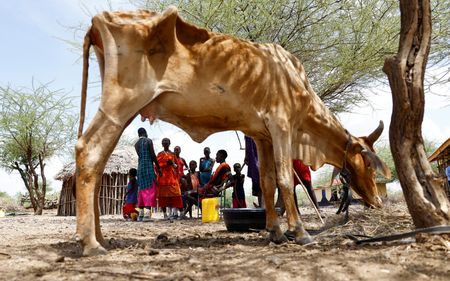
In Turkana county’s desolate landscape, 76-year-old widow and grandmother Echakan Amaja endures harsh conditions outside her earthen dwelling in Loperot village, relying on wild gingerbread fruit she gathers and minimal relief supplies.
Her family’s situation became even more dire two weeks ago when cattle thieves killed her son during a livestock raid and made off with all their animals. “When my livestock were stolen by bandits, all my grandchildren came back home,” Amaja explained to Reuters, describing how she now bears responsibility for feeding her five daughters and seven grandchildren.
The household depends on gathered wild fruit and approximately 43.2 kilograms of food supplies plus 3.2 liters of cooking oil provided monthly through the United Nations’ World Food Programme.
According to Kenya’s National Drought Management Authority, more than nine counties throughout the nation – primarily in northern and eastern regions – were experiencing developing drought conditions as of December, potentially severely impacting food availability, water supplies, and grazing land.
Officials have cautioned that repeated dry periods are intensifying competition over limited resources and heightening the potential for violent disputes as the emergency extends into previously unaffected areas.
Sarah Ayodi, who leads the WFP’s Turkana field operations, stated that 333,000 county residents need food assistance, but warned the organization cannot continue supporting them beyond next month.
Save the Children reported last August that at least four African nations, Kenya among them, would exhaust their supplies of specialized nutrition products for severely undernourished children due to shortages resulting from aid reductions.
The United States has dramatically reduced humanitarian funding under President Donald Trump’s administration, while other Western countries have similarly decreased their contributions as part of broader long-term cuts.
Families in Turkana report that even wild fruits, which have historically sustained them during difficult periods, are vanishing or withering due to the extreme dry conditions. Asinyen Akol, 81, characterized the current drought as unlike anything she has witnessed.
“This year is so bad that this is the worst drought I have ever experienced. You can’t survive here because of drought … even trees and wild fruits are nowhere to be seen, not even a green leaf,” Akol stated.
The drought has created a visible path of destruction throughout Kenya, with dead cattle scattered across pastoral lands.
The emergency has also impacted other Horn of Africa nations, with Somalia announcing a national drought emergency in November following consecutive seasons of poor precipitation.
The WFP issued a warning last month that millions of Somalis are confronting acute hunger, with nearly half of all children suffering from malnutrition and requiring immediate medical intervention.