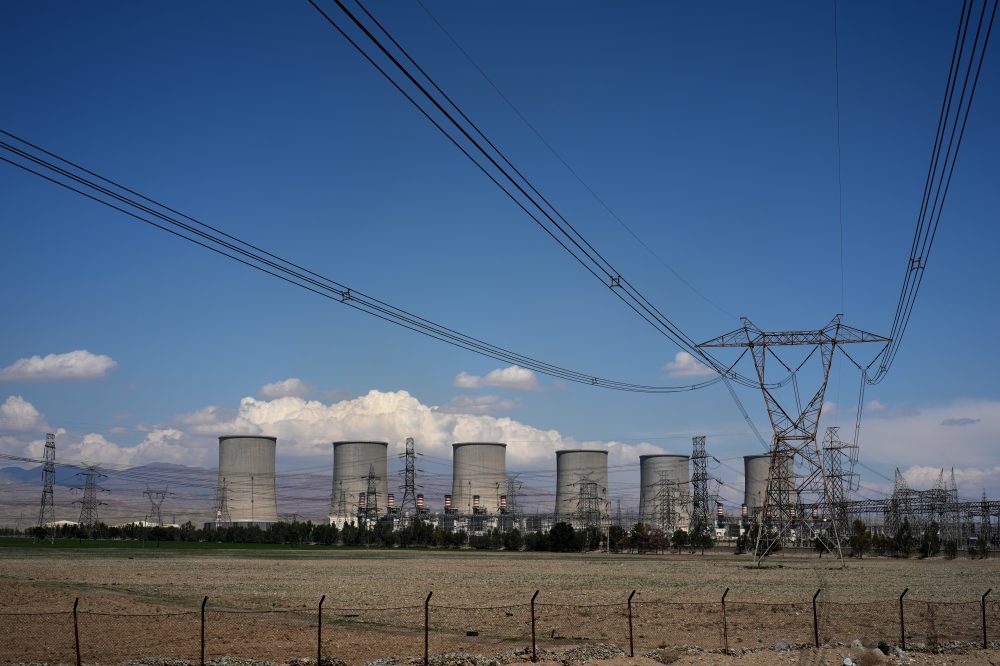

TEHRAN, Iran (AP) — Asghar Hashemi requires kidney dialysis three times weekly at a medical facility in Tehran’s northern district. The 56-year-old transit worker worries his survival could be at risk if electrical infrastructure gets targeted, as President Donald Trump has warned in recent escalating statements.
Citizens across Tehran hurried on Tuesday to purchase bottled water and power up electronic devices including phones, flashlights and backup batteries while time counted down toward Trump’s newest ultimatum demanding Iran reopen the Strait of Hormuz or face strikes against electrical facilities and transportation infrastructure. Even with these threats endangering his medical care, Hashemi said his situation mirrors that of fellow Iranians enduring more than five weeks of conflict.
“I am worried, but I am more worried about my fellow citizens,” Hashemi said, lying on his bed at Tajrish Martyrs Hospital for the treatment. “Whatever happens, we will stand until the end.”
While Trump emphasized his 8 p.m. Washington deadline was non-negotiable, Iranian reactions varied from terror to acceptance to defiance like Hashemi’s.
“I will be ready to pick up a gun and start a fight against the enemy,” he said.
The Associated Press has been granted permission by the Iranian government to send an additional team into the country for a brief reporting trip. AP already operates in Iran. The visiting team must be accompanied by a media assistant from a government-affiliated company. AP retains full editorial control of its content.
Tehran and surrounding regions have experienced nearly continuous air bombardments from American and Israeli forces starting February 28. Electrical supply became Iranians’ primary anxiety as Trump’s deadline approached.
“When there is no electricity, there will be no water, no hygiene, nothing,” said Mahan Qayoumi, 23, who works at an artisan shop, where he said business would stop under a power outage. He brought emergency lights to his apartment to prepare, noting that “all aspects of life” would be affected.
A young designer in central Tehran, speaking on condition of anonymity for her safety, said her parents left at the beginning of the war, but she stayed behind to take care of her cat, Maya. Now, because of Trump’s threats, she said she plans to drive north — which has largely been spared heavy strikes — with Maya and join her family.
“If there is no electricity, there is no water,” she told AP on the messaging app Telegram, noting Tehran’s low water pressure and electric water pumps. “You can’t cook, either.”
The avenues of expansive Tehran, watched over by snow-covered peaks, have experienced reduced vehicle movement in recent weeks as many inhabitants departed for more secure locations. Educational institutions and numerous government offices continue closure.
Despite some residents’ urgent preparations and food stockpiling, activity at a major covered marketplace in northern Tehran appeared relatively routine Tuesday. Commerce continued normally, bakeries produced fresh loaves, and traditional Iranian confections like gaz and sohan were being made.
“We are living our normal lives,” said Said Motazavi, 58, who owns a home appliances shop. Motazavi said Iranians have a lot of experience preparing for and living with conflict, referring to the 1980-88 Iraq-Iran war and the 12-day war with Israel last year.
At Tajrish Martyrs Hospital, the director told AP that a generator can keep much of the medical facility functioning if needed. He said the hospital has enough fuel to power it, as well as ample medicine and supplies for six months.
“I do not see any problem,” Dr. Masoud Moslemifard said, adding that the hospital has been prioritizing operations for those wounded in the war and postponing nonurgent surgeries.
Security presence increased noticeably throughout Tehran’s streets Tuesday, featuring inspection points across multiple areas of the capital. Military vehicles equipped with mounted heavy weaponry were positioned at key traffic junctions.
Iran’s internet access remains severely restricted, limiting information flow while anxiety mounted over Trump’s warnings.
A 26-year-old Pilates instructor told AP on condition of anonymity for her safety via Telegram that she’s been unable to prepare for possible attacks. She called this week the “worst atmosphere” since the war began.
“Honestly, we’ve kind of lost it at this point,” she said, describing how she’s not left home for the last few days and she and her family refuse to leave Tehran. “Whatever is going to happen, let it happen. We are dying bit by bit.”
One resident told AP that if the U.S. follows through on its threat, the people of Iran — not the government — will be the victims.
“By attacking infrastructure, the Islamic Republic will not be destroyed, only we will be destroyed,” the woman, a teacher in her 20s, told AP via a message on Telegram, on condition of anonymity for her safety.
She fears the attacks will spread chaos. “If we don’t have the internet, and if we don’t have electricity, water, and gas, we’re really going back to the Stone Age, as Trump said.”