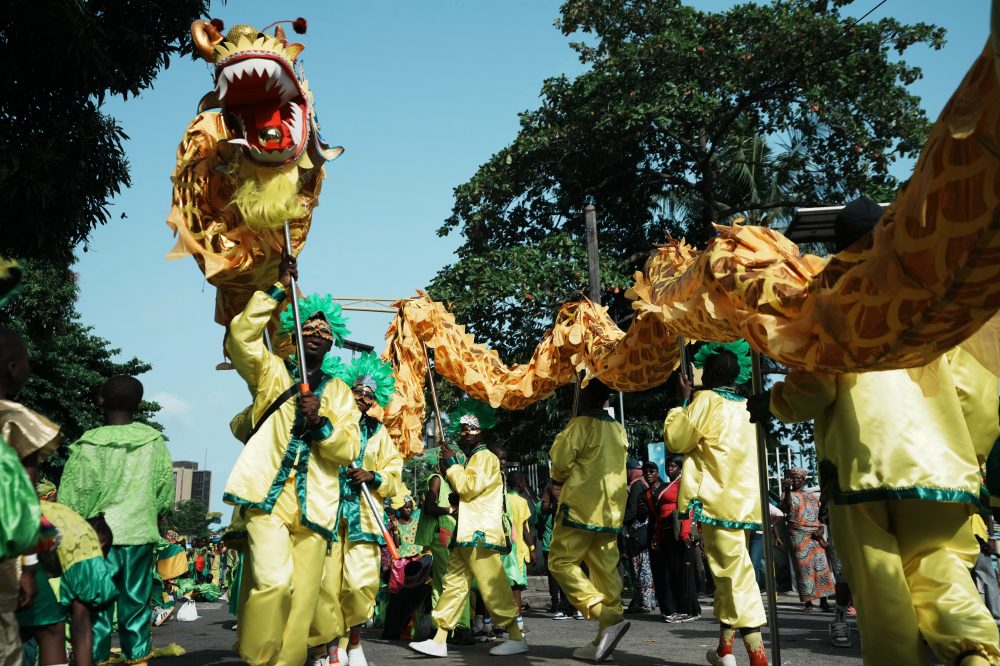

LAGOS, Nigeria — Massive crowds gathered in Nigeria’s commercial capital of Lagos for the spectacular annual Fanti Carnival, honoring the rich Afro-Brazilian culture of the “Aguda” community — descendants of formerly enslaved individuals who made their way back from Brazil during the 1800s.
Typically held during the Easter season in recent years, this cultural extravaganza ranks among West Africa’s most significant celebrations, drawing comparisons to Brazil’s famous Rio Carnival, known worldwide as the ultimate party.
Upon arriving in West Africa, many of these returnees made Lagos their home, integrating with the local Yoruba community while maintaining elements of Brazilian and Portuguese traditions. These influences became woven into local music, cuisine, building styles, religious practices, and daily life, ultimately creating the foundation for the Fanti celebration.
“If you know the history of Lagos, you will understand how this carnival is important to the city and its history,” carnival participant Ademola Oduyebo explained on Monday. “It is important that we preserve this so for our children.”
Under this year’s banner “A Homecoming of Heritage,” parade groups from throughout Lagos made their way to Tafawa Balewa Square, showcasing multiple generations of descendants from formerly enslaved communities.
Participants donned vibrant attire as they danced through the streets toward downtown, with some riding on horseback. Each group proudly showcased aspects of their Brazilian ancestry and cultural identity.
Performers and artists from across the African continent displayed stunning outfits adorned with beads and feathers, while others painted their bodies in brilliant colors, moving to traditional Yoruba beats.
Festival attendee Glamour Sandra expressed her enthusiasm for participating in both the Fanti celebration and Brazil’s Rio Carnival.
“I love the energy, the artistic splendor that they create,” she remarked about the Fanti festival.
Community organizations representing the historic Aguda neighborhoods play a central role in the yearly celebration and assist with its coordination.