
Taiwan’s primary opposition party leader made a historic appeal for peace during her visit to China this week, calling for reconciliation between the two sides at a ceremony loaded with political significance.
Cheng Li-wun, who heads Taiwan’s Kuomintang (KMT) party, traveled to the eastern Chinese city of Nanjing on Wednesday to pay respects at the mausoleum of Sun Yat-sen, the political figure both sides claim as their founding father.
During the wreath-laying ceremony, which was broadcast live on Taiwanese television, Cheng invoked Sun’s legacy while making her case for cross-strait cooperation.
“The core values of Sun Yat-sen’s ideal that ‘all under heaven are equal’ have always been equality, inclusiveness, and unity,” Cheng stated. “We should work together to promote reconciliation and unity across the (Taiwan) Strait and create regional prosperity and peace.”
The timing of Cheng’s visit is particularly notable, occurring as Chinese military activities around Taiwan have intensified and Taiwan’s opposition-controlled legislature has blocked a proposed $40 billion defense spending increase.
Sun Yat-sen holds unique status in the complex relationship between Taiwan and mainland China. After overthrowing China’s final imperial dynasty in 1912, he established the Republic of China before his death from cancer in 1925. Today, Taiwan officially honors him as the Republic of China’s founder, while Communist Party leaders in Beijing also celebrate him as a national hero, with Mao Zedong once calling him a “great revolutionary forerunner.”
Nanjing itself carries deep historical meaning, having served as the capital of the KMT-led Republic of China government before it retreated to Taiwan in 1949 following defeat in the civil war against Mao’s communist forces.
During her remarks, Cheng acknowledged both Taiwan’s democratic transformation and China’s economic progress since the civil war ended.
“Likewise, on the mainland, we have also seen and witnessed progress and development that exceeded everyone’s expectations and imagination,” she said, while also referencing the “white terror” period of martial law that Taiwan endured for 38 years until 1987.
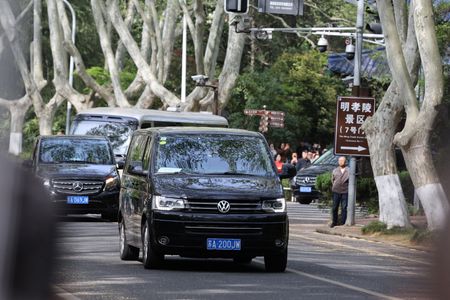
The visit drew tight security measures and some public interest from Chinese citizens. Yang Zihang, a 19-year-old student who came to observe Cheng’s motorcade, told reporters: “I think this is very important for peaceful exchanges between the two sides of the Taiwan Strait.”
However, the diplomatic outreach faces significant obstacles. Beijing refuses direct communication with Taiwan’s current president, Lai Ching-te, labeling him a “separatist.” Lai maintains that only Taiwan’s citizens should determine their island’s future. Neither government officially recognizes the other’s legitimacy.
Taiwan’s ruling administration has urged Cheng to use any meetings with Chinese officials, potentially including President Xi Jinping, to demand an end to military intimidation and respect for Taiwanese self-determination.
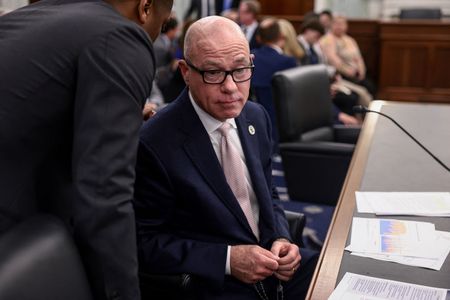
Taiwan’s National Security Bureau Director-General Tsai Ming-yen addressed the situation during a parliamentary session in Taipei, explaining China’s strategic approach to the island.
“China uses military intimidation and harassment to create an atmosphere of rising military danger and instability across the Taiwan Strait,” Tsai explained. “This is intended to make Taiwan’s society and public feel the psychological pressure and anxiety of a possible conflict.”
He added that these tactics aim to “divide Taiwanese society internally, boosting the visibility of pro-China positions” while also working to “obstruct efforts to push forward U.S. arms procurement deals.”