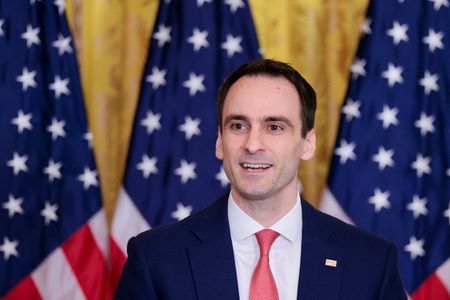

Ukrainian President Volodymyr Zelenskyy has put forward a proposal to Russia calling for both nations to halt strikes on energy facilities during the upcoming Orthodox Easter weekend celebration.
The proposal was delivered to Moscow through American intermediaries who have been facilitating discussions between Ukrainian and Russian representatives as the conflict enters its fifth year, Zelenskyy announced.
“If Russia is ready to stop strikes on our energy infrastructure, we will be ready to respond in kind,” Zelenskyy stated during his Monday evening address to the nation. “This proposal, conveyed through the Americans, has already been presented to the Russian side.”
Moscow has not yet responded to the Easter truce suggestion. Past ceasefire attempts have yielded minimal results. Last Easter, Russian President Vladimir Putin declared a unilateral 30-hour halt to hostilities, but both nations later blamed each other for violations.
Russia previously dismissed a 30-day unconditional ceasefire proposed by the United States and Ukraine as a pathway to peace negotiations, demanding instead a complete resolution to the conflict. However, Moscow has implemented several brief, one-sided truces.
Zelenskyy expressed skepticism that the Kremlin would accept his April 12 holiday ceasefire proposal, noting that Russia currently profits from elevated oil prices resulting from the Iran conflict.
The Ukrainian president worries that an extended U.S.-Israeli confrontation with Iran might diminish American backing for Ukraine.
The American-mediated negotiations have stalled on major issues as Washington focuses on Middle Eastern developments, while Russian and Ukrainian forces continue fighting along the approximately 1,250-kilometer front.
Russia has systematically targeted Ukraine’s electrical grid to break civilian morale, while Ukraine has launched domestically manufactured long-range drones against Russian oil facilities to reduce Moscow’s primary export income.
“Ukraine’s expanding long-range strike campaign against Russian oil infrastructure is exploiting overstretched Russian air defenses and significantly damaging Russian oil export capabilities,” stated the Institute for the Study of War, a Washington think tank, in Monday’s analysis.
“Russia’s geographical size poses an enormous challenge to defend, especially with traditional air defense systems on which the Russians reportedly still rely to protect against Ukraine drone salvos,” the assessment continued.
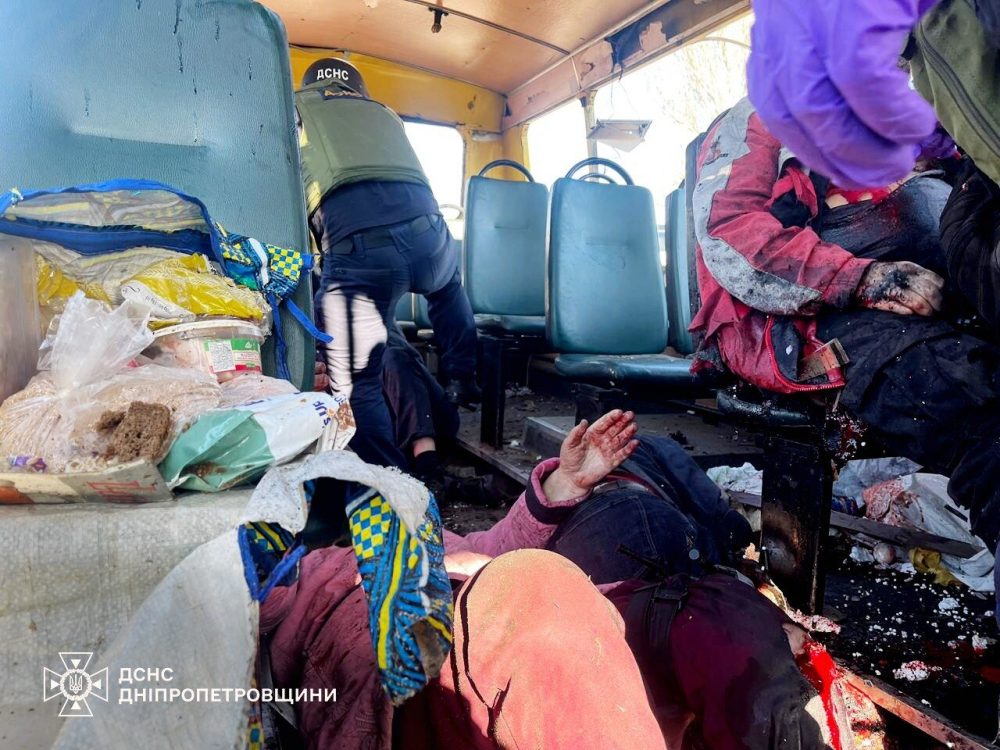
Russian forces are also striking public transportation systems, including Ukraine’s critical railway network and bus routes.
Tuesday morning brought tragedy when a Russian drone hit a bus approaching a stop in Nikopol, a southeastern Ukrainian city, killing four civilians and wounding 15 others, local officials reported.
“This brutal attack on civilian regular transportation occurred during rush hour, when people were just going to work,” Interior Minister Ihor Klymenko posted online. “This is not an accident, it’s their (Russian) tactic: deliberate strikes on civilians.”
Ukrainian officials also confirmed three deaths and three injuries from an assault on a residential structure in Kherson, a southern city. Near the eastern city of Synelnykove, an 11-year-old boy died in a separate drone attack, raising Tuesday’s civilian casualties to eight fatalities.
Government and military leaders reported electrical outages across multiple eastern and southern Ukrainian regions following artillery bombardments and drone attacks.