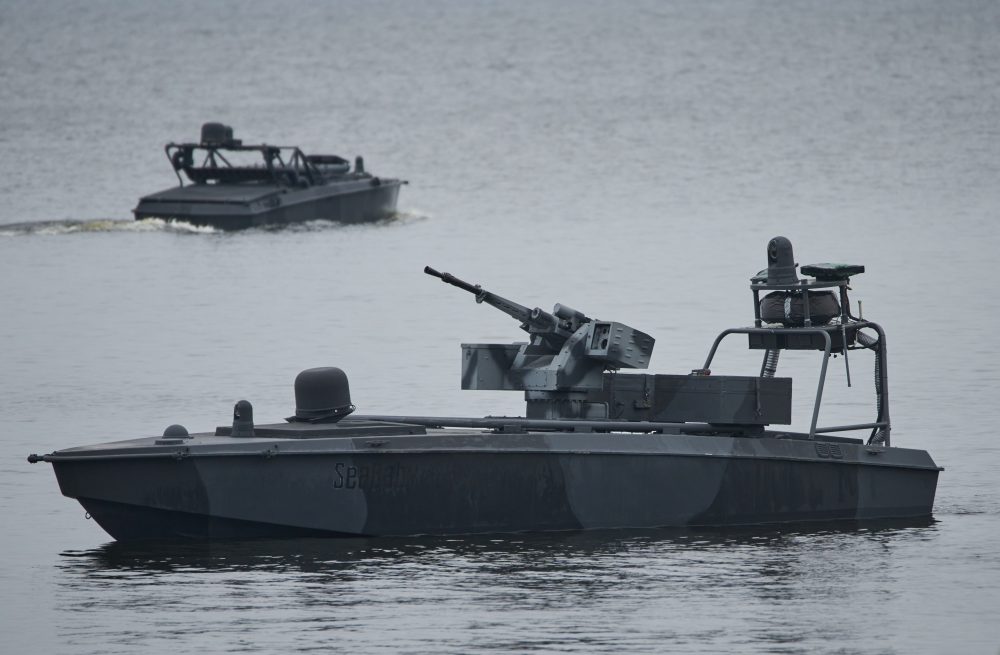

Ukrainian military personnel have established operations in western Libya through a secret agreement backed by Western nations, and launched a drone strike against a Russian gas tanker from Libyan territory last month, two Libyan officials revealed Tuesday.
The Russian vessel Arctic Metagaz, loaded with 61,000 tons of liquefied natural gas, sustained severe damage from what authorities believe was a sea drone assault near Malta’s waters in early March. The ship has since been drifting off Libya’s coast. Rescue teams evacuated all 30 crew members to another ship bound for Benghazi, according to Libya’s Maritime Authority.
The targeted vessel belongs to Russia’s unofficial shadow fleet that transports oil despite international sanctions imposed over Moscow’s ongoing invasion of Ukraine, which began more than four years ago. Recent temporary U.S. sanctions relief aims to address supply shortages during the Iran conflict.
Moscow has attributed the assault to Ukrainian sea drones. Ukraine maintains that oil export profits are financing Russia’s military campaign.
The Ukrainian personnel, primarily drone specialists, are based mainly at a Misrata air facility along the coast, while also maintaining presence at military installations in Tripoli and the coastal community of Zawiya, the officials informed The Associated Press. Both requested anonymity when discussing sensitive information.
According to one official, Ukrainian operatives launched the March 3 drone assault from a Tripoli military installation.
Libya’s Maritime Authority reported at the time that the vessel suffered “sudden explosions, followed by a massive fire” approximately 240 kilometers (150 miles) from Sirte. The maritime agency incorrectly initially announced the tanker had been destroyed.
Following the strike, the Arctic Metagaz stayed afloat and ocean currents pushed it toward Libya’s shoreline, the World Wide Fund for Nature reported. Recently, Libyan officials tried towing the vessel to safer waters off their western coastline. These attempts were unsuccessful due to severe weather and powerful winds that left the tanker drifting without control.
Russian and Ukrainian representatives have not immediately responded to these allegations. Tripoli’s government also did not provide immediate comment.
Ukraine has emerged as a center for rapid military technological advancement, particularly in unmanned aircraft systems, while defending against Russia’s larger military force.
Ukraine’s Sea Baby naval drones have successfully targeted Russian vessels throughout the Black Sea. These effective operations forced Russia to modify its tactics, reducing Black Sea attack opportunities and pushing Ukrainian specialists to plan more ambitious strikes.
The officials explained that Ukrainian forces were progressively positioned in western Libya over recent months through what one described as a “covert deal” between Kyiv and the struggling administration of Prime Minister Abdul-Hamid Dbeibah in Tripoli.
Western nations, including the United States, supported this arrangement. U.S. African affairs adviser Massad Boulos has created a proposal to resolve Libya’s prolonged conflict while maintaining Dbeibah as prime minister, the officials stated.
Boulos’ plan also involves naming Saddam Hifter, son of influential eastern military leader Khalifa Hifter, to lead the presidential council. Saddam Hifter serves as chief of staff for the self-proclaimed Libyan National Army controlling eastern and southern Libya, including significant oil reserves.
For over ten years, the nation has remained divided between a U.N.-recognized Tripoli government under Dbeibah and a competing eastern administration supporting Russia-aligned Hifter. Various armed factions and international governments have backed each side.
Dbeibah’s governmental authority ended when Libya couldn’t conduct its planned presidential election in December 2021. He has since resisted attempts to form a new government and guide the petroleum-rich country toward elections, cautioning that his removal could spark warfare.
Jalel Harchaoui, a Libya expert with the Royal United Services Institute, indicated that Ukrainian forces in western Libya represent NATO’s continuing efforts to prevent the region from falling under “Russia’s reach.”
“It is entirely plausible that, with the knowledge and blessing of NATO powers — chiefly the United States but also the United Kingdom and Turkey — several small groups of Ukrainian operatives now maintain a presence in the greater Tripoli area,” he stated.
Libya has experienced turmoil since a NATO-supported rebellion overthrew and killed longtime ruler Moammar Gadhafi in 2011. The oil-wealthy country has become a battleground for ongoing competition between Russia and Western powers. With borders touching six nations, Libya has created challenges for Europe by serving as a migration route for people attempting to reach European territories.