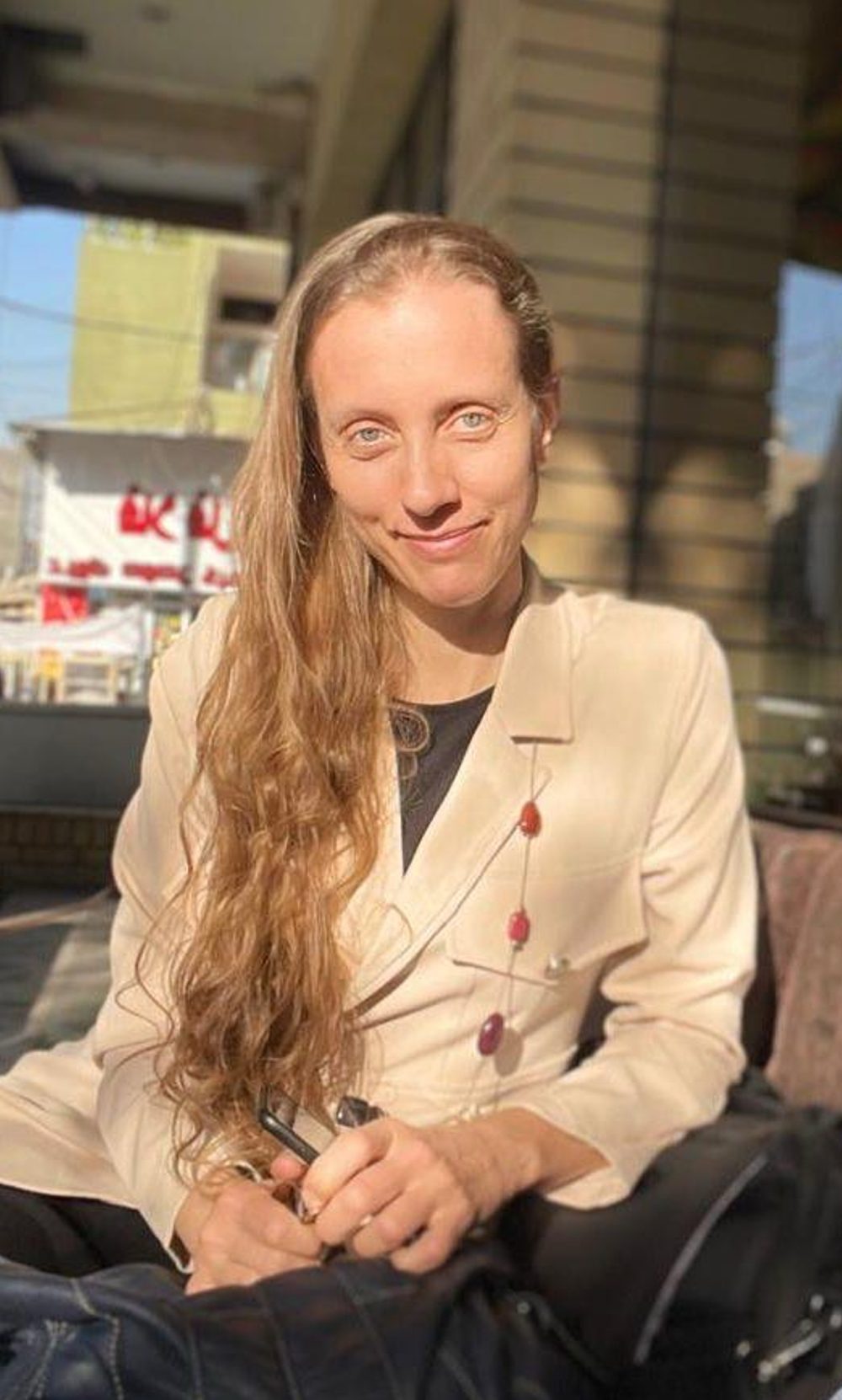

BAGHDAD — Three Iraqi government sources revealed Tuesday that local officials suspect the Iran-backed Kataib Hezbollah militia orchestrated the March 31 kidnapping of American freelance journalist Shelly Kittleson from a Baghdad street corner, though efforts to secure her freedom have encountered significant roadblocks.
While U.S. authorities had previously pointed to this group as responsible for Kittleson’s abduction, Iraq’s government has not officially identified the perpetrators, and the militia organization has made no public claims regarding the kidnapping.
When contacted for comment, representatives from Kataib Hezbollah refused to respond.
Two Iraqi security officials and one member of the pro-Iran Coordination Framework political alliance shared details with The Associated Press under anonymity, as they lacked authorization to discuss the sensitive matter publicly.
According to one security source, a representative from the Popular Mobilization Forces — an umbrella organization of Iran-backed militias operating under nominal Iraqi military oversight — was assigned to establish contact with the kidnappers for Kittleson’s release but encountered substantial communication barriers with Kataib Hezbollah’s leadership.
“The primary challenge is that the leaders of the Kataib militia — specifically, the commanders of the battalions — are nowhere to be found. No one knows their whereabouts, and the process of establishing contact with them is extremely complex,” they said. “These leaders have gone underground, maintaining no active lines of communication, out of fear of being targeted.”
The political source indicated that Iraqi officials sent communications to Kataib leadership seeking their conditions for the journalist’s release. While authorities expressed readiness to free six detained Kataib Hezbollah members — most held for attacks on a U.S. facility in Syria — the militia has yet to clearly state its demands.
A second security official noted additional complications, explaining that the Iraqi official overseeing the case still awaits authorization from U.S. authorities to move forward with negotiations.
U.S. officials have not yet responded to requests for comment. The State Department has previously stated it is collaborating with the FBI to secure Kittleson’s freedom.
Press freedom organizations have called on the U.S. government to officially classify Kittleson as a hostage or “wrongful detainee,” a status that would activate enhanced government response protocols.
The 49-year-old Kittleson spent years working internationally, previously operating from Rome while establishing a distinguished journalism career throughout the Middle East, with particular focus on Iraq and Syria. As is common for independent journalists, she frequently operated with limited resources and without the security measures provided by major news organizations to their staff reporters.
She had recently re-entered Iraq before her capture. U.S. officials report they repeatedly warned her about threats to her safety, but she chose to remain in the country.
Iraqi authorities described the kidnapping as involving two vehicles, with one crashing during a pursuit near al-Haswa in Babil province, located southwest of Baghdad. The journalist was subsequently moved to a second vehicle that escaped.