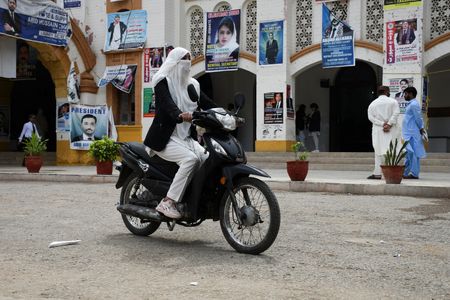

Mounting fuel costs and concerns about petroleum availability have triggered an unprecedented shift toward electric motorcycles throughout Pakistan, with dealers reporting record-breaking sales increases.
In Rawalpindi, Haseeb Bhatti, who converts gasoline-powered motorcycles to electric models, experienced a remarkable 70% jump in March sales. Meanwhile, Ali Gohar Khan, who operates a nationwide electric bike dealership established seven years ago, described the recent sales spike as the most dramatic he has ever witnessed.
“People have this fear that maybe in the near future, they might not get petrol at all,” Khan said.
The ongoing Middle East conflict has caused worldwide petroleum prices to climb sharply, adding to the financial burden on Pakistani citizens already struggling with inflation and economic challenges following the pandemic. Since Pakistan relies on imports for nearly all its oil through the Strait of Hormuz, concerns about supply disruptions have spread despite government reassurances.
Transportation experts note that approximately 40% of Pakistan’s gasoline consumption powers the country’s 30 million motorcycles and three-wheeled vehicles that fill the streets in a nation where automobiles remain unaffordable for most and mass transit systems are limited.
Market specialists and researchers predict the current crisis will accelerate Pakistan’s transition to electric vehicles, a movement that benefits from the country’s abundant and inexpensive solar energy resources for charging stations. This transformation could significantly reduce oil import dependency, strengthen foreign currency reserves, and cut pollution in what was ranked as the world’s most polluted nation in 2025.
Following an 18% government fuel price increase last week, Pakistani families earning average wages now spend 31% of their daily earnings on a single liter of gasoline – ranking among the highest 22 countries out of 139 nations monitored by globalpetrolprices.com and Our World in Data.
“My monthly salary is 30,000 rupees. I can barely cover expenses for my family of six with this. How am I supposed to fill my bike?” said Zahoor Ahmed, a security guard in the southern city of Karachi.
The shift to electric vehicles has attracted everyone from working professionals to university students in recent months. Data from consultancy Renewables First revealed that elevated gasoline prices drove electric vehicle sales up nearly threefold last year to 90,000 units, representing 5% of all two-wheeled vehicle purchases.
This year marks the first time electric vehicles have captured more than 10% of monthly motorcycle sales, according to Talha Khan, CEO of EV logistics planning firm Orko. He anticipates this trend will accelerate since conventional fuel costs can be up to 10 times higher than electric charging expenses.
“Keeping inflation and fuel prices in mind, I took matters in my own hands and bought an electric scooter,” said Mehvish Qureshi, a lawyer in southern Hyderabad.
A standard electric motorcycle costs approximately 250,000 rupees – exceeding half of Pakistan’s annual per capita income and 56% more than the popular gasoline-powered Honda CD 70, priced around 160,000 rupees.
The government launched the Pakistan Accelerated Vehicle Electrification (PAVE) initiative in February, offering subsidies covering one-fifth of purchase prices plus interest-free financing for the remainder. The program focuses specifically on electric motorcycles and autorickshaws.
Finance Ministry adviser Adnan Pasha told Reuters the program has already attracted roughly 270,000 applications – nearly seven times PAVE’s initial phase goal ending in June. The government plans to finance 2 million electric vehicles over five years, funding the initiative through existing fuel sales taxes.
“Electrifying just 2 million vehicles could result in nearly half a billion dollars in annual savings, as we don’t have to import that fuel,” Pasha said.
Many Pakistani households adopted solar power following IMF-mandated electricity rate increases in 2023, purchasing affordable Chinese-manufactured panels for residential use. The government now seeks to leverage this solar expansion to support electric vehicle growth.
“Using solar can reduce electricity costs at charging stations, and make it more affordable to charge at home,” Pasha said.
Ammar Habib, an adviser to Pakistan’s power minister, explained that electric vehicles are also “great for the grid as the steady demand from electric vehicle charging will ease some of the daytime volatility linked to solar oversupply.”
Similar to Pakistan’s solar energy transformation, the country’s electric motorcycle adoption relies heavily on Chinese manufacturers. Scooter companies including Yadea and Jinpeng, along with locally assembled electric bikes using batteries and parts from firms like AIMA and Sunra, are positioned to meet growing demand.
Chinese electric vehicle manufacturer BYD, which has partnered with Pakistan’s HUBCO Green to establish charging networks nationwide, announced plans to support broader electrification efforts before eventually introducing passenger vehicles.
Pasha indicated the government wants domestic companies to construct charging facilities and expects the 45% reduction in charging station electricity rates implemented last year to continue encouraging adoption.
However, financial support programs could face pressure if regional conflicts continue, while limited local technical expertise and challenging charging infrastructure expansion present additional obstacles for Pakistan’s electric vehicle transition, according to Ahtasam Ahmad, energy finance lead at Renewables First.
Reliable maintenance networks are essential since electric vehicles are more vulnerable to road damage from potholes, which are widespread on South Asian streets. In neighboring India, operating electric scooters on poorly maintained roads has created significant service delays.
“When Chinese players flood the market, it may look promising on paper, but with virtually no after-sales service infrastructure, they risk eroding consumer confidence in the technology,” Ahmad said.