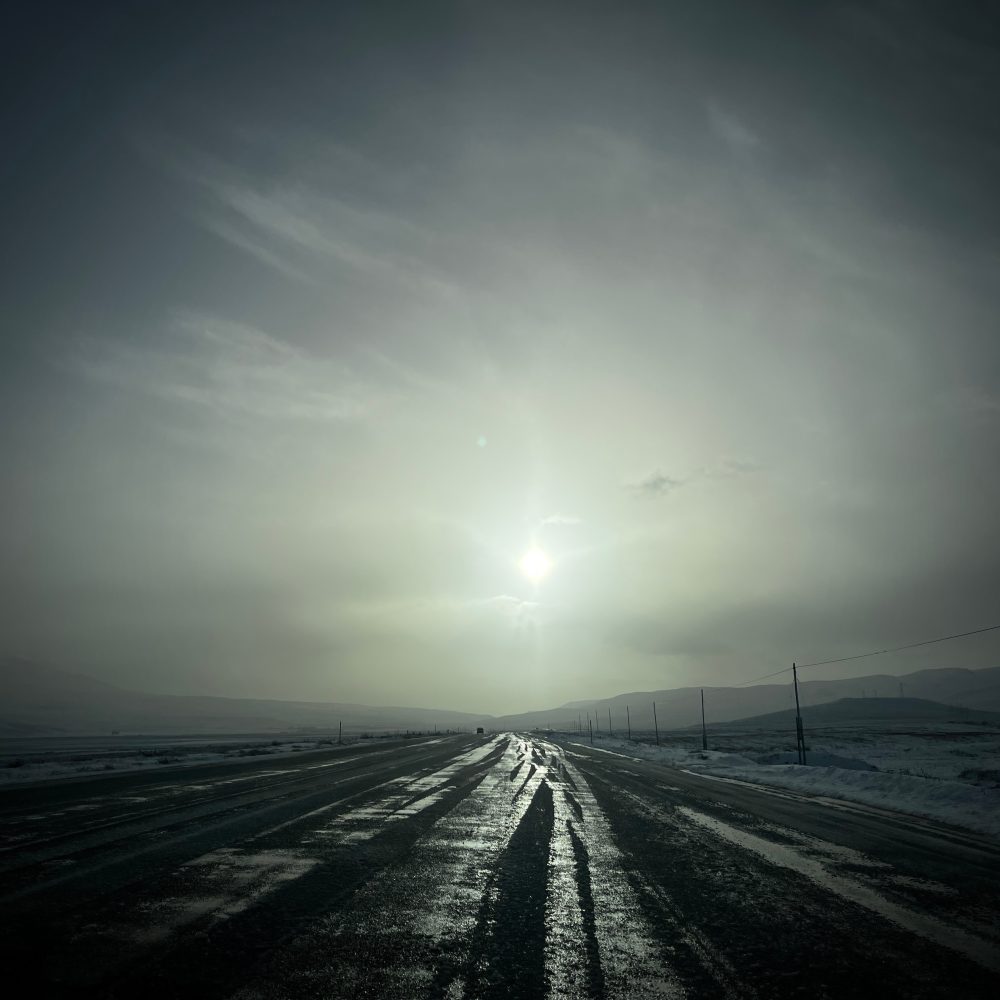

RAZI, Iran (AP) — During a lengthy 12-hour journey across Iran, Associated Press journalists witnessed a nation where ordinary civilian routines continue alongside visible reminders of regional conflict and tension.
The reporting team observed families sharing morning meals at roadside truck stops and spotted a cargo vehicle displaying a Nike emblem while traveling through a mountain pass. At one dining establishment, patrons listened to R.E.M.’s “Losing my religion” while enjoying grilled dishes and saffron beverages, including women who had removed their required head coverings.
Following five weeks of intensive American and Israeli military strikes, significant damage has occurred throughout the country, especially in Tehran where journalists documented destroyed government facilities and law enforcement buildings.
However, during the extended journey from the Turkish border, visible evidence of the regional conflict that has affected Middle Eastern stability and global markets remained limited.
Iranian authorities have authorized the Associated Press to deploy an additional reporting team for a short-term assignment in the country. The AP maintains existing operations in Iran, with visiting journalists required to work alongside government-affiliated media assistants while retaining complete editorial independence.
Large images of Supreme Leader Ayatollah Ali Khamenei, who died during the conflict’s opening day, decorated the border crossing area with inflammatory messaging. Nearby, a herder moved his flock along the roadway as snow-covered peaks stretched into overcast skies.
Halfway through their journey in Zanjan city, reporters encountered their first direct war evidence. An Israeli military strike had recently damaged a religious community facility called a husseiniyah. Iranian authorities reported the attack destroyed medical and library facilities, resulting in two civilian deaths. Israeli forces claimed they targeted a military command center.
Beyond this damaged complex and throughout every community along the Tehran route, normal activities appeared to continue. Commercial establishments remained operational and traffic congestion occurred during peak hours.
Additional Khamenei promotional displays appeared as the team approached Tehran. Arriving after midnight, they traveled through vacant streets past bombed government structures and security positions staffed by Revolutionary Guard and Basij forces, key Islamic Republic institutions that have faced repeated attacks.
This documentary photo story was compiled by AP photo editors.
Associated Press reporter Sam Metz in Ramallah, West Bank, contributed.