
MUMBAI, India (AP) — Mumbai’s historic Sassoon Dock, constructed in 1875, has served multiple roles throughout its nearly 150-year history: a commercial gateway linking India to the Persian Gulf, a vibrant marketplace for textiles and spices, and even a trading post for opium during colonial times.
In recent decades, the waterfront facility has transformed into a vital center for Mumbai’s fishing industry.
However, the once-bustling harbor now displays an unusual quiet.
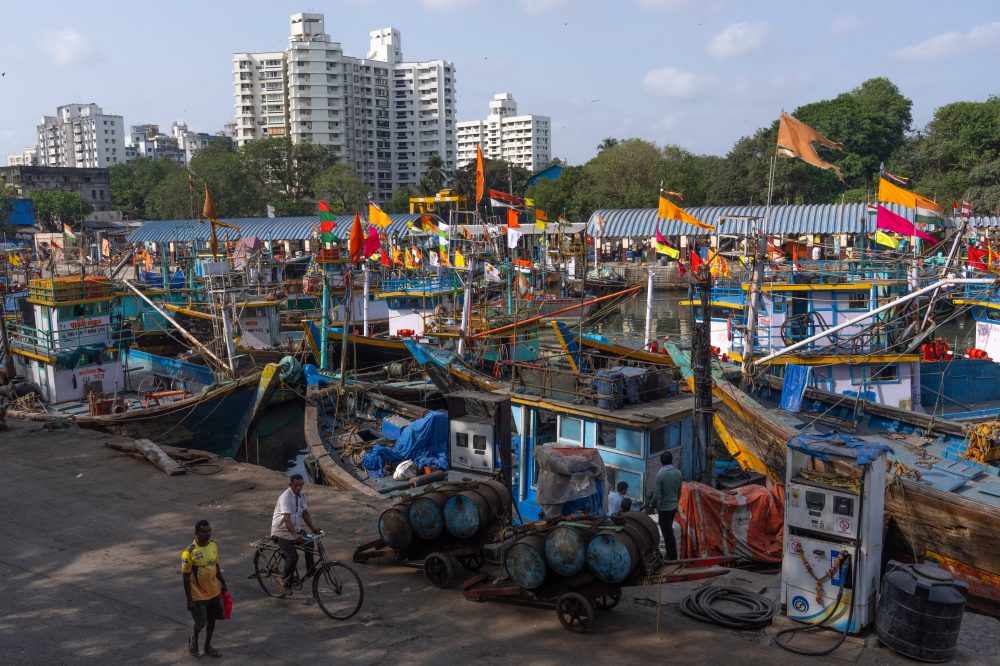
Fishing vessels cluster together in the morning sunlight, their vibrant flags dancing in the breeze against Mumbai’s towering urban landscape.
Under typical circumstances, the dock pulses with activity. Workers haul nets from boats while diesel motors roar to life. Ice gets transported across the pier as vendors call out their prices above the commotion.
Now, that familiar energy has given way to mounting anxiety.
Shekhar Chogle, a boat owner whose face bears the weathered bronze of countless days on the water, has kept his fishing vessel docked since hostilities erupted in the Middle East. His earnings have plummeted while operating expenses continue, and skyrocketing diesel costs have made fishing ventures financially devastating.
A withered marigold garland drapes over the harbor’s fuel pump, symbolizing the current situation. A dock worker recently returned empty-handed from a nearby gas station, his wooden cart carrying six unfilled containers. Wholesale diesel rates have climbed beyond $1.20 per liter ($4.54 per U.S. gallon), creating hardships for cooperative groups that typically help fishermen access discounted fuel, ice, and equipment.
Throughout India and the broader Asian region, fishing crews confront the same devastating dilemma. They must choose between remaining on land or venturing out knowing they’ll lose money, placing both individual livelihoods and entire seaside communities in jeopardy.
News that Iran, the United States, and Israel have reportedly agreed to a two-week ceasefire provides some hope. However, energy experts caution that fuel supply chains will need considerable time to return to normal operations.
Time is becoming scarce for Chogle. “Our income has dropped significantly since we have not been able to take our boat out to sea,” he said.
Despite soaring fuel expenses, a handful of boats continue their fishing operations. Morning markets maintain some activity, though the daily catch has diminished considerably.
Women wearing bright saris negotiate prices over the limited seafood available. One mother, carrying her infant while examining the fish, carefully considers each purchase against her family’s budget.
“If diesel prices don’t come down soon, I don’t know how we’ll survive,” Chogle said.