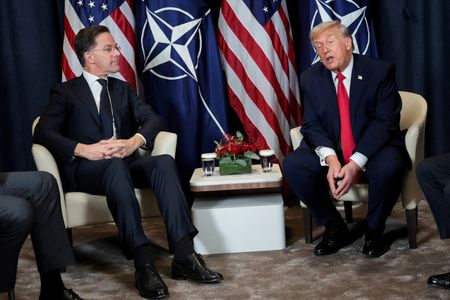

NATO Secretary General Mark Rutte arrived at the White House Wednesday for talks with President Donald Trump as ongoing conflict with Iran creates unprecedented strain within the military alliance.
The meeting comes after Trump has harshly criticized European NATO members for failing to adequately back the U.S.-Israeli military operations against Iran. The president has even suggested pulling America out of the 32-nation defense pact entirely. Trump announced Tuesday that bombing operations would temporarily halt following agreement on a two-week ceasefire.
European nations remain reluctant to participate in missions aimed at clearing mines from shipping lanes or other efforts to restore navigation through the Strait of Hormuz while fighting continues, diplomatic sources indicate. Iran has pledged to block the crucial waterway with mines until hostilities cease.
Rutte, nicknamed a “Trump whisperer” by European colleagues, has maintained positive relations with the president despite mounting tensions. The NATO chief previously described Trump as a “daddy” managing disputes between Israel and Iran, with diplomats characterizing Rutte’s strategy as respectful yet productive.
“This is a dangerous point for the transatlantic alliance,” warned Oana Lungescu, former NATO spokesperson now with the Royal United Services Institute think tank.
During their discussions, Rutte plans to emphasize shared goals of reopening normal shipping routes after the conflict drove energy costs higher worldwide, according to diplomatic sources. He will likely try to discourage Trump from publicly attacking the alliance while highlighting European efforts to boost military spending.
A NATO representative said Rutte would focus on expanding defense industry partnerships and addressing both the Iran and Ukraine situations.
However, NATO’s potential involvement in Middle Eastern operations remains uncertain, given the alliance’s traditional focus on defending North America and Europe. European leaders have not authorized Rutte to commit forces to Strait of Hormuz operations during his White House visit.
“I expect he will keep up the dialogue on Ukraine and burden-shifting within NATO,” said a senior European diplomat, noting Rutte has suggested alliance members “should lean into opening Hormuz” following any ceasefire.
Trump’s Oval Office sessions with international leaders often become public displays where both compliments and complaints are aired before news cameras. The White House hasn’t announced whether media will have access to the Trump-Rutte meeting.
NATO was established in 1949 as protection against Soviet threats and has served as the foundation of Western security for decades. Recently, Trump has repeatedly labeled NATO a “paper tiger” that fails to help when needed. When asked about leaving NATO, Trump responded: “Wouldn’t you if you were me?”
The president’s Middle East focus has also raised concerns about diverting American weapons from Ukraine, which European NATO members consider a top priority. Trump’s Ukraine criticism, Russian outreach, and threats regarding Greenland have further worried European allies.
“He has been disappointed by NATO and other allies’ unwillingness to be helpful throughout Operation Epic Fury, even though his effort to destroy the threat posed by Iran is to their benefit,” stated White House spokeswoman Anna Kelly. “As he said, the United States will remember.”