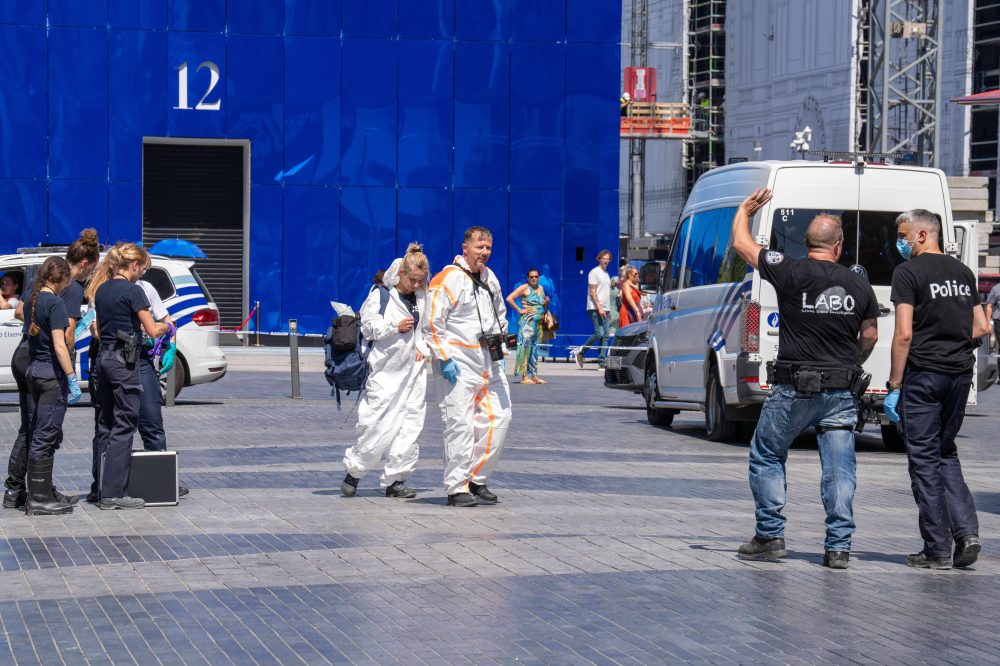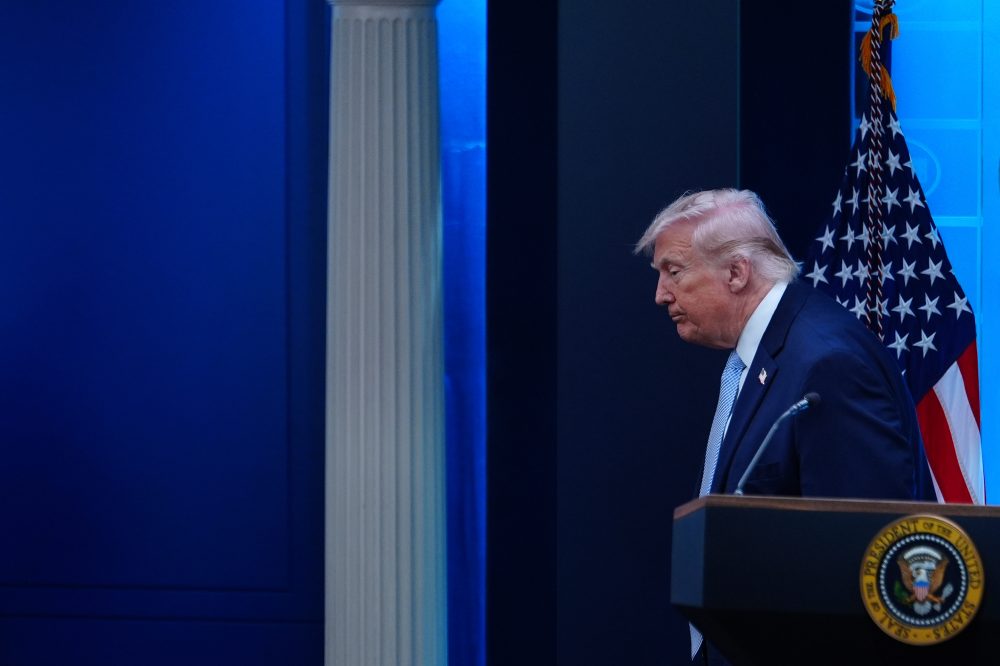

Military strikes targeted infrastructure across Iran on Tuesday, hitting transportation networks and a train facility, while President Donald Trump issued what he called a final ultimatum demanding Tehran agree to terms that would reopen the strategically vital Strait of Hormuz.
Trump delivered stark warnings that “a whole civilization will die tonight” unless Iranian leaders accept his latest proposal by an 8 p.m. Washington deadline. The president has previously extended similar ultimatums but indicated this one would be his last.
American forces also conducted operations against military installations on Kharg Island, Iran’s key oil export facility, marking the second assault on the location. Previous attacks on the island destroyed air defense systems, radar equipment, an airfield, and a naval base, according to satellite imagery analyzed by defense research organizations.
The escalating conflict has Iran’s leadership calling on citizens to protect critical infrastructure. Iranian official Alireza Rahimi released a video appeal urging “all young people, athletes, artists, students and university students and their professors” to create protective human barriers around electrical generation facilities.
Iranian President Masoud Pezeshkian announced on social media that 14 million citizens have responded to recruitment drives, volunteering for military service, and declared his intention to join them. Revolutionary Guard commanders have encouraged families to send their children to staff security checkpoints.
The military standoff centers on Iran’s blockade of the Strait of Hormuz, through which roughly 20% of global oil supplies normally flow during peacetime. Iran imposed the shipping restrictions after coordinated attacks by Israel and the United States on February 28 initiated the current conflict.
Iranian forces retaliated Tuesday morning by launching seven ballistic missiles toward Saudi Arabia, with debris scattering near energy installations as defense systems intercepted the projectiles. The attacks forced Saudi authorities to temporarily shut down the King Fahd Causeway, the sole roadway linking Bahrain and the Arabian Peninsula.
Additional missile strikes targeted Israeli territory, with incoming projectiles reported near Tel Aviv and Eilat. Israel’s military confirmed it attacked an Iranian petrochemical facility in Shiraz for the second consecutive day and issued warnings in Farsi advising Iranians to avoid railway travel.
The humanitarian toll continues mounting, with Iranian state media reporting over 1,900 deaths since hostilities began, though officials haven’t updated casualty figures recently. In Lebanon, where Israel battles Iran-supported Hezbollah forces, more than 1,400 people have died and over one million have been displaced.
Economic consequences are spreading globally as oil prices surge. Brent crude reached above $108 per barrel in Tuesday trading, representing approximately a 50% increase since the conflict started.
International leaders are expressing alarm at the escalating rhetoric. French Foreign Minister Jean-Noël Barrot warned that strikes against civilian and energy infrastructure “are barred by the rules of war, international law” and would trigger “a new phase of escalation.”
United Nations Secretary-General António Guterres also cautioned the United States that attacks on civilian infrastructure violate international legal standards, according to his spokesperson.
When asked about potential war crimes concerns, Trump told reporters he’s “not at all” worried about such allegations.
Behind-the-scenes diplomatic efforts are continuing despite the public threats. Mediators from Pakistan, Egypt, and Turkey are working intensively to broker a compromise before the deadline expires. Iran has connected any reopening of the strait to sanctions relief, while the United States has shown willingness to ease some restrictions, particularly on Iran’s oil sector, partly to stabilize global energy markets.
Tehran rejected a 45-day ceasefire proposal on Monday, demanding instead a permanent end to hostilities. However, indirect communication channels between Washington and Tehran remain active as negotiators race against time.
The mood in Iran’s capital reflects the gravity of the situation. One teacher in Tehran, speaking anonymously for safety reasons, expressed fear that continued attacks on infrastructure could create widespread chaos. Many Iranians who initially hoped the conflict might topple their government now worry about returning to primitive conditions without electricity, internet, or basic utilities.
Iran’s Revolutionary Guard has threatened to “deprive the U.S. and its allies of the region’s oil and gas for years” and expand attacks throughout the Gulf region if Trump follows through on his ultimatum.
The conflict has also claimed lives beyond Iran and Lebanon, with more than two dozen deaths reported in Gulf Arab states and the occupied West Bank, 23 fatalities in Israel, and 13 American service members killed.