
LIMA, April 8 – Citizens of Peru will cast ballots on April 12 to select their next president and congressional representatives, concluding a period marked by significant political instability, impeachment proceedings, and corruption investigations that have resulted in eight different presidents holding office since 2018.
An unprecedented number of candidates are vying for the presidency in the initial voting round. Should no candidate secure the required 50% majority for an outright victory, the top two vote-getters will proceed to a runoff election set for June 7. Polling data suggests a second round is probable, with approximately five of the 35 presidential candidates having realistic opportunities to secure one of the final two positions.
The following represents an overview of the primary candidates:
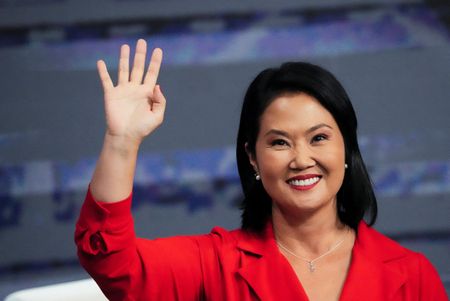
KEIKO FUJIMORI
The 50-year-old conservative politician is pursuing the presidency for the fourth time, having advanced to runoff elections in each of her three prior attempts — a track record that demonstrates both her persistence and her divisive influence on Peru’s political landscape.
The former congressional representative heads the conservative People’s Force party and serves as the oldest child of the late ex-President Alberto Fujimori, who governed from 1990 to 2000 before imprisonment for human rights violations.
Her party maintains significant influence in Congress, serving as the foundation of a right-wing coalition and providing her with benefits in a divided political environment. Polling consistently ranks her among the top candidates.
She previously confronted allegations regarding unlawful campaign funding, though Peru’s constitutional court rejected the charges last year due to procedural issues.
Having received her education in the United States, Fujimori has established herself as pro-American, promoting foreign investment through improved institutional frameworks and presenting herself as a more dependable ally for Washington compared to opponents she characterizes as having closer ties to Beijing.
Her campaign emphasizes law-and-order themes, reflecting the military-focused security approaches linked to her father’s 1990s administration.
RAFAEL LOPEZ ALIAGA, ‘PORKY’
The 65-year-old ultraconservative entrepreneur from the Popular Renewal party and former Lima mayor ranks among the most recognizable candidates, although recent polling indicates declining support. Previously employed as a Citibank corporate banker, he accumulated wealth through hotel and railway ventures and has spent considerable time developing a hardline political image.
Known by the nickname “Porky” referencing the animated character Porky Pig, Lopez Aliaga actively opposes abortion rights, same-sex marriage, and what he terms “gender ideology.” A past member of the Catholic organization Opus Dei, he remains unmarried and has stated he has maintained celibacy since age 19.
His business interests include connections to Peru’s mining industry, with his railway investments benefiting from mineral transportation including copper from the Las Bambas copper mine, which operates under Chinese ownership.
CARLOS ALVAREZ
At 62, Alvarez has achieved recognition throughout Peru as a popular entertainer who has criticized the political establishment and seeks to capitalize on voter dissatisfaction with current leadership. Representing the center-right Country for All party with a populist, anti-crime agenda, he has drawn comparisons between himself and Ukrainian President Volodymyr Zelenskiy, highlighting his own movement from entertainment into politics. Recent surveys indicate growing voter support.
His policy proposals include supporting death penalty implementation for specific offenses and expanded military involvement in addressing rising security concerns. Regarding international relations, Alvarez has expressed approval for U.S. President Donald Trump’s increased attention to Latin America while recognizing the economic significance of Chinese investment in Peru.
Opponents have raised questions about the comprehensiveness of his policy proposals and the capabilities of his advisory team should he achieve governmental position.
ALFONSO LOPEZ CHAU
The 75-year-old economist and academic represents the left-of-center Now Nation party. A former central bank board participant, he has partnered with a Marxist running mate who has advocated for changes to Peru’s market-based economic structure.
Lopez Chau has suggested establishing a sovereign wealth fund for infrastructure project financing, though specific details remain unclear, and has supported demands for constitutional revision. He faces investigation by Peru’s prosecutor’s office regarding alleged embezzlement during his service as National University of Engineering president from 2021 to 2025. He disputes these allegations.
JORGE NIETO
The 74-year-old former defense and culture minister under ex-president Pedro Pablo Kuczynski represents a centrist candidate with limited polling support who has presented himself as a unifying leader with institutional background.
He stepped down in opposition when Kuczynski granted clemency to Alberto Fujimori.
As founder of the centrist Party of Good Government, Nieto has advocated for civil rights reforms including same-sex marriage recognition and loosening restrictive abortion regulations. He has provided minimal commentary on foreign policy matters.
CESAR ACUNA
The 71-year-old leader of the right-wing Alliance for Progress party built his career in education through university campus development. The two-time presidential candidate has encountered numerous corruption allegations during his political tenure, which encompasses roles as congressman, governor of the gold-mining region of La Libertad, and mayor of its capital city, Trujillo. He has consistently rejected wrongdoing accusations and maintains no criminal convictions.
He has committed to prioritizing education reform and reducing government expenditures by decreasing the number of government ministries from 18 to 10.
ROBERTO SANCHEZ
A congressional representative campaigning for the left-leaning Together for Peru party, Sanchez has gained notice as a potential surprise factor in the fragmented competition. He advocates for constitutional revision to create a “plurinational” state providing enhanced representation for Indigenous communities, addressing longstanding complaints from regions feeling excluded from national governance.
Sanchez’s campaign closely connects to his ministerial service under former leftist president Pedro Castillo, who faces imprisonment on rebellion and conspiracy charges following his unsuccessful attempt to dissolve Congress in December 2022. From prison, Castillo has publicly supported Sanchez as his chosen successor.