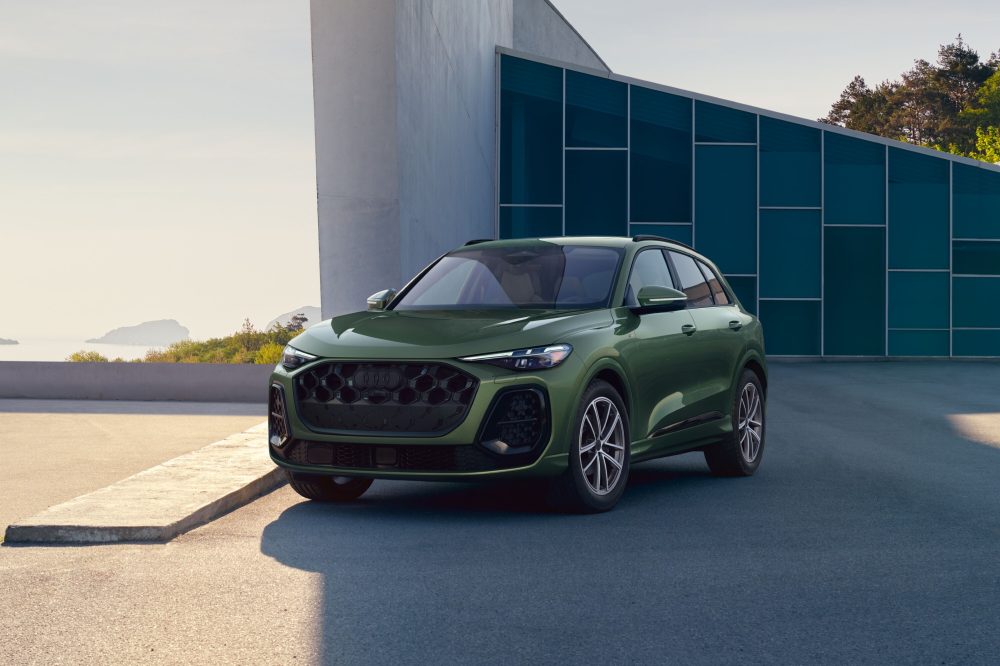

Shoppers seeking a compact luxury SUV often find themselves choosing between two standout models: the Audi Q5 and BMW X3. Both vehicles deliver practical dimensions, upscale interiors, and an accessible entry point into luxury SUV ownership. Last year brought comprehensive redesigns to both models, with the BMW receiving dramatic styling changes both inside and outside, while Audi focused primarily on upgrading the Q5’s interior technology features.
Automotive experts at Edmunds recently conducted a detailed comparison to determine which vehicle delivers superior value. Their analysis examined performance specifications, comfort levels, technology offerings, and pricing structures across both standard models.
Under the hood, both SUVs feature turbocharged 2.0-liter four-cylinder engines as standard equipment. Audi holds a slight power advantage with 268 horsepower versus BMW’s 255 horsepower output. However, real-world driving performance proves nearly identical between the two vehicles, with both providing adequate acceleration for highway merging and passing maneuvers.
Fuel efficiency creates a clear distinction between the competitors. The Q5 achieves an EPA-estimated 24 miles per gallon in combined driving conditions, while the X3 30 xDrive delivers significantly better economy at 29 mpg combined.
Ride quality remains comfortable in both vehicles, though each maintains the firm, controlled feel typical of German engineering. BMW’s M Sport package can enhance handling characteristics while potentially compromising ride smoothness. The Q5 Prestige trim level includes air suspension technology that provides the smoothest ride experience while allowing adjustable ride height.
Interior space favors the Audi, particularly for rear passengers who benefit from additional legroom and reclining seatbacks – a feature unavailable in the BMW’s fixed rear seats. Both vehicles earned praise for supportive front seats with extensive adjustment capabilities.
Storage capacity appears to favor the BMW on paper, but testing revealed similar real-world cargo capacity between both models. The Q5’s sliding rear seats can create additional cargo space when needed, though this reduces passenger legroom.
Technology systems in both vehicles center around large touchscreen displays that integrate climate control functions, requiring multiple steps for adjustments that previously used simple buttons. Despite this complexity, experts found both systems highly capable and user-friendly.
Connectivity features match closely between the models, with both offering wireless device charging, USB-C ports throughout the cabin, and wireless smartphone integration. Standard navigation systems and digital instrument clusters complete the technology packages.
Safety assistance features overlap significantly, including collision warning, automatic emergency braking, lane keeping assistance, and blind-spot monitoring. The Q5 includes adaptive cruise control as standard equipment, while BMW charges extra for this feature. However, the X3 offers hands-free driving assistance for low-speed traffic situations up to 40 mph, which Audi doesn’t currently provide.
Pricing initially favors the BMW at $52,650 compared to the Q5’s $54,095 base price, including delivery charges. However, the Audi includes several features that require additional cost in the BMW, such as all-wheel drive, panoramic sunroof, leather seating, adaptive cruise control, and smartphone key functionality.
The comparison concludes with nearly identical overall ratings, though the X3 edges ahead slightly in expert scoring. Buyers prioritizing comfort should consider the Q5, while those seeking maximum value may prefer the BMW’s feature-per-dollar ratio.