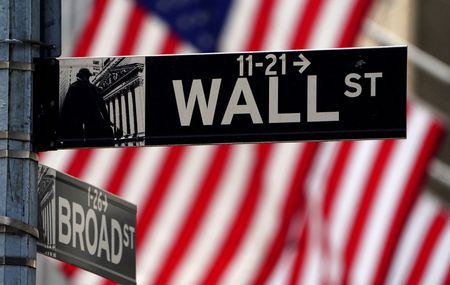

America’s biggest financial institutions presented contrasting results this week, with turbulent markets connected to Middle Eastern conflicts boosting trading activity during the first quarter while casting uncertainty over future deal-making activities.
Financial sector earnings receive widespread attention beyond Wall Street because they provide immediate insights into how American families and companies are managing elevated loan costs, financial pressures, and economic uncertainty.
Here are the major developments from first-quarter reports released by leading U.S. financial institutions, which typically influence the broader corporate earnings period:
TRADERS CAPITALIZE ON MARKET CHAOS
The quarter proved exceptionally turbulent for financial markets, driven by declining global technology shares amid artificial intelligence disruption concerns, the Iran conflict, and anxiety surrounding the private credit industry.
Wall Street trading operations became the primary beneficiaries of market disruption that affected nearly every investment category, encompassing stocks, bonds, and raw materials.
DEALMAKING RECOVERY REMAINS UNCERTAIN
For several years, leading Wall Street firms have anticipated a recovery in deal-making activity from its downturn. In 2026, this began showing promise with numerous large transactions and Elon Musk’s SpaceX planning what could become the largest initial public offering in history this summer.
Nevertheless, unstable markets have reduced this optimism, with experts noting an irregular outlook for transactions if the conflict continues.
“The banks were understandably reticent to be too bullish in their outlook statements, given the range of possible outcomes to the Middle Eastern conflict and the peace talks,” Russ Mould, investment director at AJ Bell, told Reuters.
LENDING AND CREDIT DEVELOPMENTS UNDER SCRUTINY
Interest earnings increased among the four largest U.S. banks during the first quarter as borrowing demand recovered.
Customers became more willing to take on new debt, though indicators of weakening employment markets and unclear Federal Reserve interest rate direction will likely maintain bank caution.
Credit quality stayed generally steady, with financial institutions reporting only minor adjustments despite investor monitoring for stress indicators, particularly regarding banks’ private credit operations. This stability also encouraged lending growth throughout the industry, since increasing credit losses usually cause lenders to restrict lending.
“Private credit is still just a smaller part of the overall credit spectrum. While there are some major headlines, the banks are in great shape to weather what’s going on,” said Macrae Sykes, portfolio manager at Gabelli Funds, which holds several large-cap bank stocks.
PERFORMANCE VERSUS ANALYST PREDICTIONS
Earnings improved and exceeded analyst forecasts at all six major banks, supported by strong trading and deal-making performance.
SHARE PRICE MOVEMENT
A benchmark measuring large bank stocks declined 1.8% this year through April 14, while the broader S&P 500 index gained 2%, reflecting concerns about private credit and economic uncertainty.
Individual bank performance included JPMorgan exceeding profit expectations with record trading revenue and strong dealmaking, Bank of America surpassing estimates through trading and investment banking gains, Wells Fargo falling short on interest income expectations, Citigroup beating estimates as market volatility increased trading revenue, Goldman Sachs exceeding profit forecasts despite weak fixed income trading, and Morgan Stanley surpassing estimates with record trading revenue and dealmaking improvements.