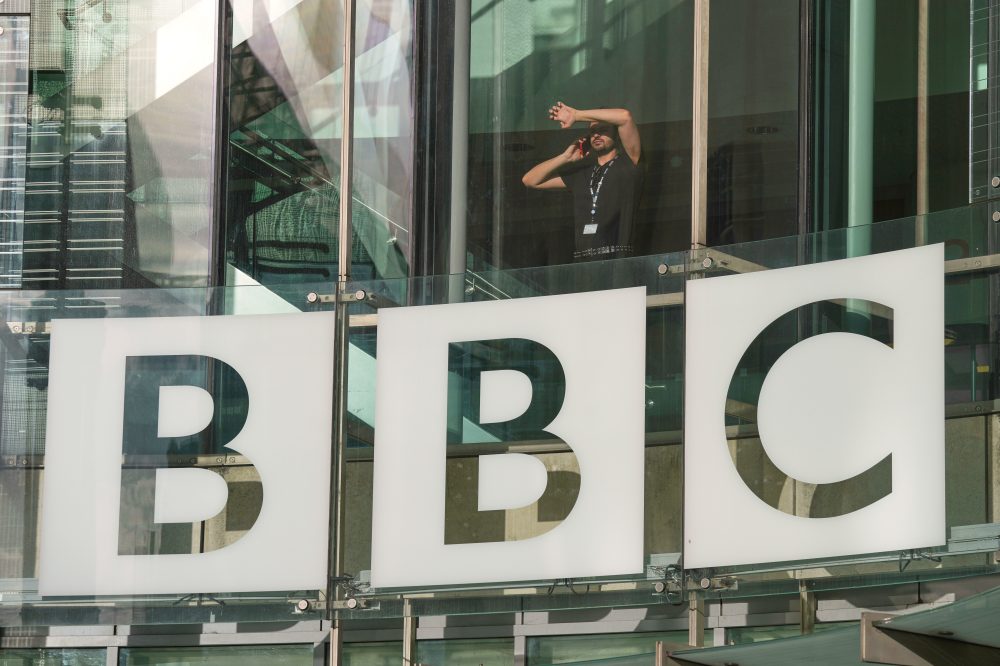

LONDON — Britain’s national broadcasting service announced Wednesday it will eliminate as many as 2,000 positions during the next two years as part of efforts to reduce spending by 10% of its yearly budget, equivalent to 500 million pounds or $677 million.
The workforce reduction marks the most significant downsizing at the British Broadcasting Corporation in more than ten years, according to company officials who briefed employees during a staff meeting.
“I know this creates real uncertainty, but we wanted to be open about the challenge,” interim Director-General Rhodri Talfan Davies wrote in an email to employees.
Davies explained that rising costs, declining license fee revenues, reduced commercial earnings, and an unstable worldwide economy necessitated the personnel reductions.
Earlier this year, the broadcasting company acknowledged facing “substantial financial pressures” and outlined goals to reduce approximately one-tenth of its budget by 2029. Most of the workforce cuts will occur during the upcoming fiscal year starting April 1, 2027.
The downsizing announcement comes just before former Google executive Matt Brittin assumes the director-general position next month.
Brittin will replace Tim Davie and news chief Deborah Turness, who both stepped down following controversy over misleading editing in a documentary about President Donald Trump’s January 6, 2021 speech before supporters attacked the U.S. Capitol.
Trump has filed a $10 billion defamation lawsuit against the BBC.
The broadcasting organization serves as both a cherished and frequently criticized cultural cornerstone, supported through yearly license fees of 180 pounds ($244) that all U.K. households must pay if they watch live television or any BBC programming.
Critics of the fee system, including competing commercial networks, have become more vocal during the streaming era, as many viewers no longer own traditional television sets or follow conventional viewing schedules.
Britain’s center-left Labour government has promised to provide “sustainable and fair” funding for the BBC, though officials haven’t eliminated the possibility of replacing the license fee structure with alternative financing methods.
Established in 1922 as a radio service with the mission to “inform, educate and entertain,” the BBC now manages 15 national and regional television networks across the U.K., multiple international channels, 10 nationwide radio stations, numerous local radio outlets, the worldwide World Service radio network, and comprehensive digital content including the iPlayer streaming platform.