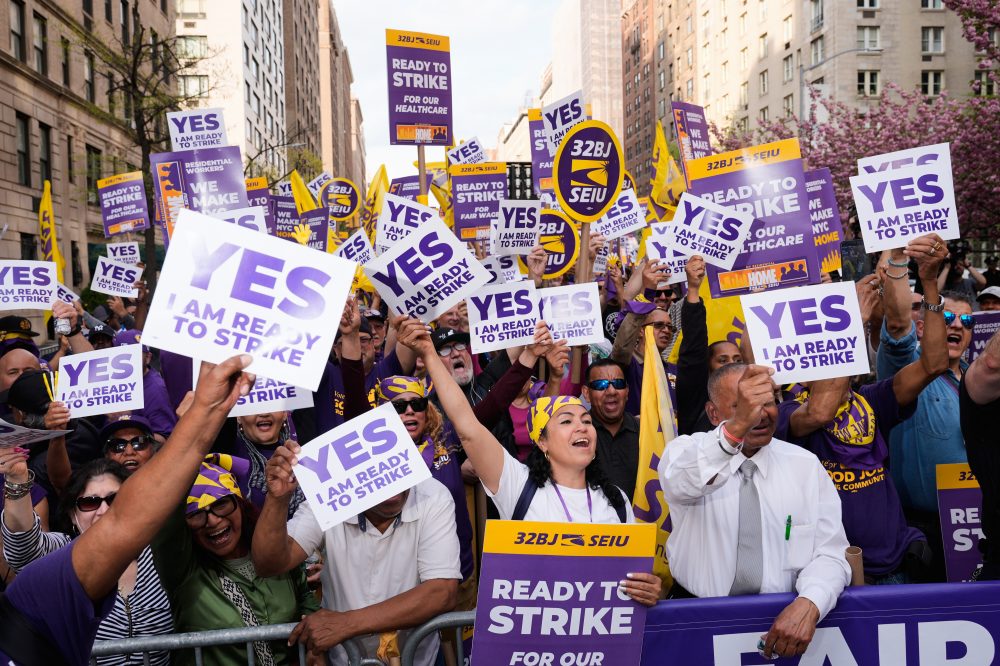

Apartment building employees throughout New York City have given the green light for their first work stoppage in more than three decades following failed contract discussions centered on healthcare benefits and retirement plans.
The potential strike would impact approximately 1.5 million residents living in rental units, cooperatives, and condominiums citywide, according to union 32BJ SEIU. Building occupants might find themselves handling door duties, package management, hallway cleaning, sidewalk maintenance, and garbage removal.
Should negotiators fail to reach an agreement, the work stoppage could commence at midnight Monday when their current labor agreement ends.
According to the union, property owners are attempting to burden 34,000 employees who are already finding it difficult to live in the expensive metropolitan region on wages averaging approximately $62,000 annually for door staff, with varying pay scales for different positions. Property owners, working through the Realty Advisory Board on Labor Relations, are demanding workers begin contributing to health insurance costs and want newly hired employees placed in a different job category that union officials say would offer reduced compensation.
“The owners’ association wants to cut costs on the backs of workers,” stated Union President Manny Pastreich.
“We won’t allow it!” Pastreich declared before Wednesday afternoon’s demonstration and authorization vote. He stressed that the city “is becoming more unaffordable for working people every day,” while property owners have raised rental prices in recent years, particularly for market-rate units in Manhattan.
While opposing management’s healthcare and hiring proposals, union representatives are seeking enhanced retirement benefits and salary increases, though they haven’t yet specified exact wage demands.
The Realty Advisory Board maintains that building owners face their own financial pressures, especially given Mayor Zohran Mamdani’s efforts to implement rent freezes on the city’s approximately one million rent-stabilized units. The board points out that most American workers contribute to their health benefit costs.
“Without meaningful movement to address costs … the long-term sustainability of the industry and its workforce is at risk,” Board President Howard Rothschild stated. He urged negotiations for “a contract that reflects these realities and supports a viable path forward.”
Mamdani and fellow Democratic officials participated in the union’s Wednesday protest along Manhattan’s Park Avenue, known for its upscale apartment buildings featuring door staff and support personnel.
Beyond the traditional image of formally dressed attendants, these positions encompass various responsibilities including building security for residences housing hundreds of tenants, managing the surge in package and food deliveries since the pandemic, and assisting residents with mobility equipment navigate lobby steps. Some workers also handle cleaning duties, snow removal, and moving refuse containers from basement storage areas for collection.
Building superintendents manage maintenance and repair work in structures that may date back over 100 years.
Several building management companies have already informed residents they may need to delay renovation projects, relocations, and large deliveries while limiting visitor access and package deliveries should a strike occur.
The union’s previous work stoppage occurred in 1991 and lasted 12 days. Since then, the organization has occasionally authorized strike action but ultimately reached contract settlements.