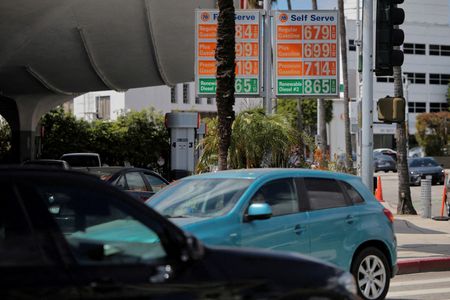

Gas prices in California have skyrocketed to unprecedented levels as fuel shortages intensify across the Golden State due to ongoing Middle East conflicts that have effectively shut down a crucial shipping route for global oil supplies.
Drivers throughout California are now spending an average of $5.86 per gallon at the pump as of Thursday, making it the most expensive state for gasoline in the country. This price point sits well above the national average of $4.09 per gallon, according to data from the American Automobile Association.
The state’s fuel reserves have dropped to their lowest point since record-keeping began, with gasoline stockpiles averaging just 9.44 million barrels during the four-week period ending April 10. This figure represents the smallest inventory in the California Energy Commission’s database, which extends back to 2005.
Energy experts are sounding alarms that the situation may deteriorate further as California depends heavily on fuel imports from Asian refineries, which process Middle Eastern crude oil before shipping finished products to the West Coast.
“The Energy Commission is in close communication with all in-state refiners to ensure adequate transportation fuels supply during this volatile period of supply contraction due to the effective closing of the Strait of Hormuz,” stated agency spokesperson Niki Woodard.
The Strait of Hormuz, now closed due to the Iranian conflict, serves as a vital passageway for approximately one-fifth of the world’s oil and gas shipments. California’s geographic isolation from major U.S. fuel pipeline networks makes it particularly susceptible to supply disruptions from this region.
Current gas prices reflect a 26% jump since the Iranian war began, according to AAA statistics. California’s elevated fuel costs stem from multiple factors including state taxes and the expense of producing the state’s specialized gasoline formula designed to combat smog pollution that historically plagued the Los Angeles area.
University of Southern California professor Michael Mische warned in a recent analysis that the complete impact of reduced fuel imports has not yet reached California’s distribution system. Since shipping refined petroleum products from Asia typically requires several weeks, the worst effects may still be ahead.
“Over the next one to two weeks, gasoline imports are expected to drop off sharply,” Mische’s analysis indicated. “This will mark the point at which the import shock becomes fully visible in terminal supply and, ultimately, at the gas pump.”
Susan Bell from Rystad Energy echoed these concerns, predicting that California’s gasoline stockpiles could continue shrinking over the coming weeks.
The state’s vulnerability has increased in recent years as California transitioned from a major oil producer to becoming more reliant on imported crude and refined products. Two refineries representing roughly 20% of the state’s refining capacity have permanently shut down, further straining the supply chain.
California’s crude oil reserves currently stand at 10.09 million barrels, representing a decline of more than 23% compared to the same period last year, according to California Energy Commission data.
Despite the challenging circumstances, Woodard expressed cautious optimism about near-term supplies. “We are not predicting a near-term supply challenge,” she said, noting that refineries are actively seeking alternative sources for imported crude and gasoline to replace lost Middle Eastern shipments.
State officials project that current inventory levels should remain adequate through mid-May. California residents consume approximately 36 million gallons of gasoline daily.