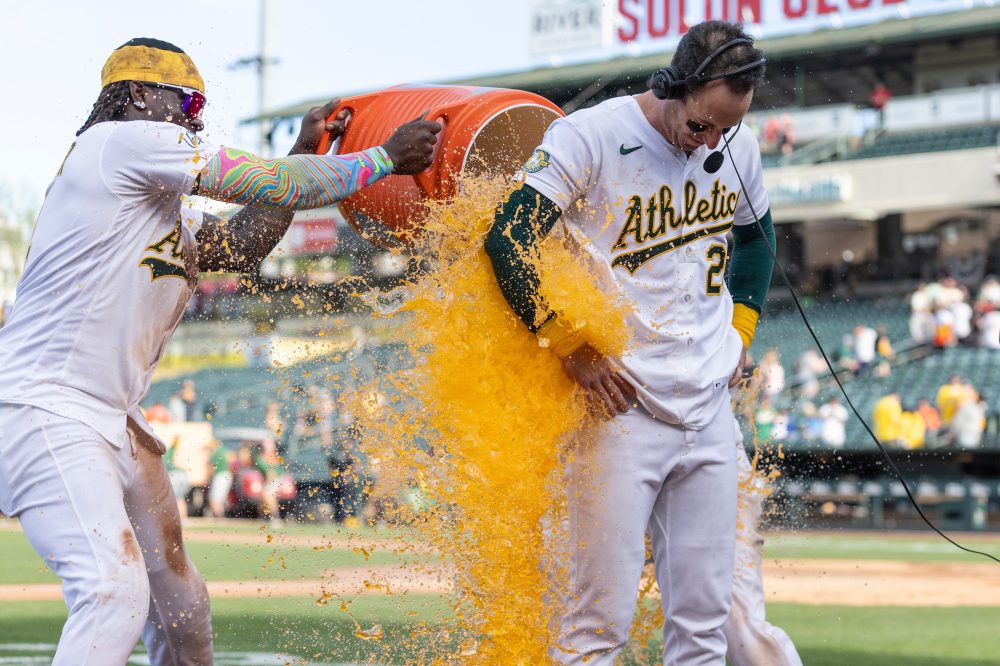

Six decades after creating the sports drink category, Gatorade is making a strategic shift away from its traditional athlete-focused marketing approach.
Parent company PepsiCo announced Thursday that the iconic brand plans to expand its appeal to everyday consumers seeking hydration solutions for activities like air travel, casual walks, or even hangover recovery. The company will introduce updated packaging that emphasizes the scientific research and specific benefits behind Gatorade’s drink and powder formulations.
This strategic move comes as American consumers increasingly gravitate toward beverages marketed for health benefits. Food and beverage analyst Jack Doggett from consulting firm Mintel found that 60% of sports drink purchasers aren’t competitive athletes but seek functional ingredients such as electrolytes for hydration and carbohydrates for energy.
“People are using these drinks more for wellness and daily maintenance,” Doggett said. “It’s easy to say that the wellness consumer is the young consumer, but older generations are also drinking these drinks for hydration.”
Market data from research firm Circana shows sports drink mix sales, including products from Liquid I.V., Skratch Labs and Gatorade, jumped nearly 20% in the year ending March 22. Meanwhile, bottled water sales remained stagnant during the same timeframe.
The expanding market has attracted numerous competitors, with PepsiCo’s U.S. beverages president Mike Del Pozzo noting that 150 new brands have entered the hydration space recently.
“That puts a lot of risk on the category and pressure from a credibility perspective,” Del Pozzo said. “Some that are coming in are building on the science that we created. And we’re like, ‘Well, geez, we should be doing that. We should be talking more overtly about the science and the business and why we believe we’re future-forward.’”
Moving forward, Gatorade will prominently label products claiming superior or faster hydration compared to water. The company plans to launch Gatorade Longer Lasting next year, combining glycerin and electrolytes to extend hydration beyond what water alone provides.
PepsiCo’s strategy mirrors competitor moves in the beverage industry. Coca-Cola’s Powerade updated its packaging in 2023 with brighter designs highlighting increased electrolyte content. Last fall, Powerade launched Power Water, a sugar-free, electrolyte-enhanced beverage targeting non-athletes.
Liquid I.V., originally launched as a sports drink mix in 2012, transformed into a wellness and hydration brand after Unilever’s 2020 acquisition. LMNT also targeted casual consumers last fall with a smaller 12-ounce version of its sparkling electrolyte beverage.
Ernst & Young Americas beverage sector leader Sean Harapko explained that today’s crowded marketplace requires companies to clearly articulate their product benefits. Americans pursuing healthier lifestyles gather information from multiple sources and create personalized definitions of wellness, he noted.
Gatorade’s origin story dates to 1965, when University of Florida football coach approached Dr. Robert Cade, a physician and professor, about players losing significant weight during games without urinating. Cade discovered the athletes were sweating out electrolytes—minerals including sodium, potassium and magnesium—disrupting their body’s chemical balance.
Cade developed Gatorade using salt for electrolyte replacement, sugar for energy enhancement, and lemon juice for taste. Quaker Oats purchased Gatorade’s parent company in 1983 and established the Gatorade Sports Science Institute two years later. PepsiCo acquired ownership when it bought Quaker Oats in 2000.
Del Pozzo emphasized that Gatorade will maintain its commitment to athletic performance. Gatorade Thirst Quencher contains 48 grams of sugar and 18% of daily recommended carbohydrates that athletes require for sustained energy. However, he highlighted that Gatorade Lower Sugar, launched last month with 75% reduced sugar content, ranks among the company’s most successful recent releases.
Del Pozzo said lower-sugar formulations for non-athletes and the elimination of artificial colors are attracting new customers to the brand.
“I think there were people that said, ‘I didn’t exercise or I’m not out in the heat or I am not sweating.’ The reality is, everybody is sweating and dehydrated from the moment they wake up and many just don’t know it,” he said.
However, Travis Masterson, an assistant professor at Pennsylvania State University’s College of Health and Human Development, argues that typical non-athletes obtain adequate sodium through regular diet. While athletes under physical stress sometimes need hydration reminders, average individuals can rely on natural thirst signals, he explained.
“Gatorade 100% has a place, but is it going to be necessary for everybody? Do you need to hydrate faster or longer?” he said. “The average person doesn’t need all the extra stuff.”