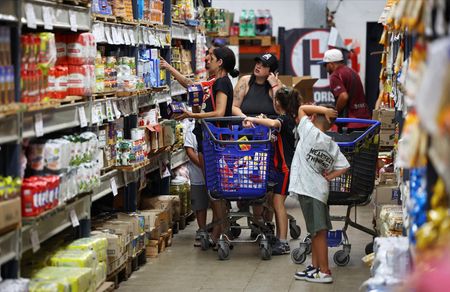

Economic experts worldwide are raising inflation projections for this year as energy market disruptions continue to push oil prices higher, according to a comprehensive survey of approximately 500 economists released Tuesday.
The research, conducted between March 27 and April 27, examined the top 50 global economies and found that 44 nations are now expected to experience higher inflation in 2026 than previously anticipated. This shift comes as ongoing Middle East tensions have significantly impacted global oil supplies.
Iran’s control over the Strait of Hormuz has created uncertainty around one-fifth of the world’s oil supply, with crude prices climbing back above $110 per barrel this week. Despite these pressures, most countries outside of Turkey and Argentina – which already face double-digit inflation – saw only moderate forecast adjustments.
Seth Carpenter, Morgan Stanley’s global chief economist, noted the unprecedented nature of current conditions. “The outright closure of the Strait of Hormuz is essentially ahistorical, and so we don’t have a great model for this in the past,” Carpenter explained.
“People need to entertain the idea we just have higher oil prices for the foreseeable future because of the extra risk premium built in,” he added.
Central banking officials remain cautious about immediate policy responses, still mindful of their earlier miscalculations during the COVID-19 pandemic when they initially dismissed rising prices as temporary. The Bank of Japan maintained steady interest rates Tuesday, following predictions from financial analysts.
Most major central banks are expected to take similar wait-and-see approaches while monitoring how Middle Eastern conflicts develop. The focus centers on whether current price increases will trigger broader economic effects requiring immediate interest rate adjustments.
Current projections suggest the Federal Reserve will reduce rates only once this year, likely in the fourth quarter. Meanwhile, the Bank of England and Bank of Canada are anticipated to maintain current rates through 2026, while the European Central Bank may implement a single rate increase, possibly in June.
Douglas Porter, chief economist at BMO Capital Markets, expressed concerns about market reactions to ongoing developments. “There is a tendency in financial markets, which we think will be super rational, to ignore bad news until it’s right on their doorstep,” Porter observed.
“While I do take some comfort in how strong financial markets have been, I don’t think that gives us an all-clear signal by any means,” he continued.
Despite energy sector challenges, global economic growth projections remain remarkably stable at 2.9% for this year – virtually unchanged from previous forecasts over the past twelve months. This consistency comes even amid significant trade disruptions from tariffs and what the International Energy Agency has called the worst energy crisis on record.
The International Monetary Fund recently projected slightly stronger global growth at 3.1% for this year, though some economists maintain more conservative outlooks.
Porter described his forecasts as “probably a little bit more cautious,” citing particular concerns about Gulf region activity. “A lot of that is just due to a much weaker outlook for activity in the Gulf region. But we’ve also shaved our view on Europe and North America as well as parts of Asia,” he explained.
Gulf economies face the most significant downward revisions due to their proximity to ongoing conflicts, with three of six regional economies expected to contract this year before recovering in 2027. These projections assume the current war will end soon and energy market disruptions will stabilize.
Other regions show more stable economic outlooks. Taiwan’s growth estimates received boosts from artificial intelligence technology demand, even as the broader Asian region faces mild impacts from energy market shocks.