
The US dollar strengthened Wednesday as financial markets prepared for the Federal Reserve’s anticipated interest rate announcement, with ongoing Middle East warfare creating additional uncertainty for investors worldwide.
Trading activity remained subdued across Asian markets, with Japan observing a national holiday and multiple central bank meetings scheduled throughout the week. Currency movements stayed within narrow ranges during the lighter trading session.
The euro fell 0.07% against the dollar to $1.1705, while the British pound declined 0.05% to $1.3513. Both currencies have retreated from peaks reached earlier this month.
Market attention centers on the Federal Reserve’s policy announcement expected later Wednesday, where officials are anticipated to maintain current interest rates. Investors will closely examine the central bank’s evaluation of how Middle East conflicts might affect the US economy, along with signals about Fed Chair Jerome Powell’s plans.
“The question is what Powell is going to do, because he still holds the governor seat until 2028, so whether he chooses to resign after the expiry of the Chair term or if he stays on as a governor and as sort of a shadow Chair,” explained Carol Kong, a currency strategist at Commonwealth Bank of Australia.
“Powell has previously said that he will stay on if he thinks that Fed independence is under threat, so I think his decision … will depend on his perception of Fed independence,” Kong added.
The dollar index, measuring the currency against a collection of international currencies, held steady at 98.68. Canada’s dollar showed little movement at C$1.3685 ahead of the Bank of Canada’s rate decision also scheduled for Wednesday.
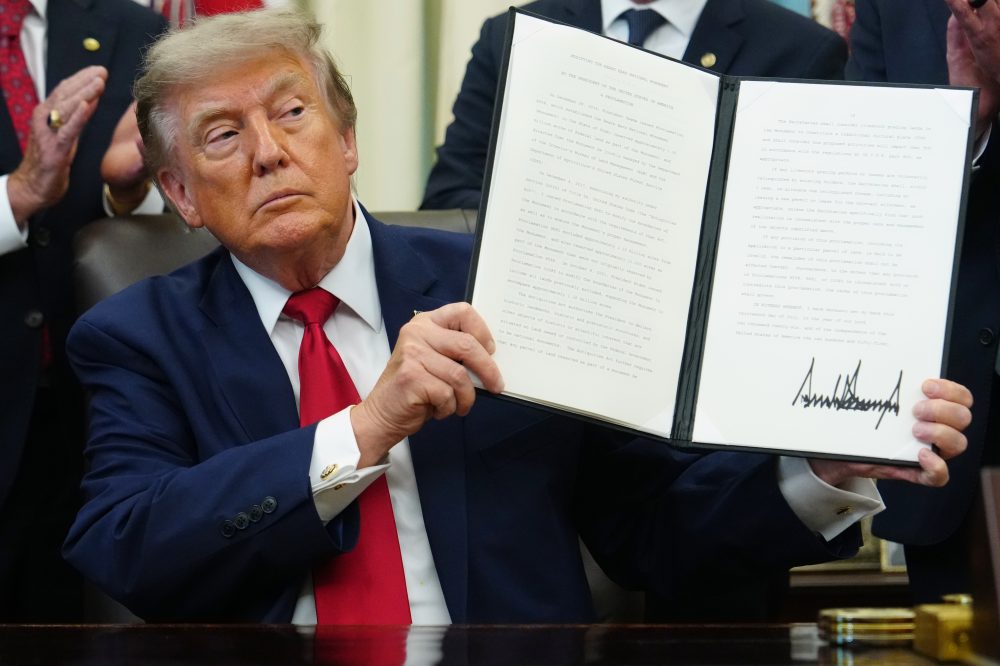
Diplomatic efforts to resolve the Iran conflict have stalled, with US President Donald Trump expressing dissatisfaction with Tehran’s latest proposals due to his insistence on addressing nuclear concerns immediately. This geopolitical tension continues supporting the dollar as investors seek safe-haven assets.
The Japanese yen hovered near the critical 160-per-dollar level despite the Bank of Japan’s hawkish stance Tuesday, which suggested potential rate increases in upcoming months. The yen traded at 159.63 against the dollar, receiving modest support following the Japanese central bank’s decision.
Bank of Japan Governor Kazuo Ueda emphasized the institution’s willingness to increase rates to prevent energy price shocks from driving widespread inflation, provided any economic downturn from Middle East tensions remains limited.
“If you look at the broader picture here, yes there’s a bit of a hawkish hint coming through, (the BOJ) may have hiked if not for the war… but the broader picture here is that, it’s still one in which the rate hike that is likely to come is going to be gradual in nature,” said Sim Moh Siong, a strategist at OCBC.
“The story for the yen is one in which the downside is capped because we’re near to intervention levels, but it’s very difficult to get excited about the upside,” Siong noted.
Currency traders remain watchful for possible intervention by Japanese officials to support their currency, as the 160 level is widely viewed as a potential threshold for such action.
The Australian dollar dropped 0.26% to $0.7164 following domestic inflation data that revealed continuing price pressures, though the core inflation measure came in slightly below expectations. New Zealand’s dollar fell 0.4% to $0.5862.
New Zealand’s central bank chief stated Wednesday that core inflation measurements for the first quarter remained stable within the target range of 1% to 3%, noting the bank’s continued focus on managing inflation while supporting economic recovery.