
Elon Musk’s space exploration company is preparing for what could become the biggest initial public offering in history, with a potential valuation reaching $1.75 trillion when it goes public later this year.
The ambitious timeline for SpaceX began more than two decades ago during a celebration in Las Vegas following PayPal’s 2002 public debut. While other executives enjoyed poolside festivities at the casino, Musk was already buried in Soviet rocket manuals, plotting his next business venture.
“He’d come off what was an unequivocally big win, he was one of the largest shareholders, and yet he was focused on this next thing,” Kevin Hartz, an early PayPal investor who was at the party, told Reuters. “Now it’s a multi-trillion-dollar business.”
Over the past twenty years under Musk’s leadership, SpaceX has evolved into the planet’s most significant space enterprise, deploying thousands of Starlink internet satellites and developing reusable rocket technology that has revolutionized space economics. Musk compares this innovation to creating aircraft that don’t need to be destroyed after each flight.
The upcoming public offering could position Musk to become the world’s first trillionaire, validating years of bold risk-taking that defied conventional wisdom in the aerospace industry.
However, the company’s future ambitions may prove even more challenging than developing reusable rockets or creating the first mainstream electric vehicle, according to a Reuters analysis of over 100 pages from SpaceX’s confidential pre-IPO documents.
“I always thought he was crazy,” said Walter Isaacson, who spent two years shadowing Musk while writing a biography of the billionaire. “But the danger of betting against him is that he ends up being crazy like a fox and gets things done.”
The company’s prospectus reads like science fiction, repositioning SpaceX beyond rocket and satellite manufacturing toward becoming a dominant force in artificial intelligence, featuring space-based data centers and lunar and Martian industries.
SpaceX pledges to capture solar energy for virtually unlimited power to drive the AI revolution and states it will “make life multi-planetary, to understand the true nature of the universe and to extend the light of consciousness to the stars.”
“You want to wake up in the morning and think the future is going to be great,” reads an opening quote from Musk at the top of the document, known as an S-1, “and that’s what being a space-faring civilization is all about.”
SpaceX declined to provide additional comments regarding the filing.
These extraordinary claims are generating skepticism from market watchers and critics. Nevertheless, major institutional investors and Musk supporters including Fidelity Investments, Founders Fund and Valor Equity Partners have maintained their commitment despite years of rocket explosions, financial losses, government litigation, workplace accidents and international complications.
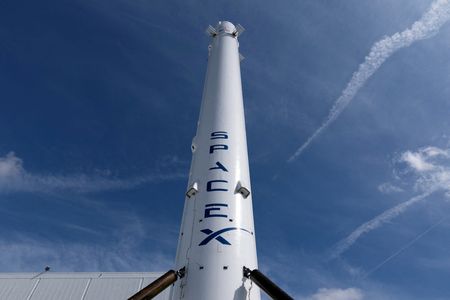
Musk’s investor credibility stems from SpaceX’s track record of transforming questionable concepts into functioning businesses, particularly through the reusable Falcon 9 rocket and the Starlink broadband network it made possible.
“Twenty-five years ago, people thought we were insane, including me,” said Jim Cantrell, one of SpaceX’s earliest employees, who later left to start his own company. Now, “the idea of having products made on Mars and sold on Earth is not so insane.”
However, the filing reveals SpaceX recorded losses last year, invests significantly less in AI development than major technology competitors, and cautions investors that projects from lunar and Martian settlements to orbital data centers depend on unproven technologies that may lack commercial viability.
These sobering financial details have prompted some analysts to characterize Musk’s vision as promotional hype intended to boost SpaceX’s valuation. Unlike the early development of reusable rockets or electric vehicles, artificial intelligence represents a crowded marketplace where SpaceX will face competition from global giants including OpenAI, Microsoft and Google parent company Alphabet.
The filing claims SpaceX is targeting a total addressable market worth $28.5 trillion, exceeding the entire United States GDP. “A very swing for the fences number,” said Eric Talley, a Columbia Law School professor who focuses on corporate governance, adding that Musk’s “calling card is swinging big and hoping to cash in.”
Ross Gerber, CEO of Gerber Kawasaki, an investment firm that owns SpaceX and Tesla shares, said investors are “willing to suspend fundamental analysis to not be left out.”
“There’s the perception that Elon did it once with Tesla and built a trillion-dollar company,” he said, “and that he’ll be able to do this again and again.”
Musk’s space forecasts haven’t always materialized as predicted. Development schedules for Starship, the completely reusable rocket central to SpaceX’s future plans, have consistently delayed due to explosive test failures, regulatory obstacles and engineering challenges.
This matters significantly because Starship forms the foundation for much of what SpaceX has promised investors, from expanding Starlink into additional markets to launching AI infrastructure into orbit and transporting astronauts for NASA missions beyond Earth. The prospectus clearly outlines these risks.
“Any failure or delay in the development of Starship at scale … would delay or limit our ability to execute our growth strategy,” the S-1 said.
Among the most significant risks highlighted in SpaceX’s pre-IPO filing is the company’s dependence on Musk personally. He maintains four executive positions, controls the board of directors, and operates under an unusual compensation structure linked to valuation targets reaching $7.5 trillion and achievements such as establishing a million-person settlement on Mars.
The filing describes Musk as “one of the great visionaries of our generation” and warns that operating without him could present an existential threat to the company, noting that choosing a replacement may not occur in a “timely manner or at all.”
“He’s the only person reliably getting satellites into orbit, and astronauts down from the space station,” Isaacson, Musk’s biographer, said.
“He’s been able to turn science fiction into just science.”