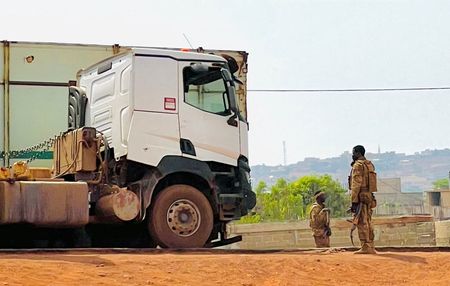

International mining companies plan to maintain their operations in Mali, a mineral-rich African nation, despite weekend violence that claimed the life of the country’s defense minister and heightened security worries, according to industry leaders and analysts.
The West African country ranks among the continent’s leading gold producers, with the precious metal reaching unprecedented prices on global markets. Mali also possesses substantial deposits of lithium, uranium, and copper.
However, the nation has faced decades of conflict with insurgent forces, and the resulting instability has enabled military leaders to repeatedly seize power through coups.
During Saturday’s violence, an unusual alliance between al Qaeda-affiliated militants and separatist fighters demonstrated extraordinary cooperation, killing Mali’s defense minister, attacking the capital city’s airport, and forcing Russian troops to withdraw from a remote desert community more than 1,000 kilometers away.
Malian officials have stated that military operations against the rebels continue, while asserting that authorities have the situation under control.
The country’s mines ministry has not yet responded to requests for comment.
Three mining company executives, speaking anonymously, along with two industry analysts, indicated that the unrest has heightened worries about transportation routes and facility protection, as insurgents occasionally prevent the delivery of fuel and essential materials.
Control Risks analyst Vincent Rouget warned that “security and terrorism risks on supply routes will prevail.”
Signal Risk senior analyst Daniel van Dalen noted that the possibility of another military coup has increased, and any resulting chaos could impact commercial mining activities.
“There is a credible risk that such reactions could extend to foreign interests, particularly Western-linked assets,” van Dalen stated.
Mali had already become less appealing to international mining companies after the military government, which relies heavily on mining revenue since taking power in 2021, modified the country’s mining regulations.
These changes increased tax burdens and expanded state ownership while reducing international companies’ stakes in mining operations.
Barrick successfully regained operational authority over its primary Loulo-Gounkoto facility earlier this year following nearly two years of disputes with government officials.
Despite these tense relationships, numerous mining companies have maintained their investments, particularly since industrial mining activities are concentrated in southern regions that have remained relatively protected from the violence.
Australian company Resolute announced Tuesday that its Syama gold operation in southern Mali continues running at full capacity, with the recent surge in violence having no effect on worker safety, transportation, or production levels.
One mining executive operating throughout the Sahel region of central Mali explained that the potential profits from elevated gold prices and high-grade ore justify the security risks.
Chinese mining companies have shown greater confidence, sometimes acquiring properties after other operators chose to reduce their involvement in the region.
In January, Canadian company Allied reached an agreement to transfer its Malian assets to China’s Zijin Mining.
A representative from Zijin confirmed the company employs professional armed security services, while a senior executive at Ganfeng Lithium, which controls 65% of Mali’s Goulamina lithium operation, emphasized that their facility is located far from conflict zones and the company has prepared for various contingencies.