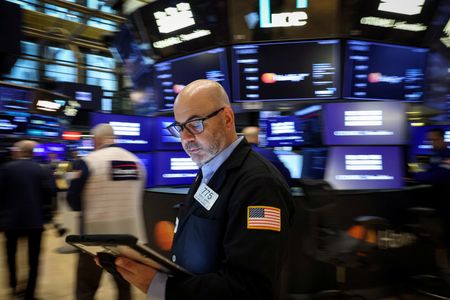

Wall Street’s impressive rally will face several crucial tests in the coming week as investors monitor new economic reports, Middle East conflict developments, and a pivotal summit between American and Chinese leaders.
American stocks have experienced remarkable gains, with the S&P 500 climbing over 15% since hitting its yearly bottom in late March. The most robust corporate earnings performance in four years has boosted investor confidence, while concerns about severe economic damage from the Iran conflict have diminished as traders rush to avoid missing potential profits.
“We have seen this tremendous rebound as markets have willed themselves to focus on only the positive,” explained Kristina Hooper, chief market strategist at Man Group.
Market participants remain focused on prospects for ending the Middle East hostilities that started in late February with American-Israeli military actions against Iran. Traders are particularly watching for the reopening of the Strait of Hormuz, a vital passage for worldwide oil transportation.
The Iranian conflict has driven energy costs sharply higher, with American crude oil prices climbing more than 60% this year.
“The continued progress towards a resolution for the U.S.-Iran war will be top of mind for investors,” noted Michael Arone, chief investment strategist at State Street Investment Management. “You need to begin to see ship movements in the Strait of Hormuz.”
The conflict will likely feature prominently when President Donald Trump meets Chinese President Xi Jinping in Beijing next week. Market watchers will track any progress between the nations regarding rare earth materials access, technology issues, and other bilateral concerns.
The current market surge has lifted the S&P 500 by 7% in 2026 through Thursday, extending three straight years of double-digit gains. The tech-focused Nasdaq Composite has advanced 11% year-to-date, with both indices reaching new record highs.
Although first-quarter earnings reporting is nearly complete, corporate results will continue driving stock movements. Upcoming reports include technology networking company Cisco and semiconductor equipment manufacturer Applied Materials, while major players Nvidia and Walmart will report later this month.
First-quarter S&P 500 earnings are projected to surge 28%, based on LSEG IBES information. Substantial corporate investment in artificial intelligence technology is benefiting multiple sectors as companies expand data centers and supporting infrastructure.
These results show that “all the fears that tariffs or this oil price shock would eat into margins have not materialized so far,” Arone observed. “Earnings are the lifeblood of this rally.”
Next week’s economic data, particularly inflation measurements covering April, may reveal the Iranian conflict’s economic effects.
Tuesday’s consumer price index report – a key inflation indicator – is projected to increase 0.6% according to Reuters polling. March CPI jumped 0.9%, marking the largest gain in nearly four years due to gasoline price spikes.
With markets anticipating a quick war resolution, investors may concentrate on core CPI figures that exclude energy costs and provide clearer guidance for interest rate predictions. Following the conflict-driven energy price increases, markets have eliminated expectations for equity-friendly rate reductions this year, while recent Federal Reserve communications suggested more aggressive stances from multiple policymakers.
“If core CPI is significantly higher, I think that’s going to be very problematic,” Hooper warned.
Additional weekly data includes Wednesday’s producer price report, offering another inflation perspective, and Thursday’s retail sales figures, where investors will examine how elevated gasoline and energy expenses are affecting other consumer purchases. This week, the national gasoline average exceeded $4.50 per gallon for the first time since July 2022.
“Even with oil bouncing around a bit and coming down from the highs, gasoline prices across the U.S. have just continued to move higher,” said James Ragan, co-CIO and director of investment management research at D.A. Davidson. “We haven’t had any relief there. I don’t think there is a lot of evidence yet that it’s hurting the consumer spending, but it’s definitely a larger budget item.”