
Economic concerns remain at the forefront for many Americans this week as rising costs at grocery stores and gas stations continue affecting household budgets and business decisions nationwide.
The latest economic developments show a mixed picture of the nation’s financial health, with some encouraging signs amid ongoing challenges.
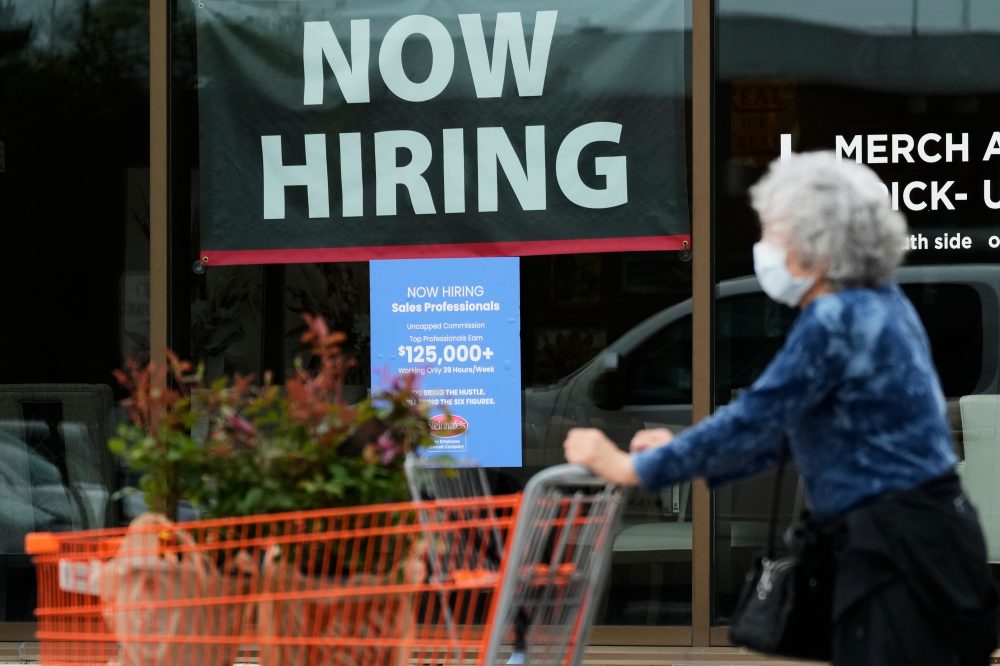
U.S. employers exceeded expectations by creating 115,000 new positions last month, even as the ongoing conflict with Iran created economic uncertainty. This job growth nearly doubled the 65,000 new positions that economic forecasters had predicted, though it represented a slowdown from March’s stronger performance of 185,000 jobs added.
The nation’s unemployment rate held steady at a relatively low 4.3%, according to Friday’s report from the Labor Department.
The healthcare sector led job creation with 37,000 new positions, while retail businesses contributed 22,000 jobs. Manufacturing, however, continued struggling with 2,000 job cuts in April alone. The manufacturing sector has eliminated 66,000 positions over the past twelve months, despite President Donald Trump’s trade protection policies designed to boost factory employment.
Home financing costs climbed higher this week as mortgage rates responded to bond market instability caused by rising oil prices linked to the Iran conflict and growing inflation concerns.
Freddie Mac reported Thursday that the standard 30-year fixed mortgage rate increased to 6.37% from the previous week’s 6.3%. While still below last year’s average of 6.76%, this marks the second consecutive weekly rise, returning rates to levels seen a month ago.
Applications for unemployment benefits increased last week but continue reflecting a historically strong job market despite inflationary pressures and other economic challenges.
New unemployment claims for the week ending May 2 rose by 10,000 to reach 200,000, the Labor Department announced Thursday. This figure came in below the 205,000 applications that FactSet-surveyed analysts had anticipated.
The prior week’s claims total, originally reported as the lowest since 1969, was adjusted upward by 1,000 to 190,000.
These weekly unemployment filings serve as an immediate gauge of layoff activity and provide real-time insight into job market conditions.
Job availability remained relatively stable in March while hiring activity strengthened before the Iran war’s full economic effects took hold.
Companies advertised 6.87 million open positions in March, slightly down from February’s 6.92 million openings, according to Tuesday’s Labor Department data.
Employment trends have fluctuated throughout the year following a challenging 2025, with the Iran conflict that began February 28 adding uncertainty to economic and hiring forecasts.
The Job Openings and Labor Turnover Survey revealed increased layoffs in March, but hiring activity improved significantly. Employers filled 5.55 million positions, representing the strongest hiring month since February 2024. Additionally, more Americans voluntarily left their jobs, typically indicating worker confidence in finding better opportunities.
Stock markets advanced toward record levels to close the week, buoyed by encouraging employment data and strong corporate earnings reports from major American companies.
The S&P 500 gained 0.5% and moved closer to an all-time high following news that employers added 115,000 more jobs than they eliminated last month, despite rising fuel costs and economic uncertainty from the Iran war.
Although hiring slowed compared to March, the results nearly doubled economist expectations. The positive news kept the S&P 500 positioned for its sixth consecutive weekly gain, which would mark its longest winning streak since 2024. U.S. markets have surged since late March, partly due to optimism that the war won’t create worst-case economic scenarios and hopes that the Strait of Hormuz will reopen for Persian Gulf oil shipments.