
Delaware residents and millions of Americans across the country are unknowingly funding electrical infrastructure projects through their monthly bills before these facilities are even constructed.
Regulatory officials, responding to urgent needs to modernize the country’s deteriorating electrical infrastructure, are permitting utility companies to bill customers for power facilities and transmission systems well before construction is complete. This practice increases current monthly bills while promising cost reductions that may not appear for decades, according to a comprehensive analysis of regulatory documents.
These financial arrangements are designed to accelerate electrical grid improvements during a period of increasing power demand driven by data centers supporting artificial intelligence technology. However, they’re also driving up electricity costs for families and businesses already struggling with escalating energy expenses.
Historically, utility companies planning costly infrastructure developments had to obtain financing from financial institutions and investors, with customer charges only beginning after project completion.
However, these developments can now receive advance funding through Construction Work In Progress (CWIP) programs, which enhance utility companies’ cash flow while reducing their borrowing expenses. These charges generally add several dollars monthly to typical household electricity bills, affecting millions of customers nationwide.
Currently, at least 40 states nationwide implement some version of CWIP programs, according to analysis of thousands of pages of utility rate documentation. This represents double the number from ten years ago, when research by economic consulting firm The Brattle Group identified fewer than 20 states with such provisions.
Recent reporting reveals how extensively CWIP policies have expanded over the past five years alongside the growth in data center construction. Interviews with two dozen industry representatives, analysts, and consumer advocates highlight these policies’ effects on grid development and American household electricity expenses.
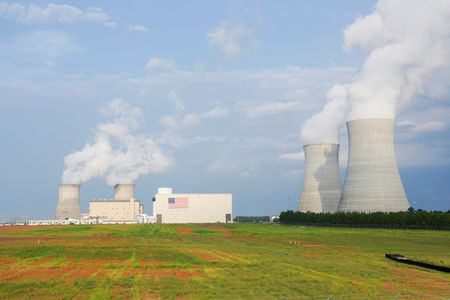
Research shows CWIP policies have funded various major energy and infrastructure developments, including Georgia’s Vogtle nuclear facilities, which faced substantial cost increases and construction delays; a Nevada transmission system currently raising bills for financial benefits expected decades ahead; and a Virginia offshore wind installation that has already collected approximately $2 billion from customers before starting operations.
Following decades of relatively stable power consumption, the nation’s electrical grid reserves have become critically low in multiple regions, raising the possibility of rolling blackouts, according to federal energy officials. Grid managers forecast electricity demand will grow more than 2% annually through at least 2045, compared to average yearly growth of approximately 0.5% from 2009 to 2024.
Many new state CWIP policies have been implemented recently as grid capacity issues have intensified. Missouri Governor Mike Kehoe reversed his state’s 50-year prohibition on CWIP programs last year to address increasing power demands from data centers. Arkansas, Kansas, Oklahoma, and North Carolina have also established CWIP provisions since 2024.
“Governor Kehoe believes CWIP incentivizes new power generation while reducing long-term financing costs passed on to ratepayers,” the governor’s office said in a statement. “Without CWIP, customers see dramatic increases in their monthly utility bills when a new facility comes online. CWIP allows these costs to be recouped over a longer period, reducing price shocks to customers.”
The National Governors Association, representing state governors, stated it doesn’t take positions on whether CWIP is suitable for individual states or specific developments.
However, business and consumer organizations criticize CWIP for increasing power costs for projects that may never provide benefits.
“All this does is shift the financial risk to the ratepayer,” said Paul Cicio, president of the Industrial Energy Consumers of America, a trade group representing large manufacturers. “The average ratepayer has no idea this is happening.”
American electricity prices have already increased approximately 40% over the past five years to fund massive investment in aging electrical infrastructure, according to the U.S. Energy Information Administration, with double-digit increases over the past year in data center regions including Virginia, Maryland, and Pennsylvania.
“Huge rate increases have caused a monumental affordability crisis for electricity,” said Ben Inskeep, program director for Citizens Action Coalition of Indiana, an Indianapolis-based consumer watchdog group. “CWIP incentives are adding insult to injury for these customers.”
Utilities and states argue CWIP programs are essential for initiating projects needed to strengthen the grid to meet growing demand after decades of insufficient investment, and that these provisions can reduce long-term costs by lowering financing expenses.
In Nevada, Berkshire Hathaway-owned NV Energy charges average customers approximately $4 monthly to cover financing costs for long-distance, high-voltage transmission lines scheduled for 2028 operation, according to regulatory submissions.
The utility claims using CWIP for project financing costs less than obtaining Wall Street funding, ultimately saving customers money.
However, the calculated advantage in reduced rates could be as small as 0.1% and require half a century to realize, according to Mark Garrett, a consultant for Nevada’s Bureau of Consumer Protection.
“A ratepayer would need to stay on the system for 52 years before receiving any net benefit from the CWIP model,” Garrett said. “This means that an average 40-year-old ratepayer would be 92 before seeing any benefit from the CWIP approach.”
NV Energy didn’t respond to requests for comment regarding Garrett’s assessment.
In Virginia, hosting the world’s largest data center concentration, electricity customers have already paid Dominion Energy approximately $2 billion for an $11.5 billion offshore wind facility still under construction, currently adding up to $11.23 to average monthly bills, according to regulatory documents.
Dominion leadership states the CWIP structure will save customers $2 billion over the project’s complete 30-year operational period.
Overall, Wall Street experts characterize current capital spending by American electric utilities as an investment surge exceeding $1 trillion over the next five years. This spending significantly benefits utility company profits because they receive regulated returns on capital investments ranging from 9% to 12%, according to financial data analysis.
CWIP programs often include provisions protecting utilities from delays, cancellations, and cost increases, leaving customers responsible for additional expenses, said Jason Walter, a University of Tulsa economics professor.
This creates concern because the American power industry has experienced failed, delayed, and over-budget projects.
“If a project, particularly a nuclear one, cannot attract private capital without a public backstop, it is a clear signal that it may not be a financially responsible investment,” Walter said. “Forcing captive ratepayers to act as the bank for speculative projects serves no clear public purpose.”
This structure has already generated public opposition in some instances.
In November, Georgia voters removed two Republican public service commissioners, driven by anti-CWIP sentiment over massive cost overruns from constructing the state’s two Vogtle nuclear reactors.
That development ran seven years behind schedule and cost approximately $35 billion, more than double the original $14 billion estimate, according to Georgia regulators. Meanwhile, state households each paid around $1,000 in CWIP expenses since 2009 as electricity rates increased sharply, Georgia regulatory records show.
“What’s important is that Georgia’s nuclear pursuit is seen as a cautionary tale across the country for the nuclear hype that is underway,” said Patty Durand, director of Georgians for Affordable Energy. “Georgia ratepayers were severely harmed, and any electeds that support these high-risk, expensive projects may suffer the same fate from consumer outrage as the two commissioners who lost their seats did.”