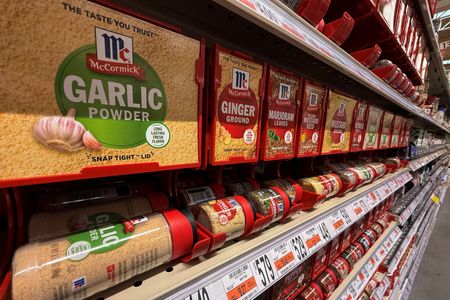

Major shareholders are calling for environmental commitments as Unilever moves forward with spinning off its food operations to merge with American spice giant McCormick in a massive $65 billion transaction announced this past March.
The merger will create a food industry powerhouse combining McCormick with Unilever’s food division, bringing together well-known products such as Hellmann’s mayonnaise and Cholula hot sauce under one corporate umbrella. McCormick will oversee operations nearly double its current scale, managing a more intricate worldwide supply network that introduces new sustainability challenges related to farming, raw materials, and small agricultural producers.
Because Unilever has established itself as a sustainability leader, various investors want clarity on the merged company’s future sourcing policies.
Vemund Olsen, a senior analyst with Norwegian investment firm Storebrand, which holds significant stakes in both companies, stated: “We will be seeking assurances about the intention of the combined company to uphold and build upon best practice with regard to deforestation-free sourcing of commodities.”
Olsen explained that such practices involve avoiding suppliers who source from cleared or converted forestland throughout the supply network, maintaining public complaint mechanisms, and ensuring complete tracking of raw materials back to their plantation origins.
A representative from Union Investment, a Frankfurt-based firm ranking among the top 40 investors in both corporations, indicated they would pursue transparency “about how it integrates sustainable practices moving forward.”
The regulatory landscape presents complications, as McCormick, headquartered in Hunt Valley, Maryland, operates under U.S. disclosure requirements that are less demanding than the detailed sustainability reporting standards Unilever must meet as a UK-based company in Europe.
European companies face EU-mandated sustainability reporting obligations, though full compliance may require several years, creating an interim period where disclosure levels depend primarily on voluntary corporate commitments.
Cailin Dendas, environmental health program senior coordinator at shareholder advocacy organization As You Sow, warned: “If Unilever-McCormick decide to turn their backs (on sustainability), this could create significant risk for shareholders and the new entity.”
“We saw this happen when Kellanova separated from Kellogg in 2023 and dropped its pesticide commitments, among other sustainability goals,” Dendas added.
Mars purchased Kellanova the following year but did not provide comment when contacted.
Under the merger agreement, Unilever will become the largest shareholder in the new entity with approximately 10% ownership and four board positions. However, smaller investors will have restricted influence over board decisions.
When questioned about whether Unilever would use its ownership position to encourage McCormick to adopt Unilever’s environmental standards, a company representative responded: “We are working closely with McCormick ahead of the completion of the transaction to support the transition of our Foods-related sustainability programmes and commitments.”
Hannah Schalk, an analyst with ESG evaluation firm Sustainalytics, categorizes McCormick as presenting “medium-risk” from a sustainability perspective. She noted that McCormick’s sustainability documentation lacks a clear company-wide anti-deforestation pledge and offers fewer specifics regarding supply chain tracking, auditing, and certification processes.
Schalk also highlighted that McCormick will need to expand its sustainability infrastructure as its supply chain grows significantly.
McCormick has recognized in its reports that achieving its indirect emissions reduction and responsible sourcing objectives partly relies on enhanced data collection and stronger supplier relationships.
“While we cannot comment on future targets at this time, we are already well underway on a comprehensive strategic update process for our sustainability program, and we’ll share more details on our approach as the process unfolds,” McCormick stated in written responses.