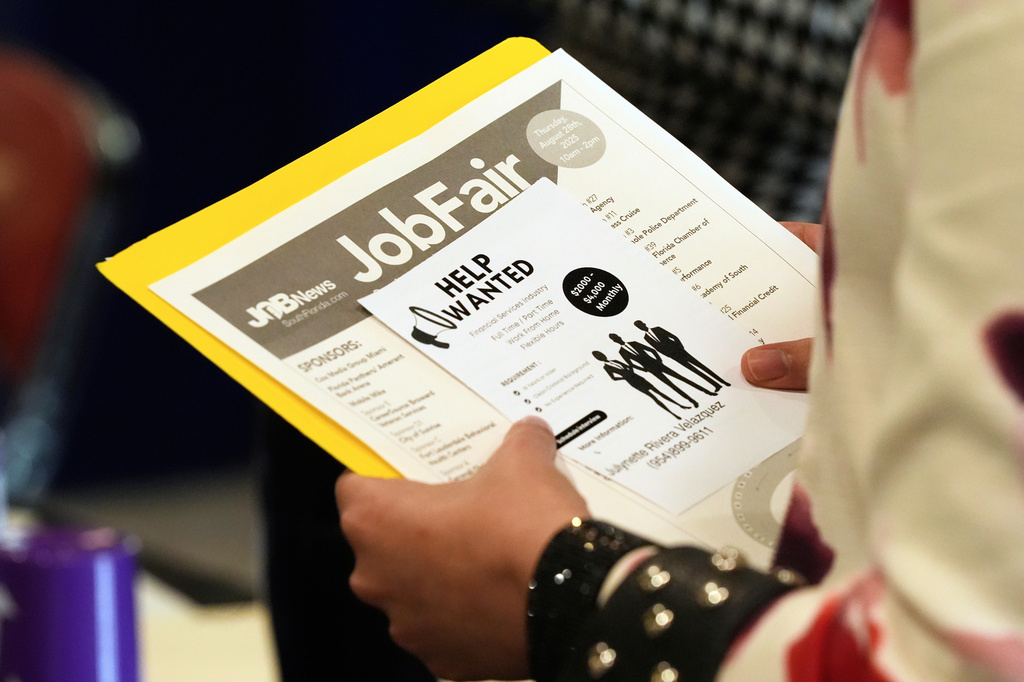

WASHINGTON — The nation’s job market demonstrated unexpected resilience in April, generating 115,000 new positions even as economic turbulence from the Iran conflict continues to impact global markets.
The monthly employment gains surpassed economist predictions of 65,000 new positions, although growth slowed compared to March’s robust 185,000 job additions. Unemployment held steady at 4.3%, according to Friday’s Labor Department data.
The ongoing Iran conflict has triggered unprecedented disruptions to worldwide oil distribution, pushing U.S. gas prices beyond $4.50 per gallon this week. However, America’s employment sector has largely withstood these pressures, while President Trump’s tariff policies from the previous year have proven less economically damaging than initially projected.
“The labor market is not booming, but it is proving harder to break than many feared,” economist Olu Sonola of Fitch Ratings observed.
Healthcare sectors led job creation with 37,000 new positions, while transportation and warehousing industries contributed 30,000 roles. Manufacturing bucked the trend, eliminating 2,000 positions in April and shedding 66,000 jobs annually despite Trump’s protectionist measures designed to boost factory employment.
“Businesses to some extent are viewing the conflict in Iran as temporary,” explained Gus Faucher, chief economist at PNC Financial. “We’re seeing strong business investment, particularly around tech and AI. The economy continues to expand. We’ve weathered some shocks. The worst of the tariff impact is likely over.”
However, Faucher warned that “the longer conflict in Iran lasts, the higher energy prices go, the longer they stay elevated the greater the drag on the economy.”
Department revisions reduced February and March employment figures by 16,000 positions.
Worker wages increased 0.2% monthly and 3.6% annually compared to April 2025, aligning with Federal Reserve inflation objectives of 2%.
The nation’s workforce contracted last month, with labor force participation declining to 61.8% — the lowest level recorded since October 2021.
Nevertheless, employment growth has maintained momentum throughout the year.
Economic activity has received support from substantial tax refund distributions this spring, stemming from Trump’s tax reduction legislation. These refunds enable increased consumer spending, encouraging businesses to expand their workforce in response to growing demand.
The employment landscape shows gradual improvement following a challenging 2025. Last year’s job creation averaged just 9,700 monthly positions — the weakest performance outside recession years since 2002. Elevated interest rates and uncertainty surrounding Trump’s economic agenda constrained hiring decisions.
March and April represented the first consecutive months exceeding 100,000 job gains since late 2024.