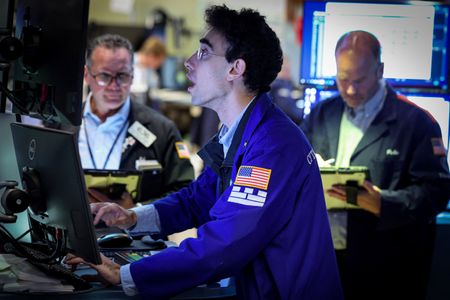

Technology stocks took another beating on Wednesday, sending U.S. and international markets tumbling as investor enthusiasm for artificial intelligence companies continues to wane. Market volatility increased further when oil prices surged following U.S. President Donald Trump’s threat to strike Iran “very hard.”
The artificial intelligence investment boom that has driven much of this year’s market gains is showing clear signs of fatigue, creating an ironic backdrop as the world’s largest initial public offering prepares to debut. Technology and AI-focused companies are facing mounting pressure, dragging broader market indexes down alongside them.
The semiconductor index known as “SOX” has dropped 13% over the past week, while the Nasdaq has declined on five of the last six trading sessions – marking its worst streak this year. Both the Nasdaq and the S&P 500 technology index closed at their lowest levels in more than a month.
On the inflation front, annual U.S. consumer price increases have climbed above 4%, more than doubling the Federal Reserve’s 2% target. This trend is expected to continue in coming months, creating additional financial strain for consumers and households as November midterm elections approach.
However, some positive signals emerged from the data. Monthly core inflation decelerated to 0.2% from 0.4%, falling short of the expected 0.3%. Core goods inflation turned negative for the first time this year, indicating that tariff effects may be diminishing, while oil price impacts on core inflation remain contained.
In Japan, Bank of Japan Governor Kazuo Ueda was admitted to a hospital Wednesday and will be absent from next week’s policy meeting. This marks the first time a central bank governor will miss a scheduled policy session since the current decision-making structure was established in 1998.
The central bank is anticipated to increase rates by 25 basis points to 1.00%, reaching a three-decade peak. From a currency standpoint, a firm commitment to additional monetary tightening might be necessary to prevent the yen from falling to multi-decade lows, but Ueda’s absence complicates this messaging.
Wednesday’s Market Performance:
• EQUITIES: South Korea fell 5%, while China and Japan dropped 2%. The three major U.S. indexes declined nearly 2%.
• SECTORS: Eight S&P 500 sectors declined, three advanced. Technology fell 2.3%, industrials dropped 3.4%, while consumer staples gained 1.7%. Super Micro Computer plunged 28%, Nvidia decreased 3.8%, and the chip index lost 3.6%.
• CURRENCIES: The dollar-yen pair rose to 160.50, reaching its highest level since April 30 when Japan last intervened.
• FIXED INCOME: U.S. bond yields increased modestly. The 10-year Treasury auction attracted robust demand, particularly from indirect bidders representing foreign central banks.
• COMMODITIES: Oil prices rebounded 2%, while gold fell 4%.
Thursday’s Market Catalysts:
• Middle East developments
• Turkey’s interest rate decision
• European Central Bank rate announcement
• U.S. weekly unemployment claims
• U.S. producer price inflation data for May
• $22 billion U.S. Treasury 30-year bond auction