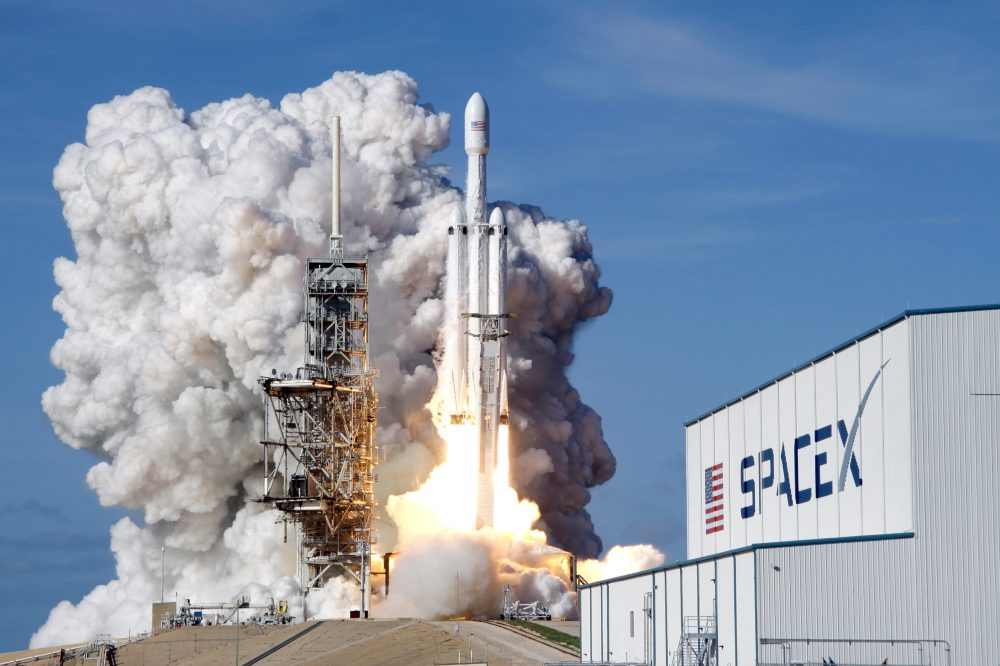

Elon Musk’s space exploration company is preparing for a historic stock market debut that revolves around astronomical figures — and the numbers behind SpaceX’s public offering plans are truly staggering.
Financial documents for the upcoming stock launch reveal expenditures on an enormous scale — surpassing the entire economic production of many nations — with plans to expand dramatically as Musk works to fulfill his ambitious vision of transporting humans to other worlds. The capital expected to be generated from this initial stock sale — projected at $75 billion — will help fund these ambitious, science-fiction-like objectives.
If the public offering proceeds smoothly, it would establish a new record as the biggest in history. The move could also elevate Musk, who holds a significant ownership position in SpaceX and currently ranks as the planet’s wealthiest individual, to become the first person worth more than a trillion dollars.
Beyond the remarkable financial figures, the company’s filing documents read somewhat like a screenplay for a futuristic Hollywood film as Musk outlines his vision of using rocket technology to prevent human extinction by transforming our species into inhabitants of multiple planets.
Initially, Musk plans to transport astronauts to the moon for establishing a lunar outpost. His ultimate goal involves creating settlements on Mars.
Here’s an examination of the impressive statistics underlying Musk’s extraordinary aspirations.
SpaceX would achieve this market valuation if its publicly traded shares maintain the initial offering price of $135 per share. Given the significant investor enthusiasm surrounding SpaceX, the stock price could potentially climb higher during its first trading day. Currently, computer chip manufacturer Nvidia holds the position as the world’s most valuable publicly traded corporation at approximately $4.9 trillion. A valuation of $1.77 trillion would position SpaceX alongside Broadcom as the sixth most valuable company, based on Wednesday’s market closing.
This represents Elon Musk’s total wealth as of June 10, according to Forbes calculations. Based on how significantly the SpaceX public offering increases the value of Musk’s company ownership, he might achieve trillionaire status for the first time in history. The total wealth of the second through fifth richest individuals on the Forbes ranking — Google co-founders Larry Page and Sergei Brin, Amazon founder Jeff Bezos and Meta Platforms CEO Mark Zuckerberg — equals $999.2 billion.
SpaceX would generate these funds by offering 555,555,555 shares priced at $135 each through the public offering, representing more than twice the previous IPO record of $26 billion achieved by Saudi oil company Aramco in 2019.
This represents the quantity of advanced Starlink satellites that Musk indicates SpaceX intends to launch into orbit. The Starlink network currently operates approximately 9,600 satellites in space. For perspective, UPS reports operating 135,000 delivery vehicles — including motorcycles — across its transportation network.
Musk will maintain this level of decision-making authority at SpaceX through his ownership of over 90% of the company’s Class B shares, which provide holders with 10 votes per share. He additionally holds a 12.3% ownership in Class A shares, which carry single voting rights per share.
Musk must achieve this population level in a Martian settlement to qualify for a portion of his SpaceX performance-based compensation. Currently, no technology exists to transport even a single individual to Mars, much less one million people. Earth cities with similar populations include Ottawa, Prague and San Jose, California.
The company’s total expenditures in 2025 across all divisions, encompassing rockets, satellites and artificial intelligence systems. The majority of this spending, totaling just under $11.4 billion, originated from its connectivity division that operates the Starlink satellite network. In comparison, NASA’s 2026 budget allocation is $24.4 billion.
SpaceX allocated this amount in 2025 for purchasing Cybertrucks from Musk’s other publicly traded enterprise, Tesla. The entry-level Cybertruck model is priced at $69,990. This $131 million expenditure would purchase approximately 1,871 vehicles. The business relationships between Musk’s companies have generated discussion about a potential future merger between Tesla and SpaceX.
This represents the projected portion of IPO shares designated for individual investors with smaller investment budgets, commonly called retail investors. Generally, only approximately 5% to 10% of IPO shares are allocated to this investor category.