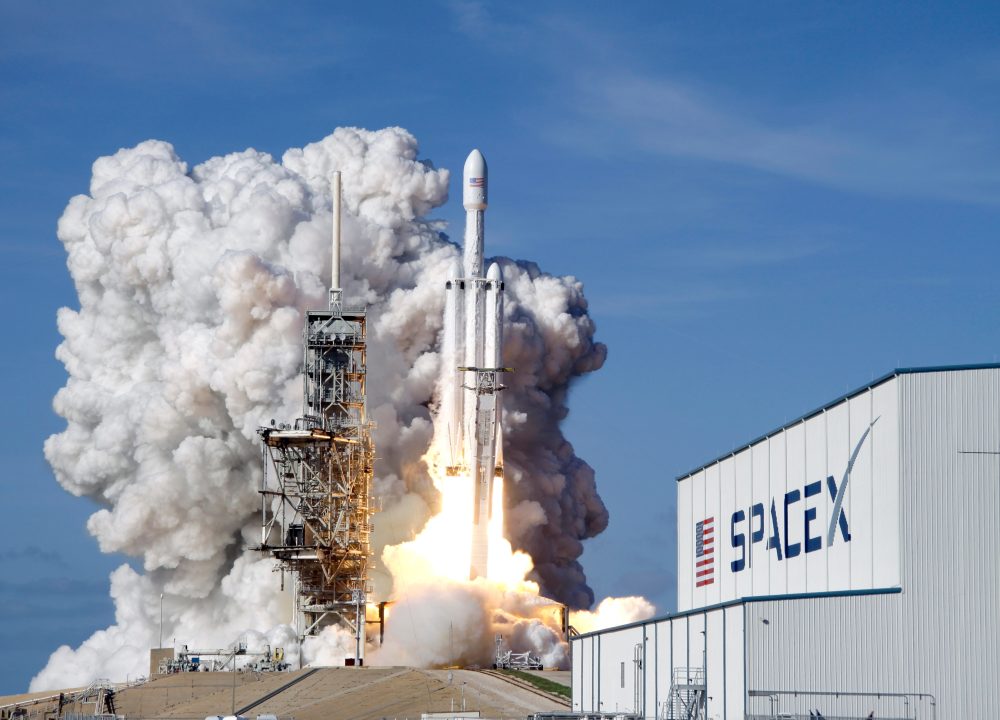

NEW YORK — Elon Musk’s rocket company is preparing for what could become the largest initial public offering in history, and the firm wants everyday investors to have an unusually large stake in the launch.
Space Exploration Technologies Corp., commonly known as SpaceX, is planning to allocate a significant portion of its stock debut directly to individual “retail” investors — those who trade through smartphone apps and personal brokerage accounts rather than large institutional funds with professional trading operations.
Several key factors stand out as the public offering draws near:
While most stock debuts typically reserve just 5% to 10% of shares for individual investors according to Fidelity, SpaceX could allocate as much as 30% to this group. The rocket manufacturer expects everyday investors to access its IPO through major platforms including Charles Schwab, Fidelity, Robinhood, SoFi and E-Trade by Morgan Stanley.
Fidelity is lowering its account requirements significantly for this offering, allowing investors with just $2,000 in their accounts to potentially purchase SpaceX shares. This represents a dramatic reduction from the typical $100,000 to $500,000 minimum requirements for other equity offerings.
The high level of anticipated interest means not everyone who expresses interest will necessarily receive shares in the offering.
While the excitement surrounding SpaceX might tempt investors to quickly flip their shares for profit if prices surge, brokerages maintain policies that prevent investors from participating in future offerings if they sell IPO shares too rapidly, typically within a few weeks.
SpaceX is cautioning that significant retail investor participation could lead to price volatility. Individual investors tend to trade more emotionally compared to pension funds, which make calculated decisions based on long-term payment obligations stretching years or decades into the future.
Individual investors were the driving force behind GameStop and other “meme stocks” that reached what professional investors considered irrational heights during 2021.
According to Jay Ritter, an IPO specialist and professor at the University of Florida’s Warrington College of Business, the average IPO has gained 7% on its first trading day from 1980 through 2025.
However, IPOs typically underperform comparable companies over the following five years, excluding their debut day performance. They trail by an average of 3.6% annually, Ritter’s research shows.
Launching objects beyond Earth’s atmosphere and building massive AI data centers requires enormous capital, and SpaceX has accumulated $29.1 billion in debt as of March’s end.
The company reported losses of $4.9 billion last year and an additional $4.3 billion during the first quarter of 2026. SpaceX admits it “may not achieve profitability in the future.”
Stock prices generally follow company profitability trends over extended periods.
Many investors might inadvertently become SpaceX shareholders without making a direct purchase. Millions of people own shares in the QQQ exchange-traded fund, which mirrors the Nasdaq 100 index and manages approximately $460 billion in assets.
The Nasdaq 100 traditionally added new members each December during annual restructuring to maintain its roster of the 100 largest non-financial Nasdaq companies. Recent rule changes now permit major companies to join the Nasdaq 100 after just 15 trading sessions.
If SpaceX’s public debut meets expectations, it could rapidly enter both the Nasdaq 100 and QQQ fund, automatically making QQQ shareholders partial SpaceX owners.
The organization managing the more widely followed S&P 500 index has not implemented similar fast-track entry procedures.
SpaceX’s IPO will feature 555.6 million “Class A” shares, with each share providing one vote on shareholder matters. These voting rights cover important decisions like selecting board members who oversee the chief executive.
The offering excludes “Class B” shares, which carry 10 votes each. Musk’s extensive holdings of these super-voting shares would give him control over more than 82% of total voting power after the IPO.
In regulatory filings, SpaceX acknowledges potential conflicts of interest between the company and Musk, along with his other ventures like Tesla.
Pension fund leaders representing firefighters, teachers and other workers in California and New York wrote to SpaceX last month criticizing several IPO provisions, including “super voting shares,” mandatory arbitration requirements instead of lawsuit options, and Musk’s concentrated power.
These officials noted they could become SpaceX owners through index funds that automatically purchase stocks when they join specific indexes.
Musk’s voting control over the board would grant him extraordinary authority over SpaceX, “essentially making him unfireable without his own consent,” wrote the CEO of California Public Employees’ Retirement System, the New York state comptroller and the New York City comptroller.
“This level of insulation from accountability is virtually unheard of among any other large U.S. issuer whose governing documents foreclose accountability to public owners on these terms.”
SpaceX will trade under ticker symbol “SPCX,” which closely resembles “SPCE,” the symbol used by Richard Branson’s Virgin Galactic Holdings.