
The World Cup has begun, setting the stage for an intense rivalry between athletic giants Nike and Adidas both on the soccer field and in retail stores worldwide.
Nike desperately needs a victory. The global soccer competition, taking place partially on American soil, arrives during the second year of CEO Elliott Hill’s effort to turn the company around. The athletic wear manufacturer has watched its market position weaken, anticipates revenue will decline between 2% and 4% during the current quarter, and has seen stock values plummet more than 30% this year as shareholders lose patience with Hill’s recovery efforts.
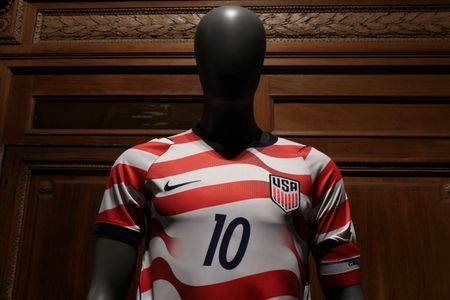
However, encouraging developments are emerging in retail locations. Customers walking into the Pelé Soccer store in Times Square recently encountered a display of mannequins wearing Nike uniforms for the United States, Brazil, and France teams.
Nike’s World Cup marketing effort called “Rip the Script,” centered on a promotional video showcasing soccer stars and famous personalities including Kylian Mbappé and Kim Kardashian, dominated the window showcase at a Champs Sports location in midtown Manhattan. The prominent positioning of Nike jerseys by the Foot Locker subsidiary demonstrates Nike’s advancement in repairing connections with retail partners that were damaged when former CEO John Donahoe shifted toward selling directly to consumers.
“Football allows us to reach so many different people,” said Camilo Andrade, Nike’s vice president of global football. Regarding collaboration with wholesale retailers, the approach “has been first and foremost to make sure that we restore those relationships,” Andrade added.
Beyond introducing two new Mercurial soccer cleats this month, the athletic apparel company is providing uniforms for 12 national teams, collaborating with local streetwear designers, and updating soccer products at over 5,000 Nike and wholesale locations around the world.
However, the competition remains intense. Adidas, serving as an official World Cup sponsor and a brand with deep soccer heritage, is backing 14 teams and providing the tournament’s official match ball, which acts as a prominent centerpiece in retail environments.
British retailer JD Sports has observed that Mexico and Argentina jerseys – both supported by Adidas – have emerged as the top-selling team uniforms so far, according to a company spokesperson. Industry experts suggest brand success will partially depend on which teams perform well in the actual tournament.
Louis Carrillo, 30, found himself attracted to a display of Mexico jerseys at Pelé Soccer – not just to cheer for his home country’s team as they compete against South Africa on Thursday, he explained, but also because of the distinctive Adidas three stripes featured on the shirt’s shoulders.
He previously purchased Nike’s Mercurial soccer boots during his youth, “but I feel that it’s not the same anymore,” Carrillo added, noting his enthusiasm for the design has diminished.
Industry analysts warn that even a World Cup boost might not be sufficient to change Nike’s overall direction. The sportswear leader still must introduce more innovative products that capture consumer attention.
RBC Capital Markets reduced its Nike stock recommendation just one day before the World Cup’s opening match. Analyst Piral Dadhania pointed to a slower-than-anticipated recovery, stating the World Cup influence and new products are “not sufficient to offset clean-up actions elsewhere in the business.”
“The problems that Nike has are not going to just go away because of the World Cup,” said Morningstar analyst David Swartz. “But it’s certainly an opportunity to get the brand back in front of people.”
Nike’s product selection will help increase brand visibility as the tournament progresses, but currently, Adidas merchandise appears more prominent at retailers like Dick’s Sporting Goods and Foot Locker, according to analysts at Telsey Advisory Group who published their findings this week.