
The Japanese sneaker company behind the iconic footwear featured in the movie “Kill Bill” is pursuing an ambitious worldwide expansion strategy, though financial experts caution that this growth plan might jeopardize the brand’s exceptionally high profit margins.
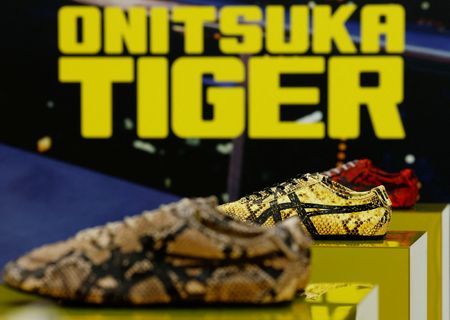
Onitsuka Tiger, known for the distinctive yellow and black sneakers worn by actress Uma Thurman in the 2003 film “Kill Bill” and versions connected to martial arts legend Bruce Lee, is establishing flagship retail locations across Europe and the United States.
The brand has already benefited significantly from international visitors to Japan, attracted by the country’s weakened currency that makes shopping more affordable. Revenue increased by one-third during the January through March period, achieving profit margins of approximately 40% – the strongest performance among all of the parent company’s divisions.
These profit levels reach “a level far closer to luxury brands than traditional sporting goods companies,” according to Mark Chadwick, an analyst who publishes on Smartkarma. He cautioned that the brand’s new organizational structure could threaten its substantial margins.
The “exceptional margins” may prove harder to maintain as operating as an independent business brings additional expenses, Chadwick explained. The company also faces implementation challenges with its “capital-intensive” approach of establishing flagship retail locations.
The brand’s history spans nearly eight decades, beginning with a footwear company established in Kobe in 1949 by Kihachiro Onitsuka. However, the Mexico collection featuring the brand’s signature stripes didn’t debut until 1966, after earlier products like basketball footwear.
In the 1960s, Nike co-founder Phil Knight connected with company representatives and started bringing the firm’s running shoes to American markets.
Following a break in operations, the parent company revived Onitsuka Tiger in 2002 throughout Europe, bringing back its traditional styling as a lifestyle brand.
“Onitsuka Tiger was able to benefit from consumers switching their preference from maximalist shoes, which have a lot of cushioning, to minimalist shoes,” explained Ivan Su, an analyst at Morningstar.
The brand’s appeal has grown dramatically in recent years, supported by renewed interest in vintage-style athletic shoes. The company named Momo from K-pop group TWICE as its brand representative in 2022.
On Wednesday, the parent company, valued at approximately $20 billion, announced that Onitsuka Tiger would move to OT Group, a completely owned subsidiary, through a corporate division.
Company officials stated no public offering plans exist. However, some market watchers believe the separation makes it simpler for the parent company to modify ownership arrangements if needed.
“The move does not unlock value immediately, but it lays the groundwork for the market to recognise OT as a fundamentally different business with fundamentally different economics,” Chadwick noted.
Operating nearly 200 retail locations globally, Onitsuka Tiger intends to open additional stores this year in markets including China, Italy and South Korea. The brand plans to return to the United States next February with a Los Angeles location, three years after shutting down its New York store.
Japanese culture holds worldwide appeal, said Glenn McMahon, a fashion and retail brand consultant in Los Angeles.
“The brand benefits from … growing consumer interest in alternative sneaker brands and increasing fatigue with the dominance of Nike and Adidas,” McMahon explained.
Product designs featuring elements like pink cherry blossoms highlight the company’s Japanese heritage. The brand offers a premium “Nippon Made” collection crafted by hand in a small western Japanese town.
Onitsuka Tiger footwear has “the vintage feel with the novelty to the U.S. market and the exotic vibe,” said American college student Kaito Hikino.
During a family trip to Japan this year, he purchased Mexico 66 TGRS sneakers for his girlfriend and noted that most of his female friends in the United States own Onitsuka Tiger shoes.
The company sells clothing and accessories at current stores in upscale areas such as London’s Regent Street and Paris’s Champs-Elysees.
“We think some level of prior investment will be needed, including for opening directly managed stores in major U.S. cities and strengthening advertising,” Nomura Securities analyst Shintaro Umeda wrote in a research note.
“When looking online for must-dos in Japan, getting Onitsuka Tigers is always talked about as a must-do,” said Brazilian Ana Lebl, who visited Japan after completing high school in the United States.
“I had found them online about a year ago through resellers but they’re always much more expensive,” Lebl explained after purchasing Mexico 66 SD sneakers in Tokyo last week.
“We would expect steeper sales growth if the firm accelerated store openings compared to its currently cautious approach,” SMBC Nikko analyst Kenya Matsuo wrote in a research note.
However, major competitors including Nike, Adidas and Puma offer their own simple sneaker collections in an increasingly crowded market of classic-inspired designs.
Fashion trends can be unpredictable, and Onitsuka Tiger might stumble, one analyst warned.
“We have seen a lot of companies doing something like what Onitsuka Tiger has done with the Mexico 66 model and fashion trends are outside their control,” Su of Morningstar said.
“The Onitsuka Tiger brand has been popular for a while, but we think that might fade in the coming years, affecting margins.”