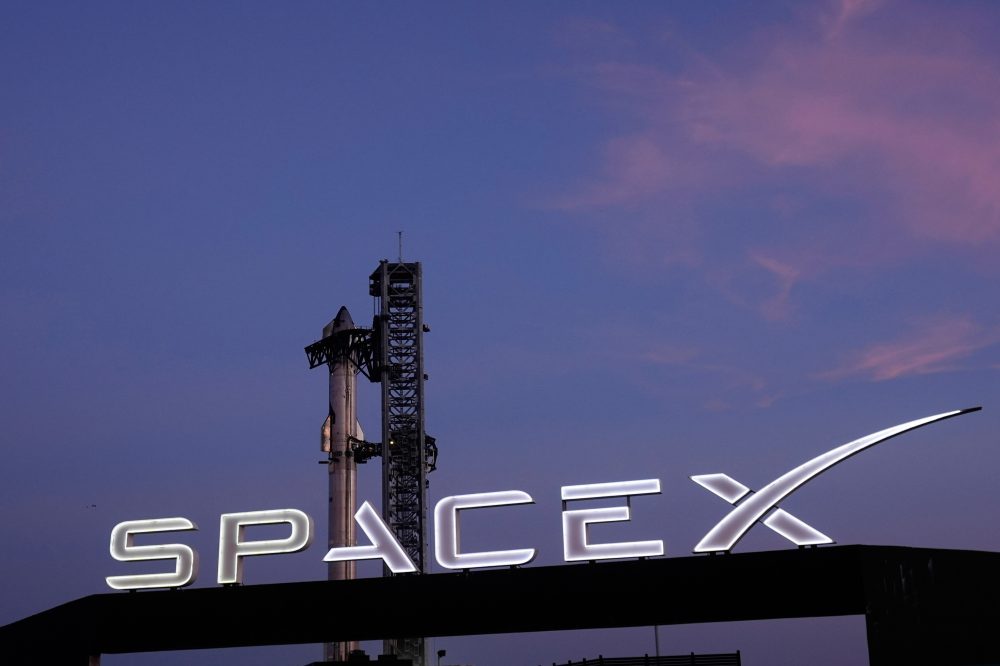

Elon Musk’s space exploration company SpaceX is set to begin trading on Wall Street this Friday, with investors eagerly awaiting the chance to purchase 555.6 million shares priced at $135 each. The move could potentially make Musk, who is already the wealthiest person globally, the world’s first trillionaire.
During a video call on Musk’s social media platform X with JPMorgan CEO Jamie Dimon, Musk explained that while people have been urging him to take SpaceX public for a decade, he’s choosing to do so now because the company intends to launch 100,000 next-generation Starlink satellites into orbit. He stated that putting AI data centers in space represents a “massive new growth base and you need capital for that.”
The public offering is expected to generate approximately $75 billion in proceeds, potentially making it the largest initial public offering in history. SpaceX aims to become the first company to transport humans to Mars, and part of Musk’s future earnings are tied to SpaceX successfully creating a colony of at least 1 million people on Mars.
While going public will provide SpaceX with the capital it requires, it also subjects the company to increased shareholder scrutiny and regulatory oversight. This includes mandatory quarterly financial reporting, which some critics argue promotes short-term decision-making over long-term planning and creates unnecessary expenses. Securities regulators are currently seeking public input on a proposal that would require public companies to file financial reports just twice annually instead.
SpaceX acknowledges Musk as the “driving force” behind its growth, innovation and achievements. However, the company warns that losing Musk could disrupt its ability to implement its strategy and damage its “reputation and relationships with customers, partners and other stakeholders.” SpaceX also cautions that finding someone with Musk’s equivalent skills and experience would be time-consuming, if not nearly impossible. As Wedbush Securities analyst Dan Ives noted Wednesday, “At the end of the day Musk is SpaceX and SpaceX is Musk.”
Musk will retain control of a majority of special shares, giving him authority over company strategy, financial decisions and staffing choices. Due to his ownership of most Class B shares, Musk is essentially the only person with the power to remove himself as CEO.
Industry experts say SpaceX has gained a significant advantage over competitors like Blue Origin, headed by Amazon founder Jeff Bezos, by developing reusable rocket technology. The Starlink satellite division faces competition from companies including AST SpaceMobile, which ironically plans to use a SpaceX rocket to launch its newest satellites next week.
According to the prospectus filed last week, SpaceX identifies its largest potential market as selling business-focused artificial intelligence products that could revolutionize workplace productivity. The company estimates this opportunity could be worth $22.7 trillion if it could outcompete rivals like Anthropic, OpenAI and Microsoft in this highly competitive sector. However, the prospectus reveals no clear path to profitability for the xAI business, which combined with SpaceX earlier this year.
The massive reusable rocket currently in testing phase is crucial to achieving Musk’s goals. Much of the commercial space industry depends on SpaceX successfully developing Starship’s capability to be completely reusable and durable enough for rapid turnaround between missions. If this fails to materialize, SpaceX warns that deploying data centers and satellites in space will require more time and money, potentially causing customers to abandon the company.
Should the SpaceX public offering succeed as anticipated, the stock could rapidly be added to the Nasdaq 100, a closely watched index that monitors the 100 largest non-financial companies on the Nasdaq. This inclusion matters because popular funds, such as the $460 billion QQQ exchange-traded fund, replicate the index and automatically purchase whatever stocks are listed.
Nasdaq recently modified its regulations to permit select companies to join the Nasdaq 100 after only 15 trading days.
Meanwhile, S&P Dow Jones Indices maintains its established and more conventional requirements that would enable SpaceX or other companies with enormous IPOs quicker access to its S&P 500 index. This means companies must still wait for their stocks to trade for a complete 12 months before index inclusion.
Companies seek S&P 500 inclusion particularly because it’s considered the most significant index on Wall Street, with trillions of dollars either directly copying it or using it as a benchmark. For instance, Vanguard’s VOO fund that follows the S&P 500 has approximately $950 billion invested in it.