
Back in 1978, two Scottish soccer fans with nearly empty wallets managed to hitch a ride on a ship bound for Argentina, earning their passage by painting the vessel along the way — a story so remarkable it ended up in a BBC documentary.
For generations, working-class fans found creative ways to follow their national teams — hopping on buses, trains, or hitchhiking to reach distant stadiums. When Brazil hosted the tournament in 2014, thousands of South American supporters made the journey affordable by traveling and bunking in camper vans.
But this year’s World Cup is a different story entirely. Skyrocketing ticket and lodging costs have transformed the tournament into an event increasingly accessible only to those with deep pockets.
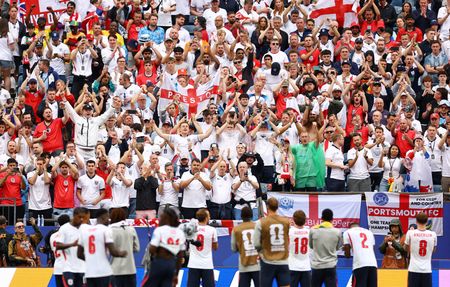
“You’ve got to pay to play,” said Mike Gill, a British real estate developer based in Canada who was cheering on England against Ghana near Boston on Tuesday. “It’s extortionate but people are paying the prices, so what are you going to do?”
Greg Connor, who runs an automotive repair shop in Oklahoma, shelled out $9,600 for four tickets so his family could watch France take on Norway on Friday. “It’s insane,” Connor said. “We were considering going to five or six games, but we’re just going to the one.”
DYNAMIC PRICING DRIVES COSTS THROUGH THE ROOF
When tickets for group-stage matches first went on sale this year, the top official price was $575 per seat. Compare that to the 2022 World Cup, where the priciest group-stage ticket was $220.
FIFA adopted a dynamic pricing model for this tournament — one that allows ticket prices to rise and fall based on demand. The result: first-round resale tickets have climbed past $1,000, with prices for later rounds going even higher.
As of Friday, the average lowest available price for upcoming matches on secondary resale platforms was $1,600, according to Ticketdata, a price-tracking service.
Renato Perez, a resident of the Galapagos Islands in Ecuador, said his family of five spent roughly $22,000 on tickets, travel, lodging, and other costs to watch Ecuador defeat Germany in New Jersey on Thursday. “But it’s worth every cent,” Perez said. “I would do it all over again.”
The dramatic price jump is changing the makeup of who fills the seats at World Cup venues.
Reuters spoke with more than 50 fans at various stadiums during the group stage. About 30 were employed in higher-paying fields, with sales, finance, and real estate well represented. Four were business owners, three were engineers, and two were doctors. Among lower-wage professions, two electricians and two nurses were also in attendance.
For American fans used to dynamic pricing at concerts and sporting events, the high costs weren’t entirely shocking.
Colleen Cheesman, a partner at a consulting firm who attended England’s match against Ghana, said she had been prepared to spend up to $3,000 on a ticket — only to be offered seats at $420 apiece from friends who had purchased them through an early FIFA lottery. “We got six and brought our friends,” she said. “They’re so cheap. You can’t even see a concert for that these days.”
For others, the expense was a real strain. Caroline Dowie, an Australian who owns a house-clearing business in Adelaide, said she and her husband paid $4,000 for four tickets — not counting travel or accommodation.
Some in the soccer world are troubled by the shift in who shows up to games, both at the World Cup and in domestic leagues.
“The World Cups are blown out of proportion — the costs, everything else,” said Paraguay coach Gustavo Alfaro. “The essence of football is lost. And football can’t be a business, it has to be football.”
A FIFA spokesperson defended the organization’s approach, noting that 130,000 tickets across the tournament were made available at just $60 each. The spokesperson said the broader pricing strategy mirrors standard market practices for major sporting and entertainment events in the host countries, and that revenue generated would be reinvested into soccer development.
However, that discounted ticket offering — announced in December after public backlash over pricing plans — represents only a small fraction of the approximately 7 million total tickets available. It’s also well below the 400,000 reduced-price tickets offered at the 2014 Brazil World Cup, where students could get in for as little as $15.
Despite the steep costs, demand remains strong. Total ticket sales for the tournament hit a record 3.6 million as of Thursday.
MILLION-DOLLAR EXPERIENCES FOR THE ULTRA-WEALTHY
For those at the very top of the income scale, cost appears to be no barrier at all.
Luxury concierge company Knightsbridge Circle offered a $4 million hospitality package that included six front-row seats on the halfway line at the World Cup final, along with access to the pitch during the trophy ceremony. That package sold within 24 hours. Two additional seats, also with pitchside access for the ceremony, remain on sale at $1.5 million each.
Stefan Szymanski, a professor of sport management at the University of Michigan, said the surge in World Cup ticket prices reflects soccer’s unmatched global appeal and its expansion into newer markets like the United States.
“Although this was already the world’s most popular sport 30-40 years ago, that popularity has actually grown even further, and particularly amongst affluent people,” Szymanski said.
“We will watch this, we will be glued to it (and) people will pay huge prices to go to the games,” he added. “And then once it’s over, Americans will forget about it immediately and get into the NFL and all the other things with the World Series coming up.”