
WASHINGTON — A towering dinosaur rib cage. A sandcastle built from 7,000 pounds of sand hauled in from the Jersey Shore. Two rocking chairs sitting in an unstaffed booth. These are among the sights greeting visitors at the Great American State Fair, now open on the National Mall in Washington, D.C.
The fair is organized by Freedom 250, a group established by President Donald Trump to oversee his administration’s official celebratory events. Its formation created friction with America 250, a separate organization created by Congress to plan the country’s 250th anniversary festivities. The National Mall event is scheduled to run through July.
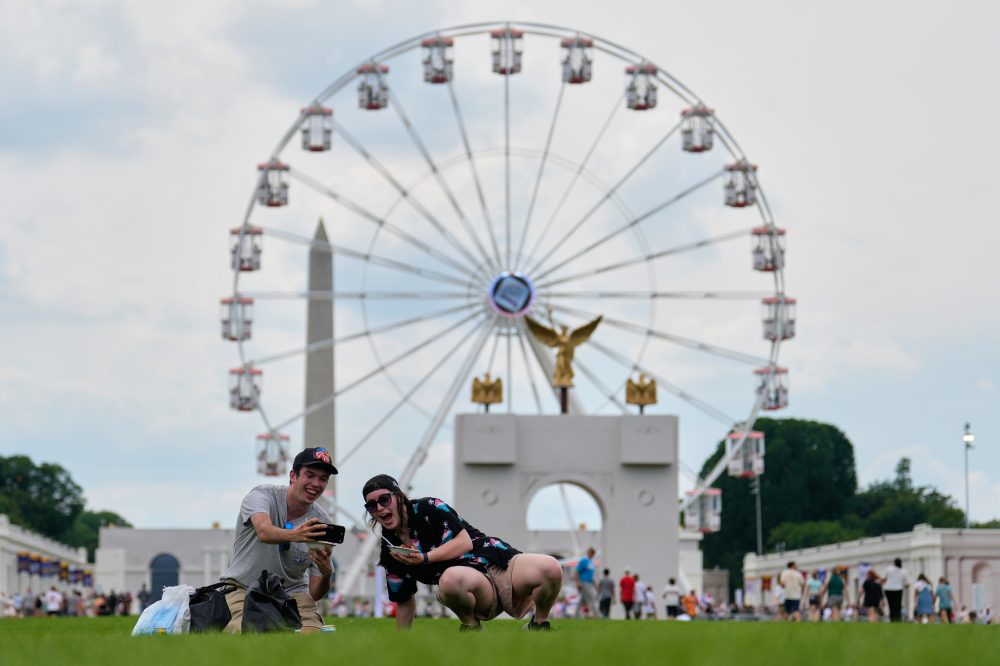
Early crowds on Friday were light, with little wait at security checkpoints. Once inside, visitors were greeted by a 110-foot Ferris wheel — the only ride at the fair — and a decorative arch similar to those the president has featured at other events.
Talking with attendees, a common thread emerged: the fair was a worthwhile concept, but one that didn’t quite live up to its potential.
A familiar fair atmosphere was provided by goats, sheep, and a calf — courtesy of the Washington High School Future Farmers of America chapter from Jefferson County, West Virginia — whose sounds echoed across the Mall. Baby chicks drew enthusiastic crowds, and a cowboy performance featuring bucking broncos was also on the schedule.
Visitors said they were drawn by a desire to see states celebrate their individual identities and by hopes for a nonpartisan moment of American togetherness.
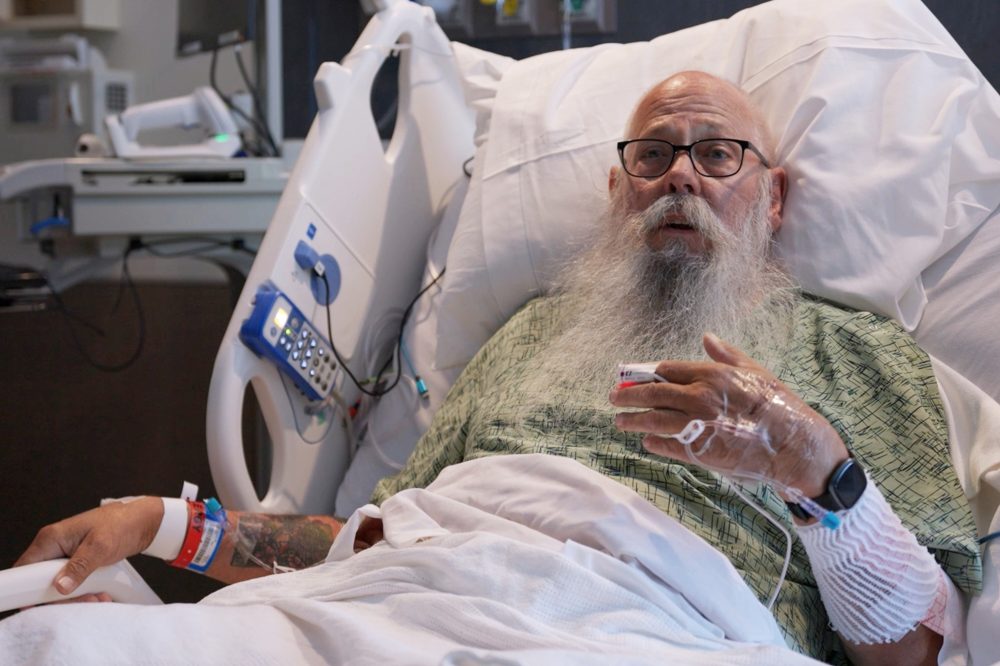
Sharyn Bovat, who said she lives in Florida but has been staying in the Washington area after suffering a heart attack this year, offered a nuanced take. “There’s nice people, nice events, nice family events,” she said. “Half the country is divided with the other half. I wish they would create a USA 250 for all the people. I’m tired of the politics.”
Bovat pointed to the decorative arch as the element that gave the event a political feel. “It makes me think of Germany,” she said.
The state exhibit booths were housed in structures designed to echo the neoclassical style of the nearby National Gallery of Art. Inside, visitors found a range of Americana on display.
Montana’s booth featured a massive replica rib cage from an apatosaurus — a close relative of the more widely recognized brontosaurus. Virginia took visitors through the state’s contributions to American history, while Washington, D.C. displayed a large banner for visitors to sign and a tree decorated with cherry blossoms. South Carolina offered a putting green, and Texas went big with a space capsule, an Alamo facade, and a statue of Big Tex.
Arizona drew the longest line, thanks to an interactive display that placed visitors virtually into the state’s landscape. New Jersey’s booth featured the elaborate sandcastle crafted from Jersey Shore sand over four days by a local artist.
Andy Walters and his wife Kirsten made the trip from Wapakoneta, Ohio — the hometown of Apollo 11 astronaut Neil Armstrong — with their three children. “I think it’s nice. I wish all the states were participating,” Andy said. “It’s a little underwhelming but it’s a great idea.”
Kirsten Walters said she’d love to see similar events held more regularly, without the political undertones. “We’re excited to be here and participate,” she said.
While most states did participate — treating the fair largely as a tourism showcase — the event did not achieve full representation. Maine, Massachusetts, and Pennsylvania all declined to send delegations, citing concerns over cost, scheduling conflicts, or the event’s perceived politicization.
Several booths, including those for Hawaii and Alaska, were left unstaffed. Hawaii’s booth did feature a pair of rocking chairs, which weary visitors were happy to use.
Alonzo Lewis Jr. and Kelly Domizio, visiting from Rome, New York, took a seat in those chairs and shared their impressions. “This was really pretty cool,” Domizio said. “Been going to all the different states.”
But Lewis saw it differently. “Was it necessary, I don’t think so,” he said. “It feels forced. There’s so much separation.”
Domizio recalled the nation’s bicentennial celebration in 1976. “There was a sense of pride” and togetherness back then, she said. “We are enjoying the day but it feels forced.”