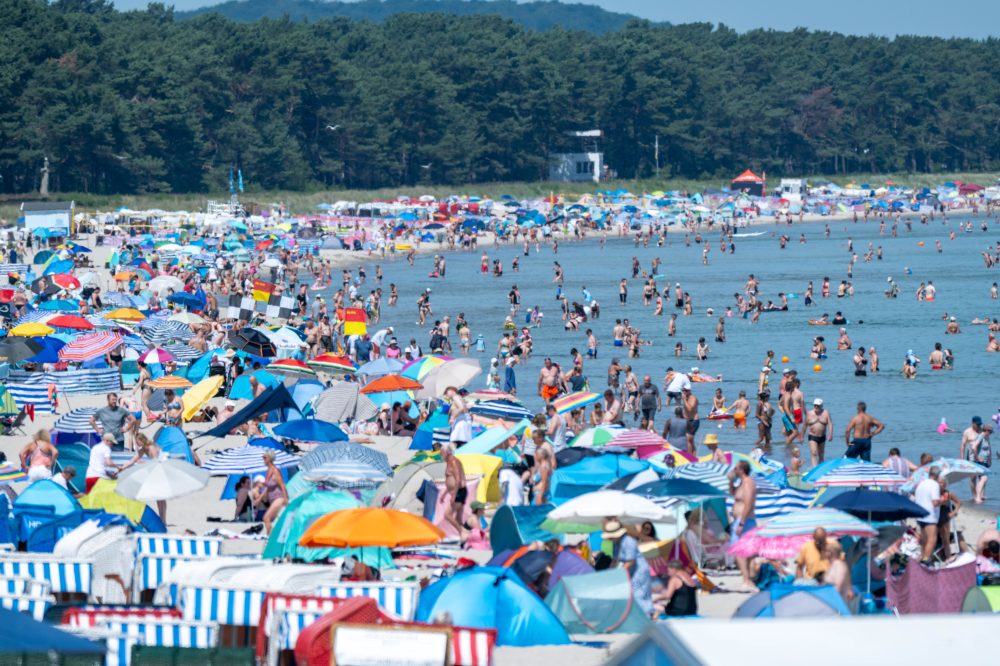

European authorities are scrambling to respond to a powerful heat wave that has caused significant damage to transportation infrastructure, overwhelmed hospitals, and claimed lives across the continent.
In Germany, officials reported damage to major roadways and disruptions to rail service on Saturday as the intense heat — expected to peak at 40 degrees Celsius (104 degrees Fahrenheit) — pushed infrastructure to its limits. In two locations outside Berlin, sections of the concrete on the A2 highway cracked and buckled under the extreme temperatures, forcing authorities to close the road. Additional highway damage was reported elsewhere throughout the country, according to German daily Bild.
In the western city of Dormagen, dozens of nursing home residents had to be evacuated for medical treatment after temperatures inside the facility climbed to 35 degrees Celsius (95 degrees Fahrenheit). A resident at the home passed away overnight, though a city spokesperson told German news agency dpa that it remained unclear whether the heat was responsible.
Air conditioning is not common in Germany or much of Europe, as the region has historically not experienced such extreme summer heat.
Train operator Deutsche Bahn and other rail companies urged travelers to avoid all nonessential trips on long-distance and regional trains this weekend. “Germany’s transportation infrastructure is being severely affected by the record-breaking heat this weekend,” Deutsche Bahn said in a statement. The company added that passengers could return their tickets for a full refund if they chose not to travel.
Meanwhile, in France, the worst of the heat appeared to be easing in some areas, but hospitals continued to face enormous strain. In the capital, the Paris public hospital authority activated its emergency response plan across all 38 hospitals to manage a sharp rise in patients.
According to a statement released Friday evening, the hospital authority’s emergency departments treated nearly 3,000 patients in a single 24-hour period — more than a third above normal levels. A large share of those patients were over the age of 75 and required hospitalization. Calls to medical dispatch centers surged nearly 80% compared to the same period in 2025.
Three-quarters of France, home to tens of millions of people, were placed under a red alert for extreme heat on Thursday and Friday as temperatures topped 40 degrees Celsius (104 degrees Fahrenheit) in some areas, including Paris. The country also logged its hottest average day ever recorded on Wednesday, when the average temperature measured across 30 French weather stations hit 30 degrees Celsius (86 degrees Fahrenheit).
In the United Kingdom, the extreme heat was expected to gradually subside over the weekend, though an amber warning — one level below the most severe red alert — remained active through Saturday night. The country broke its June heat record three consecutive days in a row this week. Friday was confirmed as the hottest June day ever recorded in the UK, with a provisional high of 37.3 degrees Celsius (99 degrees Fahrenheit) measured in eastern England — more than one degree hotter than the previous June record set in the summer of 1976.
On Saturday, police reported that the body of a 22-year-old man was pulled from a river after he reportedly got into trouble in the water during the heat wave. Authorities across the region have cautioned people to use extra care when swimming in unsupervised locations such as rivers and lakes, following the deaths of approximately 40 people in France over the past week.