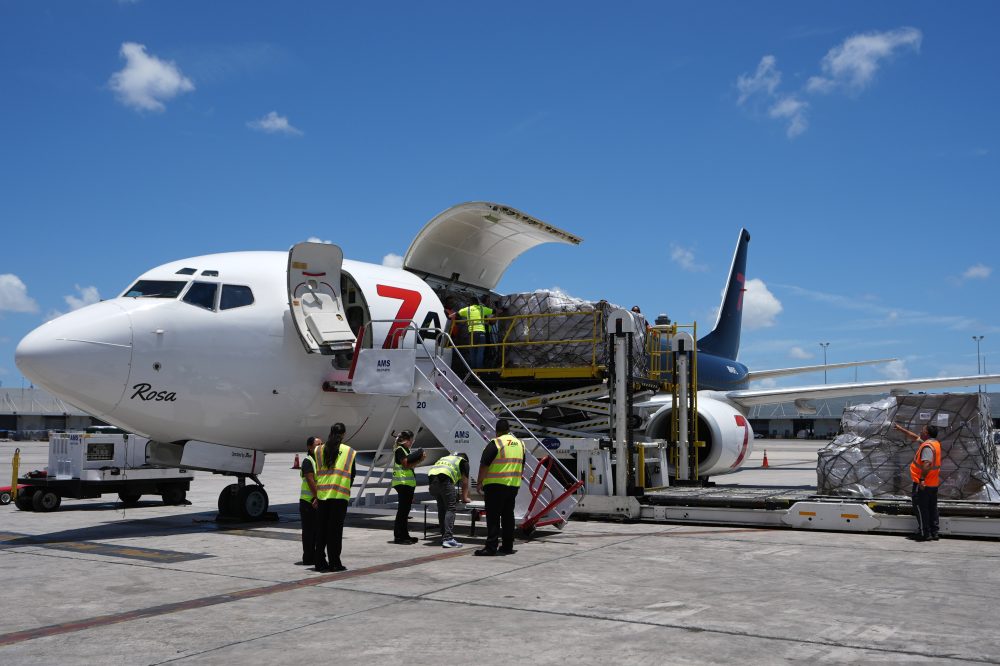

Senior officials from both Mexico and the United States came together Saturday to open a sterile fly production facility in Metapa de Dominguez, a town in the southern Mexican state of Chiapas near the Guatemalan border — marking a significant step in the ongoing battle against the New World screwworm.
Mexican President Claudia Sheinbaum and U.S. Agriculture Secretary Brooke Rollins were both present at the opening of the plant, which was built as a joint project between the two nations at a cost of more than $50 million. Once fully operational, the facility is expected to produce as many as 100 million sterile flies per week, which will be released to reduce the population of wild screwworm.
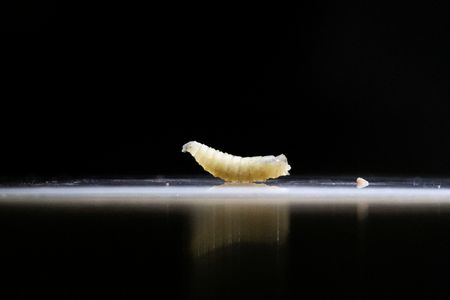
The screwworm is a parasite that burrows into the flesh of warm-blooded animals and can prove deadly if left untreated.
Experts have cautioned that even with the new plant running at full capacity, the total number of sterile flies available will still fall short of what would be needed to fully wipe out the pest.
The plant’s opening comes more than 18 months after Mexico recorded its first confirmed screwworm case back in November 2024. The infestation gradually moved northward through Mexico before crossing into the United States, where the first cases in several decades were confirmed in Texas in early June. Those U.S. cases have raised serious alarms about the potential impact on the American cattle industry.
“Our countries have beaten this before, 40, 50 years ago. We will beat the New World screwworm again sooner than anyone would have thought because of the extraordinary work that is going to happen at this facility,” Rollins said at the event.
Warning signs had actually emerged as far back as 2023, when the Panama-United States Commission for the Eradication and Prevention of Screwworm — known as COPEG — flagged that the parasite was moving northward. Despite those early alerts, officials were unable to stop its spread. By the time action was taken, the screwworm had already infected more than 30,000 animals across Mexico. Plans for the new plants in both Chiapas and Texas were not announced until 2025.
In response to the outbreak, the U.S. has kept its border largely closed to live cattle from Mexico since May 2025. That closure has disrupted a trade relationship that previously brought more than one million animals annually into U.S. feedlots. The shortage has hit Texas particularly hard, with some feedlots sitting nearly empty and cattle inventories reaching historically tight levels.
The trade disruption has also changed how Mexican ranchers operate. Many who previously exported live cattle to the north have instead begun fattening and processing animals within Mexico, spurring investment in domestic feedlots and slaughter facilities. As a result, Mexican beef shipments to the U.S. rose sharply in 2026.
President Sheinbaum addressed the importance of cross-border cooperation at the ceremony. “Animal diseases, pests and the challenges of food safety aren’t limited by borders,” she said. “In the face of those challenges, the best response is to team up, share our experiences and build solutions together.”
The new Chiapas facility is projected to roughly double the number of sterile insects available for release beyond what COPEG’s existing plant in Panama currently provides. That Panama plant has been running at full capacity, producing around 100 million flies weekly. Most recently, those sterile flies have been deployed along the U.S.-Mexico border near Texas.