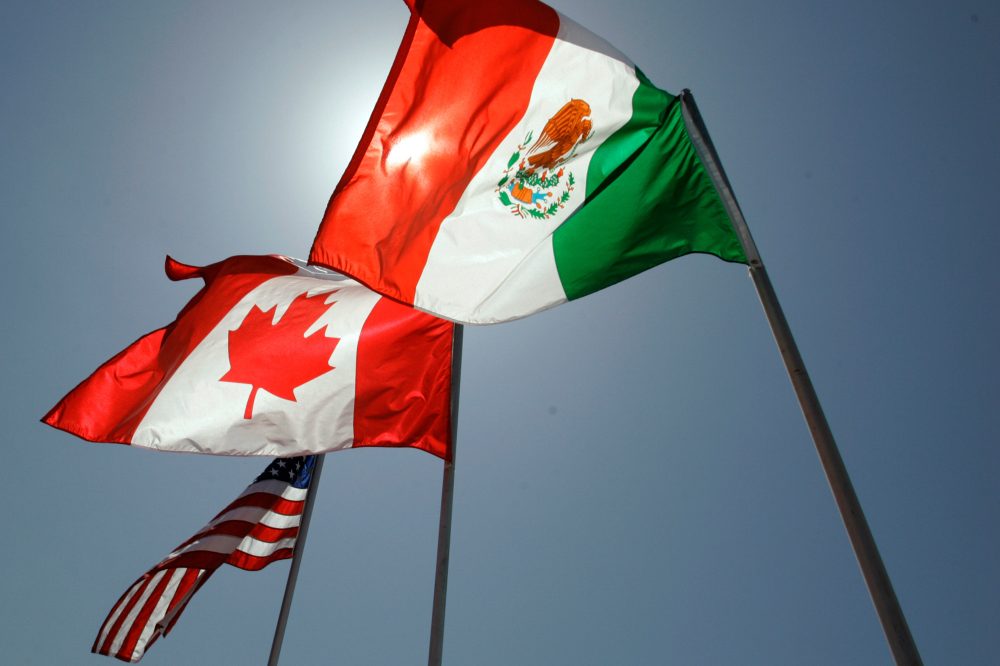

From tourists heading to Mexican beach resorts to Canadian auto parts flowing into Midwest factories, the trade relationship between the United States, Canada, and Mexico touches nearly every corner of everyday life. The three nations exchange $1.9 trillion worth of goods and services each year — roughly $5 billion every single day — and Canada and Mexico have now overtaken China as America’s two largest trading partners.
With that much at stake, the rules governing how those three countries do business carry enormous weight. And after a year of unpredictable tariff decisions under President Donald Trump, businesses across all three nations are desperate for some sense of stability. Experts say they’re unlikely to find it anytime soon.
The trade agreement at the center of these talks — the U.S.-Mexico-Canada Agreement, known as USMCA — is up for renewal this Wednesday. Trump originally negotiated the deal during his first term and frequently touted it as a major achievement. But the road to renewing it is full of obstacles.
“There’s going to be a lot of drama this summer,” said Diego Marroquín Bitar, a fellow in the America’s program at the Center for Strategic and International Studies, speaking last week at a USMCA forum sponsored by the Cato Institute.
Among the most controversial U.S. demands is a push to require that a greater share of automobile manufacturing take place within the United States. While such a shift could bring more factory jobs to American workers, it would also disrupt long-established supply chains and drive up the price of new vehicles — which already average close to $50,000 — at a time when consumers are already struggling with the high cost of living.
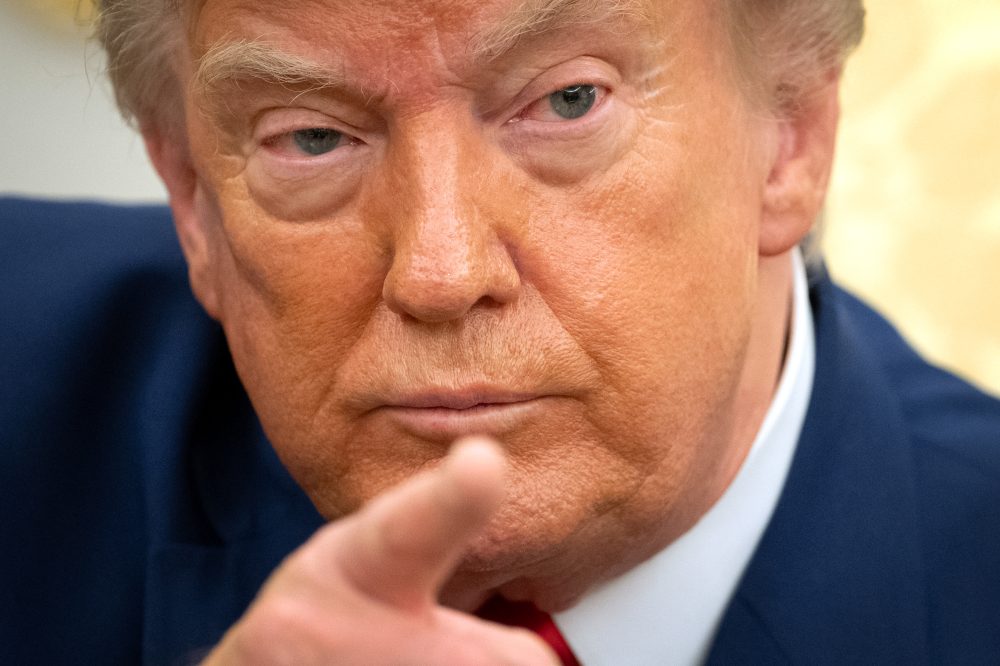
Trump has added fuel to the fire by threatening to walk away from the agreement entirely — a deal he himself brokered.
The USMCA took effect in 2020, replacing the 1994 North American Free Trade Agreement. Trump and others had long criticized NAFTA, arguing it encouraged U.S. companies to relocate factories to Mexico to take advantage of lower wages and then ship products back to the U.S. without tariffs. The USMCA was designed to address some of those concerns by requiring higher factory wages and ensuring more goods originated within North America — partly to prevent Chinese products from entering the region duty-free through a back door.
The agreement also included an unusual provision requiring it to be reviewed and renewed every six years. That deadline arrives Wednesday, but experts say don’t expect any dramatic announcements. “Nothing is going to happen July 1,” said Oscar Ocampo, director of economic development at the Mexican Institute for Competitiveness.
Negotiators could technically agree Wednesday to extend the USMCA unchanged for another 16 years, but that outcome is considered extremely unlikely. More probable is that talks will continue, with the three countries having until 2036 to reach a new agreement — or see the pact expire altogether.
In the meantime, any of the three countries can exit the agreement by giving the other two just six months’ notice. That’s a possibility Canada and Mexico — both heavily dependent on trade with the U.S. — are watching closely. Trump said in June that he was “not looking to renew” the deal, adding, “We don’t need anything that they have.”
Ocampo believes Trump’s real goal isn’t to scrap the treaty but to use the threat as leverage on issues like immigration and border security with Mexico.
So far, the U.S. and Mexico have held talks on the renewal, but Canada has largely been left out of those discussions. Patrick Childress, a partner at the Holland & Knight law firm and a former U.S. trade negotiator, described the risk for Canada: “The danger for Canada is this: that the U.S. government and the Mexican government reach agreement on changes to core provisions of the treaty and then show up in Ottawa and say: ‘Here’s what we’ve agreed to. You can take it or leave it.’”
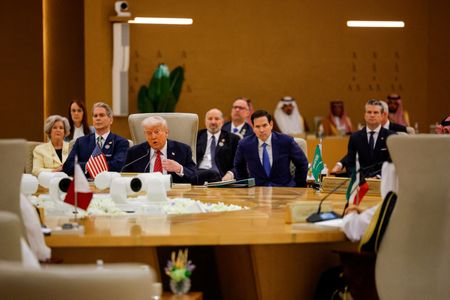
Canadian Prime Minister Mark Carney confirmed that the three countries plan to meet virtually on Wednesday, but signaled he wasn’t ready to sign anything, saying, “I’m not looking for my pen.” He later added in French that his priority is to update the USMCA.
One of the sharpest points of contention is a U.S. demand that 50% of any automobile sold under the agreement be manufactured specifically in the United States — not just somewhere in North America. Carney confirmed the demand in early June. Currently, no individual country is guaranteed any set share of production. “It’s a red line for both Mexico and Canada, and it goes against the spirit and the letter of regional integration,” Ocampo said.
Under the current USMCA rules, 75% of automotive content must originate in North America — already an increase from the 62.5% threshold under NAFTA. The U.S. wants to push that figure even higher, but Childress noted that automakers have spent years restructuring their operations to meet the existing 75% standard and would need considerable time to adjust to a new one.
Marcos Carias, an economist at the credit insurer Coface, said only one in five vehicles imported from Mexico and Canada into the U.S. would currently qualify under the proposed 50% American-made requirement. Models likely to face higher costs include Ford’s Maverick compact pickup truck, Chevrolet’s mid-size Equinox SUV, and certain Nissan sedans — all manufactured in Mexico. Carias estimated prices on the most affected vehicles could climb between 5% and 7%.
For many smaller businesses, the biggest wish isn’t a sweeping overhaul — it’s simply consistency. “My interest in this USMCA renewal is just consistency, right?” said Shawn Miller, co-founder of PKGD Group, a Holland, Michigan-based company that imports agave spirits — including tequila, mezcal, and raicilla — from family producers in Mexico. “If the rules change, the rules change. But we’d really like to know (what they’re going to be) and we’d like them to stay that way for a while.”
Business has been strong for PKGD, with sales up 62% so far this year, following a 100% surge in 2025 and a 300% jump in 2024. But last year brought serious headaches. In February, Trump imposed a 25% tariff on Mexican and Canadian goods, only to reverse course a month later and exempt products covered under USMCA. Three truckloads of Mexican spirits imported by PKGD crossed the border during that chaotic window and were hit with the 25% tax — a bill totaling $105,000.
Faced with that uncertainty, Miller sat down with his Mexican suppliers to figure out how to handle the financial hit. “What can we absorb? What can they absorb?” he said. Miller noted that he and his partners “are not large multinational corporations with dedicated trade departments, teams of lawyers, or lobbyists focused on trade policy.”