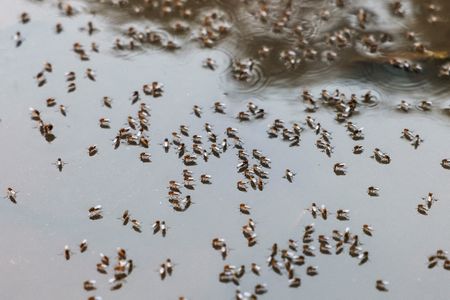

DHAKA — Health experts in Bangladesh are sounding the alarm over a potential sharp spike in dengue fever cases during the next two months, as rainy conditions and struggling mosquito control efforts fuel a growing outbreak.
The disease has been spreading at an accelerating pace in recent weeks, stoking fears after the country suffered its deadliest dengue outbreak on record in 2023.
According to data from the country’s health ministry, dengue-related deaths climbed from just one at the end of May to 18 by the close of June. Confirmed infections surged more than eightfold during the same period, jumping from 714 cases to 5,924.
Professor Kabirul Bashar, an entomologist at Jahangirnagar University, painted a troubling picture of what lies ahead. “We expect dengue cases in Dhaka to at least double in July from June levels and increase three to fourfold by August,” he said.
He added that the situation beyond the capital could be even more severe. “But the bigger challenge will likely be outside the capital, where several districts are at risk of a much steeper rise in infections,” Bashar said.
The scale of Bangladesh’s 2023 outbreak was staggering — more than 321,000 people were infected and 1,705 lost their lives. Last year, the country recorded 102,861 dengue cases and 413 deaths, following 101,214 infections and 575 deaths in 2024.
The dengue threat is compounding an already dire public health situation. Since mid-March, Bangladesh has been grappling with one of its most severe measles outbreaks in decades. More than 100,000 suspected cases and over 10,000 confirmed infections have been reported, with the death toll surpassing 700 — placing enormous strain on a healthcare system already under pressure.
Bashar noted that heavy rainfall, warm temperatures, and high humidity have combined to create near-perfect conditions for the spread of dengue, while efforts to control mosquito populations have failed to keep up with the escalating threat.
He called on the government to establish a nationwide early warning system to pinpoint mosquito breeding sites and emerging hotspots, enabling authorities to act quickly and alert communities before conditions worsen.
“The window to contain the outbreak is narrowing,” Bashar warned.