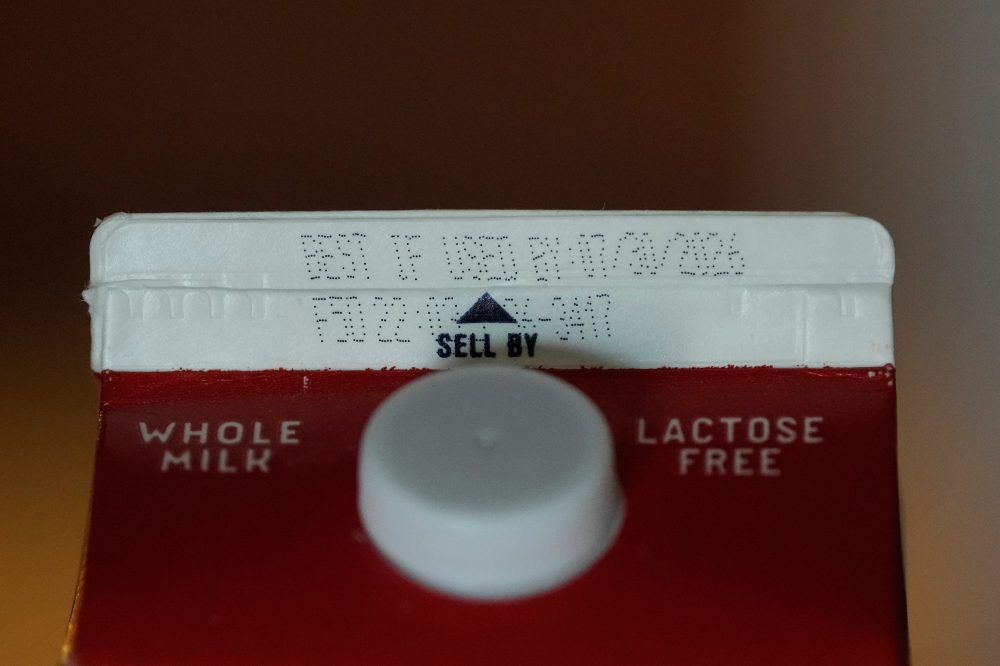

For one California family, a jug of milk sitting past its “sell by” date can spark a household debate. Kimberley Kausen, a chef and cooking teacher in Irvine, California, says her daughter would toss it immediately, while her husband would keep drinking it for a few more days.
Kausen herself takes a more careful approach. “I’ll put some thought into it, and if we’re talking about meat and poultry, I’m very cautious about that and for sure will do the smell test and the touch test,” she said.
That kind of uncertainty is playing out in kitchens across the country — and California is now taking steps to end it. A new state food labeling law that took effect Wednesday bans “sell by” dates from appearing on food packaging sold in the state.
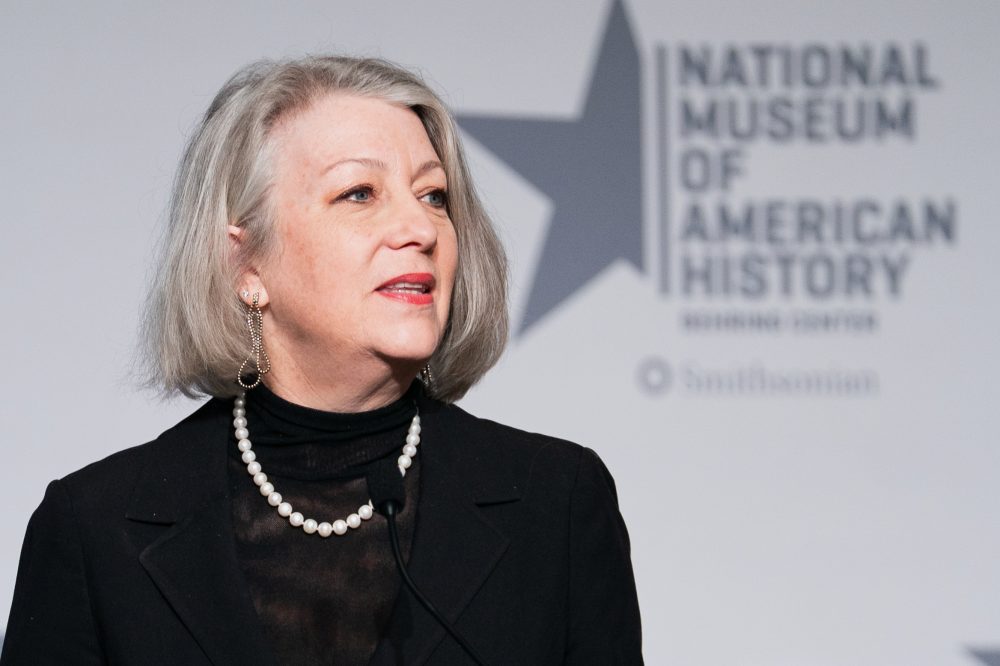
Experts say “sell by” dates are intended to help store employees manage shelf inventory, not to signal whether a product is still safe to eat. Under the new law, food manufacturers selling products in California must now choose from two standardized labels: “Best if Used By,” which indicates peak quality, and “Use By,” which signals a food safety concern. Manufacturers may use one or both labels, according to Democratic Assemblymember Jacqui Irwin, who authored the legislation.
California made history as the first U.S. state to standardize food date labels when the law was approved in 2024. The measure is aimed at cutting food waste and reducing the climate emissions that come with it. New York state lawmakers have since passed a similar bill, which is currently awaiting the governor’s signature there. Comparable legislation has also been introduced in Illinois, Maryland, Massachusetts, New Jersey, and South Carolina, though none of those states have passed it yet.
Nick Lapis, director of advocacy at Californians Against Waste, which co-sponsored the bill, called food date labels the leading driver of household food waste. He noted that food banks in California have also been hurt by the confusion, with donors and recipients alike treating “sell by” dates as expiration notices. “We don’t need to build some kind of huge infrastructure and invest tons of money to solve this. We just need companies to use the same words across brands,” he said.
A 2022 University of Maryland report on food waste found more than 50 different date label formats currently used on packaged foods in stores. That information is largely unregulated and often has nothing to do with whether a product is actually safe to consume.
Kumar Chandran, policy director at ReFED, a nonprofit focused on reducing food waste, explained the problem plainly. “Consumers get confused and they just default to assuming that whatever date is on the package means ‘don’t eat it and throw it away,’” he said.
Chandran added that California and New York’s actions have helped build momentum for a national solution. A bipartisan bill calling for uniform food labels is currently pending in Congress. The U.S. Department of Agriculture recommended a decade ago that food sellers adopt “Best if Used By” labeling, but the only product currently subject to federal date label regulations is infant formula. The Food and Drug Administration estimates that date label confusion contributes to nearly 20% of all food waste in the United States. In California alone, roughly 6 million tons of food that hasn’t actually expired gets thrown out every year.
Nate Rose, a spokesperson for the California Grocers Association, said some retailers had to update their labeling systems to comply with the new law, but that the industry broadly supports the change. He described the outcome as “a win-win where we can reduce food waste and consumers will find these decisions a little bit simpler.” Rose also noted that shoppers will likely still see old-style labels on store shelves for several months while existing inventory is sold through.