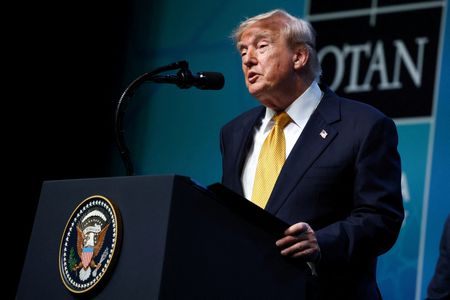
President Donald Trump and Iranian Supreme Leader Mojtaba Khamenei are locked in a war of words, with both sides issuing stark threats while Washington and Tehran tell very different stories about the state of their diplomatic relationship — and remain sharply divided over control of a key waterway.
In a late Friday post on Truth Social, Trump declared that the United States has 1,000 missiles pointed at Iran and that a massive military response would follow if Tehran carries out — or even attempts — any plot to kill him. “1000 Missiles are Locked and Loaded and aimed at the Islamic Republic of Iran,” Trump wrote, warning that thousands more could “immediately follow” if Iran tries to assassinate the sitting U.S. president, adding, “in this case, ME!”
Trump also stated that the U.S. military was “ready, willing, and able” for up to one year — with the possibility of extension — to “completely decimate and destroy all areas of Iran — PRAISE BE TO ALLAH!”
Earlier this week, The Wall Street Journal and other American news outlets reported that Israel had passed along intelligence about an alleged Iranian plan to assassinate the president.
On the Iranian side, Khamenei vowed revenge for those who died in military conflict, including his father, Ali Khamenei. A message issued on his behalf stated: “Tehran is committed to avenging your blood (his father Ali Khamenei) and the blood of all those killed in the two wars. This revenge is the will of our nation and it must be done soon.”
Amid these threats, Trump claimed Iran’s leadership had reached out to restart diplomatic discussions, even though he had previously declared that a Washington-Tehran memorandum of understanding was finished. “The Islamic Republic of Iran has asked us to continue ‘talks.’ We have agreed to do so, but the United States has stated to them, in no uncertain terms, that the Cease Fire is OVER!” Trump wrote Friday.
Iran flatly rejected that account. The Iranian news agency Fars cited a source close to the country’s negotiating team who said talks would not happen “until the American side backs down from its positions.” Iran’s state broadcaster added that Tehran would not return to the table due to what it described as U.S. noncompliance with the Islamabad memorandum of understanding.
The dispute also extends to the Strait of Hormuz, a waterway that typically carries roughly one-fifth of the world’s oil supply. Senior U.S. officials said Friday that Washington is demanding Iran publicly commit to halting attacks on ships in the strait and allow free, unrestricted passage through all shipping lanes. Iran has refused to give up its grip on the waterway.
Iranian Foreign Minister Abbas Araghchi traveled to Oman to meet with his Omani counterpart, Badr al-Busaidi, to discuss how ships could move through the strait under the terms of the memorandum of understanding.
Saudi Crown Prince Mohammed bin Salman also held a conversation with Trump covering the U.S.-Iran talks, security in the waterway, and broader regional stability, according to the Saudi Press Agency.
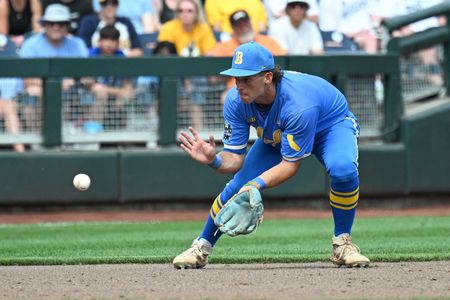
PHILADELPHIA — The Chicago White Sox, already sitting atop the AL Central standings, made what many considered the obvious choice Saturday by selecting UCLA shortstop Roch Cholowsky as the first overall pick in Major League Baseball’s amateur draft.
Standing 6-foot-2 and batting right-handed, Cholowsky was a Golden Spikes Award finalist during his time at UCLA. In his junior season, he put up a 1.088 OPS to go along with 21 home runs and 60 RBIs, earning him Big Ten Player of the Year honors.
White Sox general manager Chris Getz praised the selection, saying: “Roch, his family and his support structure impressed us throughout the entire process, and his experience at UCLA certainly prepared him to take the next step as a professional. An outstanding defensive shortstop, Roch brings an impact bat to any lineup, and he is a leader on the field as well as in the clubhouse. He has more than lived up to very high expectations, and we cannot wait to get him into our organization, get started and see him continue his growth and success.”
The next two picks also went largely as analysts had forecast. Tampa Bay used the second pick to grab Texas high school shortstop Grady Emerson, while Minnesota went third and selected Georgia Tech catcher Vahn Lackey.
At just 18 years old, Emerson — a 6-foot-3, 185-pound left-handed hitter who throws right — is widely viewed as the most complete player available in this year’s draft. A University of Texas commit, Emerson moved to Fort Worth Christian for his senior year, where he played under head coach Rusty Greer, a nine-year MLB veteran who spent his entire career with the Texas Rangers.
Lackey, 21, didn’t draw a single Division I offer until his senior year of high school but has since developed into one of the draft’s premier catching prospects at Georgia Tech. The 6-foot-2, 215-pound Lackey also showed flexibility by playing third base at times.
San Francisco grabbed right-handed pitcher Jackson Flora — known for his love of fried chicken — out of UC Santa Barbara with the fourth pick. Pittsburgh followed by selecting LSU outfielder Derek Curiel fifth. Louisville outfielder Zion Rose went sixth to Kansas City, and Oak Grove High School outfielder Eric Booth Jr. from Mississippi landed with Baltimore at seventh.
Oakland chose Georgia Tech outfielder Drew Burress eighth, Atlanta took Virginia outfielder AJ Gracia ninth, and Colorado rounded out the top ten by picking Kentucky shortstop Tyler Bell.
The draft, held at a Philadelphia convention center just a few miles from Citizens Bank Park — home of Tuesday’s MLB All-Star Game — drew hundreds of fans, including former White Sox and Phillies players Jimmy Rollins and Greg Luzinski. For Chicago, this marks the first time the franchise has held the top draft pick since selecting Harold Baines in 1977. Baines was later inducted into the Hall of Fame in 2019.
The White Sox earned the No. 1 pick after losing 102 games last season and winning the draft lottery. The team has endured three consecutive 100-loss seasons but has since turned things around dramatically. Led by All-Star third baseman Miguel Vargas, Chicago entered Saturday in first place in the AL Central and is viewed as one of the biggest surprises in baseball this year. The organization hopes Cholowsky can one day help the franchise win its first World Series title since 2005.
Cholowsky becomes the first collegiate shortstop selected first overall since Vanderbilt’s Dansby Swanson in 2015 and the first UCLA player to go No. 1 since Gerrit Cole in 2011.
Notably, none of the draft prospects were present at the event in Philadelphia. MLB announced Friday that no amateur players were scheduled to attend — consistent with last year’s approach. Major League Baseball has floated the idea of requiring prospects to attend as part of collective bargaining negotiations, with a proposal that would bring up to 10 players to the draft, each receiving a $50,000 attendance bonus.
In the absence of the players, the loudest cheer of the evening went to the Phillie Phanatic during a mascot introduction segment. Phillies fans directed boos at the Braves’ mascot Blooper and also greeted MLB Commissioner Rob Manfred with jeers — though Manfred managed to win the crowd over somewhat by referencing celebrated names from Phillies history before the draft began. Manfred did stumble at the podium, mispronouncing Cholowsky’s name. For the record, it’s pronounced chil-OW’-skee.
MLB Network’s Siera Santos summed up the evening’s promise for the crowd: “We’re going to see the arrival of tremendous talent today” — even if that talent was watching from somewhere other than Philadelphia.
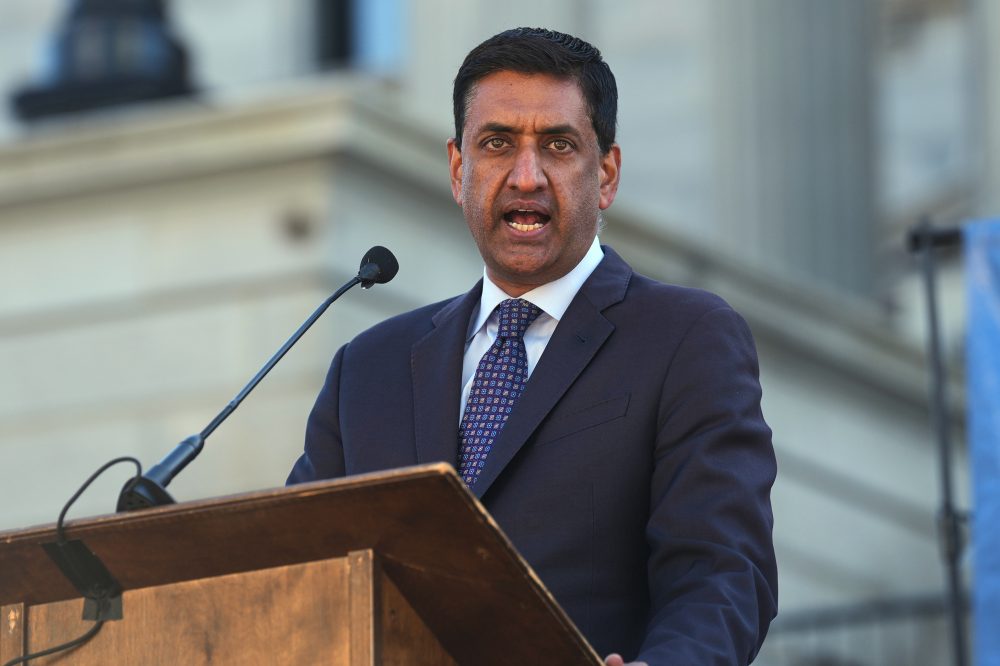
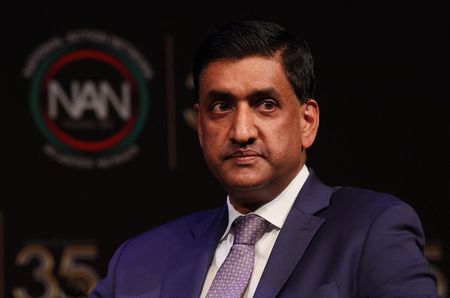
U.S. Representative Ro Khanna, a progressive California Democrat, says he was stopped and held against his will by armed settlers and Israeli military personnel during a visit to the occupied West Bank — and was only freed after his team reached out to the American Embassy in Jerusalem. The Israeli Defense Forces pushed back on that characterization, saying their troops did not detain anyone during the incident.
A spokesperson for Khanna said the confrontation took place on Wednesday, midway through a three-day trip through the West Bank. While the congressman was visiting a Palestinian village that had been abandoned following settler attacks, a group of masked, armed men surrounded his party and refused to let them leave.
The New York Times reported that one of its photographers witnessed the incident firsthand. Khanna’s office identified the location as the town of Khirbet Zanuta.
According to Khanna, when Israeli soldiers showed up, he was troubled to see them behaving in a friendly way toward the men who had stopped his group — and then joining in blocking the exit. It wasn’t until both the U.S. Embassy and Israeli police were contacted that his group was permitted to continue on their way.
“If this can happen to an American member of Congress, imagine what life is like for Palestinians who have no smartphones, no security, and no national platform,” Khanna wrote in a fundraising email sent out shortly after he posted about the incident Saturday. Khanna is said to be exploring a run for president in 2028.
In its official response, the IDF said it had received a report of Israeli civilians blocking foreign nationals and members of the media in Khirbet Zanuta. “Upon receiving the report, IDF troops were dispatched to the scene, quickly dispersed the Israeli civilians, and reopened the blocked road,” the military stated. “The IDF soldiers operating in the area did not take part in blocking the road.”
The episode comes amid growing friction between U.S. Democratic politicians and Israel, as the party’s voters have increasingly turned against the country. This past week, former Chicago Mayor Rahm Emanuel — whose father was born in Jerusalem and served in Israel’s war of independence — delivered a pointed speech in Tel Aviv calling Israel a “territorial pariah.” Emanuel is also considered a potential presidential contender.
A recent poll conducted by The Associated Press-NORC Center for Public Affairs Research found that roughly 58% of Democrats feel the United States is “too supportive” of Israelis.
In a separate incident also on Saturday, the Israeli military announced it had detained four individuals who attacked foreign journalists traveling to Sinjil, another West Bank community. The military said the attackers blocked and damaged the journalists’ vehicle and were carrying clubs and knives.
CNN reported that one of its crews was among the journalists targeted in that attack. The network said its team had traveled to the area to cover the one-year anniversary of the death of a Palestinian-American man who was beaten to death by Israeli settlers.
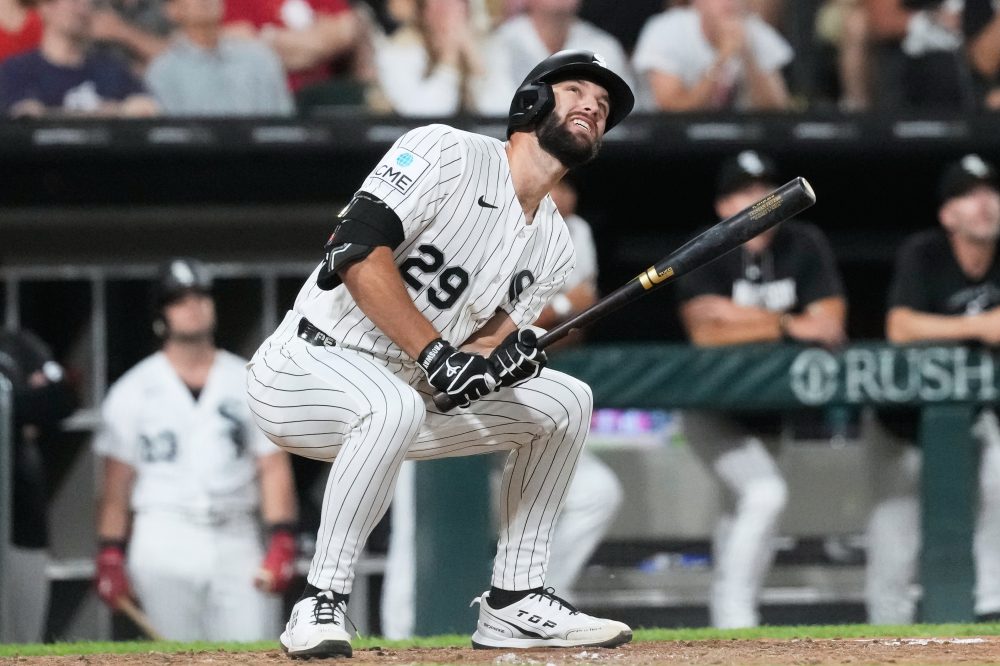
CHICAGO — One day after etching his name into White Sox history books, outfielder Tristan Peters received another major honor — a spot on the American League All-Star team. Peters was selected as a replacement for Athletics slugger Nick Kurtz, who was forced out of the All-Star Game due to a right thumb sprain.
Kurtz had been slated to start at first base for the American League in next week’s Midsummer Classic. He was placed on the 10-day injured list Saturday, with the move backdated to Friday. The 23-year-old sat out as the Athletics fell to the White Sox 14-1 in Chicago. Kurtz is currently hitting .266 on the season with 20 home runs, 66 RBIs, and a league-best 76 walks. Last year, he earned AL Rookie of the Year honors after batting .290 with 36 home runs and 86 RBIs. This marks the second time in his career he has landed on the injured list, following a strained left hip flexor in May 2025.
Peters now joins White Sox teammates Miguel Vargas and Munetaka Murakami on the 2026 All-Star roster. Murakami, a rookie from Japan, was added to the team just Friday — hours before he returned from a six-week absence caused by a right hamstring strain.
Still in his first full major league season, Peters has been nothing short of impressive. The 26-year-old rookie is hitting .303 with six home runs, 35 RBIs, 20 doubles, and three triples. His most recent triple came Friday night in the seventh inning of Chicago’s blowout win over Oakland, completing the cycle and making him the first White Sox player to accomplish the feat since Jose Abreu did it in September 2017.
Peters’ path to Chicago was unconventional. The White Sox acquired his rights from Tampa Bay last December. He had appeared in just four games with the Rays the previous season, going hitless in 12 plate appearances. A former Savannah Banana, Peters has found a home — and a breakout season — in Chicago.
Reflecting on his journey, Peters credited the organization’s support for helping him grow. “The White Sox gave me this opportunity and I went into it just trying to make the most out of it and just be who I am as a player, too,” he said. “I know there was a lot of bunting in the beginning and just trying to figure out who I am at the big league level and you know they give space for that, too. Just an incredibly supportive group and that’s helped me thrive.”
A native of Winkler, Manitoba, Peters became just the second Canadian player in major league history to hit for the cycle. He joins Cleveland right-hander Cade Smith and Miami infielder Otto Lopez — who holds dual Canadian-Dominican citizenship — as Canadian representatives on the 2026 All-Star roster.
Peters admitted that earning an All-Star selection felt like a distant dream at the start of the year, but his perspective shifted as the first half progressed. “I guess toward the end of this first half, I was like ‘OK, maybe there’s a chance,’” he said, “but there’s a lot of really, really talented players in this league.”
WASHINGTON — A federal judge has thrown out what remained of the government’s landmark prosecution against far-right Proud Boys members who were found guilty of seditious conspiracy for their roles in a plot to attack the U.S. Capitol and prevent the transfer of presidential power more than five years ago.
The case’s end on Friday was widely anticipated after Trump used his pardon authority last year to wipe out every prosecution stemming from the January 6, 2021 riot, when a crowd of his supporters stormed the Capitol building. The judge who oversaw the Proud Boys leaders’ trial found no legal grounds to uphold the convictions in the wake of Trump’s sweeping clemency action.
U.S. District Judge Timothy Kelly — who was appointed to the bench by Trump during his first term in office — wrote that there is “little mystery” as to why the second Trump administration chose to abandon this case along with all other January 6-related prosecutions.
“President Trump’s views about the prosecution of those who attacked the U.S. Capitol on January 6 — whether those views are based on fact or fiction — are well known, as is his intention to extend clemency to them,” Judge Kelly wrote in his ruling.
Kelly was careful to note that his order dismissing the case should not be interpreted as support for the Justice Department’s choice to drop the charges. He described the Capitol riot as “a perilous event” and characterized it as an assault on the constitutional requirement that power be transferred peacefully between presidential administrations.
“Moving forward, if this Nation’s experiment in self-government is to last another 250 years, the American people — no matter their partisan preferences — will have to act together to preserve, protect and defend that miracle through our constitutional framework,” Kelly wrote.
Separate juries in Washington, D.C., had convicted leaders of both the Proud Boys and another extremist organization, the antigovernment Oath Keepers, of coordinating violent efforts to keep Trump, a Republican, in power following his loss of the 2020 presidential election to Democrat Joe Biden.
A separate judge has yet to rule on the Justice Department’s request to also dismiss the seditious conspiracy convictions against Oath Keepers members.
Friday’s dismissal covered four of the five Proud Boys members convicted at trial: Ethan Nordean, Joseph Biggs, Zachary Rehl, and Dominic Pezzola. Trump had commuted their prison sentences, but they were not included in the president’s broader mass pardon.
Former Proud Boys national chairman Enrique Tarrio, who was convicted at the same trial, did receive a full pardon from Trump. Kelly had originally sentenced Tarrio to 22 years in prison — the longest sentence handed down in any Capitol riot case.
The Chicago White Sox kicked off the 2026 Major League Baseball Draft on Saturday in Philadelphia by choosing UCLA shortstop Roch Cholowsky as the first overall selection.
Cholowsky, who celebrated his 21st birthday in April, has drawn comparisons to some of the best shortstop prospects in recent memory. Draft analysts consider him the finest college shortstop prospect since Troy Tulowitzki was drafted in 2005, and he becomes the first college shortstop taken with the top pick since Dansby Swanson in 2015.
The UCLA standout was widely expected to land at the top of the board heading into draft day. Texas high school shortstop Grady Emerson and Georgia Tech catcher Vahn Lackey were also considered among the elite available talent. The Tampa Bay Rays held the second pick and the Minnesota Twins the third.
For Chicago, this marks the first time the franchise has held the top pick since 1977, when they selected prep outfielder Harold Baines, who was inducted into the Baseball Hall of Fame in 2019. The White Sox previously picked first overall in 1971 when they chose high school catcher Danny Goodwin, though they were unable to sign him.
Over three seasons and 178 games with the Bruins, Cholowsky posted a .329/.448/.624 slash line and hit 52 home runs. USA Baseball ranked him second among NCAA Division I shortstops in wins above replacement and defensive runs saved this past season, and named him a finalist for the Golden Spikes Award, which honors the nation’s top amateur player.
Cholowsky earned Big Ten Player of the Year honors twice — a feat only three players in history have achieved — and contributed to UCLA capturing a share of the last two conference titles. While his overall production remained strong as a junior, some analysts lowered their evaluations after he failed to stand out at the NCAA tournament, with the top-ranked Bruins falling short of the Men’s College World Series.
Analysts broadly project Cholowsky as at least a dependable major leaguer who can contribute on both offense and defense at a premium position. However, some scouts wonder whether his ceiling is as high as that of Emerson, the 18-year-old from Fort Worth Christian High School. Neither shortstop is projected to have the kind of impact that Kansas City Royals star Bobby Witt has made. Some analysts actually rated Lackey as the top player in the entire draft class, though concerns about his limited baseball experience and the physical demands of catching tempered his standing.
Standing 6-foot-2 and weighing 202 pounds, Cholowsky bats right-handed and reportedly could have accepted a college football scholarship to play quarterback at Notre Dame. He has acknowledged that he personally prefers football, but recognized that pursuing baseball exclusively offered him the best path to professional success.
Had Cholowsky entered the draft straight out of high school three years ago, he was projected as a top-50 pick. Baseball runs in his family — his father, Dan Cholowsky, was himself selected in the first round, 39th overall, by the St. Louis Cardinals in 1991. The elder Cholowsky spent eight professional seasons with four organizations, including 285 games at the Triple-A level, before transitioning into a career as an MLB scout.
Chicago has spent recent years rebuilding but has emerged as a surprise contender in the American League Central. Shortstop Colson Montgomery has grown into one of the better players at the position in a league filled with elite shortstop talent.
The White Sox also boast a loaded farm system with additional shortstop depth, including prospects Caleb Bonemer and Billy Carlson. One advantage of drafting a shortstop is the positional flexibility it provides — if Cholowsky is ready for the big leagues down the road, Montgomery and others could shift to different spots on the field.
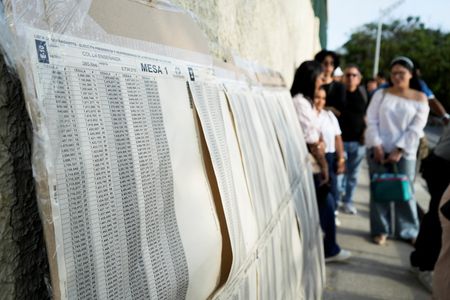
CARACAS — The number of lives lost following two devastating earthquakes that hit Venezuela on June 24 has climbed to 4,333, National Assembly President Jorge Rodriguez announced to reporters on Saturday. He also revealed that housing distribution for survivors will get underway as early as next week.
Among those counted in the death toll, 315 victims have yet to be identified, Rodriguez noted.
The official injury count remains at 16,740. Rescue teams have pulled 6,462 people to safety, while approximately 17,000 individuals have been displaced from their homes.
Rodriguez said that acting President Delcy Rodriguez will assign the first 200 homes to earthquake victims next week, though no additional details were provided about the plan.
Rodriguez also reported that 856 structures sustained damage in the disaster, with 190 of those either fully collapsing or suffering significant structural failure.
Early government estimates indicate that around 25,000 homes will be needed to address the housing crisis. Authorities have already pinpointed roughly 40 parcels of land — totaling approximately 584,000 square meters — in the Osma and Chuspa areas that could be used for new housing developments.
Search and rescue efforts are still ongoing. Rodriguez offered an emotional statement about the continuing operations, saying, “As long as there is life, there is hope. We still have one or two sites where the situation remains uncertain, active sites where we are searching for survivors.”
LONDON — Twenty-one-year-old Czech Republic tennis player Linda Noskova claimed her first Grand Slam championship on Saturday, defeating her compatriot Karolina Muchova 6-2, 5-7, 6-3 in the Wimbledon women’s singles final.
Seeded ninth in the tournament, Noskova currently holds a WTA ranking of 12. The Wimbledon title is her first Grand Slam crown.
ROAD TO THE FINAL
Noskova’s path through the draw included the following results: a first-round win over Ella Seidel (6-4, 6-3), a second-round victory against Camila Osorio (6-3, 4-6, 6-2), a third-round triumph over Sorana Cirstea (6-2, 3-6, 7-6(9)), a fourth-round win against Madison Keys (6-4, 7-6(2)), a quarterfinal victory over Elise Mertens (6-3, 7-5), and a semifinal win against Marta Kostyuk (6-4, 6-4).
EARLY LIFE
Noskova made her first appearance in WTA qualifying competition in Prague in 2020. The following year, she captured the 2021 French Open girls’ singles title and put together an impressive 38-9 win-loss record for the season, which included four ITF Circuit titles — among them a W60 event held in Prerov, Czech Republic.
CAREER HIGHLIGHTS
She launched her professional career on the ITF circuit in 2022, winning six titles that year. On August 1, 2022, she broke into the top 100 of the world rankings following a semifinal run in Prague, making her the youngest player in the rankings at the time by surpassing Coco Gauff.
During a breakout 2023 season, Noskova reached the runner-up position at Adelaide 1 as a qualifier, falling to Aryna Sabalenka, and also finished second in Prague, where she lost to Nao Hibino. She additionally reached the quarterfinals in Lyon and the third round at both Indian Wells and Cincinnati, cracking the top 40 on October 9, 2023.
At the 2024 Australian Open, Noskova reached her first Grand Slam quarterfinal, highlighted by an upset victory over then-world number one Iga Swiatek in the third round before losing to Dayana Yastremska. That same year, she also claimed her first WTA singles title in Monterrey, beating Lulu Sun in the final, and reached the semifinals in both Prague and Brisbane.
In 2025, Noskova advanced to three tour finals — including her first WTA 1000 final in Beijing, where she fell to Amanda Anisimova, along with finals in Prague and Tokyo. She also made her top 20 debut that season and closed the year ranked a career-high No. 13.
Saturday’s Wimbledon final was Noskova’s eighth career WTA singles final. With the win, she becomes the fourth player since 2020 to reach their first Grand Slam singles final at Wimbledon, joining Elena Rybakina, Ons Jabeur, and Amanda Anisimova. She is also the youngest Wimbledon champion since Petra Kvitova won the title in 2011.
Linda Noskova had to dig deep on Saturday, overcoming a serious case of nerves to defeat fellow Czech Karolina Muchova 6-2, 5-7, 6-3 in one of the most dramatic Wimbledon women’s singles finals in recent memory.
The 21-year-old looked unstoppable early on, cruising through the opening set in just 32 minutes and building a 5-2 lead in the second. It was already a historic occasion — the first Grand Slam singles final between two women from the Czech Republic in the professional era.
Then everything started to unravel. Muchova, the 29-year-old veteran, refused to give in, saving three match points when trailing 2-5. Noskova then gifted another match point away with a double fault, and Muchova saved yet another at 4-5, suddenly turning what had been a one-sided affair into a Centre Court thriller.
Noskova dropped five straight games as Muchova forced a deciding third set. The ninth-seeded Noskova, however, found a way to clear her head and storm back, racing out to a 5-2 lead in the final set.
Muchova clawed one game back, but when Noskova stepped up to serve for the championship a second time, she delivered. After earning two more match points — more than an hour after her first opportunity — she fired an unreturnable serve and collapsed to the court, overcome with relief and emotion.
With the victory, Noskova becomes the third Czech player in four years to win the Wimbledon women’s title, following Marketa Vondrousova’s triumph in 2023 and Barbora Krejcikova’s win in 2024.
Gonzaga University’s basketball program has lost one of its key players, as point guard Mario Saint-Supery has departed the team and inked a deal with Spanish EuroLeague club Valencia.
According to the Field of 68, the signing caught Gonzaga off guard. Saint-Supery had been on the practice floor with the Bulldogs in Spokane, Washington, just earlier in the week before the news broke.
The 20-year-old’s contract with Valencia runs through June 30, 2030.
Saint-Supery spent one season with Gonzaga in 2025-26, earning a spot on the West Coast Conference All-Freshman Team. He suited up for all 35 games, starting 17 of them, and put up averages of 8.6 points, 2.8 rebounds, and 3.8 assists while logging 23.1 minutes per game.
He connected on 40.3% of his three-point attempts, going 48-for-119 from beyond the arc, and knocked down 87.8% of his free throws, hitting 65 of 74 attempts. His development throughout the season had positioned him as the expected starter at the point guard spot going forward.
Originally from Malaga, Spain, Saint-Supery is heading back to his home country to play under head coach Xavi Albert at Valencia.
Gonzaga head coach Mark Few had not yet made a public statement regarding the departure, but the loss is considered a significant setback for the program.
The Bulldogs are preparing for a move to the restructured Pac-12 and had already been working with a slim group of returning players — just three — from a squad that went 31-4 before falling to Texas in the second round of the NCAA Tournament this past March. With Saint-Supery now gone, that returning group shrinks to two.
Meta has pulled the plug on a feature tied to its recently released AI image tool after users and industry groups raised serious concerns about how public Instagram photos were being used.
The company acted on Friday, just days after rolling out Muse Image — its first image-generation model built into the Meta AI assistant. Muse Image is the parent company’s debut tool for creating images through artificial intelligence, and it’s available through both Instagram and Facebook’s platform.
In a statement, Meta explained its original intentions while acknowledging the public pushback. “Our intent was to provide a useful creative tool and to give people control over whether their public content could be referenced in this way,” the company said. “We’ve heard the feedback that this feature missed the mark, so it’s no longer available.”
Like other AI tools capable of generating images, Muse Image produces visuals based on prompts entered by users. However, the feature also automatically pulled photos from all public Instagram accounts, making them available as references when the AI created new images — without requiring any action from account holders.
The revelation sparked a wave of posts across social media, with users flagging privacy worries and sharing step-by-step guides on how to opt out of having their Instagram content accessed by the tool.
The entertainment industry was among the quickest to respond. The Screen Actors Guild-American Federation of Television and Radio Artists urged its members to update their Instagram privacy settings to safeguard their personal likeness from being used by the AI tool.
After Meta announced it was shutting down the feature, SAG-AFTRA posted a statement on X expressing its approval of the move. “With the dangers of nonconsensual digital replicas well known to all, a feature that encouraged that behavior is unwise,” the union wrote. “We appreciate its discontinuance. It is the right thing to do.”
WASHINGTON — President Donald Trump is claiming he has left standing military orders to strike Iran at unprecedented levels if Tehran acts on its longstanding threats to kill him. But national security experts say no such automatic trigger mechanism actually exists within the U.S. government.
In reality, if Trump were to be killed, the transfer of presidential power would be governed by the 25th Amendment and the Presidential Succession Act of 1947. That means Vice President JD Vance would instantly become commander in chief and hold sole authority over any military response.
Under that scenario, Vance could choose to carry out exactly what Trump has called for — but he would also have the option to ignore his predecessor’s orders or respond in an entirely different manner.
Author Garrett M. Graff, who wrote “Raven Rock: The Story of the U.S. Government’s Secret Plan to Save Itself — While the Rest of Us Die,” explained the situation plainly: “The U.S. has, for a whole variety of reasons, never utilized a technical ‘dead man’s switch.’”
The United States does maintain detailed contingency plans for keeping the government functioning in the event of a nuclear strike or catastrophic attack on Washington. However, those plans do not allow for automatic retaliatory strikes to be launched upon a president’s death, even if that president had previously ordered the military to be prepared to do so.
Despite this, Trump posted on his social media platform Saturday that Iran had made threats “to assassinate, or attempt to assassinate” him, and he declared that 1,000 “missiles are Locked and Loaded and aimed at the Islamic Republic of Iran, with thousands more to immediately follow, should the Iranian Government act on its threat.”
Hours after Trump’s post, Iran’s supreme leader Mojtaba Khamenei said Iranians would continue seeking revenge for the death of his father, Ayatollah Ali Khamenei, who died during the initial U.S. and Israeli strikes that began the war in late February. Funeral ceremonies for the elder Khamenei were held throughout Iran this week. The son declared that retaliation “is the will of our nation and must certainly be carried out.”
“We pledge to take revenge for the pure blood of you and all the martyrs of these two wars from the criminal and disgraceful killers,” Mojtaba Khamenei said in remarks broadcast on state television. “This revenge is the will of our nation and must certainly be carried out.”
The White House did not respond Saturday to questions about what would happen to Trump’s military directives if he were killed.
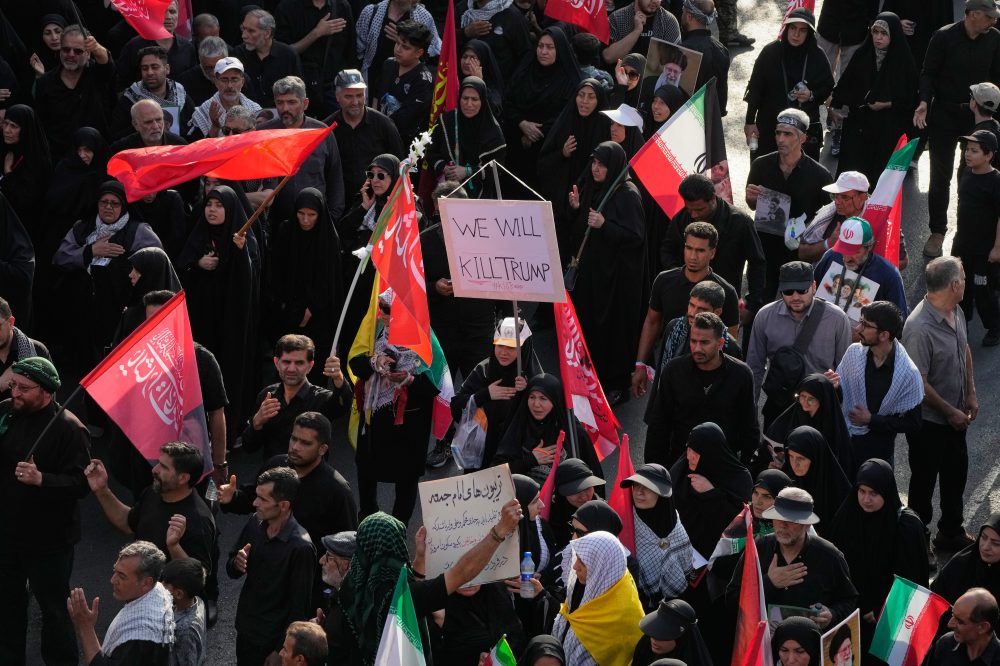
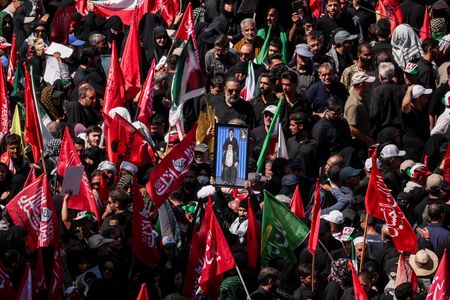
During the recent funeral proceedings in Iran, mourners were seen holding signs and banners calling for the deaths of both Trump and Israeli Prime Minister Benjamin Netanyahu.
The Wall Street Journal reported this week that Israel had alerted U.S. officials to new Iranian plots targeting Trump’s life. The White House declined to comment on the report, but Trump appeared to reference those threats during this week’s NATO summit in Turkey, telling reporters, “They want to take out the U.S. leader — me.”
Sabrina Singh, who served as deputy Pentagon press secretary under the Biden administration, said “Iran wanting to target senior American leaders is something that we know is happening.” She added, “You have to take these as credible threats.”
Trump has already survived two domestic assassination attempts during the 2024 presidential campaign and was present when a gunman stormed the White House Correspondents’ Association dinner he attended in April.
Adding to security concerns, Trump flew part of the return trip from Turkey this week aboard an older Air Force One aircraft rather than the newer Qatari-gifted plane. Images of the newer jet — which was retrofitted at an estimated cost of $400 million — show it lacks some of the missile detection and countermeasure systems found on earlier versions of the aircraft.
The travel decision came as the U.S. and Iran resumed trading military strikes, threatening the fragile deal reached last month to end the conflict. When asked about Iranian threats aboard Air Force One, Trump told reporters, “I’m No. 1 on their list.”
Graff noted that the U.S. spent decades developing plans for how nuclear launch authority would transfer in the event of a surprise attack, including keeping airborne command posts flying around the clock during 30 years of the Cold War, with a general aboard capable of authorizing nuclear strikes if Washington were destroyed.
“What I believe Trump is saying is that he’s left standing orders to attack if he’s killed, e.g., that the Pentagon should proceed with standard launch protocols,” Graff said. “There’s a lot of reason to doubt the legality of such standing orders, since in the event of a president’s death, the nuclear launch authority would immediately pass to the vice president or designated successor — and ultimately it would be up to him or her to determine whether to proceed.”
It should be noted that Trump’s social media post referred only to firing conventional missiles at Iran — something the U.S. has done many times since the conflict began. He did not explicitly mention nuclear weapons.
Graff added that Trump could also simply instruct Vance directly — saying something like “If I’m killed, nuke Iran” — which Graff said “would make more sense and would be absolutely legal.”
While U.S. officials regularly receive classified briefings about threats against the president and senior leaders from Iran and other adversaries, it is far less common for a sitting president to publicly declare that he personally has been targeted.
This is not, however, the first time Washington has issued warnings to Iran over threats against Trump. In 2022, the Biden administration warned Iran against attacking U.S. citizens after the Justice Department revealed that a member of Iran’s Islamic Revolutionary Guard Corps had plotted to assassinate John Bolton, Trump’s first-term national security adviser. Bolton, now a Trump critic, pleaded guilty last month to illegally retaining classified documents in a case pursued by Trump’s Justice Department.
Then-national security adviser Jake Sullivan said in 2022 that “should Iran attack any of our citizens, to include those who continue to serve the United States or those who formerly served, Iran will face severe consequences.”
Two years later, amid Trump’s 2024 presidential campaign against Democrat Kamala Harris, the Biden administration again quietly warned Iran — this time making clear that any attack on Trump would be treated as an act of war.
President Donald Trump took to social media Saturday to announce that he had completed a physical examination at Walter Reed National Military Medical Center, though he did not specify exactly when the checkup took place.
Questions remain about whether Trump was referring to a brand-new physical or the one he underwent in late May, after which he told the public that “everything checked out perfectly.”
In a post on Truth Social, Trump — who celebrated his 80th birthday in June — wrote: “I just finished a perfect physical at Walter Reed, I do it every six months, and I requested another Cognitive Test, the only President to do so, three times, and I aced them all — Got every question right.”
The announcement did not include any additional details about the results of the examination or when it was conducted.
The Milwaukee Brewers announced Saturday that left-handed pitcher Kyle Harrison has been placed on the 15-day injured list, sidelined by tightness in his forearm.
The roster move was made retroactive to Thursday — one day after Harrison threw four innings and absorbed the loss in Milwaukee’s 5-1 defeat at the hands of the St. Louis Cardinals.
Harrison, 24, has been one of the Brewers’ standout performers this season, his first in Milwaukee. He carries an impressive 8-2 record with a 3.01 ERA across 17 starts. The team acquired him from the Boston Red Sox back in February.
To replace Harrison on the active roster, Milwaukee recalled left-hander Robert Gasser, 27, from Triple-A Nashville on Saturday. Gasser holds a 2-3 record with a 4.15 ERA in eight starts with the Brewers this season.
Alexander Zverev steps onto Centre Court Sunday with a chance to make history, but standing between him and the Wimbledon title is world number one Jannik Sinner — an opponent who has beaten the German nine straight times and taken the last 14 sets between them.
Zverev arrives at his first-ever Wimbledon final riding a wave of momentum after claiming the French Open crown at Roland Garros. He is the first German man to reach the Wimbledon final since Boris Becker accomplished the feat in 1995.
His path to the Roland Garros title was aided by circumstances — 2025 champion Carlos Alcaraz was sidelined by a wrist injury, and Sinner suffered a shocking second-round exit in the Paris heat. Zverev capitalized, grinding out a tense victory over Italian Flavio Cobolli in the final to snap the Alcaraz-Sinner stranglehold that had produced the previous nine Grand Slam winners.
Wimbledon’s grass courts have historically not been kind to Zverev, but the confidence he carried out of Paris has translated beautifully to London. His second-week performances — victories over Czech player Jiri Lehecka, hard-serving American Taylor Fritz, and British wildcard Arthur Fery in the semifinals — paint the picture of a man playing without hesitation.
“Once you win a major you know how to do it and you feel like you can do it again. You have this feeling inside of you,” Zverev told reporters when asked about heading into the final.
One of the most striking developments during the tournament has been Zverev’s forehand. Once considered a vulnerability in his game, it has become a genuine weapon. In the semifinal against Fery, he produced 22 forehand winners compared to just eight on his trademark backhand.
“I’ve been trying to play a more aggressive game style. I’ve been trying to take on the game a bit more. For sure my forehand is a big part of it,” Zverev explained.
A victory Sunday would make Zverev just the seventh man in tennis history to win the French Open and Wimbledon in the same calendar year.
However, Sinner’s semifinal performance served as a sharp reminder of just how formidable the Italian is. He swept seven-time Wimbledon champion Novak Djokovic aside in straight sets on Friday, delivering 16 aces and surrendering only six points on his first serve throughout the match.
Sinner had entered the tournament under some scrutiny — questions swirled about his ability to handle London’s third heatwave of the summer, given a perceived sensitivity to heat. He also had a nervous moment in the first round, needing five sets to get past Serbian Miomir Kecmanovic. But from there, he found his rhythm and never looked back.
The last time Sinner lost to Zverev was at the 2023 U.S. Open. Their most recent Grand Slam final meeting — the 2025 Australian Open — ended in a straight-sets defeat for Zverev that the German described as deeply affecting.
Sinner acknowledged that Zverev’s French Open victory has given his opponent a new level of belief heading into Sunday’s match.
“Because he tried for so long, and then when you finally achieve it, it’s amazing and then gives you this confidence boost,” Sinner said. “We see it again here. We saw how aggressive he’s playing, serving very big. He is a tough player to play against.”
The New York Times says federal agents showed up at the homes of several of its journalists Friday night in an effort to force them to appear before a grand jury next week.
The subpoenas are connected to the reporters’ coverage of an Air Force One aircraft that was gifted to Trump by Qatar — a story that has drawn significant national attention.
The Justice Department’s move to compel testimony from journalists is being seen as a major press freedom issue, as reporters are being targeted for their newsgathering work.
The economy and inflation dominated headlines over the past week, with rising costs at the grocery store and gas pump continuing to squeeze American households and businesses alike.
The International Monetary Fund lowered its outlook for the global economy in 2026, pointing to the energy shock triggered by the Iran war as a primary driver. That blow is being partially cushioned by surging investment in artificial intelligence and other emerging technologies.
The IMF now projects world economic growth of just 3% in 2026, a step down from 3.5% last year and below the 3.1% it had predicted back in April. The fund does anticipate a recovery to 3.4% growth the following year.
For the United States — the world’s biggest economy — the IMF expects growth of 2.3% this year, a slight improvement over 2.1% in 2025 and consistent with its April projection. The 21 European nations sharing the euro are expected to grow a modest 0.9% this year, down from 1.4% in 2025, as higher energy prices take a heavy toll on that region.
Sales of previously owned homes slipped in June, but prices continued to climb. Existing home sales dropped 2.4% from May, landing at a seasonally adjusted annual rate of 4.09 million units, the National Association of Realtors reported. That figure came in below the 4.21 million pace that economists had anticipated, according to FactSet. Year-over-year, sales were up 2.8% compared to June 2024.
Even with the slower sales pace, the national median home price rose 1.8% in June compared to a year ago, reaching $440,600 — an all-time high in data stretching back to 1999. Home prices have now increased on an annual basis for 36 straight months, the NAR noted.
Inside the Federal Reserve, there is a clear disagreement about what comes next for inflation. Meeting minutes released this week — the first under new Chair Kevin Warsh — showed that Fed officials are split on whether inflation will stay elevated or cool off once the Iran conflict subsides.
Many of the Fed’s 19 officials indicated they believe the central bank’s key interest rate will end the year at or slightly below its current level of 3.6%. However, others expect it to be higher by year’s end. Forecasts from after the June 17 meeting showed exactly half of the 18 policymakers who submitted projections favored raising rates before the year is out, while the other half preferred holding steady or cutting. Warsh chose not to submit a forecast, citing his belief that doing so can unnecessarily tie policymakers to a fixed path when economic conditions may change.
Global oil demand is on track to fall this year for the first time since 2020, when the COVID-19 pandemic kept billions of people at home, according to the International Energy Agency. The agency projects demand will drop by 1 million barrels per day in 2026, driven by elevated prices and disruptions to oil supplies that have rippled across the world.
Much of that decline has been concentrated in Asia, which relies heavily on oil transported through the Strait of Hormuz — a route that has been largely closed to tanker traffic since the war began. Asian countries have responded by adjusting work schedules and implementing other energy-saving measures.
One notable exception to the global pullback in oil use was the United States, where gasoline consumption actually increased in the second quarter of 2026, even as pump prices sat nearly 50% above their pre-war levels as of May.
On the jobs front, the number of Americans filing for unemployment benefits edged down slightly last week, a sign that layoffs remain historically low. For the week ending July 4, new jobless claims fell by 2,000 to 215,000, the Labor Department reported Thursday — better than the 220,000 analysts surveyed by FactSet had expected.
Weekly unemployment filings are closely watched as a near real-time gauge of the job market’s health. However, last week’s broader June jobs report showed that employers pulled back significantly on hiring, adding just 57,000 jobs — less than half the total from the prior month and an indication that many companies are proceeding cautiously.
U.S. stock markets drifted to a quiet close Friday after a volatile stretch driven by concerns over how the Iran war could disrupt global oil supplies. The S&P 500 rose, putting it on pace for a fourth winning week out of the last five. The Dow Jones Industrial Average posted a slight gain, while the Nasdaq composite finished nearly flat. Oil prices held relatively steady despite a fresh round of unclaimed airstrikes on Iran following the conclusion of U.S. military operations.
A dangerous heat wave is taking shape across the United States, threatening to bring extreme temperatures to a vast portion of the country. Triple-digit highs are expected in the Southwest and Great Plains this weekend, with the heat then pushing eastward beneath a high-pressure dome that weather experts say could lock in oppressive conditions for a week or longer.
Weather forecasters are urging people to drink plenty of water and seek out air-conditioned spaces. Temperatures in many areas are expected to run 15 to 25 degrees Fahrenheit — or 8 to 14 degrees Celsius — above seasonal norms. What makes this event especially dangerous is that the heat won’t let up after sunset, leaving the human body no time to recover overnight.
“The heat doesn’t necessarily stop when it’s dark out,” said Josh Adam, a meteorologist with the National Weather Service in Bismarck, North Dakota. Temperatures there are forecast to exceed 100 F (37 C) through Tuesday — a dramatic departure for a state where summer highs typically hover in the 80s, Adam noted.
The National Weather Service projects that more than 90 local temperature records across the country will be tied or broken by Wednesday. Roughly two-thirds of those records are expected to be overnight heat records. Cities including Fort Lauderdale, Florida; Miami; Tampa, Florida; Galveston, Texas; and Charleston, South Carolina are forecast to see nighttime lows stay above 80 F (27 C).
Chad Merrill, a senior meteorologist with AccuWeather, described the current heat dome as one of the strongest to hit the Dakotas in 25 years. A heat dome forms when high pressure traps hot air in place while blocking the cooling effects of wind and rain.
Record-breaking triple-digit temperatures this weekend are expected across Nevada, Utah, Colorado, Wyoming, Idaho, Montana, North Dakota, and South Dakota.
Andrew Gorelow, a meteorologist with the National Weather Service in Las Vegas, said Nevada — a state no stranger to intense heat — is running even hotter than usual. Las Vegas is forecast to reach 111 F (48 C) on Saturday, Gorelow said.
Experts are stressing that staying hydrated and finding cool environments is essential during this event. They are also cautioning that the extreme heat could elevate wildfire danger in already-dry regions, particularly in the Rockies, where Merrill said dry thunderstorms may develop.
Scientists note that climate change, driven by the burning of coal, oil, and natural gas, is making heat waves more intense, longer-lasting, and more geographically widespread.
This year’s temperatures are also expected to be influenced by El Nino — a natural warming of the equatorial Pacific Ocean that disrupts weather patterns and pushes temperatures higher around the world. The current El Nino formed last month and is considered too new to have significantly contributed to this particular heat wave. However, experts say it has an 81% chance of reaching “very strong” status — the highest category — by fall, according to the U.S. National Oceanic and Atmospheric Administration, which made that announcement Thursday.
Heavy rainfall hammered parts of Missouri on Friday, triggering widespread emergency rescues and evacuations — including a dramatic helicopter airlift of more than 200 children and staff from a summer camp. One person remains unaccounted for as the state continues to deal with the aftermath.
Washed-out roads left Camp Taum Sauk completely cut off in the small southeastern Missouri community of Lesterville, according to Sgt. Eddie Young of the state highway patrol. Army National Guard helicopters — specifically Black Hawks — were deployed to fly the campers and staff to a nearby elementary school, where they were reunited with their families.
The camp expressed its gratitude to emergency crews in a late Friday Instagram post, writing: “We are beyond thankful for your help keeping our camp community safe.”
At a separate location, campers at the Bearcat Getaway campground near the Black River — roughly 85 miles south of St. Louis — had climbed onto a building to escape the rising floodwaters when the structure gave way beneath them. “Between the weight and the constant waters underneath it, it just gave away on them,” Young said.
Three additional people were rescued Friday evening after becoming stranded in trees along the Black River in Reynolds County, Young added.
No major injuries or deaths have been reported, but a woman identified as Faith Gregory has been missing since the house she was in was carried off its foundation by floodwaters in Crawford County, approximately 71 miles southwest of St. Louis. Young confirmed Saturday that Gregory remains the only person still unaccounted for in the county. Family and friends have taken to social media to resume their search and ask others to watch for Gregory and her dogs, who are also believed to have been swept away.
The National Weather Service had issued flash flood warnings for the region as wave after wave of thunderstorms rolled through. Matt Beitscher, a lead meteorologist with the NWS office in St. Louis, noted the area’s vulnerability. “It’s very, very popular place for recreation,” he said. “So there are campgrounds there. There are float trip locations there. A lot of vulnerable populations that would be susceptible to flash flooding.”
Gov. Mike Kehoe declared a state of emergency and activated one of the state’s search and rescue teams. He reported late Friday that hundreds of people had been pulled to safety from floodwaters, trees, rooftops, and stranded vehicles.
Kehoe also warned that the Black River continues to rise and is expected to crest at more than 28 feet near Annapolis in southeastern Missouri — a level that would set a new record for the waterway. Several major roads remain impassable due to flood damage.
“As recovery efforts continue and additional rain is expected, I urge everyone in flood-prone and low-lying areas to stay weather-aware, have multiple ways of receiving alerts, and be ready to take protective action,” Kehoe said in a statement.
In Reynolds County, two rescue boats capsized during the emergency response, though all personnel involved were safely recovered by other responders, according to the sheriff’s office.
The threat is not limited to Missouri. The National Weather Service warned that slow-moving storms are shifting southward and could bring damaging winds, heavy rain, and scattered flash flooding across a broad region stretching from the Ozark Mountains through much of the Ohio and Tennessee river valleys — with some areas facing impacts into Sunday.
Missouri’s Emergency Management Agency cautioned that even as the storms exit the state, additional thunderstorms could still trigger more flash flooding, particularly in areas that have already received between 6 and 12 inches of rain.
The Athletics announced Saturday that first baseman Nick Kurtz has been placed on the 10-day injured list after being diagnosed with a right thumb capsule sprain.
The 23-year-old had already missed Friday’s 14-1 defeat to the Chicago White Sox and will now also be absent from Tuesday’s All-Star Game, set to take place in Philadelphia.
Kurtz had earned the starting spot for the American League at first base after Vladimir Guerrero Jr. of the Toronto Blue Jays withdrew due to a back injury.
The thumb issue appears to have originated during Wednesday’s 6-1 loss in Detroit, when Kurtz left the game after just one and a half innings. The team initially attributed his early exit to illness, but he was also seen appearing to injure his hand while attempting to field a throw in the bottom of the first inning. He returned as the designated hitter the following day, going hitless in four at-bats with two strikeouts during Thursday’s 4-1 loss to the Tigers.
Through 92 games this season, Kurtz is hitting .266 with 20 home runs and 66 RBIs. Last year, he claimed the 2025 AL Rookie of the Year award after posting a .290 batting average, 36 home runs, and 86 RBIs across just 117 games.
To fill the roster spot, the Athletics recalled catcher Brian Serven from Triple-A Las Vegas on Saturday. The 31-year-old appeared in one major league game this season — a 9-8 loss to the Miami Marlins on Sunday — going 1-for-4. With Las Vegas, Serven has put together a strong year, batting .308 with seven home runs and 41 RBIs in 55 games.
The New York Times announced Saturday that the U.S. Department of Justice has issued subpoenas to several of its journalists, compelling them to testify before a federal grand jury. The action follows the newspaper’s reporting on security concerns related to President Donald Trump’s new Air Force One aircraft, which was donated by Qatar.
According to the Times, the subpoenas were handed down on Friday and require the journalists to appear before the grand jury on Wednesday to testify, in the paper’s words, “in regard to an alleged violation of federal criminal law.”
The subpoenas were issued by Jay Clayton, the U.S. Attorney in Manhattan. In some cases, federal agents personally delivered the legal documents to reporters at their homes, the newspaper reported.
The Times characterized the government’s actions as “an extraordinary escalation in President Trump’s efforts to threaten and intimidate independent news organizations.”
When Reuters reached out for comment, a Department of Justice spokesperson neither confirmed nor denied that the subpoenas had been issued. The spokesperson stated that the administration’s concern was not with reporters themselves but with individuals who may have leaked classified information. The White House directed all inquiries to the Justice Department.
Earlier in the week, on Wednesday, Trump announced he would fly aboard the older Air Force One aircraft “for old time’s sake” for a leg of his trip from Ankara to a Royal Air Force base in Mildenhall, Britain. The newly acquired Qatari-gifted plane made the same stop so that U.S. military personnel stationed there could walk through and see the aircraft.
Video footage from late Wednesday showed President Trump boarding the new Qatar-gifted Air Force One at the British base as it prepared to return to the United States.
DUBAI, United Arab Emirates — Leaders from the United States and Iran exchanged sharp threats on Saturday as a shaky interim ceasefire continued to fall apart and international mediators worked desperately to keep diplomatic channels open.
Overnight, President Donald Trump took to social media to threaten additional missile strikes against Iran, following the funeral of Supreme Leader Ayatollah Ali Khamenei, where crowds openly called for Trump’s death. Senior American officials also demanded that Iran publicly declare the Strait of Hormuz open and guarantee the safety of ships passing through it.
Iran’s new Supreme Leader, Mojtaba Khamenei, responded by pledging that Iranians would press forward with avenging his father’s death. He declared that such revenge “is the will of our nation and must certainly be carried out,” in remarks broadcast on Iranian state television. He had not appeared publicly since the conflict erupted on Feb. 28 — the day strikes killed his father.
Iran has maintained that it controls the strait and has the right to collect fees from vessels traveling through it, a position it adopted after the war began.
The war of words came after several days of American airstrikes on Iran, which were triggered by Iran’s attacks on three ships in the strait, and subsequent Iranian strikes targeting Arab nations throughout the region.
Trump declared the ceasefire finished but indicated the U.S. would keep negotiating. Iranian Foreign Minister Abbas Araghchi traveled to Oman on Saturday — situated on the far side of the strait — for additional discussions, one day after Qatari mediators had met with Iranian officials in Tehran.
Trump says threats against him prompted his response
Trump wrote on his website that a thousand “missiles are Locked and Loaded and aimed at the Islamic Republic of Iran, with thousands more to immediately follow, should the Iranian Government act on its threat.”
He stated he was reacting to threats “to assassinate, or attempt to assassinate” him. During Khamenei’s funeral, mourners displayed posters and banners demanding the deaths of both Trump and Israeli Prime Minister Benjamin Netanyahu. Khamenei, who was 86 years old, was buried this week.
Trump also wrote that the U.S. military would “completely decimate and destroy all areas of Iran — PRAISE BE TO ALLAH!” Trump has repeatedly used the Arabic name for God in his statements and threatened to obliterate Iranian civilization. The Council on American-Islamic Relations, an advocacy organization, has spoken out against what it called Trump’s “deranged mocking of Islam.”
U.S. blames hard-liners for undermining the ceasefire
American officials, who spoke without attribution given the sensitivity of the situation, said the renewed strikes this week followed what they described as a rogue group of Iranian hard-liners attempting to derail the ceasefire agreement. Iran, however, has insisted that its government is united behind the new supreme leader.
After the U.S. completed its most recent round of strikes on Thursday, additional attacks reportedly struck Iran, raising questions about who else might be hitting the country. Israel did not claim responsibility, pointing to the possibility that Gulf Arab states carried out the strikes, possibly to discourage Iran from attacking them again. Iran had retaliated against U.S. strikes on Thursday by launching attacks on Bahrain, Jordan, Kuwait, and Qatar.
The two-day wave of strikes inside Iran killed at least 17 people and left 115 others wounded, according to Iranian Health Ministry spokesperson Hossein Kermanpour.
Any nuclear deal would require Iran to hand over enriched uranium
U.S. officials told reporters that Washington would not pursue a nuclear agreement with Iran unless Tehran first halted its attacks on ships in the strait. They also said any nuclear deal would require Iran to surrender its stockpile of highly enriched uranium — something Iran has consistently refused to do.
If no agreement is reached, the U.S. said it has military options to ensure the material stays buried underground permanently, though officials declined to provide specifics.
The uranium, enriched to levels close to weapons-grade, is believed to be stored at nuclear facilities that the U.S. bombed in 2025. Iran has long maintained that its nuclear program is entirely peaceful. The International Atomic Energy Agency, however, has noted that Iran is the only country in the world enriching uranium to such high levels without an active weapons program.
Train lovers across the country are turning out in huge numbers to catch a glimpse of a true piece of American railroad history rolling through their cities.
Union Pacific’s Big Boy No. 4014 — recognized as the world’s largest operating steam engine locomotive — is on a rare cross-country tour, thrilling crowds at every stop along the route.
The massive locomotive, which dates back to the 1940s, rolled into Philadelphia on July 5, 2026, where attendees gathered to take photographs and get an up-close look at the historic machine. The stop was one of many planned across multiple cities and states throughout the United States.
The tour is tied to the celebration of America’s 250th anniversary, giving the public a unique opportunity to see the legendary steam-powered giant in action — something that rarely happens given the locomotive’s age and size.
PROVO, Utah — Over the course of five days, prosecutors laid out what they described as compelling evidence against the man charged with killing conservative activist and Turning Point USA founder Charlie Kirk, while defense attorneys challenged DNA findings and questioned the credibility of other witnesses.
However, it will still be weeks before a Provo judge rules on whether Tyler Robinson must face trial on an aggravated murder charge for the September 10 killing of Kirk at Utah Valley University. Both sides will deliver closing arguments on September 1 after filing legal briefs with State District Judge Tony Graf.
Robinson has not entered a plea at this point, and his legal team is working to remove the death penalty as a possible punishment. Robinson surrendered to authorities one day after Kirk was shot. Kirk had been a close ally of President Donald Trump and was credited with helping energize young voters to support him during the 2024 election.
Here is a breakdown of what emerged during the preliminary hearing.
Kirk, who was 31 years old, was fatally shot while addressing a crowd of thousands on September 10. Prosecutors presented multiple videos they say show Robinson on the university campus that day.
Former State Bureau of Investigation Agent David Hull walked the court through the footage, including one clip showing a man he identified as Robinson purchasing food at a Chick-fil-A and making contact with members of Kirk’s organization.
Hull testified that Robinson returned to campus in different clothing several hours later and fired the fatal shot from a rooftop. Prosecutors showed video of a man climbing onto a campus building, crouching down, and moving toward the edge. After the shot was fired, the man ran back across the roof, dropped to the ground, and fled on foot.
On Thursday, prosecutors played an audio recording of Robinson’s former roommate and romantic partner, Lance Twiggs. In the recording, Twiggs says Robinson told him the day after Kirk’s death that “he wishes he hadn’t done it.”
Prosecutors also presented messages from a Discord chat they say involved Robinson and his friends. In the messages, a man identified by prosecutors as Robinson wrote: “Hey guys I have bad news for you all. it was me at UVU yesterday. Im sorry for all of this. Im surrendering through a sheriff friend in a few moments. Thanks for all the good times.”
In addition, prosecutors said Robinson left a handwritten note for Twiggs stating, “I had the opportunity to take out Charlie Kirk and I’m going to take it.”
Defense attorneys tried and failed to prevent the public release of Twiggs’ statements and the chat room messages, arguing that prosecutors would frame the material as a confession and compromise Robinson’s right to a fair trial.
Investigators recovered what they believe to be the murder weapon — a bolt-action rifle with one spent round — wrapped in a towel in a wooded area near the campus.
State Bureau of Investigation analyst Jennifer Faumuina testified that DNA found on the towel matched two individuals: Robinson’s roommate, and someone very likely to be Robinson.
FBI DNA analyst Amanda Bakker explained the testing process she used, noting that she ran the tests again after Twiggs provided a DNA sample. Because Robinson and Twiggs lived together, Twiggs’ DNA was expected to appear on household items like the towel, Bakker said.
Robinson was identified as a “possible contributor” of DNA found on both the towel and a screwdriver discovered on the rooftop where the shot originated. Bakker noted that U.S. Department of Justice guidelines prohibit analysts from using phrases like “absolute identification” or “reasonable degree of scientific certainty.”
Defense attorney Michael Burt challenged Bakker’s conclusions, pressing her and other forensic specialists about the limits of DNA testing, including scenarios where DNA evidence might be absent or misleading. “She can’t match Mr. Robinson to the questioned samples,” Burt said.
The DNA debate is expected to resurface if the case proceeds to trial. Forensics expert Lawrence Quarino, who has no involvement in the case, said law enforcement agencies rely on “extremely reliable” methods to calculate the probability that a person’s DNA matches samples collected from a crime scene.
Kirk’s widow, Erika Kirk, along with his parents, Kathryn and Robert Kirk, attended every day of the hearing, though they occasionally stepped out before graphic material was shown.
A particularly emotional moment came on Friday when the court played an enhanced, zoomed-in version of campus surveillance footage. Erika Kirk watched closely as the figure believed to be Robinson moved across the rooftop. When the person dropped to a crawl near the edge, she turned and embraced her mother-in-law, who was in tears. The two held each other with their faces buried in one another’s arms until the video was nearly finished, while Robert Kirk rubbed Kathryn’s back.
Robinson’s parents were also present throughout the hearing, seated a couple of rows from the Kirk family. Robinson himself remained quiet and showed little emotion during the proceedings.
Donald Trump Jr. attended the first several days of the hearing, and conservative activist Jack Posobiec was also present in the courtroom.
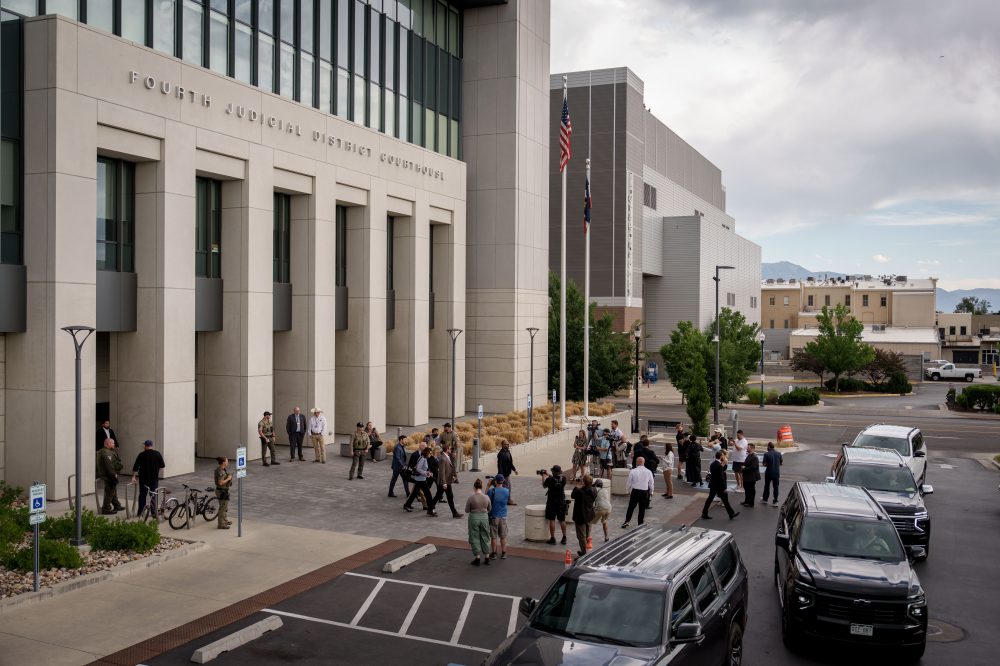
Only 14 seats were available to the public on a first-come, first-served basis. The limited availability led some people to camp outside the courthouse, with folding chairs, sleeping pads, and blankets visible at the entrance each day.
Nguyen Weeks traveled from Northern California to attend but was unable to get a seat on the first two days. By Wednesday, she arrived at 2 a.m. to secure the first spot in line. Weeks said she came to witness “how justice happens.”
Tiani Shoemaker drove roughly an hour from Salt Lake City on Friday to show support for Kathryn Kirk. She was able to pass along a hat bearing the words “love like a mother” and a note of condolences to a member of the Kirk family’s security staff. She also said she wanted to witness a moment in history.
“This really is like the whole world is focused on little Provo, Utah, right now,” Shoemaker said.
JOHANNESBURG (AP) — South Africa has formally asked the United States to exclude it from proposed tariffs connected to an American investigation into whether dozens of countries are doing enough to prevent imports of goods made with forced labor.
A South African trade delegation, led by the Department of Trade, Industry and Competition, appeared before the Office of the U.S. Trade Representative in Washington this week. The hearing was part of a Section 301 investigation looking at whether at least 60 countries are adequately enforcing bans on goods produced through forced labor.
The delegation made the case that South Africa has ratified major International Labor Organization conventions that prohibit forced labor and has laws on the books allowing authorities to block such imports. The delegation also pointed out that under South African law, goods made using prison labor are already banned.
South Africa urged the U.S. not to move forward with a proposed 12.5% tariff on South African exports. It also sought specific exemptions for several key export products, including platinum group metals, vehicles, citrus, seafood, wine, and nuts, saying there was no evidence those goods were tied to forced labor.
Trade relations between Washington and Pretoria have grown increasingly tense in recent years, with disagreements spanning tariffs, South Africa’s domestic policies, and differing stances on international conflicts, including the war in Gaza.
South Africa has historically enjoyed duty-free access to U.S. markets through the African Growth and Opportunity Act, a trade program that has helped drive billions of dollars in exports from sub-Saharan Africa. That program is set to expire unless the U.S. Congress acts to renew it.
South Africa’s Trade Minister Parks Tau said the United States remains a vital trading partner and that his government plans to continue engaging with Washington on this investigation as well as on existing U.S. tariffs affecting steel, aluminum, and automobiles.
Following the hearing, the U.S. trade office opened a window for additional written submissions due by Thursday, after which officials were expected to make a decision on the matter.
KYIV, Ukraine — U.S. President Donald Trump’s announcement that Ukraine could receive a license to manufacture Patriot air-defense systems has been hailed as a potential turning point for Kyiv, but both experts and Ukrainian officials caution that transforming the pledge into actual weapons will likely require years of work.
Trump made the announcement Wednesday while standing alongside Ukrainian President Volodymyr Zelenskyy at a NATO summit held in Ankara, Turkey. He declared that the United States would permit Ukraine to manufacture the American-designed systems that Kyiv has desperately wanted to protect its cities and infrastructure from ongoing Russian missile and drone attacks.
“We’ll give them the right to make Patriots. We’ll show them how to do it,” Trump stated. “I think they can produce them pretty quickly.”
However, the announcement left a critical question unanswered: exactly what would Ukraine actually be permitted to produce?
“America has recognized Ukraine as a country that is ready to do this,” Zelenskyy told reporters on Thursday, saying that Ukrainian and U.S. diplomats and defense officials must now work “without pauses” to finalize the licensing arrangements.
Patriot interceptor missiles — used to shoot down incoming missiles, drones, and aircraft — are manufactured by U.S. defense contractors Lockheed Martin and Raytheon, which operates as part of RTX.
A production license would not automatically give Ukraine the ability to build complete Patriot battery systems from the ground up. A full battery includes launchers, radar systems, command posts, and missiles. Instead, the license might cover more limited aspects, such as assembling interceptor missiles from imported component kits or producing select individual components.
Serhii Beskrestnov, an adviser to Ukraine’s defense minister, explained that a U.S. production license would typically come with technical documentation, specialist training, supplier contacts, and foreign consultants to help get manufacturing off the ground.
Other analysts believe the initial steps would fall well short of full domestic production capability.
Anatolii Khrapchynskyi, development director of the Fly Group Ukraine defense company, said Trump’s language was vague because he spoke broadly about producing “Patriots” without clarifying whether he meant missiles, launchers, radar systems, command centers, or individual components.
Missile production alone involves an enormous supply chain, Khrapchynskyi noted, with hundreds of companies responsible for parts including control surfaces, engines, guidance systems, and communications equipment.
The Trump administration has not released specific details about the proposed Ukraine license, though an administration official — speaking anonymously because they were not authorized to comment publicly — said the U.S. is significantly speeding up and expanding Patriot production to meet rising demand and is forming industrial partnerships with allies and partners around the world.
Any additional Patriot systems would enter a conflict that has already demonstrated how rapidly weapons production can scale up when a country receives designs, technical support, and access to parts. Ukraine has emerged as a significant producer of low-cost, expendable drone systems. Russia has similarly expanded domestic production of Iranian-designed Shahed-type attack drones — called Gerans in Russia — at a factory in Tatarstan.
But experts note that Patriot interceptors are far more technologically complex, requiring precision guidance systems, advanced radar technology, solid-fuel rocket motors, military-grade electronics, and rigorous certification standards.
Yehor Chernev, deputy chairman of Ukraine’s parliamentary committee on national security, defense and intelligence, said the legal and administrative groundwork could be laid within months, but that actual production would take considerably longer.
Even if Ukraine received complete component kits imported from abroad, Chernev said, it would likely need a minimum of 18 to 24 months to launch its first pilot production line — followed by additional time before the first finished weapons were ready.
The PAC-3 missile, designed specifically to intercept and destroy ballistic missiles, is among the most technically advanced components in the Patriot family. Chernev said producing a PAC-3 MSE missile in the United States takes roughly 24 months, and manufacturing its solid-fuel rocket motor requires approximately 30 months.
He also noted that some technology — particularly the missile’s active radar seeker — is so sensitive that Washington would likely be unwilling to share full manufacturing documentation. That could mean Ukraine would need to import some of the most complex components and concentrate initially on assembly, integration, or less sensitive portions of the supply chain.
Dr. Thomas Withington, an analyst specializing in electronic warfare, radar, and military communications at the Royal United Services Institute, urged realistic expectations. Ukraine’s existing defense industry could contribute, he said, but the country would still need time to establish facilities, train a workforce, and secure reliable supply chains.
“This is not going to be a fix for the air-defense threats Ukraine is going to face tomorrow,” Withington said.
The United States has previously allowed Patriot-related production in other countries, and those examples show that licensed manufacturing is achievable — but slow.
Japan has been producing Patriot missiles under license for decades. Mitsubishi Heavy Industries has assembled PAC-3 missiles under a licensing agreement with Lockheed Martin, and Japan later relaxed its postwar arms export restrictions to allow the sale of U.S.-designed Patriot missiles back to the United States — a move that could indirectly help replenish stocks used to support Ukraine.
Germany offers a more recent case. Raytheon and MBDA Deutschland announced in 2022 a plan to produce Patriot GEM-T missiles within Germany. A major NATO procurement contract followed in 2024 for up to 1,000 missiles, and a new production facility in Schrobenhausen is expected to help supply Ukraine and replenish European stockpiles.
But Ukraine would face a significant challenge that neither Japan nor Germany had to contend with: Russian airstrikes.
Khrapchynskyi warned that any facility contributing to Ukraine’s air-defense capability would immediately become a high-priority target for Moscow. Production sites would need to be placed in protected locations — potentially underground or inside reinforced shelters.
That reality makes the proposed license more of a long-term strategic investment than a near-term battlefield solution. If fully implemented, it could help Ukraine become a future producer of air-defense weapons and lessen its dependence on allies whose own stockpiles are already under pressure.
“It would not solve the current missile shortage in 2026,” Khrapchynskyi said, “but it would lay the foundation for Ukraine to become one of Europe’s leading producers of air-defense systems in the future.”
Saturday’s third round of the Scottish Open was brought to a halt by thick fog, with play suspended for close to two and a half hours before conditions improved enough to continue.
Seventeen players were already out on the course when the fog thickened to the point where play could no longer safely continue. Officials called the suspension at 10:45 a.m. local time — 5:45 a.m. ET — before eventually allowing action to resume at 1:10 p.m. local time at The Renaissance Club in North Berwick, Scotland.
Among the players still waiting to take the course is Northern Ireland’s Rory McIlroy, one of three golfers sharing the lead at 9-under par. McIlroy is set to tee off at 6:04 p.m. local time (1:04 p.m. ET), playing alongside England’s Matt Fitzpatrick, who sits at 8-under.
The other two co-leaders — England’s Jordan Smith and South Korea’s Tom Kim — are scheduled to begin their third rounds at 6:15 p.m. local time.
Players and officials will have some daylight to work with, as sunset in North Berwick is not expected until 9:52 p.m. local time.
South Africa’s sports ministry announced Saturday that international midfielder Jayden Adams, who represented his country at the 2026 World Cup, has died at the age of 25. No cause of death was disclosed.
Adams appeared in each of South Africa’s three Group A contests at the tournament. He started in the matches against Mexico and the Czech Republic, and entered as a substitute during the team’s 1-0 victory over South Korea — the result that secured South Africa’s historic first-ever berth in the knockout stage. The team was ultimately eliminated by Canada in that round.
The tournament carried personal heartbreak for Adams as well. His grandmother passed away the day before South Africa faced the Czech Republic, and he was substituted out at halftime during that game.
At the club level, Adams played for Pretoria-based Mamelodi Sundowns, where he helped the team claim the African Champions League title during the 2025/26 season. He had joined Sundowns in January 2025 after coming through the youth system at Stellenbosch FC.
On the international stage, Adams earned his first cap against Mozambique in 2022. He went on to collect 13 appearances for the national side, scoring two goals — both coming in qualifying matches for the 2026 World Cup.
The South African Football Players’ Union released a statement mourning his passing. “South African football has lost a gifted player, a proud servant of the game and a young life that still had so much to offer,” the organization said.
South Africa’s minister of sport Gayton McKenzie also shared his grief. “Our nation mourns alongside his family, his teammates and the millions of supporters who watched him grow from a promising academy prospect into a full Bafana Bafana international,” McKenzie said.
FIFA president Gianni Infantino extended his sympathies through Instagram, writing that his “thoughts and condolences, as well as those of everyone at FIFA and the global football community, are with his family, friends and teammates.”
Germany’s top automakers are feeling the pain in China, where sales have fallen sharply as consumer confidence drops and homegrown competitors gain ground in the world’s largest car market.
Volkswagen, Mercedes-Benz, BMW, and Porsche all reported sales declines of between 30% and 41% in China during the April-through-June quarter, based on figures each company released over the past week. For the entire first half of this year, all four brands saw year-over-year sales fall by more than 20% in China — losses that have weighed heavily on their overall profits and, in some cases, wiped out gains made in other parts of the world.
Independent auto analyst Lei Xing described the latest quarterly figures as among the steepest declines these German brands have experienced in China.
Volkswagen Group, for instance, delivered 424,300 vehicles in China during the quarter — a drop of 36.6% — which pulled its global sales down 8.6%, even as its numbers improved in Europe and the Americas. The automaker, headquartered in Wolfsburg, Germany, has long counted heavily on the Chinese market and announced it will now cut its vehicle model lineup by as much as half in response to the sales slump.
A prolonged downturn in China’s real estate sector, combined with a broader economic slowdown, has dampened consumer spending and made buyers more cautious about major purchases like vehicles. On top of that, an intense and ongoing price war among domestic Chinese automakers has made affordable local brands far more attractive to Chinese drivers.
Porsche, which is part of the Volkswagen Group, described China’s current market conditions as “challenging,” while Mercedes-Benz pointed to “a significantly weaker overall market and macroeconomic environment” in China.
According to the China Association of Automobile Manufacturers, passenger car sales within China fell 24% in the first half of this year, totaling nearly 8.3 million vehicles. The consulting firm AlixPartners projects that overall light vehicle sales in China — a category that includes passenger cars — will likely slide about 10% for the full year.
Stephen Dyer, who leads the automotive practice for Asia-Pacific at AlixPartners, said at a news briefing last month that as Chinese brands become increasingly popular with local buyers, “foreign automakers are going to have to fight for every share of (the) market.”
Chris Liu, an analyst with the research and advisory group Omdia, noted that German automakers remain far more competitive in traditional gasoline-powered vehicles than in electric vehicles — a significant disadvantage at a time when EV sales in China are outpacing conventional fuel-powered cars.
“The German automakers are bearing most of the brunt,” said Xing, the independent analyst.
Dyer also pointed out that Chinese automakers have a built-in advantage because they refresh their vehicle lineups far more frequently than their foreign competitors, keeping buyers engaged with newer options.
The troubles in China don’t stop at its borders. These same German brands now face growing competition from Chinese automakers in Europe and other international markets, as leading Chinese brands like BYD expand their global reach.
A tourist speedboat capsized off the coast of southern Vietnam on Saturday, claiming the lives of 15 Indian visitors, according to state media reports out of Hanoi.
The vessel was carrying 32 Indian tourists along with four crew members when it overturned approximately 400 meters — about 1,310 feet — from Hon May Rut Ngoai Island, located near Phu Quoc, Vietnam’s largest island, authorities said.
Witnesses told VN Express that boats in the area immediately rushed to help, pulling passengers from the water before border guards, naval personnel, coast guard units, and other rescue agencies arrived on scene. VN Express reported that the rescue operation was especially challenging because a number of those aboard were trapped inside the capsized vessel.
In total, 21 people were pulled to safety, and the bodies of all 15 victims were recovered. Those who sustained injuries were transported to nearby hospitals for treatment.
Video footage broadcast on Vietnamese television showed rough waters and powerful winds at the scene, with rescue crews tossing life buoys to people struggling in the sea. Jet skis were used to bring survivors back to shore, where bystanders on the beach administered first aid.
Vietnamese Prime Minister Le Minh Hung called for a full investigation into what caused the accident and directed officials to hold any responsible parties accountable. He also instructed authorities to conduct a safety review of waterway and maritime operations in the affected area and in comparable locations throughout the country.
Indian Prime Minister Narendra Modi confirmed that the tourists were employees of a private mobile phone company who had been attending an annual company event. He posted on social media that staff from the Indian Embassy had been dispatched to the scene.
Phu Quoc, situated in the Gulf of Thailand, ranks among Vietnam’s most visited beach destinations. Hon May Rut island lies roughly 10 kilometers — about 6 miles — south of Phu Quoc. Both locations are celebrated for their white-sand beaches and crystal-clear waters, drawing millions of visitors from Vietnam and abroad each year.
The exact cause of the accident had not been determined as of Saturday, and an investigation remains ongoing.
A U.S. citizen working for a humanitarian organization in Congo has tested positive for the Ebola virus, the U.S. Centers for Disease Control and Prevention announced Friday, as the Central African nation continues to battle a rapidly growing outbreak.
The CDC said it is coordinating with the infected person’s employer, U.S. government agencies, public health authorities, and Congolese partners to stop the virus from spreading further and to track down anyone who may have had close contact with the individual. No additional details about the patient were released.
Earlier this week, the Africa Centres for Disease Control and Prevention reported that this outbreak is the fastest-growing Ebola outbreak ever documented on the continent. So far, Congo has recorded 1,830 confirmed cases, including 648 deaths. The disease has also spread to neighboring Uganda.
This is not the first American to be affected during this outbreak. In the outbreak’s opening week, an American doctor working in Congo also tested positive and was flown to Germany for medical care.
Trump administration officials had initially announced plans to send Americans exposed to Ebola overseas to a new facility in Kenya, rather than bringing them back to the United States. However, those plans have since been put on hold following a ruling by a Kenyan court.
Congolese authorities officially declared the new Ebola outbreak on May 15, after the World Health Organization determined the disease had been spreading for weeks before it was formally detected.
The current outbreak is being driven by the rare Bundibugyo strain of the virus, for which there is currently no approved vaccine or treatment available.
Efforts to bring the outbreak under control have faced serious obstacles, including a lack of adequate funding, attacks on health care facilities, and ongoing armed conflict in eastern Congo, where the outbreak is centered.
Last week, researchers launched highly anticipated clinical trials aimed at finding an effective treatment for the Bundibugyo virus.
LONDON — Henry Patten and Harri Heliovaara, ranked as the top men’s doubles team in the world, have won the Wimbledon men’s doubles championship for the second time, defeating Mate Pavic and Marcelo Arevalo by a score of 7-6(4) 7-6(3) on Friday.
The victory marks the third Grand Slam doubles title for the partnership, which features British player Patten alongside his Finnish teammate Heliovaara.
Neither team managed to earn a single break point throughout the entire match, as both sides held their serve effectively in each set. With no breaks of serve, the outcome of both sets was decided in tiebreaks, where Patten and Heliovaara kept their composure and pulled through to secure the championship.
DHAKA — Relentless monsoon rains have unleashed devastating floods and landslides across southeastern Bangladesh, killing at least 44 people and leaving more than a million residents stranded as emergency crews worked urgently Saturday to get aid to overwhelmed communities.
According to the country’s disaster management ministry, the flooding has spread across seven districts — Chattogram, Cox’s Bazar, Bandarban, Rangamati, Khagrachhari, Moulvibazar and Habiganj — disrupting everyday life, cutting off thousands of families, and affecting 267,918 households.
Downed power lines, wrecked roads, and severed communication networks have hampered rescue and relief operations. Many residents have gone days without being able to prepare meals as floodwaters filled their homes, while others are dealing with thick mud that has covered kitchens and living areas.
Nurul Islam, a resident of a flood-affected neighborhood in Chattogram, described the desperate conditions his family is facing. “There is still water inside our home and we have no way to cook. The dry food we had has run out, and we spend the nights in the dark with our children because there is no electricity,” he said.
Countless families are surviving on ready-to-eat foods such as flattened rice, puffed rice, and biscuits that require no cooking. However, washed-away roads and collapsed bridges have made it extremely difficult for relief workers to access some of the most severely affected areas.
Both army and navy units are using boats to transport food, clean drinking water, medicine, and other critical supplies to communities that have been cut off from the outside world.
Disaster Management and Relief Minister Iqbal Hossain traveled to affected areas in Chattogram, where he addressed the ongoing response efforts. “The government is doing everything possible to support flood victims. Relief, safe drinking water and medical supplies are being distributed, and we urge people whose homes have been inundated to move to the nearest shelter,” he stated.
Earlier in the week, the heavy rainfall also triggered landslides inside Rohingya refugee camps located in Cox’s Bazar, where 16 refugees — including women and children — lost their lives. The camps are home to more than one million Rohingya refugees, many of whom live in makeshift shelters built on steep, tree-stripped hillsides that are particularly vulnerable when monsoon rains arrive.
Bangladesh ranks among the most disaster-vulnerable nations on earth, with seasonal monsoon flooding, river erosion, and landslides a recurring threat. Scientists have noted that climate change is intensifying extreme rainfall events, making disasters like this one more frequent and more severe.
When soccer players collide in the air, the injuries that follow aren’t always the ones that make headlines. Concussions and torn ligaments get plenty of attention — but broken noses, it turns out, can leave athletes with lasting damage long after the final whistle.
Dr. Farhad Ardesh, a facial plastic and reconstructive surgeon based in Beverly Hills, California, says nasal injuries in soccer are among the sport’s most underestimated risks.
“Sometimes a minor injury on the outside can cause major damage on the inside,” said Ardesh, who has worked with professional athletes including soccer players. “You might have the nose that just looks a little swollen or a little crooked, but the inside of the nose actually has a zigzag pattern or an S-shaped deformity that’s really affecting this player’s breathing.”
The issue has gained new visibility at the 2026 World Cup, where multiple players have competed while wearing protective facial masks following jaw or facial injuries. England’s Djed Spence, Austria’s Stefan Posch, and Algeria goalkeeper Luca Zidane have all appeared on the pitch with facial protection. The trend echoes recent high-profile cases, including France’s Kylian Mbappe wearing a mask to shield a broken nose at Euro 2024, and Croatian defender Josko Gvardiol donning similar protection at the 2022 World Cup.
While fans in the stands may see the mask as a symbol of toughness, Ardesh views it differently.
“The face is very fragile after an injury, whether it’s from trauma like getting hit with an elbow or if it’s from surgery,” he said. “We want to protect the bone.”
Ardesh compared the facial trauma soccer players endure to what is seen in boxing or mixed martial arts.
“People don’t think of soccer as being a combat sport,” he said. “But you’ve got elite athletes that are running as fast as humanly possible and jumping really high. When you’re talking about an elbow or a shoulder directly to the nose, it’s more or less like taking a right hook to the face.”
Contrary to what many might assume, the ball itself is rarely the main culprit. Instead, Ardesh said most facial injuries come from contact with heads, shoulders, elbows, knees, feet, or the ground after a fall.
The nose is particularly at risk due to its prominent position on the face.
“The nose is what’s sticking out from our faces,” Ardesh said. “It’s the first thing that’s probably going to take any kind of impact.”
A broken nose that goes untreated or is improperly evaluated can lead to a range of serious complications, including chronic nasal obstruction, a deviated septum, long-term breathing difficulties, a visibly misaligned nose, or the need for reconstructive surgery months down the road. For elite athletes, Ardesh said, restricted airflow can directly affect how they perform.
“If patients are not getting good airflow through their nose, they’re not going to be performing at their best,” he said. “The goal of rhinoplasty and septoplasty is not only to improve the aesthetics of the nose but also make sure they’re getting the best breathing possible.”
In the immediate moments after a facial blow, the priority is stopping the bleeding and ruling out more serious injuries. Players should lean forward to keep blood from running down the throat.
Once a player sees a specialist, one critical concern is a septal hematoma — a buildup of blood inside the wall dividing the nose. If left untreated, it can cut off blood supply to the cartilage and cause a collapsed, saddle-shaped deformity.
Because swelling can obscure the true extent of damage in the early hours after impact, Ardesh said imaging may be necessary to check for fractures involving the eye socket, cheekbone, or jaw, as well as to screen for concussion. For a straightforward nasal fracture, he typically waits one to two weeks for swelling to go down before attempting to reset the bones. More involved procedures, such as rhinoplasty or septoplasty, may follow three to six months later depending on the player’s breathing, appearance, and overall function.
“The goal for these players is that they want to get back on the field,” he said. “But we need to assess all the injuries and come up with an individualized plan.”
Goalkeepers face an especially elevated risk because of the nature of their position, regularly throwing themselves into situations where they come into direct contact with opposing players.
“They can get elbowed, head-butted or kneed,” Ardesh said. “They are at higher risk for taking on a straight-on facial impact.”
Despite the risks, Ardesh does not foresee mandatory facial protection becoming a widespread requirement in soccer, given the sport’s demands for speed, clear vision, and player comfort. He believes optional masks for players recovering from specific injuries are the more practical approach.
“These are fighters,” Ardesh said of professional players. “They don’t want to leave the field.”
Northbound travelers on B Street are facing a left lane closure between New Castle Avenue and Townsend Court as construction crews work in the area.
The lane restriction is expected to remain in place until 4 p.m., according to traffic officials. Drivers in the area should allow extra travel time or consider using an alternate route to avoid potential delays.
No additional details about the nature of the construction work were immediately available. Motorists are encouraged to stay alert and follow any posted signage in the work zone.
Motorists traveling southbound on Interstate 95 should be aware of an active lane restriction currently in effect on the bridge spanning the Christiana River.
Construction activity in the area has led to the closure of the right shoulder on the southbound side of the bridge. The restriction is expected to remain in place until 5 p.m.
Drivers are encouraged to use caution while passing through the work zone and to allow extra travel time if their route takes them across the Christiana River bridge on I-95 southbound.
PETERSBURG, Alaska (AP) — While Republican incumbent Dan Sullivan and Democratic rival Mary Peltola were front and center at Fourth of July parades across Alaska, a third candidate sharing the senator’s name was content to enjoy the holiday quietly in the small fishing community he has called home for decades.
He fit right in — which is easy to do in a place where nearly everyone knows each other. He kept a low profile and stayed away from campaigning. “I didn’t want to turn it into something that was about me rather than about the celebration,” he said.
This candidate — Dan J. Sullivan — has been anything but a typical political contender. From the moment he entered the race, he faced fierce criticism for sharing both the name and party affiliation of the sitting senator — Dan S. Sullivan — in a contest that could determine which party controls the U.S. Senate come November. The incumbent and his Republican allies have claimed the same-named challenger in the August 18th primary is a phony candidate operating in concert with Democrats to create confusion and benefit Peltola. Both Dan J. Sullivan and the Peltola campaign have flatly rejected those claims.
A senior state elections official removed Dan J. Sullivan from the ballot, but the Alaska Supreme Court later stepped in and ruled he must be included.
In Alaska, all candidates — regardless of party — compete together in a single primary. The four candidates who receive the most votes move on to the ranked-choice general election in November. Top races can feature more than a dozen contenders. Dan J. Sullivan is one of 16 people vying for the Senate seat. The incumbent and Peltola are the most prominent candidates and the only ones who have publicly reported raising campaign funds.
Petersburg, where the challenger has spent decades of his life, is an island community of roughly 3,000 residents in southeast Alaska, reachable only by air or water. Many people who have known him for years find it nearly impossible to believe that their Dan Sullivan — a retired elementary and middle school teacher — could be involved in political trickery.
“You really have to do a lot of mental gymnastics to suddenly not respect Dan Sullivan, because he’s honestly a very stand-up human being,” said Orin Pierson, publisher of the Petersburg Pilot newspaper.
Even residents who were undecided about their vote, or who declined to share their preference, took issue with the state’s effort to block him from running, pointing out that he met all the age, residency, and citizenship requirements outlined in the U.S. Constitution.
“To say somebody can’t run — that he’s fake — that’s fear,” said Linda Bunge, who was attending a community potluck at a park where yellowish seaweed blanketed the beach at low tide. Bunge said she is leaning toward voting for Peltola, a former congresswoman, but would give Dan J. Sullivan some consideration.
Jeigh Stanton Gregor, a borough Assembly member who worked alongside Sullivan at the local elementary school years ago, said he was a bit surprised to see him running, noting that people had previously tried to get Sullivan to run for local offices. He described Sullivan’s character as “unimpeachable.”
Stanton Gregor said he wants to watch how the race develops before committing to a candidate. He finds Dan J. Sullivan’s concerns about rising healthcare costs compelling, but he also has had a positive working relationship with the senator and holds Peltola in high regard. A registered Democrat, Stanton Gregor said he typically votes based on the individual rather than the party.
“Being a good human carries a lot of weight with me,” he said.
Last month, Republican Lt. Gov. Nancy Dahlstrom, who has authority over elections, announced a formal investigation into Dan J. Sullivan’s candidacy. She pointed to what she called “credible allegations” that he ran in coordination with another candidate and campaign in an effort to “manipulate voters.” The announcement followed claims by a lawyer for the National Republican Senatorial Committee, who argued that Dan J. Sullivan’s use of a consultant who had previously worked with Democrats was proof of an attempt to mislead voters and “rig the election” for Peltola — a position the Republican Senate campaign organization has continued to push.
Dan J. Sullivan maintained the state had no legal grounds to remove him from the race. He called the allegation of coordination with Peltola “entirely false” and said a consultant’s past clients were no reason to investigate him. The state Democratic Party and affiliated campaign groups also denied having any role in recruiting him or any connection to his campaign. The director of the state Division of Elections, Carol Beecher, in her decision to disqualify him, did not cite any evidence of actual coordination.
Instead, she concluded he had not filed a “good-faith candidacy,” pointing to factors such as his lack of prior Republican Party affiliation and a campaign website that resembled the senator’s.
A state court judge threw out her ruling, finding it lacked constitutional or legal grounding and that there was insufficient evidence to conclude Dan J. Sullivan intended to confuse voters. The state Supreme Court upheld his placement on the ballot, leaving the Division of Elections to sort out the logistics.
While Dan J. Sullivan sought to appear on the ballot as Republican Dan J. Sullivan, he is instead listed as Daniel J. Sullivan Jr. with no party affiliation. The senator appears as Republican Dan S. Sullivan and carries the label “incumbent” — a designation not given to other candidates seeking reelection.
Dan J. Sullivan said he doesn’t think that arrangement is fair, but acknowledged that if the agency’s real concern “is truly that I’m going to confuse people, then this certainly will be a way that people should not be confused.”
He openly acknowledges that his name gives him a leg up over the 13 other candidates who have little to no public recognition or campaign backing. He is now working out how to capitalize on the attention while handling the added scrutiny. He plans to pursue fundraising, may visit other communities, and could take part in candidate forums. He currently maintains a Facebook page and a basic campaign website.
“I want something to change, and it’s my right to do that,” he said. “I could put up a yard sign; I could write letters. In this case, I thought, wow, this would reach a lot more people.”
No single issue drove the Petersburg Sullivan to enter the race, but he said he had grown increasingly frustrated with a senator he views as unresponsive to the people he represents. He also wanted the incumbent to join Alaska’s senior senator, Republican Lisa Murkowski, in speaking out against a compensation fund proposed by the Trump administration that could potentially benefit individuals who took part in the storming of the U.S. Capitol on January 6, 2021.
Dan J. Sullivan said he is concerned that President Donald Trump’s tariff policies and the conflict with Iran are pushing costs higher for Alaskans. He does not believe the rural healthcare funding passed by Congress last year — and touted as a major win by the senator — is doing enough to address people’s immediate needs.
Petersburg, like many small Alaskan communities, has limited access to healthcare. Those needing specialized medical attention must travel to larger cities. Residents often make the most of trips to Juneau, the nearest sizable city, by loading their vehicles onto the state ferry and stocking up on groceries and supplies at lower prices.
Resident Grace Wolf said she values what the senator has accomplished, citing his fiscal responsibility and military background. The senator served as a Marine for many years and retired as a colonel in the Marine Corps Reserve. Still, “I feel like this time around, grassroots might be the way to go,” she said.
She plans to cast her vote for Dan J. Sullivan — the man she knows simply as Mr. Sullivan.
Wolf said she worries about whether people can afford to remain in or relocate to the area, and about protecting the local fishing industry that drives the regional economy. Having elected officials who truly understand those challenges matters deeply, she said.
“I think we stand a better chance with having them at the helm and protecting our interests. It doesn’t matter if they’ve got a ‘D’ or an ‘R’ by their names. They’re our neighbors and they know what we’re going through.”
Gut health is having a moment. From the rise of so-called “fibermaxxing” to growing rates of colorectal cancer among younger adults, more Americans are paying closer attention to what’s happening inside their digestive systems — and what they’re eating to support it.
At the center of that conversation right now is fermentation, one of the oldest methods of food preservation known to humanity. The federal government’s most recent dietary guidelines now specifically encourage Americans to eat more fermented foods, giving the trend an official stamp of approval.
Fermented foods have also gained a following among supporters of Health Secretary Robert F. Kennedy Jr.’s Make America Healthy Again movement. And while health experts have pushed back on some of that movement’s other dietary claims — including unproven ideas about raw milk and seed oils — the science does support some benefits of eating fermented foods.
Fermentation itself is a process where naturally occurring microbes, including bacteria and yeast, break down and preserve food. Humans have been doing it for thousands of years, long before refrigerators existed. Many cultures around the world have their own traditional fermented staples: yogurt, kimchi, sauerkraut, and South Indian dishes like idli and dosa are just a few examples.
Doctors and dietitians say fermented foods can be a great addition to nearly anyone’s diet — but they caution against reaching for new, mass-produced products that claim to offer the same benefits.
“We’ve been doing this for ages and we just found out more recently that it’s actually helped our gut health,” said Dr. Lisa Ganjhu, a gastroenterologist with New York University Langone Health.
But being fermented doesn’t automatically make something a health food. As Dr. Ganjhu pointed out, “Beer and wine are fermented foods, but they’re not necessarily probiotics. If anything, they influence our own microbiome in more of a negative way.”
Barbara Olendzki, director of the University of Massachusetts Chan Medical School’s Center for Applied Nutrition, said she advises people to focus on “whole fermented foods” — things like fermented beets or green beans — along with staples such as yogurt, kefir, kimchi, sauerkraut, and tempeh.
The microbes found in fermented foods essentially begin the digestion process for you, breaking down compounds and changing what’s available for your body to absorb. The bacteria also help keep your gut in balance by competing with less beneficial bacteria already living in your intestines.
Researchers are still working to fully understand exactly why fermented foods are so beneficial. “What is it that makes the fermented foods so healthy? The answer is we’re still working on it,” said Dalia Perelman, a research dietitian at Stanford University.
Some fermented foods, like yogurt, deliver live probiotics directly to your system. Others, like sourdough bread, provide little to none because the baking process kills off the microbes. Still, Perelman noted there is evidence that some fermented foods offer benefits even without live microbes present.
Experts are skeptical of sodas, chocolate, and other heavily processed products that market themselves as probiotic. Even probiotic supplements are essentially trying to recreate what naturally develops in traditionally fermented foods, Perelman said.
“Consumers are getting excited about it and trying to choose products that are fermented and with the idea that it’s very ‘gut healthy,’ which is not a clinical definition,” she said. “And then the marketing is running with this trend.”
Dr. Ganjhu also warned against sugary fermented products, explaining that extra sugar feeds harmful bacteria rather than the beneficial kind. She recommends looking for products that list “live cultures” on the label — not just the word “probiotic.”
“The best yogurt you can have is just plain, fermented milk with culture,” she said. “Let it do its business.”
For most people, fermented foods are considered safe. Beyond their health value, they also add unique and varied flavors to meals. However, Perelman noted that people with weakened immune systems or irritable bowel disease should speak with their doctor before making big changes to their diet, as reactions can vary depending on the type of fermented food consumed.
Olendzki added that some people may notice bloating, gas, or other discomfort when they first start eating more fermented foods, as their gut adjusts to the change.
“If you feel good, keep drinking it. You don’t feel good? Stop,” Dr. Ganjhu said, noting that the same foods can affect people very differently.
As for which fermented food reigns supreme, experts say there’s no definitive scientific ranking. The better approach is variety — eating many different types of fermented foods regularly rather than relying on just one.
Dr. Ganjhu suggested thinking about fermented foods in categories, such as milk-based options like yogurt and kefir, and fiber-based choices like kimchi and sauerkraut. Perelman recommended aiming for about two servings a day.
Fermented foods should also be part of a broader, balanced diet, so the beneficial bacteria you’re adding to your gut have plenty of fiber-rich prebiotics to feed on.
“Just go slow and drink a lot of water. It also matters what the rest of the diet looks like,” Olendzki said. “It’s not just one thing.”
New Castle County Division of Police detectives have arrested two individuals in connection with an armed robbery that took place in the Stanton area earlier this year.
Officers were dispatched to Mill Road in Stanton at approximately 12:56 a.m. on Thursday, May 14, 2026, after receiving a report of a robbery that had just taken place.
According to investigators, the incident stemmed from a vehicle exchange that had occurred the day before. A victim had traded their Volkswagen for a Honda belonging to 18-year-old Reese Hendricks, which ultimately led to the robbery that prompted the police response.
Detectives continued to investigate the circumstances surrounding the incident, and the case eventually resulted in the arrest of two suspects. The investigation is ongoing.
A lane shift is currently in effect at the intersection of Milltown Road and Old Limestone Road, according to transportation officials.
The lane restriction is expected to remain in place until 11 a.m. Drivers traveling through the area should use caution and allow extra time for their commute.
No additional details were provided regarding the cause of the lane shift. Motorists are encouraged to stay alert for traffic control signage in the area.
BEJAR, SPAIN — Hundreds of firefighters, supported by helicopters and fixed-wing aircraft, spent Saturday racing to contain one of the most deadly wildfires Spain has seen in years, a blaze that has now claimed at least 12 lives.
Antonio Sanz, who leads Andalusia’s emergency services, said that lighter winds and higher humidity were giving crews some relief, but the enormous scale of the fire continued to make the battle difficult. The blaze has burned through approximately 66 square kilometers — about 25 square miles — of forest and farmland, an area comparable in size to Manhattan.
Sanz said firefighters conducted controlled burns overnight along the fire’s edges in an effort to slow its spread. The fire first ignited late Thursday in a dry, semi-arid region near the Sierra de Los Filabres mountains in Almeria province, striking just as Spain was enduring a brutal heat wave.
Authorities say most of the victims are believed to be foreign nationals who lost their lives after disregarding instructions to shelter in place. Seven of the dead were found on foot, having abandoned their vehicles. Four of those killed are thought to be British citizens — investigators identified the likely nationality based on the right-side steering wheel found in their burned vehicle, consistent with British cars.
Sanz confirmed Saturday that autopsies had been completed and DNA samples collected to help formally identify the victims.
In total, authorities evacuated 1,448 residents from roughly 11 different areas as a precaution.
Jeffrey and Christine Kember were relaxing at their Los Pinos farmhouse watching a favorite television program when a blaring siren warned them of the approaching fire. Jeffrey Kember described how both he and his wife jumped into separate cars, while also trying to assist a neighbor who had two young toddlers with her.
The couple became separated during the chaos, and Jeffrey had no way to reach his wife because she had left without her phone.
“I’m driving through the flames. It was actually flames. I thought, ‘I can’t stop, I just gotta go,’” Jeffrey Kember told the Associated Press, his wife standing beside him outside an evacuation center.
“It was eerie because all of a sudden I came out of the flames and it was all bright sunshine. It was like surreal. Ridiculous!”
Spanish authorities also arrested two individuals who defied evacuation orders and returned to a high-risk zone, according to Spain’s official EFE news agency. Search crews continue to comb through the Bédar area looking for any additional victims.
Spain has faced increasingly severe and frequent heat waves in recent years, with temperatures regularly topping 40 degrees Celsius, or 104 degrees Fahrenheit. A combination of high heat, wind, and dry conditions can quickly turn small fires into massive, uncontrollable blazes.
Justice Minister Félix Bolaños pointed to a “climate emergency” as the driving force behind the fire’s intensity on Saturday, noting that at its most ferocious, the blaze was advancing at a rate of 100 meters — roughly 328 feet — per minute.
This past June, Spain suffered through several days of record-breaking heat that contributed to more than 1,000 excess deaths.
According to the European Union’s Copernicus Climate Change Service, Europe is warming faster than any other continent — temperatures there have risen at twice the global average rate since the 1980s. Parts of Western Europe are currently enduring their third heat wave in just six weeks. Globally, 2025 ranked as the third-hottest year ever recorded, bringing with it a series of intense heat events across Europe.
France was also battling multiple active wildfires Saturday as temperatures spiked across the country. Interior Minister Laurent Nunez announced that 32 people have been arrested in France since the start of summer in connection with wildfire-related offenses.
“Those unacceptable acts, which have disastrous consequences and mobilize our firefighters at the risk of their lives, now fall into the hands of the justice system,” Nunez said. “We will continue our determined action and will not let anything slide.”
French President Emmanuel Macron also weighed in, noting in a post on X that nine out of every ten wildfires are sparked by human activity. More than 25,000 hectares — roughly 62,000 acres — have burned in France so far in 2026, approximately double the area burned during the same stretch last year.
France is currently at the height of its third heat wave this summer, with temperatures hitting 40 degrees Celsius across western and central regions, and around 37 degrees Celsius — about 98 degrees Fahrenheit — in Paris. Last month was France’s hottest June on record, with deaths climbing by nearly a third during the peak heat week.
Wildfires are not new to Spain. Last year’s fire season scorched more than 393,000 hectares — around 971,000 acres — an area twice the size of London, according to the European Forest Fire Information System. Four people died in those fires.
Spain’s deadliest wildfire on record occurred in 1979, when 21 people were killed in Lloret de Mar, a coastal town roughly an hour north of Barcelona. In neighboring Portugal in 2017, a wildfire killed 66 people in Pedrogao Grande, located about 200 kilometers — or 120 miles — northeast of Lisbon. In that disaster, 47 of the victims died on a single road while attempting to flee in their cars, much like several of the victims in this week’s Spanish blaze.
The surging electricity needs of artificial intelligence technology are sparking a revival of fossil fuel development — but supporters of clean energy are pushing hard to make sure massive data centers draw their power from climate-friendly sources as well.
In states with existing climate commitments, lawmakers are worried that the data center boom could undermine their targets for cutting greenhouse gas emissions. Meanwhile, in other states, environmental groups and businesses with clean energy pledges are working through regulatory channels to challenge the grip that monopoly utilities have long held over energy supply and grid access.
The core challenge facing clean energy advocates is that technology companies are demanding electricity at a pace and volume that wind and solar construction simply cannot match. Some individual data centers consume as much energy as a mid-sized city.
That gap has triggered the largest construction surge of natural gas-fired power plants in history. On top of that, utilities, power plant operators, and the federal government are moving to extend the lives of aging coal plants that were previously set for retirement.
A bill sitting on the desk of New York’s governor would require data centers above a certain size to hit renewable energy targets starting in 2030 and to draw at least 90% of their power from renewable sources by 2040. The legislation’s sponsor, state Sen. Kristen Gonzalez, a Democrat, said the goals are achievable.
“We are literally talking about the wealthiest companies in the world that are looking to build in New York state, and if they have the resources to put billions of dollars into data center development, then they certainly should have the resources to build out renewable energy sources to power them,” Gonzalez told The Associated Press.
Michigan, Oregon, and Minnesota have been out front on this issue, each passing laws within the past 18 months aimed at protecting their existing mandates requiring electric utilities to rely solely on emissions-free energy by 2040.
“That’s a challenging thing to meet with the data centers,” said Bob Jenks, executive director of the Oregon Citizens’ Utility Board, a nonprofit focused on lower utility bills and cleaner energy. “It was a challenging thing to meet without the data centers.”
Minnesota and Oregon directed regulators to align data center energy use with their emissions-reduction plans, while Michigan tied a lucrative sales tax exemption for large-scale data centers to a requirement that they meet a 90% clean energy standard within six years.
Similar legislation has surfaced in more than half a dozen other states, including California, Illinois, New Jersey, Pennsylvania, and Virginia.
“We just can’t do business as usual with a demand at this scale and facilities of this scale because the impacts are massive,” California state Sen. John Padilla, who introduced legislation in his state, told the AP.
Even as gas projects multiply, major tech companies like Google are pouring billions of dollars into their own zero-emissions initiatives, including solar, wind, geothermal, nuclear, and battery storage projects.
Tech firms frequently run into utilities that are unable to deliver power quickly enough to meet their needs. As a result, those companies — joined by environmental organizations, energy entrepreneurs, and business groups — are pressing regulators to open up greater access to the electrical grid, even in states where lawmakers resist clean energy requirements.
Greg Robinson, whose Raleigh, North Carolina-based company Aston Power helps secure power for data centers and other high-energy users, compared the situation to the rise of FedEx when businesses decided the U.S. Postal Service wasn’t fast enough.
“Then business said, ‘Hey we’re doing more things now, the postal service is not keeping up so maybe there’s an opportunity for a new service,’” Robinson said.
Part of the effort involves convincing utilities — which earn profits by constructing power plants and transmission lines — that expanding grid access to clean energy won’t hurt their finances, according to clean energy advocates.
One argument in their favor: utilities would gain access to a power source they don’t have to bill customers for, which is particularly appealing as electricity rates climb in many areas. They also gain a large, long-term customer that funds grid expansion rather than building its own off-grid power supply.
Last year, clean energy advocates successfully persuaded Colorado regulators to require the state’s largest electric utility, Xcel Energy, to develop a program allowing large power users to build clean energy projects connected to the grid.
In a regulatory filing this past April, Xcel Energy indicated it supported the concept and pointed to two Google projects — one in Nevada connecting 115 megawatts of geothermal power and another in Minnesota connecting 1,900 megawatts of wind, solar, and battery storage — that were approved under comparable arrangements.
However, a dispute over how Xcel Energy plans to structure the program is still pending before state regulators.
Google’s deal with NV Energy, Nevada’s largest for-profit utility, received regulatory approval last year and is widely considered a first-of-its-kind agreement. Google reports that similar arrangements have now been approved or are under review in eight additional states, including Indiana, Kansas, Missouri, and South Carolina.
The Corporate Energy Buyers Association — which counts major tech firms and large corporations among its members — negotiated a deal with Georgia Power that was approved by state regulators earlier this year, allowing members to build clean energy sources and tie them into the grid. The group is now pursuing a comparable agreement in North Carolina.
“These innovations are actually some of the most incredible and understated innovations we’re going to see in regulatory and energy procurement,” said Nidhi Thaker, the association’s senior vice president of policy, in comments to the AP. “And I think the actions that are being taken right now are actually going to set energy policy for the next two to three decades.”
LA GUAIRA, Venezuela — Maria Alejandra Sanz looked away the moment she learned rescue workers had recovered the lifeless body of one of her closest friends from the wreckage of a building destroyed by twin earthquakes that hit the state of La Guaira in northern Venezuela last month.
The 17-year-old had spent 17 agonizing hours pinned beneath the collapsed structure in the coastal town where she had spent her entire life. The June 24 quakes brought the building down around her, forcing her to drink her own urine to stay alive while she assumed the other members of her dance group had all perished.
Of the ten friends who had been rehearsing a routine for their upcoming high school graduation, four would not make it out alive.
“I’m fine,” Sanz said without conviction during an interview held in front of what used to be her home, nine days after the disaster. The air around her was still thick with dust and sorrow. Earlier that same day, rescuers had recovered the body of her friend, Gonzalo Marquez, from the debris.
A flood of questions she could not answer followed: Would her friends still be alive if help had come faster? Would things have turned out differently if the group had been practicing somewhere else? What if she had stayed downstairs with Marquez instead of going up to get him water? Why does she get to go to university when he does not?
Sanz and her friends had grown up amid economic collapse, mass migration and authoritarian rule. They began 2026 with cautious hope, believing that the U.S. removal of Venezuelan President Nicolas Maduro might finally open the door to a better future.
Then the earthquakes struck. The government reports that more than 4,000 people have been killed and nearly 17,000 others injured.
Saved by a Friend’s Thirst
In the weeks before the disaster, the dance troupe had been practicing seven days a week, sometimes rehearsing until 3 a.m. On the evening of June 24, they were in the ground-floor party hall of Sanz’s building, working on their moves to “Dangerous,” a 1991 Michael Jackson song. Graduation was just three days away.
About 20 minutes before the quakes hit, Marquez asked Sanz to bring him some water. She headed up to the third-floor apartment she shared with her parents, paused to pet her dog Bruna one final time, and was just about to grab the water when the building began to shake at 6:04 p.m.
She stepped into the nearest doorframe. Seconds later, darkness swallowed her as the floors below collapsed. A doorframe fell diagonally across her midsection, acting as a shield against a crumbling wall.
A thin sliver of light visible across her fingers told her she wasn’t buried too deeply. She managed to free her feet by sliding out of the oversized sneakers she had been wearing for the dance performance.
Knowing that her own urine might be her only source of hydration, she caught what she could in her hand and brought it to her lips. As the light disappeared, she prayed.
“If I have to die, let it be while I’m asleep,” she recalled thinking in that moment.
When light returned, Sanz woke and began clawing toward it, slowly squeezing her body through chunks of concrete until she carved out an opening large enough to escape through.
With half her body free, she called out to a neighbor for help. Her 71-year-old father, who had been outside with his wife when the quakes struck, ran up the pile of rubble to reach her. Still in a daze, she held onto him tightly. When she finally reached her mother, she learned that five of her ten friends had escaped without injury.
“What about Gonzalo? Isa?” she asked.
There was no word yet on Marquez, but volunteer rescuers reported that Isa Campos — a friend Sanz had known her entire life — had been spotted conscious beneath the rubble. She was alive, they said. At the time, that was true.
‘That Could Be My Daughter’
Jeffry Campos, Isa’s father, arrived at the scene within two hours of the disaster and spent the entire night digging through concrete and steel alongside the father of another dancer. By 11 a.m. the following day, a Caracas police unit joined the effort — working with only their bare hands.
The specialized equipment needed to free Isa from between two beams never came. Known for her sharp mind and vibrant energy, she died roughly 24 hours after the earthquakes. Her body remains in the rubble.
“Help arrived late,” her father said outside a church where a memorial mass was held in her honor. “Rescue workers, firemen and the military did not arrive until two or three days later.”
Civil engineer Andres Ganscka saw a TikTok video about the trapped dancers the night of the earthquakes and immediately set out from his home in central Colombia. He loaded his vehicle with hydraulic and power jacks, hand tools, diapers and baby cream.
“I saw it and thought, ‘That could be my daughter,’” said Ganscka, who has three children of his own.
He arrived the following night to a scene scattered with bodies. He took charge of coordinating volunteer rescue workers at the Sanz family’s building, searching the debris for the missing dancers and 15 other children who had been playing table tennis inside. Venezuelan authorities did not show up until three days after Ganscka had already arrived. In total, he spent approximately $35,000 on the rescue effort.
An Imagined Future, Now Gone
Both Sanz and Marquez had secured spots at universities in Caracas. He had planned to study engineering; she was set to pursue architecture. They had spoken about staying in Venezuela to help rebuild the country.
Like many young Venezuelans, they had watched their parents endure more than a decade of economic crisis, political turmoil and violence, while friends and family members left for other countries. The capture of Maduro by U.S. forces during a January raid had felt like a reason to hope.
When Marquez was assigned the desk beside hers during their freshman year, Sanz says she didn’t think much of it. By senior year, the two were inseparable. Though he wasn’t particularly funny at first, he later became known for his constant sarcastic jokes. They played Mr. and Mrs. Claus together at the school’s Christmas show and, when not dancing, practiced piano side by side.
“He was often the only boy, he didn’t care what anyone thought, full of personality and the protector of the crew,” Sanz said.
The group chat where they once coordinated costumes, set designs and rehearsal schedules has gone mostly quiet. Sanz says the surviving members of the group move between numbness and grief — fine one moment, in tears the next.
“We talked about how we weren’t going to see each other after graduation, we talked about how Gonzalo looked like his dad and would have gray hair,” Sanz said. “They’ll stay young forever, always young.”
Firefighting crews battling a devastating wildfire in Spain’s southeastern Almería province were set to begin pushing back against the blaze on Saturday, according to the region’s top emergency official — even as additional villages were cleared out overnight as a safety precaution.
Driven by strong winds, the fire exploded across the landscape on Friday, overtaking some victims before they could escape. Autopsies have been performed on all 12 bodies recovered near the forested district of Bédar, north of Los Gallardos where the fire originated, though none of the victims have yet been officially identified.
Antonio Sanz, who heads emergency services for the Andalusia region, spoke to reporters at the perimeter of the disaster zone, describing the fire as still “complex” and continuing to spread. However, he praised firefighting crews for successfully preventing the blaze from crossing a major highway toward more densely populated towns along the coast.
“So far we have been engaged in defense work, to prevent advances,” Sanz said. “Today is the first day we will be able to work on attacking the fire.”
The majority of those who died are believed to be citizens of Britain and Belgium, along with one Spanish national. Eight people sustained injuries in the fire, four of them critically, and all remain hospitalized in Seville.
The Institute of Forensic Medicine in Almería released a statement Friday evening noting that identification of the victims has not yet been possible. “No one has been identified yet, nor is it possible at this time to determine the age or sex of the deceased,” the institute stated.
Forensic samples have been sent to Madrid for further testing and comparison against DNA provided by the victims’ families.
Officials have sought to temper fears of a dramatically higher death toll, pointing out that only seven people have been formally reported missing by their families, compared to 23 informal reports that had circulated by Friday.
By late Friday, more than 1,400 residents had been evacuated as the fire continued to burn near Los Gallardos, with precautionary evacuations also carried out in several communities surrounding Bédar.
More than 500 firefighters and emergency personnel are working the scene, including regional fire crews, military soldiers, and 19 specialists from a national firefighting unit. Emergency officials said teams are focusing their efforts on the western edge of the fire, where the flames are burning most intensely and spreading most rapidly. In total, 6,600 hectares have been consumed by the fire so far.
Sanz offered a cautiously optimistic update on overnight conditions: “The night has passed relatively well, within the complexity and dimensions of the fire. The fronts have remained less active and no new direct threats to inhabited areas have occurred.”
Those who witnessed the fire’s terrifying speed on Friday described scenes of disbelief. At one point, the fire advanced 15 kilometres in just two hours, according to the regional president.
Víctor Manuel Fernández, the parish priest serving Bédar and Los Gallardos, recounted that he had traveled to a neighboring village to lead Mass when the fire began. “You could see smoke but far away, in a corner of the municipality,” he said. “I figured they would put it out because our firefighters always react very rapidly. But when we came out of the Mass there was a cloud of black smoke and looking up at the mountains, the flames were devouring everything. It was a matter of minutes.”
U.S. Democratic Congressman Ro Khanna says he was detained by armed Israeli settlers while visiting the West Bank this week, describing the encounter as a firsthand look at the consequences of Israeli occupation as he considers running for president in 2028.
Speaking to reporters on Thursday in a Palestinian village, Khanna recounted how a van carrying his group was surrounded the previous day by settlers holding M4 rifles in a part of the southern West Bank where Palestinian residents regularly face settler violence.
“We were at a village that Israeli settlers had destroyed, they had destroyed the school, they had destroyed that village, and we were just looking at it,” said Khanna, a progressive lawmaker from California in the U.S. House of Representatives.
“And these hoodlums come in with machine guns — M4, an American-made machine gun — and they detain us. They block off the road. And then they call the IDF and the IDF is on their side, not on the side of the Americans,” Khanna said, referring to the Israeli military.
Cameron Kasky, an aide to Khanna who was present during the incident, said the group was held for over an hour and reached out to the U.S. Embassy in Jerusalem for assistance. He said a group of officers who appeared to be police eventually stepped in and secured their release.
The Israeli military confirmed that troops and police responded after receiving a report of settlers blocking vehicles near Khirbet Zanuta, a small Palestinian hamlet whose residents were forcibly displaced following violent settler raids after the 2023 Hamas attacks on Israel. “Upon their arrival, the troops dispersed the Israeli civilians and allowed the vehicles to continue on their way,” the military stated.
Israel’s police did not respond to a request for comment, and neither did the U.S. Embassy in Jerusalem.
Khanna is the second Democrat considering a White House bid to visit the region this week. In Tel Aviv on Wednesday, Rahm Emanuel — who served as chief of staff to former President Barack Obama — said Israeli policies toward Palestinians were weakening support for the U.S.-Israeli alliance.
When asked whether he plans to run for president, Khanna responded: “I’m strongly considering it and I’m more resolved to consider it after this trip.”
Israel’s treatment of Palestinians has become a divisive issue within the Democratic Party ahead of November’s U.S. midterm elections, contributing to primary losses for some sitting lawmakers who were challenged by left-leaning opponents accusing them of backing Israel’s right-wing government.
A Reuters/Ipsos poll found that Israel’s favorability among Democrats dropped sharply, falling from 59% in 2018 to just 22% as of May.
While Israel has historically enjoyed broad bipartisan backing in the U.S., a growing number of congressional Democrats are now pushing to cut military aid, which totals $3.8 billion annually and covers items such as M4 rifles and missile interceptors that Israel used during the Iran war.
Standing near Turmus Ayya — a village home to thousands of Palestinian American dual nationals — and overlooking a valley with settler outposts visible in the distance, Khanna said he felt his party’s leadership was “clueless about how much of a moral test Palestine, Gaza and Israel have become.”
He explained that he deliberately structured his visit around the West Bank only, with Palestinian-led programming, to gain an unfiltered perspective on territory Israel captured during the 1967 Middle East war.
“If you’re unwilling to speak up for Palestinian human rights, if you’re unwilling to speak up against the genocide in Gaza, the apartheid in the West Bank, then you are morally compromised,” Khanna said.
Israel rejects claims that it has carried out a genocide in Gaza or operates an apartheid system in the West Bank, which has a population of roughly 3 million Palestinians and approximately 500,000 Jewish settlers.
The majority of countries and the United Nations consider Israeli settlements in the West Bank to be illegal under international law, based on the Fourth Geneva Convention’s prohibition against moving a civilian population into occupied territory. Israel disputes this, arguing the West Bank is contested land with a Jewish presence spanning thousands of years. Palestinians consider the West Bank, along with Gaza and East Jerusalem, to be part of a future Palestinian state.
Republican support for Israel remains strong, though some factions within the broader conservative coalition have also called for ending U.S. aid.
At least 11 people were wounded — among them a child — after Russia unleashed a barrage of missiles and drones on the Ukrainian capital of Kyiv in the early morning hours Saturday, according to Ukraine’s State Emergency Service.
In a separate counter-strike, Ukrainian forces targeted Russian ships in the Sea of Azov, with Ukraine’s General Staff reporting damage to 21 tankers carrying oil and petroleum products. Four tugboats, two cargo vessels, and a dredging ship were also hit in the overnight operation. Ukrainian officials said those vessels had been used to support Russian military logistics.
Russian authorities disputed the scope of the attack, saying only four ships were struck and that the damage was minor. One person was killed — a sailor aboard a technical support vessel — according to local Gov. Yuri Slyusar. He said one of the four vessels hit was a tanker carrying methanol.
Explosions and fires broke out across three Kyiv districts: Solomianskyi, Darnytskyi, and Dniprovskyi, the emergency service announced via Telegram. A strike in Solomianskyi district set a three-story office and warehouse building ablaze, while a separate warehouse in Dniprovskyi district also caught fire after being hit.
Ukrainian President Volodymyr Zelenskyy said Russia fired 12 missiles of various types — six of which were ballistic — along with 121 drones during the overnight assault. He noted that while most drones and some missiles were intercepted, none of the ballistic missiles were shot down, underscoring what he described as critical weaknesses in Ukraine’s air defense network.
Ukraine’s air defense forces reported shooting down or electronically disabling two missiles and 111 drones. The Air Force confirmed direct hits at 11 locations from ballistic missiles, two guided air-to-surface missiles, and seven attack drones, with debris from intercepted weapons falling at three additional sites.
Russia’s Defense Ministry claimed its forces had aimed at drone manufacturing facilities in Kyiv, as well as port infrastructure at Izmail and Chornomorsk in Ukraine’s southern Odesa region. The ministry also stated that Russian air defenses destroyed 178 Ukrainian drones overnight across eight Russian regions, as well as over Russian-occupied Crimea and portions of the Black and Azov seas.
Iran’s Supreme Leader Ayatollah Mojtaba Khamenei issued a strong vow of retaliation on Saturday, declaring that avenging the death of his father and predecessor is both “the demand of the nation” and something that “must certainly” happen.
The statement was shared through a written message posted to Khamenei’s Telegram account, timed to coincide with funeral ceremonies for his father, Ayatollah Ali Khamenei, who died in U.S.-Israeli airstrikes on February 28.
“We pledge to avenge the blood of the martyred leader and all the martyrs of these two wars from the criminal and disgraced killers,” Khamenei wrote in the message.
The ceremonies marking the elder Khamenei’s passing were held months after he was killed in those strikes, with his son now leading the country as Supreme Leader.
At least 15 Indian tourists lost their lives after a boat overturned in waters off Phu Quoc, a popular island destination in southern Vietnam, on Saturday, according to VnExpress, which cited local authorities.
The vessel had 36 people on board at the time of the accident — 32 Indian tourists, three crew members, and one attendant. Of those aboard, 21 people survived.
The boat was making its way from Hon May Rut Island to An Thoi Port when it capsized approximately 400 meters — roughly 440 yards — from shore. Authorities noted that sea conditions were dangerous at the time, with large waves in the area.
India’s embassy in Vietnam confirmed it is closely following the situation and has opened emergency response centers in both Ho Chi Minh City and Hanoi to provide support to the families of those involved.
In a statement, the embassy described the event as “tragic” and noted that “exact details of the incident are being ascertained as search and rescue operations by local authorities are ongoing.”
Phu Quoc is Vietnam’s largest island and has grown into one of the nation’s top tourist destinations, drawing a significant number of visitors from India in recent years.
Chinese authorities have ordered the evacuation of more than 1.8 million people as Typhoon Bavi churns toward Wenzhou, a major eastern city, after hammering Japan’s southern Sakishima island chain with fierce winds and torrential rain and skirting past northern Taiwan.
Although Bavi has been gradually slowing and losing strength as it travels over cooler ocean waters on a northwesterly track, meteorologists warn the storm remains a serious threat. Its rain bands stretch an area roughly the size of France, carrying an enormous amount of moisture capable of causing widespread flooding.
As of 0808 GMT, the National Meteorological Center reported that Bavi was carrying maximum sustained winds of 144 kilometers per hour — equivalent to a Category 1 hurricane on the Saffir-Simpson scale — and was positioned approximately 200 kilometers southeast of Wenling in the eastern province of Zhejiang. The storm is projected to come ashore near Wenzhou, a city of around 10 million people, in the early hours of Sunday.
State media reported that more than 1.7 million residents had been moved out of harm’s way across Zhejiang province, where Wenzhou is situated, while an additional 100,000 people were evacuated from the neighboring province of Fujian.
Wenzhou resident Huang Xinghuan, 50, was spotted purchasing groceries at a local wet market before it closed ahead of the storm’s arrival. “I’m a little worried, but I think it’ll be OK. We’ve been through typhoons before. We’ll get through it,” he said.
Huang noted that his family had set aside roughly two to three days’ worth of water. He added, “I think supplies are well guaranteed now. There’s no need to panic or stockpile a lot of food or other supplies.”
While neither Japan nor Taiwan has reported any deaths directly from the typhoon, the storm’s influence worsened a southwest monsoon in the Philippines, where 17 people were killed by the resulting heavy rainfall. Taiwan’s fire department reported 87 injuries on the island, most of them involving people falling from motorcycles or bicycles, or being struck by objects.
In Taiwan, the government relocated more than 14,000 residents — primarily from mountainous regions — as the island braced for Bavi’s approach. Though the typhoon did not make direct landfall in Taiwan, officials took extensive precautions given forecasts calling for nearly one meter, or about three feet, of rain in certain areas.
The majority of those evacuated were from northern and eastern parts of the island. Around 920 international flights were cancelled, effectively shutting down the main international airport at Taoyuan, located outside the capital city of Taipei. All 282 domestic flights were also grounded. Nearly every city and county across Taiwan declared a typhoon holiday for Saturday, closing offices and schools, though some restaurants and convenience stores in Taipei remained open. The main north-south high-speed rail line kept running but with reduced service.
In downtown Taipei, some residents ventured outside despite the blustery conditions. “It’s OK, it’s not that serious,” said Yeh Mao-hsiung, 68, who was taking his dog for a morning walk. “It’s just a little bit more wind.”
However, in Taipei’s Beitou neighborhood, nestled in the foothills of the mountains surrounding the city, gusts reaching around 100 kilometers per hour toppled trees and caused rivers to swell.
Back in Wenzhou, a woman in her 60s named Chen Qiuqin was walking through steady rainfall on her way to check on her elderly parents. She said she wanted to help them prepare but wasn’t overly alarmed, citing the government’s response efforts. “I was worried about the flowerpots on my mother’s balcony, so I’m going to help move them inside. My parents are both elderly and they’re home alone, so I wasn’t at ease,” she explained.
Good morning, Delmarva! It’s going to be a stormy Saturday, so you’ll want to keep that umbrella handy. We’re starting the day mostly cloudy with temperatures climbing to a warm high near 86°F. The big story today is our storm chance — showers and thunderstorms become likely this afternoon, especially between noon and 3 p.m., with storms continuing into the evening hours. With an 80% chance of precipitation, most of us will see some rain today. Expect between a half and three-quarters of an inch of rainfall, so keep an eye on any poor drainage areas. North winds will stay light at 0 to 10 mph.
Tonight, storms gradually taper off, leaving us mostly cloudy with a comfortable low near 68°F.
The good news? Sunday looks beautiful! We’ll see mostly sunny skies and a pleasant high of 84°F — a perfect summer day on the Peninsula. Sunday night stays mostly cloudy with a low around 66°F.
Stay safe out there today, Delmarva, and enjoy that sunshine on Sunday!
WASHINGTON — The Trump administration served subpoenas Friday to multiple journalists at The New York Times in response to the newspaper’s recent coverage of security questions surrounding the new Air Force One aircraft, according to the paper.
The new presidential jet, which President Donald Trump received as a gift from Qatar, only entered service last week. Federal agents personally delivered some of the subpoenas to the reporters at their residences.
The subpoenas are demanding that the reporters appear before a federal grand jury in Manhattan on Wednesday, the Times reported. The White House and the Department of Justice had not responded to requests for comment at the time of publication, and the Times’ account could not be independently verified.
The newspaper’s attorney, David McCraw, issued a sharp response Friday, stating: “The appearance of federal law enforcement agents on the doorstep of news reporters should shock the conscience of any American who believes in the Constitution and the press freedom it protects.”
The situation unfolded after Trump flew aboard the new Air Force One to a NATO summit held in Turkey. However, when he departed Wednesday for Mildenhall — a Royal Air Force installation in Suffolk, England — he boarded one of the older presidential aircraft instead. Both jets made the trip to Mildenhall, and Trump then switched back to the newer plane for the return flight to Joint Base Andrews.
The sudden change in aircraft raised eyebrows, particularly given that a fragile cease-fire with Iran had fallen apart around the same time, with the U.S. carrying out airstrikes on Iran and Tehran striking three Gulf Arab nations. Because Iran and Turkey share a border, observers speculated that the Qatar-donated jet — which received a $400 million retrofit — may be missing certain advanced security and defensive systems.
The Times had reported Wednesday that the Secret Service pushed for the plane switch. A follow-up report Thursday said the newer aircraft lacked some protective capabilities found on the older jets, including systems designed to counter missiles. Both stories relied on unnamed sources.
President Trump dismissed any suggestion of security concerns at the time, posting on social media that the stop in England was simply to let military personnel stationed there get a look at the new aircraft. While flying home, Trump told reporters on board that Iranian threats played no role in the decision to fly two planes back. When asked whether he knew of any specific Iranian threats against Air Force One, Trump downplayed the question.
“I have a threat all the time. I’m No. 1 on their list,” Trump said.
The White House subsequently pushed back on any claims of security deficiencies with the new plane. Spokesman Steven Cheung released a statement saying: “The new Air Force One is a state-of-the-art aircraft that has been fitted with high-level security protocols that ensure the safety of the President and his staff. As the President has said recently, there are many enemies of America who have their sights on him, and we use every tool at our disposal — including distraction and misdirection — to address those threats.”
The Times identified the journalists who received subpoenas as Julian E. Barnes, Eric Lipton, Tyler Pager, and Eric Schmitt.
This is not the first time the Justice Department has taken this approach in recent months. Earlier this year, the DOJ issued subpoenas targeting reporters at The Washington Post and The Wall Street Journal, though in both of those instances, the subpoenas were eventually withdrawn.
Drivers traveling along US Route 40 should be aware of a shoulder closure currently in effect between Brookmont Drive and Glasgow Drive.
The closure is related to ongoing construction activity in the area and is expected to remain in place through July 13, 2026.
Motorists passing through the affected stretch are encouraged to slow down, stay alert, and watch for construction crews and equipment near the roadway.
On the Fourth of July, hundreds of white nationalists wearing masks descended on Washington, D.C., staging a highly visible march through the nation’s capital.
The group behind the demonstration was Patriot Front, an organization that has drawn growing concern from civil rights observers and law enforcement watchers alike. Despite their public presence, many questions remain about the true nature of the organization — including who its members really are and how the group finances its operations.
The sight of hundreds of masked individuals marching through Washington on a national holiday raised immediate questions: what does this group actually represent, and is its public image an accurate reflection of what it truly stands for?
Investigators and journalists have been looking into the group’s funding sources and membership, suggesting that what the public sees from Patriot Front may not tell the whole story about the organization behind the masks.
Moldovan President Maia Sandu has put forward financier Vasile Tofan as her choice for the country’s next prime minister, making the announcement during a press conference held Saturday.
Tofan, who is 44 years old, works as a senior partner at the investment firm Horizon Capital. He was a supporter of President Sandu during her 2024 presidential election campaign.
TIRANA — A Miami-based businessman wanted in Albania on allegations of laundering drug money is also suspected of forging the property documents used to sell land where Jared Kushner plans to build a multi-billion-dollar resort, according to case files from Albania’s organized crime-fighting agency reviewed by Reuters.
The businessman, Artur Shehu, denies every accusation leveled against him, according to his attorney, Kujtim Cakrani, who confirmed that Albanian prosecutors have issued a warrant for Shehu’s arrest on charges of laundering money on behalf of drug trafficking organizations.
The case files allege that Shehu and his associates smuggled South American cocaine into European ports and used the proceeds to build a real estate portfolio — including through the use of falsified land ownership records.
“Nothing that has been alleged regarding Mr. Artur Shehu’s character is true. He is neither a drug trafficker nor a forger of property documents,” attorney Cakrani said.
Cakrani added: “Mr. Shehu is aware of the allegations made by the Albanian prosecution. These allegations do not concern him because he maintains that the truth is entirely different from what the prosecution claims.”
A spokesperson for the U.S. Justice Department declined to say whether authorities had received any request from Albania to locate or detain Shehu in Miami.
This past April, Shehu sold the pristine strip of Albanian coastline earmarked for the resort to a company called Albania Land Development, which is owned by Sazan Real Estate Development — the Kushner-backed developers — along with other investors.
“Reasonable suspicions are formed, based on evidence, that the above-mentioned assets were acquired through the use of forged documents,” prosecutors wrote in the case files.
Importantly, the files contain no allegations of wrongdoing against Kushner himself, Sazan Real Estate Development, Albania Land Development, or any other investors connected to the resort project. Reuters found no evidence that any of the investors had knowledge of suspicions surrounding Shehu when they purchased the land.
A spokesperson for Sazan Real Estate Development did not directly address the allegations against Shehu but stated that the company believes the land purchases were conducted lawfully. Albania Land Development did not respond to requests for comment, and a spokesperson for Kushner also declined to comment. While Sazan has confirmed Kushner is an investor in the project, the specific nature of his role and the size of his investment have not been made public.
The allegations surrounding the property documents add yet another obstacle to a project already generating significant controversy. Mass protests have erupted over concerns that the development threatens local wildlife, and residents of the nearby village of Zvernec have been challenging Shehu’s claim to the land in court for more than a decade.
Last month, a dozen of those residents showed Reuters title deeds and tax records they say prove they are the rightful owners. Their attorney, Kostandin Beko, said the legal dispute remains open and that they intend to seek a court order to stop the resort from moving forward.
Albania, once among the poorest and most secluded nations in Europe, is now a candidate for European Union membership and is experiencing a construction surge along some of the last unspoiled coastline on the Adriatic Sea.
The planned resort sits along a stretch of wild beaches, forests, and wetlands that serve as habitat for sea turtles and flamingoes. Those birds have become symbols for opponents of the project, who have branded their demonstrations the “Flamingo Revolution.”
Kushner’s wife, Ivanka Trump, has said the couple came up with the idea for the resort after spotting the coastline from a yacht years ago. In 2024, Kushner announced the plans on social media, sharing an artist’s rendering depicting a hotel, villas, swimming pools, and yacht docks covering the land. He has not publicly disclosed the amount of money he has invested.
Albania’s government has been a strong supporter of the project, dismissing the protests as politically motivated. Prime Minister Edi Rama told Reuters last month that the development was “beautiful” and would proceed regardless of opposition. A government spokesperson, when asked about the allegations against Shehu, said the government would not intervene in private transactions and that the project was moving forward in compliance with Albanian and EU regulations.
The European Union has previously urged Albania — as a membership candidate — to follow EU environmental standards in connection with the project. A spokesperson for the EU’s executive Commission declined to provide additional comment.
The case files against Shehu were compiled by Albania’s Special Structure Against Corruption and Organised Crime, known as SPAK, an independent agency established in 2019 to combat corruption using its own investigators and prosecutors, separate from the regular police and prosecution service.
The documents span 200 pages and have not been released to the public. A SPAK spokesperson confirmed the agency is investigating the matter but declined to elaborate further.
The files are dated June 12, 2026 — the same day SPAK publicly announced arrest warrants for 20 individuals on charges of drug trafficking and money laundering. While the case files identify suspects by their full names, the arrest warrants follow standard Albanian practice and list suspects only by initials. The initials in the warrants correspond to the full names in the case files, including one suspect listed as “A.Sh.”
Shehu’s attorney, Cakrani, confirmed his client is a target of the warrant but expressed little concern, saying it was “widely believed” that Albanian prosecutors act under the influence of political and business figures. SPAK has not disclosed whether any of the 20 suspects have been arrested or formally charged.
According to the SPAK documents, Shehu sold the resort land for approximately €110 million. Prosecutors say they have ordered those funds frozen in a notary’s account, blocking the money from reaching Shehu.
The documents allege that Shehu and his associates “purchased land using illegally obtained funds and forged ownership documents by creating false property titles or artificially increasing the size of properties,” and that “the properties were then transferred or exchanged so they could not easily be traced by the authorities.”
Sazan Real Estate Development’s spokesperson responded: “We continue to believe the underlying land acquisitions were conducted lawfully and in accordance with applicable procedures. As always, we respect and will cooperate with any lawful process as required.” The company did not respond to follow-up questions asking why it considered the transactions lawful in light of the prosecutors’ allegations.
Shehu’s attorney told Reuters that Shehu’s family has held ownership of the land since the era of the Ottoman Empire, more than a century ago, and that the sale to resort investors was entirely legitimate. Cakrani also described Shehu as a law-abiding individual who sought political asylum in the United States in 1998 after witnessing “criminal gangs” kill his brother and uncle. Reuters was unable to independently verify that account.
Residents and visitors along Delaware’s coast should prepare for minor tidal flooding this evening, as the National Weather Service has issued a Coastal Flood Advisory for Kent County, Inland Sussex County, and the Delaware Beaches.
Flooding is expected to develop around 5:00 PM this evening and continue through 11:00 PM tonight. Forecasters say up to one foot of inundation above ground level is possible in low-lying areas near shorelines and tidal waterways.
The greatest concern is for roads in coastal and bayside communities, where partial or full closures are possible during the evening high tide. Drivers are urged not to attempt to drive through flooded roadways — water may be deeper than it appears and could seriously damage your vehicle or put your life at risk.
Authorities also warn against leaving vehicles parked in areas prone to tidal flooding.
This may not be a one-night event. The National Weather Service says minor tidal flooding could continue through Sunday evening’s high tide and potentially into Monday, with additional advisories possible.
The current Coastal Flood Advisory remains in effect until 11:00 PM tonight. For updated water level and flood impact information, visit water.noaa.gov.
The National Weather Service office in Mount Holly, New Jersey has put a Coastal Flood Advisory into effect starting in the early morning hours of Friday, July 11, with the alert set to remain active until 11:00 PM that same evening.
Coastal Flood Advisories are issued when minor flooding is expected in low-lying areas near the shoreline, which can affect roads, properties, and other areas close to the water. Residents in affected coastal communities are encouraged to take precautions and stay aware of changing water conditions throughout the day.
Authorities recommend that people avoid walking or driving through flooded areas and keep an eye on updated forecasts as conditions develop. Check with the National Weather Service for the latest information on which specific areas fall under this advisory.
LONDON (AP) — A 26-year-old man arrested in connection with the death of former British Member of Parliament Ann Widdecombe has been released by police and is no longer considered a suspect in the case.
Devon and Cornwall Police confirmed the release Saturday, stating that “detectives continue to carry out numerous enquiries as part of the ongoing investigation and we remain committed to establishing the full circumstances surrounding the incident.”
Widdecombe, 78, was discovered dead Thursday inside her secluded rural residence on the outskirts of Dartmoor National Park in southwest England. The man had been taken into custody Friday in a nearby town located several miles from the scene.
Authorities have since clarified that the killing is not believed to be an act of terrorism, and investigators have found no evidence suggesting the death was connected to Widdecombe’s political background.
The news sent a wave of grief and shock through British political circles. Widdecombe had served as a lawmaker in the House of Commons from 1987 to 2010 and held the position of prisons minister during Prime Minister John Major’s Conservative government in the 1990s.
After stepping away from Parliament, Widdecombe became a familiar face on British television, appearing as a contestant on the reality programs “Strictly Come Dancing” and “Celebrity Big Brother.”
In her later years, she aligned herself with the Brexit Party and took on a spokeswoman role for the anti-immigration Reform UK party.
ISTANBUL — Turkish prosecutors have issued detention orders for 36 individuals, among them the mayor of an Ankara district controlled by the country’s main opposition party, as part of an ongoing investigation into alleged bribery and manipulation of government contracts, the Ankara chief prosecutor’s office announced Saturday.
Of the 36 people named in the orders, 27 have already been taken into custody. Authorities are still actively searching for the remaining suspects, according to a statement from the prosecutor’s office.
Huseyin Can Guner, the mayor of Ankara’s Cankaya district and a member of the Republican People’s Party — commonly referred to as the CHP — addressed the situation in a post on X. He said he had voluntarily informed authorities of his location and even left a spare key to his home so officers could carry out a search while he made his way back to Ankara.
“Since taking office, we have managed this institution in the best possible way and have not engaged in the slightest conduct that would embarrass anyone who has placed their trust in us,” Guner wrote.
The latest action is part of a broader pattern of legal investigations targeting municipalities run by the CHP. The Turkish government maintains that its judicial system operates independently. The CHP, however, has pushed back against the allegations, characterizing the investigations as politically driven rather than based on genuine legal concerns.
Russian authorities confirmed Saturday that one person was killed following a drone strike on four ships in Taganrog Bay, part of the Sea of Azov.
Yuri Slyusar, governor of the southern Rostov region, shared the news on Telegram, writing: “A seaman on a technical support vessel has lost his life. I offer my condolences to the family and loved ones of the deceased. No one else was injured.”
Slyusar noted that the vessels suffered damage to varying degrees, but assured that “there is no risk of a methanol spill or leak” from the tanker involved in the attack.
Among the ships struck was a tanker transporting methanol. The governor also reported that more than 18 drones were shot down during the defense of the region against the aerial assault.
Russia’s Defence Ministry reported that air defense units destroyed a total of 178 Ukrainian drones across various regions throughout the night.
The attack follows a series of drone strikes on Friday, which triggered fires at two fuel storage facilities and at the Taganrog sea port.
Tristan Peters had a night to remember Friday, going a perfect 4-for-4 at the plate with four RBIs and hitting for the cycle as the host Chicago White Sox overwhelmed the struggling Athletics by a score of 14-1.
The victory ended a three-game skid for Chicago while pushing the Athletics to their worst losing streak of the season at seven consecutive defeats.
Andrew Benintendi, Sam Antonacci, and Peters each drove in runs during a critical four-run fifth inning. The win kept the White Sox tied with Cleveland at the top of the American League Central standings.
Peters put an exclamation point on an eight-run seventh inning with both a two-run home run and a two-run triple, making him the first White Sox player to accomplish the cycle since Jose Abreu did it in 2017. He also became the third player in the majors to hit for the cycle this season.
Starting pitcher Sean Burke improved to 6-4 on the year, earning his third win in his last five starts. Burke held the Athletics to just one run and four hits across seven innings, with Tyler Soderstrom’s solo home run in the seventh being the only blemish on his outing.
Tigers 10, Phillies 2
Kevin McGonigle and Spencer Torkelson each launched two-run home runs as Detroit continued its hot streak, cruising past visiting Philadelphia. Colt Keith added a solo shot for the Tigers, who have now won six straight and nine of their last ten games. Riley Greene reached base four times and scored twice, while James Outman contributed a two-run triple. Jack Flaherty held Philadelphia to two runs and two hits over six innings to earn the victory.
Philadelphia starter Aaron Nola surrendered two runs and three hits while striking out eight over five innings. Derek Hill led the Phillies with three hits, including a solo homer, and two RBIs.
Rockies 4, Giants 3
Colorado pulled off a stunning comeback, scoring three runs in the ninth inning to topple San Francisco. Kyle Karros delivered a two-run single to flip the deficit into a lead, and Cole Carrigg added a sacrifice fly for extra insurance. Giants closer Caleb Kilian failed to retire any of the four batters he faced, allowing a single to Mickey Moniak, a walk to pinch hitter Troy Johnson, and a bunt single to Jake McCarthy before Karros came through. Antonio Senzatela, who threw a scoreless eighth, was credited with the win at 9-1.
Giants starter Robbie Ray gave up just one run on four hits and six walks over five-plus innings. Rafael Devers drove in three runs, while Luis Arraez had three hits for San Francisco, which fell to 2-3 on their current homestand.
Orioles 5, Royals 3
Samuel Basallo launched a two-run home run in the bottom of the eighth inning to give host Baltimore the winning edge against Kansas City in the first game of a three-game series. Blaze Alexander homered in the fourth and was the lone Oriole with two hits as Baltimore collected nine total. The Orioles have now won back-to-back games after dropping three straight.
Jac Caglianone and Isaac Collins went deep for Kansas City, which has now lost three in a row and seven of their last ten games. Josh Rojas joined Caglianone and Collins with two hits each as the Royals also totaled nine hits.
Reds 4, Cubs 0
Elly De La Cruz and JJ Bleday hit home runs, and Hunter Greene dominated for seven innings as host Cincinnati shut out Chicago in the series opener. De La Cruz blasted a solo homer and also tripled for the Reds, who out-hit the Cubs 13-4. Bleday hit a two-run shot, and Spencer Steer collected three hits. Greene improved to 1-1, surrendering just three hits and striking out 12 in his second start since returning from elbow surgery in March.
Seiya Suzuki had two hits for Chicago, which struck out 16 times and was shut out for the ninth time this season. De La Cruz snapped Cincinnati’s 15-inning scoreless drought with a leadoff homer in the fifth against Shota Imanaga, who fell to 5-8. The 400-foot blast was De La Cruz’s 15th home run of the year.
Guardians 3, Marlins 2
Parker Messick carried a no-hit bid into the sixth inning and Chase DeLauter smacked a two-run homer as Cleveland cooled off host Miami. Messick improved to 8-5, lasting six innings while allowing just one hit and one run. He struck out only one batter but induced 10 ground balls.
Sandy Alcantara dropped to 10-5 after giving up five hits and three runs while striking out eight over seven innings. Miami’s six-game winning streak came to an end. Heriberto Hernandez broke up the no-hit bid with a homer, and Leo Jimenez also went deep for the Marlins.
Rays 7, Mariners 2
Nick Martinez picked up his eighth win on the same day he was named to his first All-Star team, leading Tampa Bay to a victory over Seattle in St. Petersburg. Martinez tossed 5 1/3 innings, allowing two runs on four hits. Junior Caminero went 2-for-4 with his 28th homer of the season — his 13th in just 17 games — along with a double, two RBIs, two runs scored, and a walk. Victor Mesa Jr., Jonathan Aranda, and Chandler Simpson each recorded three hits.
Cole Young homered and J.P. Crawford went 2-for-4 with a run for Seattle, which has now dropped four straight. Starter Luis Castillo fell to 3-8 after giving up four runs on nine hits over five innings.
Rangers 7, Astros 3
Wyatt Langford delivered a tiebreaking home run as Texas erupted for four runs in the bottom of the eighth inning to defeat Houston in Arlington. Langford’s ninth homer of the season answered Houston’s rally from a three-run hole. It was the first home run that left-handed reliever Bryan King has given up to a right-handed batter all season. Three batters later, Jake Burger also went deep off King with a three-run shot.
Houston had rallied from a 3-0 deficit when Yordan Alvarez launched his 30th homer of the season and 200th of his career to lead off the sixth. Yainer Diaz followed with a two-run shot in the seventh to tie the game at 3-3 before Texas took over in the eighth.
Red Sox 6, Mets 2
Wilyer Abreu contributed a two-run homer among his three hits, Anthony Seigler went 2-for-5 with a two-run homer, and Boston capped an eventful day by defeating host New York for its seventh consecutive win. The first pitch was delayed from 7:15 to 7:51 p.m. ET after the Red Sox didn’t land at nearby LaGuardia Airport until after 4 p.m. ET. Sonny Gray improved to 11-1, winning his ninth straight decision by allowing just one run on five hits and one walk over six innings.
Brett Baty homered and went 3-for-4, extending his career-best hitting streak to 10 games for the Mets, who have now lost twice in their last six games.
Angels 4, Twins 3
Vaughn Grissom hit a solo home run and a sacrifice fly, and Grayson Rodriguez delivered 5 1/3 solid innings to carry Los Angeles past host Minnesota. Grissom’s fifth homer of the season came in the fourth inning, helping the Angels build a 4-1 advantage that held up after Rodriguez departed having allowed three earned runs on six hits.
Josh Bell, Trevor Larnach, and Brooks Lee each hit two doubles for Minnesota, which went just 2-for-11 with runners in scoring position.
Yankees 5, Nationals 3
Jazz Chisholm Jr. crushed a go-ahead two-run homer in the ninth inning to spark New York past Washington, giving the Yankees back-to-back wins for the first time since June 23-24. Jasson Dominguez singled with one out before Chisholm connected off Matt Krook. Austin Wells added insurance with his own homer, and Ben Rice had hit his 29th of the season in the first inning. Ryan Weathers allowed one run on six hits over 5 1/3 innings, and David Bednar closed out the final two frames.
James Wood fell a triple short of the cycle and scored twice, while Keibert Ruiz also homered for Washington. The Nationals received a combined seven innings of two-run work from opener Carson Palmquist and bulk reliever Zach Littell.
Blue Jays 5, Padres 3
Kazuma Okamoto belted a historic three-run homer during a four-run fifth inning as visiting Toronto defeated San Diego. Okamoto’s 22nd homer of the season tied Shohei Ohtani’s major league rookie home run record for a Japanese-born player, giving the Blue Jays a 5-2 lead. Vladimir Guerrero Jr. and Alejandro Kirk added RBI hits for Toronto. Louis Varland recorded his 19th save in 19 attempts despite allowing a run in the ninth.
Xander Bogaerts gave the Padres an early 2-0 lead with a first-inning two-run shot, and Jackson Merrill added an RBI single. JP Sears fell to 2-2 after giving up six hits and three runs over 4 1/3 innings.
Diamondbacks 9, Dodgers 3
Tim Tawa homered and matched his career high with four RBIs as Arizona cruised past host Los Angeles. Tawa had three hits on the night, and Gabriel Moreno chipped in two hits and two RBIs as the Diamondbacks won their second game in a row. Eduardo Rodriguez improved to 8-3 with seven strong innings, pushing Arizona to 3-5 against the Dodgers this season.
Shohei Ohtani and Andy Pages homered for Los Angeles, which has now lost five of its last 17 games. Pages also had three hits.
Cardinals 2, Braves 1
Jimmy Crooks hit a go-ahead solo home run in the eighth inning to lift St. Louis over visiting Atlanta. After a rain delay of nearly three hours halted play in the top of the fourth, Crooks connected for his second home run of the season off Atlanta’s Danny Young to give the Cardinals the series-opening victory.
Chris Sale started for Atlanta, holding the Cardinals to two hits over three scoreless innings before the delay. Austin Riley’s RBI single in the fifth accounted for the Braves’ only run, as Atlanta dropped its fourth game in six tries.
Retirement may not be permanent for former Los Angeles Rams defensive tackle Aaron Donald. The 10-time Pro Bowler, who walked away from professional football in 2024, has been generating buzz about a possible return to the field in 2026.
Those comeback rumors gained serious momentum after TMZ published photos showing Donald working out at the Rams’ training facility on Friday, making the prospect of an un-retirement appear far more realistic.
Over his decade with the Rams, Donald established himself as one of the most dominant defensive players in NFL history, earning eight All-Pro honors. His final season came in 2023, when he recorded eight sacks before calling it a career.
The speculation has intensified following the Rams’ blockbuster trade for Myles Garrett, the reigning NFL Defensive Player of the Year. If Donald were to return anywhere close to his former elite level, a pairing between him and Garrett could form an extraordinarily fearsome defensive front for Los Angeles.
Rams head coach Sean McVay fueled the fire last month when he revealed he had already approached Donald about rejoining the team. “I’ve talked to him about the opportunity to bring him on board,” McVay said.
The coach made clear he believes Donald still has plenty left in the tank. “If Aaron decides he wants to dust ’em off at the age of 35,” McVay said, “I bet you he can still do it at a pretty high clip.”
Donald himself admitted that McVay’s pitch left an impression. Speaking with media personality Pat McAfee, he said, “It for sure got me thinking.”
During his career, Donald accumulated 111 sacks, 543 tackles, and 176 tackles for loss — numbers that cemented his legacy as one of the all-time greats at his position.
As for Garrett, the 30-year-old set the NFL single-season sack record last year with 23, all coming during his nine seasons and 134 games with the Cleveland Browns. He also tallied 412 career tackles, 125.5 sacks, 23 forced fumbles, and six fumble recoveries during his time in Cleveland.
PAMPLONA, Spain — A participant in Spain’s famous San Fermin festival was pierced in the face by a bull’s horn Saturday, while dozens of others narrowly escaped serious injury during a frenzied morning run through the streets of Pamplona.
Six bulls and a group of accompanying steers thundered through tightly packed crowds along the festival’s narrow cobblestone course. The massive animals sent runners tumbling to the ground, and stumbling participants triggered multiple pile-ups throughout the two-and-a-half-minute dash from the starting pen to the bullring, where the animals are killed by bullfighters later in the day.
According to the University of Navarra Hospital, one person sustained a horn wound to the face, while 12 others were treated for various bumps and injuries sustained during the run.
A black bull separated from the rest of the herd early in the 875-meter (957-yard) course and barreled into a crowd of runners, striking one person squarely in the face with its horn. It remains unclear whether that specific moment resulted in the goring.
Throughout the run, many participants appeared completely oblivious to the bulls right behind them. Rather than attempting to gore the runners, some of the bulls simply shoved them aside.
Saturday’s run was the fifth of eight morning runs that make up the festival, which is held in northern Spain.
This year’s San Fermin carries special historical significance — it comes exactly 100 years after the publication of Ernest Hemingway’s novel “The Sun Also Rises,” the book widely credited with bringing the festival its international reputation.
The most recent fatality at San Fermin’s bull runs took place in 2009. However, gorings and broken bones remain a regular occurrence at the event, due in large part to the many inexperienced runners and foreign tourists who participate alongside seasoned locals.
A loud explosion that shook the eastern portion of Tehran province on Saturday was the result of a planned, controlled disposal of ammunition left over from wartime, according to Iranian state media citing a local official.
The official confirmed that the operation was conducted safely and presented no threat to residents, adding that no emergency or incident had taken place as a result of the blast.
Before that explanation was provided, Iranian state media had initially reported the explosion without identifying its source or pinpointing its exact location. Residents living in the areas of Pakdasht and Qiyamdasht said they heard the blast, prompting early concern about its cause.
LONDON — British police announced Saturday that a 26-year-old man who had been taken into custody on suspicion of murdering former government minister Ann Widdecombe has been freed and is no longer considered part of the investigation.
Devon and Cornwall police released a statement from Assistant Chief Constable Matt Longman, who said authorities remain committed to finding those responsible. “Our priority remains identifying those responsible and ensuring that all available evidence is thoroughly examined,” Longman said.
He added that while the investigation is still in its early phases, it is progressing rapidly. “Our murder enquiry is in its early stages but moving at a significant pace. We are deploying all of the necessary resources to find out exactly what has happened,” he said.
The case began Thursday when ambulance workers responded to Widdecombe’s home in rural southwest England and alerted police after discovering her dead with serious injuries.
Widdecombe was 78 years old and well known for her socially conservative political positions. She served as a junior minister under Conservative Prime Minister John Major during his 1992 to 1997 government, and more recently held a role as an immigration and justice spokesperson for Nigel Farage’s populist Reform UK party.
News of her passing broke on Friday and prompted tributes from politicians across the political spectrum in Britain, including from Prime Minister Keir Starmer.
Typhoon Bavi is already making its presence felt across Japan’s southern islands as Taiwan and eastern China take emergency measures ahead of the storm’s arrival.
The typhoon is packing maximum sustained winds of 144 kilometers per hour (89 miles per hour) near its center. Taiwan’s Central Weather Administration says the storm is projected to pass to the north of Taiwan on Saturday before heading toward Zhejiang province in eastern China. China’s National Meteorological Center expects the typhoon to come ashore in the early morning hours of Sunday.
In Japan’s Okinawa prefecture, local officials have warned residents about dangerous wave heights, powerful winds, and storm surges. More than 200 flights across the region have been scrapped, according to public broadcaster NHK. Islands including Ishigaki have already been hit by strong winds and rain.
By 8 a.m. Saturday, Taiwan’s Central Emergency Operation Center had recorded at least 36 injuries linked to Typhoon Bavi. A significant number of those injuries occurred when people riding motorcycles lost control on rain-slicked roads.
As of Saturday morning, roughly 14,210 residents had been evacuated across Taiwan, with those in the eastern county of Hualien and the central city of Taichung among those displaced. Schools and workplaces in most areas of Taiwan were shut down for the day.
Along China’s southeastern coast, cities are taking precautions ahead of the storm’s expected arrival. In Ningde, a city in Fujian province, more than 3,700 residents were moved away from high-risk coastal areas by Friday evening, according to the state-run Xinhua News Agency. Fujian province authorities have also placed more than 17,000 emergency rescue personnel on standby.
China’s National Meteorological Center has issued an orange typhoon alert — the second-highest level in the country’s four-tier warning system. Schools and ferry services have been suspended in affected areas, with hundreds of flights canceled and some high-speed rail lines halted. On Saturday, the center also issued the year’s first red alert for severe rainstorms, as reported by state broadcaster CCTV.
The Trump administration took a significant step Friday to reshape how the federal government protects endangered and threatened wildlife, finalizing a new rule that alters enforcement of the Endangered Species Act.
At the center of the change is a narrowed definition of the word “harm” as it applies under the long-standing law, which has served as a cornerstone of wildlife conservation efforts in the United States.
Federal agencies will now operate under this revised interpretation as they carry out their responsibilities under the Act.
At 6 feet, 5 inches tall, Erling Haaland cuts an imposing figure on the soccer field — a towering presence who can make opponents look small in both size and ability. With seven goals scored across four World Cup matches heading into Saturday’s game, the Norwegian striker has earned comparisons to a machine. But among a growing wave of devoted new fans, he’s something else entirely: a babygirl and a princess.
Haaland has exploded into a full-blown social media sensation, with his own posts and fan-created memes converting casual observers into passionate supporters almost overnight.
His commanding physical presence paired with a surprisingly playful online personality has fueled the frenzy. Fans can’t stop talking about his flowing blond hair, color-coordinated hair ties, and lighthearted posts — including a Snapchat-filtered selfie where he declared Shrek his “twin.” The sharp contrast between his on-field dominance and his relaxed, self-deprecating internet personality has earned him the “babygirl” label, a term fans often apply to male celebrities or characters who come across as sensitive, caring, or vulnerable.
Haaland’s crossover appeal reflects a wider trend of soccer players becoming pop culture icons, driven largely by how they carry themselves away from the game.
Sarah Wilson, a 31-year-old baseball content creator based in New York, only recently started following soccer — but she’s become such a devoted fan over the past month that she went on an extended search to track down her new favorite player’s jersey.
“I love Erling Haaland more than life itself,” Wilson said in a video that has since gone viral. “I cannot fathom being such a pretty Norwegian princess and also being one of the best strikers in all of football.”
Haaland is riding a wave of fame even greater than what he’d already built as the Premier League’s leading scorer. Wilson says it comes down to the combination of extraordinary talent and an endearing personality.
“Him being really, really talented — that’s the first pillar of it all. And then you find out that he’s 25 years old and he’s probably the most Gen Z athlete in the World Cup,” Wilson told the Associated Press, pointing to his use of Snapchat and playful photo filters. She added that many new fans are thinking, “‘Wow, I love that guy, he’s hilarious. Now he’s my new favorite player,’ which is exactly what happened with me.”
Haaland’s animated reactions during matches and his distinctive look have inspired hundreds of memes. He’s embraced the attention, posting cheeky selfies on Instagram, sharing long-form vlogs on YouTube, and engaging with followers through his public Snapchat stories — frequently poking fun at himself in the process.
After netting two goals to eliminate Brazil from the tournament, he shared a smug locker room selfie with the caption, “Well well well.” When an Instagram video with close to 100 million views compared his appearance to a green onion — its stringy roots serving as a stand-in for his hair — Haaland fired back in the comments with a side-eyeing dog GIF. And when Google added a Viking rowing animation to his search results, he posted on X: “One thing to do today… search my name on Google,” complete with a winking emoji.
At a team news conference on Thursday, Haaland said he’s genuinely enjoyed the embrace he’s received from American fans.
“I think it’s a good thing because I like the Americans. I think they are kind of hilarious as well. They are funny. I like the way they are,” he said. “I think it’s just good and honestly, on every single thing, the World Cup so far here has been amazing.”
Sports function as a “cultural force” comparable to politics or religion, according to Jeffrey Kassing, a professor at Arizona State University who has spent years studying how fans and athletes use social media. He said it makes perfect sense that Haaland has “crossed over” into audiences with no prior interest in soccer. A song from his childhood has gone viral online. A lookalike competition is being organized. Even dogs have been spotted wearing blond wigs in his honor.
“There used to be a whole lot of gatekeeping that would happen with athletes; you would only ever hear from athletes maybe in an interview or in a press conference,” Kassing said. He noted that Haaland is a prime example of how today’s players have far greater control over how they’re perceived by the public.
The closeness fans feel toward athletes like Haaland is rooted in what researchers call a parasocial relationship — a one-sided connection where fans feel they know a celebrity personally, even though that celebrity doesn’t know them. Gayle Stever, a professor at Empire State University who has studied celebrity-fan dynamics for decades, noted that Haaland’s nearly 60 million Instagram followers feel a personal bond with him, despite the relationship being entirely one-directional.
The vast majority of these parasocial connections are “positive, healthy and normal,” Stever said, with only a small fraction of people taking things to unhealthy extremes.
Skyla Clarke, a 19-year-old sports management student in Brisbane, Australia, and a lifelong soccer fan, says she’s witnessed the darker side of fan culture — attacks on players after poor performances, and unprovoked hostility directed at athletes’ partners are not uncommon. Haaland himself described AI-generated content involving players as “a bit scary,” though he noted in Norwegian that the widespread attention on the team and its traditions — such as the rowing celebration — is ultimately a form of praise.
“Usually if it’s like that, it means that you’re doing something right, and that your country is doing something right,” Haaland said.
Even healthy fan behavior can seem strange to those unfamiliar with internet culture. Haaland isn’t the only player whose persona has taken off online, nor is he the only one fans have crowned a babygirl.
Fans have described feeling “maternal” toward Luka Modrić — particularly following Croatia’s elimination in what was the 40-year-old’s final international match. Clarke called Modrić a “special case,” saying his difficult childhood during the dissolution of Yugoslavia adds emotional depth to how fans connect with him online. Some fans incorporate childhood photos of him into their content, creating “a deeper appreciation for him as a player,” she said. Clarke’s own TikTok video about Modrić’s possible retirement racked up hundreds of thousands of views within days.
While Modrić maintains a relatively quiet social media presence compared to Haaland, Kassing noted that fans “take it upon themselves to try to shape the perception” of athletes they feel connected to. In both Modrić and Haaland’s cases, some fans do this by adding bows and hearts to images of the players.
Ahead of Norway’s quarterfinal matchup against England on Saturday, fans have also zeroed in on Haaland’s friendship with English player Jude Bellingham, his former teammate. Some fans have “shipped” the two, creating edits of them hugging and celebrating together and drawing comparisons to the TV show “Heated Rivalry,” in which two rival professional hockey players develop a romance away from the ice.
“People have been saying ‘heated Haalandry,’” said Nulara Ratwatté, a 19-year-old art student at the University of Melbourne, who is among the many fans whose videos about falling for Haaland have gone viral.
Ratwatté admits she’s “not supposed to talk about football” given her limited knowledge of the sport, but she says there’s no turning back after catching Haaland fever. She describes him as a “big, friendly giant” and, despite knowing little about soccer, she’s now tuning in to root for Norway.
“Truly, from the bottom of my heart,” she said, “I love him.”
A fast-moving brush fire erupted Friday afternoon in a thinly populated stretch of Los Angeles County, triggering evacuation orders for residents in the area.
According to the LA County Fire Department, the fire ignited around 1 p.m. in a remote high desert region located about 45 miles (72 kilometers) northeast of Los Angeles. Dangerously dry conditions and extreme heat fueled the blaze, with temperatures in the area climbing to nearly 100 degrees Fahrenheit (38 degrees Celsius).
By Friday evening, the fire had burned through approximately 2,700 acres (1,092 hectares), according to Angeles National Forest officials posting on the social media platform X. The number of structures threatened by the fire has not yet been confirmed.
To assist those forced from their homes, the American Red Cross established an emergency shelter at a YMCA located in Los Angeles County.
The community closest to the fire’s eastern edge is Piñon Hills, a census-designated area in San Bernardino County with a population of around 7,200 people. By Friday evening, portions of that community were placed under an evacuation warning.
The wildfire is unfolding as a widespread heat wave descends on much of the United States this weekend. Meteorologists say an unusually powerful and persistent heat dome is responsible, pushing temperatures 15 to 25 degrees Fahrenheit (8 to 14 degrees Celsius) above normal in some regions — conditions that are significantly elevating wildfire danger across drought-affected parts of the country.
WASHINGTON/CAIRO — President Trump announced Friday that the ceasefire reached last month between the United States and Iran is no longer in effect, though he confirmed both sides have agreed to keep diplomatic talks going.
The week had seen a sharp escalation in hostilities, with three commercial tankers from Qatar and Saudi Arabia coming under attack. The U.S. responded with strikes on Iranian targets, and Iran retaliated with hits on American military installations in Gulf states. Friday brought a relative pause in the fighting as regional mediators scrambled to prevent further escalation.
“The Islamic Republic of Iran has asked us to continue ‘talks.’ We have agreed to do so, but the United States has stated to them, in no uncertain terms, that the Cease Fire is OVER!” Trump wrote on his Truth Social platform.
Iran pushed back on that characterization, with state television reporting that Tehran had not requested direct talks with the U.S. but had agreed to receive a Qatari mediator. A source familiar with the situation confirmed to Reuters that Qatari negotiators were in Iran on Friday, working to reduce tensions and address the situation in the Strait of Hormuz.
Trump also issued a stark military warning, saying he had ordered U.S. forces to be ready to strike Iran if the country moved forward with any assassination plot targeting him.
“1000 Missiles are Locked and Loaded and aimed at the Islamic Republic of Iran, with thousands of more to immediately follow, should the Iranian Government act on its threat, pronounced in many corners of the Globe, to assassinate, or attempt to assassinate, the sitting President of the United States of America, in this case, ME!” he posted.
He added: “Orders have already been given, and the U.S. Military is ready, willing, and able, for a one year period of time, subject to extension, to completely decimate and destroy all areas of Iran — PRAISE BE TO ALLAH!”
The Wall Street Journal and other American media outlets reported this week that Israel had passed along intelligence to Washington indicating Iran had recently developed a plan to assassinate Trump.
At the funeral of Iran’s Supreme Leader Ayatollah Ali Khamenei on Thursday — who was killed in an airstrike on the opening day of the war — massive crowds gathered, with some attendees carrying banners that read, “We Will Kill Trump.”
The conflict began on February 28 with U.S.-Israeli strikes on Iran and is now entering its fifth month. It has claimed thousands of lives, disrupted global energy markets, and raised alarm about a potential worldwide economic downturn.
A major focus of diplomatic efforts is the Strait of Hormuz, the waterway that carried one-fifth of the world’s oil supply before the war began. Iran has largely taken control of the strait during the conflict. The U.S. is demanding that Iran publicly commit to halting attacks on ships passing through the waterway and guarantee that all shipping lanes remain open with no tolls.
Iranian Foreign Minister Abbas Araqchi is set to travel to Oman to discuss arrangements for safe passage through the strait, according to the semi-official ISNA news agency.
Iran’s Health Ministry reported that at least 17 people were killed and 115 wounded in U.S. strikes on six Iranian cities on Wednesday and Thursday. Despite the violence, senior U.S. officials said recent conversations between the two governments had been productive.
Iran’s foreign ministry warned that any failure by Washington to honor commitments would be met with “reciprocal action,” according to state media.
The renewed fighting has also hit American consumers at the pump. After weeks of falling prices, crude oil posted its largest weekly gain in eight weeks.
Justin Gignac showed up in a wedding tuxedo, trash-grabbing claw in hand, wading through crowds of Taylor Swift fans who had spent hours waiting outside Madison Square Garden. He was on the hunt for friendship bracelet beads — a meaningful keepsake in the Swift fan community. He came up empty on that front.
What he did find: a single AirPod, a ring pop, an ovulation test strip and a rainbow fan, among other discarded items. He packaged each piece into tiny one-inch boxes and sold them online. Fifty of those little collections of street debris were snapped up by Swift fans as far away as Australia, Germany and the United Kingdom.
“People were like, ‘Is there any more? Is there any more?’” he recalled.
In the days following what many have dubbed “the United States’ royal wedding,” fans combed Manhattan’s streets and the internet for any trace of the event. Despite it being a massive, star-studded gathering of roughly a thousand people, Swift managed to keep nearly every detail under wraps.
For close to twenty years, Swift has built her career on turning private experiences into shared ones — crafting songs that felt like entries from a personal diary, because sometimes they were. But her own wedding has become notable for what she has chosen to keep to herself.
A full week after the ceremony, not one confirmed photo had emerged showing the inside of the venue, the wedding ceremony itself, or Swift’s gown. Attendees and staff were required to sign strict non-disclosure agreements and hand over their cell phones. The couple arranged for street closures and surrounding tent walls to shield the celebration from outside view.
Some New York City residents expressed frustration over the security measures, which disrupted access to a major transit hub during a holiday weekend — all in the middle of a heat wave. The elaborate privacy effort also highlighted how, at Swift’s level of fame, genuine privacy demands a degree of wealth and influence that very few people possess.
Still, fans in Swift merchandise crowded the barricades, watching a steady stream of black SUVs roll into the arena.
In the early morning hours, a bakery van pulled up outside. A catering worker offered a box of apple honey pastries, which a police officer then distributed to fans waiting outside. One person in the crowd could be heard shouting: “Oh my God, you guys, we’re having Taylor Swift’s dessert!”
Gignac has spent 25 years turning New York City trash into collectible art, creating limited-edition sets from major city moments — like the Knicks parade — where the discarded objects themselves tell the story of a gathering. Swift’s wedding, he said, was a different kind of challenge.
“I was like, OK, let me see how close I can get,” he said. “Everything going on on the block outside of Madison Square Garden was a part of the festivities as well — it’s just a very different part.”
The area outside the venue was “fairly clean,” he noted, but he gathered enough to work with. He even tied discarded straws into knots to, as he put it, “reinforce the wedding theme.”
Fans who later saw the boxes told him the project brought to mind Swift’s song “New Year’s Day” — a track about lingering after a party ends and holding onto whatever is left behind.
“You’ve never had a song change your life, and the artist be the soundtrack of your life?” Gignac said. “That’s such a massive role in your day to day — it’s nice to have something from that.”
The absence of real photos left a gap that was quickly filled with artificial intelligence. Fake images of Swift and Kelce in wedding attire began circulating online, along with fabricated glimpses of the so-called “secret garden” that guests had described — an interior transformation of the arena featuring greenery, trees and flowers.
Some of the AI images were clearly meant as jokes, with users inserting themselves into the scene or pretending they had been hired as photographers. Others were crafted to appear genuine — blurry, pixelated shots meant to look like they had been secretly taken inside the venue.
Swift fans are well-known for hunting down hidden clues and “Easter eggs” in her music and social media posts. Longtime fan Alexa Volland said those same sharp-eyed habits helped many quickly identify AI-generated fakes by spotting distorted facial features, physically impossible dress details and hidden watermarks from tools like Google DeepMind’s SynthID.
“They built a habit of close observation,” Volland said.
Volland, who works as a video producer for the News Literacy Project, said she was surprised no real images had leaked — but was glad Swift maintained control over her own story.
“As a Swiftie, I would prefer to have those first looks come directly from her,” she said. “I know that we will eventually get a song that is probably the most revealing, way more revealing than any AI-generated image ever made.”
Boston-based Swift fan Margaret Willison said she was still waiting on one specific detail from the wedding.
“I need to know what her first song was,” she said. “It’s been haunting me.”
Willison, who has led workshops on Swift’s music and fan culture, said this kind of anticipation is central to Swift’s appeal. She has a rare ability to take seemingly small moments and turn them into something larger — “a cathedral we all get to be part of,” as Willison described it.
Willison said many fans trust that Swift will eventually share whatever she wants them to know, on her own terms.
“We don’t want something that’s been stolen from her,” she said.
Years ago, Swift sang about stepping away from the spotlight and choosing “the rose garden over Madison Square.” In the end, Willison said, it turned out those two things were not mutually exclusive.
“In all of her previous relationships, there was this tension between how much she was able to shine and still be understood by a partner,” Willison said. “Isn’t it incredible that she found that she didn’t have to choose?”
Every morning, well before the sun came up, Lorenzo Salgado Araujo would leave his home, gather his construction crew, and head off to build yet another house somewhere in the Houston area. Fourteen hours later, he would return to his wife — the woman he had fallen in love with as a teenager in Mexico — and the modest home he had built for his own family on the city’s east side.
That was his life for decades, according to his oldest son, Ronaldo Salgado. He says his father constructed hundreds of homes over a 35-year career, providing for his family and living to see all three of his sons pursue college educations.
On Tuesday, a U.S. Immigration and Customs Enforcement officer shot and killed Salgado Araujo, 52, after federal agents in unmarked vehicles chased down his white van as he was driving his crew to a work site. The fatal encounter has ignited anger among Houston officials and intensified national debate over ICE operations and the Trump administration’s immigration enforcement push.
Democratic U.S. Rep. Sylvia Garcia, whose congressional district covers the area where the shooting occurred, spoke out on Friday. “This family needs answers. America needs answers,” she said. “This should not be happening in our streets or any street in this country.”
Garcia said she was briefed by ICE’s acting director and learned that federal agents were actually searching for a different person when they attempted to stop Salgado Araujo’s van. The Department of Homeland Security has claimed that an ICE officer fired in self-defense after Salgado Araujo — whom officials referred to as an “illegal alien” — allegedly struck an ICE vehicle with his van. No evidence has been released to support that account.
An attorney who spoke with the three men riding in the van on Friday said they told him Salgado Araujo was shot through a passenger-side window, and that the officer who fired was not positioned in front of the van and was not in any immediate danger.
Salgado Araujo’s family has also challenged the official version of events. They said attorneys who were helping him apply for a work permit had coached him on how to respond if immigration agents ever stopped him. The family says he was close to obtaining legal status at the time of his death.
“He knew what to do,” Ronaldo Salgado told reporters this week. “He knew not to sign anything. He knew that the first phone call he should make should be either to myself or to my mom. So that way we can get the process started of getting him out.”
Ronaldo Salgado believes his father may have panicked because he didn’t realize the unmarked vehicles following him were federal agents — possibly fearing that someone was trying to rob him of his van or his tools.
The killing in the predominantly Hispanic neighborhood marks at least the eighth death connected to the Trump administration’s immigration enforcement campaign.
Salgado Araujo came to the United States more than 30 years ago and built a life in Houston alongside his wife, where they raised their three children together. Education was always a priority in their household, said Ronaldo, who is now a teacher. One of his brothers became an engineer, and the other is currently studying engineering in college.
Friends who grew up with Ronaldo remembered his father as a gentle, soft-spoken man who always took the time to ask about his sons’ friends and inquire about his wife’s day — even after working exhausting hours.
“We didn’t really see him until the end of the day when he came home to have dinner, but that just shows how much of a hard worker he was,” said neighbor Jessica Alanis Magdaleno. “Everything they have now is thanks to the dedication to that.”
Josué Flores, who has been friends with Ronaldo Salgado since their freshman year of high school, said he first encountered Lorenzo Salgado Araujo at one of his son’s football games. “I think it speaks volumes of the kind of person that he was,” Flores said, noting that Salgado Araujo showed up to cheer on his son even after a grueling day of work.
A relative said Salgado Araujo’s wife is “inconsolable” following his death. “She is very upset… angry, sad, disoriented,” said Jose Torres Ramon, a nephew living in Mexico, in a Facebook message to the Associated Press.
In the evenings after coming home, Salgado Araujo enjoyed sitting on the porch listening to music and spending time with the family dog. Those who knew him described him as a man of simple, steady habits.
“He did not deserve to die,” Ronaldo Salgado said. “He dedicated his life in the United States to giving his family the American dream.”
NEW YORK (AP) — Just one week ago, 18-year-old Nolan Xavier Wells boarded a boat with a group of friends to celebrate the Fourth of July on an island off Mississippi’s Gulf Coast. He would never return home.
His body was discovered two days after he disappeared. According to Wells’ parents, what exactly happened remains deeply unclear — a puzzle filled with contradictory accounts, explanations that don’t hold up, and critical details that seem to be missing. The case has also raised concerns given Mississippi’s troubled racial history and widespread distrust of law enforcement in the region.
On Friday, Christine and Elmore Wonsley held a news conference in New York City, urging investigators to conduct a thorough and open inquiry into their son’s death. They expressed serious doubt over claims that Wells told his friends to leave the island without him, and over suggestions that he — a high-level athlete who knew how to swim — had accidentally drowned.
Wells’ body was recovered in the early morning hours of Monday along the shoreline of Horn Island, an uninhabited strip of land roughly 7 miles (11.2 kilometers) off the Mississippi coast, more than a day after he was last seen alive. The island, approximately 11 miles (17.7 kilometers) long and located near the Alabama state line, can only be reached by boat. The family’s attorneys said approximately 200 people were on the island that Fourth of July.
“We just want to know what happened and why our baby didn’t come home,” Christine Wonsley said, glancing upward several times as she stood beside her attorney, Ben Crump, and the Rev. Al Sharpton, who will preside over Wells’ funeral.
Crump announced that the Wells family has hired a forensic pathologist based in Washington, D.C. — one with no connection to Mississippi law enforcement — to conduct an independent autopsy while the family waits for the official autopsy results, which could take several weeks. Crump also said the family plans to bring in experts to recover messages that appear to have been erased from Wells’ cellphone, with plans to eventually hand the device over to authorities.
The family also made a public appeal for any witnesses at Horn Island to come forward and asked people to share any video footage that may capture Wells during his time on the island. That request mirrors a similar call from the Jackson County Sheriff’s Office as investigators try to piece together what happened in the moments before Wells vanished.
A social media photo, reportedly taken during the boat ride to the island, shows Wells with his arms around three white male friends. Sheriff John Ledbetter stated that Wells’ friends are cooperating with investigators and that authorities do not currently suspect foul play. However, Crump noted that those friends now have legal representation and that his own investigators have not yet been able to speak with them.
Wells’ death has sparked widespread speculation and suspicion, with many people reflecting on Mississippi’s history of racial tension and what it means to be a Black person in a predominantly white setting.
Actor and producer Tyler Perry is helping cover the cost of Wells’ funeral. Former NFL quarterback Colin Kaepernick is helping fund the independent autopsy. Filmmaker Spike Lee attended Friday’s news conference to show solidarity with the Wells family.
Crump said Wells’ parents came to him because they do not believe Mississippi law enforcement will conduct a fair investigation, citing the state’s history under Jim Crow — including the 1955 lynching of Emmett Till and the killings of three civil rights workers in the 1960s.
“The history of Mississippi is something that they don’t just read about in books,” Crump told reporters at the Rev. Sharpton’s National Action Network headquarters in Harlem. “It’s a lived experience for many Black Americans that oftentimes when our children are killed in highly questionable situations that there is this notion that ‘Oh, there was nothing wrong, no foul play, let’s just sweep it under the rug.’ Well, we refuse to sweep it under the rug.”
This is the second case Crump has taken on in Mississippi in recent months. He was also recently hired by the family of a one-year-old Mississippi child who was killed when police opened fire on a moving vehicle.
Sheriff Ledbetter told the Associated Press this week that investigators believe Wells “chose to stay on the island with the assumption that he was going to ride back to the mainland with someone else.”
But Wells did not have his cellphone or his keys with him — both were in the possession of his friends.
“What teenager would leave their phone behind if they’re going to stay on this island? What teenager wouldn’t take their phone?” Crump said. “It’s not adding up at all.”
Crump said video recorded by bystanders on the island appears to show someone he identified as Wells in an argument, apparently trying to get his phone back. A witness also reportedly told investigators that Wells had intended to leave on the boat with his friends — directly contradicting the sheriff’s account of events.
“The friends come back and he’s left there with some story about how he said leave him behind,” Sharpton said. “But then by some magic one of the friends has his keys and his phone.”
The sheriff did not respond to Associated Press requests for comment on the family’s concerns.
Christine Wonsley said her worry began when a friend of her son called her just after 11 p.m. on July 4. After attempting to locate him herself, she reported him missing to police and met an officer with her husband at a McDonald’s parking lot. The process was further complicated by a dispute between law enforcement agencies over which one had jurisdiction over the island. One of Wells’ friends had also separately reported him missing to the U.S. Coast Guard.
Elmore Wonsley said he went out on a boat the morning of July 5 to search for his son near Horn Island. Crews from multiple local and state agencies launched an extensive search operation, and Wells’ body was found early Monday, according to family members.
“If he’s drowning, nobody sees him drown? Nobody offers assistance? Nobody tries to help? I mean, obviously he stands out,” Crump said. “I think he’s the only Black person I saw when I’m looking at the videos.”
Christine Wonsley said she used a phone-tracking app to locate her son’s device and, after a friend retrieved it, discovered that some of his messages appeared to have been deleted. Wells, who was known for taking photos at social and family gatherings, had two Snapchat accounts — but both were empty, with no pictures or saved messages, she said.
During the search for their son, Elmore Wonsley went to collect Wells’ car keys from the home where his friends had stayed the night before the island trip. His son’s car was still parked outside, he said.
Wells, who would have celebrated his 19th birthday next month, played wide receiver for the football team at Southwest Mississippi Community College in Summit, Mississippi, and had dreams of competing at a top-tier Division I program.
His coach, Les George, spoke to WAPT-TV about the young man’s character. “He was a guy that never had a bad day. Never,” George said. “He was very sociable with everyone, didn’t meet a stranger. He would pop up at my office and come sit on the couch just to hang out and talk.”
Christine Wonsley said she and her husband made a point of teaching Wells about history and preparing him to navigate the racial tensions that remain present throughout the South.
By all accounts, Wells was a peacemaker who disliked conflict — his parents even recalled a moment when, still in diapers, he broke into a dance to lighten the mood during one of their arguments. He had a reputation for wanting everyone to feel included and for avoiding confrontation.
“Nolan is a person with a big heart,” Elmore Wonsley said.
The last time his parents saw him was the evening before the boat trip. He stopped by their home, cooked them salmon for dinner, and hugged his mother goodbye.
As mourning and protests have spread in the wake of Wells’ death, Christine Wonsley had a message for those speaking out on his behalf.
“Please be peaceful,” she said. “Nolan was not someone who liked fights, physical fights. He didn’t even really like arguments. Don’t go out there trying to be tough. Think about what Nolan would want, and he wouldn’t want that type of behavior.”
DUBAI, United Arab Emirates — President Donald Trump issued a sweeping military threat against Iran on Saturday, responding to open calls for his death that emerged during the funeral of Supreme Leader Ayatollah Ali Khamenei — the latest flashpoint in an already deeply unstable situation across the Middle East.
Trump took to his Truth Social platform to post the warning after senior U.S. officials pressed Iran to publicly declare that the Strait of Hormuz is open and that vessels passing through the critical waterway will no longer face attack.
Tehran has refused to make any such declaration. Instead, Iranian officials have insisted on maintaining exclusive control over the strait and have called for ships to pay fees to Iran for passage — a position that defies decades of international understanding treating the corridor as open international waters.
Earlier this week, Iran attacked three ships in the strait, prompting a series of U.S. airstrikes against Iran. Iran responded with retaliatory strikes targeting countries across the region, setting off multiple days of back-and-forth military action.
“1000 Missiles are Locked and Loaded and aimed at the Islamic Republic of Iran, with thousands of more to immediately follow, should the Iranian Government act on its threat,” Trump wrote in his post.
Trump framed his warning as a direct response to threats against his life. During Khamenei’s funeral, crowds of mourners held up posters and banners calling for Trump to be killed, alongside Israeli Prime Minister Benjamin Netanyahu.
Khamenei, who was 86 years old, was killed in an airstrike on February 28 — the opening moment of the Iran war. His body was transported to cities in both Iran and Iraq over the course of a multi-day funeral ceremony before being buried this week.
Trump also wrote in his post that the U.S. military would “completely decimate and destroy all areas of Iran — PRAISE BE TO ALLAH!”
Throughout the conflict and its uneasy ceasefire period, Trump has repeatedly invoked the name of God in Arabic and threatened to obliterate Iranian civilization. The Council on American-Islamic Relations, a national advocacy organization, has previously condemned what it called Trump’s “deranged mocking of Islam.”
U.S. officials, speaking anonymously to describe the current state of negotiations, said the renewed military strikes this week were triggered by what they characterized as a rogue faction of Iranian hardliners attempting to derail the ceasefire between Washington and Tehran.
Iran, however, has pushed back on that characterization, maintaining that its government is unified under the country’s new supreme leader, Ayatollah Mojtaba Khamenei, following the war.
Those same U.S. officials said Friday that Trump is giving American negotiators only a limited window to reach a deal with Iran, while also making clear that the president has a broad range of options available if those talks break down.
Just before the U.S. officials spoke, Iran’s diplomat at the United Nations told reporters that any decisions about the Strait of Hormuz — including whether it is open or subject to demining — “rests exclusively with Iran.”
Iran has demanded that all vessels pay fees to Tehran to pass through the strait, overturning a global norm that has treated the waterway as international territory for decades. Before the war began, roughly one-fifth of all oil and natural gas traded worldwide passed through the strait.
Iran’s stranglehold on the strait during the conflict triggered a worldwide energy crisis. Oil prices have since fallen sharply from a wartime peak of $120 per barrel, though tensions remain high.
Oregon’s attorney general office announced Friday that it has withdrawn its legal motion seeking to put the brakes on Paramount’s proposed $110 billion purchase of Warner Bros.
The Oregon Department of Justice released a statement to Reuters explaining the decision: “Paramount made it clear that they weren’t going to comply with the investigative demand, and that they think they’re above the law. We’re not going to let them waste Oregonians’ resources on these games.”
The department added, “We’ve withdrawn the motion to consider our next steps.”
Earlier this week, Oregon Attorney General Dan Rayfield’s office had gone to a court in Multnomah County seeking to compel the company to turn over documents and halt the deal for 60 days while the state conducted its review. Paramount had agreed not to finalize the transaction before July 22 while the review was ongoing.
At the heart of Oregon’s inquiry are documents related to what Paramount internally called “Project Warrior” — the company’s effort to secure regulatory approval for the deal. The state also wants records tied to Paramount’s lobbying of the Trump administration in support of the merger.
A Paramount spokesperson responded positively to the withdrawal, telling Reuters the company was pleased with the development and defending the merger as both “lawful” and “pro-competitive.”
The proposed deal would bring together two of Hollywood’s four major studios and has sparked concern among actors, writers, and other industry workers who worry about potential job cuts. The merger is also facing pressure from additional U.S. states, which Reuters reports could file lawsuits to block the acquisition as early as next week, citing competition concerns.
President Donald Trump announced Friday that he has directed the U.S. military to stand ready to launch a massive strike against Iran if the Iranian government moves to assassinate him or attempts to do so.
Taking to his Truth Social account, Trump issued a blunt warning: “1000 Missiles are Locked and Loaded and aimed at the Islamic Republic of Iran, with thousands of more to immediately follow, should the Iranian Government act on its threat, pronounced in many corners of the Globe, to assassinate, or attempt to assassinate, the sitting President of the United States of America, in this case, ME!”
The president went further, stating that standing orders have already been given to the armed forces. “Orders have already been given, and the U.S. Military is ready, willing, and able, for a one year period of time, subject to extension, to completely decimate and destroy all areas of Iran,” Trump wrote.
The warning comes amid what Trump described as threats against his life that have been reported across multiple parts of the world.
SEOUL — North Korea lashed out at the United States and its allies on Saturday, accusing them of strengthening military alliances and ramping up arms buildups in the wake of this week’s NATO summit, according to a report from state media outlet KCNA.
The country’s foreign ministry issued a statement declaring that Pyongyang would protect its sovereignty and security interests, along with regional peace, through what it called the responsible exercise of its sovereign rights.
JAKARTA — One of Indonesia’s most powerful prosecutors stepped down Saturday after police carried out a wave of raids connected to corruption investigations, including a search of his own home, netting more than $20 million in cash and 74 kilograms of gold bars.
Febrie Adriansyah, who served as head prosecutor of special crimes within the Attorney General’s Office, submitted his resignation in order to preserve neutrality while the police investigation proceeds, according to a press statement issued by the Attorney General’s Office in the early morning hours of Saturday.
Detectives from both the national police and Jakarta police descended on 12 separate locations and spoke with 15 witnesses throughout the week. During those operations, officers recovered the gold bars along with cash exceeding $20 million, held in a mix of Indonesian rupiah, U.S. dollars, Singapore dollars, and Saudi riyals. Jakarta police spokesperson Budi Hermanto disclosed those details during a press conference Friday evening.
Budi noted that authorities have not publicly explained the full scope of the investigation or outlined specific allegations against Febrie, as the probe is still active.
Police had previously indicated the raids were tied to a broader corruption and bribery inquiry involving the management of state insurance companies Jiwasraya and Asabri, along with irregularities in coal procurement for electricity generation that contributed to recent power outages.
Before submitting his resignation, Febrie spoke to reporters Friday morning and denied any wrongdoing. He said he had no understanding of why he was being investigated in connection with the power blackouts.
Following his resignation, Febrie did not respond to a request for comment from Reuters.
During his tenure, Febrie oversaw some of the Attorney General’s Office’s most high-profile criminal cases, including controversial corruption proceedings against Gojek startup founder Nadiem Makarim and former trade minister Thomas Lembong, who became a government critic, as well as a case involving illegal fuel imports by state energy company Pertamina.
Febrie also held a role in President Prabowo Subianto’s forestry task force, a body that has seized plantations and mining operations from companies accused of breaking forest use regulations.
At the time of his resignation, Febrie was also leading a corruption investigation into the National Nutrition Agency, the government body responsible for running President Prabowo’s free school meals initiative.
CHICAGO (AP) — Chicago White Sox rookie center fielder Tristan Peters made franchise history Friday night, becoming the first White Sox player to hit for the cycle in almost nine years during a commanding 14-1 win over the Athletics.
Peters put together the rare accomplishment piece by piece throughout the game — collecting a double in the third inning, a single in the fifth, and a two-run home run in the seventh.
With only a triple standing between him and the cycle, Peters stepped back into the batter’s box later in the seventh inning and smoked a hard ground ball past first base and down the right-field line. The 26-year-old from Canada hustled around second base and dove headfirst into third, beating the relay throw and sending the crowd into a frenzy. That hit drove in three of Chicago’s eight runs in the inning, capping a stellar night in which he went 4-for-4 with four RBIs and two runs scored, all while batting ninth in the lineup.
Peters joins Pete Crow-Armstrong and Bryce Harper as the only three major leaguers to hit for the cycle so far this season. The last time a White Sox player turned the trick was Jose Abreu on September 9, 2017 — nearly nine years ago.
MIAMI — England captain Harry Kane is opening up about an unexpected golf outing with U.S. President Donald Trump, calling the experience “surreal” and giving the president high marks for his game on the course.
Earlier this week, Trump mentioned to reporters that he had hit the links with the England striker, calling Kane a great player and a solid golfer. Kane then confirmed the story himself on Friday, speaking to reporters in Miami ahead of England’s World Cup quarter-final showdown with Norway.
Kane said the round took place in Palm Beach, Florida, roughly 18 months ago. “I played all right, to be honest,” Kane told reporters. “He invited me to play when I was down in Palm Beach. So yeah, when the president invites you somewhere …”
Kane went on to reflect on what the encounter was like. “It was a pretty surreal experience just to meet him and obviously play golf with him. His golf is pretty good, to be honest,” Kane said. “I hope I can play as well as him when I’m his age. So yeah, unique experience and I was just grateful he invited me down to play.”
The conversation around the two began after Trump took to his Truth Social platform to praise the Bayern Munich forward following England’s 3-2 round-of-16 win over Mexico, posting: “Harry Kane of England is a GREAT player!!!”
The very next day, Trump revealed to reporters that the two had shared a round of golf together. “I think Kane is a great player,” Trump said. “I played golf with him and I like him a lot. He’s a good golfer. He’s really great.”
The St. Louis Blues have brought back forward Oskar Sundqvist, inking the unrestricted free agent to a one-year, two-way contract on Friday.
Under the terms of the deal, Sundqvist will earn $850,000 if playing at the NHL level, or $300,000 if he plays in the American Hockey League.
In 52 games with St. Louis last season, the 32-year-old forward tallied 17 points — five goals and 12 assists — along with a minus-18 rating, 26 penalty minutes, 26 blocked shots, and 69 hits.
Over his entire NHL career spanning 545 regular-season games, Sundqvist has accumulated 181 points (67 goals and 114 assists), a minus-40 rating, 231 penalty minutes, 288 blocks, and 651 hits. He has suited up for the Pittsburgh Penguins (2015-17), the Blues (2017-22 and 2023 to present), the Detroit Red Wings (2022-23), and the Minnesota Wild (2023).
A native of Sweden, Sundqvist has also made his mark in the postseason, recording 13 points (six goals, seven assists), a plus-4 rating, 16 penalty minutes, 18 blocks, and 126 hits across 44 playoff games. He has won two Stanley Cup championships — one with Pittsburgh in 2016 and another with St. Louis in 2019, which was the franchise’s first-ever title.
Sundqvist was originally selected by the Penguins in the third round of the 2012 NHL Draft.
Violent flash flooding fueled by a wave of powerful thunderstorms tore through the Ozark Mountains in rural southeastern Missouri on Friday, leaving hundreds of people stranded in rising waters along the Black River, according to authorities.
National Guard crews flying Black Hawk helicopters spent Friday afternoon airlifting approximately 200 stranded individuals to safety from Camp Taum Sauk in Lesterville, Missouri — a community located roughly 100 miles south of St. Louis — according to State Highway Patrol Sergeant Eddie Young.
Young said about half of those evacuated from the summer youth camp were children, with the remainder being counselors and other staff members.
Elsewhere along the river in Reynolds County, rescue teams using boats pulled three additional stranded people from the floodwaters later in the day. As of Friday evening, no deaths had been reported in connection with the flooding.
Earlier that day, the Reynolds County Sheriff’s Office reported that emergency responders had already rescued more than 90 people from floodwaters that had swallowed homes, campsites, and vehicles.
Joann Franklin was among those rescued. She told St. Louis television station KMOV-TV, a CBS affiliate, that she, her husband, their dog, and their cat were pulled from the roof of their home. “This is the highest that the water’s ever been, and I’ve lived here since 1979, so (almost) 50 years,” she said.
The situation grew dangerous for rescuers as well — two boats carrying emergency workers capsized in the churning floodwaters. All crew members were safely recovered downstream by fellow responders, the sheriff’s office said.
An additional 20 to 30 people who had been listed as missing in Reynolds County were later found safe or rescued, Young said. That group included people who had reportedly been swept off the roof of a building when it collapsed into floodwaters at the Bearcat Getaway Campground. One person remained unaccounted for in neighboring Crawford County as of Friday.
Washed-out roads across the region made it difficult for emergency crews to check on riverfront campgrounds, but search teams planned to return to those locations once the water levels dropped, Young said.
The Black River and surrounding waterways were overwhelmed after a series of thunderstorms dropped between 6 and 12 inches of rain on the area overnight and into early Friday morning, according to the sheriff’s office. More rain was expected to fall Friday night across the already saturated region.
Several counties in the mountainous Lead Belt area of southeastern Missouri, in the eastern Ozarks, bore the brunt of the flooding, officials said. However, dangerous storm conditions and the threat of additional flooding extended across a much broader area.
The National Weather Service issued flood watches covering parts of eight states affecting more than 21 million people — stretching from Missouri eastward through southern Illinois, Indiana, Kentucky, and Tennessee, and northward into West Virginia, Ohio, and western Pennsylvania.
Missouri Governor Mike Kehoe declared a state of emergency in the flood-affected areas to help streamline coordination between state and local agencies and speed up the delivery of disaster relief.
JOHANNESBURG — South African authorities have taken a British fugitive into custody after tracking him to the city of Johannesburg, where he had been hiding following the alleged murders of his wife and two young daughters in England.
Ndodana Mkhanyisi Tshuma, a British citizen originally from Zimbabwe, was apprehended in the Johannesburg neighborhood of Kensington. The arrest was the result of an intelligence-driven operation carried out jointly by Interpol and South African law enforcement.
British investigators had been searching for Tshuma in connection with the deaths of his wife, Nothabo Zandile Tshuma, 42, and the couple’s two daughters — 15-year-old Natalie and 5-year-old Nala. The three victims were found dead inside the family’s home located near Bedford, north of London.
Acting National Police Commissioner Lt. Gen. Puleng Dimpane stated that the successful arrest highlights South Africa’s commitment to working with law enforcement agencies around the world to bring fugitives to justice.
“This arrest demonstrates that South Africa is not a safe haven for fugitives,” Dimpane said. “Anyone who believes they can evade justice by fleeing to our country should know that (the South African Police Service) will work tirelessly with international law enforcement partners to trace, locate and arrest them.”
Police spokesperson Brig. Athlenda Mathe confirmed that authorities will move forward with the required legal and extradition procedures in coordination with officials in the United Kingdom. While Britain and South Africa do have an extradition agreement in place, Tshuma must first go through the South African court system before he can be transferred to British custody.
Sources with knowledge of the case said the identity of Tshuma’s legal representation is expected to be revealed once the matter is formally called before a court. Tshuma is set to make his first court appearance in South Africa this coming Monday.
TOKYO (AP) — Japan took a major step in its space ambitions Saturday when an experimental reusable rocket successfully lifted off and touched back down during its very first test flight. The achievement is part of the country’s effort to master technology that could dramatically lower the cost of sending payloads into space and help it compete in a global market currently dominated by SpaceX.
The rocket, known as the RV-X, climbed into the air, hovered briefly, moved sideways, and then landed safely — all within a flight lasting less than one minute. The test took place at the Japan Aerospace Exploration Agency’s Noshiro Testing Center in northeastern Japan and was broadcast live by NVS, an organization made up of space enthusiasts.
JAXA was expected to hold an online briefing later Saturday to share details about the results of the test.
The goal is for Japan to catch up with the reusable rocket capabilities that Elon Musk’s SpaceX has been employing for years to bring down the expense of space launches. Saturday’s test brings Japan one step closer to developing a more affordable successor to its current primary rocket, the single-use H3 series.
The timing is notable — the test came just one day after state media in China reported that the country had successfully recovered the first stage of a rocket following a launch of its own.
Japan’s H3 rocket was already designed to be more economical than the previous H-2A series, which had an impressive success record. However, officials say further cost reductions are still needed to remain competitive on the world stage.
The Japanese government has stated that building a reliable, commercially viable launch capability is essential both to the nation’s space program and its national security interests.
The RV-X was jointly developed by JAXA and Mitsubishi Heavy Industries. The rocket measures 1.8 meters (5.9 feet) across and stands 7.3 meters (23.9 feet) tall. It features engines built for greater durability and is equipped with four landing legs designed to absorb the shock of touchdown.
Looking ahead, JAXA — which is also working on reusable rocket development alongside France and Germany — plans to fly the RV-X to a much higher altitude of around 100 meters (218 feet) in future tests.
PHOENIX (AP) — The Trump administration on Friday completed a rule change that significantly alters how the Endangered Species Act is enforced, stripping away a major protection that had long shielded vulnerable wildlife from habitat destruction caused by logging, oil drilling, and other development activities.
At the heart of the change is a narrowed definition of the word “harm” under the landmark environmental law — a shift that carries sweeping consequences for wildlife across the country.
For decades, the federal government interpreted “harm” broadly, meaning that encroaching on the habitat of threatened or endangered animals could be considered a violation of the law. Under the new rule finalized Friday, industries such as oil and gas, mining, and logging can operate in critical wildlife habitats as long as the animals themselves are not directly killed or physically injured.
Wildlife advocates sounded the alarm, warning that the change could drive certain species to extinction by opening the door to widespread habitat destruction — which they note is already the leading cause of extinction. Meanwhile, industry groups and their Republican allies have long contended that the 1973 law has been applied too broadly, holding back economic development.
Administration officials defended the change, saying they are bringing the law back to its original intent. They pointed to a 2024 Supreme Court ruling that curtailed federal agencies’ ability to broadly interpret environmental laws passed by Congress. Officials also framed the previous definition of harm as an overreach that infringed on private property rights.
This rule change is part of a broader push by officials under President Donald Trump to roll back wildlife protections.
“For years, federal agencies abused the ESA to obstruct lawful land use and burden American families and businesses,” Interior Secretary Doug Burgum said in a statement.
The rule was first put forward in April 2025, and environmentalists mounted an unsuccessful effort to stop it from taking effect.
“This is one of the most horrific attempts to harm wildlife in American history and a gift to the oil barons and foreign mining companies,” said Aaron Weiss, executive director of the Center for Western Priorities.
The Endangered Species Act is widely credited with rescuing iconic American animals — among them the bald eagle, American alligator, and California condor — from the edge of extinction.
During Trump’s first term, Republicans rolled back several provisions of the law, but those changes were later reversed under Democratic President Joe Biden.
New York City officials announced Friday that the city will become the first municipality in the United States to ban businesses from locking consumers into subscription traps, introducing what they are calling a groundbreaking consumer protection policy.
The announcement came jointly from the offices of New York City Mayor Zohran Mamdani and Department of Consumer and Worker Protection Commissioner Samuel Levine, who described the new rules as unlike anything previously enacted at the local government level in the country.
At the heart of the policy is a so-called “Click to Cancel” rule, which takes effect on October 1. The rule covers automatic renewal and continuous service subscriptions, requiring companies to clearly spell out subscription terms upfront and provide a simple, transparent way for customers to cancel — no hoops, no runarounds.
The policy also targets “junk” fees, requiring businesses to advertise the true, all-in price of goods and services from the start, including any mandatory charges or add-on fees that might otherwise be buried in the fine print.
City officials pointed to consumer reports estimating that hidden fees cost the average family of four roughly $3,200 every year — a figure they cited as a driving reason behind the new rules.
Companies found to be in violation of the policy will face consequences including repayment to affected consumers and civil penalties starting at $525 per violation.
The move follows a failed attempt at the federal level. Former President Joe Biden’s administration had pursued a similar national “Click to Cancel” rule, but a federal appeals court struck it down last year before it could take effect.
Mayor Mamdani, a democratic socialist who campaigned on a platform of making New York City more affordable for residents, took office in January.
WASHINGTON — The United States and a coalition of Latin American nations issued a joint statement Friday expressing what they called “deep concern” over efforts to undermine confidence in Colombia’s recent presidential election.
“We observe with deep concern the recent statements and actions that, without duly substantiated grounds, cast doubt on the integrity of the electoral process in the Republic of Colombia,” the statement, released through the State Department, read. The statement did not point to any specific comments or actions.
The declaration was signed by the U.S., Argentina, Bolivia, Chile, Costa Rica, the Dominican Republic, Ecuador, El Salvador, Guyana, Honduras, Panama, Paraguay, and Trinidad and Tobago.
The statement came following a narrow presidential election victory last month by Colombian right-wing candidate Abelardo De La Espriella, who had received a public endorsement from President Donald Trump.
The coalition behind Friday’s statement is known as the “Shield of the Americas,” a military alliance established by Trump that brings together right-wing leaders committed to combating drug trafficking.
Trump had previously engaged in a public dispute with outgoing Colombian President Gustavo Petro, a former rebel who became the country’s first leftist leader. Colombian leftist senator Ivan Cepeda conceded the presidential race late last month.
Following his concession, Cepeda raised several allegations — claiming that Trump had improperly interfered in the election, that voters had been manipulated through artificial intelligence-generated content, and that De La Espriella had engaged in vote-buying. He offered no evidence to support any of those claims.
De La Espriella, who ran on a platform of cracking down on crime and reviving the economy, also leveled a vote-buying accusation against Cepeda — likewise without providing supporting evidence.
The joint statement emphasized that transferring power between governments is not a political choice but a constitutional obligation. “The transition between governments does not constitute a political concession, but rather a constitutional and institutional duty designed to guarantee the continuity of the State, democratic stability, and the effective fulfillment of the popular will,” it stated.
The statement carries notable context given Trump’s own history of challenging election outcomes. Trump falsely claimed he had won the 2020 presidential election, which he lost to former President Joe Biden. His supporters stormed the U.S. Capitol in a failed attempt to block Congress from certifying those results. Trump later won the 2024 election and returned to the White House.
More broadly, Trump has been working to expand American influence across Latin America. He ordered a raid targeting ousted Venezuelan leader Nicolas Maduro that resulted in fatalities, and U.S. military forces have conducted multiple strikes on vessels in the Caribbean, operations that have left dozens dead.
Human rights advocates have condemned these actions as unlawful and tantamount to extrajudicial killings. The Trump administration frames them as necessary measures to combat drug trafficking and curb illegal immigration.
KYIV — Russian forces bombarded Ukraine’s capital city of Kyiv with ballistic missiles in the early morning hours of Saturday, according to city officials.
A reporter on the ground for Reuters heard multiple powerful blasts ring out across the city before authorities had even issued an air raid warning to residents.
According to the city’s military administration, which posted updates on the Telegram messaging platform, the strike caused damage to a non-residential building in one part of the city. In another district, smoke was visible rising from a location, and a separate office building was reported to be on fire following the attack.
Miami Heat center Bam Adebayo reportedly threw a punch at his former teammate Tyler Herro during a brief confrontation in Las Vegas on Friday, according to reports from ESPN and The Athletic.
The altercation took place on a practice court inside a Las Vegas hotel, where NBA Summer League games are currently being hosted. Herro was present with an AAU team that he oversees. According to ESPN, Adebayo walked onto the court, and after Herro made a comment to his ex-teammate, Adebayo struck him in the “head area.”
Security personnel escorted Herro away from the scene, while Adebayo departed on his own. The Athletic reported that Las Vegas police were not called to respond to the incident.
Shortly after the altercation — but before news of it became public — Herro sat down for an interview with Amazon Prime Video ahead of a summer league game between the Miami and Milwaukee squads. He spoke warmly about his time with the Heat organization.
“It’s all love. It’s all love in Miami,” Herro said. “I’ve seen a couple of the guys, and the coaching staff. Chris Quinn, Spo (Erik Spoelstra), front office guys. We are all good in Miami and just the opportunity for both sides to reset, get a fresh start and we’re both super happy for this.”
The upbeat comments came despite tension that had been building publicly. Last week, a series of private messages between Herro and an anonymous fan surfaced online, in which Herro appeared to take a shot at Adebayo’s defensive abilities.
“You should get paid 60 million to be a top tier defender on some nights? I’m just wondering,” Herro allegedly wrote in those messages.
Herro, 26, was traded to the Milwaukee Bucks as part of a major deal. In that transaction, the Bucks sent Giannis Antetokounmpo and Bobby Portis to Miami in exchange for Herro, Kel’el Ware, Jaime Jaquez Jr., Kasparas Jakucionis, three first-round draft picks, a second-round pick, and a pick swap.
Adebayo, 28, has spent his entire nine-year NBA career with the Heat and was Herro’s teammate for seven of those seasons. Earlier this year, on March 10, Adebayo erupted for 83 points against the Washington Wizards, surpassing Kobe Bryant for the second-highest individual scoring performance in NBA history.
Adebayo signed a three-year, $166 million contract extension with Miami in June 2024. This past season, he averaged 20.1 points and 10.0 rebounds per game over 73 appearances. Herro, meanwhile, averaged 20.5 points, 4.8 rebounds, and 4.1 assists, though injuries limited him to just 33 games.
The San Antonio Spurs announced Friday that French basketball phenom Victor Wembanyama has agreed to a multi-year contract extension with the franchise. The team did not reveal the financial terms of the agreement.
Wembanyama took to social media to share the news with fans, writing, “Spurs family, I’m here to stay. Whatever it takes.”
The 22-year-old center had a remarkable season, becoming the youngest player in NBA history to earn the Defensive Player of the Year award. He also helped carry the Spurs all the way to the NBA Finals, where the team ultimately fell to the New York Knicks in five games.
Selected first overall in the 2023 NBA Draft, the 7-foot-4 Wembanyama posted career-best numbers during the regular season, averaging 25 points, 11.5 rebounds, and 3.1 assists across 64 games.
He also led the entire league with 3.08 blocked shots per game while adding 1.03 steals per contest. Those numbers made him just the seventh player in NBA history to average at least 25 points, 10 rebounds, and three blocks in a single season.
American stock markets edged upward Friday, fueled by continued investor appetite for companies benefiting from the artificial intelligence boom. The S&P 500 gained 0.4%, wrapping up its fourth winning week out of the last five. The Dow Jones Industrial Average climbed 0.3%, and the Nasdaq composite also added 0.3%. Shares of South Korean technology company SK Hynix surged on their first day of trading in the United States. Oil prices slipped, while Treasury yields moved slightly higher. Stock markets outside the U.S. showed mixed results.
Apple Sues OpenAI Over Alleged Trade Secret Theft
Apple filed a lawsuit Friday accusing ChatGPT creator OpenAI of stealing its trade secrets as the AI company works to develop its own hardware. The legal action marks a significant breakdown in the relationship between the iPhone manufacturer and the artificial intelligence firm. Filed in a California federal court, Apple’s lawsuit claims the theft was part of what it described as a “coordinated pattern of misconduct at an institutional level” by OpenAI. Two former Apple employees who now work at OpenAI are also listed as defendants in the case. OpenAI had not responded to requests for comment as of Friday.
Global Oil Demand Falling, But American Drivers Still Filling Up
Global demand for oil is on track to fall this year for the first time since 2020, according to the International Energy Agency, which projects a decline of roughly 1 million barrels per day by 2026. The drop is being driven by elevated oil prices and supply disruptions linked to the U.S.-Iran conflict. In May, worldwide demand slipped to 97.9 million barrels per day, with Asia experiencing the sharpest decline. China cut its oil consumption by nearly 6 million barrels per day. Despite high prices, American gasoline use actually increased during this period. A fragile ceasefire allowed some oil to flow through the Strait of Hormuz, helping to stabilize prices.
Volkswagen Reports Steep Sales Drop, Plans to Trim Brand Lineup
German automaker Volkswagen announced Friday that its sales fell sharply, with particularly severe declines in China, and revealed plans to cut its vehicle model lineup by nearly half. Group-wide sales dropped 8.6% in the second quarter, falling to just under 2.1 million vehicles. Sales in China alone collapsed by more than one-third. CEO Oliver Blume said the goal is to make the company faster and more competitive by reducing complexity and excess production capacity. The automaker pointed to geopolitical tensions and rising costs as key challenges. On Thursday, workers demonstrated outside the Zwickau manufacturing plant, calling for job protections as the facility transitions to electric vehicle production.
EU Orders Meta to Remove Addictive Features from Facebook and Instagram
The European Union accused Meta on Friday of violating social media regulations by engineering Facebook and Instagram to be addictive. The EU’s executive body called on Meta to turn off features such as infinite scrolling and autoplay by default. The charges stem from an investigation under the Digital Services Act, which requires technology platforms to safeguard users or risk substantial financial penalties. Regulators say Meta failed to properly evaluate the health risks these design features pose to users, including minors. While Meta does offer tools to help users manage their time on the platforms, those tools are described as easy to dismiss. Meta will have an opportunity to respond before any final decision is made, which could result in significant fines.
Trump Lets Housing Bill Become Law Without His Signature
President Donald Trump announced Friday that he will not sign a broad housing affordability bill, citing his frustration that Congress failed to pass a strict voter ID measure that lacks sufficient support to advance. Despite refusing to sign the legislation, the housing bill is expected to become law on its own, as Trump had a 10-day window to issue a veto and chose not to do so. Trump’s public statement simply indicated he would not be putting his signature on the measure.
SK Hynix Soars Nearly 13% in Record-Breaking US Market Debut
Shares of South Korean memory chipmaker SK Hynix jumped nearly 13% on their first day of trading in the United States, riding a wave of surging demand for chips tied to the artificial intelligence boom. The company priced its American depositary receipts at $149 each, and they closed Friday at $168.01 on the Nasdaq. The offering of 177.9 million ADRs raised $26.5 billion, making it the largest initial share sale on a U.S. exchange ever by a foreign company. SK Hynix holds a leading global position in high bandwidth memory, a component considered essential to the advancement of AI technology.
China Halts Helium Exports Amid Iran War Supply Crunch
China announced Friday that it is temporarily suspending exports of helium, a critical material used in semiconductor manufacturing, as the ongoing Iran war continues to disrupt global supply chains. The ban was announced by China’s commerce ministry and customs agency, citing the country’s Foreign Trade Law. Helium plays a vital role not only in chipmaking but also in medical applications such as cooling MRI machines. Supply disruptions and rising prices have been ongoing since the Iran war began in late February. China produces about 15% of its own helium and imports much of the rest from Qatar. The move is intended to protect domestic industries as China works to strengthen its self-sufficiency in chipmaking and artificial intelligence.
New York Times Files Countersuit Alleging Political Retaliation
The New York Times fired back Friday with a countersuit against a federal civil rights agency, accusing it of political retaliation and violations of free speech. The move came in response to a discrimination lawsuit the news organization is facing on behalf of a white male employee who was passed over for a position given to a multiracial woman. In its court filing, the Times argued that the Equal Employment Opportunity Commission brought the original lawsuit in retaliation for the newspaper’s critical reporting on President Donald Trump’s administration — specifically a story revealing that EEOC staff are under pressure to pursue cases aligned with the administration’s priorities, including discrimination claims filed by white men.
Federal Reserve Forms Task Forces With High-Profile Leaders
The Federal Reserve released a list of names Thursday of prominent figures who will help develop recommended changes to the central bank’s operations. Among those named are venture capitalist Marc Andreessen, economist Raj Chetty, and former Bank of England governor Mervyn King. The effort is being led by someone who previously called for “regime change” at the Fed while being considered to replace former chair Jerome Powell. That individual has expressed a desire to communicate less about the Fed’s interest rate thinking and has indicated he wants to reduce the central bank’s approximately $6.7 trillion in government bond holdings. How far-reaching the task forces’ recommendations will ultimately be remains to be seen.
Spain’s Mikel Merino delivered another late-game heroic moment, scoring in the 88th minute to lift Spain past Belgium 2-1 in the World Cup quarterfinals in Inglewood, California. Merino entered the match in the 86th minute and needed only two touches to make his mark, rushing into the box and capitalizing after backup Belgium goalkeeper Senne Lammens fumbled a long-range shot from Pau Cubarsí. It was the second consecutive match in which Merino came off the bench to seal a win — he also scored late as a substitute in Spain’s 1-0 victory over Portugal. Spain will now face tournament favorite France in the semifinals on Tuesday in the Dallas area.
World Cup quarterfinal ticket resale prices fell sharply after the United States and Mexico were eliminated from the tournament. According to the resale platform TickPick, the lowest available ticket for the Spain-Belgium match dropped to $1,381 — down from $3,261 before the U.S. fell to Belgium in the round of 16. The England-Norway quarterfinal had a floor price of $2,049, compared to $3,866 before England beat Mexico to advance. The Argentina-Switzerland game’s lowest listed price was $1,142, down from $2,381 prior to the round of 16. Meanwhile, FIFA put nearly 1,200 additional seats on sale for the World Cup final, priced at $7,380 each.
Victor Wembanyama has agreed to the largest contract in San Antonio Spurs franchise history. A source familiar with the negotiations told the Associated Press that the five-year extension could surpass $250 million if Wembanyama exercises the player option in the final year of the deal. The source spoke anonymously because neither side publicly disclosed the specific financial terms.
Los Angeles Dodgers star Shohei Ohtani will undergo a procedure Sunday to drain fluid from his left knee, and as a result, he will not participate in next week’s All-Star Game. The Dodgers pulled Ohtani from his scheduled Friday night pitching start against the Arizona Diamondbacks, though he is expected to serve as designated hitter throughout the weekend series. Ohtani has been managing the knee issue for at least a month, with an earlier outing against the Pittsburgh Pirates on June 11 cut short due to inflammation in the same knee.
Former Miami Heat teammates Bam Adebayo and Tyler Herro were involved in a brief physical altercation at an NBA Summer League practice facility in Las Vegas on Friday. Reports indicate Adebayo struck Herro during the encounter. Herro was dealt to the Milwaukee Bucks earlier this month. The Heat acknowledged the incident but offered no further comment, and Herro did not speak publicly about what happened. In other NBA news, the National Basketball Players Association’s executive director David Kelly voiced criticism of the second apron provision in the league’s collective bargaining agreement. Additionally, Trae Young spoke about his new $212 million contract with the Washington Wizards, stressing the importance of team chemistry and brushing aside outside criticism.
Defending Wimbledon champion Jannik Sinner dominated seven-time winner Novak Djokovic with a commanding 6-4, 6-4, 6-4 victory to reach the Wimbledon final. The win gave Sinner some payback after Djokovic defeated him at the Australian Open earlier this year, and it helped quiet doubts following Sinner’s struggles at the French Open. The top-ranked Sinner will face second-seeded Alexander Zverev in Sunday’s championship match. Zverev reached the final by defeating British wild card Arthur Fery 7-6 (0), 6-2, 6-4 in a lopsided match on Centre Court. The win comes just one month after Zverev claimed his first Grand Slam title at the French Open. The loss prompted Djokovic to reflect, saying he feels both “blessed and cursed” by the level of success he has achieved throughout his career.
World No. 1 golfer Scottie Scheffler experienced a rare stumble at the Scottish Open in North Berwick, Scotland, missing the cut for the first time in nearly four years. Scheffler carded a 72 on Friday and finished two shots outside the cut line at The Renaissance Club. His last missed cut came at the FedEx St. Jude Championship in August 2022. Scheffler noted he was unable to get close enough to the hole to generate quality birdie chances, and he also missed a 6-foot par putt on the final hole and a 7-foot birdie attempt on his 16th hole. He is heading to Royal Birkdale early to begin preparations for the British Open.
With Scheffler out of contention, Rory McIlroy seized the moment at the Scottish Open, shooting a 66 to share the 36-hole lead with Tom Kim and Jordan Smith. McIlroy, who won the Scottish Open three years ago, is well-positioned to add another title. Scheffler was not alone in his early exit — Patrick Cantlay and Bernd Wiesberger also fell from a share of the first-round lead to missing the cut entirely.
In the World Cup quarterfinals, England prepared to face Norway in Miami Gardens, Florida, with much of the attention focused on Norwegian forward Erling Haaland. Haaland has tallied seven goals in the tournament, just behind Kylian Mbappé and Lionel Messi in the scoring race. England midfielder Morgan Rogers acknowledged the difficulty of containing Haaland, citing his size, strength, and skill. Haaland’s Manchester City teammate and England player Nico O’Reilly suggested the key was keeping the ball away from Haaland altogether. The match also set up a personal battle between Haaland and England’s Harry Kane, with both teams having reached the quarterfinals through dramatic victories.
Defending World Cup champion Argentina faced Switzerland in the final quarterfinal match Saturday night at Arrowhead Stadium in Kansas City, Missouri. Argentina, led by Lionel Messi, is considered one of the tournament favorites, while Switzerland is making its first quarterfinal appearance since 1954. Switzerland’s defense has been among the stingiest in the tournament, surrendering just three goals across five matches. Argentina, by contrast, had to grind past Cape Verde before rallying from two goals down to defeat Egypt 3-2. Messi heads into the match tied with France’s Kylian Mbappé at eight goals each in the race for the tournament’s Golden Boot award.
Israeli soldiers conducting operations within the security zone in southern Lebanon have discovered and demolished a series of Hezbollah weapons facilities, underground tunnels, and arms stockpiles, according to the Israel Defense Forces (IDF).
Members of the Golani Brigade Combat Team, working under the command of the 36th Division, came across weapons depots holding an array of military hardware, including launchers, machine guns, explosive devices, and missiles, along with other Hezbollah armaments.
The IDF reported that soldiers eliminated both the storage facilities themselves and all weapons found within them. Military officials stated that the weapons had been intended for use against Israeli troops and civilians.
In the Majdal Zoun area of southern Lebanon, soldiers uncovered two separate underground tunnel systems with a total combined length of around 200 meters. The tunnels were found to contain residential living areas, three launch shafts pointed in the direction of Israel, and dozens of additional weapons.
A further stockpile of arms was also discovered, which included mortars, launchers, and RPG rockets, the IDF said.
The Israeli military stated it will press forward with its mission to neutralize threats facing Israeli forces and made clear it will not permit Hezbollah to carry out attacks against Israeli civilians.
Former Miami Heat teammates Bam Adebayo and Tyler Herro found themselves in a brief but heated confrontation — both verbal and physical — at an NBA Summer League practice facility in Las Vegas on Friday, according to a source with knowledge of the situation.
The source, who asked not to be identified because neither player nor their respective teams made any public statement about the incident, told The Associated Press that Adebayo hit Herro at least once during the encounter.
The two players were teammates until earlier this month, when Herro was dealt to the Milwaukee Bucks as part of the trade that brought Giannis Antetokounmpo to Miami. Adebayo, the Heat’s team captain, will now play alongside the superstar in South Florida.
The Heat acknowledged that something happened but offered no further details. Herro briefly addressed reporters from The Miami Herald and the South Florida Sun-Sentinel following a summer league game between the Bucks and Heat, offering only this: “my only comment is no comment.” Herro was in attendance for that game, while Adebayo did not appear at the contest. ESPN was the first outlet to report specifics of the altercation.
The source told AP that one contributing factor to the confrontation was that Herro had apparently made critical remarks about Adebayo — specifically targeting the three-year, $166 million contract extension Miami awarded him in 2024. Those comments are believed to have been made through direct messages on social media, and screenshots of the conversations eventually became public.
Meanwhile, other notable developments unfolded in Las Vegas during Summer League on Friday.
The Washington Wizards have been using the Summer League as an opportunity for team bonding, with veteran players gathering to watch their top overall pick and others showing up to support Trae Young at a press conference where his new $212 million, four-year contract was announced.
Young appeared to embrace the team atmosphere, saying: “I’m a people’s person. I think to be the best version of yourself, you’ve got to be in the most comfortable spot for yourself. I mean, surround yourself with the right people and the right things. And for me, just being around here (for) the few months that I was after I got traded, it just felt like this could be my next home. And I mean, that’s why I’m here.”
The four-time All-Star had a difficult past season, playing in only 15 games split between Atlanta and Washington — including just five appearances after being traded from the Hawks, the team he spent his first 7½ NBA seasons with. He averaged 17.9 points per game, more than seven points below his career average.
Young addressed the criticism surrounding the large contract the Wizards committed to him, saying he isn’t concerned about outside opinions. “I don’t really care about what other people think,” he said. “I just care about what the people in this organization think, my teammates think and how we’re going to get better and how we’re going to find ways to win games. So, what everybody else has to say, I mean, it’s all irrelevant to me.”
Also on Friday, newly appointed National Basketball Players Association executive director David Kelly took strong aim at the NBA’s second apron salary rule, vowing that the union will push back against it in the next collective bargaining agreement.
“We are not fans of the second apron,” Kelly said. “We did not propose the second apron. We should have done a better job of fighting back against the second apron, and in the future, we will have a much more unified union, and we will do a better of fighting it back against a second apron.”
Kelly’s remarks came in response to a question about comments NBA veteran Kyle Kuzma posted on social media earlier this month. Kuzma argued that the salary apron rules are “starting to function like a hard cap on player value, team continuity, and player movement,” and urged the union to step up its efforts rather than let the league “continue to run circles around us time and time again with elite lawyers, economists, cap experts, media strategists, and long term business operators.”
Kelly pushed back on that framing, though he said he did so with respect. “You don’t ever go into any sort of a competition trying to score as many points as your opponent,” he said. “We do not need anyone who is equal to the NBA. The NBA is not the standard. We need people who will fight for us and force the NBA to raise their game to our standard.”
The current collective bargaining agreement is set to remain in effect through at least the 2028-29 season.
A cybersecurity company has released a report claiming that Pakistani police networks were targeted by hacking groups linked to both China and India in a series of separate cyberattack campaigns.
SentinelOne, a cybersecurity firm based in Mountain View, California that specializes in AI-driven threat defense, published the report on Thursday. It found evidence of multiple intrusions carried out by hacking groups associated with both countries between February 2024 and April 2026.
The most significant target identified in the report was the Balochistan Police, which serves Pakistan’s southwestern province. According to SentinelOne, the compromised assets there included network equipment, web servers, and online applications — among them a complaint management system containing both police and citizen data, including criminal and biometric records. Researchers say a suspected China-linked actor embedded custom malicious software into one of those web applications.
Aleksandar Milenkoski, a principal threat researcher at SentinelOne, wrote in the report that “When multiple cyberespionage actors operate against law enforcement institutions of a single state, the convergence itself is a signal of target value.”
Beyond Balochistan, the report identified additional targets including the Khyber Pakhtunkhwa Police, the Islamabad Police, and the Punjab Safe Cities Authority.
SentinelOne said the China-linked hacking activity relied on tools including PlugX, ShadowPad, and Cobalt Strike. Researchers believe the motivation was primarily concern for the safety of Chinese nationals working in Pakistan, particularly those connected to China-Pakistan Economic Corridor projects, following a series of attacks by groups such as the Balochistan Liberation Army.
The India-linked activity, associated with a tool called Remcos and actors identified as TAG-179, focused heavily on Balochistan. The report suggests this stemmed from the broader rivalry between India and Pakistan, with hackers seeking intelligence on how the province manages its security amid ongoing accusations between the two countries over support for militant groups.
The Khyber Pakhtunkhwa Police acknowledged that one user login credential had been compromised but said no core systems were accessed. The Balochistan Police and other agencies did not respond to requests for comment. China denied any involvement in such activities, while India had not commented on the report at the time of publication.
SentinelOne noted that Pakistani law enforcement agencies are attractive targets for foreign intelligence-linked hackers because they hold detailed information about the country’s internal security situation, including threats and responses to them — drawing interest from both a strategic partner and a regional rival.
The report comes as Pakistan faces a significant increase in terrorist violence, especially in Khyber Pakhtunkhwa and Balochistan, where security forces have experienced frequent attacks and insurgent activity has grown more intense.
As of now, no official government source has confirmed or denied the report’s findings.
Martha Lillard was just five years old when polio changed the course of her life forever. Diagnosed with the disease as a young child, she spent decades relying on an iron lung to keep her breathing. She passed away on June 26 in Oklahoma at the age of 78 — the last known polio patient in the country who depended on that machine to survive, according to her younger sister.
“They told her she wasn’t supposed to live past 20 years old,” said her sister, Cindy McVey, speaking to The Associated Press. “She had the enthusiasm and the drive to continue living and make the best of her life.”
McVey, 75, said she doesn’t know the official cause of death but believes the effects of long-haul COVID-19 played a significant role.
The iron lung worked by encasing Lillard’s body inside a large cylinder, using changes in air pressure to force her lungs to inhale and exhale. Despite this extraordinary challenge, Lillard found ways to engage with the world around her. As a child, she attended grade school for two hours each day and received tutoring the rest of the time. At Shawnee High School, she participated in class through a phone intercom system that connected her to teachers and fellow students.
Family road trips to Missouri were made possible through a specially built trailer and her father’s persistent calls to hotels, checking whether doorways were wide enough for the iron lung. For a period of time, Lillard was even able to drive.
“To me, it was just normal,” McVey recalled.
Polio was once among the most dreaded diseases in America, capable of causing widespread paralysis, particularly in children. The introduction of vaccines beginning in 1955 transformed the situation dramatically. The federal Centers for Disease Control and Prevention reports that a national vaccination effort reduced annual U.S. cases to under 100 by the 1960s and fewer than 10 by the 1970s. By 1979, polio was declared eliminated in the United States.
As technology evolved, so did Lillard’s connection to the outside world. The internet gave her access to information on a wide range of subjects, including her own condition, which had paralyzed her right arm and left her only able to move her left arm side-to-side at her waist. Despite these limitations, she lived independently for many years and prepared her own meals.
The internet also led her to love. After the September 11, 2001, terrorist attacks, Lillard sought to better understand what had happened and entered an online chat room, where she connected with a man living in Egypt. The two communicated online for more than 20 years. In February, Lillard married Baha Salh after he was finally granted a visa to travel to Oklahoma.
“They were really soulmates,” McVey said. “He’s extremely brokenhearted.”
During the COVID-19 pandemic, Lillard contracted the virus twice. Even before that, her lung capacity had already fallen below 25 percent. In her final five years, she was unable to leave her home as breathing became increasingly difficult. For the last two years of her life, she spent nearly every hour of the day inside the iron lung, McVey said.
McVey described her sister as a deeply creative person who wrote poetry and composed songs. Lillard even wrote her own obituary, which has been posted online by a funeral home. In it, she described volunteering with the Humane Society and her love of animals. “She was an avid Beagle lover and assisted in animal rescue as a cross poster on Facebook,” Lillard wrote. She later added a note to her obituary stating she “died of long-haul Covid 19,” with McVey adding the date of her passing.
In recent years, the sisters had struggled to find someone who could repair the aging iron lung — one of several Lillard had used over her lifetime.
“But since she’s the last one, we don’t need that anymore,” McVey said through tears.
The U.S. Securities and Exchange Commission is requiring activist investors to publicly identify their clients in regulatory filings — a surprise move that could significantly disrupt the hedge fund industry, which has long fought to keep such information private.
The updated guidance, covering 13D filings and proxy statements, was issued by the nation’s top securities regulator on Thursday. Legal advisers who work in investor activism said the changes were unexpected and had not been widely anticipated. Those attorneys spoke anonymously in order to discuss the matter candidly.
The new guidance falls under the SEC’s Corporate Finance Interpretations and clarifies how the agency applies its rules to key filings. The update comes after a particularly active six-month stretch of activist investor campaigns. The regulator did not respond to requests for comment and has not explained what prompted the timing of the new interpretation.
Attorneys who advise on these matters say the changes reflect a growing interest in making investor activity more transparent — especially regarding what investors pushing for corporate changes must reveal about who is backing them. The guidance arrives as so-called “sidecar” special purpose vehicles have become an increasingly popular tool for financing activist campaigns.
In addressing Question 110.09, the SEC states: “The identities of the investors in an entity formed for the purpose of acquiring securities of a specific issuer and engaging in an activism campaign at that issuer must be disclosed.”
The agency also addressed Question 155.02, which asks whether clients count as “participants” in a limited partnership seeking to solicit votes for changes to a company’s board of directors. The SEC’s answer is yes — if those clients invested more than $500.
The first half of 2026 saw a surge in activist investing, with firms including Elliott Investment Management, Ancora Alternatives, and TOMS Capital Investment Management pressuring companies such as media giant Warner Bros Discovery and Devon Energy to improve their performance.
Hedge funds have traditionally guarded the identities of their investors closely, arguing that revealing such information could invite copycat strategies and hurt their ability to generate returns. As these funds compete to attract more capital, many have turned to special purpose vehicles that allow individual clients to invest in specific companies rather than participate in a broader fund pool.
Companies on the receiving end of activist campaigns, however, have argued that knowing who is behind those efforts is essential information for mounting a defense.
The SEC’s new stance is likely to bring back memories of a 2022 episode involving medical device company Masimo Corp. Facing a campaign by Politan Capital, Masimo updated its bylaws to require any activist seeking to nominate directors to disclose the identities of the fund’s limited partners and reveal any future plans to nominate candidates at other companies.
That move drew sharp backlash from experienced activist investors. While few other companies followed Masimo’s example, hundreds of corporations reached out to their attorneys to explore whether similar bylaw changes made sense for them, according to legal advisers. By early 2023, Masimo reversed course and dropped the disclosure requirement. The company was later acquired by Danaher in 2026.
The New York Mets have placed infielder Mark Vientos on the 10-day injured list following a fractured right hand sustained during Thursday’s game. While surgery will not be necessary, the 26-year-old is expected to miss six to eight weeks of action.
The injury occurred in the second inning of New York’s 7-3 victory over the Kansas City Royals at home on Thursday, when Vientos was struck by a 92.2 mph sinker thrown by Royals pitcher Michael Wacha. Vientos was able to run the bases after being hit but did not return to his position at third base when the third inning began.
Describing the moment he realized something was seriously wrong, Vientos said, “It definitely sucks because I want to be with the team and play with the guys. I’ve been hit in the hand before. I started to realize this (injury) was different when I was on first base and the hand started to feel a little numb. It was a painful feeling. … The hand was swollen and there was no way I could grip the ball.”
Through 73 games this season, Vientos is batting .211 with 11 home runs and 35 RBIs. He has seen his playing time decrease, splitting time between first base (60 games), designated hitter (eight games), and third base (three games).
Now in his fifth year with the Mets — the team that drafted him in the second round back in 2017 — Vientos carries a career batting average of .234 with 65 home runs and 192 RBIs across 386 games. His standout year came in 2024, when he posted a .266 average with 27 home runs and 71 RBIs in 111 games.
To fill the roster spot, the Mets promoted shortstop Zack Short from Triple-A Syracuse. The 31-year-old had appeared in three games for New York earlier this season, going 1-for-8 (.125), after previously posting a .167 average in 23 games with the Detroit Tigers. At Syracuse this year, Short went 3-for-21 (.143) in seven games. He has now suited up for five different Major League Baseball organizations since 2021, including 10 games with the Mets in 2024 where he hit .111.
Right-handed pitcher Tobias Myers, 27, was also recalled from Syracuse. In his first season with the Mets, Myers is 0-2 with one save, a 6.14 ERA, 13 walks, and 33 strikeouts in 44 innings spread across 25 appearances, including three starts. Over his career, Myers is 10-10 with one save, 64 walks, and 198 strikeouts in 232 and two-thirds innings across 74 games, pitching for both the Milwaukee Brewers and the Mets.
Myers had been optioned to Syracuse on Thursday when 28-year-old Dan Hammer, a career minor leaguer, was added to the major league roster to strengthen the bullpen. Hammer did not appear in a game before being designated for assignment as part of Friday’s moves.
WASHINGTON — Before President Trump dismissed the leaders of a key federal election agency last Thursday, White House officials had spent months quietly searching for ways to work around it entirely, four people with knowledge of the matter told Reuters.
Those officials grew frustrated with what they viewed as the Election Assistance Commission moving too slowly to update guidelines for states on voting machines, the sources said. Some also wanted the agency to add a proof-of-citizenship requirement to its national mail voter registration form and take action on other election-related priorities of the administration.
Trump dismissed the bipartisan agency’s two Democratic commissioners and allowed its sole Republican commissioner to step down. A fourth commissioner had already left the agency back in April.
With no quorum remaining, the agency cannot take up any new business — including changes to voting procedures or the national voter registration form. However, remaining staff can still test and certify equipment, publish research and reports, and distribute federal grant funding.
It remains unclear why Trump chose to act now, or whether replacements will be named.
When asked about discussions regarding sidestepping the commission, the White House issued a statement Friday saying: “The administration from the start has been working across all agencies and local partners to safeguard elections from fraud and abuse, and investing in a strong infrastructure to sustain that mission especially in the midterm elections.”
In a separate statement confirming the dismissals Thursday, the White House pointed to a Supreme Court ruling from June that expanded presidential authority to remove members of independent agencies. “(The president) reserves the right to remove individuals that may not be totally aligned with the important task of securing America’s elections,” the statement read.
Democratic lawmakers pushed back sharply. Senate Minority Leader Chuck Schumer, a Democrat from New York, called the firings a “brazen attempt to seize control of our elections before a single vote is cast” in the upcoming midterms. “He is gutting the independent agency that certifies voting systems and helps election officials run secure elections,” Schumer said.
According to the four sources, White House officials reviewed a proposal as far back as last fall from the Office of the Director of National Intelligence to declare a national emergency and establish a federal task force. That task force would have had the power to compel states to address vulnerabilities in voting systems — bypassing the elections commission altogether. The ODNI did not respond to a request for comment, and the recommendation was never acted upon.
At the time, the agency was wrapping up an investigation into voting machines it had seized from Puerto Rico. ODNI officials concluded those machines had flaws they believed might exist elsewhere, two of the sources said. Election experts noted that Puerto Rico, which does not participate in presidential elections, has lagged behind the states in adopting the latest voting system standards.
During the same period, officials from the Department of Homeland Security, ODNI, and the White House met with commission leadership to voice concerns — including claims that flaws in voting systems may have contributed to irregularities in the 2020 election. Those claims have been widely debunked.
Trump and his allies have continued to push Congress for nationwide voting changes and have argued that some voting systems need upgrades. Trump has repeatedly and falsely claimed the 2020 election was stolen from him.
Election administration experts say the commission’s pace is deliberate, not negligent. “The voting system guidelines haven’t been updated too frequently because the process takes a long time,” said Matt Weil, vice president of governance at the Bipartisan Policy Center and a former commission staffer. “So yes, there is slowness, but that is not a bug, that’s a feature of the system.”
Congress approved $45 million for the commission in fiscal year 2026 to provide grants to states for improving election systems. Since 2018, the commission has distributed more than $1.4 billion for election administration, according to the Congressional Research Service.
Oakland Athletics first baseman Nick Kurtz was held out of Friday night’s lineup after being diagnosed with a right thumb capsule strain — an injury that could cost him a spot in next Tuesday’s All-Star Game in Philadelphia.
A’s manager Mark Kotsay said the team anticipates Kurtz will need to be placed on the 10-day injured list, a move that would make him unavailable for the All-Star Game. Kurtz had been selected as the American League’s starting first baseman after Vladimir Guerrero Jr. of the Toronto Blue Jays withdrew from the game due to a back injury.
“We had Kurtz evaluated because he’s been dealing with a right thumb issue,” Kotsay said. “He’s played through it for, I don’t want to quote the timeline, but more than a few days. … We’re expecting him to have to go to the IL, which, obviously, will impact the All-Star Game. Once we really determine that, we’ll have more info.”
Kurtz left Wednesday’s game against the Detroit Tigers after just one and a half innings. The team initially cited illness as the reason for his early exit, but Kurtz also appeared to injure the hand while attempting to field a throw during the bottom of the first inning.
The 23-year-old is hitting .266 with 20 home runs across 92 games this season. His 66 RBIs entering Friday ranked second-highest among American League players.
In additional roster moves, the Athletics placed versatile infielder/outfielder Zack Gelof on the 10-day injured list with a knee injury and called up first baseman/outfielder Joey Meneses from Triple-A Las Vegas.
Gelof, 26, suffered the knee injury Thursday night while playing left field. He made a sliding catch in foul territory after a lengthy run, and his knee was cut when it struck the metal railing in front of the stands. The injury came shortly after Gelof had returned from a right hand contusion on July 4. In 67 games this season, he is batting .273 with 11 home runs and 29 RBIs.
Meneses, 34, appeared in seven games with the A’s earlier this year, going 2-for-14 with two RBIs for a .143 batting average.