
Typhoon Bavi is already making its presence felt across Japan’s southern islands as Taiwan and eastern China take emergency measures ahead of the storm’s arrival.
The typhoon is packing maximum sustained winds of 144 kilometers per hour (89 miles per hour) near its center. Taiwan’s Central Weather Administration says the storm is projected to pass to the north of Taiwan on Saturday before heading toward Zhejiang province in eastern China. China’s National Meteorological Center expects the typhoon to come ashore in the early morning hours of Sunday.
In Japan’s Okinawa prefecture, local officials have warned residents about dangerous wave heights, powerful winds, and storm surges. More than 200 flights across the region have been scrapped, according to public broadcaster NHK. Islands including Ishigaki have already been hit by strong winds and rain.
By 8 a.m. Saturday, Taiwan’s Central Emergency Operation Center had recorded at least 36 injuries linked to Typhoon Bavi. A significant number of those injuries occurred when people riding motorcycles lost control on rain-slicked roads.
As of Saturday morning, roughly 14,210 residents had been evacuated across Taiwan, with those in the eastern county of Hualien and the central city of Taichung among those displaced. Schools and workplaces in most areas of Taiwan were shut down for the day.
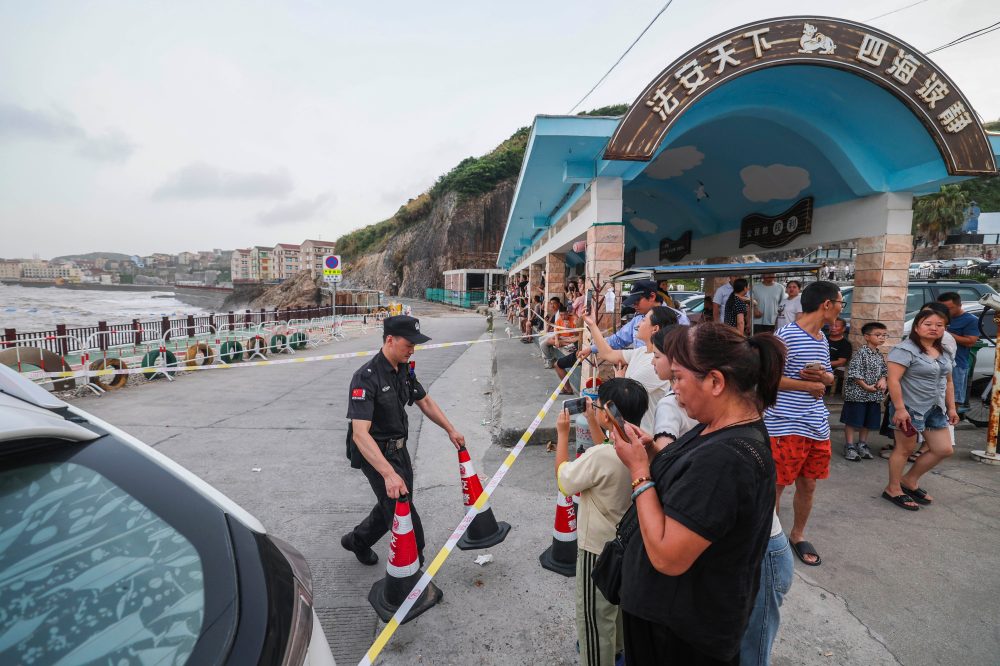
Along China’s southeastern coast, cities are taking precautions ahead of the storm’s expected arrival. In Ningde, a city in Fujian province, more than 3,700 residents were moved away from high-risk coastal areas by Friday evening, according to the state-run Xinhua News Agency. Fujian province authorities have also placed more than 17,000 emergency rescue personnel on standby.
China’s National Meteorological Center has issued an orange typhoon alert — the second-highest level in the country’s four-tier warning system. Schools and ferry services have been suspended in affected areas, with hundreds of flights canceled and some high-speed rail lines halted. On Saturday, the center also issued the year’s first red alert for severe rainstorms, as reported by state broadcaster CCTV.