Philadelphia Phillies fans will have plenty to cheer about at Monday’s Home Run Derby, with two of their own taking part in the festivities at Citizens Bank Park.
Kyle Schwarber made it official on Friday, announcing he will compete alongside Phillies teammate Bryce Harper in the annual slugfest. Schwarber currently leads all of Major League Baseball with 32 home runs on the season.
The final spot in the eight-man field was filled Friday night by Chicago White Sox first baseman Munetaka Murakami. The 26-year-old Japanese rookie had been sidelined for 35 games with a hamstring injury before returning to action Friday. Despite the time missed, Murakami had already launched 20 home runs in just 57 games before hitting the injured list.
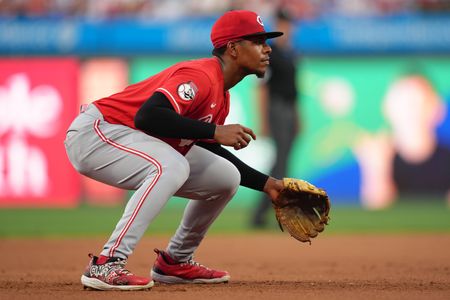
The rest of the derby lineup includes Tampa Bay Rays third baseman Junior Caminero, New York Yankees first baseman Ben Rice, Kansas City Royals outfielder Jac Caglianone, St. Louis Cardinals right fielder Jordan Walker, and Boston Red Sox first baseman Willson Contreras.
This won’t be Schwarber’s first time in the derby spotlight. Back in 2018, when he was playing for the Chicago Cubs, he advanced all the way to the finals — where he lost to none other than Harper, who was then with the Nationals. That year’s All-Star events were hosted in Washington.
His most recent derby appearance didn’t go as well. In 2022, Schwarber was eliminated in the opening round.
A left turn lane on Glasgow Avenue at the intersection with westbound US Route 40 is currently closed due to construction activity in the area.
According to traffic officials, the closure is expected to remain in effect through July 13, 2026, meaning drivers can anticipate the restricted access for an extended period.
Motorists traveling in that area are encouraged to plan ahead, consider alternate routes, and use extra caution near the construction zone.
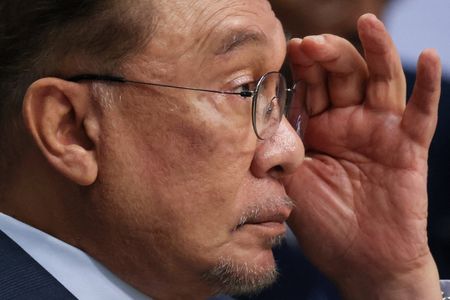
Residents of Johor, a state in southern Malaysia, cast their votes Saturday in a regional election that analysts say could test the strength of Prime Minister Anwar Ibrahim’s coalition government at the national level.
While the Johor state election won’t directly affect Anwar’s majority in Malaysia’s national parliament, the decision by a major coalition partner to campaign independently has raised questions about the durability of his federal alliance.
Anwar has been in office since 2022 and has been widely credited with bringing political stability to a country that had experienced years of internal political turmoil. However, his administration is a patchwork of political blocs, including the formerly dominant Barisan Nasional — once a rival coalition — which has reportedly grown frustrated with playing a secondary role to Anwar’s Pakatan Harapan alliance.
Progressive members within the coalition have also expressed disappointment over what they see as a sluggish pace of reform, while coalition parties have repeatedly clashed on how to handle racial and religious matters in the multi-ethnic, Muslim-majority nation.
Although the next national election isn’t scheduled until 2028, Anwar said in May that he would be open to calling a snap election if the internal divisions continued to deepen.
Barisan Nasional has controlled Johor since 2022 and opted to seek re-election without support from Pakatan. Analysts view BN as the likely frontrunner, though it faces significant competition from both Pakatan and the opposition bloc Perikatan Nasional, which is led by the rising Islamic party PAS.
The election is drawing attention from investors as well. Johor, which shares a border with Singapore, has emerged as a regional financial hub in recent years, attracting billions of dollars in data center and artificial intelligence-related investments. A special economic zone linking Johor and Singapore is also currently in development.
Despite that growth, many residents feel left behind, with rising property values and higher costs of living — driven in part by the state’s proximity to its wealthier neighbor — putting financial pressure on ordinary Johoreans.
Saturday’s vote also marks the first electoral appearance of a new party called Bersama, led by Rafizi Ramli — a former economic minister and one-time protege of Anwar who has since become a rival. The new party has drawn a number of defectors from Pakatan.
The Johor election comes three weeks ahead of another state election in Negeri Sembilan on August 1, which will serve as yet another gauge of stability for the federal coalition. Pakatan is expected to contest all 36 seats in that race, having captured 17 seats in the previous state election there.
Westbound travelers on DE-2 are facing a lane restriction overnight, with the left lane shut down between Delaware Park Drive and Pike Creek Road.
According to Delaware Department of Transportation, the closure is expected to remain in place until 6 AM. Drivers in the area should allow extra time or consider using an alternate route to avoid delays.
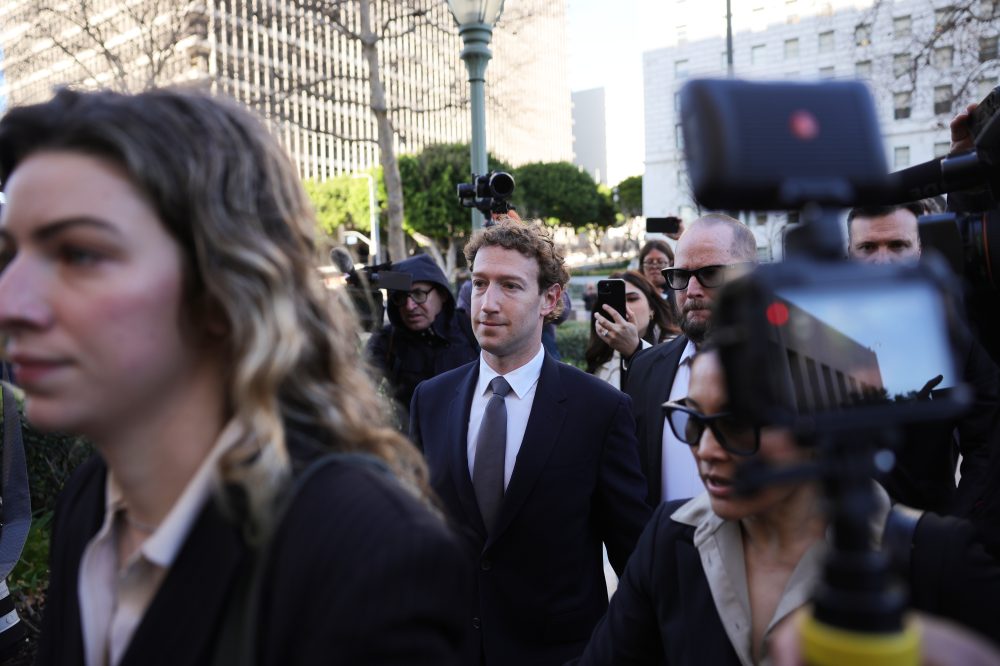
Meta, the company behind Instagram and Facebook, is pushing back against a groundbreaking jury verdict in Los Angeles that held it responsible for creating social media platforms designed to get young users hooked, with little regard for their mental well-being.
Attorneys for Meta filed a notice of appeal Tuesday in Los Angeles County Superior Court. The specific legal arguments supporting the appeal will be laid out in future court filings.
At the heart of the case was a 20-year-old woman — identified in court only by her initials, KGM, and her first name, Kaley — who testified that she became addicted to social media during her childhood and that the experience made her mental health struggles worse. The jury determined that negligence by both Meta and Google-owned YouTube, which was also named as a defendant, played a substantial role in causing her harm.
The jury awarded Kaley $3 million in damages and recommended an additional $3 million in punitive damages. Her lead attorney, Mark Lanier, released a statement Friday saying the legal team expects the appellate court to “continue the careful application of the law to this case, affirming the verdict of the trial court.”
Filing a notice of appeal kicks off what can be a long legal process. A Meta spokesperson repeated a statement Friday that was first issued when the jury returned its verdict in March, saying that teen mental health is “profoundly complex and cannot be linked to a single app.”
José Castañeda, a spokesperson for Google, said in a statement Friday that YouTube also intends to appeal, adding that “these are standard motions for this case to move forward.”
Both Meta and Google had previously filed post-trial motions asking the judge to overturn the jury’s verdict — a routine legal move by defense attorneys — and requested a new trial. Trial Judge Carolyn B. Kuhl rejected those motions in early June.
Technology companies like Meta and YouTube typically enjoy legal protections from liability over content posted by outside users, thanks to Section 230 of the 1996 Communications Decency Act. To work around those protections, attorneys for Kaley focused their arguments on the platforms’ design features, such as “infinite scroll” — the never-ending nature of social media feeds — and autoplay functions.
Throughout the five-week trial, the question of whether those arguments crossed into content-related territory was the subject of frequent objections from the defense.
The verdict arrived at a particularly difficult moment for Meta legally. Just one day before the California jury reached its decision, a jury in New Mexico also found that Meta’s platforms harm children’s mental health and safety. That New Mexico jury, siding with state prosecutors who brought the case, ordered a penalty of $375 million. Meta has said it disagrees with that verdict and plans to appeal it as well.
“We will continue to defend ourselves vigorously, and we remain confident in our record of protecting teens online,” a Meta spokesperson said in a statement issued around the time of both verdicts and again on Friday.
Kaley’s lawsuit was the first of its kind, and the outcome could shape the results of thousands of similar cases filed against social media companies for allegedly causing deliberate harm. TikTok and Snap Inc., the parent company of Snapchat, were initially named as defendants in the case as well, but both reached undisclosed settlement agreements before the trial got underway.
Meta announced Friday that it is shutting down a newly launched artificial intelligence feature that gave users the ability to generate images drawn from public Instagram accounts — and the rollout lasted only a matter of days.
The company released a statement explaining its original intentions: “Our intent was to provide a useful creative tool and to give people control over whether their public content could be referenced in this way.”
However, the response from users was far from positive. Meta acknowledged the criticism directly, saying, “We’ve heard the feedback that this feature missed the mark, so it’s no longer available.”
The quick reversal highlights the growing scrutiny tech companies face when rolling out AI-powered tools that involve user-generated content and personal images.
INGLEWOOD, California — Substitute Mikel Merino delivered another clutch late goal for Spain on Friday, capitalizing on a fumble by Belgium’s backup goalkeeper to secure a 2-1 quarterfinal victory and set up a World Cup semifinal showdown with France.
The match was deadlocked at 1-1 heading into the second half, but Belgium’s fortunes took a turn when starting keeper Thibaut Courtois left the field injured. His replacement, Senne Lammens, couldn’t hold onto a low shot from Pau Cubarsi, and the ball bounced right to Merino, who buried it in front of a packed, largely pro-Spain crowd on a scorching afternoon at Los Angeles Stadium.
“There are no such things as coincidences,” Merino said after the match. “If you go into a match well-prepared, things tend to happen again.”
It was a familiar script for Merino, who had also come off the bench to score the decisive goal in Spain’s 1-0 round-of-16 win over Portugal. He entered Friday’s contest in the 86th minute and netted just two minutes later, making him the first player in World Cup history to score the winning goal in two separate knockout-stage matches as a substitute.
“We are two matches away from winning the World Cup and that is what we are going after,” Merino added.
The last time Spain reached the World Cup semifinals was in 2010 — the year they lifted the trophy. Now, as European champions, they’ll face tournament favorites France in Dallas on Tuesday for a spot in the final.
“We’re going to work hard to try and beat France,” Spain coach Luis de la Fuente said. “They’ll be just as worried as we are.”
Spain came out aggressive from the opening whistle. Fabian Ruiz gave them the lead around the 30-minute mark, firing a shot through defender Timothy Castagne’s legs and into the net after Courtois made a superb diving save. The goal validated De la Fuente’s surprising choice to start the Paris St Germain midfielder over Pedri, who came on for Ruiz early in the second half.
Belgium pulled level 11 minutes later when Charles De Ketelaere timed his run perfectly to head a Castagne cross past Spanish keeper Unai Simon — the first goal Spain had given up in the entire tournament. The equalizer reinvigorated Belgium as both sides battled through the intense heat to halftime.
Spain came out of the locker room with renewed energy, dominating possession and pressing the Belgian defense. Eighteen-year-old Lamine Yamal was a constant danger throughout the match. Spain ultimately outshot Belgium 17 to 5, and the late winner felt like only a matter of time.
Belgium entered the match already shorthanded. Captain Youri Tielemans picked up an injury during warmups and was pulled from the starting lineup, with Hans Vanaken stepping in. Midfielder Amadou Onana was also absent, having torn his ACL in Belgium’s round-of-16 win over the United States.
But the loss of Courtois proved to be the turning point. The 34-year-old Real Madrid goalkeeper, regarded as one of the best in the world, made four outstanding saves before reporting muscle pain in his leg on long kicks in the second half. Coach Rudi Garcia made the call to substitute him, and Courtois left the field in tears.
“I wanted to continue but, yeah, the coach wanted someone 100%, so okay, that’s his decision … and that’s not a problem,” Courtois said afterward.
With Courtois watching helplessly from the sideline, Lammens was unable to make the routine stop that would have kept Belgium alive. Courtois was quick to console his teammate.
“Senne, obviously, I gave him a big hug,” Courtois said. “Not much more I can do at the moment. I know, for goalkeepers, this is a shit feeling, and he’s a great goalkeeper, and he will only get stronger from this.”
Belgium veterans Kevin De Bruyne and Romelu Lukaku pushed for a late equalizer but couldn’t break through Spain’s defense.
The 70,492 fans in attendance at the sun-drenched Los Angeles Stadium included musicians Courtney Love and Noel Gallagher, American actor Brad Pitt, and Spanish actors Penelope Cruz and Javier Bardem.
Friday’s quarterfinal was the eighth and final World Cup match held at the $5 billion venue, known outside the tournament as SoFi Stadium and home to the NFL’s Rams and Chargers.
Activist investment firm Elliott Investment Management has quietly accumulated a large ownership stake in CCC Intelligent Solutions, according to a Bloomberg News report published Friday, as the software company weighs a potential sale.
CCC, which is headquartered in Chicago, has brought in Morgan Stanley to guide the sale process, Reuters reported exclusively on Thursday.
The precise size of Elliott’s position remains unclear, but Bloomberg reported — citing individuals with knowledge of the situation — that the firm built its stake before CCC began formally considering a sale. The effort is being spearheaded by Elliott’s private equity division.
Neither Elliott nor CCC responded to requests for comment.
CCC develops cloud-based software tools used by auto insurance companies, collision repair facilities, vehicle manufacturers, and parts suppliers to handle accident claims and coordinate repair operations.
The company’s market value has taken a significant hit over the past year, sliding from approximately $6.4 billion to around $3.3 billion. Investors have grown uneasy over slowing growth, reduced claims activity across the industry, and a slower-than-anticipated rollout of some of the company’s newer software offerings.
Data from Barclays shows that activist investors ramped up pressure on companies globally during the second quarter, pushing at a faster overall pace through the first half of 2026. Their most common demand: that companies sell themselves, amid a recovering deal-making environment.
The Minnesota Twins bolstered their bullpen Friday, landing right-handed reliever Tommy Nance from the Toronto Blue Jays. In return, Toronto received catcher and infielder prospect Ryan Sprock along with an undisclosed sum of international bonus pool money.
Nance, 35, has been with Toronto for three seasons. Before joining the Blue Jays, he spent one season each with the Chicago Cubs in 2021 and the Miami Marlins in 2022, marking the beginning of his Major League Baseball career.
This season, Nance has appeared in 32 games, compiling a 1-2 record and a 3.82 earned run average. He has struck out 34 batters while issuing just 13 walks. Right-handed hitters have had a particularly tough time against him in 2026, batting only .159.
Sprock, 21 years old, was selected by Minnesota in the eighth round of the 2025 draft. He has seen action at both Class-A Fort Myers and High-A Cedar Rapids this season, combining for a .297 batting average, five home runs, 38 RBIs, and 14 stolen bases across both levels.
To open a spot for Nance on the 40-man roster, the Twins moved right-hander Mick Abel to the 60-day injured list. Abel has been dealing with right elbow inflammation.
The St. Louis Cardinals made a major commitment to one of baseball’s brightest young talents Friday, agreeing to an eight-year contract extension with rookie second baseman JJ Wetherholt.
Reports indicate the 23-year-old will earn $112.5 million under the deal, with additional performance bonuses capable of pushing the total value as high as $132 million. The extension begins with the 2026 season and carries through the 2034 campaign.
Wetherholt was St. Louis’s first-round pick — seventh overall — in the 2024 amateur draft. Cardinals president of baseball operations Chaim Bloom praised the young infielder in an official news release.
“Since joining the Cardinals two years ago, JJ has impressed in every aspect,” Bloom said. “He is a dynamic player who produces in every facet of the game, and a true professional who is consistent, prepared and hard-working. Equally as important, he’s a great teammate who wants to win, and he represents the organization with class both at the field and away from it.”
Bloom continued: “We are proud of the person JJ is and the player he continues to become, and are pleased to enter into this commitment with him. JJ is a very important part of what we are building, and we look forward to winning together for many years.”
Through 87 games heading into Friday, Wetherholt has already etched his name in Cardinals history. His 13 home runs this season are the most ever hit by a rookie second baseman in franchise history. He has also driven in 36 runs while batting .267. On defense, he has been equally impressive, ranking first among all major league second basemen with 12 runs prevented.
The left-handed hitter made a name for himself at West Virginia during his college days before quickly rising through the Cardinals’ minor league system. In his first professional season, he was named MVP of the Double-A Texas League — a remarkable achievement considering he appeared in just 62 games for Springfield.
With the deal now in place, Wetherholt becomes the first St. Louis player currently under contract for the 2027 season.
Victor Wembanyama has locked in a new deal with the San Antonio Spurs — and it will go down as the biggest contract in the franchise’s history. A source familiar with the negotiations told The Associated Press on Friday that the five-year extension could surpass $250 million if Wembanyama exercises the player option included in the final year of the agreement.
The source spoke anonymously to the AP because neither the Spurs nor Wembanyama’s camp publicly disclosed the financial terms. The team confirmed the signing in an official announcement, describing it only as “a multi-year contract extension.”
What makes the deal notable is that Wembanyama left money on the table. According to the source, he was eligible for a contract that could have climbed above $300 million, but deliberately chose a lower figure. The reason, the source said, was to give the Spurs more salary cap flexibility as they look to build around their promising young core — with an eye toward future contract extensions for other rising players on the roster.
The Spurs reached the NBA Finals this past season, powered in large part by Wembanyama, who earned All-NBA honors and was the unanimous selection as Defensive Player of the Year. ESPN was first to report the agreement.
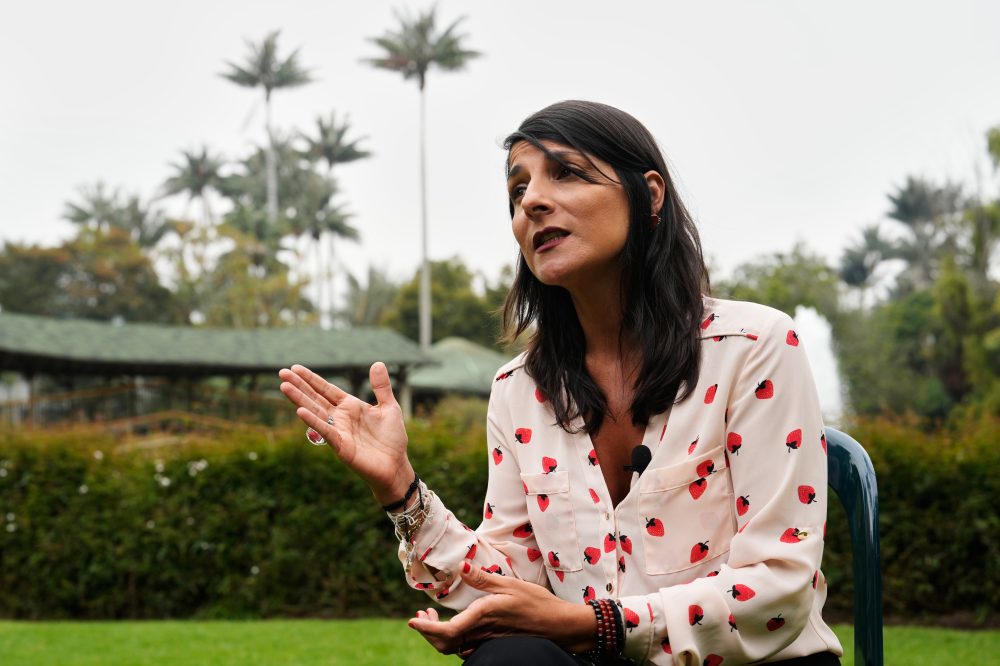
BOGOTA, Colombia — Colombia’s outgoing environment minister is sounding the alarm over what she sees as a dangerous shift in the country’s approach to climate and conservation under the incoming government.
In an interview with The Associated Press on Friday, Environment Minister Irene Vélez Torres said she fears the new administration will roll back the progress Colombia has made on climate action — progress she says is urgently needed as the country faces growing environmental threats, including El Niño, a naturally occurring weather phenomenon that can disrupt rainfall and trigger droughts, floods, and extreme heat.
“Arriving with an attitude of climate denialism is absolutely dangerous,” Vélez said.
Her remarks come just weeks before President-elect Abelardo de la Espriella is set to take office on August 7, following a narrow election win that signals a significant political shift for Colombia. The country has spent the past four years under President Gustavo Petro, whose administration worked to establish Colombia as a global leader in climate diplomacy, Amazon protection, and moving away from fossil fuels.
During his campaign, which received an endorsement from U.S. President Donald Trump, de la Espriella pledged to revitalize Colombia’s oil industry, expressed support for fracking, and argued that the country should tap more of its natural resources to drive economic growth. Environmental advocates and some Indigenous leaders have cautioned that a greater focus on extractive industries could put pressure on ecologically sensitive regions, including parts of the Amazon rainforest.
Approximately 42% of Colombia’s land area is covered by Amazon rainforest, and the Petro administration made protecting that rainforest — along with transitioning away from fossil fuels — a cornerstone of its environmental policy.
One of Vélez’s top concerns involves the future of Indigenous communities’ role in managing the Amazon environment. She worries the incoming government could undermine recent efforts to recognize Indigenous authorities as central figures in environmental decision-making and reduce backing for Indigenous territorial governance programs.
Vélez also raised concerns about the possible return of aerial spraying of glyphosate on coca crops — the plant used to produce cocaine. She described the herbicide as “potentially carcinogenic to humans” and said its past use left lasting damage to both the environment and public health in Colombia.
Additionally, she warned against expanded fossil fuel development and mining in Colombia’s paramos — distinctive high-altitude wetlands that provide drinking water to millions of Colombians.
The incoming administration has disputed some of those concerns. Fabio Arjona, a marine biologist selected by de la Espriella to serve as environment minister, has argued that environmental discussions should be less driven by ideology. He criticized what he called “environmental hysteria” and said fracking could be considered under strict regulations, though not in protected areas like national parks and paramos.
Requests for comment sent to representatives for de la Espriella and Arjona went unanswered before this story was published.
Vélez urged the new administration not to abandon the work done to reduce deforestation, restore ecosystems, and strengthen protections for wetlands, paramos, and the Amazon.
“We have a legacy that, despite our differences, should be preserved,” she said. “It would be an unforgivable mistake to abandon this agenda simply because it comes from a different political sector. Social and environmental justice must remain at the center of the political agenda.”
A pharmaceutical company working to bring a pill-based treatment for sleep apnea to market has taken a major step toward going public. Apnimed submitted paperwork Friday for an initial public offering in the United States.
The move comes as the biotech industry experiences a significant turnaround, with new investment flowing back into the sector and improving confidence among investors following a lengthy period of decline. IPO activity in the biotech space had fallen to its lowest point in over a decade heading into 2025.
Apnimed was established in 2017 and focuses on creating oral medications to address obstructive sleep apnea, commonly known as OSA, along with related conditions. Unlike current treatments that often rely on devices worn during sleep, the company is pursuing a pill-based approach.
The company’s primary drug in development, called AD109, is an experimental pill taken once each night at bedtime. In May, it successfully met the main goal of a late-stage clinical trial, marking a significant milestone. Apnimed has already submitted a marketing application and is anticipating a potential decision from the FDA sometime in the first quarter of 2027.
BofA Securities, Evercore ISI, Cantor, and LifeSci Capital are serving as the underwriters for the public offering. Apnimed plans to list its shares on the Nasdaq stock exchange under the ticker symbol “APMD.”
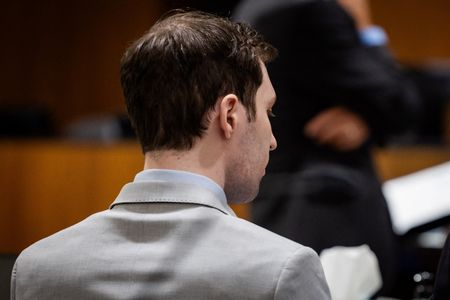
Erika Kirk was allowed Friday to view surveillance footage that prosecutors say captures the man accused of murdering her husband, prominent conservative activist Charlie Kirk, on a Utah university campus.
The video compilation, drawn from campus security cameras at Utah Valley University, was shown only to those physically present in the courtroom. While most of the five-day preliminary hearing — which is determining whether Tyler Robinson should stand trial — has been livestreamed at Erika Kirk’s urging, this particular footage was not made available to the public.
According to a report from The Associated Press, Erika Kirk watched closely as the video showed a figure running across the roof of the campus building where investigators say Kirk was shot. When the figure appeared to drop to a crawl near the edge of the roof, Erika Kirk reportedly turned and embraced Kirk’s mother, who was in tears, and both looked away until the video was nearly finished.
As Charlie Kirk’s legal representative under Utah state law, Erika Kirk has pushed for all evidence presented at the hearing to be made public through livestreaming, or at minimum shown to her and others in the courtroom. Her attorney, Jeffrey Neiman, argued in a court filing Wednesday that without full transparency, “speculation and conspiracy theories related to the tragic assassination of Mr. Kirk will continue to proliferate.”
District Court Judge Tony Graf, who had already reviewed the surveillance footage earlier in the week, has been weighing the transparency request against concerns that public access to certain evidence at this early stage could make it harder to seat impartial jurors if the case goes to trial. Graf had also called for portions of a key interview with Robinson’s roommate to be redacted, and some prosecution evidence has been shown only in the courtroom rather than via livestream.
The judge is expected to issue a ruling later this year on whether Robinson should face trial, following oral arguments set for September 1.
Charlie Kirk, 31, was a prominent ally of President Donald Trump. He was killed in front of thousands of people while participating in a student debate at Utah Valley University — one of the most high-profile incidents in a troubling series of attacks on politicians and public figures that has raised alarm about political violence in the United States. Trump’s son, Donald Trump Jr., attended the first day of this week’s hearing alongside Kirk’s wife.
Erika Kirk, 37, is a podcaster, businesswoman, and former Miss Arizona USA. Following her husband’s death, she assumed leadership of Turning Point USA, the conservative organization Charlie Kirk co-founded.
Utah, like most states, gives a deceased person’s family the right to be informed about court proceedings and to speak at sentencing hearings. Erika Kirk’s legal team has argued that Utah’s crime victim law entitles her, as a victim’s representative, to view all evidence presented in court.
In a statement released Friday after court adjourned, the Kirk family said: “We pray that truth will continue to be heard through a process that is fair, transparent, and grounded in the facts.”
Robinson’s defense team has argued that prosecutors intend to present certain evidence — including the interview with Robinson’s roommate — as “confessions” that he killed Kirk. Defense attorney Richard Novak warned that potential jurors being exposed to such material could compromise Robinson’s constitutional right to a fair and impartial trial.
On Thursday, prosecutors displayed a handwritten note that the court had barred from public view. The note, found beneath Robinson’s computer keyboard, read: “I had the opportunity to take out Charlie Kirk, and I’m going to take it.”
As a consequence of the note being aired publicly, Judge Graf on Friday imposed a one-day ban on livestreaming any images entered as evidence — a separate matter from his earlier decision to keep the surveillance video compilation off the public stream.
Robinson, who was studying to become an electrician at the time of the shooting, faces seven criminal charges, including aggravated murder. Prosecutors are seeking the death penalty. He has not yet entered a plea.
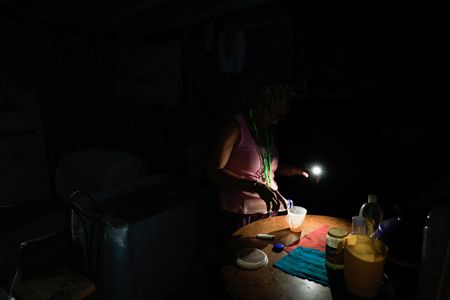
HAVANA — Cuba’s entire national power grid went dark again on Friday, the second time this week the island has suffered a complete nationwide blackout and the fourth total outage of the year so far.
Cuba’s energy ministry announced via social media that recovery efforts were underway, stating, “Protocols are being activated to begin the recovery process,” as grid operator UNE worked to restore electricity to the island’s millions of residents.
The latest collapse came just days after a prior nationwide outage struck on Monday. Authorities had managed to bring most of the grid back online by late Tuesday, but large portions of the country — including the city of Santiago de Cuba — remained without power due to critical fuel shortages.
Yailin Fis Garcia, a 26-year-old woman, stood outside her unlit cafe and pizza restaurant in central Havana with her 5-month-old baby resting on her shoulder. She and her family had opened La Criolla cafe only a few weeks earlier, and Friday’s blackout was already the second total grid failure since they launched the business.
“All the food spoils, which is an economic hit,” she said.
Despite the hardship, she acknowledged things could be even worse. Her neighborhood on the edge of the capital has been experiencing such extreme energy shortages that for the past month, her home has only had electricity for one or two hours each day.
U.S. President Donald Trump imposed an oil blockade on Cuba after Washington removed Venezuelan President Nicolas Maduro from power on January 3. Venezuela had been Cuba’s main supplier of fuel, and additional U.S. pressure subsequently led Mexico to cut off its own oil shipments to the island as well.
The repeated power failures have intensified social unrest, triggering scattered pot-banging protests in Havana following Monday’s blackout. The demonstrations brought to mind the widespread protests of July 11, 2021, when thousands of Cubans flooded the streets in the largest anti-government uprising the communist-governed island had seen in decades.
Cuba’s government points to the longstanding U.S. trade embargo as the root cause of its crumbling infrastructure, while Washington counters that the blackouts are the result of poor management of Cuba’s state-controlled economy.
The United States has openly declared its intention to bring down Cuba’s government, calling for democratic elections and the freeing of individuals it considers political prisoners.
At a United Nations General Assembly debate held Tuesday, U.S. Ambassador to the U.N. Michael Waltz placed the responsibility squarely on Cuban authorities, declaring, “Change your ways and turn the lights back on for your people.”
However, the overwhelming majority of nations that addressed the debate urged the United States to lift the blockade and roll back the economic sanctions that have severely weakened Cuba’s economy.
Cuba’s Minister of Foreign Affairs, Bruno Rodríguez Parrilla, condemned the U.S. fuel embargo and economic sanctions as a “systematic violation of the human rights of an entire people in an act of collective punishment,” and described U.S. policy toward the island as “cruel and ruthless.”
A federal bankruptcy judge ruled Friday that California is barred from seeking financial damages from the successor company to 23andMe in connection with a 2023 data breach that exposed the genetic and personal information of an estimated 6.9 million customers.
U.S. Bankruptcy Judge Brian Walsh, presiding in St. Louis, determined that 23andMe’s Chapter 11 reorganization plan prevents California from pursuing monetary relief against Chrome Holding Co and an affiliated company. However, the state may still seek non-monetary remedies.
Judge Walsh gave California 14 days to either dismiss its May 28 lawsuit filed in San Francisco Superior Court, or revise the complaint to remove any requests for financial damages.
The ruling represents a significant setback for California Attorney General Rob Bonta, who had accused 23andMe of disregarding warnings that its systems had been compromised and minimizing the seriousness of the breach. Bonta had been pursuing what could have amounted to millions of dollars in civil penalties. His office did not respond to requests for comment.
In arguing against the ruling, the attorney general’s office contended that Congress never granted bankruptcy judges the authority to block state-level enforcement actions in state courts, warning that allowing such power could turn bankruptcy courts into what he called “a haven for wrongdoers.”
Judge Walsh pushed back on that characterization, writing that he “disagreed” that 23andMe’s reorganization plan created any such haven — and adding that even if it had, California would not be in a position to challenge it at this stage.
“Because the state was a party to the Chapter 11 case and was given a fair chance to challenge this court’s subject-matter jurisdiction, the state cannot challenge it now” by proceeding with its lawsuit, Walsh wrote in his decision.
California filed its lawsuit four months after Walsh had already approved the creation of a fund to settle most customer claims stemming from the data breach. On Tuesday, Walsh authorized an additional $32.46 million payment on top of $14.29 million that had already been distributed, bringing the total payout to $46.75 million.
23andMe, which was headquartered in Palo Alto, California, sought bankruptcy protection from creditors in March 2025. TTAM Research Institute, a nonprofit controlled by 23andMe co-founder Anne Wojcicki, purchased the company’s assets for $305 million last July.
HAVANA (AP) — Cuba was plunged into darkness again on Friday, marking the second complete island-wide power failure in just one week. The blackout is the latest blow to a nation of nearly 10 million people struggling with a failing electrical grid and severe fuel shortages driven by a U.S. energy blockade.
While total power outages have grown more frequent in Cuba in recent times, two occurring just days apart is highly unusual. The country’s Electric Union announced the outage on the social media platform X.
Cuban officials had also acknowledged the first complete blackout, which struck on Monday, though the exact cause was never publicly identified. Authorities said at the time that an investigation had been launched.
The fuel crisis began intensifying in January, when U.S. President Donald Trump threatened tariffs against any nation that supplies oil to Cuba. That move deepened an already severe economic and financial crisis on the island, grinding public transportation to a halt and forcing the cancellation of tens of thousands of scheduled surgeries.
Cuba currently produces only 40% of the fuel it requires. A Russian tanker delivered 730,000 barrels of oil in late March, but that supply was exhausted by the end of April. To cope, the government has been enforcing deliberate power cuts that can last more than 24 hours at a stretch.
The blackouts are not isolated events. A power failure in mid-May knocked out electricity across the island’s eastern provinces, and a separate island-wide outage occurred in mid-March.
A preliminary investigation report released Friday by the National Transportation Safety Board reveals that both engines on a small business jet lost power before the aircraft crashed onto a Texas highway in June, leaving the flight crew with no way to reach a nearby airport.
Before the crash, the pilots had searched for a field or other flat surface to land on, but air traffic controllers told them no such options were available in the area. The accident claimed one life and left six others injured.
The NTSB report indicates that early in the flight, the crew noticed an unfamiliar “unusual vibration” they had never encountered before. The aircraft had taken off from the Mexican resort city of San José del Cabo, bound for Austin. After consulting with staff at NetJets, the company that operated the jet, the crew determined it was safe to continue to their destination.
As the jet neared the U.S.-Mexico border, warning messages began appearing in the cockpit indicating low fuel pressure. Additional alerts followed, and the crew declared an emergency.
The flight crew reported a generator failure and “multiple other failures” — including a “fuel level low” warning — to Houston air traffic controllers, and requested permission to divert to Laredo International Airport. That request was approved, but as the jet made its final approach, the right engine “flamed out,” and the left engine followed just moments later.
Surveillance footage captured “two instances of fire flaring up around the airplane as it was on final approach,” according to the report.
A pilot radioed the Laredo air traffic control tower asking whether there was an open field to the right of their position. A controller responded that there was not. When the pilot asked again about any open area to the right, the controller replied, “It’s just going to be the main highway, and that’s just about it.”
With no other options, the flight crew guided the plane onto the highway, touching down roughly one mile — about 1.6 kilometers — southeast of the airport. Upon landing, the jet “sheared off several light poles,” struck a vehicle, and came to rest straddling the edge of an overpass with the main cabin exit door “oriented upward.” That door was eventually forced open, and five people were able to get out.
The fiery scene near the Mexican border drew bystanders rushing from their vehicles to help police pull passengers and crew from the burning wreckage. Video from the chaotic scene showed one person attempting to break the cockpit glass with a sledgehammer, while others used improvised tools to pry open the plane’s door. Local officials reported that a firefighter entered the smoke-filled aircraft to pull out one remaining person after the others had already escaped. The NTSB report noted that the jet “sustained substantial damage” to its fuselage, both wings, and its tail.
According to the Laredo Police Department, two pilots and three teenagers survived the crash and were later discharged from the hospital. A dog that was also on board suffered smoke inhalation but was expected to recover, according to Jose Baeza, an investigator with the police department, who spoke in June.
The crash claimed the life of Joshua Baer, a prominent figure in Texas’ technology and startup communities.
Energy company Holtec Nuclear Corporation took a major step toward going public on Friday, submitting its initial public offering filing with U.S. regulators.
The move comes as the American IPO market has made a strong comeback following several years of sluggish activity. Bigger deals and listings tied to artificial intelligence have pushed the total dollar value of offerings toward record-breaking territory, even though the overall number of new public companies remains well below the highs seen during previous boom periods.
Holtec’s core business centers on developing small modular reactors, known as SMRs. These compact nuclear units are promoted as being more affordable and faster to construct compared to traditional full-scale nuclear plants, which can take many decades to complete.
The company sees its SMR technology as a potential replacement for coal-burning power plants and as a way to meet more localized energy demands.
Several major financial institutions are serving as underwriters for the offering, including J.P. Morgan, Guggenheim Securities, Goldman Sachs, and Citigroup.
Holtec plans to list its shares on both Nasdaq and Nasdaq Texas, trading under the ticker symbol “HNUC.”
A 32-year-old Pennsylvania man who openly identified himself as a white supremacist and Nazi is facing federal charges after threatening violence against a member of Congress, Muslims, transgender people, and Democrats, the Department of Justice announced Friday.
A federal grand jury in Pittsburgh handed down a 12-count indictment naming Robert Hlovchiec as the sole defendant. The DOJ’s statement did not identify which member of Congress was targeted.
According to prosecutors, Hlovchiec posted threatening comments on YouTube videos between February and March of this year. Those threats targeted the unnamed lawmaker, Democrats and liberals, transgender individuals, and various minority communities including Muslims.
Among the threats quoted by the DOJ, Hlovchiec wrote: “If i get the chance im going to do a mass shooting wherever (member of Congress) is standing. (Member of Congress) needs to die … America is not for sale. America is not a Muslim country.”
In a separate threat, he allegedly wrote: “If i get the chance I’ll shoot everyone in (member of Congress)’s family. America is a white Christian nation. We are ready to kill and die before foreigner Muslims take over.”
The grand jury charged Hlovchiec with interstate threats and with attempting to influence, impede, or retaliate against a federal official through threats. The DOJ noted that Hlovchiec also expressed desires to carry out mass shootings and assassinations.
Attempts to reach a representative for the defendant were unsuccessful at the time of the announcement.
Rights advocates in the United States have pointed to a steady rise in Islamophobia over the more than two decades since the September 11, 2001 attacks, with more recent factors including anti-immigration policies, white supremacist activity, and tensions surrounding Israel’s war in Gaza. Political experts have also raised separate alarms about the growing threat of political violence driven by increasing polarization across the country.
Saint Lucia’s Julien Alfred put together one of the fastest women’s 200-metre performances in history on Friday, clocking 21.51 seconds at the Monaco Diamond League meet to claim victory and cement her place as the third-fastest woman ever over the distance.
Alfred struggled off the starting blocks but made up ground dramatically over the final 50 metres, ultimately setting a new world lead for the season. She finished 0.25 seconds ahead of Adaejah Hodge of the British Virgin Islands, with American Gabby Thomas — who beat Alfred for the gold medal at the Paris Games — finishing third in 21.84.
“It’s not about the reaction time, it’s about how you finish,” said Alfred, who is also the Olympic champion in the 100m. “I didn’t realise how fast it was until I crossed the line.”
In the men’s 100m, Jamaica’s world champion Oblique Seville looked dominant from start to finish, holding off a late challenge to win in 9.88 seconds. Seville had placed second earlier this month in Eugene but left no doubt in Monaco. American Jordan Anthony was second in 9.92, and Cameroon’s Emmanuel Eseme took third in 10.00.
One of the evening’s most remarkable moments came in the rarely run 1,000 metres, where Kenya’s Emmanuel Wanyonyi shattered the world record on his very first attempt at the event. The Olympic 800m champion finished in 2 minutes and 11.83 seconds, trimming 0.13 seconds off the previous mark set by fellow Kenyan Noah Ngeny 27 years ago. Britain’s Jake Wightman came in nearly a full second behind in second place, with Algeria’s Djamel Sedjati finishing third.
Botswana’s world champion Busang Collen Kebinatshipi continued his dominant 2025 campaign in the 400m, claiming his fifth consecutive Diamond League win in the event with a time of 43.44 seconds. Americans Jacory Patterson (43.96) and Rai Benjamin (44.13) rounded out the top three.
“I did not expect me to be fast like this. We are just playing around and see how fast we can go towards the end of the season,” Kebinatshipi said. “My focus now is on the 400m but maybe in the future, when I achieve what I want in this event, we can switch to 200m.”
Dominican runner Marileidy Paulino stayed perfect on the season, taking the women’s 400m in 48.67 seconds. American Aaliyah Butler was second in 48.84, and Czech athlete Lurdes Gloria Manuel placed third in 49.44.
American Olympic champion Masai Russell continued her impressive season with a 12.20-second win in the 100m hurdles, finishing 0.18 seconds ahead of fellow American Alaysha Johnson. The Netherlands’ Nadine Visser was third in 12.49.
Switzerland’s Dominic Lokinyomo Lobalu edged American Graham Blanks by just six hundredths of a second in the men’s 5,000m, winning in 12:52.54 after overtaking Blanks in the final strides. Bahrain’s Birhanu Balew finished third in 12:52.91.
In the field events, Australia’s Nina Kennedy soared to a 4.95-metre clearance in the women’s pole vault, setting the new world lead and becoming just the sixth woman in history to reach that height. The Paris Olympic champion had missed nearly all of the 2025 season due to leg injuries before her return at the Rabat Diamond League in May. She made an attempt at the five-metre mark before ending her night.
Meanwhile, Mondo Duplantis — who regularly draws crowds hoping to witness another world record — won the men’s pole vault with a leap of 6.07 metres, though he was unable to clear 6.15 on three attempts.
China’s 18-year-old Yan Ziyi won the women’s javelin with a throw of 68.75 metres, while Cuba’s reigning world champion Leyanis Perez took the women’s triple jump with a mark of 15.06 metres. Greece’s two-time Olympic champion Miltiadis Tentoglou won the men’s long jump with 8.61 metres, and Ukraine’s Oleh Doroshchuk topped the men’s high jump at 2.32 metres.
ROSARIO, Argentina — A towering tribute to soccer icon Lionel Messi has gotten a fresh makeover in the city where he grew up.
The enormous mural, spanning 534 square meters — roughly 5,748 square feet — covers the side of a building in downtown Rosario, Argentina, Messi’s birthplace. Artists restored and officially unveiled the work just in time for Argentina’s World Cup quarterfinal matchup against Switzerland.
Project director Marlene Zuriaga noted that the restoration of the mural, which was first created in 2021, required 300 liters — about 79 gallons — of paint to complete.
The artwork carries the title “From another galaxy and from my city” and features several new additions, including three stars on the jersey badge worn by the giant painted version of Messi — one for each of Argentina’s three World Cup championship victories — along with the word “Gracias!” meaning “Thank you!” displayed at the top of the mural.
Messi, now 39 years old, became the all-time leading scorer in World Cup history during this tournament. His roots in the sport trace back to Rosario, where he played for local club Newell’s Old Boys before rising to global stardom.
Artist Lisandro Urteaga reflected on the meaning behind the mural’s name, saying: “We called the mural ‘From another galaxy’ but in reality he’s a human like us, who had to deal with a lot of challenges from childhood, who was born among humble working people, who rose above it.”
A Utah judge is now reviewing evidence after a weeklong preliminary hearing concluded today in the case against the person accused of killing conservative activist Charlie Kirk.
The purpose of the hearing was to determine whether prosecutors have sufficient evidence to bring the accused to a full trial. Over the course of the week, the courtroom heard what was described as dramatic testimony.
The judge will now consider everything presented before making a decision on whether the case moves forward to trial.
WASHINGTON — The United States is pushing Iran to make a public declaration that it will stop targeting ships in the Strait of Hormuz and that all shipping lanes through the strait will remain open and free of tolls, according to senior U.S. officials who spoke Friday.
The officials, speaking to a small group of reporters on a conference call, said that recent discussions between the two countries have been going well.
“What we’re demanding is that the Iranians issue a public statement that acknowledges all channels of the Strait of Hormuz are open and they’re not shooting at ships anymore. They’re either going to give us that statement or we’re not having a good outcome for them,” one official stated.
Iran has reportedly told Washington that the recent attacks on shipping vessels were the result of “an errant part of their system,” according to one senior official.
Officials also noted what appears to be an internal conflict playing out within Iran, describing what looks like a power struggle between hardline factions and more pragmatic elements within the Iranian government.
The diplomatic pressure follows a violent week in which three ships were attacked in the strait, leading U.S. President Donald Trump to authorize military strikes against Iranian targets. Trump has also declared that a ceasefire agreement the two sides reached in June is no longer in effect.
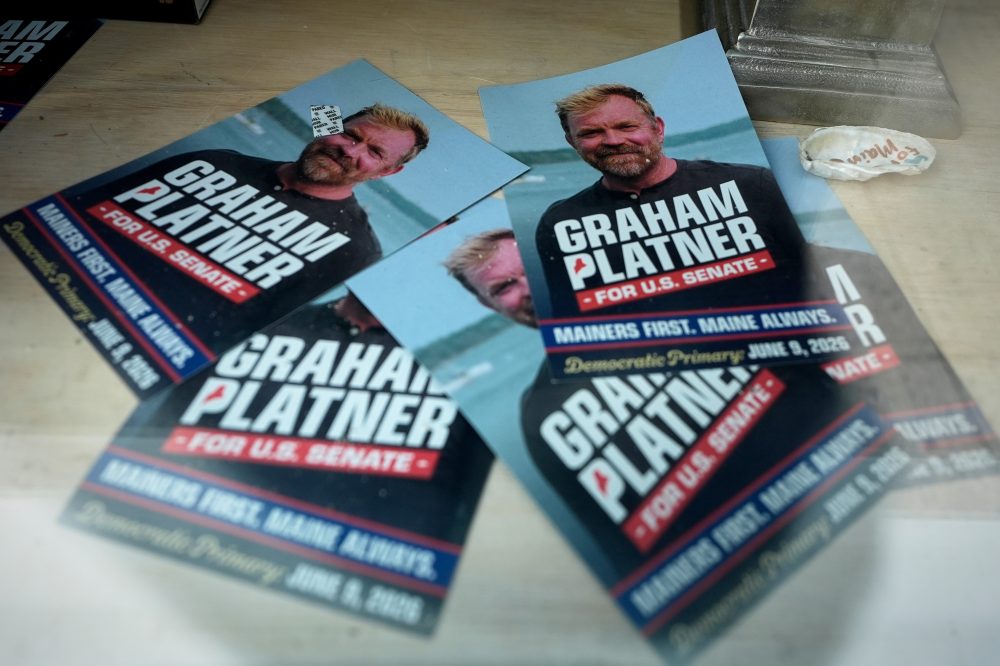
Maine’s Democratic nominee for U.S. Senate, Graham Platner, has officially pulled out of the state’s Senate race, the Secretary of State’s office announced in a statement on Friday.
Because of his withdrawal, Platner’s name will not be listed on the November 3 ballot. His political party now has a deadline of July 27 to put forward a new candidate to take his place in the race.
Los Angeles Dodgers star Shohei Ohtani will not take the mound Friday against the Arizona Diamondbacks, as the team announced he has been removed from his scheduled start due to persistent irritation in his left knee.
The four-time MVP, who plays both as a pitcher and a hitter, will shift to the designated hitter role for the remainder of the weekend series rather than pitching.
In addition to missing Friday’s start, the 32-year-old will not travel to Philadelphia to participate in the MLB All-Star Game, which he had been set to appear in.
Following the conclusion of the Diamondbacks series, Ohtani is expected to undergo some unspecified “interventions” on his knee, with the goal of having him fully ready to contribute when the second half of the season gets underway.
Drivers traveling along Cherry Road should be prepared for intermittent lane closures between Ivy Lane and Ridge Road as construction work continues in the area.
The lane restrictions are expected to remain in place until 4:00 PM. Motorists are encouraged to plan ahead, consider alternate routes if possible, and allow additional time when traveling through the affected stretch of roadway.
No further details about the nature of the construction were provided. Updates on traffic conditions can be found through local traffic monitoring resources.
Graham Platner has made his exit from Maine’s U.S. Senate race official, submitting the necessary paperwork to formally withdraw his candidacy on July 10.
The withdrawal comes in the wake of rape allegations leveled against Platner by a former romantic partner — accusations that he has denied.
In his written withdrawal notice, Platner reflected on what drove voters to support him in the first place. “People are desperate for change,” he wrote, pointing to that sentiment as the reason he secured the Democratic nomination.
With Platner now out of the race, Maine’s Democratic Party is under the clock to find a replacement. Party officials have until July 27 to select a new candidate to carry the Democratic banner in the Senate contest.
Los Angeles Dodgers superstar Shohei Ohtani has been ruled out of next week’s All-Star Game in Philadelphia, as persistent irritation in his left knee continues to sideline him from certain duties.
The Dodgers announced that Ohtani would also skip his scheduled pitching start against the Arizona Diamondbacks on Friday evening, though he will remain in the lineup as a designated hitter throughout the weekend series.
The knee has been bothering Ohtani for at least a month. His outing against the Pittsburgh Pirates on June 11 was cut short due to inflammation in that same knee.
Once the team’s series against Arizona concludes on Sunday, Ohtani will undergo what the Dodgers described as “interventions” on the knee to prepare for the second half of the season — a process that will keep him away from the All-Star festivities at Citizens Bank Park.
The four-time MVP has once again established himself as one of baseball’s premier players this season, remaining the only true two-way player in the big leagues. He is currently batting .290 with 20 home runs and 56 RBIs, while posting an 8-2 record on the mound with a 1.79 ERA and 95 strikeouts across 85 2/3 innings.
His absence from the All-Star Game is a significant loss for baseball’s midsummer showcase. The Japanese star, who celebrated his 32nd birthday earlier this week, ranks among the sport’s most recognizable figures and led all of Major League Baseball in jersey sales last season.
Earlier this week, on Tuesday night, Ohtani launched his 300th career home run — a leadoff blast off Colorado’s Michael Lorenzen — becoming the first Japanese-born player in major league history to reach that milestone.
The Dodgers, the two-time defending World Series champions, owned baseball’s best record at 61-33 heading into Friday’s action.
Motorists in the area should be aware that northbound Old Orchard Road is currently closed to traffic as a result of ongoing construction work.
The closure affects the stretch of roadway running between East Chesapeake Street and the Georgetown Trail, and is expected to remain in effect until 5:00 PM.
Drivers are encouraged to allow extra travel time and seek alternate routes to avoid the affected area until the road is reopened.
Low-income counties throughout the South are preparing for major reductions in food assistance as President Trump’s tax and spending legislation introduces new requirements for the program.
The changes are placing pressure on some of the nation’s poorest communities, which depend heavily on federal food aid to support residents in need. Local administrators are now working to figure out how to manage the impact of the funding cuts.
The new law brings added requirements that are expected to reshape how food assistance is distributed and managed at the county level across the region.
NEW YORK — For the first time since the COVID-19 pandemic hit in 2020, global oil demand is expected to fall this year, according to a new report from the International Energy Agency.
The agency projects that worldwide oil consumption will drop by roughly 1 million barrels per day in 2026. The decline has been driven by elevated oil prices and major disruptions to the physical supply of crude — though the impact has not been felt equally around the world.
Those supply disruptions stem from the ongoing war between the U.S. and Iran, which left oil tankers stranded in the Persian Gulf for more than three months. The ships were unable to safely pass through the Strait of Hormuz — a critical shipping corridor for global oil and gas — during that time.
Jim Burkhard, vice president and head of crude oil research at S&P Global Energy, warned that the situation at that key waterway remains unstable. “The future of Hormuz is probably more uncertain today than it was at the beginning of the war,” he said.
Burkhard noted that Iran continues to assert control over the strait, while the U.S. has yet to fully restore normal shipping operations, making a return to pre-war conditions unlikely in the near term.
In May, global oil demand averaged just 97.9 million barrels per day — a drop of 5.3 million barrels per day compared to the same time last year. Asia, which is heavily dependent on Middle Eastern oil, accounted for a large share of that decline.
China saw the steepest drop of any country, cutting its oil consumption by 1.5 million barrels per day — a 9% reduction — according to the report.
Burkhard said China made a deliberate decision to slash its purchases from the global market as prices climbed during the spring, reducing consumption by nearly 6 million barrels per day overall. “What China said is, ‘You know what, prices are high, there’s a crisis. We have this huge inventory stock, we can sustain demand. We’re just going to cut by 50% the amount of crude oil we buy,’” he said.
Daniel Sternoff, a senior fellow at the Center on Global Energy Policy at Columbia University, explained that one way China trimmed its consumption was by pausing the filling of its strategic petroleum reserve — a process that had previously been adding close to 1 million barrels per day. The crisis also pushed China further toward electric vehicles, which reduced its need for gasoline and diesel on the roads.
“What we’re tracking so far, at least since the crisis began, is China is probably on track to see somewhere between 500,000 and 600,000 barrels per day worth of demand losses for gasoline and diesel. So that’s pretty significant,” Sternoff said.
A fragile ceasefire allowed some vessels to pass through the Strait of Hormuz in June, easing supply constraints and pushing oil prices lower. But even as tensions between the U.S. and Iran flared again earlier this month, prices did not surge dramatically.
“This gray zone conflict that the U.S. and Iran are in, it’s not really a shock to the oil market,” Burkhard said. “It can push prices up and down a few dollars like it did the other day, but it’s not the same shock that it was in early March when Iran did what many thought was unthinkable.”
Experts also pointed out that there were simply fewer buyers in the market to absorb newly available supply. Beyond China’s reduced demand, several Russian oil refineries were knocked out of service by Ukrainian drone strikes, and refineries across the Middle East remained damaged from the war. As a result, prices for gasoline, diesel, and other refined fuels have remained elevated even as crude oil prices softened.
“There’s this gush of supply of crude oil being made available to the market, and there’s simply less demand for that crude oil,” Burkhard said.
The notable exception to the global trend has been the United States. Despite average gasoline prices surpassing $4.50 per gallon for regular unleaded in May — more than 50% higher than before the war began, according to AAA data — American drivers actually used more gasoline during the second quarter of 2026.
Sternoff offered a couple of explanations. He noted that the share of household income Americans spend on gas has been declining over time, and that many workers have been transitioning back from remote work to in-office jobs, putting more people on the road.
“Even though it’s a really political price that people pay a lot of attention to, if you are in the higher quintiles of income in the U.S., you might grumble about it, but you’re not really driving less just because of that increase in prices,” Sternoff said.
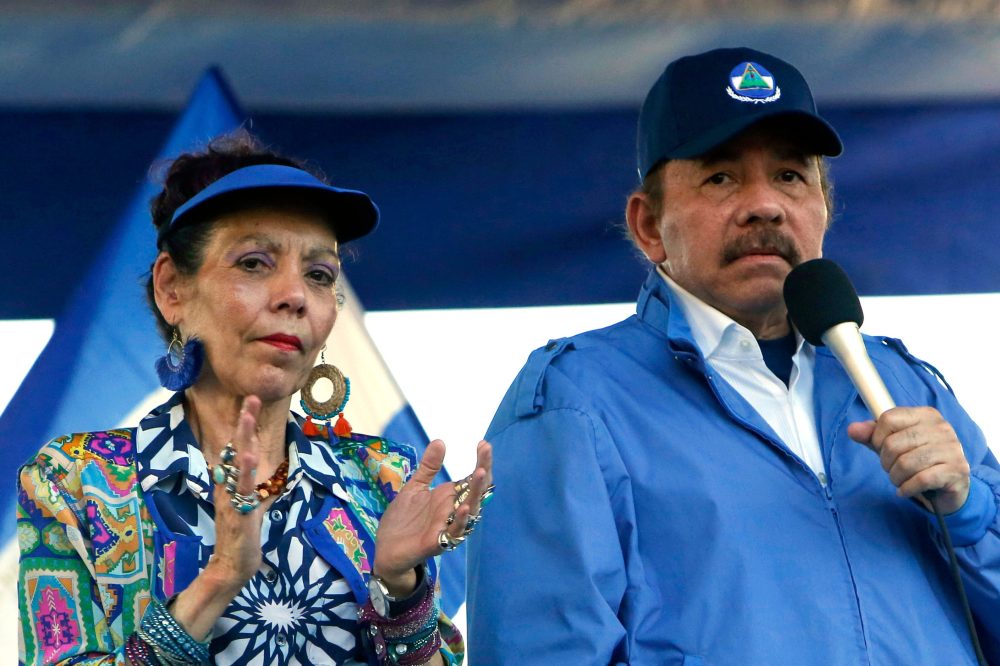
MEXICO CITY — Nicaragua’s ruling government has quietly revoked the practicing licenses of a large number of lawyers in recent days, with a United Nations expert calling it a deliberate “purge of the legal profession” designed to eliminate what little remains of independent oversight in the country.
The nation is governed by husband-and-wife co-presidents Daniel Ortega and Rosario Murillo, who have been systematically crushing opposition since widespread social protests erupted in 2018 — protests the government responded to with violent force.
In the years since, the government has jailed political opponents, religious figures, and journalists, driving thousands out of the country. Hundreds have been stripped of their Nicaraguan citizenship and property. More than 5,000 organizations have been shut down since 2018, including religious groups, local rotary clubs, and scouting organizations.
In recent days, lawyers began noticing their licenses had simply vanished from the Supreme Court of Justice’s official registry — with no warning or explanation given. Reed Brody, an American human rights attorney serving on a U.N. panel of experts focused on Nicaragua, confirmed the removals, as did several lawyers who had their own credentials wiped from the system.
Nicaragua’s government offered no official statement and did not respond when the Associated Press reached out for comment.
Brody said the full extent of the purge was still unclear, but estimated it “would certainly appear to be at least hundreds, if not thousands of lawyers.”
“This follows the pattern that we’ve been seeing for years. First, they closed the NGOs, the universities, the independent media, you know, they’ve gone after the churches, and now it seems the legal profession,” Brody said. “Anyone who might stand between the government and citizens.”
Brody said he was personally aware of at least 20 lawyers who had been affected.
Juan Diego Barberena, a lawyer and human rights defender who has been living in exile in Costa Rica since 2022, was among those whose credentials were erased. He said he knew of at least 25 other colleagues in the same situation.
On Thursday, Barberena attempted to look up his legal accreditation in the government’s online database and found that both his name and license number had been completely removed.
“This is a means of exercising totalitarian control over the legal profession,” Barberena said. “This means that the dictatorship can decide who gets to practice and who doesn’t.”
The tactic mirrors actions the government has taken against exiles who were stripped of their citizenship. Many have reported finding that their birth certificates and other official documents had been erased from government databases as if they never existed.
However, Barberena and Brody noted that this latest round of erasures went further than targeting known dissidents. Some of those affected were simply Nicaraguans living outside the country. Others practiced areas like criminal or family law with no political connection whatsoever. A number were even known supporters of the government, Barberena said.
Brody characterized the move as an effort to strip away the last traces of independence from a judicial system that Ortega and Murillo already effectively control.
“On one hand, it’s an arbitrary measure to punish political dissent,” Barberena said. “On the other, it’s the dictatorship looking medium-term and wanting to prevent lawyers, experts, and academics from participating in the future of the country’s institutions.”
WASHINGTON (AP) — In the days following the shooting deaths of two American citizens in Minneapolis earlier this year, then-Homeland Security Secretary Kristi Noem pledged that the department would move quickly to put body cameras on officers across the nation.
Nearly six months later, that commitment remains unfulfilled — and a new deadly shooting involving federal immigration officers has reignited anger from critics who argue body cameras are essential for holding officers accountable during the ongoing immigration enforcement push.
The ICE officers who were present during the fatal shooting of Lorenzo Salgado Araujo — a Mexican national who had lived in the United States for more than 35 years — were not equipped with body cameras, according to Homeland Security.
No evidence has surfaced to back up the department’s account of what happened, which claims an officer fired after Salgado Araujo used his van to ram an ICE vehicle that was pursuing him. Eyewitnesses dispute that version of events. Body camera footage could have provided crucial clarity about what actually occurred.
The incident has brought renewed attention to ICE’s enforcement methods at a time when arrests are increasing and the department has received a significant influx of congressional funding — a portion of which was specifically set aside to equip officers with body cameras.
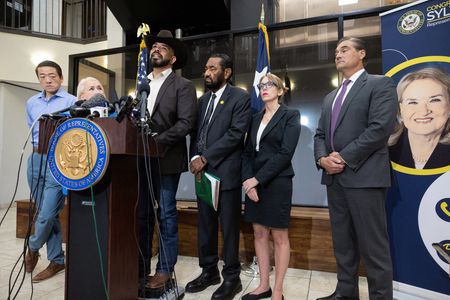
“Even after we’ve given ICE specifically $20 million for body cameras and Kristi Noem promised in February of this year that she was going to purchase them and get them in the field, that here we were in Houston that the agents didn’t have them,” said Rep. Sylvia Garcia, a Democrat from Houston, at a news conference on Friday.
Shortly after Alex Pretti was killed while protesting ICE activity in Minneapolis in January, Noem announced that every Homeland Security officer deployed there would receive a body-worn camera, calling it the start of a nationwide rollout as funding became available.
“We will rapidly acquire and deploy body cameras to DHS law enforcement across the country,” Noem — who has since been replaced by Markwayne Mullin — wrote in a social media post.
Homeland Security stated Thursday that body cameras have now been distributed to more than half of ICE field offices nationwide, with the remaining offices expected to receive them within the next 60 days.
Garcia said she expressed her frustration directly to acting ICE director David Venturella during a phone call, and that Venturella acknowledged fewer than one-third of officers nationwide currently have body cameras. He reportedly told her all officers would be equipped by the end of July.
“Trust me, I will hold him to it, and I will make sure that all my colleagues in Congress and the Democratic caucus hold him to it,” Garcia said.
Michelle Gross, president of the Minnesota-based advocacy group Communities United Against Police Brutality, argued that ICE should halt enforcement operations until every officer has a camera.
“If they’re going to be running around with guns and stopping people, you damn well better have some body cameras,” she said. “This is an agency that’s soaking up an incredible amount of tax dollars and we can’t have any accountability?”
During the Pretti shooting, Homeland Security confirmed that four Border Patrol agents on the scene were wearing cameras. Investigators from Customs and Border Protection used that footage, along with other video sources, to determine that more than one officer fired shots during that incident.
The department has not confirmed whether any ICE officers present at the January killing of Renee Good — a 37-year-old mother of three — were wearing body cameras. Bystander video from both Minneapolis shootings drew intense public scrutiny and fueled widespread outrage.
The former acting head of ICE, Todd Lyons, testified before Congress following the Minneapolis shootings and said body camera footage would eventually be made public — but that footage has not yet been released. Lyons has since retired.
Lyons and his counterpart at CBP, Rodney Scott, told Congress at the time that thousands of their officers were already outfitted with body cameras, with more deployments planned.
“That’s one thing that I’m committed to is full transparency. And I fully welcome body cameras all across the spectrum in all of our law enforcement activities,” Lyons said.
A January court filing revealed that a senior ICE officer, Samuel J. Olson — head of the St. Paul field office — stated in a deposition that body-worn cameras had not been issued to deportation officers working out of that office at a time when roughly 2,000 ICE officers were deployed in Minnesota. Olson estimated the agency would need about six months to complete the equipment and training needed for a full statewide rollout.
The body camera question has surfaced repeatedly during the current administration as growing numbers of ICE and CBP officers carry out the president’s mass deportation agenda. In Chicago, during an operation called “Operation Midway Blitz,” a judge ordered federal immigration officers to wear body cameras, citing the need for evidence in cases involving confrontations with protesters.
Homeland Security officials have pointed the finger at Democrats, saying the officers in Houston lacked cameras because of “back-to-back Democrat shutdowns” — government shutdowns driven by Democratic opposition to the administration’s immigration policies and demands for reforms at the department.
In the aftermath of the Pretti and Good shootings, body cameras represented one of the few areas where both parties expressed agreement. In April, Congress approved $20 million for Homeland Security specifically for “the procurement, deployment, and operations of body-worn cameras” for officers involved in immigration enforcement.
Garcia dismissed the claim that Democrats bear responsibility for the officers’ lack of cameras as “ludicrous.”
“That’s just a freaking excuse, because the bottom line is they made a commitment,” Garcia said.
Graham Platner made his exit from Maine’s U.S. Senate contest official on Friday, submitting formal withdrawal paperwork to the Maine secretary of state’s office — a move that sets off an urgent search by Democrats for a replacement candidate.
The secretary of state’s office received Platner’s paperwork, which was reflected in the office’s online withdrawal list shortly afterward.
In a letter addressed to the secretary of state’s office — which Platner also shared on social media — he wrote that the voters who nominated him “voted for a new kind of politics” that is “representative of people down here in the real world — not billionaires, oligarchs, or the political establishment.” That anti-establishment message had defined his campaign throughout, during which he earned support from progressive figures including Vermont Sen. Bernie Sanders and U.S. Rep. Ro Khanna of California.
“I seek to further the movement we have built together and the future we believe in,” Platner added, offering no specifics about his next steps.
Maine is viewed as a critical battleground for control of the narrowly split U.S. Senate, and Democrats had been eager to field a strong contender capable of unseating Republican Sen. Susan Collins.
The official withdrawal came two days after Platner announced he was stepping aside following a sexual assault allegation, which he has denied. State law allows Democrats to name a replacement before the general election, but that selection must be made no later than July 27.
Just before Platner’s Wednesday announcement, over 100 members of the state Democratic Party committee had already signed on to hold a nominating convention to select a new candidate if he stepped down. The state party has yet to publicly announce when that convention will take place.
A number of Democrats have already declared their interest in the nomination this week. Among them are three candidates who fell short in June’s Democratic gubernatorial primary: former Maine Center for Disease Control and Prevention director Nirav Shah, Secretary of State Shenna Bellows, and former Maine Senate President Troy Jackson.
Additional contenders who have announced their candidacies include Maine Beer Company co-founder Dan Kleban; former 2nd Congressional District candidates Jordan Wood and Paige Loud; state Rep. Valli Geiger; and former Maine Senate candidates David Costello and Andrea LaFlamme.
Apple took legal action against OpenAI on Friday, accusing the maker of ChatGPT of stealing confidential trade secrets as the AI company works to develop its own hardware — a significant breakdown in what had been a working partnership between the two tech giants.
The lawsuit, filed in a California federal court, alleges that the theft was part of what Apple described as a “coordinated pattern of misconduct at an institutional level” by OpenAI.
“This case is about Apple’s former employees stealing Apple’s trade secrets for the benefit of OpenAI,” the court filing states. “Apple brings this suit to put a stop to it.”
Two former Apple employees who are now on OpenAI’s payroll are listed as defendants in the case. The first is Tang Tan, who played a role in designing the iPhone, Apple Watch, and iPod and now serves as OpenAI’s chief hardware officer. The second is Chang Liu, a former electrical engineer whom Apple says was trusted with some of its most sensitive product development work before he left to join OpenAI earlier this year.
OpenAI had not responded to requests for comment as of the time of this report.
While OpenAI has not publicly disclosed the exact nature of the device it is developing, the company has described the project as an effort to create a new way for people to interact with artificial intelligence — one that moves beyond what it calls “traditional products and interfaces.” The initiative is part of a broader industry push to give AI a physical presence, coming roughly a decade after Amazon and Google brought voice-activated speakers into households across the country.
Apple’s lawsuit contends that this hardware effort was built, at least in part, on information taken illegally from Apple.
“OpenAI’s nascent hardware business now rests on the shakiest of foundations, rotten to its core by its illegal reliance on misappropriated trade secrets,” the lawsuit reads.
According to Apple, an internal investigation revealed a pattern of theft involving former employees who went on to work at OpenAI. The company alleges that both Liu and Tan accessed private Apple files and information while already employed by OpenAI. Specifically, Apple claims Liu downloaded several confidential hardware-related documents onto an Apple-issued device he kept after leaving the company. Apple also alleges that Tan instructed job candidates — who were still Apple employees at the time — to bring “actual parts” from Apple to their OpenAI interviews.
Apple says it first contacted OpenAI in February to flag its concerns, but the company never received a reply.
In a statement released Friday, an Apple spokesperson said the company will “always defend our teams’ hard work and innovations, and we are taking all appropriate steps to do so.”
American drivers who had enjoyed weeks of falling gas prices are now facing a reversal at the pump, as fresh military clashes between the United States and Iran sent crude oil prices sharply higher.
According to AAA data, the national average price for a gallon of gasoline climbed 6 cents this week to $3.88 on Friday — the steepest single-week increase since mid-May. The jump came as global oil benchmark Brent crude posted a weekly gain of roughly 5.5%, its strongest weekly performance in eight weeks.
The trigger was renewed fighting centered on the Strait of Hormuz, a critical waterway that carried about 20% of the world’s daily oil and gas supplies before the conflict began on February 28. Attacks on several tankers passing through the strait were followed by retaliatory strikes between Washington and Tehran, and the U.S. subsequently revoked a general license that had allowed the sale of Iranian oil.
“Gasoline prices have rallied alongside the massive move higher in crude oil after several tankers in the Strait of Hormuz were attacked,” said Alex Hodes, director of energy market strategy at brokerage StoneX.
Oil flows through the Strait of Hormuz remain well below pre-conflict levels, raising concerns that even small disruptions could send shockwaves through global fuel markets.
The situation has become a political pressure point for President Donald Trump, whose Republican Party is working to maintain slim congressional majorities heading into November midterm elections. Trump has accused oil companies of price gouging and has pushed gasoline retailers to lower prices more aggressively. The administration has also urged the Justice Department to investigate potential gouging and recently launched a price-cutting program offering discounted fuel at certain locations in Pennsylvania and New Jersey.
Beyond the conflict in the Middle East, supply problems elsewhere are adding to the crunch. Hodes noted that unplanned refinery shutdowns in both Russia and the United States have further squeezed available fuel.
Russia’s refining industry has been battered by repeated attacks, sharply cutting fuel production. Moscow has responded by limiting diesel exports and increasing gasoline imports, which has tightened global supplies and pushed prices higher. Tom Kloza, chief energy adviser at Gulf Oil, described Russian output of gasoline, diesel, jet fuel, and fuel oil as having been “decimated,” with many months of recovery time still ahead.
Domestically, refinery disruptions have compounded the problem. Outages have been reported at Marathon Petroleum’s 146,000-barrel-per-day facility in Detroit, Michigan, and Delta’s 190,000-barrel-per-day refinery in Trainer, Pennsylvania.
The Energy Information Administration reported Wednesday that U.S. gasoline inventories dropped by 1.9 million barrels last week to 212.1 million barrels — nearly 10 million barrels below the five-year seasonal average.
Denton Cinquegrana, chief oil analyst at Dow Jones Energy, noted that gasoline stocks are running below normal levels across every region of the country, with the Gulf Coast showing the most severe shortfall. Inventories there fell to 76.4 million barrels, compared to a five-year average of 82.3 million barrels. The Gulf Coast is the source of the vast majority of the nation’s refined fuel products.
With Middle Eastern and Russian barrels largely off the global market, U.S. refiners have stepped in as key suppliers, boosting exports. U.S. petroleum product exports hit a weekly record of 8.7 million barrels per day in the week ending July 3, according to EIA data.
“The U.S. Gulf of Mexico may see consistent gasoline exports of 1-million b/d and there are bets among Houston traders as to whether 2-million b/d will be achieved for distillate departures,” Kloza wrote to clients on Thursday.
The summer driving season, which runs from June through early September, typically increases gasoline demand. The switch to more expensive summer-blend fuel also raises refining costs, putting additional upward pressure on pump prices.
“It seems prices will mostly drift up and down here in the short-term,” Cinquegrana said.
A $4.7-billion international bridge connecting Detroit, Michigan, and Windsor, Ontario, is expected to open in the near future following an agreement on how toll revenues will be divided between the United States and Canada, according to a Michigan Republican speaking Friday.
Michigan Republican Senate candidate Mike Rogers announced on WJR radio that he had spoken with U.S. Commerce Secretary Howard Lutnick, who informed him that the administration had finalized a deal. Rogers said the agreement would be formally announced within the coming days and would allow the Gordie Howe International Bridge to open shortly thereafter.
A source confirmed the deal had been struck, with the U.S. set to receive 50% of all toll revenue collected at the crossing. The agreement also gives the U.S. the power to veto any toll increase that exceeds 10% above current rates.
The bridge had originally been scheduled for a ribbon-cutting ceremony in early June, but Canadian Prime Minister Mark Carney revealed last month that Canada agreed to push back the opening at the request of the Trump administration.
“We agreed to delay the opening and take the necessary time to resolve outstanding issues,” Carney said.
President Trump had raised objections to the bridge in February, pointing to Canada’s refusal to carry certain U.S. alcoholic beverages in Canadian stores, Canada’s dairy tariffs, and its trade discussions with China as reasons he might block the crossing from opening.
The owner of the competing Ambassador Bridge — which also connects Detroit and Windsor — Matthew Moroun, met with Commerce Secretary Lutnick in February. Weeks before that meeting, Moroun had contributed $1 million to a political action committee aligned with Trump.
Construction on the new bridge began in 2018 and was funded entirely by Canada after the U.S. declined to contribute financially. The construction costs were intended to be recovered through toll collections over a 30-year period, though it remains unclear how the newly agreed revenue split will affect that repayment plan.
The new crossing is expected to relieve congestion on the Ambassador Bridge, which serves as the largest freight port along the U.S.-Canada border. In 2023 alone, the Ambassador Bridge handled $126 billion worth of goods transported by commercial trucks.
According to a University of Windsor study, the new bridge will shave 20 minutes off crossing times, saving truckers an estimated $2.3 billion over the next 30 years.
The bridge announcement comes amid ongoing trade tensions between the two countries. Trump has repeatedly threatened Canada during his second term and has significantly raised tariffs on the northern neighbor. Last month, Trump also suggested he might not renew the existing free trade agreement with Canada and Mexico.
A federal judge in Washington agreed Friday to temporarily halt a union lawsuit that had been trying to prevent the Trump administration from effectively shutting down the nation’s top consumer financial watchdog agency.
U.S. District Judge Amy Berman Jackson issued the pause, with both sides agreeing to revisit the case after the Senate decides whether to confirm Brian Johnson — a Capital One senior executive — as the new director of the U.S. Consumer Financial Protection Bureau, according to court records.
Current agency leadership had argued that Johnson should be given the opportunity to weigh in on a proposed mass layoff plan that the administration has spent more than a year fighting to implement. That plan, unveiled in April, would shrink the CFPB workforce to just 556 employees — fewer than one-third of the staff the agency had when President Donald Trump first took office. The proposal would eliminate 80% of positions in the enforcement division and 85% in the supervision division.
In her Friday order, Judge Jackson directed both parties to notify her within two days if the Senate votes to confirm Johnson as director.
Johnson, a Republican who previously held a senior role at the CFPB, is expected to take over from Russell Vought, Trump’s budget director who has been serving as acting CFPB head. Vought had publicly stated his intention to abolish the agency entirely and is legally required to step down at the beginning of August.
A federal appeals court last month cleared the way for Judge Jackson to consider lifting a preliminary injunction she had previously put in place, which barred the administration from carrying out mass firings at the CFPB while courts determine whether such action is legal. Friday’s order puts that process on hold for now.
In a joint court filing, both sides stated that if Johnson is confirmed, he should be allowed to review the layoff plan and, in their words, “decide whether he would like to pursue it.”
The CFPB was established by Congress in the aftermath of the 2008 financial crisis, with a mission to crack down on predatory lending and oversee consumer financial industries that played a central role in that economic collapse.
Trump and other administration officials have called for the agency to be eliminated altogether, arguing it engages in politically motivated enforcement and places excessive burdens on businesses. Consumer advocates have pushed back strongly against that position, calling it an unlawful benefit to politically connected corporations that puts ordinary Americans at risk.
Apple has taken legal action against artificial intelligence company OpenAI and two of its former employees, accusing them of stealing confidential company information to give OpenAI an advantage as it moves into the consumer hardware market. The lawsuit was filed Friday in the U.S. District Court for the Northern District of California.
The complaint names Chang Liu, who previously served as a senior system electrical engineer at Apple, and Tang Yew Tan, a former Vice President of Product Design for iPhone and Apple Watch. OpenAI Foundation, OpenAI Group PBC, and io Products are also listed as defendants. None of the parties responded immediately to requests for comment.
According to Apple’s filing, Liu failed to return a company-issued laptop after leaving the company and later exploited an authentication vulnerability to gain access to Apple’s internal network, where he allegedly downloaded “dozens of Apple’s confidential hardware-related files.”
Apple further claims that Tan, who now serves as OpenAI’s hardware chief, was “methodically using Apple’s confidential information to benefit OpenAI” — including emailing himself details about Apple suppliers and internal industry summaries before his departure from the company.
The lawsuit also alleges that Tan encouraged Apple workers to bring company parts to job interviews at OpenAI for what were described as “show and tell” sessions. Apple’s filing references one incident in which a job candidate at OpenAI reportedly said he “didn’t even know we could take those from the office.”
Apple noted in the filing that more than 400 of its former employees now work at OpenAI, adding that “it is not surprising” that some of them possess knowledge of its confidential information. However, the company was direct in its position: “That OpenAI now employs people who were once entrusted with Apple’s trade secrets does not entitle OpenAI to use that information to jumpstart its hardware efforts.”
The suit also alleges that OpenAI employees reached out to Apple suppliers seeking confidential information, with one supplier allegedly being asked to perform what Apple described as a secret metal finishing technique — under the mistaken belief that OpenAI had Apple’s authorization to use it.
OpenAI’s interest in consumer hardware grew significantly after it acquired the startup io Products — founded by former Apple designer Jony Ive — in a $6.5 billion deal last year. Ive is not named in the lawsuit.
The legal battle has been building for some time. Apple stated in its complaint that it reached out to OpenAI back in February, expressing concern that its confidential information was ending up in OpenAI’s hands and requesting a conversation about the issue. Apple says it received no response. A source familiar with the situation told Reuters in May that OpenAI had been weighing its own legal options against Apple, though it was considering stopping short of a full lawsuit.
Despite the conflict, the two companies have maintained a business partnership. In 2024, Apple announced that its “Apple Intelligence” platform would be integrated across its apps, including Siri, and that ChatGPT would be made available on Apple devices. The arrangement lets users pull up ChatGPT results through Siri, and iPhone users can sign up for ChatGPT memberships directly through their iOS settings.
Apple also recently rolled out a long-awaited redesign of Siri — an update that came two years after the company first promised significant improvements that were repeatedly pushed back.
A grieving mother broke down in tears Friday, urging anyone with information to come forward about the mysterious death of her teenage son, whose body was recovered on a Mississippi barrier island after he traveled there over the Fourth of July holiday with three white friends.
“We just want to know what happened and why our baby didn’t come home,” said Christine Wonsley, struggling to hold back tears during a press conference. The death of her son, Nolan Wells, has ignited a firestorm on social media, with many raising questions about race in America.
Wells, 18, was found dead on July 6 at the northwestern end of Horn Island, a narrow barrier island along the Gulf of Mexico. He had gone to the island on the Fourth of July with a group of friends he had known from high school in Ocean Springs, Mississippi. At Friday’s press conference, a lawyer representing the Wells family raised several troubling questions — including why Wells’ phone was not found near his body, but instead was in the possession of one of the friends who had accompanied him.
Social media users have been circulating videos and piecing together timelines, though authorities say those videos have not been verified. For many Black Americans, the case has reopened painful conversations about racism and about long-standing disparities in how much attention missing persons cases involving Black individuals receive compared to others.
While many have called for a full and transparent investigation, some voices have urged the public to wait for official findings before drawing conclusions.
ABC News has reported that investigators believe Wells may have drowned, though no cause of death has been officially ruled out. The Jackson County Sheriff’s Office, which is leading the investigation, confirmed to Reuters on Friday that the case remains active and ongoing, but declined to share further details.
Civil rights attorney Ben Crump, who is representing the family and assisting with an independent investigation that includes a private autopsy, spoke at Friday’s press conference in New York alongside Rev. Al Sharpton and Wells’ parents. Crump outlined several key concerns about the case.
Chief among them: the three friends who were with Wells say he told them he wanted to remain on the island with a young woman when they departed on the afternoon of July 4 — but that young woman has told a different story, saying Wells actually got on the boat with the boys when they left. Crump also noted that videos circulating online appear to show Wells in a heated dispute with his friends, though Reuters was unable to independently verify those videos.
Adding to the family’s suspicions, Wells’ phone was not recovered with his body. His mother located it using the Life360 tracking app and found it in the possession of one of the young men who had been with Wells on the island. She also said it appeared that several social media messages had been deleted from the phone by someone.
On July 7, the Jackson County Sheriff’s Office issued a public statement asking anyone who may have witnessed anything involving Wells on Horn Island on July 4 — or who has relevant photo or video evidence — to come forward and assist with the investigation.
Three men taken into custody during an immigration enforcement operation in Houston are pushing back against the account provided by U.S. Immigration and Customs Enforcement surrounding a shooting that left someone dead.
The detainees are challenging ICE’s version of events, specifically the agency’s assertion that its agents felt threatened during the incident that turned fatal. Their dispute puts the official narrative at odds with what those who were present say actually happened.
Patriotic art and music are stepping into the spotlight this year, as the Trump Administration steers federal arts funding in a new direction — away from diversity, equity, and inclusion initiatives and toward works that celebrate American heritage.
The shift in priorities at the National Endowment for the Arts is reshaping which organizations and projects are likely to receive support. Among those who stand to benefit are groups whose missions already align with patriotic themes.
One example is the Reagan Presidential Library, which is highlighting a new orchestral and video work centered on episodes from the life of the 40th president. The project, which includes what is being called “The Ronald Reagan Overture,” fits squarely within the administration’s new vision for federally supported arts programming.
For institutions like the Reagan Library, the changing funding environment is not a challenge — it is an opportunity to bring work they have long championed to a wider audience.
SAWYER, Mich. — A newly completed bridge linking Detroit to Canada is on track to open by the end of this month, after officials from both the United States and Canada worked out an agreement to settle the dispute that had been holding things up. Two people directly involved in the negotiations confirmed the deal, though they were not authorized to speak publicly ahead of a formal announcement.
Commercial traffic across the bridge is anticipated to begin before August 1st, according to two officials with knowledge of the situation. A date for the official ribbon-cutting ceremony has not yet been determined.
The opening had originally been planned for June 12th, but the Windsor-Detroit Bridge Authority announced a postponement, saying both nations still needed time to work through “outstanding issues.” The delay came after President Donald Trump had previously threatened to block the bridge from opening.
Republican U.S. Senate candidate Mike Rogers indicated during a Friday interview that a resolution was imminent. “I had a conversation with the secretary yesterday, Secretary of Commerce Lutnick, and the deal will be announced in the next few days,” Rogers said on WJR radio. “This is getting wrapped up. That bridge is going to get open.”
The stalled opening of the Gordie Howe International Bridge became a flashpoint in one of the nation’s most closely watched Senate contests. Democratic candidate Mallory McMorrow, who has since withdrawn from the race, attempted to use the controversy to put Trump and Republicans on the defensive.
Back in February, Trump took to social media to demand that Canada hand over at least half of the bridge’s ownership to the U.S. government, along with other unspecified conditions — part of his wider trade tensions with Canada.
Canada funded the bridge’s construction. The project was originally negotiated by Rick Snyder, the former Republican governor of Michigan, with construction underway since 2018 at a total cost of nearly $4.4 billion.
The 1.5-mile-long span crosses the Detroit River, connecting Detroit with Windsor, Ontario. It is named in honor of the late Canadian hockey legend Gordie Howe, who played 25 seasons with the Detroit Red Wings. The bridge is expected to serve as a major economic link between the U.S. and Canada.
Jointly owned by Canada and the state of Michigan, the toll bridge is designed to help relieve traffic congestion at the existing Ambassador Bridge and the Detroit-Windsor tunnel.
Detroit and Windsor have shared close community ties for generations, with residents on both sides of the border regularly crossing for shopping and entertainment. Windsor had a population of roughly 230,000 as of 2021, and like Detroit, its economy is heavily rooted in manufacturing and the auto industry.
Most commercial trade between the two cities has historically moved across the Ambassador Bridge, a nearly century-old, privately owned crossing that sits closer to downtown Detroit than the Gordie Howe Bridge. The Moroun family owns the Ambassador Bridge, and federal campaign finance records show that Matthew Moroun donated $1 million to Trump’s super PAC earlier this year.
Thousands of Americans have fallen ill from a parasite commonly tied to contaminated fresh produce — one that can trigger weeks of watery diarrhea. But health experts say you don’t have to give up your summer fruits and vegetables to stay safe.
Investigators have yet to pinpoint the exact source of what is shaping up to be one of the country’s largest cyclospora outbreaks in recent years. Tracking down the culprit is difficult because the contaminated ingredient is often something used across many different recipes — think basil or cilantro.
The good news: cyclospora infections can typically be treated with antibiotics and rarely lead to serious health problems.
Here’s what you can do to lower your risk:
Cyclospora is a tiny, round parasite that the U.S. Centers for Disease Control and Prevention describes as causing watery diarrhea “with frequent and sometimes explosive bowel movements.”
More than 1,500 people in Michigan alone have been diagnosed with the infection, and investigations into similar illnesses are underway in 30 additional states. This makes it the largest such outbreak in Michigan’s history and among the biggest nationally in years. No deaths have been reported.
These outbreaks are notoriously difficult to investigate. Tracing the food source can take months, and sometimes investigators never find a definitive answer. In previous outbreaks, people became infected after eating fruits or vegetables irrigated with water contaminated by feces. The situation is further complicated by the fact that food distributors may send the same contaminated product to both grocery stores and restaurants, making it hard to trace where a tainted item originated.
Cyclospora outbreaks tend to peak in late spring and summer. The parasite thrives in warm conditions, infects the intestines, and spreads through feces.
Although the source of the current outbreak remains unknown, Dr. Erika Noel — an assistant professor at Hawaii’s medical school and a pediatrician on the island of Kauai — says the situation is a good reminder to practice basic hygiene. That means washing hands thoroughly with soap and water after using the bathroom and before preparing food.
It’s worth noting that alcohol-based hand sanitizers are not effective against cyclospora. Soap and water, however, are highly effective at eliminating or removing the parasite from your hands.
Past outbreaks have been connected to raspberries, basil, cilantro, snow peas, and pre-mixed salads.
Dr. Noel offers the following tips for washing produce: When cleaning leafy herbs like cilantro or basil, separate the individual leaves before rinsing. For green onions, trim the roots, peel away the outer layer, and rub them under running water. Cooking produce to an internal temperature of at least 158 degrees Fahrenheit (70 degrees Celsius) will kill the parasite.
Research also suggests that washing produce in a vinegar solution can help. While vinegar won’t kill cyclospora outright, it can help dislodge it. Dr. Noel recommends soaking produce in a bowl of three parts water to one part vinegar for a few minutes, then using a salad spinner with plain water to wash away any lingering vinegar taste.
Instead of buying pre-mixed bagged salad and trying to wash individual leaves, consider purchasing a whole head of lettuce and removing the outer leaves yourself.
For melons, scrub the outer rind thoroughly before cutting — a knife can transfer germs from the surface into the fruit as it cuts through.
Peel fruits and vegetables whenever possible, and don’t overlook cleaning your cutting boards and countertops as well.
Some produce is harder to clean than others. Items with tight crevices or delicate skin — like broccoli and cauliflower — can be particularly challenging. Because berries are so difficult to clean effectively, Dr. Noel suggests cooking them in pies or turning them into jam rather than eating them raw. Root vegetables such as carrots, potatoes, and radishes, which grow underground and carry heavy soil, also require extra care.
Even if a bag of pre-mixed salad is labeled as pre-washed, Dr. Noel recommends washing it again in a water-and-vinegar solution before eating.
Ultimately, Dr. Noel wants people to keep eating their fruits and vegetables. The health benefits, she says, far outweigh the risks posed by this outbreak.
“We don’t need to panic,” she said. Simply staying aware and maintaining good hygiene habits — which are always a smart practice — goes a long way toward keeping you safe.
Nigerian security forces have successfully rescued at least 39 schoolchildren and six teachers who were held captive after being kidnapped by gunmen in the country’s southwestern Oyo state, a spokesperson for the Nigerian presidency announced Friday.
The victims were taken on May 15 when armed men stormed multiple schools in Oyo’s Oriire district. The abduction lasted nearly two months before authorities were able to secure their release.
State officials in Oyo had previously reported that one of the kidnapped teachers died while being held captive. Presidential spokesperson Bayo Onanuga confirmed in an official statement that eight of the suspected kidnappers have been apprehended and remain in custody.
The statement included remarks from President Bola Tinubu, who vowed that his administration “will get justice for these children and their teachers” as well as for the family of the teacher “who the terrorists gruesomely murdered.”
Mass abductions carried out by armed criminal groups have emerged as a growing security crisis across Nigeria in recent years. These gangs have taken advantage of weak law enforcement presence and poorly monitored borders to target travelers, students, and rural residents, typically demanding cash or goods in exchange for releasing their captives.
Schools have frequently been singled out as targets, though such attacks occur less often in Nigeria’s southwestern region compared to other parts of the country.
The Philadelphia Phillies will have a strong presence in this year’s Home Run Derby, with two of their own set to compete when the event takes place Monday at Citizens Bank Park.
Kyle Schwarber made the announcement Friday that he will be taking part in the exhibition alongside fellow Phillie Bryce Harper, giving the host city’s fans plenty to cheer about.
Several other players have also been confirmed for the competition, including Tampa Bay Rays third baseman Junior Caminero, New York Yankees first baseman Ben Rice, Kansas City Royals outfielder Jac Caglianone, St. Louis Cardinals right fielder Jordan Walker, and Boston Red Sox first baseman Willson Contreras.
Schwarber enters the contest as the current major league home run leader, having blasted 32 this season. This won’t be his first time in the derby — he made it all the way to the finals back in 2018 while playing for the Chicago Cubs, only to lose to Harper, who was then with the Nationals when Washington hosted the All-Star festivities that year.
His most recent Derby appearance didn’t fare as well. In 2022, Schwarber was eliminated in the opening round.
Fashion retailer Tailored Brands took a major step toward going public on Friday, releasing its initial public offering documents for the U.S. market.
The move comes at a favorable time for companies looking to list on U.S. exchanges, as stronger stock markets, better valuations, and growing demand for artificial intelligence investment have helped boost the IPO landscape.
The company, headquartered in Houston, Texas, had quietly submitted its IPO paperwork back in April before making the filing available to the public on Friday.
Goldman Sachs, Morgan Stanley, and Jefferies are among the financial institutions handling the underwriting for the offering.
Tailored Brands plans to list its shares on the Nasdaq stock exchange under the ticker symbol “MENW.”
LONDON — Novak Djokovic walked off Centre Court on Friday with a loss but not a broken spirit, after world number one Jannik Sinner thoroughly outplayed the Serbian legend in a one-sided Wimbledon semifinal, dashing Djokovic’s bid for a record 25th Grand Slam title.
The seven-time Wimbledon champion received a thunderous standing ovation from the crowd after the 6-4, 6-4, 6-4 defeat, leaving many spectators wondering if they had witnessed his final match at the iconic grass-court tournament. But Djokovic quickly put those concerns to rest.
When reporters asked whether he planned to return to Wimbledon as a 40-year-old for the tournament’s 150th edition next year, a composed Djokovic replied, “I would like to, at least one more time. Let’s see.”
Djokovic openly acknowledged the lopsided nature of the match, calling it “a good old blowout,” but he was quick to highlight the positives from his overall run at this year’s tournament. He had battled past Canadian third seed Felix Auger-Aliassime in the longest match of the tournament earlier in the week — a result he said proved he still belongs at the top of the sport.
“Of course, I’m disappointed. I wanted to win Wimbledon. That’s the reason why I’m still pushing myself so hard,” said Djokovic, who claimed his 24th Grand Slam title at the U.S. Open in 2023.
“I’m proud of what I achieved three nights ago. Felix is number three, fourth player in the world. Proven to myself and others that I can still play at the highest level, and I have,” he added.
“I reached the last four of Wimbledon. Losing in straight sets against the best player in the world, okay. It is what it is. But the tournament was positive in terms of the attitude on the court, the fighting spirit, the dedication. I mean, it’s still there.”
It’s worth noting that even Sinner, the world’s top-ranked player, lost to Djokovic earlier this year in the Australian Open semifinals, underscoring that the veteran Serb remains a formidable opponent despite his age.
With Wimbledon now behind him, Djokovic is setting his sights on the U.S. Open, the year’s final Grand Slam event.
“A little bitter taste stays as I wasn’t at the desired level today. But we turn the next page and we move on,” he said.
“I don’t have any pressure or no one is forcing me to play. I do it because I really want to and because I still can. I still can play as a top-10, top-5 player. Let’s see what the future brings.”
The Cincinnati Reds activated third baseman Ke’Bryan Hayes from the 10-day injured list on Friday, returning the veteran infielder to action after an extended absence.
To make a corresponding roster move, Cincinnati placed infielder/outfielder Matt McLain on the injured list due to a left calf strain. That designation was made retroactive to Wednesday.
Hayes, who is 29 years old, had been sidelined since May 20 after being diagnosed with a bulging disc in his back. Before the injury, he appeared in 44 games and posted a .142 batting average with two home runs and five RBIs.
The two-time Gold Glove winner brings a strong defensive reputation to the hot corner. Over his major league career spanning 672 games with the Pittsburgh Pirates from 2020 to 2025 and the Reds, Hayes holds a .247 career batting average with 44 home runs and 230 RBIs.
McLain, 26, has put together solid numbers this season, hitting .190 with eight home runs, 25 RBIs, and 11 stolen bases across 83 games before landing on the injured list.
More than 900 Delaware residents were able to get home safely thanks to a state-run program that offers free ride-share vouchers on nights when impaired driving tends to spike.
The Delaware Office of Highway Safety reported that 904 people took advantage of its Sober Rides program during the 2025-2026 enforcement period. The initiative gave residents a chance to claim vouchers on some of the year’s most high-risk nights for drunk driving.
Vouchers were available on four occasions: Thanksgiving Eve 2025, New Year’s Eve 2025, St. Patrick’s Day 2026, and the Fourth of July and America’s 250th anniversary celebration.
The program is designed to give people a no-cost alternative to getting behind the wheel after drinking, with the goal of reducing alcohol-related crashes and fatalities on Delaware roads.
Travelers heading along Paper Mill Road (Route 72) are facing a lane shift in both the eastbound and westbound directions, according to traffic officials.
The lane shift is located between Limestone Road (Route 7) and Willow Creek Lane and is expected to remain in place until 6 a.m.
Drivers in the area are encouraged to slow down, stay alert, and follow any posted signage as they pass through the affected stretch of roadway.
A Houston community is mourning the death of a Mexican immigrant who was fatally shot by federal immigration agents following an attempted traffic stop.
Lorenzo Salgado Araujo, 52, was a Mexican national who had spent more than three decades working in the construction industry. He was also a father of three children.
According to reports, Immigration and Customs Enforcement agents attempted to pull Salgado Araujo over when the confrontation turned deadly. The shooting has left the surrounding neighborhood shaken.
In the days and weeks leading up to the fatal encounter, residents in the area had begun taking notice of a growing number of ICE agents operating in their community. The increased federal immigration presence had already put many neighbors on edge before the shooting occurred.
A makeshift memorial has since been set up near the scene, where mourners — including María Guadalupe Rodríguez — gathered to pray and pay their respects to Salgado Araujo.
The incident has drawn attention to the broader impact of intensified immigration enforcement efforts in residential neighborhoods across the country.
The Trump administration officially finalized a sweeping change Friday to how federal agencies handle threatened species protections, stripping out regulatory language designed to shield wildlife habitats from damage.
The revision narrows the scope of the Endangered Species Act, a law now five decades old that has been widely credited with pulling species such as the bald eagle and California condor back from the brink of extinction, along with many other animals and plants.
The departments of Interior and Commerce announced the finalized rule, saying it will lower permitting and compliance costs for a range of industries including energy producers, agricultural operations, and fishing interests. The change aligns with President Donald Trump’s broader push to roll back regulations he argues place unnecessary burdens on American businesses.
Interior Secretary Doug Burgum defended the move in a statement, saying: “This action restores common sense, respects private property, provides much-needed certainty for landowners and follows the statute Congress actually passed.”
The Endangered Species Act plays a central role in federal decision-making when agencies review permit applications for oil and gas extraction, mining, electric transmission lines, and other projects on federal lands and waterways. Under the law, agencies are required to assess how proposed projects might affect species listed as threatened or endangered.
The newly finalized rule removes habitat destruction from the legal definition of “harm” under the act. In practical terms, this means project developers would be permitted to degrade or destroy areas where threatened species live, as long as no animals are directly injured or killed in the process.
The rule was first proposed in April of last year.
Philadelphia Phillies power hitter Kyle Schwarber has been officially added to the lineup for the Home Run Derby, set to take place Monday night at Citizens Bank Park in Philadelphia.
Schwarber will compete alongside his Phillies teammate Bryce Harper in the eight-man bracket, giving the home crowd two familiar faces to cheer on. Also confirmed for the competition are Boston’s Willson Contreras, Kansas City’s Jac Caglianone, Tampa Bay’s Junior Caminero, St. Louis’ Jordan Walker, and the New York Yankees’ Ben Rice. One spot in the field remains open, with that participant yet to be announced.
Heading into Friday’s games, the 33-year-old Schwarber tops the major leagues with 32 home runs on the season. A four-time All-Star, Schwarber has established himself as one of baseball’s premier power hitters, having launched 219 home runs since 2022 — second only to Aaron Judge, who has 227 over that same stretch.
This will mark Schwarber’s third time competing in the Home Run Derby. He reached the finals back in 2018, where he fell to Harper at Nationals Park, and returned to the competition in 2022, where he was eliminated in the opening round by Albert Pujols.
The University of Delaware men’s golf program is bolstering its lineup with a new transfer addition. Head coach Brendon Post announced Friday that Pattrasuth Boonthumrongkit has joined the team through the transfer portal.
Boonthumrongkit comes to Newark after spending three seasons at Gardner-Webb University, where he compiled a stroke average of 75.78 across 32 rounds of competitive play.
Farmers saw a modest boost in peanut prices during the week ending July 4, according to the latest report from the U.S. Department of Agriculture’s National Agricultural Statistics Service.
The average price received by farmers for all farmer stock peanuts came in at 24.1 cents per pound for that reporting week — an increase of 2.9 cents compared to the prior period.
ABUJA, Nigeria — Students who were taken captive by Muslim militants in Nigeria’s southwestern Oyo state have been freed, the country’s government announced Friday.
Government spokesman Bayo Onanuga did not provide an exact count of how many students were rescued. However, when the kidnappings occurred on May 15, authorities reported that more than 40 people had been taken. One teacher who was abducted along with the students was killed shortly after the incident.
Onanuga said eight militants were taken into custody during the rescue operation, and an undisclosed number of additional militants were killed in the process.
The kidnappings drew widespread attention in part because they took place in a southern state — a significant shift from the country’s usual pattern, as most such abductions had previously occurred in Nigeria’s northern regions.
Nigerian President Bola Tinubu released a statement praising the effort, saying: “This successful military operation has ended the siege and standoff of over 50 days and has brought relief to the entire nation and the affected families in particular.”
During the same week as the Oyo abductions, dozens of children were also kidnapped in Borno, which is considered the center of Nigeria’s ongoing security crisis.
School abductions have become a recurring problem across Nigeria, where armed militant groups frequently target educational institutions as a way to pressure the government and demand ransom payments.
King Charles III welcomed Prince Harry and his entire family on Friday for the first time in years, as both sides work to heal a deep divide that began when Harry and his wife walked away from royal life and settled in the United States six years ago.
Harry, his wife Meghan, and their two children — Prince Archie and Princess Lilibet — gathered with the king and Queen Camilla at Highgrove House, a country estate located to the west of London.
The Duke of Sussex had arrived in the United Kingdom on Monday to take part in several charity engagements, though those events were quickly overshadowed by widespread speculation about whether a family meeting would take place.
British media outlets buzzed with questions about whether Meghan, the Duchess of Sussex, would make the trip, and perhaps more significantly, whether the couple would bring their children so they could spend meaningful time with their grandfather, King Charles.
The king’s calendar is typically planned well in advance, making any last-minute family gathering difficult to arrange. The timing was also complicated by the children’s upcoming school schedule and their home base in California, leaving only a narrow window for such a visit.
That urgency created friction between Harry and royal staff earlier in the week. The tension became public when palace officials initially extended an invitation for Harry to stay at Buckingham Palace, only to pull it back after the prince did not respond quickly enough.
Harry’s trip also overlapped with the conclusion of his final legal effort against British tabloid publishers. A judge determined that Harry had not successfully demonstrated his privacy rights were violated by the publisher of the Daily Mail.
His ongoing legal battles have long been a point of contention within the royal family. Harry has said he wants to make peace with his father, who is 77 years old and currently undergoing treatment for a form of cancer that has not been publicly identified.
Part of Harry’s motivation for the visit was also to give his children a chance to bond with their grandfather. Archie, now 7, and Lilibet, now 5, first encountered the king during events marking the late Queen Elizabeth II’s Platinum Jubilee back in 2022 — and are now old enough to retain those memories. The gathering was considered a private affair, and no photographs will be made available to the public.
The rift between Harry and the broader royal family deepened after he and Meghan gave up their official duties and moved to California, where they pursued media and entertainment ventures away from the constraints of palace life.
Relations hit rock bottom after Harry released a tell-all memoir containing unflattering portrayals of royal family members and serious allegations about the relationship between the monarchy and the press.
Among the more damaging claims in his book, titled “Spare,” was that royals leaked information about one another to journalists in exchange for favorable coverage. Harry was particularly critical of Queen Camilla, alleging she shared private conversations with the media as part of an effort to improve her public image following her long affair with Charles while he was still heir to the throne.
Following a failed court challenge last year over his security arrangements, Harry signaled a desire to rebuild family ties — even while suggesting the palace may have deliberately blocked his access to police protection as punishment for leaving royal life.
“I would love reconciliation with my family. There’s no point in continuing to fight anymore,” Harry told the BBC. “I don’t know how much longer my father has.”
WASHINGTON (AP) — The National Mall in Washington transformed into a sprawling celebration of American culture as the Great American State Fair ran for 16 days, drawing visitors to experience the sights and traditions of states and territories from across the country.
The event, held as part of the nation’s 250th anniversary festivities, featured a 110-foot Ferris wheel as one of its centerpiece attractions. Visitors also explored state pavilions and watched cowboy demonstrations among the many offerings on display.
The fair served as a showcase for the rich history, diverse cultures, and longstanding traditions that define the United States and its territories.
This story is accompanied by a photo gallery curated by AP photo editors.
COLUMBUS, Ohio — A rural Ohio county is being pushed to its financial limits after 16 children were discovered living in deplorable conditions, forcing local officials to seek outside help both for prosecuting the accused family members and for providing care to the children.
Vinton County, the smallest and one of the poorest counties in Ohio, is stretched thin handling the case of the Siders family. The county covers 415 square miles of isolated Appalachian terrain and has just one traffic light and a single grocery store — serving roughly 12,600 residents with the smallest budget of any of Ohio’s 88 counties.
State officials have called the situation “an unprecedented child welfare crisis” for the county.
On Tuesday, 73-year-old Gary Siders Sr. was released from jail after a judge adjusted his bond so he no longer had to pay upfront. He was then transferred out of the county for medical treatment.
Vinton County Prosecutor William Archer Jr. explained that Siders had fallen while in jail and it became clear he was dealing with a serious health issue requiring specialized care — care that would have been billed to the county if he remained in the regional jail.
“Based on the information the county was provided, his medical care could potentially bankrupt Vinton County,” Archer told reporters Wednesday. “We were not going to put that burden also on our local taxpayers.”
Vinton County Common Pleas Judge Laina Fetherolf Rogers specified in her order that if Siders recovers enough to leave the hospital, the GPS monitoring device he’ll be required to wear will also be covered by the state.
Siders Sr. faces a felony child endangerment charge. Three other family members are also charged: his 67-year-old wife Christina Siders; their 36-year-old son Gary Siders Jr.; and Gary Jr.’s 33-year-old wife Elizabeth Siders, who is the children’s mother. All four have entered not guilty pleas, and some of their defense attorneys have urged the public not to jump to conclusions before all the facts come out.
To ease the burden on the prosecution, the judge approved Archer’s request to bring in three special prosecutors — Ohio Attorney General Andy Wilson, Assistant Attorney General Kara Keating, and Highland County Prosecutor Anneka Collins, who specializes in child abuse cases — all working without additional pay, meaning their own offices will absorb the costs.
The Vinton County Sheriff has also asked for assistance from the state Bureau of Criminal Investigation.
Mike Davis, the prosecutor for neighboring Pike County — another financially struggling southern Ohio county — said the dilemma is common for small counties.
“A lot of small counties like us, we’re in the same boat as Vinton,” Davis said. “If a person has a medical issue, do we pay the medical bills and keep them in jail and blow our budget, or do we let them out and risk something happening that’s worse?”
Davis, who dealt with a major case of his own when Pike County handled the 2016 Rhoden family murders, said large criminal cases ripple through every corner of a small county’s government — shifting workloads among offices that may have just one or two employees, while also requiring larger spaces and reliable internet access for outside investigators and media.
“Money’s green and it’s absolute. You either have it or you don’t,” Davis said.
Archer said officials carefully evaluated the decision to release Siders Sr. and determined it posed no risk to the public, given his health condition and the fact that the alleged crimes involved only family members.
When the 16 children were removed from the home, the number of children in temporary county custody instantly more than doubled. On Monday, a state legislative panel is expected to vote on a $1 million emergency funding request from the Ohio Department of Children and Youth to help Vinton County manage what the agency described as an “emergent and developing child protection crisis.”
The state estimates placement costs for the siblings will run between $150 and $250 per child each day — adding up to roughly $850,000 annually, which is more than three times what Vinton County’s levy generates for combined children’s and senior services.
The funding would also help cover additional costs such as court expenses and police overtime connected to the case.
The children ranged in age from 18 months to 18 years old. Some were described as “feral” and unable to speak. Authorities allege the children had been confined to a room approximately 12 feet by 12 feet for several years. Two of the children required emergency hospital transport by air.
Archer said this week that all the children are currently “safe and being cared for,” though he offered no further details.
Court records show the eldest child was born in May 2008, about two months after Gary Siders Jr. — then 18 years old — and Elizabeth, who was 15 at the time, crossed into West Virginia to marry at the Mason County Courthouse. Her parents had given their consent. Records indicate she has been pregnant most years since, including several sets of twins.
The United States announced a new round of Iran-related sanctions on Friday, citing Iran’s renewed attacks on international shipping vessels passing through the Strait of Hormuz, according to the Treasury Department.
Among those targeted is Ali Ansari, an Iranian banker and businessman who operates out of Dubai. Ansari had previously faced sanctions from Britain for his alleged role in providing financial support to Iran’s Revolutionary Guards, along with other individuals and entities named in the action.
The Treasury Department described Ansari as a “key financier” for Iran’s new leader Mojtaba Khamenei. Officials allege he redirected publicly funded wealth into a sprawling international portfolio of real estate and commercial assets, enriching himself, government elites, and the Islamic Revolutionary Guard Corps, also known as the IRGC.
Additionally, Treasury’s Office of Foreign Assets Control, or OFAC, took aim at major Iranian exchange houses. Officials say those operations moved billions of dollars each year on behalf of sanctioned Iranian banks, hiding the activity behind multiple layers of shell companies to conceal the government’s illicit financial dealings.
The announcement came on a relatively calm day following a week of renewed hostilities. During that period, three commercial tankers belonging to Qatar and Saudi Arabia came under Iranian fire. The attacks triggered U.S. strikes on Iranian targets, which in turn prompted Iran to launch retaliatory strikes against U.S. military installations in Gulf states.
Altera, a maker of programmable chips that was separated from Intel, is now growing at approximately 20% annually and more than doubling its operating income as it works toward an eventual stock market debut, the company’s chief executive said in a recent interview.
The company achieved full independence last September after Intel agreed to sell a 51% ownership stake to Silver Lake for $4.46 billion, a deal that placed Altera’s total value at $8.75 billion. Intel continues to hold the remaining 49% stake.
Chief Executive Raghib Hussain, who previously worked at Marvell Technology before taking the helm when Intel spun off Altera, said the company grew more than 20% last year and anticipates mid-20% growth again in the current year. Because Altera remains privately held, it does not release specific financial figures.
Hussain described his approach to business as centered on direct technical collaboration. “I believe in an engineer-to-engineer type of a discussion,” he said. “We have brought engineering very close to the customers, so that actually already is showing up in our customer engagement.”
The turnaround follows a rough period for Altera. Intel had reported the company brought in $1.5 billion in revenue during 2024, a steep drop from $2.9 billion in 2023. That decline was driven in part by customers shifting their spending toward GPU chips for artificial intelligence applications, and partly by Altera losing ground to its biggest rival, AMD-owned Xilinx.
Hussain is now steering the company toward opportunities in AI and robotics, positioning Altera’s “field programmable gate array” chips — known in the industry as FPGAs — to handle connectivity, data pre-processing, and sensor fusion alongside GPU processors.
“If GPU is the brain, the FPGAs are the nervous system,” Hussain said. He projected that FPGA content valued between $100 and several hundred dollars per robot could generate a market worth “100 billion to several hundred billion dollars” over the next decade.
On the operational side, Hussain noted that Altera produced working prototypes of six new chips last year and has significantly reduced its reliance on transition service agreements inherited from Intel, cutting them from 125 down to just 15.
He also said Altera is currently the only programmable chip supplier in full production using a newer type of memory called DDR5, designed for mid- to high-end programmable chips. The company has also built up a memory stockpile that is helping shield it from current supply shortages.
Altera produces its chips through both Intel Foundry and Taiwan Semiconductor Manufacturing Co., and is developing future products using TSMC’s 2-nanometer and 3-nanometer manufacturing technologies, Hussain said.
Cuban Prime Minister Manuel Marrero Cruz took to social media Thursday evening to dismiss speculation that Cuba’s leadership is divided, following an unusual interview in which the grandson of former Cuban leader Raul Castro said he was willing to open talks with U.S. President Donald Trump.
The interview, published by USA Today, featured Raul Guillermo Rodriguez Castro — a 42-year-old known by the nickname “El Cangrejo” who holds no formal position in the Cuban government. His public offer to engage with Washington quickly fueled questions about whether factions within Cuba’s power structure disagree on how to handle relations with the United States.
Prime Minister Marrero pushed back firmly against those questions in his social media post.
“Conversations have been held with representatives of the U.S. government aimed at seeking solutions, through dialogue, to bilateral differences,” he wrote.
He added: “The working team formed for this strategic responsibility has the trust, support, and mandate of the Army General and of the First Secretary of the Communist Party Central Committee and President of the Republic Miguel Diaz-Canel.”
Senior Cuban foreign ministry officials have consistently said that while lines of communication with the U.S. remain open, the two countries have made little meaningful progress in their relationship.
Earlier this week, tensions between the two nations came to a head at the United Nations. Cuba’s Minister of Foreign Affairs, Bruno Rodríguez Parrilla, described the U.S. fuel embargo and economic sanctions as a “systematic violation of the human rights of an entire people in an act of collective punishment.” Most of the countries that participated in the debate urged Washington to lift the blockade and roll back the sanctions, which have severely damaged Cuba’s economy.
U.S. Ambassador to the United Nations Michael Waltz countered that Cuba’s own government bears responsibility for the country’s electricity shortages.
HOUSTON — Three men who were present when a U.S. immigration agent shot and killed Lorenzo Salgado Araujo in Houston on Tuesday are contradicting the account given by Immigration and Customs Enforcement, according to the attorney representing two of them.
The three witnesses, one of whom is Salgado’s brother, are currently being held at the Montgomery Processing Center in Conroe, Texas. All of them were riding in Salgado’s white van on their way to work Tuesday morning when ICE officers pulled the vehicle over. Their attorney, Hugo Baldero-Ybera, told reporters at a Friday press conference that his clients have given him a “completely different” version of events from what the agency has described.
Baldero-Ybera called for the men’s immediate release, saying it was necessary to “ensure the integrity” of the ongoing investigation. He also voiced concern that federal authorities might pressure the witnesses into signing documents that would allow them to be deported.
The killing set off demonstrations in Houston’s predominantly Hispanic East End neighborhood. More than 1,000 people marched peacefully through the area on Wednesday, and residents have gathered at the scene to leave flowers and candles in Salgado’s memory.
Shortly after Tuesday’s incident, ICE released a statement saying Salgado — a Mexican national who had been living in the United States without legal status for more than 30 years — used his van to ram a law enforcement vehicle and tried to run over one of the officers, who then fired in self-defense. The agency has not released any evidence to back up that version of events.
Baldero-Ybera offered a starkly different picture based on what his clients told him. “At no point was there ever an agent directly in front of the vehicle, nor was an agent ever placed in the line of danger,” he said, summarizing their accounts. He added that the men also told him the fatal shots came from the side of the van, not the front.
ICE and the U.S. Department of Homeland Security had not responded to requests for comment as of the time of reporting.
A DHS official also told reporters Friday that Salgado was not even the intended target of the ICE operation. Weeks earlier, agents conducting surveillance had spotted two white vans at the property of the person they were actually looking for. On Tuesday morning, as agents were heading back to that location, they spotted a white van with someone who “resembled the target” and initiated the traffic stop.
“His only crime was he fit the description of another man they were looking for,” Baldero-Ybera said.
Salgado was a father of three and a construction worker who had lived in Houston for 35 years. Relatives said Wednesday that he had been in the process of obtaining a work permit at the time of his death. Family members, community activists, and members of Congress have all called for an independent investigation into the shooting.
The full sequence of events surrounding the fatal encounter has not yet been established. Surveillance footage first reported by local CBS affiliate KHOU11 shows an unmarked ICE vehicle appearing to cut off Salgado’s van in traffic before the van pulls to the side of the road. Additional verified videos from the aftermath show agents standing over a man clutching his chest, and in another clip, a man can be heard crying out in pain. No video capturing the actual moment of the shooting has surfaced.
The Trump administration moved last year to scale back a pilot program that would have equipped ICE officers with body cameras, urging Congress to slash funding for the effort by 75%, according to a January Reuters report. DHS confirmed Thursday that none of the agents involved in Tuesday’s incident were wearing body cameras. Texas Rep. Sylvia Garcia said at Friday’s press conference that there were also no dashboard cameras in the ICE vehicles that would have recorded the shooting, and that no clear timeline has been set for the investigation, which ICE said will be led by DHS.
The Harris County District Attorney has asked the public to submit any videos, photos, or firsthand accounts related to the incident, while making clear that federal authorities are in charge of all aspects of the case.
The chief executive of South Korean memory chipmaker SK Hynix is sounding the alarm about an unprecedented shortage of memory chips on the horizon, predicting that 2027 will be the most severe supply crunch the industry has ever seen.
Kwak Noh-jung made the remarks during an interview with Reuters on Friday — the same day his company began trading on the Nasdaq stock exchange.
“We forecast that next year will be the worst year in the industry’s history from the supply perspective,” Kwak said. “Our customer demand continues to go up, while our capacity has limitations. We still forecast that customer demand will remain higher than our supply capacity even beyond 2030. But we are doing our best to solve the problem.”
SK Hynix has become a key player in the artificial intelligence supply chain, largely because of its early investment in high-bandwidth memory, known as HBM, which is used in Nvidia chipsets. Shares of the company jumped 14.8% to $170.94 on the Nasdaq during Friday afternoon trading.
POSSIBLE U.S. MANUFACTURING FACILITY
Kwak also addressed the possibility of building a wafer fabrication plant in the United States, saying the country is among several locations being evaluated — though no final decision has been reached.
He outlined the key factors the company would weigh, including available land, electricity, water supply, a skilled workforce, and competitive production costs.
“If those conditions are met, the U.S., Japan and Southeast Asia are all under consideration,” Kwak said. “Nothing has been decided yet. We are evaluating which location can provide the greatest business advantage.”
The company’s primary manufacturing facilities are located in Icheon, where it is headquartered, and Cheongju. It is also constructing a large new facility in the city of Yongin.
SK Hynix and Samsung Electronics are both participating in a South Korean government initiative aimed at doubling the nation’s memory chip production capacity within five years. The plan involves 400 trillion won — roughly $266 billion — in investment for chip production facilities in the country’s southwest. Some investors have expressed concern that the scale of the plan could leave the companies more vulnerable if the market were to turn downward.
In the United States, SK Hynix is already investing approximately $4 billion to construct an advanced chip packaging facility in Indiana. The company is also committing $10 billion toward building an AI solutions company in the U.S. as it looks for new growth opportunities in the artificial intelligence sector.
QUESTIONS ABOUT AI DEMAND
Some market observers have raised questions about whether the current wave of AI investment is nearing a peak, a concern that has weighed on chip-related stocks recently.
Reports that Apple is exploring ways to bring Chinese suppliers into its semiconductor supply chain — and that Meta is looking to monetize surplus AI computing capacity — have added to those concerns.
Still, many industry analysts maintain that memory supply continues to fall short of demand. Nvidia’s chief executive said last month that shortages of AI memory are expected to persist for several more years due to strong demand, and noted that SK Hynix would remain Nvidia’s largest memory supplier.
Financial firm UBS has similarly projected that the global DRAM market will remain undersupplied through at least the second quarter of 2028.
RECORD PROFITS AND SOARING STOCK
SK Hynix has emerged as one of the biggest winners of the AI technology boom, driven by its early commitment to high-bandwidth memory — a bet that was once dismissed but is now widely regarded as a shrewd move. The company posted a record operating profit of 47 trillion won, equivalent to about $31 billion, in 2025. That figure was double its earnings from the prior year and a dramatic turnaround from an operating loss in 2023.
The current quarter is expected to be even stronger, with one financial estimate placing operating income at 65.5 trillion won.
While worries about the durability of the AI-driven stock rally have pushed SK Hynix shares down roughly 18% over the past two weeks, the stock has still climbed more than sevenfold over the past 12 months.
PHILADELPHIA — The Chicago White Sox have turned the corner in the standings, but they’re also sitting in prime position for the future: they hold the No. 1 overall pick in Saturday’s MLB Draft, taking place in Philadelphia as part of All-Star Game weekend.
Chicago earned that top selection after losing 102 games last season and winning the draft lottery. Now, with All-Star third baseman Miguel Vargas leading a surprising turnaround — the team is in AL Central contention after three consecutive 100-loss seasons — the White Sox are looking to add another piece that could help them chase their first World Series championship since 2005.
Unlike some years when a clear-cut top prospect exists — think current Philadelphia Phillies slugger and 2026 All-Star Bryce Harper, who was the obvious No. 1 in 2010 — this year’s draft doesn’t have one obvious answer. The White Sox are expected to choose from three candidates: UCLA shortstop Roch Cholowsky, Texas high school shortstop Grady Emerson, or Georgia Tech catcher Vahn Lackey.
MLB announced Friday that no amateur players are scheduled to attend the draft, consistent with last year’s format.
Here’s a closer look at the leading candidates for the top pick and other notable early-round prospects:
— Cholowsky: The 6-foot-2 right-handed hitter was a Golden Spikes Award finalist at UCLA, posting a 1.088 OPS with 21 home runs and 60 RBIs during his junior season.
— Lackey: The 21-year-old catcher didn’t receive a single Division I scholarship offer until his senior year of high school, but has developed into one of the draft’s premier catching prospects at Georgia Tech. The 6-foot-2, 215-pound backstop also showed versatility by playing third base.
— Emerson: At just 18 years old, the 6-foot-3, 185-pound shortstop bats left and throws right, and is widely regarded as the most complete player available in this draft class.
Because the White Sox are now in win-now mode after years of rebuilding, they may favor a college player like Cholowsky, who has proven himself at a high level and could contribute to the organization more quickly — potentially even this season, with the exception of pitchers.
White Sox director of player development Paul Janish explained the team’s thinking on bringing new draftees along.
Good news out of Wilmington — a Gold Alert that had been issued for missing woman Barbara Ellingworth has officially been canceled.
Authorities confirmed that Ellingworth has been located, ending the search. No additional details were released regarding where she was found or the circumstances surrounding her disappearance.
BAMAKO, Mali — Mali’s military declared Friday that it has successfully lifted a rebel blockade surrounding a strategically important army base in the country’s northern region, as the ruling military government continues to battle a resurgent offensive by separatist fighters and militants with ties to al-Qaida.
The base at Anéfis sits between the separatist-held town of Kidal and the military-controlled town of Gao. Late Thursday, separatists belonging to the Azawad Liberation Front, known as the FLA, announced they had attacked a large convoy carrying reinforcements for the Malian army — which also included allied Russian Africa Corps fighters and local militias — effectively cutting off the base from outside support.
By Friday, however, the FLA acknowledged pulling its forces out of the area following intense combat.
Mali’s military stated that within the previous 24 hours, “12 combat vehicles were destroyed and nearly 100 terrorists were neutralized.” The military did not release updated figures on its own casualties, including those at Anéfis.
In a social media statement released Friday, the Malian army said a substantial logistics and reinforcement convoy had successfully traveled overnight from Gao to Anéfis. The military credited combined air and ground operations for allowing forces to retake the area “despite several ambushes by the terrorist armed groups of the JNIM, the FLA and their affiliates.”
FLA spokesperson Mohamed Elmaouloud Ramadane offered a different explanation for the withdrawal, saying “ultimately, we decided to withdraw so we could better organize ourselves.” He also claimed that military forces from Niger and Burkina Faso had joined in support of Mali’s army. Ramadane said his group suffered “five dead and about 10 wounded” and alleged that the combined forces — including Russia’s Africa Corps — sustained “many deaths.”
Neither the military’s nor the separatists’ accounts could be confirmed by independent sources.
The current crisis began last week when FLA fighters targeted several towns in northern Mali, including Gao, and placed the Anéfis military camp under siege. The Malian army had been working to break through ever since. A first relief convoy was ambushed the previous Sunday, according to the FLA. Video and images purportedly showing a downed helicopter and burned military vehicles spread widely on social media.
Mali has long struggled with armed insurgencies from groups affiliated with both al-Qaida and the Islamic State, alongside a separatist movement in its northern territories, where fighters have sought for years to establish an independent state.
In April, the FLA and the regional al-Qaida affiliate JNIM carried out some of the deadliest attacks seen in more than a decade, killing Mali’s defense minister, Gen. Sadio Camara, at his home and seizing control of several key northern towns.
Mali’s military government is led by Gen. Assimi Goita.
Mali, Niger, and Burkina Faso have all been grappling with jihadist violence. After military coups in each country, their respective juntas shifted away from Western partnerships and turned to Russia for assistance in fighting Islamic militants. Despite that change, the security situation has continued to deteriorate, with militant attacks reaching record levels. Government troops and Russian fighters have also faced accusations of killing civilians suspected of cooperating with militant groups.
A frightening mid-air emergency unfolded Friday when a passenger was partially pulled through an airplane window shortly after a flight took off from the northern Greek city of Thessaloniki, bound for Memmingen, Germany — near Munich.
The flight was operated by Malta Air, a subsidiary of Ryanair. According to the airline, the plane turned back to Thessaloniki “shortly after takeoff when a passenger window dislodged in-flight.” The aircraft landed without further incident, and passengers were brought back to the terminal.
A hospital official in Greece, speaking anonymously because they were not permitted to address the media, confirmed that the 61-year-old passenger involved was treated for neck and shoulder injuries as well as friction burns. One passenger sought and received medical attention on the ground before a replacement aircraft eventually carried the group on to Germany.
Witnesses described a terrifying sequence of events. A passenger identified only as Christina told a Thessaloniki radio station that a loud noise startled those on board, oxygen masks deployed, and the plane began losing altitude rapidly.
“His whole head, neck, shoulders” were pulled out through the window, Christina said, noting that other passengers seated nearby were able to drag him back inside the cabin.
She described the initial sound as something like a tire blowing out — only far louder. “Most people had fallen asleep, we had closed our eyes. We heard a sound, I’d describe it like a tire bursting, … but very loud,” she recounted. “We knew straight away we lost pressure because we lost altitude. … Screams, shrieks, shouting.”
Flight data from tracking service Flightradar24 shows the aircraft — a Boeing 737-800 capable of carrying up to 189 passengers — climbed past 15,000 feet (about 4,570 meters) roughly six minutes after departure. It then dropped sharply to approximately 6,000 feet (around 1,830 meters), where it circled for about 30 minutes to burn off fuel before returning to Thessaloniki, landing approximately one hour after the original takeoff. The plane was delivered new to Ryanair back in 2008, according to Flightradar24.
The City of Rehoboth Beach has issued its latest edition of “Lines in the Sand,” dated July 10, 2026.
“Lines in the Sand” is a regular community communication from the City of Rehoboth Beach, used to share local updates, announcements, and information relevant to residents and visitors of the popular Delaware beach town.
The full contents of this particular release were not available for detailed review at the time of publication. Residents and visitors are encouraged to check with the City of Rehoboth Beach directly for the complete information included in this update.
A shoulder closure is currently in effect on Shawnee Road between Calhoun Road and Bontrager Road as construction work continues in the area.
The closure is scheduled to last until 6:00 PM. Drivers are encouraged to remain alert and exercise caution when passing through the affected stretch of road.
No detour information was provided, but travelers are urged to allow extra time if their route takes them through this area.
Five years ago, Luke Prokop made history by becoming the first openly gay player under contract with an NHL team — a milestone that instantly put him in the spotlight and placed the weight of representing an entire community on his shoulders.
That burden, he says, hasn’t gotten any lighter.
Prokop was just 19 years old when he came out publicly. Drafted by the Nashville Predators in 2020, he has since fielded a constant stream of questions about LGBTQ+ inclusion in ice hockey, while also making himself available to those who reach out for guidance and support.
“I guess in terms of dealing with those issues, it’s kind of lonely because I am the only one that a lot of people will come and speak to about it,” the now 24-year-old told Reuters. “Because no one else is out in the men’s game.”
That sense of isolation — alongside the broader challenges of chasing a professional career — is at the heart of a new documentary titled “The Hockey Player.” The film tracks the Canadian athlete’s life as he navigates a sport widely regarded as deeply traditional and often described as an old boys’ club.
Despite some early reluctance, Prokop said his desire to connect with others who might see themselves in his story ultimately convinced him to participate in the years-long filming process.
“I’ve said before that if I could help one person in the world with my story, then I’ve done my job, so hopefully it just resonates with a lot of people,” said Prokop, a free agent who most recently suited up for the Bakersfield Condors in the American Hockey League.
“I could take a few more cameras in the face if I need to help more,” he added.
SHIFTING CULTURE IN THE SPORT
The road hasn’t been without controversy. In June 2023, the NHL prohibited teams from wearing special jerseys during warmups, practices, or games on themed nights after multiple players declined to wear Pride-themed uniforms, with some pointing to religious convictions as their reason. The league also banned the use of colored stick tape during those same events.
Many viewed the policy as a step in the wrong direction, though the stick tape restriction was lifted in October 2023. Prokop believes the sport is now trending toward greater acceptance.
He cited the popularity of the HBO series “Heated Rivalry” — which centers on a romantic relationship between two gay ice hockey players — as evidence of changing attitudes.
“(The NHL) kind of had to accept it because there were so many new fans that were coming in because of the show,” Prokop said. “And it was now a responsibility of the teams to provide an open and welcoming environment for fans, for future players.”
Even so, no openly gay player currently competes in the NHL. Prokop said that doesn’t entirely shock him. While the outpouring of support he received in 2021 might encourage other athletes to consider coming out, he acknowledged that the intense attention that follows can be a lot to handle.
“Some players would rather just kind of have a close circle of people that knew and kind of live their lives that way,” he said.
For his part, Prokop said he has no regrets about stepping into the public role he now holds.
“It’s something that I chose to deal with, chose to tackle, and I honestly wouldn’t have it any other way,” he said of his decision to come out. “I think being able to stand up for my community is a privilege and an honour, and I want to always make sure I’m doing it right by them.”
“The Hockey Player,” presented in partnership with OUTtv, is currently available for purchase on iTunes and Amazon Prime Video, with a broader release on OUTtv planned for later this year.
LONDON — Defending Wimbledon champion Jannik Sinner made short work of Novak Djokovic on Friday, dispatching the veteran Serbian star 6-4, 6-4, 6-4 in the semi-finals to advance to Sunday’s title match.
Cooler temperatures settled over the All England Club for the evening’s second semi-final, but Sinner brought his own intensity, thoroughly outplaying a 39-year-old Djokovic who could rarely find an answer to the Italian’s game.
Sinner, the tournament’s top seed, will now compete for his fifth Grand Slam championship on Sunday against Germany’s Alexander Zverev, who earlier in the day knocked out British wildcard Arthur Fery on Centre Court.
The 24-year-old Sinner had steadily elevated his play with each passing round after a rocky start to his title defense. Notably, this was a rematch of sorts — Djokovic had beaten Sinner at the same stage of this year’s Australian Open — but Friday told a very different story.
Sinner did not face a single break point during nearly two full hours of play, controlling the match from start to finish.
Djokovic arrived at the semi-final having logged 16 and a half hours on court across his previous matches, including the tournament’s longest match against Felix Auger-Aliassime on Tuesday. The accumulated fatigue appeared to finally take its toll.
In the opening set, Sinner cracked a backhand winner down the line in the ninth game to break Djokovic’s serve, the ball flying past a stunned Djokovic before he could react.
In the second set, Djokovic’s resistance gave way at 3-3 when a perfectly placed Sinner drop shot left him stranded and unable to respond.
Sinner then broke early in the third set to put the outcome beyond doubt. Though Djokovic continued to compete, a look of resignation crossed his face as his bid for an eighth Wimbledon title faded away in the evening light.
The Delaware Department of Transportation is warning drivers about upcoming nighttime lane closures on Churchman’s Road over Interstate 95 in New Castle County.
The closures are scheduled to begin Sunday, July 19th and continue through Thursday, July 23rd, as crews carry out bridge inspections on the overpass.
On Sunday, July 19th, a double left lane closure will be in effect on I-95 northbound between Exit 4A-B, which serves SR1 and SR7, and the Churchman’s Road overpass. Drivers can expect two through lanes to remain open on I-95 northbound at all times during the work.
Motorists traveling through the area during overnight hours this week are encouraged to allow extra travel time and stay alert for changed traffic patterns near the work zone.
Delaware State Police are looking into a deadly single-vehicle accident that took place early Friday morning along Hastings Farm Road in Seaford.
At around 6:40 a.m. on July 10, 2026, a Hyundai Veloster was heading south on Hastings Farm Road, north of Coverdale Road, at what appeared to be a high rate of speed. For reasons that have not yet been determined, the vehicle veered off the east side of the road, hit a chain link fence, struck a parked vehicle sitting in a private driveway, flipped over, and then collided with a tree.
The man behind the wheel — a 25-year-old Seaford resident — was pronounced dead at the scene. His identity is being withheld at this time until his next of kin can be notified.
The road was shut down for an extended period while troopers worked the scene and cleared the area.
The Delaware State Police Collision Reconstruction Unit has taken over the investigation. Anyone who witnessed the crash or who may have video of the incident is urged to reach out to Master Corporal J. Smith at (302) 703-3267. Tips can also be submitted through a private message to the Delaware State Police on Facebook, or by contacting Delaware Crime Stoppers at 1-800-847-3333.
Anyone affected by this incident who needs emotional support or resources can contact the Delaware State Police Victim Services Unit and Delaware Victim Center around the clock at their toll-free number: 1-800-VICTIM-1 (1-800-842-8461). You can also reach the Victim Services Unit by email at [email protected].
British actor Micheal Ward walked free Friday after a London jury found him not guilty on all charges related to allegations that he sexually assaulted a woman inside a Mercedes vehicle in 2023.
The 28-year-old actor, best known for his starring role in the Netflix crime drama “Top Boy,” was cleared of two counts of rape, two counts of assault by penetration, and one count of sexual assault following the trial at Snaresbrook Crown Court.
Ward’s acting credits include the films “Blue Story,” “The Book of Clarence,” and the American political satire “Eddington,” which was released last year and featured Joaquin Phoenix and Pedro Pascal.
The actor has earned significant recognition in the industry, having taken home the Rising Star award at the British Academy Film Awards — known as the BAFTAs — back in 2020. He also received a BAFTA acting nomination for his work in Sam Mendes’ “Empire of Light” and a BAFTA television nomination for his performance in the Steve McQueen-directed series “Small Axe.”
Throughout the legal proceedings, Ward maintained his innocence, stating he had “full faith” that he would ultimately be cleared of all accusations.
Following the verdict, defense attorney Humzah Ilyas said his client was “looking forward to getting back to doing the work he loves.”
HAVANA (AP) — The classic old cars that once defined Cuba’s streets have largely disappeared. In their place, small electric tricycles — the majority manufactured in China — have emerged as the go-to form of transportation for hundreds of thousands of Cubans struggling through an extended fuel crisis.
What makes these vehicles especially remarkable is that many owners have added solar panels to them, enabling the tricycles to charge up while on the move without drawing from the country’s already overtaxed electrical grid.
These compact three-wheelers are a dramatic departure from the gas-guzzling old vehicles that were still a common sight just a year ago, leaving trails of black exhaust in their wake.
“This is how people get around now,” said Liecer de la Cruz, a 40-year-old who owns one of the vehicles.
Priced between $2,000 and $4,000, the tricycles are used to haul goods and run fixed routes that buses once covered. Though that cost is beyond what most Cubans can afford, many have traded in their old gasoline-powered vehicles to purchase one. Others have received them from family members living abroad, where the tricycles tend to be less expensive. Some small-business owners have invested their earnings into the vehicles, hoping to recover the expense over time.
The fuel situation worsened in January when U.S. President Donald Trump threatened tariffs on nations that supply oil to Cuba — a country that produces only around 40% of the fuel it consumes. Since that announcement, just one oil tanker has docked on the island, arriving in late March. That’s a sharp drop from the roughly eight tankers per month that had been arriving previously.
The effects on everyday Cuban life have been severe. Rolling blackouts have grown more frequent, compounding hardships in a country whose economy has been in turmoil for five years. Shortages of food and medicine have worsened, and public transportation has been dramatically scaled back.
In this environment, the electric tricycles have become essential. They move goods, cover bus routes that no longer operate, and in certain Havana neighborhoods, they are even used to pick up trash.
Residents carrying heavy loads of groceries can hop on for a ride — slow, hot, and far from comfortable — but preferable to walking.
“If you can pay for it, you just take it; otherwise you can’t go anywhere,” said Berta Ferrer, a 52-year-old who works as a clerk at a store in central Havana four days a week.
She spends roughly 500 Cuban pesos — less than one U.S. dollar — per ride. In a country where state workers earn an average of about $10 per month and private-sector employees bring in around $40, even that small fare is a meaningful expense.
Chinese brands including Zonsen and Jinpeng have become a familiar presence on Cuban roads. Many of the tricycles are purchased in countries like Panama and shipped to Cuba by relatives or importers for resale. They run on gel or lithium batteries. One brand, Vedca, is assembled directly in Cuba under an agreement with China.
Some owners have fitted solar panels onto the awnings above the passenger seats, allowing the vehicles to recharge while in use and continue operating through the island’s ongoing energy crisis.
“There are so many tricycles in Havana that you can’t spend 10 minutes on a street without seeing countless numbers of them pass by,” said Carlos Álvarez, a 29-year-old engineer who runs a workshop focused on electric vehicles.
Álvarez made the comment while attaching a solar panel mounting bracket to one of the tricycles. He acknowledged the solar upgrade runs about $500, but said the investment pays for itself quickly by helping owners stay mobile despite fuel shortages and power outages.
Ricardo Quintero, an engineer who also owns one of the tricycles, uses his to deliver produce to the vegetable stand he operates with his family.
“I think this is here to stay,” he said, glancing at his three-wheeler.
WASHINGTON — Workers have begun draining the Lincoln Memorial Reflecting Pool for a second time, as President Donald Trump’s renovation effort continues to face a string of problems that have pushed the project far beyond its original July 4th completion target — a date tied to the nation’s 250th birthday celebration.
Trump initially suggested the renovations would last for a century. However, within weeks of the first round of work wrapping up last month, the pool developed an algae bloom and sections of the newly applied coating appeared to be lifting off the bottom of the pool.
The president has attributed the peeling to vandals, while critics argue the damage is the result of poor workmanship.
Interior Secretary Doug Burgum, who oversees the National Park Service through his agency, addressed the new round of draining during an interview with conservative podcaster Katie Miller that was released earlier this week. Burgum said the draining was part of a planned effort and noted that the water may still contain debris left over from a major Independence Day fireworks show held over the National Mall.
“Drain the water, clean up the fireworks stuff,” Burgum told Miller, who is married to deputy White House chief of staff Stephen Miller. “Repair the vandalism that was done. Fill it back up again.”
The Reflecting Pool project is one of several initiatives Trump has launched across Washington, D.C. Among the most prominent is the demolition of the White House’s East Wing to make way for a $400 million ballroom, along with plans for a large arch to be built between the Lincoln Memorial and Arlington National Cemetery.
Trump announced his plans to upgrade the Reflecting Pool this past spring, with the stated goal of completing the work before the country’s 250th birthday festivities. The pool was drained, and Trump directed crews to paint the bottom what he called “American flag blue.” In May, he posted on his social media platform saying the project was on track: “The goal is to have it done, at this higher level, prior to July 4th — We are ahead of schedule!”
Trouble surfaced quickly once the initial work was done. Trump pointed to vandals as the cause, and court documents later revealed that the National Park Service reported a June 9 incident to U.S. Park Police in which someone used a sharp knife or razor to cut the pool’s new liner.
On Thursday, former Olympic canoe racer David Hearn entered a not guilty plea in D.C. Superior Court on charges of intentionally damaging the Reflecting Pool. Hearn has maintained that he only reached into the pool to look at the peeled sealant and released a piece of it when a park employee told him to do so.
Hearn’s legal team and other critics of the Trump administration have called the prosecution an overreach and contend that Hearn is being made a scapegoat for the poor quality of the renovation work.
Court records show that at least three other individuals have been charged in the same court with misdemeanors for allegedly removing pieces of paint from the pool. All three entered not guilty pleas during their initial appearances in court on Wednesday.
The pool had been closed during the Independence Day celebration, which Trump described as the largest fireworks display in the world. The president had previously acknowledged that another round of draining would be necessary as part of the ongoing repairs.
Burgum has indicated that the administration does not plan to seek competitive bids for the new repair work. Speaking on CNN’s “State of the Union” last weekend, he said: “We’ll use the same company because they did a fantastic job.”
Ohio-based Green Water Solutions, also known as Greenwater Services, received a $1.7 million contract to install a water-purification system in the pool. Virginia-based Atlantic Industrial Coatings was awarded a separate $14.7 million contract to repaint and waterproof the concrete floor.
Democratic members of both the Senate and House are now investigating the project, including raising questions about the total amount of taxpayer money being spent.
Thinking about becoming a police officer in Delaware’s capital city? The Dover Police Department wants to help you get there. The department is hosting a free seminar called How to Succeed in the Hiring Process on Saturday, August 1, 2026, inside the Public Assembly Room at the Dover Police Department. Doors open at 8:45 a.m., and the event runs from 9:00 a.m. to 11:00 a.m.
The seminar is designed to walk prospective applicants through everything involved in joining the force — from start to finish. Attendees can expect to learn about the following areas of the hiring process:
The online application process
Physical fitness assessment
Written examination
Oral board interview
Background investigation
Chief of Police interview
Police academy expectations
Tips and strategies to successfully prepare for each phase of the hiring process
Beyond the structured presentation, department personnel will be on hand to field questions and offer a firsthand look at what life in law enforcement is really like.
There is no RSVP or application needed to attend. Organizers simply encourage interested individuals to arrive before the 9 a.m. start time and take that first step toward serving the Capital City.
The Dover Police Department accepts police officer applications on a rolling basis throughout the year. For more details on career opportunities, visit www.doverpolice.org/careers.
Anyone with questions about the seminar can reach Sergeant Joseph Bauer at (302) 736-7116.
Want to know what it’s really like to work in law enforcement? The Dover Police Department is opening its doors to the public through its 2026 Citizen Police Academy, and applications are now being accepted.
The program is completely free of charge and will run on Wednesday evenings from 6:00 p.m. to 9:00 p.m., kicking off on September 9, 2026, and wrapping up on November 4, 2026.
Designed to give everyday residents a genuine look at how policing works, the academy walks participants through the procedures, challenges, and responsibilities that officers face. Attendees will have direct access to Dover Police officers, with opportunities to ask questions and better understand the day-to-day work that goes into keeping the community safe.
You don’t have to live in the City of Dover to apply — the program is open to community members regardless of where they reside.
The Citizen Police Academy is built around three core goals: educating the public about department procedures and the realities of law enforcement; giving residents the chance to personally meet the officers who serve them; and creating a space where officers can hear directly from the people in their community to build stronger partnerships.
Participants can expect a mix of presentations, demonstrations, videos, and hands-on activities covering a wide range of topics, including:
Meet the Chief and a Question and Answer Session
Community Policing
Laws of Arrest
Search and Seizure
Emergency Communications — the 9-1-1 Center
Internal Affairs
Criminal Investigations
Crisis Negotiation Team
Crime Scene Investigation and Forensics
Patrol Operations
Canine Unit
Drugs, Vice, and Organized Crime Unit
Special Operations Response Team
Use of Force Training
Traffic Stops
Public Information
Beyond the classroom, each person who completes the program will also have the chance to ride along with a Dover Police officer on patrol, offering a firsthand glimpse into what officers experience during a typical shift.
Applications must be turned in no later than Friday, August 7, 2026, by 3:00 p.m. Spots are limited, so interested residents are encouraged to get their applications in as soon as possible.
The application can be found on the Dover Police Department’s Citizen Police Academy webpage. For more information, reach out to the Dover Police Department’s Public Information Office.
London — When Karolina Muchova and Linda Noskova step onto Centre Court Saturday for the Wimbledon women’s singles final, they will add another page to the Czech Republic’s storied history at the world’s most prestigious tennis tournament — and one of them will walk away with her first Grand Slam championship.
The all-Czech final means a new name from that nation will be etched into the Wimbledon record books for the third time in four years, and the tournament’s remarkable streak of first-time women’s champions will stretch to nine consecutive editions.
For the 29-year-old Muchova, Saturday’s final represents a long-awaited return to the biggest stage. A wrist injury had slowed her career after she reached the French Open final three years ago, but she has rediscovered her form as one of the most creative players in the women’s game.
“We have great history of Czech tennis,” Muchova said. She is looking to follow in the footsteps of Marketa Vondrousova, who won at Wimbledon in 2023, and Barbora Krejcikova, who claimed the title in 2024.
Muchova credited the depth of Czech women’s tennis for inspiring her own ambitions. “Definitely the fact that there’s so many of us. Myself, when I was younger, looking up to the girls who were like maybe five years older than I was, you can see them doing so well. So it gave me the belief that I can as well do it,” she said. “That’s how it worked for me. It’s nice that we’re from such a small country and we have so many good players.”
A win for either player would place her alongside an illustrious group of Czech Wimbledon champions that includes Petra Kvitova, who won the title in 2011 and 2014, and the late Jana Novotna, whose 1998 victory remains one of the tournament’s most cherished moments. At the top of that list stands Martina Navratilova, who won her first Wimbledon singles title representing Czechoslovakia in 1978 before becoming an American citizen and ultimately collecting nine Wimbledon crowns.
At just 21 years old, Noskova arrives at her first Grand Slam final with momentum and a game well-suited to grass courts. She also teamed with Muchova in the Olympic doubles at the 2024 Paris Games, where the pair finished fourth.
Noskova’s path to the final was far from certain after a disappointing early exit at the French Open, but she regrouped and found her best tennis on the Wimbledon lawns. “It always comes out of nowhere. You can’t really plan your success or good times,” she said.
“If I could do it, I’d definitely be planning it at every Grand Slam. But after Roland Garros I was mentally tired because the clay season was long for me. I had a lot of good matches, a lot of great tournaments, but the French Open was a disaster. I had to restart, reset, focus on just enjoying the time on court and this is where it got me.”
Both players came into Wimbledon with pre-tournament title victories to build their confidence — Muchova won in Bad Homburg, while Noskova claimed the Berlin title. Noskova has been one of the quieter stories of the fortnight, but her grass-court numbers speak loudly: she carries a tour-best 19-4 win-loss record on the surface dating back to the start of 2025.
“I think I’m playing great tennis,” Noskova said. “It’s always when I feel good and relaxed off court is probably when it shows the most on court. At this stage, everybody has the level; it’s the small percent that makes the biggest difference. I feel like I’m using my game, my style on grass a lot, and it’s paying off.”
While Noskova’s success reflects a natural fit for the grass, Muchova’s greatest asset is her ability to adapt. “On grass I hadn’t played that many matches overall until this year,” Muchova said. “I’m pretty adaptive. I like them all because you can use all different types of game, weapons, spins on all the surfaces. I enjoy the changes.”
The women’s final is scheduled to begin no earlier than 11:00 a.m. Eastern time on Saturday. Earlier in the day, the men’s doubles final will feature the top-seeded team of Harri Heliovaara of Finland and Henry Patten of Britain taking on the sixth-seeded pairing of Marcelo Arevalo of El Salvador and Mate Pavic of Croatia.
The U.S. Department of Commerce took steps Friday to loosen export controls on the United Arab Emirates, making it simpler to send military items, certain commercial satellites, and spacecraft to the Gulf nation, according to a notice published in the Federal Register.
Under the updated rules, the UAE government and pre-approved companies will now be able to obtain advanced computing items without needing a license. UAE-based firms G42 and Core42, along with U.S. companies doing business in the country — including Amazon, Apple, and xAI — are among those that will no longer be required to secure licenses for AI chips and servers.
The Commerce Department explained that the favorable treatment stems from a long-standing security relationship. The U.S. and UAE have worked together for decades to counter Iran and groups it supports, including Hamas, Hezbollah, and the Houthis.
“More recently, the UAE played a key role advancing U.S. interests during Operation Epic Fury,” the Federal Register posting stated, referring to U.S.-Israeli strikes against Iran that began in February.
Officials also pointed to the UAE’s economic significance, noting it is the largest U.S. trading partner in the Middle East, with UAE foreign direct investment in the United States valued at more than $1 trillion.
The new regulation moves the UAE into a country grouping that permits broader license exceptions for military and dual-use items under Commerce Department oversight. Notably, the UAE will be the only nation in that group that does not belong to multilateral export control regimes — a distinction that sets it apart from the NATO members and other allies also included in the grouping.
Other countries in the region, such as Israel and Saudi Arabia, are not part of that same group.
Elevar Therapeutics announced Friday that the U.S. Food and Drug Administration has turned down its application to approve a drug combination intended to treat a form of liver cancer.
According to the company, the FDA’s decision was based on problems identified during an inspection of one of its manufacturing sites, with regulators determining those deficiencies were significant enough to block approval.
Syrian authorities announced Wednesday that they have broken up multiple Islamic State cells in southern Syria and taken into custody a senior ISIS figure named Firas al-Dagher. Officials say al-Dagher held a number of high-level roles within the organization, including serving as what ISIS called its “Governor of Lebanon and Palestine” and later working as a personal aide to the group’s self-proclaimed “Caliph.”
The joint operation, conducted by Syria’s Interior Ministry and the General Intelligence Service, is considered one of the most significant counterterrorism actions announced by Damascus since the country underwent its recent political transition.
According to the Interior Ministry, al-Dagher steadily climbed through ISIS’s chain of command over the years, beginning with oversight of areas the group called the “Jaidour Sector” and the “Western Region” before being elevated to lead the self-declared “Province of Lebanon and Palestine.”
Beyond al-Dagher’s arrest, the operation also led to the detention of several other ISIS operatives accused of carrying out assassinations and handling the cell’s financing. Authorities said these suspects confessed to murdering two Interior Ministry personnel, killing a civilian during an attempted assassination inside a barber shop, and stalking a man and his wife before later killing them as well.
Investigators determined that the cell financed its operations by targeting gold merchants in Daraa province — robbing and killing them — and then selling the stolen gold to fund further activities.
Syrian political writer and researcher Bassam Abu Adnan said the importance of this operation goes far beyond capturing a single senior commander. “The investigation sheds light on how ISIS cells in southern Syria have adapted their methods, increasingly relying on assassinations, armed robberies, and criminal activity to finance their operations after losing the traditional sources of revenue they once controlled during the years they ruled large parts of Syria and Iraq,” Abu Adnan told The Media Line.
He added that the operation also highlights improved coordination between Syria’s Interior Ministry and General Intelligence Service as the country continues pursuing ISIS sleeper cells years after the group’s territorial collapse.
An Interior Ministry security source told The Media Line that the arrests followed a lengthy intelligence effort conducted jointly by the two agencies. The fact that raids targeted multiple suspects at the same time suggests authorities had spent an extended period gathering surveillance and intelligence before moving in.
Syrian researcher Orabi Orabi, who specializes in jihadist movements, said capturing someone of al-Dagher’s rank is not the result of a standard security sweep. “Operations of this nature are usually the outcome of extensive intelligence work involving surveillance of suspects, monitoring financial and communication networks, and, in some cases, information obtained through previous arrests or investigations into crimes linked to the cell,” Orabi told The Media Line.
He said the findings point to a growing ability within Syria’s security services to reach senior ISIS operatives rather than simply rounding up lower-level fighters.
Orabi also explained that ISIS has fundamentally changed how it funds itself since losing its territorial strongholds. “At the height of its territorial control, ISIS relied on oil and gas revenues, taxation, extortion, and control of border crossings and local resources,” he said. “Today, its cells increasingly finance themselves through criminal activity such as armed robbery, gold theft, extortion, and kidnapping for ransom.”
He said the pattern uncovered in Daraa — robbing gold merchants and selling the stolen goods — fits squarely into this wider shift. “Criminal activity has become one of ISIS’s primary funding mechanisms since the group lost its traditional sources of income,” Orabi said. “This model also allows sleeper cells to operate with greater flexibility and remain concealed, as many of these crimes initially appear to be ordinary criminal incidents before investigations reveal links to terrorist financing networks.”
Analysts say that as Syrian authorities press forward with efforts to dismantle ISIS networks, lasting success will require more than individual arrests. Disrupting the group’s leadership structure, financial pipelines, and intelligence capabilities will be essential to preventing sleeper cells from continuing to operate despite ISIS’s defeat on the battlefield.
French President Emmanuel Macron’s two-day trip to Damascus on July 6 and 7, 2026, stood as the clearest sign yet that France and Syria are moving past years of diplomatic deep-freeze, with both governments turning their attention toward economic recovery and rebuilding efforts.
Meetings between Macron and Syrian President Ahmed al-Sharaa went well beyond symbolic gestures. The two sides unveiled a set of concrete initiatives: French technical support for Syria’s banking sector, agreements tied to transportation, steps to return assets seized in France from members of the Assad family, and the repatriation of Syrian antiquities that have been held in Paris for years.
The visit carried weight beyond the bilateral relationship. Syria is working to restore its standing on the world stage after a prolonged period of international isolation, while France appears determined to reestablish its foothold in the country before other regional and global players lock up reconstruction contracts.
Al-Sharaa called the visit “an important development” in the relationship between the two nations and credited France with playing a helpful role in supporting Syria’s return to the international fold. He said the next chapter of cooperation would center on infrastructure, financial reform, and other areas where French investment and know-how could aid the country’s rebuilding.
The backdrop to the visit stretches back more than a century. France administered Syria under a mandate from 1920 to 1946, and the relationship in the decades following independence swung between cooperation and tension. Notable moments included a visit to Damascus by former French President Jacques Chirac in 1996 and then-Syrian President Bashar al-Assad’s appearance at France’s Bastille Day celebrations in 2008, at the invitation of then-President Nicolas Sarkozy.
The relationship fell apart after Syria’s uprising began in 2011. France pulled its ambassador, shuttered its Damascus embassy, and became one of Europe’s most vocal champions of sanctions against the Assad government. Syria’s subsequent political transition has led Paris to take a fresh look at its stance, with Macron’s visit serving as the most concrete evidence yet that France is ready to engage with the country’s new leadership.
Ayman Abdelnour, a US-based Syrian reformist and economist affiliated with the Arab Christian Congress and the Middle East Institute’s Syria Program Advisory Council, said the visit’s importance lay not just in the symbolism of a French president arriving in Damascus, but in what actually came out of the discussions.
“Paris and Damascus have moved beyond testing each other’s intentions toward building shared interests,” Abdelnour told The Media Line. “France understands that Syria is entering a new phase in which the country’s economic landscape will be reshaped. Remaining absent would allow other regional and international players to cement their positions in reconstruction, energy, and infrastructure projects.”
He said the tangible steps announced during the visit set it apart from earlier diplomatic contacts and suggested a genuine effort to translate political warming into lasting cooperation.
The makeup of Macron’s delegation underscored that point. In addition to senior government figures, the French president brought along representatives of major French corporations, a sign that economic cooperation was just as central to the trip as political and security matters.
Samir Tawil, a Syrian economic journalist based in France, said the delegation’s composition reflected growing awareness in Paris that the future of French-Syrian relations would hinge as much on business partnerships as on diplomacy.
“The agreements announced during the visit—from financial-sector cooperation to transportation and asset recovery—show that France is not simply testing the waters,” Tawil told The Media Line. “Paris is seeking to establish an early foothold in what is expected to become an increasingly competitive reconstruction environment.”
For Damascus, Macron’s arrival amounted to more than a diplomatic milestone. Syrian officials view it as a chance to bolster the country’s international credibility, demonstrate to Western governments that the post-Assad transition has opened the door to a new kind of relationship with Europe, and encourage other European capitals to resume political and economic ties.
Dr. Faten Ramadan, a Syrian political and human rights activist who leads the organization Sans Menottes, said the visit gave Syria’s new leadership meaningful diplomatic momentum, coming as it did from a country that has long helped set Europe’s Syria policy.
“A French president’s visit to Damascus after years of diplomatic estrangement carries significance far beyond protocol,” Ramadan told The Media Line. “It reflects recognition that Syria’s political landscape has changed and that engagement with the new leadership is becoming part of a different European approach.”
She cautioned that rebuilding ties with Europe would take more than one visit, but noted that France’s move could prompt other European capitals to follow suit if Syria’s new authorities deliver real results.
Mazen Alloush, director of relations at Syria’s General Authority for Border Crossings and Customs, who was present at the meetings between the two presidents, echoed that view. “The economic agenda featured prominently alongside political discussions,” Alloush told The Media Line. “Talks focused on rebuilding state institutions, modernizing infrastructure, and creating an environment capable of attracting foreign investment.”
He said Damascus sees cooperation with France as the start of a broader economic partnership rather than a collection of one-off deals. “The objective is also to reassure European investors that Syria is open to partnerships and investment opportunities during the next phase,” he said.
Kenana Khalaf Alkorde, a Syrian political activist, journalist, and media figure from Deir ez-Zor, said the presence of business leaders showed that France increasingly sees Syria as a future economic partner rather than simply a political or security concern. “French interest extends to infrastructure, energy, transportation, financial services, and public-sector rehabilitation,” she told The Media Line. “These sectors will require significant investment and international expertise after years of conflict.”
Among the most consequential announcements was France’s pledge to provide technical assistance to the Central Bank of Syria, a step economists say is critical for rebuilding confidence among potential investors.
Mohammad Faroun, a Syrian economist working in the exhibitions and conferences sector, said reforming the banking system is fundamental to drawing foreign capital. “Any serious investor needs a banking system capable of handling international transactions, providing financing, and operating according to globally recognized standards,” he told The Media Line.
Faroun said modernizing Syria’s financial institutions would help reconnect the country’s economy to global markets and lay the groundwork for long-term investment.
Another major outcome was France’s decision to begin the process of returning approximately €51 million — roughly $58 million — in assets that had been confiscated from Assad family members. Faroun said the announcement carries both financial and political weight. “It demonstrates France’s willingness to cooperate with Damascus on sensitive legal and financial issues that would have been politically difficult only a short time ago.”
He added that the move could inspire similar efforts elsewhere and strengthen the Syrian government’s push to recover public assets through internationally recognized legal channels.
Analysts say France’s renewed engagement with Damascus is driven by more than just the bilateral relationship. Paris is responding to a rapidly shifting regional picture in which Syria’s political transition has created both strategic and economic openings.
Mosab Al-Saoud, a France-based Syrian journalist and member of the Oversight and Transparency Board of the Syrian Journalists Association, said the emergence of new leadership in Damascus has pushed French policymakers to rethink a stance that had gone largely unchanged for over a decade. “The new authorities have presented themselves as a government committed to rebuilding state institutions and reopening Syria to the international community,” Al-Saoud told The Media Line. “That has created a different political reality for Paris.”
He argued that France’s thinking goes beyond diplomacy. “Security remains a key consideration,” he said. “Stability in Syria affects European interests through counterterrorism, migration, and security in the Eastern Mediterranean.”
He added that Paris is also conscious that sitting on the sidelines would hand reconstruction opportunities to rival regional and international powers.
Tawil said the presence of business figures showed France’s aim to secure an early position in sectors expected to drive Syria’s recovery. “The cargo-handling agreement at Damascus International Airport should be viewed as more than a stand-alone project,” Tawil said. “It could become the first practical step toward the return of French companies to the Syrian market.”
He said successful follow-through would likely encourage other European firms to explore investment, provided Syria can offer a stable legal and economic environment.
The visit also produced a cultural dimension, with France agreeing to return 23 Syrian antiquities that had been held at the Arab World Institute in Paris. While the number was relatively small, the timing gave the gesture added political significance, coinciding as it did with the restoration of high-level ties.
Alkorde described the decision as a meaningful confidence-building step. “Cultural cooperation is often one of the first signs that political trust is being rebuilt,” she noted. “Returning these artifacts could pave the way for broader cooperation in protecting Syria’s cultural heritage and recovering additional antiquities held abroad.”
The visit was not without a stark reminder of Syria’s ongoing security challenges. Two improvised explosive devices went off in Damascus while Macron was in the capital, injuring several people including police officers. Syrian security forces opened an investigation, but Macron continued with his schedule without interruption.
Abdelnour said that decision sent its own message. “Paris does not intend to allow a single security incident to dictate the future of its relationship with Damascus,” he said. “Continuing the visit demonstrated that France views engagement with Syria’s new leadership as a long-term strategic choice.”
The bombings underscored that winning over international investors will require not only political engagement but also the Syrian state’s ability to deliver lasting security and institutional stability. As one of the European Union’s most influential members, France could become the first major European power to test a new model of engagement with Damascus.
Ramadan said the visit has the potential to reshape broader European policy — but only if the commitments made are actually carried out. “The agreements announced this week represent an important opportunity for both sides,” she said. “Ultimately, they will be judged by implementation rather than political declarations. That is what will determine whether this visit marks a genuine turning point in Syrian-French relations.”
Whether Macron’s trip becomes a true reset will ultimately depend on what comes next: whether agreements are implemented, whether institutions are reformed, and whether French-Syrian economic cooperation can hold up against Syria’s ongoing security and political pressures.
A US official confirmed Thursday that technical negotiations between Washington and Tehran over Iran’s nuclear program are still moving forward, even after two days of retaliatory strikes rattled the diplomatic process this week.
Speaking to ABC, the official stated, “The United States is still committed to finding a resolution, and technical talks continue. Iran can never possess a nuclear weapon.”
The official described the existing 60-day ceasefire and memorandum of understanding as “performance-based” agreements, and said Iran’s recent behavior has fallen well short of what was expected under those terms.
“Iran’s actions constitute failed performance at an unacceptable level,” the official said. “Iran’s attacks on these innocent vessels are acts of terrorism.”
The military exchanges came after the Trump administration reimposed sanctions on Iran, which responded by striking ships in the Strait of Hormuz.
At the NATO summit on Wednesday, President Donald Trump offered a sharply negative take on the state of diplomacy with Iran. When asked about the agreement, Trump did not mince words: “I think it’s over. I don’t want to deal with them anymore, they’re scum … they’re led by sick people and they’re vicious, violent people.”
Trump also accused Iranian officials of publicly denying that any negotiations had taken place. “We make a deal… They go outside, talk to the press, they say ‘we never even talked about it’. There’s something wrong with them. They’re cuckoo. As far as I’m concerned, it’s over,” he said.
Despite those strong words, Trump left the door slightly open, saying US negotiators could continue talks “if they want” — though he called further diplomacy “a waste of time.”
Trump specifically mentioned special envoy Steve Witkoff and his son-in-law Jared Kushner as those who could carry on diplomatic efforts if they chose to do so. “I’ll speak to our negotiators, if they want to negotiate they’re good people — Steve Witkoff, Jared Kushner — but they have to come back to me, as far as I’m concerned it’s just a waste of time,” Trump said.
The United States took a historic step on Wednesday, formally launching the process to strip Syria of its State Sponsor of Terrorism designation after President Donald Trump notified Congress of his intent to revoke the label — one that has been attached to Syria since December 29, 1979. The move could represent the most significant change in US-Syrian relations in nearly half a century.
Under American law, Congress has a 45-day window to review the decision before it becomes official. In a formal letter directed to Syrian President Ahmed al-Sharaa, President Trump stated that Washington plans to clear away the “obstacles” standing in the way of Syria’s reconstruction and that American businesses are now “ready to invest” in the country.
Syrian political analyst Abdul Karim told The Media Line that the congressional notification carries far more weight than a routine legal step. “The notification reflects profound political and economic implications that signal a shift in Washington’s approach toward Damascus,” he said.
Karim noted that Trump’s letter to al-Sharaa went beyond simply announcing the start of a legal procedure. “It included a commitment to remove the obstacles preventing Syria’s reconstruction, while also confirming that American companies are prepared to invest in the country. This is the first official indication at this level linking a change in US policy toward Damascus with direct economic engagement,” he told The Media Line.
He also pointed out that the decision follows several months of incremental American moves, including loosening certain restrictions and establishing communication channels with Syria’s new government as part of a broader policy departure from decades of near-total isolation.
From a legal perspective, Syrian legal expert Ibrahim Hussein cautioned that the process is not yet complete. “The removal of the designation does not automatically lift the other US sanctions imposed on Syria, many of which are based on separate laws and executive orders,” Hussein told The Media Line. “However, it removes one of the most politically significant classifications affecting how international financial institutions and companies engage with Damascus.”
Syria was first added to the terrorism list on December 29, 1979, making it one of the earliest nations placed on the roster after it was established under the US Export Administration Act. Washington’s justification at the time centered on Syria’s alleged support for groups classified as terrorist organizations, as well as its harboring of leaders from Palestinian and Lebanese factions on US terrorism lists.
For more than four decades — through multiple US administrations — Syria remained on the list, making it one of the longest-standing entries. During that stretch, Washington imposed sweeping restrictions including arms export bans, limits on US economic aid, tighter controls on dual-use goods, and additional financial and banking penalties.
Syrian economist Osama Qadi said that completing the removal would give international financial institutions and foreign companies greater confidence to explore opportunities in Syria, even with other sanctions still in place. “The State Sponsor of Terrorism designation carried legal and psychological consequences that extended far beyond the direct sanctions themselves,” Qadi told The Media Line.
He added that Trump’s explicit mention of American companies being ready to invest marks a notable change in tone from Washington. “For years, official US statements focused primarily on sanctions, counterterrorism, and humanitarian assistance,” he said. “The current message is the first to present a vision in which the American private sector could participate in rebuilding Syria’s economy, provided the necessary legal and political procedures are completed.”
Qadi argued the messaging is aimed not just at Damascus but also at international banks and American and European businesses. “They are intended to demonstrate that US policy toward Syria has entered a new phase based on gradual engagement rather than comprehensive isolation,” he told The Media Line.
Syrian political analyst Abdullah al-Abdoun said Damascus views the decision as one of its biggest diplomatic wins since its new government came to power. “The decision provides Syria with an important opportunity to advance its efforts to reintegrate into the global economy, attract foreign investment, and convince Western governments that the country’s political landscape has fundamentally changed,” al-Abdoun told The Media Line.
However, he warned that Syria’s full reentry into the global financial system will take time. “The success of this step will ultimately depend on the future of the remaining sanctions, as well as Syria’s ability to implement economic and institutional reforms and provide the legal and security environment necessary to attract investors,” he said.
If Congress completes its review without blocking the move, Syria would become the first nation removed from the US State Sponsors of Terrorism list since Sudan in 2020. Iran, North Korea, and Cuba would remain on the list, underscoring just how significant Washington’s changing stance toward Syria is.
The decision does not, however, bring the broader US sanctions regime against Syria to an end. Much of that framework is rooted in separate legislation and executive orders — most notably the Caesar Syria Civilian Protection Act, which Congress passed in 2019 and which took effect in June 2020. That law dramatically expanded the reach of US sanctions by targeting anyone — including foreign governments and companies — that provides financial, technical, or engineering support to the Syrian government or takes part in reconstruction projects without US approval.
Following Syria’s 2011 uprising and the civil war that followed, then-President Barack Obama signed a series of executive orders targeting former President Bashar Assad, senior officials, and key state institutions, including asset freezes, investment bans, and sanctions on Syria’s oil, energy, and banking sectors.
Many analysts view the Trump administration’s latest move as the beginning of dismantling Washington’s oldest pressure tool against Syria, rather than the end of the broader sanctions structure that has grown over several decades. The real question going forward is whether the US will follow this step with additional legal and economic actions capable of fully reopening Syria to international finance and investment — or whether it will remain a major political gesture without deeper policy changes that fundamentally reshape the relationship between Washington and Damascus.
Israel shared intelligence with the United States indicating that Iran had recently developed a new plot to assassinate President Donald Trump, CNN reported, citing two people with knowledge of the situation.
One source said the intelligence was passed along during the current week. A second source noted that American officials had already been receiving a stream of information over recent weeks about possible threats to President Trump, but described the Israeli tip as the first to point to a specific plan.
Details about the nature of the alleged plot were not made public. According to two sources familiar with the matter, U.S. agencies had not independently confirmed the intelligence and were not previously tracking the plan before Israel’s warning arrived.
Several U.S. officials told CNN they suspected the Israeli intelligence may have been designed to influence President Trump’s thinking on whether to pursue broader military operations against Iran.
The White House chose not to comment directly on the reported warning, instead pointing to the president’s own recent public statements about threats from Iran. The Wall Street Journal was the first outlet to report on the Israeli intelligence.
Speaking to reporters on Wednesday, President Trump addressed the threat directly: “They want to take out the US leader — me. I’m on whatever list. I saw this morning I’m on every single one of their lists. And so far, I guess I’ve been a bit lucky, but maybe that doesn’t last very long. These are evil, sick people. And we have to root out that cancer. That cancer. You know what you do? You’ve got to cut out cancer early. And that’s the way I feel.”
Trump also mentioned that he had recently been briefed on a list placing him at the top of Iran’s assassination targets, though it remained unclear whether he was referring specifically to the intelligence provided by Israel.
This week, at the funeral procession for late Supreme Leader Ali Khamenei, crowds chanted for Trump’s death and called for revenge over the February 28th airstrike that killed the Iranian leader. Protesters threw objects at a billboard depicting the U.S. president with a bullet pointed at his head bearing the message, “The US killed our father,” followed by “We won’t let you go!” Others set fire to American and British flags, held signs reading “KILL TRUMP,” and displayed posters showing President Trump, Vice President JD Vance, Defense Secretary Pete Hegseth, and Israeli Prime Minister Benjamin Netanyahu in a gun’s crosshairs alongside the words, “There will be blood.”
President Trump survived two assassination attempts in July and September of 2024 and has claimed Iran was responsible for both, though no evidence has connected Tehran to either incident. Federal prosecutors have, however, brought charges in two separate alleged Iranian murder-for-hire cases. Iranian threats against Trump stretch back to the U.S. airstrike that killed Gen. Qasem Soleimani in January 2020.
Ukraine’s Prosecutor General announced Friday that he had met with his Monaco counterpart to discuss a high-profile bombing case involving a Ukrainian-born businessman.
Ruslan Kravchenko made the announcement via Telegram, calling for the formation of a joint investigative team to carry the case forward. The push for collaboration comes after a key suspect in the bombing was found dead near Ukraine’s capital earlier this week, on Tuesday.
“I have assured that Ukraine is open to full cooperation in accordance with international legal procedures. I am counting on the same stance from our partners in the Principality of Monaco,” Kravchenko stated.
LONDON (AP) — Police in England announced Friday that a murder investigation has been opened following the death of Ann Widdecombe, a former member of Parliament and reality television personality who was discovered dead inside her home in southwest England.
The 78-year-old, who previously served as a Conservative lawmaker and prisons minister, was found Thursday at her residence in Haytor, located on the edge of Dartmoor National Park. Devon and Cornwall Police stated that she had “sustained serious injuries” when she was discovered. Authorities said they are currently looking for a male suspect in connection with her death.
British Prime Minister Keir Starmer called on the public to set aside political divisions and concentrate on bringing the perpetrator to justice. “This is really shocking news, and my thoughts, I think all of our thoughts, will be with the family and friends of Ann Widdecombe at this awful time,” Starmer said. “Ann was a distinguished politician over many, many years with many achievements, and it’s a huge, huge loss.”
After stepping away from Parliament, Widdecombe gained widespread public recognition as a contestant on the reality television programs Strictly Come Dancing and Celebrity Big Brother. She later aligned herself with the Brexit Party and took on a spokeswoman role for the anti-immigration Reform UK party.
Widdecombe held a seat in the House of Commons from 1987 to 2010 and was widely recognized for her socially conservative positions, including her opposition to abortion rights and the expansion of LGBTQ rights.
Former Prime Minister Boris Johnson remembered her as a “heroic Brexiteer and a great speaker who could move Tory audiences to such ecstasy that she was a very hard act to follow.”
The management company that handled her affairs following her departure from politics described her life and career as being rooted in strong Christian values and a dedication to public service. “She loved the cut and thrust of political debate and, 16 years after leaving Parliament, was still actively campaigning for Reform UK and offering forthright views on the hot topics of the day,” said Cloud9 Management.
The company also shared one of Widdecombe’s own words of philosophy: “We get one go this side of eternity, one go. Life is not a dress rehearsal, you take opportunities that you like and you go for it, that’s my philosophy.”
A new federal agricultural report reveals mixed results for two major U.S. crops, with winter wheat coming in lower than expected while orange growers are seeing better-than-anticipated yields.
According to the report, winter wheat production has fallen 4 percent below the forecast issued in June. At the same time, orange production has risen 3 percent compared to projections made in April.
The figures were released by federal agriculture officials as part of a routine crop production update tracking how harvests are measuring up against earlier estimates.
HOUSTON — Federal immigration authorities are declining to identify the ICE officer who fatally shot a Mexican man during a traffic stop in Houston, and questions surrounding the incident are mounting — particularly after officials acknowledged the victim was not the person they were actually pursuing.
The killing has reignited criticism of the Trump administration’s immigration enforcement approach, coming at a time when ICE arrests across the country climbed to 10,000 over a five-day stretch, driven in part by large-scale Congressional funding.
The Department of Homeland Security says that early Tuesday, officers were chasing a white van driven by Lorenzo Salgado Araujo when he rammed an ICE vehicle, prompting an officer to open fire in self-defense. But so far, no evidence has surfaced to back up that account.
Three men who were passengers in the van have told an attorney that officers are not telling the truth about what occurred, saying Salgado Araujo never struck an ICE vehicle and that he was shot through the passenger-side window instead.
The officers involved were not equipped with body cameras, and neither ICE nor DHS has made any photos, video footage, or other physical evidence from the scene available to the public.
Democratic U.S. Rep. Sylvia Garcia confirmed that Salgado Araujo — a 52-year-old homebuilder who was on his way to a construction job with his crew when he was shot — was not the individual ICE had been looking for. His family said he had lived in the United States for more than 35 years, had no criminal history, and was nearly finished with the lengthy process of obtaining legal immigration status at the time of his death.
ICE took the other three men in the van into custody. Attorney Hugo Balderas-Ibarra, who said he has spoken with them, described the DHS version of events as “completely false.”
“At no point did they ever use the van to ram into the ICE agents and at no point were these ICE agents lives ever in danger,” Balderas-Ibarra said in an Instagram post.
One of the men detained is Salgado Araujo’s brother. ICE has not released their names, though family members say they have been allowed brief contact with them.
ICE is reportedly pressuring the detained men to voluntarily leave the country, a move that could limit their ability to share their accounts with investigators. One of the men, Daniel Tirado Pantoja, does not have legal immigration status but has no criminal record, according to his stepdaughter.
“We just told him not to sign anything, that we’re going to fight this case,” his stepdaughter Juana Degollado told the Associated Press.
DHS called those allegations “categorically false.”
When asked Thursday whether officers had specifically targeted Salgado Araujo, DHS said that weeks before the shooting, investigators received a tip and observed two white vans at a target’s address. On the day of the shooting, officers spotted a white van and someone inside who they believed resembled the person they were seeking, the department said.
DHS said it will not name the officer involved, citing concerns that doing so could put the officer and their family at risk of threats or violence.
The department has also declined to answer questions about how long the officer has been employed by ICE or whether anyone involved in the shooting has been placed on administrative leave. This approach is consistent with how DHS has handled previous fatal shootings involving its officers — a stance that stands in contrast to many state and local agencies that routinely release details about officers involved in serious incidents.
Unlike some past cases involving federal immigration officers, very little visual evidence from the scene has become publicly available in the days following Salgado Araujo’s death.
The League of United Latin American Citizens announced a $5,000 reward for any video or other evidence from the scene. However, officials said the positioning of the vehicles meant that nearby surveillance cameras did not capture the shooting.
Since being named Iran’s supreme leader just one week after a strike killed his father at the end of February, Mojtaba Khamenei has been nowhere to be seen — and that disappearing act is becoming a serious problem for the Islamic Republic.
He was entirely absent from the main funeral ceremonies for his father, the late Ayatollah Ali Khamenei, offering not even a written statement. That silence has left Iranians guessing about who is truly steering the country during one of the most turbulent stretches in the Islamic Republic’s 47-year existence.
According to senior sources, Mojtaba Khamenei suffered facial injuries and other physical harm in the strike that killed his father. Those sources say he has continued to make decisions behind the scenes but has not yet recovered enough to appear before the public. He was elevated to the position with the support of the powerful Revolutionary Guards.
His invisibility has taken on greater urgency this week as hostilities with the United States flared up again, putting his leadership — and his physical condition — under an intense spotlight.
“I understand that, from a security standpoint, he should not appear in public. But the country is going through a very difficult time,” said Taghi, a 47-year-old shop owner in Isfahan who declined to share his last name. “There is a need for the Supreme Leader to be seen. Even if he has been injured, people need to see that there is a leader and that he is running the country.”
At Thursday’s burial, the late Khamenei’s three other sons led prayers over his coffin at Iran’s most sacred shrine — a carefully arranged scene that highlighted how family connections remain central to the Islamic Republic’s power structure. Those three brothers are not considered major political forces in Iran, though they have all risen to become senior clerics.
On Friday, Ali Khomeini — a grandson of the founder of Iran’s 1979 revolution — is set to speak on Mojtaba’s behalf at a mourning ceremony, a gesture that reflects how the clerical system uses family ties to project continuity.
Many had hoped Mojtaba Khamenei might finally surface — either in person, through a recorded message, or even in new photographs — when his father was laid to rest beneath the gold-domed shrine. That did not happen.
Senior Iranian sources have pointed to health and security concerns to explain why no new image or audio recording of the new leader has emerged since his March 8 appointment by a clerical assembly. Given that his father was killed in the opening strikes of an unannounced war launched by the U.S. and Israel, the security risks are considered very real.
As the holder of ultimate authority in Iran — political, military, religious, and revolutionary — he may also need to project a level of strength and capability that his ongoing recovery does not yet permit.
The most recent official update on his health came from President Masoud Pezeshkian, who stated in May that he had met with the leader and that his condition was improving.
While the Revolutionary Guards appear to be maintaining firm control of the country for now, questions are mounting about how long a theocratic state can function without its figurehead making any public appearances.
“How do you have a charismatic succession when the successor isn’t there? It’s going to be a problem for them even if they ride it out for the time being. It’s not sustainable in the long run,” said Ali Ansari, a professor of modern history at St Andrews University in Scotland.
The concern is spreading among ordinary Iranians. Reuters spoke with more than 20 people over recent weeks who expressed worry about the leader’s absence while discussing Iranian politics.
“The supreme leader’s absence, now that the war is over, will lead to growing uncertainty and disorder in the country, especially after the burial of the late leader,” said Mohammadreza, a 51-year-old teacher in Tehran.
The position of supreme leader carries a weight unlike nearly any other head of state. Iran’s official governing ideology holds that the officeholder serves as the earthly representative of Shi’ite Islam’s 12th imam, who vanished in the ninth century.
What Mojtaba Khamenei intends to do with that role remains an open question. Iran’s first supreme leader, Ayatollah Ruhollah Khomeini, was the charismatic architect of the 1979 revolution and the country’s most revered religious scholar — a figure whose commanding presence inspired absolute loyalty. His successor, Ali Khamenei, was a former president who was not initially regarded as a top religious authority. Yet over 37 years in power, he outmaneuvered rivals and, with the Revolutionary Guards at his side, extended his authority into nearly every corner of Iranian political life.
Mojtaba Khamenei similarly lacks strong religious credentials and, unlike his father, never built his own independent political standing. He spent his career managing his father’s vast office and its nationwide network of contacts while cultivating deep ties with the Revolutionary Guards.
His true views, capabilities, and leadership style remain largely unknown. What seems clear is that the Guards will continue to play a central role in how he governs — whenever he does govern visibly.
Iran continues to grapple with an ongoing conflict despite an intermittent ceasefire, an economy strangled by sanctions, and the threat of further mass unrest following the violent crackdown on protests in January. Through all of it, the man who holds the country’s highest office remains an enigma.
LONDON — British police have opened a murder investigation into the death of Ann Widdecombe, a 78-year-old former government minister who was announced dead earlier on Friday, July 10.
Widdecombe represented the Conservative Party in parliament from 1987 to 2010 and held a number of junior ministerial roles under former Prime Minister John Major.
Devon and Cornwall Police released a statement confirming the investigation is underway. “Our murder enquiry is in its early stages but moving at a significant pace,” the statement read. “We are deploying all of the necessary resources to find out exactly what has happened and to locate the person responsible who we believe to be a white male.”
Officers were called to Widdecombe’s home around noon on Thursday, where they found her dead with serious injuries. Police noted that forensic work at the property was still ongoing.
Interior minister Shabana Mahmood took to the social media platform X to express her grief, calling the circumstances surrounding the death “extremely distressing.”
Widdecombe’s death comes after two sitting British members of parliament were killed within the past ten years. Labour lawmaker Jo Cox was shot and stabbed in 2016 by an extremist during the Brexit campaign, and Conservative lawmaker David Amess was fatally stabbed in 2021 by an individual motivated by the militant group Islamic State.
Throughout her years in politics, Widdecombe was widely recognized for her strongly conservative social positions. She opposed abortion and resisted efforts to equalize the age of consent for homosexual and heterosexual relationships. She also stood behind a controversial government policy that involved restraining pregnant prisoners during childbirth to prevent escape attempts.
A Catholic convert who never married and described herself as a virgin, Widdecombe was nonetheless a vocal advocate for traditional family values.
After stepping away from parliament, she made a memorable appearance on the British television talent competition “Strictly Come Dancing” in 2010. Though judges were critical of her dancing ability, she won over audiences and remained a fan favorite throughout her time on the show.
She later aligned herself with Nigel Farage’s Brexit Party and was elected as a Member of the European Parliament, serving from 2019 to 2020. Most recently, she held the role of immigration spokesperson for Reform UK — the renamed Brexit Party — which has been leading in most British opinion polls.
Before news of the murder investigation broke, tributes began pouring in from former colleagues across both the Conservative and Reform UK parties. Former Conservative Prime Minister Boris Johnson honored her memory on X, writing that she was “a heroic Brexiteer and a great speaker who could move Tory audiences to such ecstasy that she was a very hard act to follow.”
A detection tool developed by Meta to spot its own AI-generated images fell short in a key test — failing to flag more than half of those images after they were simply cropped, a Reuters analysis has found.
The analysis examined 40 images created through Meta’s newly launched image-generation model, Muse Image. While the detection tool successfully identified all of the original, unaltered AI-generated images, it failed to recognize 55% of those same images after they were trimmed down to roughly one-third to one-half of their original size.
Meta’s website states that the preview detection tool can identify its own AI-generated content — even after cropping — through an invisible watermarking system known as Content Seal. That system is embedded in every image produced by Muse Image and is meant to help users confirm whether a photo was created by Meta’s AI.
When Reuters presented its findings to Meta, the company acknowledged that the tool is still in preview. Meta said the watermark is built to survive typical edits, but that heavy cropping can cause the embedded signal to be lost.
The issue carries broader implications. With a busy election year underway — including the U.S. midterms — the ability to detect manipulated AI images, or deepfakes, has become increasingly important. Other tech giants, including Google and OpenAI, have also acknowledged that their own detection tools are not perfect against image-alteration techniques.
Back in March, Meta’s Oversight Board — an independent body of experts that issues binding decisions and recommendations on content matters across Meta’s social media platforms — urged the company to take stronger action against what it called the “proliferation of deceptive AI-generated content” and to invest in better detection technology.
Siwei Lyu, a computer science professor at the State University of New York at Buffalo who specializes in AI image forensics, said he had not personally tested Meta’s tool, but noted that watermark-based systems come with inherent limitations.
“Watermark-based methods can be highly effective when the watermark remains intact, but any modification that removes or weakens the embedded signal — such as cropping, resizing, heavy compression, or editing — may reduce their effectiveness, depending on how the watermark is designed,” Lyu said.
Sarah Barrington, an AI researcher and Ph.D. candidate at the UC Berkeley School of Information, offered a measured take on the technology’s promise. She said watermarking could play an important role in the future of AI content verification, even if it isn’t perfect.
“Like many preventive cybersecurity or physical security measures, it may not be fully watertight, but even if we catch only 90% of cases, that’s still a great leap from 0,” Barrington said.
The Milwaukee Brewers are reportedly bringing veteran right-handed pitcher Bryse Wilson back into the fold, according to multiple news outlets on Friday.
The financial details of the agreement had not been made public at the time of the reports.
Wilson, who is 28 years old, entered free agency after the Chicago Cubs designated him for assignment last Saturday.
During his brief time with Chicago, he made two appearances out of the bullpen, giving up seven runs on 12 hits across 7 2/3 innings of work.
Before joining the Cubs, Wilson had started this season with the Philadelphia Phillies, but was let go following a single scoreless two-inning outing.
Wilson is no stranger to Milwaukee — he previously wore a Brewers uniform from 2023 through 2024, posting an 11-4 record with a 3.42 ERA across 87 appearances, including nine starts.
Over his career, which began in 2018, Wilson has compiled a 20-23 record with four saves and a 4.86 ERA in 166 games, including 57 starts, while suiting up for six different teams.
SK Hynix got off to a powerful start on Wall Street, with its U.S.-listed shares climbing 14% above the offering price when they began trading on the Nasdaq for the first time.
The strong opening day performance points to robust investor confidence in companies that stand to gain from the ongoing surge in artificial intelligence technology and development.
The City of Rehoboth Beach issued a public statement Monday acknowledging the problems with its recent fireworks display and apologizing to residents and visitors who were let down by the show.
“The City of Rehoboth Beach is aware of the issues with last night’s fireworks show and understands the disappointment many people felt. This was planned as a larger display to celebrate our country’s 250th birthday, and that’s what we promised. While some viewers saw a spectacular show, we know that wasn’t the case for everyone,” the city said in its initial statement.
Following that apology, the city worked with its fireworks contractor, Zambelli Fireworks, to get to the bottom of what went wrong — and has now shared those findings with the public.
The problems started with a site inspection back in April. At that time, the fire marshal determined that smaller fireworks had to be used because beach erosion had reduced the safe fallout zone at the launch site. Zambelli switched to what are known as multi-shot devices, or “cakes” — a different product than what had been used in previous years. Unlike traditional shells, which can climb to 450 feet or higher, these cake-style devices typically only reach around 150 feet. That is why so many people noticed the fireworks appeared much lower in the sky than usual.
The lower altitude of the bursts, combined with a large number of smaller shots firing in a concentrated area and high humidity in the air, created an unusually thick smoke cloud that blocked the view for many spectators.
The city noted that Zambelli did not communicate to officials ahead of time how these product changes might affect the viewing experience, which left the city unable to plan for or warn the public about the differences.
As for the finale, equipment malfunctions caused several devices to fail to fire on schedule. Crew members manually ignited those devices after the show had technically concluded — something witnesses nearby could see happening — resulting in noticeable gaps in timing and a finale that felt anticlimactic rather than celebratory.
Despite this year’s problems, the city emphasized that Zambelli Fireworks has provided safe, reliable, and impressive shows for the community for more than 20 years — a record the city says it genuinely values. The two parties will be working together in the coming weeks to figure out what adjustments should be made.
Many residents have also been asking why the city stopped launching fireworks from a barge. The last barge-based show took place in 2005. In 2006, following a beach replenishment project, the display was moved to the beach, where it has remained ever since. However, with ongoing beach erosion making that location increasingly challenging, the city says it will look into returning to a barge setup for next year’s show.
Another common question the city addressed: why doesn’t Rehoboth Beach hold its fireworks on the actual Fourth of July? The city explained that it has not held a July 4th fireworks show since 2014. Pulling off a safe event requires help from neighboring towns, the county, the state, and the U.S. Coast Guard for traffic and crowd management. On July 4th, all of those agencies are already committed to other events and cannot redirect their resources. The city also wants to avoid scheduling conflicts with nearby communities like Dewey and Lewes, and to prevent the massive traffic backups that would result from thousands of people leaving multiple shows at the same time.
The city encouraged residents to think of the fireworks as part of an extended holiday celebration rather than a single-night event.
Officials closed with another apology and said they look forward to seeing everyone back for the 2027 show — with the exact date still to be announced.