
Germany’s top automakers are feeling the pain in China, where sales have fallen sharply as consumer confidence drops and homegrown competitors gain ground in the world’s largest car market.
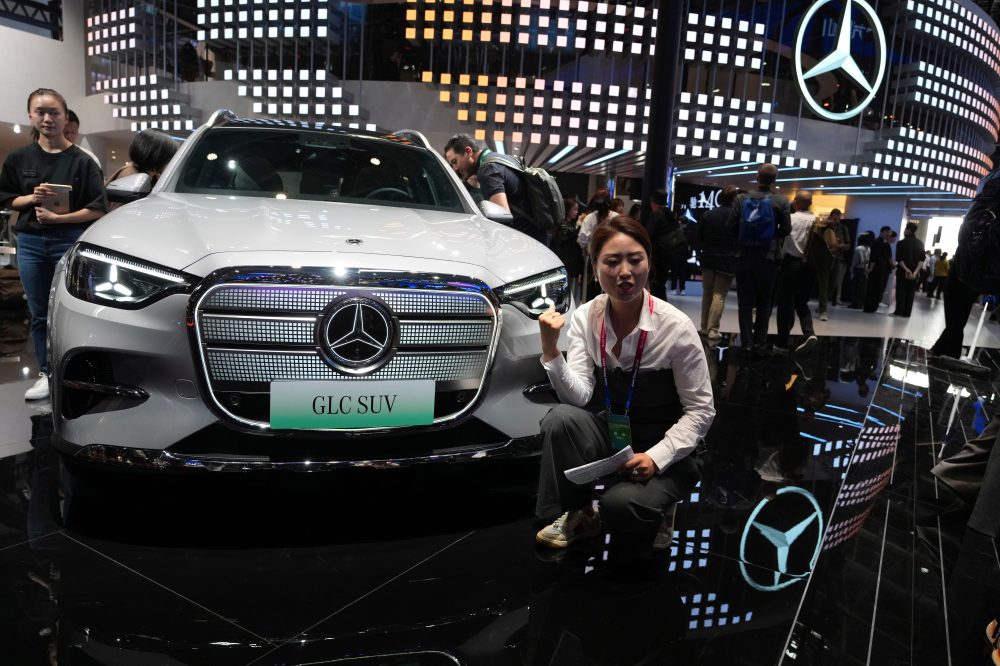
Volkswagen, Mercedes-Benz, BMW, and Porsche all reported sales declines of between 30% and 41% in China during the April-through-June quarter, based on figures each company released over the past week. For the entire first half of this year, all four brands saw year-over-year sales fall by more than 20% in China — losses that have weighed heavily on their overall profits and, in some cases, wiped out gains made in other parts of the world.
Independent auto analyst Lei Xing described the latest quarterly figures as among the steepest declines these German brands have experienced in China.
Volkswagen Group, for instance, delivered 424,300 vehicles in China during the quarter — a drop of 36.6% — which pulled its global sales down 8.6%, even as its numbers improved in Europe and the Americas. The automaker, headquartered in Wolfsburg, Germany, has long counted heavily on the Chinese market and announced it will now cut its vehicle model lineup by as much as half in response to the sales slump.
A prolonged downturn in China’s real estate sector, combined with a broader economic slowdown, has dampened consumer spending and made buyers more cautious about major purchases like vehicles. On top of that, an intense and ongoing price war among domestic Chinese automakers has made affordable local brands far more attractive to Chinese drivers.
Porsche, which is part of the Volkswagen Group, described China’s current market conditions as “challenging,” while Mercedes-Benz pointed to “a significantly weaker overall market and macroeconomic environment” in China.
According to the China Association of Automobile Manufacturers, passenger car sales within China fell 24% in the first half of this year, totaling nearly 8.3 million vehicles. The consulting firm AlixPartners projects that overall light vehicle sales in China — a category that includes passenger cars — will likely slide about 10% for the full year.
Stephen Dyer, who leads the automotive practice for Asia-Pacific at AlixPartners, said at a news briefing last month that as Chinese brands become increasingly popular with local buyers, “foreign automakers are going to have to fight for every share of (the) market.”
Chris Liu, an analyst with the research and advisory group Omdia, noted that German automakers remain far more competitive in traditional gasoline-powered vehicles than in electric vehicles — a significant disadvantage at a time when EV sales in China are outpacing conventional fuel-powered cars.
“The German automakers are bearing most of the brunt,” said Xing, the independent analyst.
Dyer also pointed out that Chinese automakers have a built-in advantage because they refresh their vehicle lineups far more frequently than their foreign competitors, keeping buyers engaged with newer options.
The troubles in China don’t stop at its borders. These same German brands now face growing competition from Chinese automakers in Europe and other international markets, as leading Chinese brands like BYD expand their global reach.